

This page contains affiliate links. Learn more.

Our Verdict (Best For)
The ZeroWater 10-Cup Ready-Pour achieved solid 2024 lab results with clean water taste and no odor, and excellent 2025 results (though faint plastic taste). We noted potential copper leaching in 2024 below strictest health guidelines, and inconsistent reduction of DBPs in 2025. It’s NSF/ANSI certified for removal of 7 contaminants and has third-party testing mostly for metal/salt reduction (we miss organics). It includes an accurate TDS meter, though we don’t like the 0 TDS approach. It’s sturdy and easy to set up, use, and maintain, with a large capacity that fits in the fridge. It pours smoothly and offers push-button dispensing, but the lid can fall off when tilting too steeply. Price is below average, but estimated annual filter replacement costs are very high. All in all, one of the most effective pitcher filters, but we think there are better and more affordable options.
The ZeroWater 10-Cup Ready-Pour pitcher is designed for use as a drinking water filter and can purify both tap water and properly disinfected well water.
As usual, we’ve tested the pitcher with our own hands:
- Hands-on experience: We assembled, primed, used, and maintained it.
- Filtration effectiveness: Across 2 independent test rounds, we sent unfiltered and filtered tap water samples to professional laboratories for analysis to determine real-world contaminant reduction. Each round used a different pitcher, water supply, and lab. We also reviewed NSF/ANSI certifications and other available test data.
- More testing: We conducted taste and odor evaluations as well as filtration speed tests.
- All other product aspects: We considered initial and long-term costs, warranties, additional features, frequent customer complaints, and more.
To learn more about our testing procedure check our editorial guidelines.
Contents

Final Rating: /5.00
FiltrationFiltration score combines our lab results and taste testing with NSF/ANSI certifications and 3rd-party contaminant reduction data.: /5.00
Usability: /5.00
CostsCost scores reflect overall value for money rather than price alone.: /5.00
| Type: | Water Filter Pitcher |
| PriceNo short-term sales. (Sep 16, 2025): | $37.99 |
| Yearly CostEstimate is based on rated/claimed filter life and 300 gallons annual water consumption. No short-term sales. (Sep 16, 2025): | ~$285 |
Final Rating: /5.00
What We Like Most
- Achieved solid results in our 2024 and excellent results in our 2025 lab testing.
- Filtered water tasted perfectly clean with no odor (2024 test).
- Handful of NSF/ANSI certifications covering important contaminants and extensive third-party testing for metal/salt reduction to 100% filter life (we miss most organics).
- Sturdy, well-built design with BPA-free materials.
- Setup is easy with clear, illustrated instructions.
- Feels good to handle and pours smoothly.
- Convenient push-button dispensing.
- Big enough to fill a 40-oz bottle with a single refill while still fitting easily in fridge shelves and doors.
- Filter replacements are very easy.
- Well below-average upfront price compared to other water filter pitchers.
What We Don’t Like
- Higher level of copper detected in filtered water in our 2024 lab testing (below strictest health guidelines).
- Inconsistent DBP reduction was observed in our newest tests, and testing yet another ZeroWater filter element also showed potential problems filtering chloroform.
- Filtered water was odor-free but had a very faint plastic taste (2025 test).
- “0 TDS approach” can be misleading (0 TDS does not necessarily mean pure water).
- On-demand filtering requires patience.
- Lid may fall off when pouring too fast or holding the pitcher too steeply.
- Lid must be removed for refilling.
- Very short 15-gallon filter lifespan requiring frequent replacements.
- No filter life indicator (though the included TDS meter helps track status).
- We estimate the annual filter replacement cost to be substantially above the category average.
- Short 90-day warranty.
- Frequent third-party customer complaints include issues with taste and smell, slow filtration/clogged filters, poor design, and leaking filters.
How the ZeroWater 10-Cup Ready-Pour Compares to…
13 Other Water Filter Pitchers
In this video, Sara explains why we think the ZeroWater 10-Cup Ready-Pour offers very effective water filtration for a pitcher, but that better options are available.
Please note: Our full guide on the best water filter pitchers is available here.
Video Chapters + Comparison Sheet
- Link to Comparison Sheet
- 00:00 – Intro
- 00:33 – What’s New
- 01:10 – Our 14 Pitchers
- 03:00 – Top Pick: Clearly Filtered
- 12:21 – Runner-Up: Culligan (and ZeroWater)
- 23:20 – For Usability: Epic Pure
- 26:22 – Budget Pick: Brita Everyday Elite
- 28:07 – Hard Water: Waterdrop Chubby
- 28:57 – Bacteria & Parasites: LifeStraw
- 30:16 – Seychelle RAD & Aquagear
- 32:03 – LARQ Pitcher PureVis
- 33:35 – PUR Plus 11-Cup
- 35:09 – Summary
Full Analysis of the ZeroWater 10-Cup Ready-Pour
Filtration: /5.00
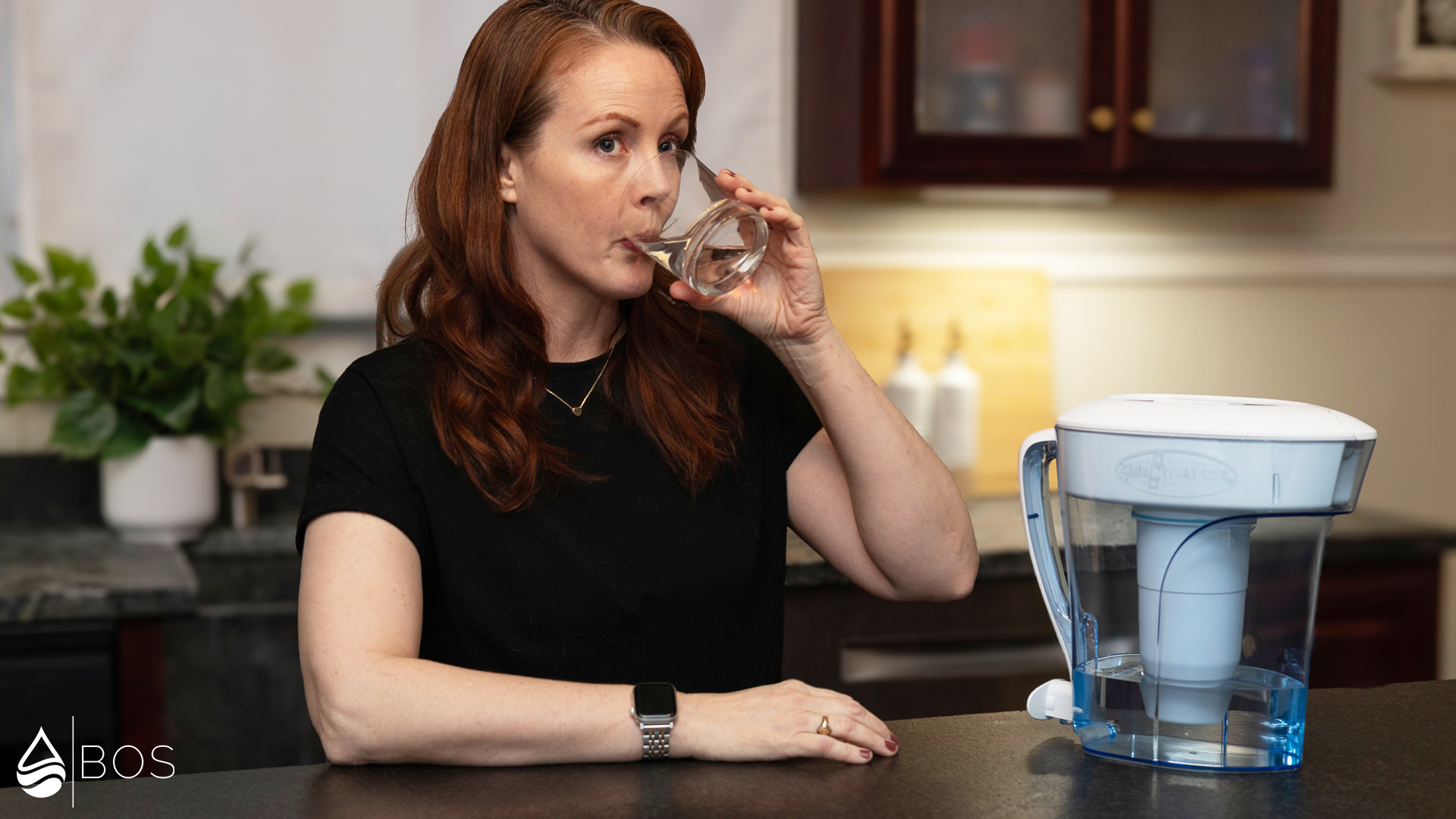
The ZeroWater 10-Cup Ready-Pour water filter pitcher scored 4.50/5.00 for filtration. How? It achieved excellent results in our 2025 lab testing, improving upon the already solid 2024 performance. In our 2024 test, we appreciated a clean taste, while in 2025 the filtered water had a better taste than our tap water but a very faint plastic flavor was added (no odor was noticed in either test round). Finally, the pitcher has a handful of NSF/ANSI certifications for contaminant reduction covering some important contaminants as well as more extensive third-party testing to 100% filter life (though this is primarily for metal/salt reduction – most organics are not covered).
1. Lab Results: /5.00 (2025) & /5.00 (2024)

Remember that our before vs after lab comparison is not an exact science. It’s informational and subject to variability, inaccuracies, and interferences caused by natural fluctuations in water quality, accidental contamination, human error, instrumentation issues, and more. Furthermore, our lab-testing is limited to those contaminants present in our water supplies and at their respective concentrations. As such, it can only give us a general idea for how effective a certain water treatment product might be.
In our 2024 and 2025 lab tests comparing an unfiltered and a filtered tap water sample, the ZeroWater pitcher could remove 9 undesirable impurities and contaminants to below the minimum detection level (so essentially to 100%): chlorine, bromoform, dibromochloromethane*, barium, lithium, strontium, manganese, nitrate, and uranium.
The following substances remained in our water:
- Bromodichloromethane* was completely removed in 2024 and reduced by a very high 96% in 2025.
- Chloroform* was reduced by a very high 94% in 2025 (not present in 2024).
- Copper was reduced by a high 82% in 2025; however, the 2024 test suggests potential leaching from the KDF filter media, as copper increased by 1,100% to 0.12 ppm. That said, copper is an essential dietary element for humans and at 0.12 ppm it was still 2.5x lower than the strictest public health guideline by the OEHHA of 0.3 ppm. While our 2025 lab findings were more consistent with ZeroWater’s third party data, which claims 99.90% copper reduction, our removal rate was still nearly 20% lower. In addition to potential leaching, this apparent discrepancy with our 2025 results may partly be explained by differing test conditions – the ZeroWater’s feed water had a ~220x greater concentration of copper (~3 ppm) compared to our feed water. The same rationale may also apply to other contaminants for which our observed reduction rates differ substantially from those reported by the manufacturer, including cases of potential leaching.
- Iron showed evidence of potential leaching in 2024, though it was completely removed in the 2025 test, which aligns with ZeroWater’s own published performance data. Now, iron is merely an aesthetic impurity which only becomes relevant (e.g., impacting water taste) at a higher level (> 0.3 ppm) than detected in our 2024 sample (0.01 ppm), per the EPA secondary standards.
- Boron was reduced by a solid 75% in 2024 and was completely removed in 2025.
- Due to a limitation of the testing method, 2024 fluoride results came back variable, ranging from 78% to 99%. Using a different lab method for fluoride detection – one which we assume to be more accurate – it was completely removed in 2025, which aligns with ZeroWater’s own published performance data. Based on this, we believe the true reduction in 2024 was likely in the high-90% range as well.
Finally, limescale/hardness was completely eliminated in both 2024 and 2025. Therefore, the ZeroWater should help protect your kettle and/or coffee maker from buildup.
Aside from contaminant reduction, we found 2 substances in our 2024 filtered water that were not present in the unfiltered water, suggesting potential leaching: aluminum (0.01 ppm) and zinc (0.03 ppm).
Fortunately, aluminum was present well below the public health goal of 0.6 ppm per the OEHHA. Zinc is another aesthetic impurity which only becomes relevant (e.g., impacting water taste) at a much higher level (5 ppm) than detected in our sample per the EPA secondary standards. As with copper, some degree of potential leaching for zinc may be attributed to the zinc-containing KDF media used in this filter. The detection of zinc in the filtered water also contradicts ZeroWater’s third-party reduction data, which reports 99.90% reduction.
There was no evidence of potential leaching in 2025.
*In our 2025 lab testing, we artificially spiked our tap water with fluoride and nitrate because our new water supply contains neither. The nitrate solution, however, unintentionally contained chloroform, resulting in a test concentration of 1,670 ppm – far above realistic tap-water levels (100 ppm is already considered high). We suspected this extremely elevated concentration likely explains why the ZeroWater did not fully remove chloroform and 1 other disinfection byproduct. For this reason, we conducted a re-test of VOC reduction at a normal chloroform level (34.7 ppm) but still did not see 100% reduction across the board. Although for our evaluation, we used the highest reduction rate observed for each DBP across both tests, it’s important to note that the 2025 re-testing of DPBs shows inconsistencies, with a decrease in removal of bromodichloromethane (from 96% to 45%), dibromochloromethane (from 100% to 44%), and chloroform (from 94% to 41%).
In addition, we observed an abnormal increase in chloroform during testing of a different ZeroWater filter element used in the 32-Cup Dispenser which was evaluated as part of our countertop water filter comparison. Taken together, these results suggest that ZeroWater filters may have difficulty consistently removing chloroform and other DBPs or organic compounds in general.
Lab Results Charts
| Potentially Harmful | Aesthetic Issues | Feed Water Level | Filtered Water Level | Reduction Rate | |
| Water Disinfectants | |||||
| Chlorine (mg/L) | ✖ | ✖ | ~2 | 0 | 100% |
| Disinfection Byproducts (Ultra-High Chloroform) | |||||
| Bromodichloromethane (µg/L) | ✖ | 19.9 | 0.75 | 96% | |
| Dibromochloromethane (µg/L) | ✖ | 5.81 | 0 | 100% | |
| Chloroform (µg/L) | ✖ | 1,670 | 98.2 | 94% | |
| Disinfection Byproducts (VOCs Re-Test) | |||||
| Bromodichloromethane (µg/L) | ✖ | 15.5 | 8.48 | 45% | |
| Dibromochloromethane (µg/L) | ✖ | 4.24 | 2.38 | 44% | |
| Chloroform (µg/L) | ✖ | 34.7 | 20.4 | 41% | |
| Metals | |||||
| Copper (mg/L) | ✖ | ✖ | 0.0136 | 0.0024 | 82% |
| Iron (mg/L) | ✖ | 0.0763 | 0 | 100% | |
| Manganese (mg/L) | ✖ | ✖ | 0.0036 | 0 | 100% |
| Barium (mg/L) | ✖ | 0.0407 | 0 | 100% | |
| Boron (mg/L) | ✖ | 0.0153 | 0 | 100% | |
| Strontium (mg/L) | ✖ | 0.112 | 0 | 100% | |
| Salts | |||||
| Nitrate (N) (mg/L) | ✖ | 2.74 | 0 | 100% | |
| Fluoride (mg/L) | ✖ | 0.925 | 0 | 100% | |
| Aesthetic Parameters | |||||
| Hardness (mg/L) | ✖ | 59.89 | 0.25 | 100% | |
| Other Parameters | |||||
| pH | 7.8 | 5.9 | |||
| Impurities NOT Detected in Unfiltered Tap Water Sample | |||||
| Lab Reports (Ultra-High Chloroform): Filtered Water Report, Unfiltered Water Report | |||||
| Lab Reports (VOCs Re-Test): Filtered Water Report, Unfiltered Water Report | |||||
| Chlorine Self Test Photos: Filtered Water, Unfiltered Water | |||||
| Explanation: | |||||
| Full Removal | |||||
| Considerable Reduction | |||||
| Concentration More Than Double of Unfiltered Water Sample | |||||
| Potential Leaching Reached or Exceeded the Strictest Public Health Guideline We Could Find | |||||
| Potentially Harmful | Aesthetic Issues | Feed Water Level | Filtered Water Level | Reduction Rate | |
| Water Disinfectants | |||||
| Chlorine (mg/L) | ✖ | ✖ | 0.2 | 0 | 100% |
| Disinfection Byproducts | |||||
| Bromodichloromethane (µg/L) | ✖ | 0.58 | 0 | 100% | |
| Bromoform (µg/L) | ✖ | 0.75 | 0 | 100% | |
| Dibromochloromethane (µg/L) | ✖ | 0.94 | 0 | 100% | |
| Metals | |||||
| Copper (mg/L) | ✖ | ✖ | 0.01 | 0.12 | 1,100% Increase |
| Barium (mg/L) | ✖ | 0.01 | 0 | 100% | |
| Boron (mg/L) | ✖ | 0.04 | 0.01 | 75% | |
| Lithium (mg/L) | ✖ | 0.01 | 0 | 100% | |
| Strontium (mg/L) | ✖ | 0.18 | 0 | 100% | |
| Salts | |||||
| Nitrate (N) (mg/L) | ✖ | 1.65 | 0 | 100% | |
| Fluoride (mg/L) (Flawed?) | ✖ | 0.46 | <0.1 | Anywhere Between 78% and 99% | |
| Other | |||||
| Uranium (µg/L) | ✖ | 7 | 0 | 100% | |
| Aesthetic Parameters | |||||
| Hardness (mg/L) | ✖ | 111.9 | 0.3 | 100% | |
| Other Parameters | |||||
| Alkalinity (mg/L) | 140 | 20 | 86% | ||
| pH | 7.77 | 6.26 | |||
| Impurities NOT Detected in Unfiltered Tap Water Sample | |||||
| Aluminum (mg/L) | ✖ | ✖ | 0 | 0.01 | |
| Iron (mg/L) | ✖ | 0 | 0.01 | ||
| Zinc (mg/L) | ✖ | 0 | 0.03 | ||
| Lab Reports: Filtered Water Report, Unfiltered Water Report | |||||
| Explanation: | |||||
| Full Removal | |||||
| Considerable Reduction | |||||
| Concentration More Than Double of Unfiltered Water Sample | |||||
| Potential Leaching Reached or Exceeded the Strictest Public Health Guideline We Could Find | |||||
2. NSF/ANSI Certifications and Other Test Data
The ZeroWater pitcher is certified for the reduction of 7 contaminants by the IAPMO against NSF/ANSI standards 42 and 53. These certifications cover chlorine (97.50%), taste and odor, lead (95.90-99.70%), mercury (96.00-96.70%), PFOA and PFOS (94.90%), and hexavalent chromium (99.60%). Reduction rates are per the official performance data sheet.
In addition, it has third-party testing for the removal of 24 substances against NSF/ANSI standards 42, 53 and other non-NSF/ANSI standards, primarily covering metals and salts, to 100% filter life (most organics are not covered). Listed reduction rates include:
- Antimony (99.00%)
- Arsenic III (98.00%)
- Arsenic V (98.00%)
- Beryllium (99.90%)
- Manganese (99.00%)
- Cyanide (99.90%)
- Nitrate (98.00%)
- Fluoride (99.00%)
3. Filtration Process
The ZeroWater filter cartridge utilizes particle filtration, activated carbon, KDF, and ion exchange resin. Particle filtration (mechanical filtration) acts as a sieve to trap solid (undissolved) impurities like sand, rust, and dirt. Activated carbon removes things like bad tastes and odors, chlorine/chloramine, disinfection byproducts and other organics, as well as certain metals. Ion exchange targets dissolved, unwanted ions in the water. KDF is a copper-zinc media which also removes chlorine and certain water-soluble heavy metals such as lead, mercury, and iron, and also inhibits microbial growth.
4. Taste and Odor Tests
In our 2024 test, the filtered water was odorless and had a clean taste. In our 2025 test, the filtered water was odorless as well, and the filtered water had a better taste than our tap water but a very faint plastic flavor was added.
Usability: /5.00
The ZeroWater pitcher achieved a usability score of 3.50/5.00, based on its performance in the following categories:
- Initial system assembly including filter priming (1.00/1.00)
- Day-to-day use (2.00/3.10)
- Filter replacements (0.50/0.90)
1. Initial Setup: /1.00
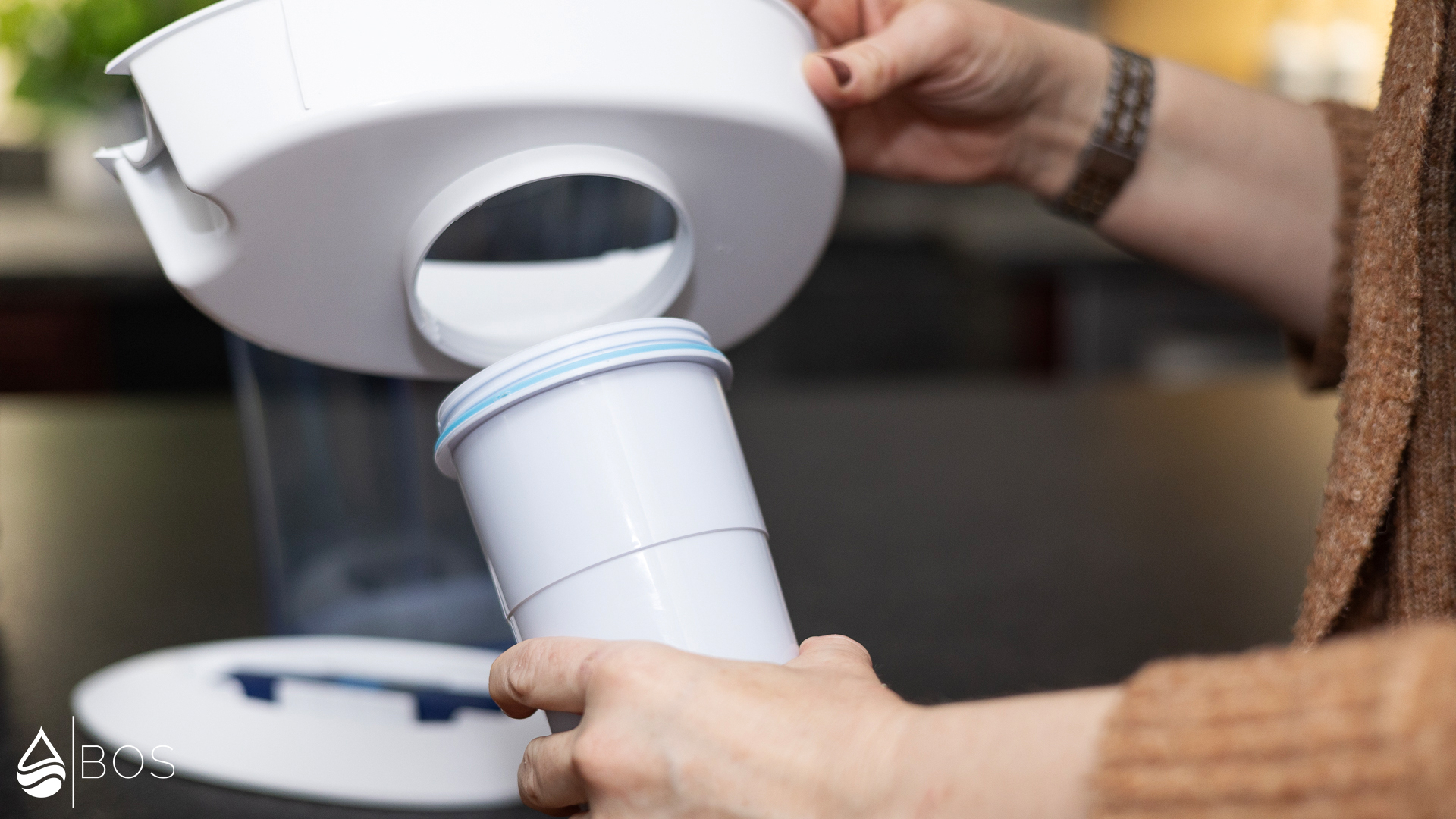
Assembling the ZeroWater pitcher is easy and straightforward. The included user manual provides clear, illustrated directions for each step.
Here’s a quick breakdown of the setup process:
- Remove lid and reservoir from the pitcher. Unwrap filter and remove branded film or blue cap (where applicable).
- Clean your device in warm water using mild soap then rinse and dry thoroughly. Rinse the exterior of your filter with warm water for 30 seconds.
- Twist filter into the bottom of the reservoir. Tighten until there is a complete seal between the filter, blue O-ring and reservoir.
- Fill reservoir with cool or ambient water, directly on to the filter. Discard the first two reservoirs of water. Replace the lid.
- Your pitcher is now ready to use!

2. Day-to-Day Use: /3.10
2.1 Speed & Water Capacity: /1.20
The ZeroWater pitcher is a reasonable choice for daily use but there are better options if day-to-day practicality is your primary concern. Its filtered reservoir (12.5-cup capacity) is generous and can store plenty of water, but it has a smaller feed (6.25-cup). Since the filtered capacity is double the size of the feed, you need to refill twice in order to top up the filtered reservoir. We estimate 5-6 daily refills for the average-sized US and US family households, which also happens to be average for the pitchers we tested.
In addition, the ZeroWater filters fast enough to meet the daily water needs of the average-sized US (family) households, and it can handle thirst bursts. That said, on-demand filtering takes a little patience. In our 2025 filtration speed test, the pitcher could filter 4 cups in a respectable 4:13 min, though it was a bit slower in our 2024 test at 5:47 min.
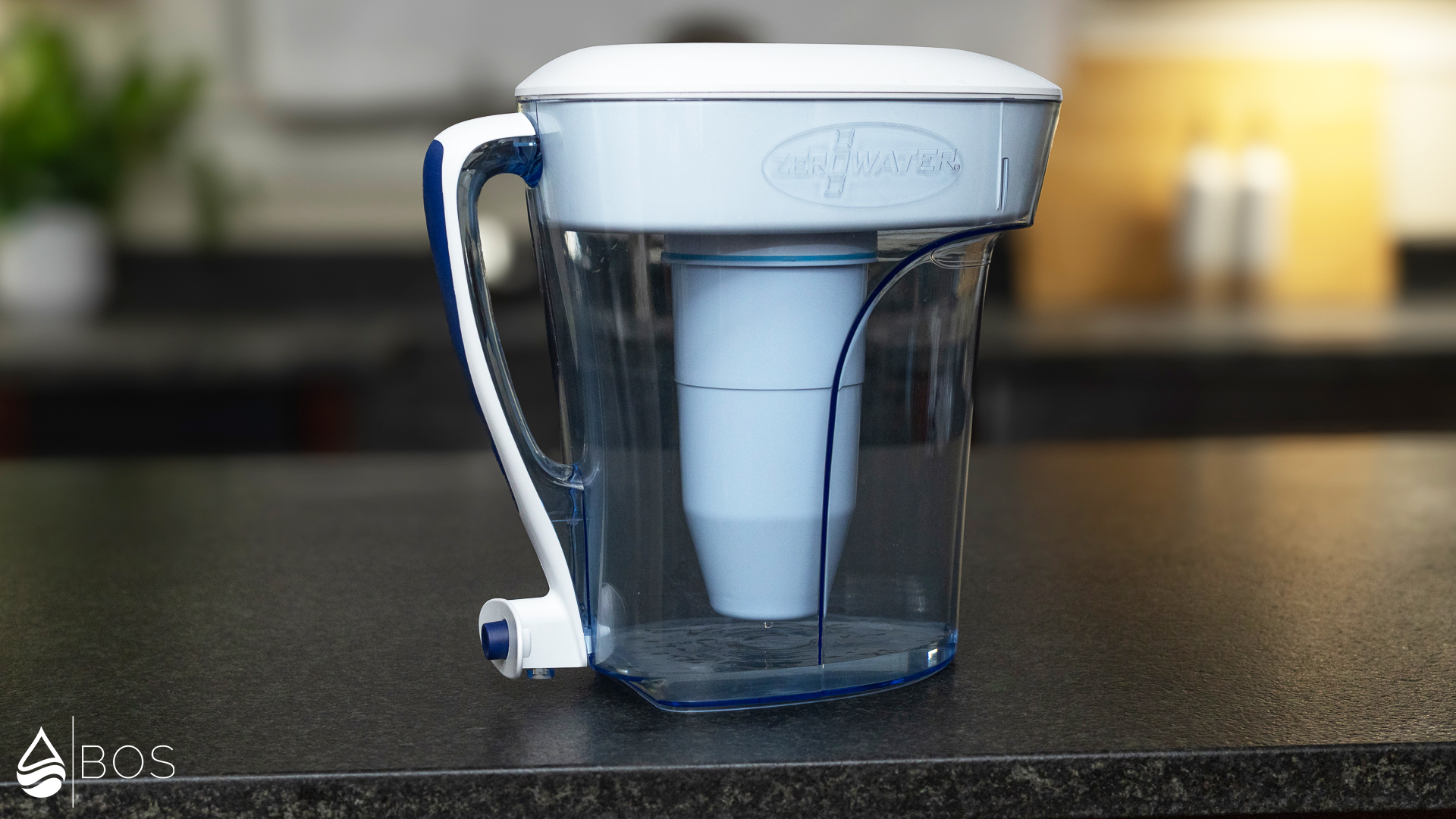
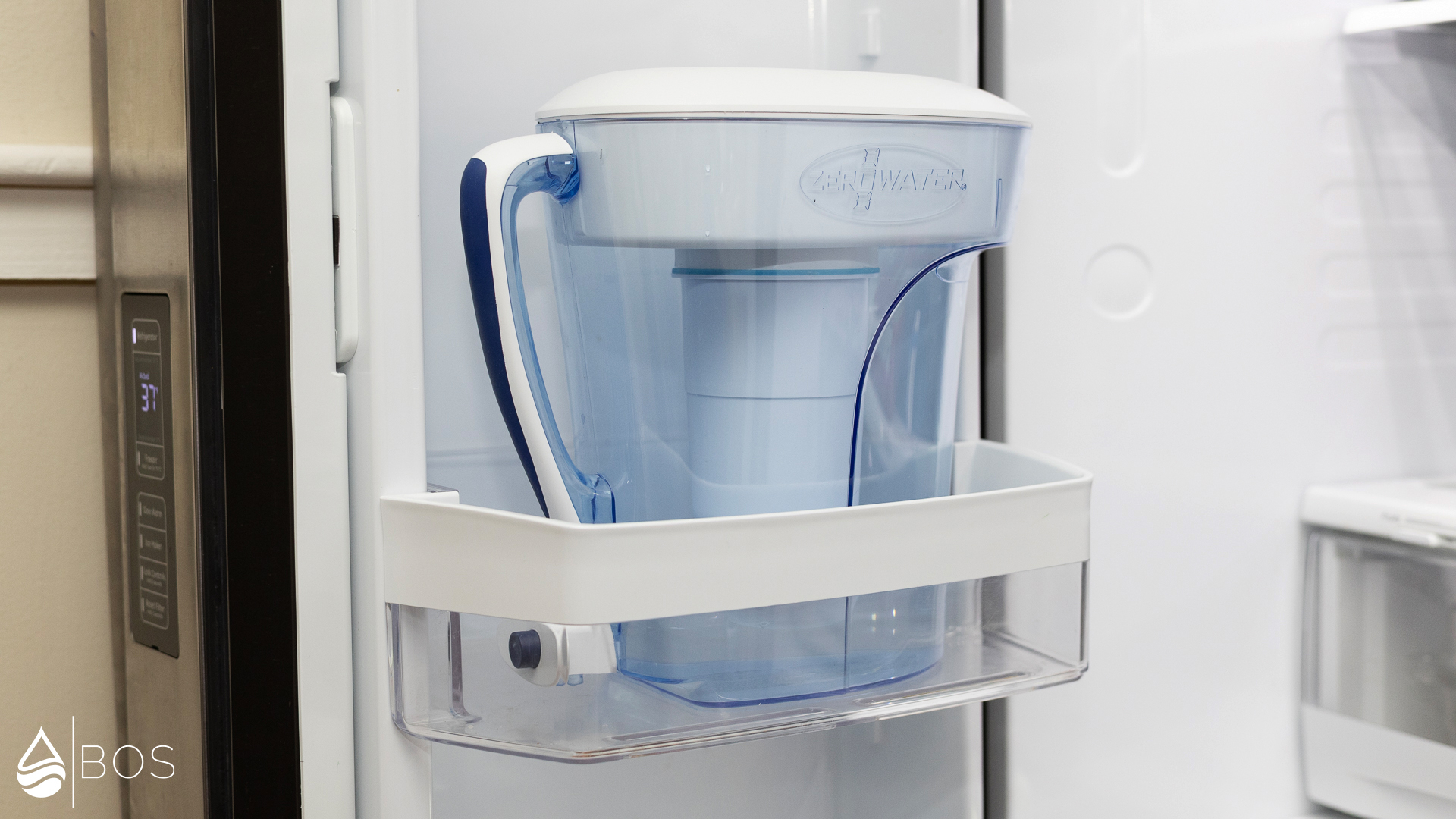
Finally, the pitcher fits both on the shelves and in the door of a standard fridge (dimensions: 5″x11″x11.5″), and thanks to the substantial feed and filtered capacities, you can fill a large 40-oz bottle with a single refill.
2.2 Handling & Pouring: /1.15
The ZeroWater feels good in hand, though it seems to be designed for two-handed use: when pouring from the top of the pitcher, we also felt the need to support it in front. The manufacturer seems to have anticipated this, as the pitcher indents right where you naturally bring your other hand up to do so.
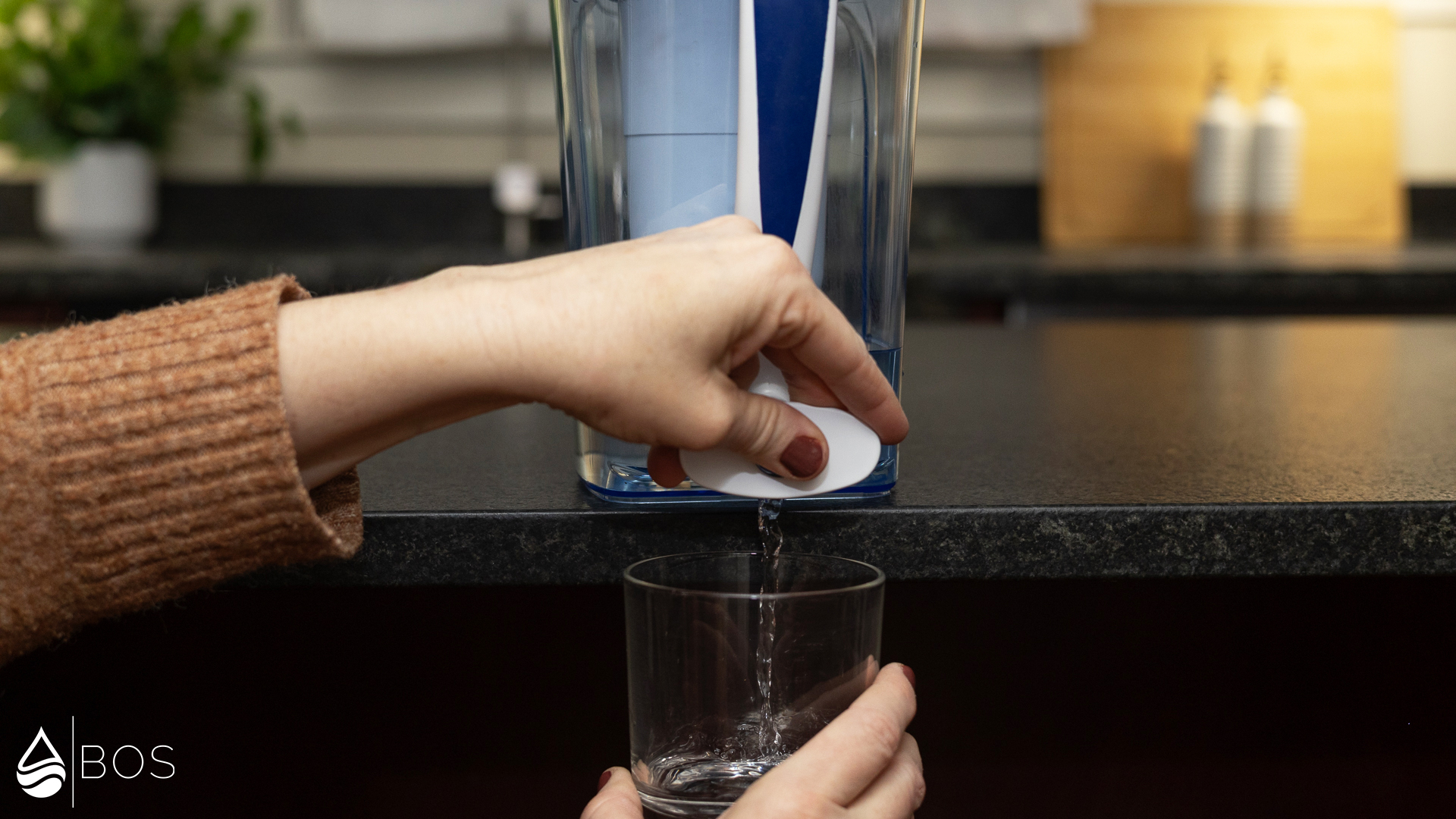
It pours smoothly but the lid may fall off if you pour too fast or tilt it too steeply to get the remaining bit of water out. It also features a pour spout on the bottom which allows for dispensing without lifting the pitcher; the button presses easily, feels sturdy, and dispenses water smoothly.
The ZeroWater 10-Cup Ready-Pour is relatively heavy compared to the other pitchers we have tested, with a weight including the wet filter cartridge of 3 lb 1.16 oz. While that may be a disadvantage from a handling perspective, in this case heavier weight indicates sturdier construction (e.g., thicker plastic) and more filter media which is desirable for better filtration results.

2.3 Refilling: /0.75
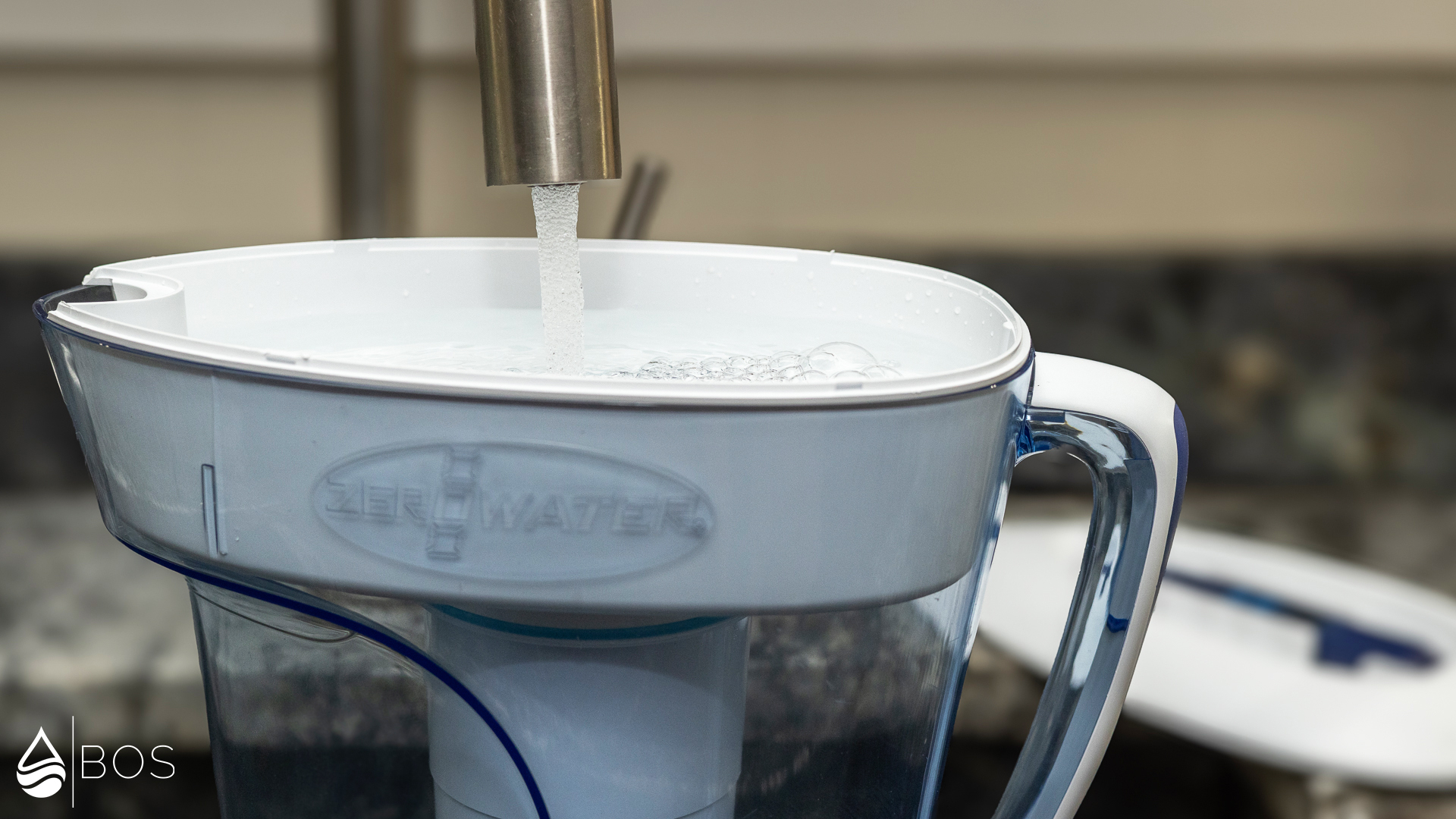
The ZeroWater is relatively easy to refill, though the lid must be removed first, which is not as convenient as some models with a flip-top lid or pour-through tab.
2.4 Other (Bonus): /0.20
This pitcher includes an accurate TDS meter which is conveniently stored in the top of the lid. However, we are not fans of the “zero TDS” idea.
- A TDS meter can’t detect several important impurities, including many organic compounds like disinfection byproducts, particulate lead, and other non-dissolved contaminants. Therefore, these substances don’t count towards total dissolved solids. What it does measure in tap water are mainly harmless or even beneficial salts and minerals.
- Additionally, a TDS meter reads in parts per million, so it’s far too imprecise for contaminants that can be harmful at much lower concentrations.
Since the information provided by the TDS meter can cause confusion and promote a false sense of security, we didn’t award the ZeroWater any extra points for this feature.

3. Filter Replacements: /0.90
Filter replacements are very easy. While there is no filter change indicator to alert you to do so, ZeroWater recommends that you change your filter when the TDS meter reads “006” or higher. However, this approach means you’re likely exceeding the NSF/ANSI-rated filter capacity of 15 gallons.
Alternatively, using that 15-gallon rated filter life and assuming 300 gallons of yearly water consumption for the average household, we estimate that you will have to change the filter every 2-3 weeks, which may get tedious.
Support BOS Water’s Mission!
Every coffee helps us test more products and bring you unbiased results!
Costs: /5.00
Based on value for money, the ZeroWater pitcher achieved a cost score of 1.74 out of 5.00, indicating it is relatively expensive for what it offers compared to competing pitchers (a score of 4.00 represents average value). Notably, while its upfront price is well below average compared to the other water filter pitchers we tested, its annual filter replacement cost is substantially above average.
1. Upfront Price
As of September 16, 2025, the ZeroWater is priced at $37.99, which is well below the $58.53 average across all the water filter pitchers we tested.
2. Long-Term Expenses for Filter Replacements
Based on 300 gallons consumption and a 15-gallon filter life, we estimate $285 in annual filter replacement costs, which is substantially above the $120.13 average across all the water filter pitchers we tested.
3. Product Warranty
The system is covered by a short 90-day warranty.
4. Other Cost Factors
- The ZeroWater comes with an accurate TDS meter, which stores neatly in the lid.
- The pitcher feels sturdy and well-built.
- ZeroWater offers a filter recycling program. While they don’t offer prepaid shipping and you don’t get a free filter, the manufacturer does provide a $20 coupon to help cover the cost of shipping upon receipt of the filters.
Additional
1. Appearance
The ZeroWater pitcher has a blue tint to the plastic, which some users may not care for.
2. BPA-Free Materials
This pitcher is made from BPA-free materials.
3. Frequent Customer Complaints
We read about issues with taste and smell (ranging from fishy, sour, metallic or chemical), slow filtration or clogged filters, poor design (especially the lid falling off when pouring), and leaking filters.
Like some of the other customers, we had trouble with the lid falling fall off when pouring quickly or tilting too steeply to get the last bit of water out. We also detected a faint plastic taste in our 2025 testing. However, we did not find that the ZeroWater filtered particularly slowly, nor did we notice leaking filters.
Bottom Line: Good but No Match for Better-Priced Pitcher Filters (/5.00)
Filtration weighted at 60%, and usability and cost at 20% each, the ZeroWater 10-Cup Ready-Pour scored a final rating of 3.75 out of 5.00.
The pitcher has a lot going for it, as it achieved solid 2024 and excellent 2025 lab results for contaminant reduction, producing odorless water with a clean taste (faint plastic taste in 2025). It’s also easy to set up and maintain, and filters fast enough to keep up with your household’s daily water demands. It pours well but you’ll need to use two hands, and don’t tilt it too steeply or the lid falls off.
More downsides: we detected potential copper leaching in 2024 (below strictest health guidelines) and inconsistent reduction of DBPs in 2025. It’s NSF/ANSI certified for removal of a few contaminants and has additional third-party testing for metals/salts, but we miss most organics. It comes with an accurate TDS meter, though we are not fans of relying on TDS measurements to inform about water quality. And if you follow ZeroWater’s recommendations of filter changes when the meter reads 006, you will likely exceed its rated filter life. On the other hand, following the 15-gallon life requires bimonthly filter replacements, which may get tedious and expensive – we estimate a substantially higher maintenance cost for the ZeroWater compared to the other pitchers we tested, though well below-average upfront cost. Finally, warranty is a short 90 days.
All in all, we do think the ZeroWater offers very effective water filtration for a pitcher, but that better options are available.
Further Reading
About the Author(s)

Sara has been a lifelong home-improvement fan (she’s been hooked on This Old House since she was five) and taught herself any project she didn’t already know by watching YouTube tutorials. She is also an award-winning filmmaker. Armed with this skillset, Sara installs, primes, samples, uses, and maintains nearly every point-of-use water treatment system we test – then brings her results to life on camera for our YouTube channel.

Mike is a former team member who made his mark by contributing to our first big water filter pitcher comparison video and reviewing a couple POE water treatment systems. Beyond the world of water solutions, Mike is a full-time blogger and YouTuber alongside his wife, Ashley. Together, they’ve transformed their passions into a creative space called Joyfully Growing, where they share DIY tutorials and simple home improvement tips to help others love the homes they’re in.

Raoul has a background in mechanical engineering and has been writing about home water treatment since 2015. He designs our product review processes, analyzes the results, and ties everything together. As editor-in-chief, he tries hard to keep the whole operation running smoothly behind the scenes.