

This page contains affiliate links. Learn more.
About This Guide
In 2 rounds, we tested and compared 18 countertop reverse osmosis systems. For each system, we:
- Hands-on experience: Set up, used, and maintained it.
- Filtration effectiveness: Sent unfiltered and filtered tap water samples to professional labs for analysis in order to determine real-life contaminant reduction capabilities. Plus, we checked for NSF/ANSI certifications and other test data.
- More testing: Performed taste & odor, filtration/dispensing speed, wastewater, and other tests.
- All other product aspects: Considered initial + long-term costs, warranties, additional features, frequent customer complaints, etc.
Don’t Feel Like Reading?
Video Chapters
- 00:00 – Intro
- 00:49 – What’s New
- 01:40 – Our 18 RO Systems
- 04:47 – AquaTru Classic (Pt. 1) + How We Tested
- 13:06 – AquaTru Classic (Pt. 2) + 3 System Types
- 18:05 – AquaTru Classic (Pt. 3)
- 26:19 – AquaTru Carafe + Bluevua ROPOT
- 39:34 – Hot Water: Waterdrop C1H
- 46:16 – Hot & Cold Water: Waterdrop A1
- 53:16 – Remaining Systems (Quick-Fire Round)
- 59:09 – Summary
Video Chapters
- 00:00 – Intro
- 00:54 – Best for Ambient
- 05:54 – Runner-Ups for Ambient
- 11:40 – Best for Hot
- 16:18 – Best for Hot & Cold
- 21:01 – Wrapping Up
Our Top 7 Countertop RO Systems at a Glance
| Model | Image | Rating | Buy Here | ||||||||||||||||||
|---|---|---|---|---|---|---|---|---|---|---|---|---|---|---|---|---|---|---|---|---|---|
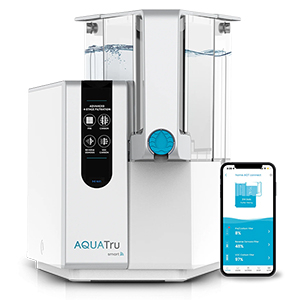
| AquaTru Classic Smart |
|

|
Check Current Price | ||||||||||||||||||
|
|||||||||||||||||||||
| AquaTru Classic |

|
|
Check Current Price | ||||||||||||||||||
|
|||||||||||||||||||||
| AquaTru Carafe Smart |

|

|
Check Current Price | ||||||||||||||||||
|
|||||||||||||||||||||
| AquaTru Carafe |

|
|
Check Current Price | ||||||||||||||||||
|
|||||||||||||||||||||
| Bluevua RO100ROPOT |

|

|
Check Current Price | ||||||||||||||||||
|
|||||||||||||||||||||
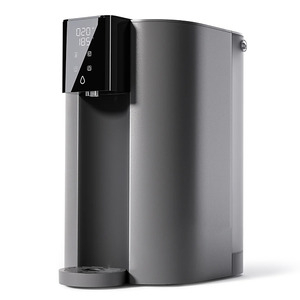
| Waterdrop C1H |
|
|
Check Current Price | ||||||||||||||||||
|
|||||||||||||||||||||
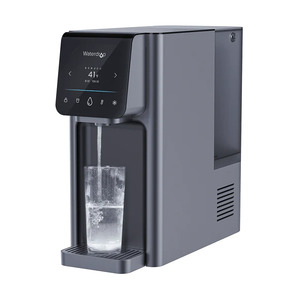
| Waterdrop A1 |
|
|
Check Current Price | ||||||||||||||||||
|
|||||||||||||||||||||
18 Countertop Reverse Osmosis Systems Compared

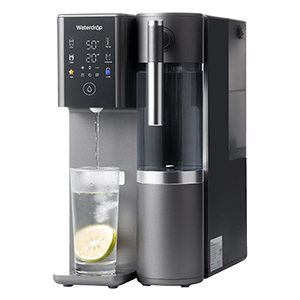
| Countertop Reverse Osmosis System | AquaTru Classic Smart | AquaTru Classic | AquaTru Carafe Smart | AquaTru Carafe | Bluevua RO100ROPOT | Waterdrop C1H | Waterdrop A1 | Waterdrop A2 | Sans Water Purifier | Bluevua ROPOT-Lite | APEC ROCT-PLUS | SimPure Y9A | APEC ROCT-C1 | SimPure Y7P-BW | NU Aqua 4-Stage Countertop RO System | RKIN U1-W | Frizzlife WB99-C | Crystal Quest Countertop Thunder |
|---|---|---|---|---|---|---|---|---|---|---|---|---|---|---|---|---|---|---|
| Purchase Links & Codes | ||||||||||||||||||
| Image | |
|
|
|
|
|
|
 |
 |
 |
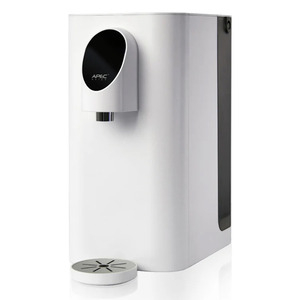 |
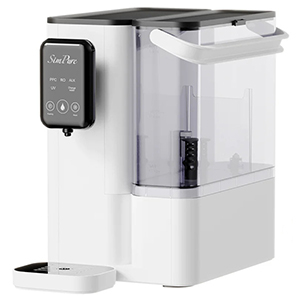 |
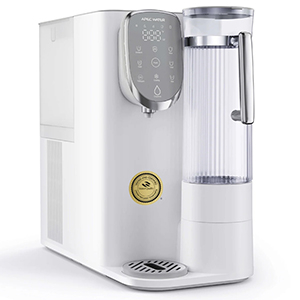 |
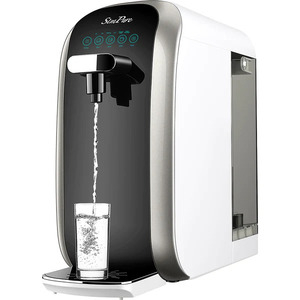 |
 |
 |
 |
 |
| FINAL RATING | ||||||||||||||||||
|
|
|
|
|
|
|
||||||||||||
| Final Rating | 4.85/5.00 | 4.77/5.00 | 4.78/5.00 | 4.69/5.00 | 4.48/5.00 | 4.38/5.00 | 4.33/5.00 | 4.42/5.00 | 4.27/5.00 | 4.22/5.00 | 4.15/5.00 | 4.14/5.00 | 4.11/5.00 | 4.05/5.00 | 4.03/5.00 | 3.80/5.00 | 3.73/5.00 | 2.31/5.00 |
| Verdict (Best For) | #1 Overall + #1 for Filtration (Fully NSF/ANSI-Certified) | #1 Overall + #1 for Filtration (Fully NSF/ANSI-Certified) | Glass Carafe + Space-Saving | #1 Upfront Budget Pick + Glass Carafe + Space-Saving | Runner-Up If You Want a Glass Carafe | #1 for Hot Water + Great Budget Pick + Space-Saving | #1 for Cold Water + Cold & Hot Water | Runner-Up for Cold Water | Runner-Up for Hot Water | |||||||||
| Comment | Includes App | Includes App | ||||||||||||||||
| Buy Here | Check Current Price | Check Current Price | Check Current Price | Check Current Price | Check Current Price | Check Current Price | Check Current Price | Check Current Price | Check Current Price | Check Current Price | Check Current Price | Check Current Price | Check Current Price | Check Current Price | Check Current Price | Check Current Price | Check Current Price | Check Current Price |
| Discount Code | $100 Discount Already Applied When Using Our Link! | $100 Discount Already Applied When Using Our Link! | $100 Discount Already Applied When Using Our Link! | $100 Discount Already Applied When Using Our Link! | BOSWATER15 - Up to 15% Off! |
C1HBOS - 5% Off on Top of Most Waterdrop Sales! |
A1BOS - 3% Off on Top of Most Waterdrop Sales! |
WD10BOS - 10% Off! |
BOSWATER15 - Up to 15% Off! |
SPY7P - $161 Off! |
BOSWATER - 5% Off! |
BOSWB2410 - $130 Off! |
BOS5OFF - 5% Off! |
|||||
| Score Overview | ||||||||||||||||||
| FiltrationFiltration score combines our lab results and taste testing with NSF/ANSI certifications and 3rd-party contaminant reduction data. | 5.00/5.00 | 5.00/5.00 | 4.99/5.00 | 4.99/5.00 | 4.50/5.00 | 4.50/5.00 | 4.50/5.00 | 4.50/5.00 | 4.33/5.00 | 4.14/5.00 | 4.50/5.00 | 4.50/5.00 | 4.50/5.00 | 3.92/5.00 | 4.07/5.00 | 3.87/5.00 | 3.68/5.00 | 2.44/5.00 |
| Usability | 4.64/5.00 | 4.24/5.00 | 4.43/5.00 | 4.03/5.00 | 4.61/5.00 | 3.85/5.00 | 3.92/5.00 | 4.25/5.00 | 4.04/5.00 | 4.60/5.00 | 3.46/5.00 | 3.53/5.00 | 3.38/5.00 | 3.80/5.00 | 3.99/5.00 | 3.80/5.00 | 3.60/5.00 | 0.70/5.00 |
| CostsCost scores reflect overall value for money rather than price alone. | 4.62/5.00 | 4.62/5.00 | 4.47/5.00 | 4.46/5.00 | 4.31/5.00 | 4.56/5.00 | 4.23/5.00 | 4.35/5.00 | 4.33/5.00 | 4.08/5.00 | 3.78/5.00 | 3.69/5.00 | 3.68/5.00 | 4.69/5.00 | 3.96/5.00 | 3.58/5.00 | 4.01/5.00 | 3.53/5.00 |
| Full Analysis | ||||||||||||||||||
| Price (Jul 13, 2026)No short-term sales. | $525 | $475 | $425 | $375 | $389 | $299 | $649 | $499 | $499.99 | $299 | $417.99 (Save 5% with Filter Subscription) | $439.99 | $499.00 (Save 5% with Filter Subscription) | $369.99 | $449.95 (Save 10% with Filter Subscription) | $749 | $449.99 | $202.23 |
| Filtration Lab Results | 2025: 5.00/5.00 2024: 4.97/5.00 |
2025: 5.00/5.00 2024: 4.97/5.00 |
2025: 5.00/5.00 2024: 4.49/5.00 |
2025: 5.00/5.00 2024: 4.49/5.00 |
2025: 5.00/5.00 2024: 5.00/5.00 |
2025: 5.00/5.00 2025: 4.95/5.00 |
2025: 5.00/5.00 2025: 4.73/5.00 |
2025: 5.00/5.00 | 2025: 5.00/5.00 2025: 4.19/5.00 |
2025: 4.73/5.00 2025: 4.42/5.00 |
2024: 5.00/5.00 | 2025: 5.00/5.00 | 2025: 5.00/5.00 | 2025: 5.00/5.00 2024: 3.40/5.00 |
2025: 4.38/5.00 2024: 4.75/5.00 |
2025: 4.37/5.00 | 2025: 3.69/5.00 2024: 4.68/5.00 |
2024: 2.94/5.00 |
| Remineralization Lab Results | See Remineralization Results Tabs | See Remineralization Results Tabs | See Remineralization Results Tabs | See Remineralization Results Tabs | ||||||||||||||
| Taste Tests | 2025: Clean 2024: Clean |
2025: Clean 2024: Clean |
2025: Clean 2024: Clean |
2025: Clean 2024: Clean |
2025: Clean (Optional Remineralization Post-Filter Added a Nice, Light Mineral Taste) 2024: Clean |
2025: Clean 2025: Clean |
2025: Much Improved Compared to Our Tap Water but Not 100% Perfect 2025: Clean |
2025: Clean | 2025: Clean 2025: Clean |
2025: Clean (Optional Remineralization Post-Filter Added a Nice, Light Mineral Taste) 2025: Clean (Optional Remineralization Post-Filter Added a Nice, Light Mineral Taste) |
2025: Clean 2024: Clean |
2025: Clean | 2025: Clean | 2025: Much Improved Compared to Our Tap Water but Not 100% Perfect 2024: Clean |
2025: Clean 2024: Clean |
2025: Clean | 2025: Clean 2024: Clean |
2024: Clean |
| Odor Tests | 2025: No Odor 2024: No Odor |
2025: No Odor 2024: No Odor |
2025: No Odor 2024: No Odor |
2025: No Odor 2024: No Odor |
2025: No Odor 2024: No Odor |
2025: No Odor 2025: No Odor |
2025: No Odor 2025: No Odor |
2025: No Odor | 2025: No Odor 2025: No Odor |
2025: No Odor 2025: No Odor |
2025: No Odor 2024: No Odor |
2025: No Odor | 2025: No Odor | 2025: No Odor 2024: No Odor |
2025: No Odor 2024: No Odor |
2025: No Odor | 2025: No Odor 2024: No Odor |
2024: No Odor |
| Speed Tests: Dispensing 1 Cup after Pre-Processing | 3 sec | 3 sec | Instantly (Poured from Carafe) | Instantly (Poured from Carafe) | Instantly (Poured from Carafe) | Ambient: 29.5 sec Hottest: 48.5 Sec |
Ambient: 19.5 sec Cold: 21.5 sec Hottest: 49.5 sec |
Ambient (Carafe): Instantly Ambient (Glass): 24.5 sec Cold: 21 sec Hottest: 48.5 sec |
Ambient (Carafe): Instantly Ambient (Glass): 40.5 sec Hottest: 45 sec |
Carafe: Instantly Glass: 44.0-55.5 sec |
Ambient: 22 sec Hottest: 52.5 sec |
21.5-27.0 sec | Ambient (Carafe): Instantly Ambient (Glass): 16.5 sec Cold: 23.5 sec |
19 sec | Ambient: 17.5 sec Hottest: 44.5 Sec |
Ambient: 38.5 sec Cold: 43.5 sec Hottest: 46 sec |
Carafe: Instantly Glass: 32.5 sec |
~1:12 hr |
| Speed Test: Dispensing 4 Cups of Ambient Water after Pre-Processing | 14.5 sec | 14.5 sec | Instantly (Poured from Carafe) | Instantly (Poured from Carafe) | Instantly (Poured from Carafe) | 1:41 min | 1:37 min | Instantly (Poured from Carafe) | Instantly (Poured from Carafe) | Instantly (Poured from Carafe) | 1:20 min | 1:15 min | Instantly (Poured from Carafe) | 1:11 min | 1:05 min | 2:21 min | Instantly (Poured from Carafe) | |
| Speed Test: Dispensing 4 Cups of Ambient Water upon Feed Tank Refill | 4:45 min | 4:45 min | 6:26 min | 6:26 min | 3:28 min | 5:21 min | 3:26 min | 5:11 min | 4:00 min | 4:01 min | 5:12 min | 1:15 min | 5:09 min | 3:15 min | 5:33 min | 3:29 min | 4:20 min | |
| Max Continuous Dispensing Tests | Ambient: 83 oz | Ambient: 83 oz | Ambient: ~62 oz (1 Full Carafe) | Ambient: ~62 oz (1 Full Carafe) | Ambient: 63 oz (1 Full Carafe) | Ambient: 52 oz Hottest: 48 oz |
Ambient: 20 oz (Rapid Stop & Go Afterwards) Cold: 34 oz (Cooling Took ~20 Minutes) Hottest: 66 oz |
Ambient: 50 oz + 6 oz Left in Carafe Cold: 52 oz (Water Was Only Cold for ~16 oz, Cooling Took ~45 Minutes) Hottest: 107 oz |
Ambient: 74 oz Hot: 88 oz |
Ambient: 42.5 oz + 43 oz with 10-Second Pause in between | Ambient: 32.5 oz Hottest: 67 oz |
Ambient: 128 oz | Ambient: 62 oz + 4 oz Left in Carafe Cold: 90 oz (Water Was Only Cold for ~16 oz, Cooling Took ~20 Minutes) |
Ambient: 70 oz | Ambient: 42 oz (in 16 oz Batches) Hottest: 72 oz |
Ambient: 84 oz Cold: 80 oz (Water Was Only Cold for ~16 oz, Cooling Took ~45 Minutes) Hottest: 63 oz |
Ambient: 58 oz + 10 oz Left in Carafe | |
| Hot & Cold Water Temp Tests (Display vs. Thermometer) | 113 °F vs. 115.5 °F 149 °F vs. 150.3 °F 185 °F vs. 192.7 °F 203 °F vs. 196.5-199 °F |
41-46 °F vs. 43.9-49.5 °F 113 °F vs. 117 °F 140 °F vs. 151 °F 185 °F vs. 191.7 °F 203 °F vs. 194.2-195 °F |
46-53 °F vs. 46.9-52.9 °F 113 °F vs. 111.6 °F 149 °F vs. 144 °F 185 °F vs. 185.6 °F 203 °F vs. 188.8 °F |
No Display vs. 192.9-195 °F | 113 °F vs. 115.2 °F 131 °F vs. 131 °F 149 °F vs. 148.8 °F 167 °F vs. 165.7 °F 185 °F vs. 184.5 °F 203 °F vs. 198.7-200 °F |
43 °F vs. 43.2-48.6 °F | 100 °F vs. 98.8 °F 160 °F vs. 157.1 °F 175 °F vs. 172 °F 200 °F vs. 194.2-197 °F |
No Temp vs. 44.4-51.4 °F 118 °F vs. 117 °F 185 °F vs. 184.5 °F 194 °F vs. 191.5 °F 212 °F vs. 193.6 °F |
||||||||||
| Pure-to-Drain Ratio Tests | 2025: ~1:0.61 2024: ~1:0.6 |
2025: ~1:0.61 2024: ~1:0.6 |
2025: ~1:0.55 2024: ~1:0.44 |
2025: ~1:0.55 2024: ~1:0.44 |
2025: ~1:1.16 2024: ~1:1.03 |
2025: ~1:0.37 2024: ~1:0.36 |
2025: ~1:0.58 2024: ~1:0.36 (~14 oz of Feed Water Remained in System) |
2025: ~1:0.49 | 2025: ~1:0.44 2025: ~1:0.45 |
2025: ~1:0.41 2025: ~1:0.38 |
2025: ~1:0.49 2024: ~1:0.5 |
2025: ~1:0.39 | 2025: ~1:0.41 (without Cooling Feature; with Cooling Feature, the Water Kept Being Sent to the Cooling Tank and Would Not Dispense) | 2025: ~1:0.24 2024: ~1:0.23 |
2025: ~1:0.22 2024: ~1:0.18 |
2025: ~1:1.08 | 2025: ~1:0.34 2024: ~1:0.3 |
2024: ~1:2.25 |
| Setup Process Incl. Filter Priming | -Easy to set up and prime with clear illustrated instructions, a helpful quick start guide, and labelled + color-coded filters -Our 2024 unit didn't work at first because water got into the front handle (we just had to let it dry) -QR code links to tutorial videos on YouTube -App was easy to connect (once we closed and opened it again it worked consistently) -Clear illustrated manual + quick start guide for connecting the app via WiFi -QR codes link to app download |
-Easy to set up and prime with clear illustrated instructions, a helpful quick start guide, and labelled + color-coded filters -Our 2024 unit didn't work at first because water got into the front handle (we just had to let it dry) -QR code links to tutorial videos on YouTube |
-Easy to set up and prime with clear illustrated instructions, a helpful quick start guide, and labelled + color-coded filters -Our 2025 unit stopped filtering during priming (after troubleshooting with AquaTru, this could easily be resolved by pushing/loosening up a valve on the bottom of the feed water tank -Tutorial video on YouTube -App was easy to connect (once we closed and opened it again it worked consistently) -Clear illustrated instructions for connecting the app via WiFi -QR codes link to app download |
-Easy to set up and prime with clear illustrated instructions, a helpful quick start guide, and labelled + color-coded filters -Our 2025 unit stopped filtering during priming (after troubleshooting with AquaTru, this could easily be resolved by pushing/loosening up a valve on the bottom of the feed water tank -Tutorial video on YouTube |
-Easy to set up and prime with clear, illustrated instructions -Tutorial video on YouTube |
-Easy to set up and prime with clear, illustrated instructions -Tutorial video on YouTube |
-Very easy to set up and prime with a clear illustrated manual and simple-to-follow on-screen prompts -Display can show QR code for product manual & service page -Tutorial video on YouTube |
-Easy to set up and prime with clear illustrated instructions and a helpful quick start guide -QR code links to tutorial video on YouTube |
-Easy to set up and prime -Helpful, basic quick-start sheet with QR code linking to online manual (more detailed but not as detailed and fewer illustrations as with other systems) |
-Easy to set up and prime with clear, illustrated instructions -QR code links to tutorial video |
-Easy to set up and prime with clear instructions (fewer illustrations than with other systems) | -Easy to set up and prime with clear, illustrated instructions -Tutorial video on YouTube |
-Easy to set up and prime with clear illustrated instructions except for priming section using confusing wording (we could see first timers struggle with this) -Our first unit showed an error code unknown to APEC support and stopped working during priming; issue couldn’t be fixed so we had to ask for a replacement unit which worked fine out of the box -Tutorial video on YouTube |
-Easy to set up and prime with clear, illustrated instructions -Tutorial video on YouTube |
-Very easy to set up and prime with clear illustrated instructions but with both our 2024 and 2025 unit the process did not go according to the manual (upon plugging the system in it displayed "03" instead of "01") -Tutorial video on YouTube |
-Easy to set up and prime with clear illustrated instructions + quick-start sheet (includes QR codes linking to digital manual and app download) -App was easy to connect -At first, the system is a little intimidating taking it out of the box (large, very heavy, lots of buttons on the touch screen) -Tutorial video on YouTube |
-Easy to set up and prime with clear, illustrated instructions -Tutorial video on YouTube |
-Easy to attach to kitchen faucet (2 adapters included) -Printed instructions were tiny (we checked online manual instead) with just a few illustrations and not laid out very well with no word on priming upon first use -Only compatible with standard kitchen faucets |
| Everyday Use (Speed & Water Capacity) | -Suited for daily use with a clean tank that stores water for later -With a single feed tank you can fill a 40-oz bottle or 2-Quart pitcher in 1 continuous dispense |
-Suited for daily use with a clean tank that stores water for later -With a single feed tank you can fill a 40-oz bottle or 2-Quart pitcher in 1 continuous dispense |
-Suited for daily use with a carafe (good size) that stores water for later -Requires more daily refills than average -With a single feed tank you can fill a 40-oz bottle from the carafe |
-Suited for daily use with a carafe (good size) that stores water for later -Requires more daily refills than average -With a single feed tank you can fill a 40-oz bottle from the carafe |
-Suited for daily use with a carafe (good size) that stores water for later -Requires more daily refills than average -With a single feed tank you can fill a 40-oz bottle from the carafe |
-Ambient: generally suited for daily use but dispensing speed is relatively slow -Ambient: with a single feed tank you can fill a 40-oz bottle in 1 continuous dispense -Hot: plenty of water hot enough for pretty much all beverages and instant food but very slow to dispense -All: volume presets (mitigate slow speed) |
-Ambient: suited for daily use with acceptable dispensing speed -Ambient: with a single feed tank you can fill a 40-oz bottle (rapid stop & go dispensing) -Hot: plenty of water hot enough for most beverages and instant food but very slow to dispense -Cold: plenty of refreshingly cold water with acceptable dispensing speed -All: volume presets (mitigate slow speed) |
-Ambient: suited for daily use with a carafe (quite small) that stores water for later -Ambient: with a single feed tank you can fill a 40-oz bottle in 1 continuous dispense or from the carafe -Ambient: dispensing into a glass is relatively slow -Hot: plenty of water but somewhat limited use due to lower temperature and very slow to dispense -Cold: up to 2 cups of refreshingly cold water with acceptable dispensing speed -All: volume presets (mitigate slow speed) |
-Ambient: suited for daily use with a carafe (quite small) that stores water for later -Ambient: with a single feed tank you can fill a 40-oz bottle in 1 continuous dispense or from the carafe -Ambient: dispensing into a glass is very slow -Hot: plenty of water hot enough for most beverages and instant food but very slow to dispense -All: no volume presets |
-Suited for daily use with a carafe (quite small) that stores water for later -With a single feed tank you can fill a 40-oz bottle from the carafe -Dispensing into a glass is very slow |
-Ambient: suited for daily use with acceptable dispensing speed -Hot: plenty of water hot enough for pretty much all beverages and instant food but very slow to dispense -All: only 1 volume preset |
-Generally suited for daily use but dispensing speed is relatively slow and there are no volume presets -Requires fewer daily refills than average -With a single feed tank you can fill a 40-oz bottle (held at an angle) in 1 continuous dispense |
-Ambient: suited for daily use with a carafe (good size) that stores water for later -Ambient: with a single feed tank you can fill a 40-oz bottle (1 continuous dispense or from the carafe) or 2-Quart pitcher (from the carafe) -Ambient: speed when dispensing into a glass is acceptable -Cold: up to 2 cups of refreshingly cold water with acceptable dispensing speed -All: volume presets (mitigate slow speed) |
-Suited for daily use with acceptable dispensing speed -Requires fewer daily refills than average -With a single feed tank you can fill a 40-oz bottle in 1 continuous dispense -All: volume presets (mitigate slow speed) |
-Ambient: suited for daily use with acceptable dispensing speed -Ambient: with a single feed tank you can fill a 40-oz bottle (held at an angle; dispensing in 16 oz batches) -Hot: plenty of water hot enough for most beverages and instant food but very slow to dispense -All: volume presets (mitigate slow speed) |
-Ambient: generally suited for daily use but dispensing speed is very slow -Ambient: with a single feed tank you can fill a 40-oz bottle in 1 continuous dispense -Hot: plenty of water hot enough for most beverages and instant food but very slow to dispense -Cold: up to 2 cups of refreshingly cold water but very slow to dispense -All: volume presets (mitigate slow speed) |
-Suited for daily use with a carafe (quite small) that stores water for later -With a single feed tank you can fill a 40-oz bottle in 1 continuous dispense or from the carafe -Dispensing into a glass is relatively slow -All: volume presets (mitigate slow speed) |
-Filtration speed is extremely slow and impractical for daily use |
| Everyday Use (Dispensing) | -Easy and without splashing by pushing the blue front button -Clean tank needs to be lifted/angled forward to completely empty it out -Pouring into large glasses is only possible if the unit sits on the edge of the counter or you lift the clean tank |
-Easy and without splashing by pushing the blue front button -Clean tank needs to be lifted/angled forward to completely empty it out -Pouring into large glasses is only possible if the unit sits on the edge of the counter or you lift the clean tank |
-Carafe has a comfortable handle, slides in and out easily, and provides a smooth stream without splashing even when pouring fast | -Carafe has a comfortable handle, slides in and out easily, and provides a smooth stream without splashing even when pouring fast | -The 2 buttons work just fine -Dispense ~0.13, ~0.26, or ~0.45 gal -Carafe has a comfortable handle, slides in and out easily, and provides a smooth stream without splashing even when pouring fast -Filtered water passes through the optional mineral cartridge as it's dispensed into the carafe (after that the water will only contact the minerals again if the carafe is full) |
-Easy and without splashing -Responsive and easy-to-navigate touch screen -Systems ramps down the pour when pushing the button to stop dispensing which takes some getting used to -Dispenses ambient and on-demand hot water up to 203 °F -Choose desired water temperature and volume in 9 °F and 2 oz increments or use the temperature (ambient, 113, 149, 185, or 203 °F) and volume (4, 8, 16, or 20 oz, or custom) presets -Favorite mode saves preferred water temperature and volume -Optional child safety lock on hot water -Small magnetic drip tray |
-Easy and without splashing -Large, responsive touch screen with intuitive interface -6 water temperature options: cold (41-50 °F), ambient, 113, 140, 185, or 203 °F -Dispense 4, 8, 16, or 20 oz, or custom -Optional child safety lock on hot water -Magnetic drip tray |
-Has option for both carafe (ambient water only) and dispensing into a glass (easy and without splashing) -Carafe has a comfortable handle and pours nicely -Large, responsive touch screen with intuitive interface and large font -Systems ramps down the pour when pushing the button to stop dispensing which takes some getting used to -Dispense cold, ambient, or hot water up to 203 °F -Choose desired water volume in 2 oz increments and hot water temperature from 113–203 °F in 9 °F increments, or use the temperature (cold, ambient, 113, 149, 185, or 203 °F) and volume (4, 8, 16, or 20 oz, or custom) presets -Favorite mode saves preferred water temperature and volume -Optional child safety lock on hot water -Small magnetic drip tray |
-Simple, responsive touch screen that feels intuitive -System senses Sans carafe and immediately starts refilling when placed on unit (dispensing stops when carafe is full) -You can dispense into a glass (without splashing) using the dispensing button -Dispense instant hot water up to 201 °F -Carafe has a comfortable handle, slides in and out easily, and provides a smooth stream without splashing even when pouring fast -You can't dispense hot water into the carafe -No display reading for hot water temp -No child safety lock on hot water -Carafe lid can be installed backwards which causes auto-dispense to not work -Drip tray |
-Responsive and easy-to-navigate touch screen -Has option for both dispensing into the carafe or straight into a glass (without splashing) -Dispense full carafe (~0.32 gal) or half carafe (~0.17 gal), or custom (~0.32 gal max) -Carafe has a comfortable handle, slides in and out easily, and provides a smooth stream without splashing even when pouring fast -Filtered water passes through the optional mineral cartridge as it's dispensed into the carafe (after that the water will only contact the minerals again if the carafe is full) |
-Easy to use (no splashing) with seamless and responsive buttons integrated into the top lid -Systems ramps down the pour when pushing the button to stop dispensing which takes some getting used to -7 water temperature options: ambient, 113, 131, 149, 167, 185, or 203 °F -Dispense 8 oz or custom -Optional child safety lock on hot water -Magnetic drip tray |
-Easy and without splashing -Touch screen with simple interface but problems with responsiveness -Magnetic drip tray |
-Responsive touch screen with intuitive interface -Has option for both carafe and dispensing into glass (easy and without splashing) -System ramps down the pour when pushing the button to stop dispensing which takes some getting used to -Dispense ambient or cold water as low as to 43 °F -After the first pour, there was always a lot of water remaining in the cooling tank that we couldn't dispense no matter what we did and how long we waited -Dispense 8, 12, or 16 oz, or custom -Carafe has a comfortable handle, slides in and out easily, and provides a smooth stream without splashing even when pouring fast -Magnetic drip tray |
-Easy and without splashing -Intuitive touch screen but not always responsive -Dispense 6, 12, or 15 oz, or custom (using flushing button) -Magnetic drip tray |
-Easy and without splashing -Responsive and easy-to-navigate touch screen -5 water temperature options: ambient, 100, 160, 175, or 200 °F -You are limited to dispensing 4, 8, 12, or 16 oz -Baby formula button (100 °F water) -Optional child safety lock on hot water -Drip tray that attaches via hooks |
-Easy and without splashing -Responsive touch screen with lots of buttons and icons which may feel overwhelming at first but is actually pretty simple -Systems ramps down the pour when pushing the button to stop dispensing which takes some getting used to -Dispense cold (≤59 °F), ambient, or hot water up to 212 °F -Choose from a range of customizable(!) water temperature options (baby formula: 109-127 °F, coffee: 167-185 °F, tea: 176-203 °F, hot: 194-212 °F) -Choose from a range of customizable(!) water volume options (small cup: 5, 7, or 9 oz, big cup: 10, 12, 14, or 16 oz) or 0.5 gal at once -No display reading for cold water temp -Child safety lock on hot water -Magnetic drip tray |
-Responsive touch screen with intuitive interface -Has option for both carafe and pouring straight into a glass (without splashing) -Slight delay when you press to stop dispensing which takes some getting used to -Dispense 4, 8, or 17 oz, or custom -Carafe has a comfortable handle, slides in and out easily, and provides a smooth stream without splashing even when pouring fast -Magnetic drip tray |
-Faucet connector switch allows you to easily switch between filtered & unfiltered water |
| Everyday Use (Refilling & Size) | -Simplicity: empty and refill feed water tank after each filtration cycle -Tank is easy to remove, refill, and place back on base -No max fill line but the instructions say to fill to "just below the handle" which is clear enough -Water shortage/change indicator -App reminds you to empty wastewater |
-Simplicity: empty and refill feed water tank after each filtration cycle -Tank is easy to remove, refill, and place back on base -No max fill line but the instructions say to fill to "just below the handle" which is clear enough -Water shortage/change indicator |
-Simplicity: empty and refill feed water tank after each filtration cycle -Feed water tank is easy to remove, refill, and place back on base -No max fill line but the instructions say to fill to "just below the handle" which is clear enough -Water shortage/change indicator -Small size saves space on counter -App reminds you to empty wastewater |
-Simplicity: empty and refill feed water tank after each filtration cycle -Feed water tank is easy to remove, refill, and place back on base -No max fill line but the instructions say to fill to "just below the handle" which is clear enough -Water shortage/change indicator -Small size saves space on counter |
-Simplicity: 1 feed tank produces 1 carafe of water -Tank is easily accessible as it sits on the back corner of the unit instead of completely behind it making it easy to remove, refill, and place back on base -Water shortage/change indicator |
-Feed water tank is easy to remove and place back on base but it's narrow which takes some getting used to -Risk of tipping over the narrow tank when filling if you are not careful -Tank status indicators -Small size saves space on counter |
-Feed water tank is easy to refill and fits firmly into place which suggests high quality but it also takes a bit more effort to lift out, and because the system is tall, deep, and very heavy it can make accessing the tank more difficult depending on where you place the system -Water shortage/change indicator |
-Feed water tank is easy to remove, refill, and place back on base -Tank status indicators |
-Smaller feed water tank is very easy to remove, refill, and place back on base -Water shortage/change indicator -Small size saves space on counter |
-Feed water tank is easy to remove, refill, and place back on base -Water shortage/change indicator -Small size saves space on counter |
-Feed water tank is tall and located in the back of the unit making it a little more difficult to remove and put back on base depending on where you place the unit -Water shortage/change indicator |
-Feed water tank is very easy to remove, refill, and place back on base because its located on the side -Water shortage/change indicator |
-Feed water tank is very easy to remove and refill -Twice upon placing the tank back on the base, our replacement unit showed the same error code as the first unit but could be fixed by unplugging and plugging it back in -Water shortage/change indicator |
-Feed water tank is tall and located in the back of the unit making it a little more difficult to remove and put back on base depending on where you place the unit -Max fill line on tank is a little hard to read -Water shortage/change indicator |
-Feed water tank is easy to remove, refill, and place back on base -Tank is enclosed and hidden so you can't see water level -Water shortage/change indicator -Somewhat larger footprint |
-Feed water tank is large, heavy, latches onto hooks located in the back of the unit, and the max fill line goes right up to the divider inside the tank (some water may drop over and get lost in the waste compartment if you're not careful), making refilling more cumbersome -Some water leaks out of the bottom valves when tipping the tank over for emptying -Water shortage/change indicator -Somewhat larger footprint |
-Lid of feed water tank is also the carrying handle making it very awkward to remove, refill (lid gets in the way of water pouring in), and place back on base -Water shortage/change indicator |
|
| Everyday Use (Other) | -Portable clean water tank has handle and fits on fridge shelf for easy dispensing -App is easy to navigate and tracks feed & filtered water quality (TDS), gallons filtered, water consumption (daily, weekly, monthly, yearly), and filter status -App doesn't show actual TDS readings but says "low", "medium", "high", or "very high" for feed and clean water |
-Portable clean water tank has handle and fits on fridge shelf for easy dispensing | -Carafe fits in the fridge -2025 unit was very noisy when filtering (valve issue?) -App is easy to navigate and tracks feed & filtered water quality (TDS), gallons filtered, water consumption (daily, weekly, monthly, yearly), and filter status -App doesn't show actual TDS readings but says "low", "medium", "high", or "very high" for feed and clean water |
-Carafe fits in the fridge -2025 unit was very noisy when filtering (valve issue?) |
-TDS monitoring (feed + filtered water) -Carafe fits in the fridge and has markers to help you meet your hydration goals |
-Interior pure water tank can be removed with the push of a button; has handle + spout (decent pour stream) + removable lid and fits in the fridge -Option to refill interior pure water tank -Very noisy when filtering |
-TDS monitoring (filtered water) -Temperature light illuminates your glass when dispensing -Cooling function kicks in every once in a while making noticeable noise (can be avoided by turning cooling off or entering night mode) |
-Carafe fits in the fridge -Little temperature light illuminates your glass when dispensing |
-TDS monitoring (filtered water) -Carafe fits in the fridge |
-TDS monitoring (filtered water) -Carafe fits in the fridge and has markers to help you meet your hydration goals |
-Basic TDS-based filtered water indicator -Makes enough noise when filtering to be disruptive to conversation in the same room |
-Makes a grating noise when dispensing (not too loud but not the most pleasant) | -TDS monitoring (filtered water) -Carafe is tall but should fit in most fridges -Light illuminates your glass when dispensing -Very noisy when dispensing |
-TDS monitoring (feed + filtered water) -Makes a rattling noise while filtering but not overly bothersome |
-App allows remote control (turning system on/off, choosing water temp and dispensing amount, locking/unlocking hot water, activating/deactivating hydrogen function, manual flushing) -App monitors TDS (filtered water) and filter status -Hydrogen monitoring on display -TDS monitoring (filtered water) on display if hydrogen is turned off |
-TDS monitoring (filtered water) -Indicator that clean water in carafe has become stagnant (>24 hours) -Carafe fits in the fridge |
-Hard to find convenient place for the system as the tubes can get in the way of normal sink use | |
| Filter Replacements | -Easy (filters are easily accessible through the side panel, color-coded, and quickly twist in/out) -App reminds you to replace filters (you can also set alerts) -You can order replacement filters (and other AquaTru products) in the app |
-Easy (filters are easily accessible through the side panel, color-coded, and quickly twist in/out) | -Easy (filters are color-coded but you need the included tool to unlock them which is not as easy as twisting in/out) -App reminds you to replace filters (you can also set alerts) -You can order replacement filters (and other AquaTru products) in the app |
-Easy (filters are color-coded but you need the included tool to unlock them which is not as easy as twisting in/out) | -Easy (filters are easily accessible through the side panel and quickly twist in/out) | -Easy (only 1 cartridge to replace that's easily accessible through the top lid and twists in/out) | -Easy (filters are easily accessible through the removable housing lid and twist in/out) -Display can show QR code to order new filters on Waterdrop website |
-Easy (only 1 cartridge to replace that's easily removable thanks to handle; new filter simply clicks in) | -Easy (filters are easily accessible although the tabs holding the pre-filter and RO membrane in place can be a bit difficult to open) | -Easy (filter is easily accessible through the top lid and quickly twists in/out) -Filter wrench included |
-Easy (filter is easily accessible through the top lid and quickly twists in/out) | -Easy (filters are easily accessible through the side panel and quickly twist in/out) -Instructions say to drain the filters before changing which takes about 5 minutes |
-Easy (only 1 cartridge to replace that's easily accessible through the top lid and twists in/out) -Filter removal tool included |
-Easy (filters are accessible behind the feed tank and quickly twist in/out) | -Easy (filters are easily accessible through the removable housing lid and twist in/out) | -Easy (filters are easily accessible through the top lid and quickly twist in/out) -Filter wrench included |
-Easy and convenient (filters are easily accessible at the front; 1 twist in/out + 1 push in/out) | -Fairly easy but the parts move around a bit due to the design -Filter wrench included |
| Filter Change Indicator? | Y (App + System) | Y | Y (App + System) | Y | Y | Y | Y | Y | Y | Y | Y | Y | Y | Y | Y | Y (App + System) | Y | N |
| Feed Water Tank | ~1.09 gal, Removable | ~1.09 gal, Removable | ~0.72 gal, Removable | ~0.72 gal, Removable | 0.95 gal, Removable | 0.88 gal, Removable | 1.13 gal, Removable | 1.31 gal, Removable | 0.88 gal, Removable | 0.97 gal, Removable | 1.28 gal, Removable | 1.39 gal, Removable | 1.38 gal, Removable | 1.5 gal, Removable | 1.11 gal, Removable | 1.58 gal, Removable | 1.22 gal, Removable | |
| Clean Water Tank | ~0.75 gal, Removable with Dispensing Button | ~0.75 gal, Removable with Dispensing Button | ~0.5 gal, Borosilicate Glass Carafe, Removable | ~0.5 gal, Borosilicate Glass Carafe, Removable | ~0.5 gal, Borosilicate Glass Carafe, Removable | ~0.27 gal, Internal, Removable | 0.2 gal, Internal (Ambient Water) 0.27 gal Internal (Cold Water) |
0.33 gal, Removable Carafe Internal (Cold Water) |
0.38 gal, Glass Carafe, Removable | ~0.36 gal, Borosilicate Glass Carafe, Removable | 0.5 gal (Pure Water), Removable Carafe 0.21 gal, Internal (Cold Water) |
0.45 gal, Internal | 0.4 gal, Internal | Internal (Cold Water) | ~0.41 gal, Removable Carafe | |||
| Dimensions (WxHxD) | 12″x14″x14″ | 12″x14″x14″ | 6.4″x12.7″x16″ | 6.4″x12.7″x16″ | 10.9″x15.4″x14.3″ | 8.3″x13.6″x11″ | 7.8″x17.1″x18.3″ | 8.3″x13.6″x14.5″ | 6.75″x11.3″x15.5″ | 9.5″x13.8″x9.5″ | 7.9″x15.6″x14.3″ | 9.25″x14.25″x14.2″ | 8.3″x15.7″x17″ | 7.5″x16.2″x16.5″ | 10.75″x14″x15.5″ | 9.5″x17.2″x18.4″ | 9″x14.8″x16.5″ | 16″x7″x7″ |
| Spout Height | 6.5″ | 6.5″ | Only Dispenses into Carafe | Only Dispenses into Carafe | Only Dispenses into Carafe | 9.6″ | 10.5″ | 9.5″ | 9.5″ | 9.5″ | 9.15″ | 7.75″ | 9.5″ | 9.65″ | 8″ | 11.5″ | 9.4″ | |
| Weight Incl. Wet Filter Cartridge(s) | 17.8 lbs | 17.8 lbs | 11.2 lbs | 11.2 lbs | 22 lbs | 13.4 lbs | 34.6 lbs | 20.2 lbs | 13.8 lbs | 15.8 lbs | 18.2 lbs | 19.8 lbs | 19.6 lbs | 14.6 lbs | 17.8 lbs | 32 lbs | 17 lbs | 7.8 lbs |
| Filter Stages | 4 | 4 | 4 | 4 | 4 | 6 | 7 | 5 | 5 | 5 | 4 | 6 | 5 | 4 | 4 | 5 (6) | 4 | 10 |
| Filter Media/Process | Stages 1+2: Composite Pre-Filter (Sediment Pre-Filter + Coconut-Shell GAC) Stage 3: RO Membrane Stage 4: Activated Coconut-Shell Carbon Block Post-Filter |
Stages 1+2: Composite Pre-Filter (Sediment Pre-Filter + Coconut-Shell GAC) Stage 3: RO Membrane Stage 4: Activated Coconut-Shell Carbon Block Post-Filter |
Stages 1+2: Composite Pre-Filter (Sediment Pre-Filter + Coconut-Shell GAC) Stage 3: RO Membrane Stage 4: Activated Coconut-Shell Carbon Block Post-Filter |
Stages 1+2: Composite Pre-Filter (Sediment Pre-Filter + Coconut-Shell GAC) Stage 3: RO Membrane Stage 4: Activated Coconut-Shell Carbon Block Post-Filter |
Stage 1: 5-Micron PP Sediment Pre-Filter Stage 2: 0.5-Micron Coconut-Shell Carbon Block Pre-Filter Stage 3: RO Membrane Stage 4: 0.1-Micron Coconut-Shell Carbon Block Post-Filter Optional: Remineralization Post-Filter |
Stages 1-6: Composite Filter (PP Cotton + Scale Inhibitor Layer + Activated Carbon Fiber Layer + PP Cotton + RO Membrane + Activated Carbon Layer) | Stages 1-3: Composite Pre-Filter (Non-Woven Fabric + Activated Carbon Layer + Scale Inhibitor Layer) Stages 4-6: Composite Filter (RO Membrane + PP Cotton + Activated Carbon Block Layer) Stage 7: UV |
Stages 1-4: Composite Filter (PP Cotton + Activated Carbon Block + RO Membrane + Taste Enhancing Layer) Stage 5: UV Post-Filter |
Stages 1+2: Sediment/Carbon Composite Pre-Filter Stage 3: RO Membrane Stage 4: Carbon Post-Filter Stage 5: UV Post-Filter |
Stages 1-5: Composite Filter (5-Micron PP Sediment Pre-Filter + 0.5-Micron Coconut-Shell Activated Carbon Block + 1-Micron PP Sediment Pre-Filter + RO Membrane + 0.1-Micron Coconut-Shell Activated Carbon Block) Optional: Remineralization Post-Filter |
Stages 1-3: Composite Filter (PP Sediment Pre-Filter + RO Membrane + Activated Carbon Post-Filter) Stage 4: UV Post-Filter |
Stage 1: Stainless Steel Mesh Stages 2+3: Composite Pre-Filter (PP + Activated Carbon) Stage 4: RO Membrane Stage 5: Remineralization Post-Filter Stage 6: UV Post-Filter |
Stage 1-4: Composite Filter (Sediment/Carbon Pre-Filtration + RO Membrane + Carbon Post-Filtration Stage 5: UV Post-Filter (Cold Water Only?) |
Stages 1+2: Composite Pre-Filter (PP Sediment Pre-Filter + Activated Carbon Block) Stage 3: RO Membrane Stage 4: UV Post-Filter |
Stages 1+2: Composite Pre-Filter (PP Sediment Pre-Filter + Activated Carbon Block) Stages 3+4: Composite Filter (RO Membrane + Granular Activated Carbon) |
Stage 1+2: Composite Pre-Filter (Sediment Pre-Filter + Activated Carbon Block) Stage 3: RO Membrane Stage 4: Remineralization Post-Filter Stage 5: Hydrogen Post-Filter Stage 6: UV Post-Filter (Cold Water Only) |
Stages 1+2: Composite Filter (Activated Carbon + RO Membrane) Stages 3+4: Activated Carbon + Alkalinization |
Stages 1+3+5+10: 1-Micron Sediment Filter Pads Stage 2: Granular Activated Carbon Stage 4: RO Membrane Stages 6+7: 2 Types of KDF Stage 8: Ion Exchange Resin Stage 9: Granular Activated Carbon |
| Summary of NSF/ANSI Certs + Other Testing for Filtration Effectiveness | -Fully NSF/ANSI-certified! | -Fully NSF/ANSI-certified! | -Fully NSF/ANSI-certified! | -Fully NSF/ANSI-certified! | -Only 2 NSF/ANSI certifications (for TDS and chromium 3) that Bluevua claims are pending -Extensive third-party testing but with at least some not over full filter life |
-No NSF/ANSI certifications but well covered by third-party testing | -No NSF/ANSI certifications but well covered by third-party testing | -No NSF/ANSI certifications or third-party testing | -No NSF/ANSI certifications -Third-Party testing lacks most organics and at least some wasn’t performed to full filter life |
-Only 4 NSF/ANSI certifications (for TDS, chromium 3, cadmium, lead) -Limited third-party testing with at least some not over full filter life |
-No NSF/ANSI certifications or third-party testing | -No NSF/ANSI certifications -Third-Party testing lacks most organics and at least some wasn’t performed to full filter life |
-No NSF/ANSI certifications or third-party testing | -No NSF/ANSI certifications -Third-Party testing lacks most organics and at least some wasn’t performed to full filter life |
-No NSF/ANSI certifications or third-party testing | -No NSF/ANSI certifications -Third-Party testing only covers TDS, chromium 3 + 6, lead, fluoride, PFOA/PFOS |
-No NSF/ANSI certifications or third-party testing | -No NSF/ANSI certifications or third-party testing |
| NSF/ANSI Certs for Filtration Effectiveness (# of Impurities Certified) | 42, 53, 58, 401 (85) - Performance Data Sheet | 42, 53, 58, 401 (85) - Performance Data Sheet | 42, 53, 58, 401 (82) - Performance Data Sheet | 42, 53, 58, 401 (82) - Performance Data Sheet | 58 (2) (Bluevua Claims These Are Pending) - Performance Data Sheet 1, Performance Data Sheet 2 | 58 (4) - Performance Data Sheet 1, Performance Data Sheet 2, Performance Data Sheet 3 | ||||||||||||
| NSF/ANSI + Other 3rd-Party Testing for Filtration Effectiveness (# of Impurities Tested) Note: Not Always Performed Throughout Entire Filter Life |
Other (~90) - Performance Data Sheets | 42, 53, 58, Other (20) - Performance Data Sheet | 42, 53, 58, Other (22) - Performance Data Sheet 1, Performance Data Sheet 2 | 58, Other (19) - Performance Data Sheet | Other (9) - Performance Data Sheet 1, Performance Data Sheet 2 | 58, Other (17) - Performance Data Sheet | 58, Other (17) - Performance Data Sheet | 58 (7) - Performance Data Sheets | ||||||||||
| Rated/Claimed Filter Life | Composite Pre-Filter: 600 gal or 6 Months RO Membrane: 1,200 gal or 2 Years Carbon Post-Filter: 600 gal or 12 Months |
Composite Pre-Filter: 600 gal or 6 Months RO Membrane: 1,200 gal or 2 Years Carbon Post-Filter: 600 gal or 12 Months |
Composite Pre-Filter: 300 gal or 6 Months RO Membrane: 600 gal or 2 Years Carbon Post-Filter: 300 gal or 12 Months |
Composite Pre-Filter: 300 gal or 6 Months RO Membrane: 600 gal or 2 Years Carbon Post-Filter: 300 gal or 12 Months |
Stage 1: 538 gal or 12 Months Stage 2: 538 gal or 12 Months Stage 3: 1,076 gal or 1-2 Years Stage 4: 538 gal or 12 Months Optional Remineralization Post-Filter: 260 gal or 6 Months |
1,100 gal or 12 Months | Composite Pre-Filter: 500 gal or 6 Months Composite Filter: 1,100 gal or 12 Months |
528 gal or 12 Months | Composite Pre-Filter: 600 gal or 12 Months RO Membrane: 1,200 gal or 2 Years Carbon Post-Filter: 600 gal or 12 Months |
Main Filter Cartridge: 1,056 gal or 12 Months Optional Remineralization Post-Filter: 260 gal or 6 Months |
1,056 gal or 12 Months | Composite Pre-Filter: 6 Months RO Membrane: 9 Months Remineralization Post-Filter: 6 Months |
6-12 Months | 528 gal or 6 Months | Composite Pre-Filter: 9-12 Months Composite Filter: 1.5-2 Years |
Composite Pre-Filter: 792 gal or 6-12 Months RO Membrane: 1-2 Years Remineralization Post-Filter: 792 gal or 6-12 Months Hydrogen Post-Filter: 6-12 Months |
Composite Filter: 900-1,000 gal or 12 Months Composite Post-Filter: 3 Months |
Not Specified |
| Yearly Cost (Jul 13, 2026)Estimate is based on rated/claimed filter life and 500 gallons annual water consumption. No short-term sales. | ~$75 | ~$75 | ~$116 | ~$116 | ~$120-150 Optional Remineralization Post-Filter: ~$40 |
~$60 (Save 5% with Filter Subscription) | ~$140 (Save 5% with Filter Subscription) | ~$70 (Save 5% with Filter Subscription) | ~$97.50 (Save 10% with Filter Subscription) | ~$80 Optional Remineralization Post-Filter: ~$34 |
~$86 (Save 10% with Filter Subscription) | ~$179 | ~$86-172 (Save 10% with Filter Subscription) | ~$100 | ~$75-100 | ~$169-338 | ~$103 | ~$185 (Save 5% with Filter Subscription) |
| Product Warranty | 1 Year | 1 Year | 1 Year | 1 Year | 1 Year | 1 Year | 1 Year | 1 Year | 3 Years | 1 Year | 1 Year, 2 Years upon Product Registration | 1 Year, 2 Years upon Product Registration | 1 Year | 1 Year, 2 Years upon Product Registration | 1 Year Extendable upon Product Registration, Lifetime Warranty with Filter Subscription + 120-Day Satisfaction Guarantee | 1 Year + 1-Year Satisfaction Guarantee (25% Restocking Fee May Apply) | 1-1.5 Years | 1 Year |
| (More) Features/Pros | -Feels sturdy and well built (except we can see the hinges on the feed tank lid not lasting over time) -Tritan plastic is free from BPA, BPS, phthalate, and estrogen & androgen activity |
-Feels sturdy and well built (except we can see the hinges on the feed tank lid not lasting over time) -Tritan plastic is free from BPA, BPS, phthalate, and estrogen & androgen activity |
-Modern, pleasant look -Feels sturdy and well built including the glass carafe (except we can see the hinges on the feed tank not lasting over time) -Tritan plastic is free from BPA, BPS, phthalate, and estrogen & androgen activity |
-Modern, pleasant look -Feels sturdy and well built including the glass carafe (except we can see the hinges on the feed tank not lasting over time) -Tritan plastic is free from BPA, BPS, phthalate, and estrogen & androgen activity |
-Modern/Classic design -Feels sturdy and well built including the glass carafe -Automatic flushing before each filtration cycle counters TDS creep and extends RO membrane life -One-Touch flushing |
-Simple, modern design -Feels sturdy and well built -Optional boiling point correction (high altitude mode) |
-Feels sturdy and well built -Optional boiling point correction (high altitude mode) -Cooling is optional -Option to flush -Night mode to save energy (no cooling) and reduced noise -Vacation mode to empty all water |
-Sleek, modern design except for the large display font and icons -Base feels sturdy and well built -Optional boiling point correction (high altitude mode) -Cooling is optional -Automatic flushing (triggered after each water production cycle, 25 minutes of total water production, and 24 hours on non-use) counters TDS creep and extends RO membrane life |
-Simple, modern design with 2 colors to choose from -Feels sturdy and well built including the glass carafe |
-Simple, modern design -Feels sturdy and well built including the glass carafe -2 colors to choose from -Option to flush -Automatic flushing (triggered when tank is placed on base + after each filtration cycle + after 24 hours of non-use) counters TDS creep and extends RO membrane life -Borosilicate glass infuser basket |
-Very modern design -Feels sturdy and well built -Optional boiling point correction (high altitude mode) |
-Feels sturdy and well built -Option to flush -Automatic flushing after each dispense counters TDS creep and extends RO membrane life |
-Looks great -Feels sturdy and well built -Cooling is optional -Semi-Automatic flushing counters TDS creep and extends RO membrane life |
-Sleek design -Feels sturdy and well built except feed tank cover which is hinged and doesn't always line up -Automatic flushing after each filtration cycle extends RO membrane life -One-Touch flushing |
-Looks great (classic and modern at the same time) -Feels sturdy and well built |
-Nice, modern design -Feels very sturdy and well built -Hydrogen is optional (if activated, window in the front tank lights up blue so you can see the bubbles) -Cooling is optional -Manual flushing counters TDS creep and extends RO membrane life |
-Feels sturdy and well built -One-Touch flushing -Automatic flushing (triggered before + after water production, when carafe is full after changing water, and every 2 minutes during water production) counters TDS creep and extends RO membrane life -Comes with a cover claimed to prevent green algae growth |
|
| (More) Cons | -Unique design that not everyone may like | -Unique design that not everyone may like | -Feed water tank has a slight yellow tint (makes you think your tap water is yellow) | -Feed water tank has a slight yellow tint (makes you think your tap water is yellow) | -Automatic flushing wastes water | -Conflicting info about the different filter layers presumably due to new cartridge design | -Night mode requires you to program a start + end time | -Carafe isn't flimsy but pretty lightweight when empty -Automatic flushing may waste water |
-Automatic flushing wastes water -Infuser leaves less room for water and can't be used together with remineralization filter |
-Information provided on APEC website and amazon product page seems incomplete | -Flushing may waste water | -Carafe isn't flimsy but pretty lightweight when empty -UV post-treatment on cold water only? -Flushing may waste water -Packaging used inflated plastic bubble cushioning instead of styrofoam like all other units |
-Automatic flushing may waste water | -To date, no large studies have confirmed the potential health benefits of hydrogen-enriched water -UV post-treatment on cold water only -Recommended bi-weekly flushing may waste water |
-Automatic flushing may waste water | -Very bare-bones design with all filters exposed | ||
| Frequent Complaints from Third-Party Customer Reviews | -Units that stopped working after a few months/years -Poor customer service -Leaking -App: major issues on both iOS & android (connection issues, app crashes, filter life reset not working, tracking issues) |
-Units that stopped working after a few months/years -Poor customer service -Leaking |
-Malfunctioning systems that didn't last very long -Poor customer service -Slow filtration -App: major issues on both iOS & android (connection issues, app crashes, filter life reset not working, tracking issues) |
-Malfunctioning systems that didn't last very long -Poor customer service -Slow filtration |
-Leaking (from base, tank seams, connections) -Extremely slow filtration sometimes stopping mid-cycle |
-Malfunctioning units (stop working, freeze mid-cycle, display persistent error code) -Leaking |
-Note: it looks like there's been a reset so not that many amazon reviews yet -Old complaints which may have been solved with the updated version included malfunctioning units, leaking, hot water not being hot, cold water not being cold, and unresponsive displays |
-Leaking -Setup & flush problems (stuck/repeated/never finishes) -Hot water not being hot, cold water not being cold (display showing target temperatures not matching actual output) |
-Note: negative reviews were hard to find (customer feedback on Sans' own website is extremely positive) -We found these complaints on reddit: leaking, malfunctioning systems, hot water not being hot, bad customer service, weird noises |
-Leaking -Malfunctioning units -System underreporting filtered water TDS to suggest better performance (possibly due to TDS creep which we only observed to a minor extent on our unit) |
-Poor/Unresponsive customer support -Replacement filter out of stock -Malfunctioning units |
-Bad taste/odor -Leaking/Dripping |
-Note: not that many customer reviews yet | -Leaking/Cracked water tanks -Water with bad/plastic/chemical taste or smell -Malfunctioning units |
-Note: not that many customer reviews yet | -Note: not that many customer reviews yet -Malfunctioning systems -Issues with customer service/warranty/satisfaction guarantee |
-Note: not that many customer reviews yet | -Note: not that many customer reviews yet -Poor customer support/return policies -Extremely slow flow -Weak filtration |
| Countertop Reverse Osmosis System | AquaTru Classic Smart | AquaTru Classic | AquaTru Carafe Smart | AquaTru Carafe | Bluevua RO100ROPOT | Waterdrop C1H | Waterdrop A1 | Waterdrop A2 | Sans Water Purifier | Bluevua ROPOT-Lite | SimPure Y9A | APEC ROCT-C1 | SimPure Y7P-BW | NU Aqua 4-Stage Countertop RO System | RKIN U1-W | Frizzlife WB99-C | ||
|---|---|---|---|---|---|---|---|---|---|---|---|---|---|---|---|---|---|---|
| Purchase Links & Codes | ||||||||||||||||||
| Image | |
|
|
|
|
|
|
|
|
|
|
|
|
|
|
|
||
| Lab Reports | Filtered Water Report | Filtered Water Report | Filtered Water Report | Filtered Water Report | Filtered Water Report | Filtered Water Report | Filtered Water Report | Filtered Water Report | Filtered Water Report | Filtered Water Report | Filtered Water Report | Filtered Water Report | Filtered Water Report | Filtered Water Report | Filtered Water Report | Filtered Water Report | ||
| Unfiltered Water Report | Unfiltered Water Report | Unfiltered Water Report | Unfiltered Water Report | Unfiltered Water Report | Unfiltered Water Report | Unfiltered Water Report | Unfiltered Water Report | Unfiltered Water Report | Unfiltered Water Report | Unfiltered Water Report | Unfiltered Water Report | Unfiltered Water Report | Unfiltered Water Report | Unfiltered Water Report | Unfiltered Water Report | |||
| Chlorine Self Test Photos | Filtered Water | Filtered Water | Filtered Water | Filtered Water | Filtered Water | Filtered Water | Filtered Water | Filtered Water | Filtered Water | Filtered Water | Filtered Water | Filtered Water | Filtered Water | Filtered Water | Filtered Water | Filtered Water | ||
| Unfiltered Water | Unfiltered Water | Unfiltered Water | Unfiltered Water | Unfiltered Water | Unfiltered Water | Unfiltered Water | Unfiltered Water | Unfiltered Water | Unfiltered Water | Unfiltered Water | Unfiltered Water | Unfiltered Water | Unfiltered Water | Unfiltered Water | Unfiltered Water | |||
| Comment | Shares Lab Results with AquaTru Classic | Shares Lab Results with AquaTru Classic Smart | Shares Lab Results with AquaTru Carafe | Shares Lab Results with AquaTru Carafe Smart | ||||||||||||||
| Reduction Rates for Undesirable Impurities & Contaminants | ||||||||||||||||||
| Potentially Harmful | Aesthetic Issues | |||||||||||||||||
| Water Disinfectants | ||||||||||||||||||
| Chlorine | ✖ | ✖ | 100% | 100% | 100% | 100% | 100% | 100% | 100% | 100% | 100% | 100% | 100% | 100% | 100% | 100% | 100% | 100% |
| Disinfection Byproducts | ||||||||||||||||||
| Bromodichloromethane | ✖ | 100% | 100% | 100% | 100% | 100% | 100% | 100% | 100% | 100% | 100% | 100% | 100% | 100% | 100% | 87% | 100% | |
| Dibromochloromethane | ✖ | 100% | 100% | 100% | 100% | 100% | 100% | 100% | 100% | 100% | 100% | 100% | 100% | 100% | 100% | 86% | 100% | |
| Chloroform | ✖ | 100% | 100% | 100% | 100% | 100% | 100% | 100% | 100% | 100% | 100% | 100% | 100% | 98% | 100% | 88% | 100% | |
| Metals | ||||||||||||||||||
| Copper | ✖ | ✖ | 100% | 100% | 100% | 100% | 100% | 100% | 100% | 100% | 100% | 100% | 100% | 100% | 100% | 100% | 100% | 100% |
| Iron | ✖ | 100% | 100% | 100% | 100% | 100% | 100% | 100% | 100% | 100% | 100% | 100% | 100% | 100% | 100% | 100% | 100% | |
| Manganese | ✖ | ✖ | 100% | 100% | 100% | 100% | 100% | 100% | 100% | 37% | 100% | 100% | 100% | 100% | 100% | 100% | 100% | 78% |
| Barium | ✖ | 100% | 100% | 100% | 100% | 100% | 94% | 100% | 100% | 100% | 100% | 96% | 100% | 100% | 100% | 100% | 100% | |
| Boron | ✖ | 100% | 100% | 100% | 100% | 100% | 100% | 100% | 100% | 76% | 66% | 94% | 51% | 68% | 47% | 94% | 51% | |
| Strontium | ✖ | 100% | 100% | 100% | 100% | 100% | 100% | 100% | 100% | 100% | 100% | 100% | 100% | 100% | 100% | 92% Increase | 100% | |
| Salts | ||||||||||||||||||
| Nitrate (N) | ✖ | 100% | 100% | 100% | 100% | 100% | 100% | 100% | 100% | 100% | 100% | 100% | 87% | 92% | 93% | 100% | 92% | |
| Fluoride | ✖ | 100% | 100% | 100% | 100% | 100% | 100% | 100% | 100% | 100% | 100% | 100% | 100% | 100% | 87% | 100% | 100% | |
| RO Salt Rejection | ||||||||||||||||||
| TDS | ✖ | 94% | 94% | 95% | 95% | 86% (Uses Remineralization) | 86% | 97% | 95% | 93% | 98% | 93% (Uses Remineralization) | 94% | 95% | 93% | 87% (Uses Remineralization) | 87% (Uses Remineralization) | |
| Impurities NOT Detected in Unfiltered Tap Water Sample | ||||||||||||||||||
| Aluminum (mg/L) | ✖ | ✖ | 0.0809 | 0.0809 | ||||||||||||||
| Antimony (mg/L) | ✖ | 0.0015 | ||||||||||||||||
| Zinc (mg/L) | ✖ | 0.00686 | 0.0479 | |||||||||||||||
| Methylene Chloride (µg/L) | ✖ | 0.53 | 1.24 | |||||||||||||||
| Bromomethane (µg/L) | ✖ | 1.2 | ||||||||||||||||
| Toluene (µg/L) | ✖ | 1.64 | ||||||||||||||||
| Explanation: | ||||||||||||||||||
| Full Removal | ||||||||||||||||||
| Considerable Reduction | ||||||||||||||||||
| Concentration More than Double of Unfiltered Water Sample | ||||||||||||||||||
| Potential Leaching Reached or Exceeded the Strictest Public Health Guideline We Could Find | ||||||||||||||||||
| Raw Data | ||||||||||||||||||
| Water Disinfectants (Unfiltered | Filtered) |
||||||||||||||||||
| Chlorine (mg/L) | ~2 | 0 | ~2 | 0 | ~2 | 0 | ~2 | 0 | ~2 | 0 | ~2 | 0 | ~2 | 0 | ~2 | 0 | ~2 | 0 | ~2 | 0 | ~2 | 0 | ~2 | 0 | ~2 | 0 | ~2 | 0 | ~2 | 0 | ~2 | 0 | ||
| Disinfection Byproducts (Unfiltered | Filtered) |
||||||||||||||||||
| Bromodichloromethane (µg/L) | 19.1 | 0 | 19.1 | 0 | 19.1 | 0 | 19.1 | 0 | 17.5 | 0 | 19.1 | 0 | 19.1 | 0 | 19.1 | 0 | 17.5 | 0 | 17.5 | 0 | 12.6 | 0 | 12.6 | 0 | 12.6 | 0 | 12.6 | 0 | 17.5 | 2.24 | 17.5 | 0 | ||
| Dibromochloromethane (µg/L) | 4.88 | 0 | 4.88 | 0 | 4.88 | 0 | 4.88 | 0 | 4.36 | 0 | 4.88 | 0 | 4.88 | 0 | 4.88 | 0 | 4.36 | 0 | 4.36 | 0 | 3.05 | 0 | 3.05 | 0 | 3.05 | 0 | 3.05 | 0 | 4.36 | 0.6 | 4.36 | 0 | ||
| Chloroform (µg/L) | 50.3 | 0 | 50.3 | 0 | 50.3 | 0 | 50.3 | 0 | 39.6 | 0 | 50.3 | 0 | 50.3 | 0 | 50.3 | 0 | 39.6 | 0 | 39.6 | 0 | 30.6 | 0 | 30.6 | 0 | 30.6 | 0.56 | 30.6 | 0 | 39.6 | 4.77 | 39.6 | 0 | ||
| Metals (Unfiltered | Filtered) |
||||||||||||||||||
| Copper (mg/L) | 0.0078 | 0 | 0.0078 | 0 | 0.0078 | 0 | 0.0078 | 0 | 0.009 | 0 | 0.0078 | 0 | 0.0078 | 0 | 0.0078 | 0 | 0.009 | 0 | 0.009 | 0 | 0.0086 | 0 | 0.0086 | 0 | 0.0086 | 0 | 0.0086 | 0 | 0.009 | 0 | 0.009 | 0 | ||
| Iron (mg/L) | 0.171 | 0 | 0.171 | 0 | 0.171 | 0 | 0.171 | 0 | 0.0882 | 0 | 0.171 | 0 | 0.171 | 0 | 0.171 | 0 | 0.0882 | 0 | 0.0882 | 0 | 0.076 | 0 | 0.076 | 0 | 0.076 | 0 | 0.076 | 0 | 0.0882 | 0 | 0.0882 | 0 | ||
| Manganese (mg/L) | 0.0046 | 0 | 0.0046 | 0 | 0.0046 | 0 | 0.0046 | 0 | 0.0055 | 0 | 0.0046 | 0 | 0.0046 | 0 | 0.0046 | 0.0029 | 0.0055 | 0 | 0.0055 | 0 | 0.0068 | 0 | 0.0068 | 0 | 0.0068 | 0 | 0.0068 | 0 | 0.0055 | 0 | 0.0055 | 0.0012 | ||
| Barium (mg/L) | 0.0289 | 0 | 0.0289 | 0 | 0.0289 | 0 | 0.0289 | 0 | 0.0354 | 0 | 0.0289 | 0.0017 | 0.0289 | 0 | 0.0289 | 0 | 0.0354 | 0 | 0.0354 | 0 | 0.0363 | 0.0013 | 0.0363 | 0 | 0.0363 | 0 | 0.0363 | 0 | 0.0354 | 0 | 0.0354 | 0 | ||
| Boron (mg/L) | 0.0131 | 0 | 0.0131 | 0 | 0.0131 | 0 | 0.0131 | 0 | 0.112 | 0 | 0.0131 | 0 | 0.0131 | 0 | 0.0131 | 0 | 0.112 | 0.0272 | 0.112 | 0.0377 | 0.111 | 0.00661 | 0.111 | 0.0542 | 0.111 | 0.0357 | 0.111 | 0.0591 | 0.112 | 0.00694 | 0.112 | 0.0552 | ||
| Strontium (mg/L) | 0.098 | 0 | 0.098 | 0 | 0.098 | 0 | 0.098 | 0 | 0.11 | 0 | 0.098 | 0 | 0.098 | 0 | 0.098 | 0 | 0.11 | 0 | 0.11 | 0 | 0.116 | 0 | 0.116 | 0 | 0.116 | 0 | 0.116 | 0 | 0.11 | 0.211 | 0.11 | 0 | ||
| Salts (Unfiltered | Filtered) |
||||||||||||||||||
| Nitrate (N) (mg/L) | 3.03 | 0 | 3.03 | 0 | 3.03 | 0 | 3.03 | 0 | 3.17 | 0 | 3.03 | 0 | 3.03 | 0 | 3.03 | 0 | 3.17 | 0 | 3.17 | 0 | 3.18 | 0 | 3.18 | 0.403 | 3.18 | 0.252 | 3.18 | 0.223 | 3.17 | 0 | 3.17 | 0.265 | ||
| Fluoride (mg/L) | 1.04 | 0 | 1.04 | 0 | 1.04 | 0 | 1.04 | 0 | 1.04 | 0 | 1.04 | 0 | 1.04 | 0 | 1.04 | 0 | 1.04 | 0 | 1.04 | 0 | 0.989 | 0 | 0.989 | 0 | 0.989 | 0 | 0.989 | 0.131 | 1.04 | 0 | 1.04 | 0 | ||
| RO Salt Rejection (Unfiltered | Filtered) |
||||||||||||||||||
| TDS (mg/L) | 462 | 28.5 | 462 | 28.5 | 462 | 24.6 | 462 | 24.6 | 466 | 67.2 | 462 | 65 | 462 | 14.1 | 462 | 20.9 | 466 | 33.6 | 466 | 11.1 | 455 | 29.8 | 455 | 28.7 | 455 | 21.2 | 455 | 32.9 | 466 | 61.5 | 466 | 62.4 | ||
| Other Parameters (Unfiltered | Filtered) |
||||||||||||||||||
| pH | 7.7 | 9.2 | 7.7 | 9.2 | 7.7 | 7 | 7.7 | 7 | 7.6 | 9.8 | 7.7 | 6.6 | 7.7 | 6.5 | 7.7 | 6.3 | 7.6 | 6.7 | 7.6 | 6.3 | 7.6 | 7.1 | 7.6 | 6.1 | 7.6 | 6.5 | 7.6 | 6 | 7.6 | 7.3 | 7.6 | 7.4 | ||
| Countertop Reverse Osmosis System | Bluevua RO100ROPOT | SimPure Y9A | RKIN U1-W | Frizzlife WB99-C | Health Guidelines | Average of Non- Remineralization RO Systems |
|---|---|---|---|---|---|---|
| Purchase Links & Codes | ||||||
| Image | |
|
|
|
||
| Lab Reports | Filtered Water Report | Filtered Water Report | Filtered Water Report | Filtered Water Report | ||
| Unfiltered Water Report | Unfiltered Water Report | Unfiltered Water Report | Unfiltered Water Report | |||
| Levels of Important Minerals, pH & Alkalinity | ||||||
| Our remineralization lab results reflect water dispensed immediately after purification, representing the shortest possible contact time between purified RO water and remineralization media — a baseline scenario for mineral concentration. We used this approach to ensure consistency across all tested RO systems. Additional testing using TDS meters and leaving water in contact with the remineralization media for extended periods showed considerably higher TDS levels, suggesting a likely increase in mineral content under those conditions. Conclusion: Actual remineralization performance during regular everyday use is likely better than reflected in our lab results but can vary significantly. This variation seems to depend on many factors that either directly impact mineral content or influence contact time — including the type and amount of remineralization media, overall RO system design, water conditions, and system usage frequency and downtime. | ||||||
| Minerals | ||||||
| Magnesium (mg/L) | 4.5 | 1.18 | 0.356 | 2.5 | Minimum Level: 10 Optimum Level: 20-30 Source: WHO |
0.11123 |
| Calcium (mg/L) | 0.404 | 1.17 | 4.42 | 0.367 | Minimum Level: 20 Optimum Level: ~50 Source: WHO |
0.47253 |
| pH & Alkalinity | ||||||
| pH | 9.8 | 7.1 | 7.3 | 7.4 | No Health Guideline | 6.72 |
| Alkalinity (mg/L) | 30 | 8 | 13 | 12 | 30 to 400 (IDPH) | 2.2 |
| Explanation: | ||||||
| Within Range of Health Guideline | ||||||
| Not within Range of Health Guideline | ||||||
| Countertop Reverse Osmosis System | AquaTru Classic Smart | AquaTru Classic | AquaTru Carafe Smart | AquaTru Carafe | Bluevua RO100ROPOT | Waterdrop C1H | Waterdrop A1 | Sans Water Purifier | Bluevua ROPOT-Lite | APEC ROCT-PLUS | SimPure Y7P-BW | NU Aqua 4-Stage Countertop RO System | Frizzlife WB99-C | Crystal Quest Countertop Thunder | ||
|---|---|---|---|---|---|---|---|---|---|---|---|---|---|---|---|---|
| Purchase Links & Codes | ||||||||||||||||
| Image | |
|
|
|
|
|
|
|
|
|
|
|
|
|
||
| Lab Reports (Please ignore results for bacteria as we didn't sample in a sterile environment.) | Filtered Water Report | Filtered Water Report | Filtered Water Report | Filtered Water Report | Filtered Water Report | Filtered Water Report | Filtered Water Report | Filtered Water Report | Filtered Water Report | Filtered Water Report | Filtered Water Report | Filtered Water Report | Filtered Water Report | Filtered Water Report | ||
| Unfiltered Water Report | Unfiltered Water Report | Unfiltered Water Report | Unfiltered Water Report | Unfiltered Water Report | Unfiltered Water Report | Unfiltered Water Report | Unfiltered Water Report | Unfiltered Water Report | Unfiltered Water Report | Unfiltered Water Report | Unfiltered Water Report | Unfiltered Water Report | Unfiltered Water Report | |||
| Comment | Shares Lab Results with AquaTru Classic | Shares Lab Results with AquaTru Classic Smart | Shares Lab Results with AquaTru Carafe | Shares Lab Results with AquaTru Carafe Smart | Potential Filter Priming Issue | |||||||||||
| Reduction Rates for Undesirable Impurities & Contaminants | ||||||||||||||||
| Potentially Harmful | Aesthetic Issues | |||||||||||||||
| Water Disinfectants | ||||||||||||||||
| Chlorine | ✖ | ✖ | 100% | 100% | 100% | 100% | 100% | 100% | 100% | 100% | 100% | 100% | 100% | 100% | 100% | 100% |
| Disinfection Byproducts | ||||||||||||||||
| Bromodichloromethane | ✖ | 100% | 100% | 100% | 100% | 100% | 100% | 100% | 100% | 100% | 100% | 100% | 100% | 100% | 100% | |
| Bromoform | ✖ | 100% | 100% | 100% | 100% | 100% | 100% | 100% | 100% | 100% | 100% | 100% | 100% | 100% | 100% | |
| Dibromochloromethane | ✖ | 100% | 100% | 100% | 100% | 100% | 100% | 100% | 100% | 100% | 100% | 100% | 100% | 100% | 100% | |
| Chloroform | ✖ | 100% | 100% | 100% | 100% | 100% | 100% | 100% | 100% | 100% | 100% | 100% | 100% | 100% | 100% | |
| Metals | ||||||||||||||||
| Copper | ✖ | ✖ | 100% | 100% | 100% | 100% | 100% | 100% | 100% | 100% | 100% | 100% | 100% | 100% | 100% | 800% Increase |
| Iron | ✖ | Not Present | Not Present | 100% Increase | 100% Increase | 100% | 100% | 100% | Not Present | Not Present | 100% | 100% | 200% Increase | 100% | 0% | |
| Aluminum | ✖ | ✖ | Added (See Below) | Added (See Below) | 300% Increase | 300% Increase | 100% | Not Present | Not Present | Not Present | Not Present | 100% | 100% | 0% | 100% | 0% |
| Barium | ✖ | 100% | 100% | 100% | 100% | 100% | 100% | 100% | 100% | 100% | 100% | 100% | 100% | 100% | 100% | |
| Boron | ✖ | 100% | 100% | 60% | 60% | 90% | 67% | 50% | 50% | 67% | 80% | 50% | 50% | 20% | 60% | |
| Zinc | ✖ | 100% | 100% | 50% | 50% | 100% | 100% | 100% | 100% | 100% | 100% | 50% | 50% | 100% | 78,450% Increase | |
| Lithium | ✖ | Not Present | Not Present | 100% | 100% | 100% | Not Present | Not Present | 100% | 100% | 100% | 100% | 100% | 100% | 100% Increase | |
| Strontium | ✖ | 96% | 96% | 98% | 98% | 98% | 95% | 100% | 97% | 97% | 96% | 98% | 98% | 98% | 92% | |
| Salts | ||||||||||||||||
| Nitrate (N) | ✖ | 100% | 100% | Not Present | Not Present | Not Present | 64% | 100% | 100% | 100% | Not Present | Added (See Below, Flawed?) | Added (See Below, Flawed?) | Added (See Below, Flawed?) | Not Present | |
| Fluoride | ✖ | Anywhere between 41% and 99% | Anywhere between 41% and 99% | 67% | 67% | Anywhere between 76% and 99% | Anywhere between 86% and 99% | Anywhere between 86% and 99% | Anywhere between 86% and 99% | Anywhere between 86% and 99% | 55% | 69% | 74% | 52% | 12% Increase (Flawed?) | |
| Other | ||||||||||||||||
| Uranium | ✖ | 100% | 100% | Not Present | Not Present | Not Present | 100% | 100% | 100% | 100% | Not Present | Not Present | Not Present | Not Present | Not Present | |
| RO Salt Rejection | ||||||||||||||||
| TDS | ✖ | 91% | 91% | 93% | 93% | 91% | 93% | 98% | 96% | 94% | 88% | 93% | 92% | 91% (Uses Remineralization) | 132% Increase | |
| Impurities NOT Detected in Unfiltered Tap Water Sample | ||||||||||||||||
| Aluminum (mg/L) | ✖ | ✖ | 0.05 | 0.05 | ||||||||||||
| Manganese (mg/L) | ✖ | ✖ | 0.02 | 0.03 | ||||||||||||
| Nitrate (N) (mg/L) (Flawed?) | ✖ | <0.5We’re confident the nitrate increase is due to natural fluctuations and not an issue with leaching, as we’ve found significant amounts of nitrate in our water supply before. | <0.5We’re confident the nitrate increase is due to natural fluctuations and not an issue with leaching, as we’ve found significant amounts of nitrate in our water supply before. | <0.5We’re confident the nitrate increase is due to natural fluctuations and not an issue with leaching, as we’ve found significant amounts of nitrate in our water supply before. | ||||||||||||
| Styrene (µg/L) | ✖ | 1.06 | ||||||||||||||
| Methylene Chloride (µg/L) | ✖ | 3.22 | 2.41 | |||||||||||||
| m+p Xylenes (µg/L) | ✖ | 1.32 | ||||||||||||||
| Silver (mg/L) | ✖ | 0.01 | ||||||||||||||
| Explanation: | ||||||||||||||||
| Full Removal | ||||||||||||||||
| Considerable Reduction | ||||||||||||||||
| Concentration More than Double of Unfiltered Water Sample | ||||||||||||||||
| Potential Leaching Reached or Exceeded the Strictest Public Health Guideline We Could Find | ||||||||||||||||
| Raw Data | ||||||||||||||||
| Water Disinfectants (Unfiltered | Filtered) |
||||||||||||||||
| Chlorine (mg/L) | 0.36 | 0 | 0.36 | 0 | 0.44 | 0 | 0.44 | 0 | 0.44 | 0 | 0.98 | 0 | 0.98 | 0 | 1.39 | 0 | 1.39 | 0 | 0.44 | 0 | 0.44 | 0 | 0.44 | 0 | 0.44 | 0 | 0.44 | 0 | ||
| Disinfection Byproducts (Unfiltered | Filtered) |
||||||||||||||||
| Bromodichloromethane (µg/L) | 0.09 | 0 | 0.09 | 0 | 2.68 | 0 | 2.68 | 0 | 2.68 | 0 | 4.64 | 0 | 4.64 | 0 | 4.04 | 0 | 4.04 | 0 | 2.68 | 0 | 2.68 | 0 | 2.68 | 0 | 2.68 | 0 | 2.68 | 0 | ||
| Bromoform (µg/L) | 1.35 | 0 | 1.35 | 0 | 4.42 | 0 | 4.42 | 0 | 4.42 | 0 | 4.32 | 0 | 4.32 | 0 | 2.95 | 0 | 2.95 | 0 | 4.42 | 0 | 4.42 | 0 | 4.42 | 0 | 4.42 | 0 | 4.42 | 0 | ||
| Dibromochloromethane (µg/L) | 1.48 | 0 | 1.48 | 0 | 5.32 | 0 | 5.32 | 0 | 5.32 | 0 | 7.94 | 0 | 7.94 | 0 | 5.95 | 0 | 5.95 | 0 | 5.32 | 0 | 5.32 | 0 | 5.32 | 0 | 5.32 | 0 | 5.32 | 0 | ||
| Chloroform (µg/L) | 0.6 | 0 | 0.6 | 0 | 1.36 | 0 | 1.36 | 0 | 1.36 | 0 | 1.61 | 0 | 1.61 | 0 | 2.19 | 0 | 2.19 | 0 | 1.36 | 0 | 1.36 | 0 | 1.36 | 0 | 1.36 | 0 | 1.36 | 0 | ||
| Metals (Unfiltered | Filtered) |
||||||||||||||||
| Copper (mg/L) | 0.01 | 0 | 0.01 | 0 | 0.01 | 0 | 0.01 | 0 | 0.01 | 0 | 0.11 | 0 | 0.11 | 0 | 0.06 | 0 | 0.06 | 0 | 0.01 | 0 | 0.01 | 0 | 0.01 | 0 | 0.01 | 0 | 0.01 | 0.09 | ||
| Iron (mg/L) | 0 | 0 | 0 | 0 | 0.01 | 0.02 | 0.01 | 0.02 | 0.01 | 0 | 0.02 | 0 | 0.02 | 0 | 0 | 0 | 0 | 0 | 0.01 | 0 | 0.01 | 0 | 0.01 | 0.03 | 0.01 | 0 | 0.01 | 0.01 | ||
| Aluminum (mg/L) | 0 | 0.05 | 0 | 0.05 | 0.01 | 0.04 | 0.01 | 0.04 | 0.01 | 0 | 0 | 0 | 0 | 0 | 0 | 0 | 0 | 0 | 0.01 | 0 | 0.01 | 0 | 0.01 | 0.01 | 0.01 | 0 | 0.01 | 0.01 | ||
| Barium (mg/L) | 0.06 | 0 | 0.06 | 0 | 0.05 | 0 | 0.05 | 0 | 0.05 | 0 | 0.04 | 0 | 0.04 | 0 | 0.04 | 0 | 0.04 | 0 | 0.05 | 0 | 0.05 | 0 | 0.05 | 0 | 0.05 | 0 | 0.05 | 0 | ||
| Boron (mg/L) | 0.05 | 0 | 0.05 | 0 | 0.1 | 0.04 | 0.1 | 0.04 | 0.1 | 0.01 | 0.06 | 0.02 | 0.06 | 0.03 | 0.06 | 0.03 | 0.06 | 0.02 | 0.1 | 0.02 | 0.1 | 0.05 | 0.1 | 0.05 | 0.1 | 0.08 | 0.1 | 0.04 | ||
| Zinc (mg/L) | 0.06 | 0 | 0.06 | 0 | 0.02 | 0.01 | 0.02 | 0.01 | 0.02 | 0 | 0.01 | 0 | 0.01 | 0 | 0.01 | 0 | 0.01 | 0 | 0.02 | 0 | 0.02 | 0.01 | 0.02 | 0.01 | 0.02 | 0 | 0.02 | 15.71 | ||
| Lithium (mg/L) | 0 | 0 | 0 | 0 | 0.01 | 0 | 0.01 | 0 | 0.01 | 0 | 0 | 0 | 0 | 0 | 0.01 | 0 | 0.01 | 0 | 0.01 | 0 | 0.01 | 0 | 0.01 | 0 | 0.01 | 0 | 0.01 | 0.02 | ||
| Strontium (mg/L) | 0.52 | 0.02 | 0.52 | 0.02 | 0.53 | 0.01 | 0.53 | 0.01 | 0.53 | 0.01 | 0.40 | 0.02 | 0.40 | 0 | 0.38 | 0.01 | 0.38 | 0.01 | 0.53 | 0.02 | 0.53 | 0.01 | 0.53 | 0.01 | 0.53 | 0.01 | 0.53 | 0.04 | ||
| Salts (Unfiltered | Filtered) |
||||||||||||||||
| Nitrate (N) (mg/L) | 1.47 | 0 | 1.47 | 0 | 0 | 0 | 0 | 0 | 0 | 0 | 1.93 | 0.69 | 1.93 | 0 | 1.21 | 0 | 1.21 | 0 | 0 | 0 | 0 | <0.5 (Flawed?) | 0 | <0.5 (Flawed?) | 0 | <0.5 (Flawed?) | 0 | 0 | ||
| Fluoride (mg/L) | 0.17 | <0.1 | 0.17 | <0.1 | 0.42 | 0.14 | 0.42 | 0.14 | 0.42 | <0.1 | 0.69 | <0.1 | 0.69 | <0.1 | 0.69 | <0.1 | 0.69 | <0.1 | 0.42 | 0.19 | 0.42 | 0.13 | 0.42 | 0.11 | 0.42 | 0.2 | 0.42 | 0.47 (Flawed?) | ||
| Other (Unfiltered | Filtered) |
||||||||||||||||
| Uranium (µg/L) | 1 | 0 | 1 | 0 | 0 | 0 | 0 | 0 | 0 | 0 | 1 | 0 | 1 | 0 | 1 | 0 | 1 | 0 | 0 | 0 | 0 | 0 | 0 | 0 | 0 | 0 | 0 | 0 | ||
| RO Salt Rejection (Unfiltered | Filtered) |
||||||||||||||||
| TDS (mg/L) | 327.9 | 29.4 | 327.9 | 29.4 | 395.2 | 25.8 | 395.2 | 25.8 | 395.2 | 36.6 | 329.4 | 24.6 | 329.4 | 6.6 | 327 | 13.2 | 327 | 20.4 | 395.2 | 46.2 | 395.2 | 26.4 | 395.2 | 30 | 395.2 | 34.2 | 395.2 | 917.4 | ||
| Other Parameters (Unfiltered | Filtered) |
||||||||||||||||
| pH | 7.66 | 7.61 | 7.66 | 7.61 | 7.86 | 7.77 | 7.86 | 7.77 | 7.86 | 6.94 | 7.93 | 6.85 | 7.93 | 6.28 | 7.78 | 7.34 | 7.78 | 6.45 | 7.86 | 7 | 7.86 | 7.02 | 7.86 | 6.63 | 7.86 | 7.02 | 7.86 | 7.43 | ||
| Countertop Reverse Osmosis System | Frizzlife WB99-C | Health Guidelines | Average of Non- Remineralization RO Systems |
|---|---|---|---|
| Purchase Links & Codes | |||
| Image | |
||
| Lab Reports | Filtered Water Report | ||
| Unfiltered Water Report | |||
| Levels of Important Minerals, pH & Alkalinity | |||
| Our remineralization lab results reflect water dispensed immediately after purification, representing the shortest possible contact time between purified RO water and remineralization media — a baseline scenario for mineral concentration. We used this approach to ensure consistency across all tested RO systems. Additional testing using TDS meters and leaving water in contact with the remineralization media for extended periods showed considerably higher TDS levels, suggesting a likely increase in mineral content under those conditions. Conclusion: Actual remineralization performance during regular everyday use is likely better than reflected in our lab results but can vary significantly. This variation seems to depend on many factors that either directly impact mineral content or influence contact time — including the type and amount of remineralization media, overall RO system design, water conditions, and system usage frequency and downtime. | |||
| Minerals | |||
| Magnesium (mg/L) | 1.94 | Minimum Level: 10 Optimum Level: 20-30 Source: WHO |
0.50 |
| Calcium (mg/L) | 0.85 | Minimum Level: 20 Optimum Level: ~50 Source: WHO |
2.00 |
| pH & Alkalinity | |||
| pH | 7.02 | No Health Guideline | 7.03 |
| Alkalinity (mg/L) | 20 | 30 to 400 (IDPH) | Most <20 |
| Explanation: | |||
| Within Range of Health Guideline | |||
| Not within Range of Health Guideline | |||

To learn more about our testing procedure, check our editorial guidelines.
Countertop Reverse Osmosis System Reviews
1. Best Overall Countertop RO + #1 for Filtration: AquaTru Classic (Smart)

Final Rating: /5.00 (Classic Smart: /5.00)
FiltrationFiltration score combines our lab results and taste testing with NSF/ANSI certifications and 3rd-party contaminant reduction data.: /5.00
Usability: /5.00 (Classic Smart: /5.00)
CostsCost scores reflect overall value for money rather than price alone.: /5.00
| Type: | Countertop Reverse Osmosis System |
| Classic PriceNo short-term sales. (Jul 13, 2026): | $475 (Use Our Link for $100 Off!) |
| Classic Smart PriceNo short-term sales. (Jul 13, 2026): | $525 (Use Our Link for $100 Off!) |
| Yearly CostEstimate is based on rated/claimed filter life and 500 gallons annual water consumption. No short-term sales. (Jul 13, 2026): | ~$75 |
Check Current Price (Amazon, No Classic Smart Version)
Final Rating: /5.00 (Classic Smart: /5.00)
The AquaTru Classic and its app-integrated counterpart, the AquaTru Classic Smart, are our top choice overall and #1 pick for filtration out of the tested countertop ROs. In fact, it is the only system in this category that we awarded a perfect 5.00/5.00 for filtration. It achieved excellent results in our 2024/2025 lab tests and is fully NSF/ANSI-certified for contaminant reduction. Plus, it produced odorless water that tasted perfectly clean and offers solid usability (great for the Smart version) at higher upfront but highly affordable ongoing costs.
What We Like Most
- Excellent results in our 2024 and 2025 lab testing.
- Clean taste with no odor in both 2024 and 2025.
- Fully NSF/ANSI-certified for contaminant reduction.
- Tritan plastic feels sturdy and well built, except for the feed tank lid hinges.
- Easy setup and priming with clear illustrated instructions and QR code–linked tutorial videos.
- Suited for daily use; clean tank stores water for later, making it instantly accessible.
- Single feed tank produces up to 12 cups in 12–15 min.
- Easy dispensing without splashing.
- Feed tank is easy to refill – done after each filtration cycle.
- Water shortage/change indicator and maintenance lights help keep performance optimal.
- Portable clean water tank with handle; easy dispensing; fridge-friendly.
- Easy filter changes: color-coded cartridges twist in/out; filter life indicators.
- Smart version adds app integration: tracks water usage, gallons filtered, qualitative TDS/water quality, plus empty wastewater reminders and filter replacement alerts.
- Low wastewater (average for a countertop RO).
- Well below-average annual filter replacement costs.
What We Don’t Like
- Design may not appeal to everyone.
- Our 2024 unit initially didn’t work due to water entering the front handle (resolved after drying).
- Clean tank must be lifted/angled forward to fully empty.
- Filling large glasses or carafes requires the unit to sit at the counter edge or lifting the clean tank.
- Slightly above-average upfront price (Classic) or well above-average (Classic Smart).
- Third-party complaints report units failing after months/years, leaking, and poor customer service; Smart app issues on iOS and Android (connection problems, crashes, filter-life reset failures, tracking issues).
Sara’s Video Review
Video Chapters
- 00:00 – Intro
- 00:28 – What We Tested
- 01:01 – Filtration
- 07:01 – Usability
- 15:47 – Customer Feedback
- 16:27 – Costs
- 18:08 – Final Scores + Which to Pick
- 19:54 – Wrapping Up
Filtration: /5.00
1. Lab Results: /5.00 (2025) & /5.00 (2024)
- The AquaTru Classic removed 13 contaminants to 100% (chlorine, all 4 disinfection byproducts, copper, barium, boron, iron, manganese, zinc, nitrate, and uranium).
- Not removed to 100% were strontium and fluoride.
- TDS reduction was high (91-94%).
- We detected potential leaching of aluminum, but at a level below the strictest health guideline.
Lab Results Charts
| Potentially Harmful | Aesthetic Issues | Feed Water Level | Filtered Water Level | Reduction Rate | |
| Water Disinfectants | |||||
| Chlorine (mg/L) | ✖ | ✖ | ~2 | 0 | 100% |
| Disinfection Byproducts | |||||
| Bromodichloromethane (µg/L) | ✖ | 19.1 | 0 | 100% | |
| Dibromochloromethane (µg/L) | ✖ | 4.88 | 0 | 100% | |
| Chloroform (µg/L) | ✖ | 50.3 | 0 | 100% | |
| Metals | |||||
| Copper (mg/L) | ✖ | ✖ | 0.0078 | 0 | 100% |
| Iron (mg/L) | ✖ | 0.171 | 0 | 100% | |
| Manganese (mg/L) | ✖ | ✖ | 0.0046 | 0 | 100% |
| Barium (mg/L) | ✖ | 0.0289 | 0 | 100% | |
| Boron (mg/L) | ✖ | 0.0131 | 0 | 100% | |
| Strontium (mg/L) | ✖ | 0.098 | 0 | 100% | |
| Salts | |||||
| Nitrate (N) (mg/L) | ✖ | 3.03 | 0 | 100% | |
| Fluoride (mg/L) | ✖ | 1.04 | 0 | 100% | |
| RO Salt Rejection | |||||
| TDS (mg/L) | ✖ | 462 | 28.5 | 94% | |
| Other Parameters | |||||
| pH | 7.7 | 9.2 | |||
| Impurities NOT Detected in Unfiltered Tap Water Sample | |||||
| Lab Reports: Filtered Water Report, Unfiltered Water Report | |||||
| Chlorine Self Test Photos: Filtered Water, Unfiltered Water | |||||
| Explanation: | |||||
| Full Removal | |||||
| Considerable Reduction | |||||
| Concentration More than Double of Unfiltered Water Sample | |||||
| Potential Leaching Reached or Exceeded the Strictest Public Health Guideline We Could Find | |||||
| Potentially Harmful | Aesthetic Issues | Feed Water Level | Filtered Water Level | Reduction Rate | |
| Water Disinfectants | |||||
| Chlorine (mg/L) | ✖ | ✖ | 0.36 | 0 | 100% |
| Disinfection Byproducts | |||||
| Bromodichloromethane (µg/L) | ✖ | 0.9 | 0 | 100% | |
| Bromoform (µg/L) | ✖ | 1.35 | 0 | 100% | |
| Dibromochloromethane (µg/L) | ✖ | 1.48 | 0 | 100% | |
| Chloroform (µg/L) | ✖ | 0.6 | 0 | 100% | |
| Metals | |||||
| Copper (mg/L) | ✖ | ✖ | 0.01 | 0 | 100% |
| Barium (mg/L) | ✖ | 0.06 | 0 | 100% | |
| Boron (mg/L) | ✖ | 0.05 | 0 | 100% | |
| Zinc (mg/L) | ✖ | 0.06 | 0 | 100% | |
| Strontium (mg/L) | ✖ | 0.52 | 0.02 | 96% | |
| Salts | |||||
| Nitrate (N) (mg/L) | ✖ | 1.47 | 0 | 100% | |
| Fluoride (mg/L) | ✖ | 0.17 | <0.1 | Anywhere Between 41% and 99% | |
| Other | |||||
| Uranium (µg/L) | ✖ | 1 | 0 | 100% | |
| RO Salt Rejection | |||||
| TDS (mg/L) | ✖ | 327.9 | 29.4 | 91% | |
| Other Parameters | |||||
| pH | 7.66 | 7.61 | |||
| Impurities NOT Detected in Unfiltered Tap Water Sample | |||||
| Aluminum (mg/L) | ✖ | ✖ | 0 | 0.05 | |
| Lab Reports: Filtered Water Report, Unfiltered Water Report | |||||
| Explanation: | |||||
| Full Removal | |||||
| Considerable Reduction | |||||
| Concentration More than Double of Unfiltered Water Sample | |||||
| Potential Leaching Reached or Exceeded the Strictest Public Health Guideline We Could Find | |||||
2. NSF Certifications and Other Test Data
The AquaTru Classic is fully NSF/ANSI-certified by the IAPMO for the reduction of all the important contaminants (85 in total) against NSF standards 42, 53, 58, and 401.
Reported reduction rates include: organics, including VOCs, herbicides, pesticides, and DBPs (95.00-99.50%+), PFOA/PFOS (97.50%+), free chlorine (97.00%), free chloramine (96.00%), emerging contaminants, including trace pharmaceuticals (86.70-99.00%), microplastics (96.48%), arsenic V (98.00%), barium (96.40%), chromium 3 (98.00%), chromium 6 (97.20%), lead (99.10%), TDS (87.10%), cysts (99.99%), fluoride (93.50%), nitrate (87.20%), nitrite (90.20%), perchlorate (98.50%), radium 226/228 (96.40%), and selenium (98.10%).
3. Taste and Odor Tests
In our 2024 and 2025 tests, odor was completely eliminated and the filtered water tasted perfectly clean.
Usability: /5.00 (Classic Smart: /5.00)
Initial setup is very simple. Daily use is straightforward as well: simply empty the wastewater and refill the feed tank after each filtration cycle – there’s also a helpful water change reminder on the display. This produces up to 12 cups of filtered water (stored in the clean water tank for instant access) in 12-15 minutes, which is fast enough and means the number of required daily refills is average to above average.
The clean tank is easily removable with a sturdy handle and fits in the fridge for chilling. Dispensing is smooth, extremely fast, and splash-free by pressing the mechanical button. However, the spout height is relatively low, so you may have to lift it.
The different filter elements last 600-1,200 gal or 6-24 months, which means easy, infrequent replacements, plus there’re indicator lights to remind you.
The Classic Smart app provides non-numeric TDS readouts for feed/filtered water and filter/water change reminders. It also tracks filter life, water consumption, and more.
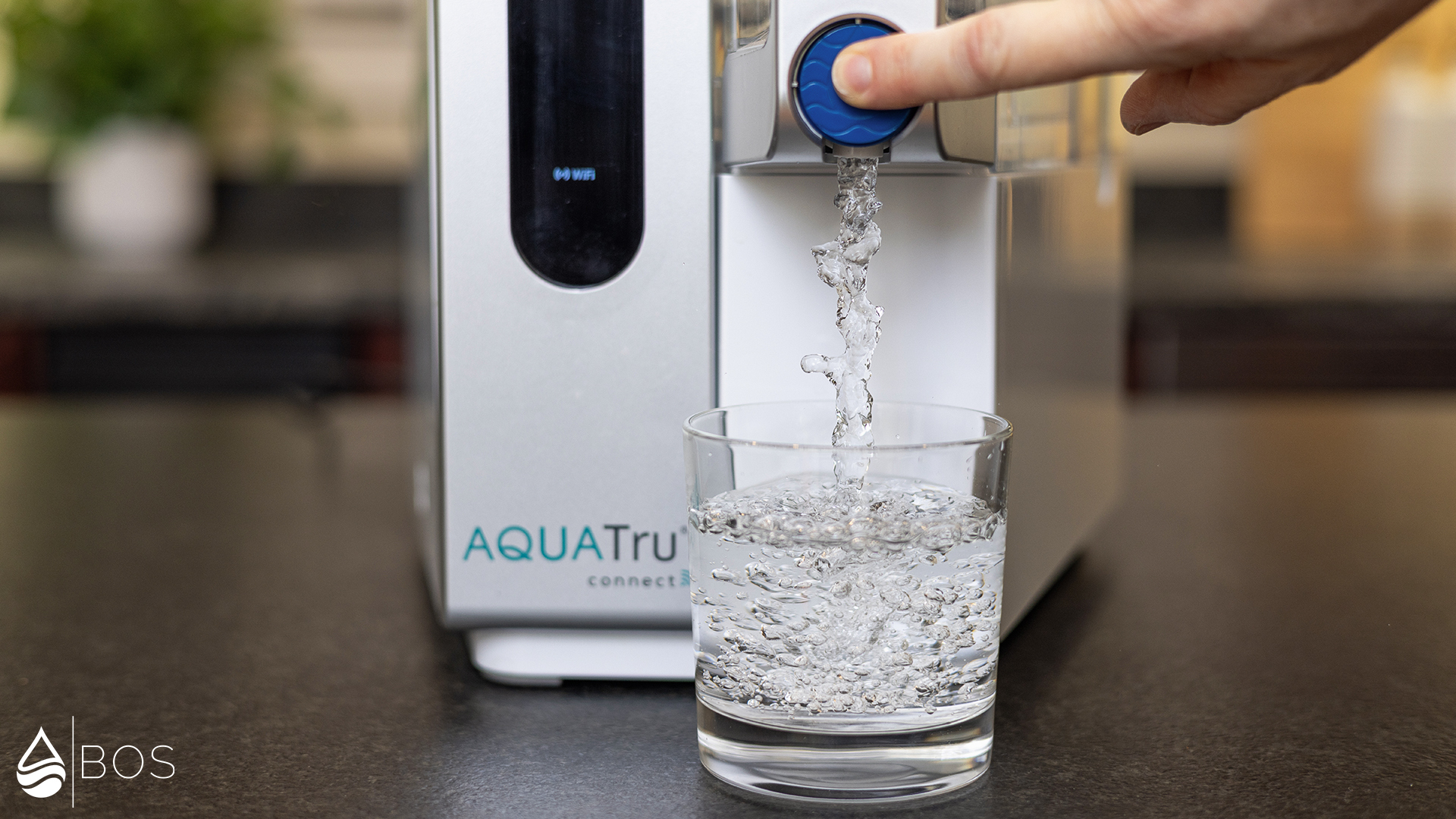
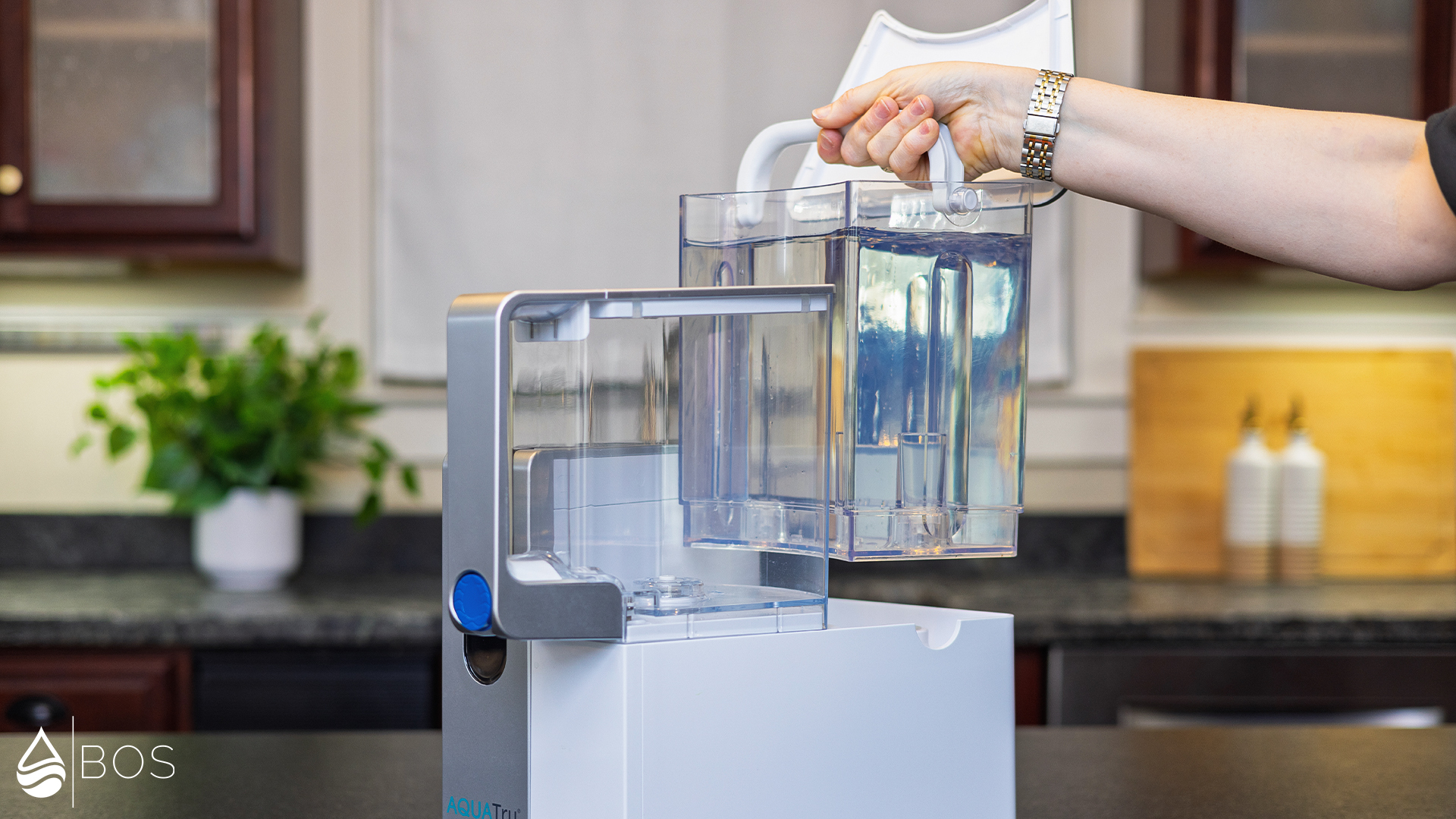
CostsCost scores reflect overall value for money rather than price alone.: /5.00
As of July 13, 2026, the AquaTru Classic is priced at $475. Using our affiliate link, you can save $100, reducing the upfront cost to $375. The AquaTru Classic Smart is priced at $525. Using our affiliate link, you can save $100, reducing the upfront cost to $425.
We estimate $75 in annual filter replacement costs for both versions. Upfront price is slightly above average (well above average for the Smart version) and long-term cost is well below average.
Wastewater
We measured average wastewater, with a pure-to-drain ratio of ~1:0.6 (2024) and ~1:0.61 (2025).
2. #1 Upfront Budget Pick (+ Glass Carafe + Space-Saving): AquaTru Carafe (Smart)

Final Rating: /5.00 (Carafe Smart: /5.00)
FiltrationFiltration score combines our lab results and taste testing with NSF/ANSI certifications and 3rd-party contaminant reduction data.: /5.00
Usability: /5.00 (Carafe Smart: /5.00)
CostsCost scores reflect overall value for money rather than price alone.: /5.00 (Carafe Smart: /5.00)
| Type: | Countertop Reverse Osmosis System |
| Carafe PriceNo short-term sales. (Jul 13, 2026): | $375 (Use Our Link for $100 Off!) |
| Carafe Smart PriceNo short-term sales. (Jul 13, 2026): | $425 (Use Our Link for $100 Off!) |
| Yearly CostEstimate is based on rated/claimed filter life and 500 gallons annual water consumption. No short-term sales. (Jul 13, 2026): | ~$116 |
Final Rating: /5.00 (Carafe Smart: /5.00)
The AquaTru Carafe and its app-integrated cousin, the Carafe Smart, are our recommendation for a budget-friendly, space-saving countertop RO that uses a glass carafe. It achieved excellent results in our 2025 lab tests, improving upon its solid 2024 performance. Plus, it comes fully NSF/ANSI-certified for contaminant reduction, and its filtered water was odorless and tasted perfectly clean. Finally, it offers solid usability at a slightly below-average to average upfront price, with affordable ongoing filter costs.
What We Like Most
- Solid results in our 2024 lab testing and excellent results in 2025.
- Clean taste with no odor in both 2024 and 2025.
- Fully NSF/ANSI-certified for contaminant reduction.
- Modern, streamlined, lightweight design with a small footprint; easy to move.
- Tritan plastic feels sturdy and well built, except for the feed tank lid hinges.
- Easy setup and priming with clear illustrated instructions and helpful tutorial videos.
- Suited for daily use; amply sized carafe stores water for later, making it instantly accessible.
- Single feed tank produces up to 8 cups in 10–15 min.
- Feed tank is easy to refill – done after each filtration cycle.
- Water shortage/change indicator and maintenance lights help maintain performance.
- Attractive glass carafe with a comfortable handle; pours smoothly without splashing; fridge-friendly.
- Easy filter changes: color-coded filters removed with the provided tool; filter life indicators.
- Smart version adds app integration: tracks water usage, gallons filtered, qualitative TDS/water quality; plus empty wastewater reminders and filter replacement alerts.
- Low wastewater, even for a countertop RO.
- Lower upfront price (regular Carafe model only) and ongoing filter replacement costs.
What We Don’t Like
- Our 2025 Carafe unit initially failed to prime due to stiff valves (easily fixed) and was noisier than the 2024 unit.
- Feed water tank has a slight yellow tint.
- Above-average number of daily refills.
- Third-party complaints report short-lived units, slow filtration, and poor customer service; Smart app issues on iOS and Android (connection problems, crashes, filter-life reset failures, tracking issues).
Sara’s Video Review
Video Chapters
- 00:00 – Intro
- 00:28 – What We Tested
- 01:01 – Filtration
- 07:01 – Usability
- 15:47 – Customer Feedback
- 16:27 – Costs
- 18:08 – Final Scores + Which to Pick
- 19:54 – Wrapping Up
Filtration: /5.00
1. Lab Results: /5.00 (2025) & /5.00 (2024)
- The AquaTru Carafe removed 10 contaminants to 100% (chlorine, all 4 disinfection byproducts, copper, barium, lithium, manganese, and nitrate).
- Not removed to 100% were boron, strontium, zinc, and fluoride.
- Aluminum (2024) increased post-filtration, but was still below its strictest health guideline. Iron also increased post-filtration (2024; fully removed in 2025), but remained below the EPA secondary standard.
- TDS reduction ranged from high (93%) to very high (95%).
- We detected potential leaching of aluminum (2025), but at a level below the strictest health guideline.
Lab Results Charts
| Potentially Harmful | Aesthetic Issues | Feed Water Level | Filtered Water Level | Reduction Rate | |
| Water Disinfectants | |||||
| Chlorine (mg/L) | ✖ | ✖ | ~2 | 0 | 100% |
| Disinfection Byproducts | |||||
| Bromodichloromethane (µg/L) | ✖ | 19.1 | 0 | 100% | |
| Dibromochloromethane (µg/L) | ✖ | 4.88 | 0 | 100% | |
| Chloroform (µg/L) | ✖ | 50.3 | 0 | 100% | |
| Metals | |||||
| Copper (mg/L) | ✖ | ✖ | 0.0078 | 0 | 100% |
| Iron (mg/L) | ✖ | 0.171 | 0 | 100% | |
| Manganese (mg/L) | ✖ | ✖ | 0.0046 | 0 | 100% |
| Barium (mg/L) | ✖ | 0.0289 | 0 | 100% | |
| Boron (mg/L) | ✖ | 0.0131 | 0 | 100% | |
| Strontium (mg/L) | ✖ | 0.098 | 0 | 100% | |
| Salts | |||||
| Nitrate (N) (mg/L) | ✖ | 3.03 | 0 | 100% | |
| Fluoride (mg/L) | ✖ | 1.04 | 0 | 100% | |
| RO Salt Rejection | |||||
| TDS (mg/L) | ✖ | 462 | 24.6 | 95% | |
| Other Parameters | |||||
| pH | 7.7 | 7 | |||
| Impurities NOT Detected in Unfiltered Tap Water Sample | |||||
| Aluminum (mg/L) | ✖ | ✖ | 0 | 0.0809 | |
| Lab Reports: Filtered Water Report, Unfiltered Water Report | |||||
| Chlorine Self Test Photos: Filtered Water, Unfiltered Water | |||||
| Explanation: | |||||
| Full Removal | |||||
| Considerable Reduction | |||||
| Concentration More than Double of Unfiltered Water Sample | |||||
| Potential Leaching Reached or Exceeded the Strictest Public Health Guideline We Could Find | |||||
| Potentially Harmful | Aesthetic Issues | Feed Water Level | Filtered Water Level | Reduction Rate | |
| Water Disinfectants | |||||
| Chlorine (mg/L) | ✖ | ✖ | 0.44 | 0 | 100% |
| Disinfection Byproducts | |||||
| Bromodichloromethane (µg/L) | ✖ | 2.68 | 0 | 100% | |
| Bromoform (µg/L) | ✖ | 4.42 | 0 | 100% | |
| Dibromochloromethane (µg/L) | ✖ | 5.32 | 0 | 100% | |
| Chloroform (µg/L) | ✖ | 1.36 | 0 | 100% | |
| Metals | |||||
| Copper (mg/L) | ✖ | ✖ | 0.01 | 0 | 100% |
| Iron (mg/L) | ✖ | 0.01 | 0.02 | 100% Increase | |
| Aluminum (mg/L) | ✖ | ✖ | 0.01 | 0.04 | 300% Increase |
| Barium (mg/L) | ✖ | 0.05 | 0 | 100% | |
| Boron (mg/L) | ✖ | 0.1 | 0.04 | 60% | |
| Zinc (mg/L) | ✖ | 0.02 | 0.01 | 50% | |
| Lithium (mg/L) | ✖ | 0.01 | 0 | 100% | |
| Strontium (mg/L) | ✖ | 0.53 | 0.01 | 98% | |
| Salts | |||||
| Fluoride (mg/L) | ✖ | 0.42 | 0.14 | 67% | |
| RO Salt Rejection | |||||
| TDS (mg/L) | ✖ | 395.2 | 25.8 | 93% | |
| Other Parameters | |||||
| pH | 7.86 | 7.77 | |||
| Impurities NOT Detected in Unfiltered Tap Water Sample | |||||
| Lab Reports: Filtered Water Report, Unfiltered Water Report | |||||
| Explanation: | |||||
| Full Removal | |||||
| Considerable Reduction | |||||
| Concentration More than Double of Unfiltered Water Sample | |||||
| Potential Leaching Reached or Exceeded the Strictest Public Health Guideline We Could Find | |||||
2. NSF Certifications and Other Test Data
The AquaTru Carafe is fully NSF/ANSI-certified by the IAPMO for the reduction of all the important contaminants (82 in total) against NSF standards 42, 53, 58, and 401.
Reported reduction rates include: organics, including VOCs, herbicides, pesticides, and DBPs (95.00-99.50%+), PFOA and PFOS (99.00%), free chlorine (96.80%), free chloramine (96.60%), emerging contaminants, including trace pharmaceuticals (89.50-99.70%), microplastics (98.96%), arsenic V (98.80%), barium (95.40%), chromium 3 (99.60%), chromium 6 (97.50%), lead (99.20%), TDS (94.40%), cysts (99.90%), fluoride (96.40%), nitrate (98.30%), nitrite (90.20%), perchlorate (98.30%), radium 226/228 (96.40%), and selenium (98.10%).
3. Taste and Odor Tests
In our 2024 and 2025 tests, odor was completely eliminated and the filtered water tasted perfectly clean.
Usability: /5.00 (Carafe Smart: /5.00)
Initial setup is very simple. Daily use is straightforward as well: simply empty the wastewater and refill the feed tank after each filtration cycle – there’s also a helpful water change reminder on the display. This produces up to 8 cups of filtered water (stored in the carafe for instant access) in 10-15 minutes, which is fast enough but requires more-than-average daily refills. Our 2025 unit was very noisy when filtering.
The sturdy borosilicate glass carafe is comfortable to handle, fits in the fridge for chilling and pours smoothly and without splashing.
The different filter elements last 300-600 gal or 6-24 months, which means easy, infrequent replacements, plus there are indicator lights to remind you.
The Carafe Smart app provides non-numeric TDS readouts for feed/filtered water and filter/water change reminders. It also tracks filter life, water consumption, and more.
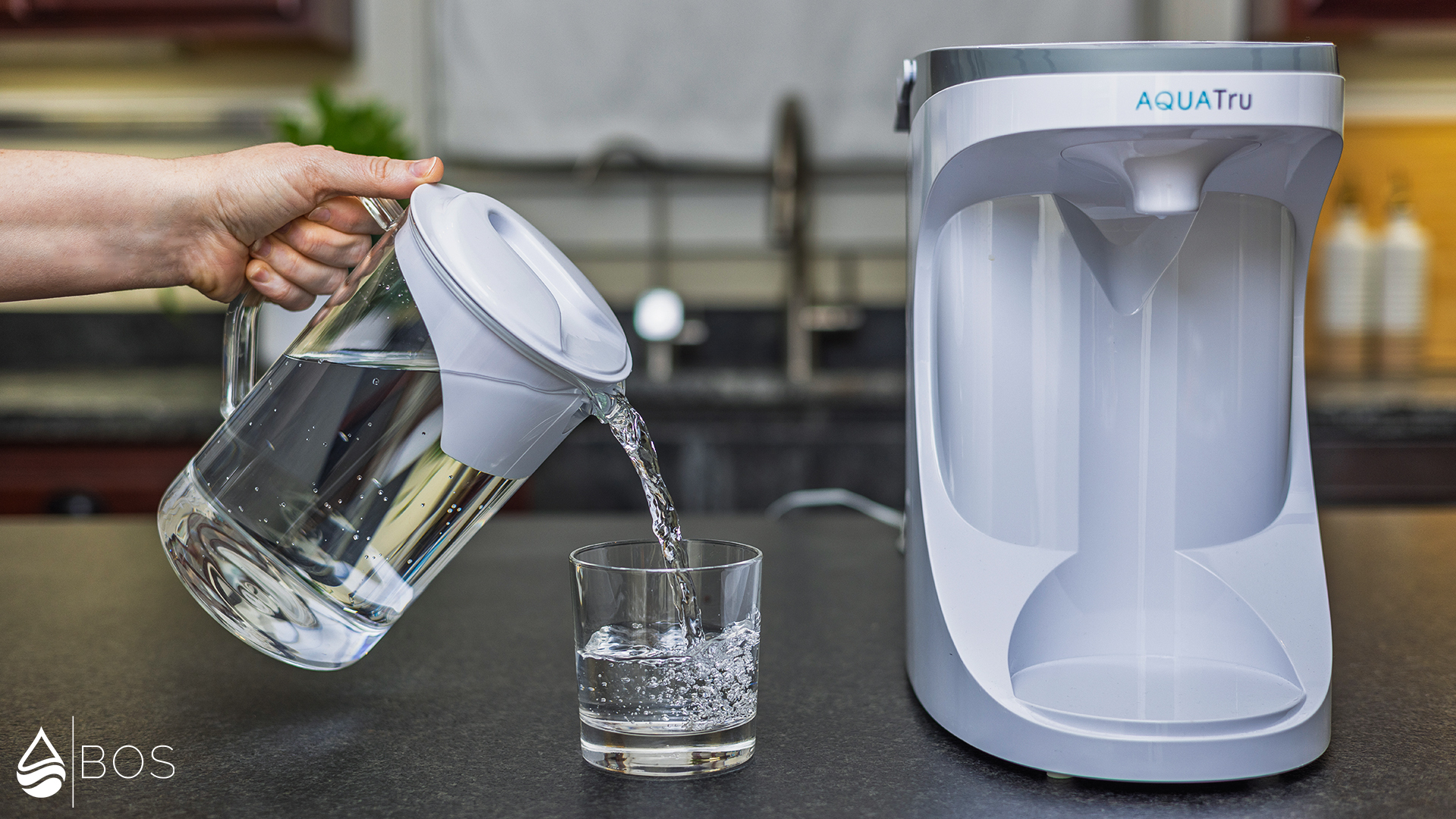
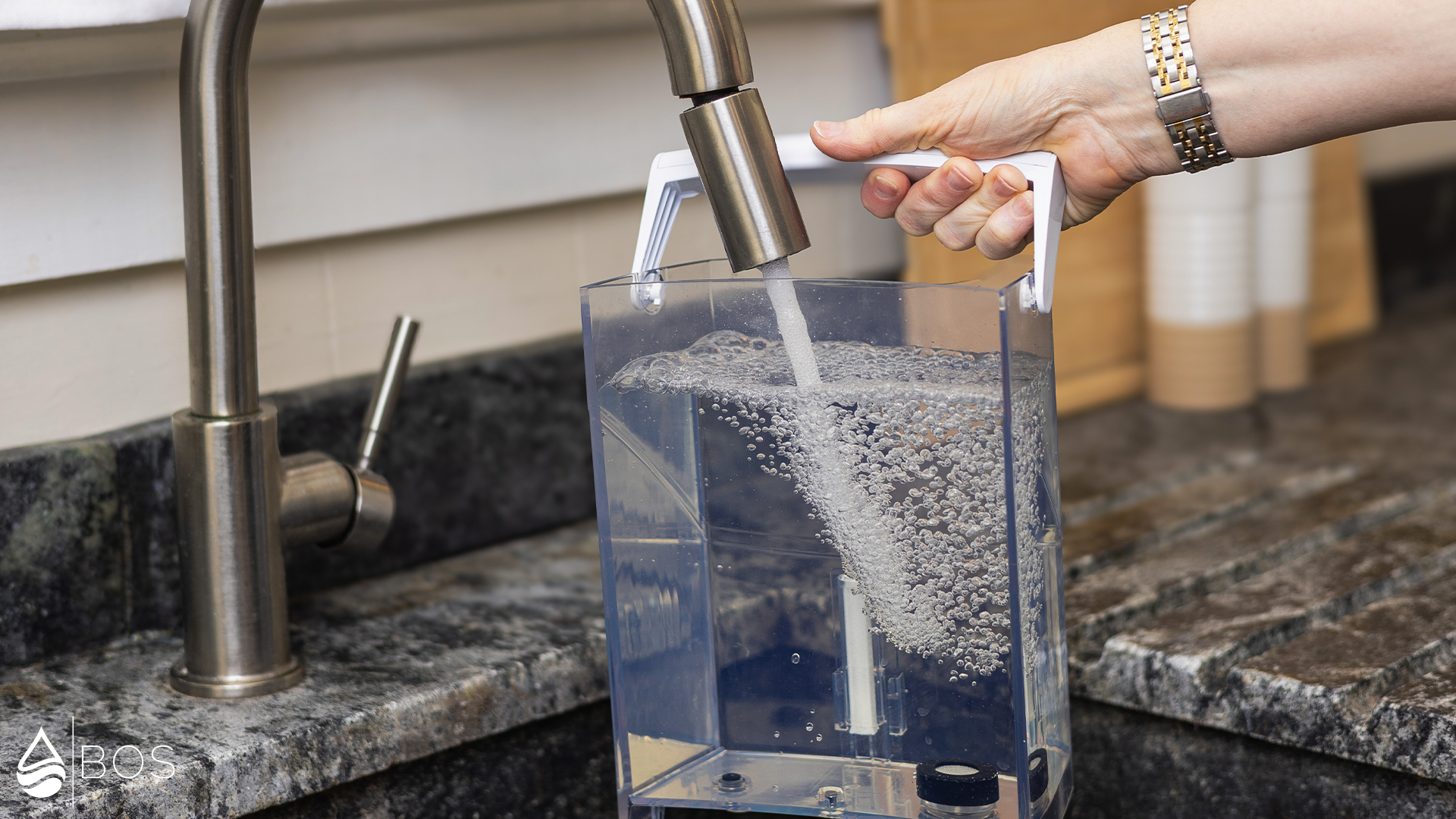
CostsCost scores reflect overall value for money rather than price alone.: /5.00 (AquaTru Carafe Smart: /5.00)
As of July 13, 2026, the AquaTru Carafe is priced at $375. Using our affiliate link, you can save $100, reducing the upfront cost to $275. The AquaTru Carafe Smart is priced at $425. Using our affiliate link, you can save $100, reducing the upfront cost to $325. We estimate $116 in annual filter replacement costs for both systems. Upfront price is slightly below average (average for the Carafe Smart) and long-term cost is also slightly below average.
Wastewater
We measured low wastewater, with a pure-to-drain ratio of ~1:0.44 (2024) and ~1:0.55 (2025).
Support BOS Water’s Mission!
Every coffee helps us test more products and bring you unbiased results!
3. Runner-Up If You Want a Glass Carafe: Bluevua RO100ROPOT

Final Rating: /5.00
FiltrationFiltration score combines our lab results and taste testing with NSF/ANSI certifications and 3rd-party contaminant reduction data.: /5.00
Usability: /5.00
CostsCost scores reflect overall value for money rather than price alone.: /5.00
| Type: | Countertop Reverse Osmosis System |
| PriceNo short-term sales. (Jul 13, 2026): | $389 (Use Code BOSWATER15 for Up to 15% Off!) |
| Yearly CostEstimate is based on rated/claimed filter life and 500 gallons annual water consumption. No short-term sales. (Jul 13, 2026): | ~$120-150 (Excl. ~$40 for Optional Remineralization Post-Filter) |
(Use Code BOSWATER15 for Up to 15% Off!)
Final Rating: /5.00
The Bluevua RO100ROPOT (aka Bluevua ROPOT) is our runner-up for best countertop RO system with a glass carafe. It achieved excellent results in our 2024/2025 lab tests and produced odorless, clean-tasting water, with the optional mineral cartridge imparting a pleasant mineral taste. While this system has extensive 3rd party testing for contaminant removal, it doesn’t reference NSF/ANSI standards for most and at least some was not performed over the full filter life. Plus, it has only 2 pending NSF/ANSI certifications for contaminant reduction. Still, it offers great usability with an average upfront price and slightly below-average long-term costs.
What We Like Most
- Excellent results in our 2024 and 2025 lab testing.
- Clean taste with no odor in 2024/2025; optional remineralization post-filter adds a nice mineral note.
- Extensive third-party contaminant-reduction testing, though at least not always across full filter life.
- Modern, classic design that feels sturdy and well built, including the glass carafe.
- Easy setup/priming with clear illustrated instructions + helpful YouTube tutorial.
- Suited for daily use; good-sized carafe stores water for later, so it’s instantly accessible.
- Simple design: single feed tank produces up to ~8 cups in 10–15 min.
- Dispenses ~0.13, ~0.26, or ~0.45 gal.
- Feed tank (back corner) is easy to remove/refill – done after each full filtration cycle with a water shortage/change alert.
- Carafe has volume markers + comfortable handle; pours smoothly without splashing; fridge-friendly for cold water.
- TDS monitoring for feed and filtered water.
- Automatic + manual flushing to reduce TDS creep and extend RO membrane life.
- Easy filter changes via side panel; quick twist in/out; filter life indicators.
- Slightly below-average annual filter replacement costs.
What We Don’t Like
- Only 2 pending NSF/ANSI contaminant-reduction certifications (TDS and chromium 3).
- Above-average number of daily feed tank refills.
- Higher wastewater for a countertop RO due to automatic flushing adding extra waste.
- Larger-than-average footprint and heavier than other tested countertop ROs.
- Third-party complaints: leaking (base, tank seams, or connections) and extremely slow filtration, sometimes stopping mid-cycle.
Sara’s Video Review
Video Chapters
- 00:00 – Intro
- 01:33 – Filtration
- 09:13 – UV
- 12:55 – Usability
- 21:51 – Additional Notes & User Ratings
- 22:49 – Costs
- 24:50 – Final Scores + Which to Pick
- 25:56 – Wrapping Up
Filtration: /5.00
1. Lab Results: /5.00 (2025) & /5.00 (2024)
- The Bluevua ROPOT removed 13 contaminants to 100% (chlorine, all 4 disinfection byproducts, copper, barium, lithium, iron, aluminum, manganese, zinc, and nitrate).
- Not removed to 100% were boron, strontium, and fluoride.
- Without the mineral cartridge in place, TDS reduction was high (91%). With the cartridge, TDS reduction was still good (86%).
- There was no potential leaching observed.
- Remineralization: the mineral cartridge improved buffering capacity and taste-related water parameters, but did not meaningfully restore essential minerals to health-recommended levels.
Lab Results Charts
| Potentially Harmful | Aesthetic Issues | Feed Water Level | Filtered Water Level | Reduction Rate | |
| Water Disinfectants | |||||
| Chlorine (mg/L) | ✖ | ✖ | ~2 | 0 | 100% |
| Disinfection Byproducts | |||||
| Bromodichloromethane (µg/L) | ✖ | 17.5 | 0 | 100% | |
| Dibromochloromethane (µg/L) | ✖ | 4.36 | 0 | 100% | |
| Chloroform (µg/L) | ✖ | 39.6 | 0 | 100% | |
| Metals | |||||
| Copper (mg/L) | ✖ | ✖ | 0.009 | 0 | 100% |
| Iron (mg/L) | ✖ | 0.0882 | 0 | 100% | |
| Manganese (mg/L) | ✖ | ✖ | 0.0055 | 0 | 100% |
| Barium (mg/L) | ✖ | 0.0354 | 0 | 100% | |
| Boron (mg/L) | ✖ | 0.112 | 0 | 100% | |
| Strontium (mg/L) | ✖ | 0.11 | 0 | 100% | |
| Salts | |||||
| Nitrate (N) (mg/L) | ✖ | 3.17 | 0 | 100% | |
| Fluoride (mg/L) | ✖ | 1.04 | 0 | 100% | |
| RO Salt Rejection | |||||
| TDS (mg/L) | ✖ | 466 | 67.2 | 86% (Uses Remineralization) | |
| Other Parameters | |||||
| pH | 7.6 | 9.8 | |||
| Impurities NOT Detected in Unfiltered Tap Water Sample | |||||
| Lab Reports: Filtered Water Report, Unfiltered Water Report | |||||
| Chlorine Self Test Photos: Filtered Water, Unfiltered Water | |||||
| Explanation: | |||||
| Full Removal | |||||
| Considerable Reduction | |||||
| Concentration More than Double of Unfiltered Water Sample | |||||
| Potential Leaching Reached or Exceeded the Strictest Public Health Guideline We Could Find | |||||
| Bluevua RO100ROPOT | Health Guidelines | Average of Non-Remineralization Countertop RO Systems We Tested |
|
| Minerals | |||
| Magnesium (mg/L) | 4.5 | Minimum Level: 10 Optimum Level: 20-30 Source: WHO |
0.11123 |
| Calcium (mg/L) | 0.404 | Minimum Level: 20 Optimum Level: ~50 Source: WHO |
0.47253 |
| pH & Alkalinity | |||
| pH | 9.8 | No Health Guideline | 6.72 |
| Alkalinity (mg/L) | 30 | 30 to 400 (IDPH) | 2.2 |
| Lab Reports: Filtered Water Report, Unfiltered Water Report | |||
| Explanation: | |||
| Within Range of Health Guideline | |||
| Not Within Range of Health Guideline | |||
| Potentially Harmful | Aesthetic Issues | Feed Water Level | Filtered Water Level | Reduction Rate | |
| Water Disinfectants | |||||
| Chlorine (mg/L) | ✖ | ✖ | 0.44 | 0 | 100% |
| Disinfection Byproducts | |||||
| Bromodichloromethane (µg/L) | ✖ | 2.68 | 0 | 100% | |
| Bromoform (µg/L) | ✖ | 4.42 | 0 | 100% | |
| Dibromochloromethane (µg/L) | ✖ | 5.32 | 0 | 100% | |
| Chloroform (µg/L) | ✖ | 1.36 | 0 | 100% | |
| Metals | |||||
| Copper (mg/L) | ✖ | ✖ | 0.01 | 0 | 100% |
| Iron (mg/L) | ✖ | 0.01 | 0 | 100% | |
| Aluminum (mg/L) | ✖ | ✖ | 0.01 | 0 | 100% |
| Barium (mg/L) | ✖ | 0.05 | 0 | 100% | |
| Boron (mg/L) | ✖ | 0.1 | 0.01 | 90% | |
| Zinc (mg/L) | ✖ | 0.02 | 0 | 100% | |
| Lithium (mg/L) | ✖ | 0.01 | 0 | 100% | |
| Strontium (mg/L) | ✖ | 0.53 | 0.01 | 98% | |
| Salts | |||||
| Fluoride (mg/L) | ✖ | 0.42 | <0.1 | Anywhere Between 76% and 99% | |
| RO Salt Rejection | |||||
| TDS (mg/L) | ✖ | 395.2 | 36.6 | 91% | |
| Other Parameters | |||||
| pH | 7.86 | 6.94 | |||
| Impurities NOT Detected in Unfiltered Tap Water Sample | |||||
| Lab Reports: Filtered Water Report, Unfiltered Water Report | |||||
| Explanation: | |||||
| Full Removal | |||||
| Considerable Reduction | |||||
| Concentration More than Double of Unfiltered Water Sample | |||||
| Potential Leaching Reached or Exceeded the Strictest Public Health Guideline We Could Find | |||||
2. NSF/ANSI Certifications and Other Test Data
The Bluevua ROPOT only has 2 pending NSF/ANSI certifications for contaminant reduction (for TDS and chromium 3) against NSF/ANSI standard 58.
It does have 3rd party testing for ~90 contaminants but it doesn’t reference NSF/ANSI standards for most; plus, at least some of this testing appears to have been performed at the start of the filter life rather than throughout the entire filter life.
Reported reduction rates include: several organics, including VOCs, pesticides, and herbicides (90.00-99.99%+), TDS (91.24-94.50%), chromium 3 (99.30%), chromium 6 (>96.04%), PFOA (>97.36%), PFOS (>99.25%), E. coli (>99.99%), total coliforms (>99.99%), barium (>99.79%), beryllium (>99.96%), fluoride (98.57-99.38%+), aluminum (>95.93%), arsenic (94.67-99.69%+), iron (>99.02%), lead (99.51-99.99%+), manganese (>99.89%), mercury (>98.04%), thallium (>99.88%), cyanide (>97.96%), nitrate (>91.28%), and free/dissociate chlorine residual (98.97-99.91%+).
3. Taste and Odor Tests
In our 2024 and 2025 tests, the filtered water was odorless and had a perfectly clean taste. The optional remineralization filter (2025) added a nice, light mineral taste.
Usability: /5.00
Initial setup is very simple. Daily use is easy as well: simply empty the wastewater and refill after filtering a full feed tank. This produces up to ~7.2 cups of filtered water (stored in the carafe for instant access) in 10-15 minutes when choosing the largest of the 3 volume presets – so it’s fast enough but requires an above-average number of daily refills. The system beeps and stops filtration when the feed water gets too low, reminding you to replenish the tank.
Its sturdy borosilicate glass carafe has convenient volume markers, is comfortable to handle, fits in the fridge for chilling, and pours smoothly and without splashing.
The different filter elements last 538-1,076 gal or 12-24 months, which means easy, infrequent replacements. Plus, there are indicator lights to remind you, and accurate TDS readings of the feed/filtered water help monitor the system’s filtration performance. The optional remineralization filter lasts 260 gal or 6 months.
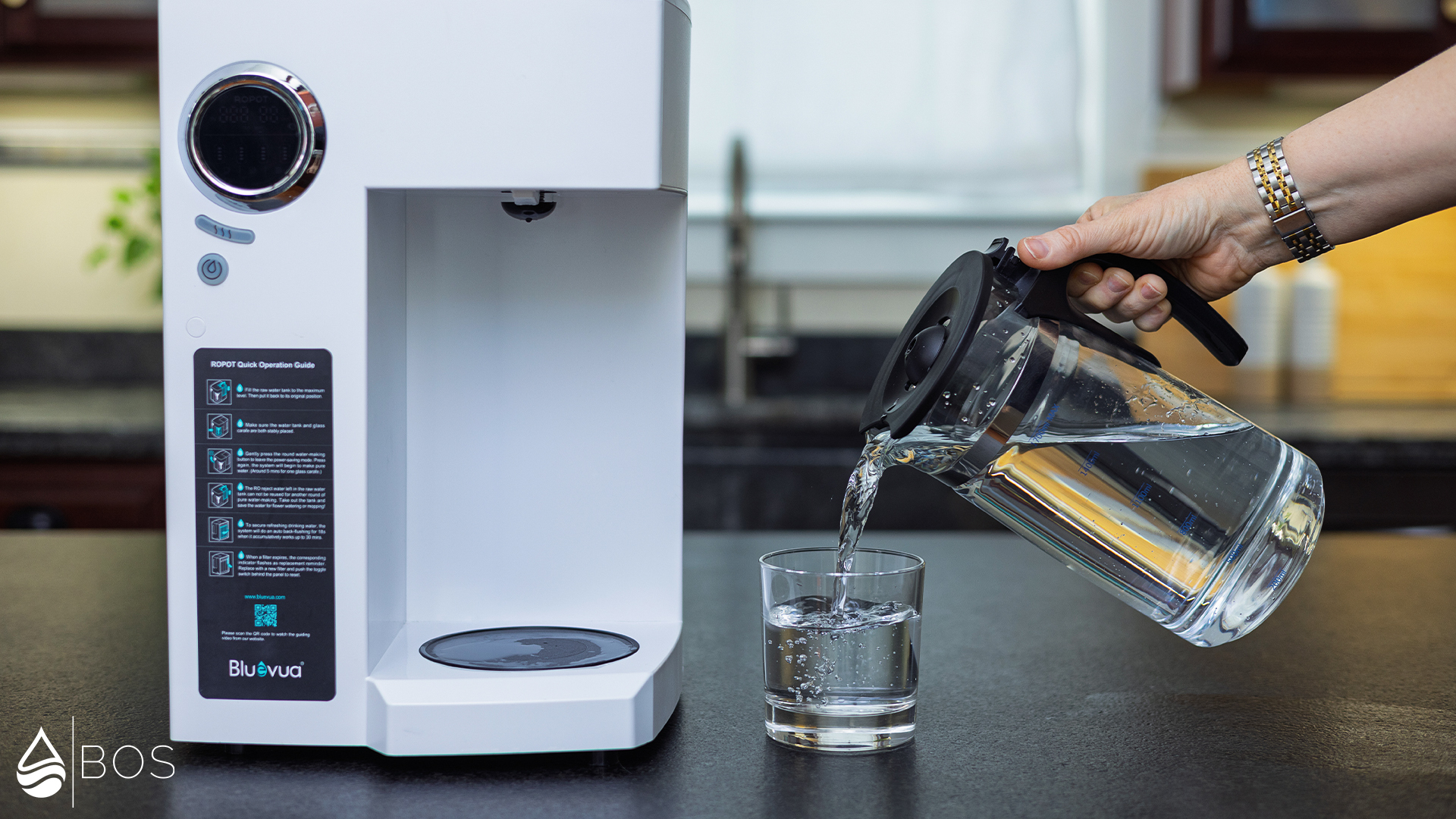
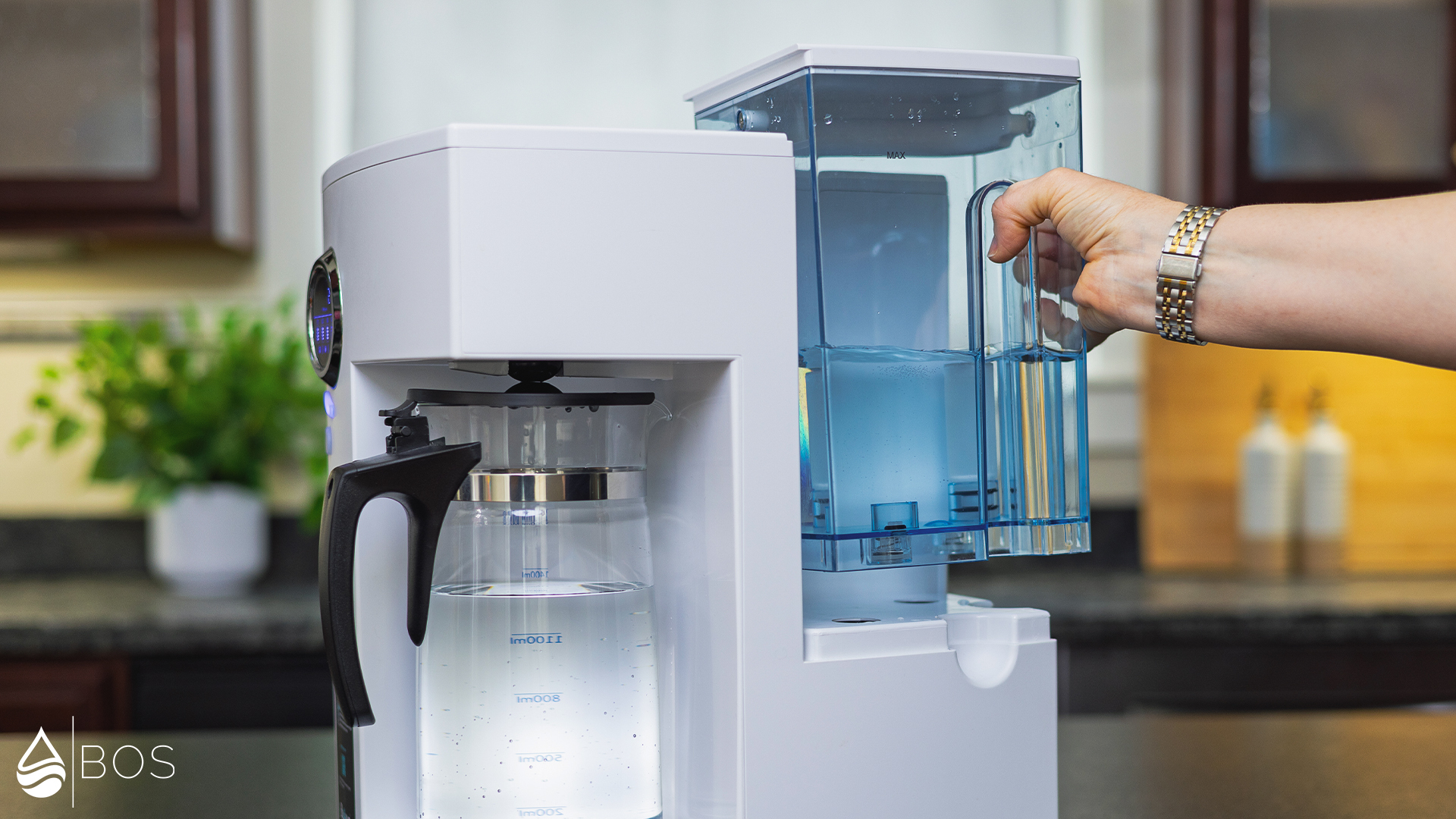
CostsCost scores reflect overall value for money rather than price alone.: /5.00
As of July 13, 2026, the Bluevua ROPOT is priced at $389. Using our 15% off discount code, you can get it for as little as $330.65. We estimate $120 (to $150) in annual filter replacement costs. Upfront price is around average and long-term costs are slightly below average. Mineral cartridges add another $40 yearly.
Wastewater
We measured high wastewater, with a pure-to-drain ratio of ~1:1.03 (2024) and ~1:1.16 (2025).
Read Our Full Bluevua RO100ROPOT Review
(Use Code BOSWATER15 for Up to 15% Off!)
4. Best for Hot Water (+ Great Budget Pick + Space-Saving): Waterdrop C1H

Final Rating: /5.00
FiltrationFiltration score combines our lab results and taste testing with NSF/ANSI certifications and 3rd-party contaminant reduction data.: /5.00
Usability: /5.00
CostsCost scores reflect overall value for money rather than price alone.: /5.00
| Type: | Countertop Reverse Osmosis System (Ambient & Hot) |
| PriceNo short-term sales. (Jul 13, 2026): | $299 (Use Code C1HBOS for 5% Off on Top of Most Waterdrop Sales!) |
| Yearly CostEstimate is based on rated/claimed filter life and 500 gallons annual water consumption. No short-term sales. (Jul 13, 2026): | ~$60 (Save 5% with Filter Subscription) |
(Use Code C1HBOS for 5% Off on Top of Most Waterdrop Sales!)
Final Rating: /5.00
The Waterdrop C1H is our pick for a hot water countertop RO that’s also space-saving and budget-friendly. It achieved excellent results in our 2025 lab tests and produced odorless, clean-tasting water. While it has no NSF/ANSI-certified contaminants, it’s bolstered by 3rd party testing. Usability is adequate, with affordable upfront and ongoing costs.
What We Like Most
- Excellent results in our lab testing.
- Clean taste with no odor.
- Well-covered by third-party testing for contaminant reduction.
- Simple, modern, sturdy build; small footprint saves counterspace and it’s lightweight for portability.
- Easy setup/priming with clear illustrated instructions + helpful YouTube tutorial.
- Generally suited for daily use.
- Ambient + on-demand hot water up to 203°F (realistically ~199°F) without splashing.
- Up to ~50 oz in one go (ambient or hot) — enough for most use cases.
- Good touchscreen with 4 volume presets (4, 8, 16, or 20 oz) and 5 temp presets (ambient, 113, 149, 185, or 203 °F) – plus customization in 2 oz or 9 °F increments.
- 34-oz removable internal pure tank refills when prompted, stores water for later, pours decently, and fits the fridge (but can’t filter more until reinstalled).
- Feed tank is easy to empty/refill – done when the tank status indicator light alerts you – but its narrow base may make it prone to toppling.
- Easy filter changes – top-panel access, quick twist in/out, plus a filter-change indicator light.
- Very low wastewater for a countertop RO.
- Extras: favorite mode (saves preferred temp/volume), optional child safety lock for hot water, and high-altitude mode (boiling-point correction).
- Below-average upfront and annual filter replacement costs.
What We Don’t Like
- No NSF/ANSI certifications for contaminant reduction.
- No external pure tank or carafe for instantly accessible water.
- Dispenses slowly, especially hot water – mitigated by the volume presets.
- Ramps down the pour when you press stop, which takes some getting used to.
- Very noisy when filtering.
- Third-party customer complaints include leaking and malfunctioning units (stopping, freezing mid-cycle, persistent error codes).
Sara’s Video Review
Video Chapters
- 00:00 – Intro
- 01:00 – How We Tested
- 01:59 – Lab Testing
- 04:40 – Taste & Odor
- 04:51 – NSF/ANSI Standards
- 05:36 – System Setup
- 06:07 – Daily Use
- 11:30 – Wastewater
- 11:39 – Cost
- 12:52 – Summary
- 14:06 – Outro
Filtration: /5.00
1. Lab Results: /5.00 (2025) & /5.00 (2025)
- The Waterdrop C1H removed 10 contaminants to 100% (chlorine, all 4 disinfection byproducts, copper, iron, manganese, zinc, and uranium).
- Not removed to 100% were barium, boron, strontium, nitrate, and fluoride.
- TDS reduction ranged from good (86%) to high (93%).
- There was no potential leaching observed.
Lab Results Charts
| Potentially Harmful | Aesthetic Issues | Feed Water Level | Filtered Water Level | Reduction Rate | |
| Water Disinfectants | |||||
| Chlorine (mg/L) | ✖ | ✖ | ~2 | 0 | 100% |
| Disinfection Byproducts | |||||
| Bromodichloromethane (µg/L) | ✖ | 19.1 | 0 | 100% | |
| Dibromochloromethane (µg/L) | ✖ | 4.88 | 0 | 100% | |
| Chloroform (µg/L) | ✖ | 50.3 | 0 | 100% | |
| Metals | |||||
| Copper (mg/L) | ✖ | ✖ | 0.0078 | 0 | 100% |
| Iron (mg/L) | ✖ | 0.171 | 0 | 100% | |
| Manganese (mg/L) | ✖ | ✖ | 0.0046 | 0 | 100% |
| Barium (mg/L) | ✖ | 0.0289 | 0.0017 | 94% | |
| Boron (mg/L) | ✖ | 0.0131 | 0 | 100% | |
| Strontium (mg/L) | ✖ | 0.098 | 0 | 100% | |
| Salts | |||||
| Nitrate (N) (mg/L) | ✖ | 3.03 | 0 | 100% | |
| Fluoride (mg/L) | ✖ | 1.04 | 0 | 100% | |
| RO Salt Rejection | |||||
| TDS (mg/L) | ✖ | 462 | 65 | 86% | |
| Other Parameters | |||||
| pH | 7.7 | 6.6 | |||
| Impurities NOT Detected in Unfiltered Tap Water Sample | |||||
| Lab Reports: Filtered Water Report, Unfiltered Water Report | |||||
| Chlorine Self Test Photos: Filtered Water, Unfiltered Water | |||||
| Explanation: | |||||
| Full Removal | |||||
| Considerable Reduction | |||||
| Concentration More than Double of Unfiltered Water Sample | |||||
| Potential Leaching Reached or Exceeded the Strictest Public Health Guideline We Could Find | |||||
| Potentially Harmful | Aesthetic Issues | Feed Water Level | Filtered Water Level | Reduction Rate | |
| Water Disinfectants | |||||
| Chlorine (mg/L) | ✖ | ✖ | 0.98 | 0 | 100% |
| Disinfection Byproducts | |||||
| Bromodichloromethane (µg/L) | ✖ | 4.64 | 0 | 100% | |
| Bromoform (µg/L) | ✖ | 4.32 | 0 | 100% | |
| Dibromochloromethane (µg/L) | ✖ | 7.94 | 0 | 100% | |
| Chloroform (µg/L) | ✖ | 1.61 | 0 | 100% | |
| Metals | |||||
| Copper (mg/L) | ✖ | ✖ | 0.11 | 0 | 100% |
| Iron (mg/L) | ✖ | 0.02 | 0 | 100% | |
| Barium (mg/L) | ✖ | 0.04 | 0 | 100% | |
| Boron (mg/L) | ✖ | 0.06 | 0.02 | 67% | |
| Zinc (mg/L) | ✖ | 0.01 | 0 | 100% | |
| Strontium (mg/L) | ✖ | 0.40 | 0.02 | 95% | |
| Salts | |||||
| Nitrate (N) (mg/L) | ✖ | 1.93 | 0.69 | 64% | |
| Fluoride (mg/L) | ✖ | 0.69 | <0.1 | Anywhere Between 86% and 99% | |
| Other | |||||
| Uranium (µg/L) | ✖ | 1 | 0 | 100% | |
| RO Salt Rejection | |||||
| TDS (mg/L) | ✖ | 329.4 | 24.6 | 93% | |
| Other Parameters | |||||
| pH | 7.93 | 6.85 | |||
| Impurities NOT Detected in Unfiltered Tap Water Sample | |||||
| Lab Reports: Filtered Water Report, Unfiltered Water Report | |||||
| Explanation: | |||||
| Full Removal | |||||
| Considerable Reduction | |||||
| Concentration More than Double of Unfiltered Water Sample | |||||
| Potential Leaching Reached or Exceeded the Strictest Public Health Guideline We Could Find | |||||
2. NSF/ANSI Certifications and Other Test Data
The Waterdrop C1H does not have any NSF/ANSI certifications for contaminant reduction. However, it is well-covered by 3rd party testing against NSF/ANSI standards 42, 53, 58 and other non-NSF/ANSI standards.
Reported reduction rates include: dissociate chlorine residue (>99.48%), chloramine (>99.66%), chloroform (>99.33%), TDS (94.95%), nitrate (93.23%), chromium 6 (>97.36%), fluoride (97.94%), arsenic (98.51%), lead (>99.94%), copper (>99.80%), total coliforms (>99.99%), and several antibiotics (98.79%-99.95%+).
3. Taste and Odor Tests
In our tests, the filtered water was odorless and had a perfectly clean taste.
Usability: /5.00
Initial setup is very simple but day-to-day use slightly less practical. The C1H lacks a carafe for instantly accessible water, and while dispensing is easy and splashless, speed is slow (ambient) to very slow (hot water).
There’s a removable internal clean water tank that fits in the fridge but it can’t be used for hot water and the system won’t filter or dispense more until it’s reinstalled.
Still, it’s fast enough for daily use and provides ~50 oz of ambient or hot water at one time and up to ~10.25 cups from one full feed tank. The hot water is hot enough for most uses, nearing kettle temps (~199 °F). Plus, volume/temp presets and custom options add convenience and offset slow dispensing speeds, but it’s very noisy when filtering.
It’s generally easy to refill the feed tank with helpful water change indicator lights. The number of required daily refills is average to above average.
Rated filter life for the composite cartridge is 1,100 gal or 12 months, though we could see the effective lifespan being closer to 6 months. Replacements are easy with a filter change indicator light.
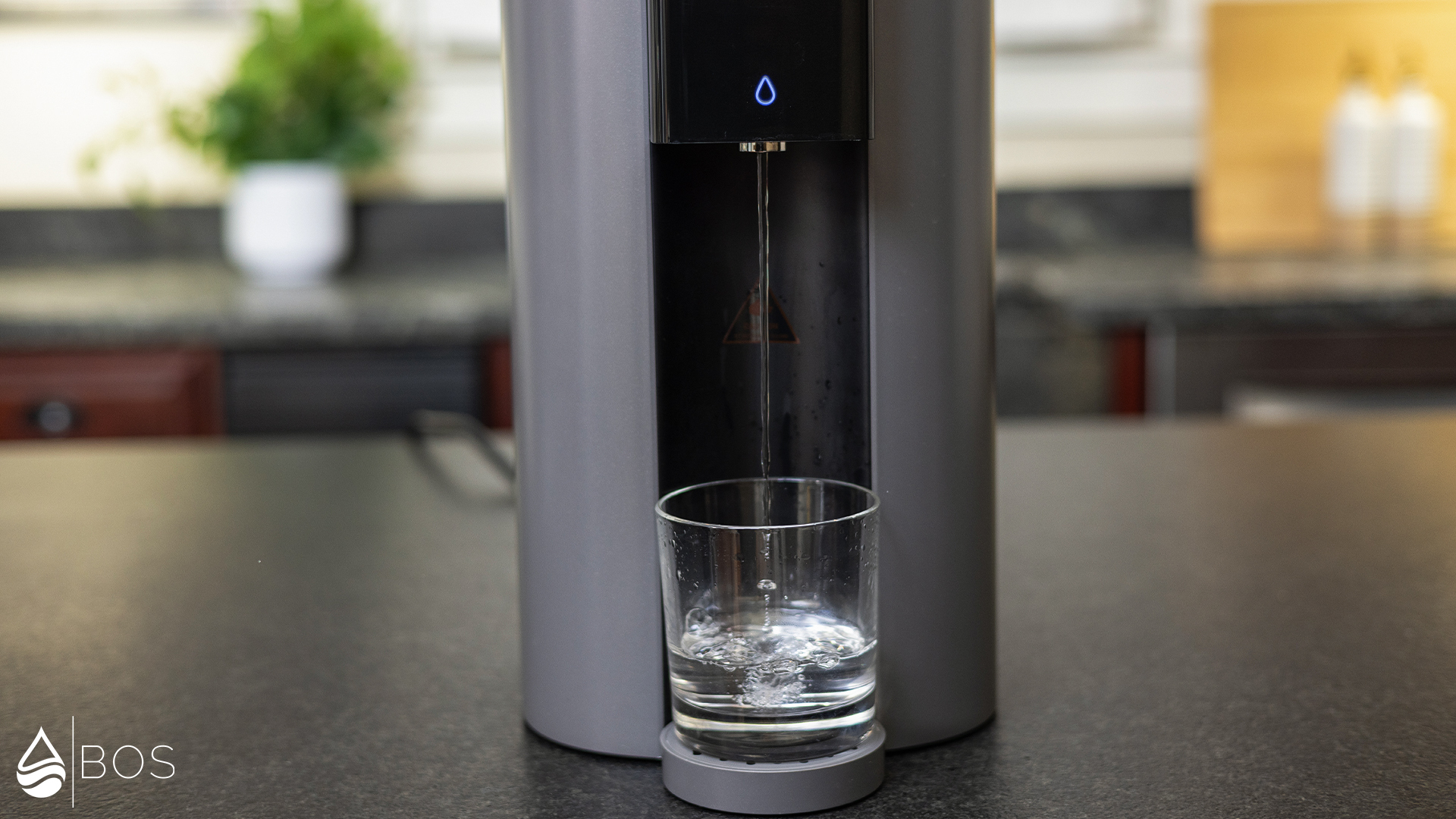
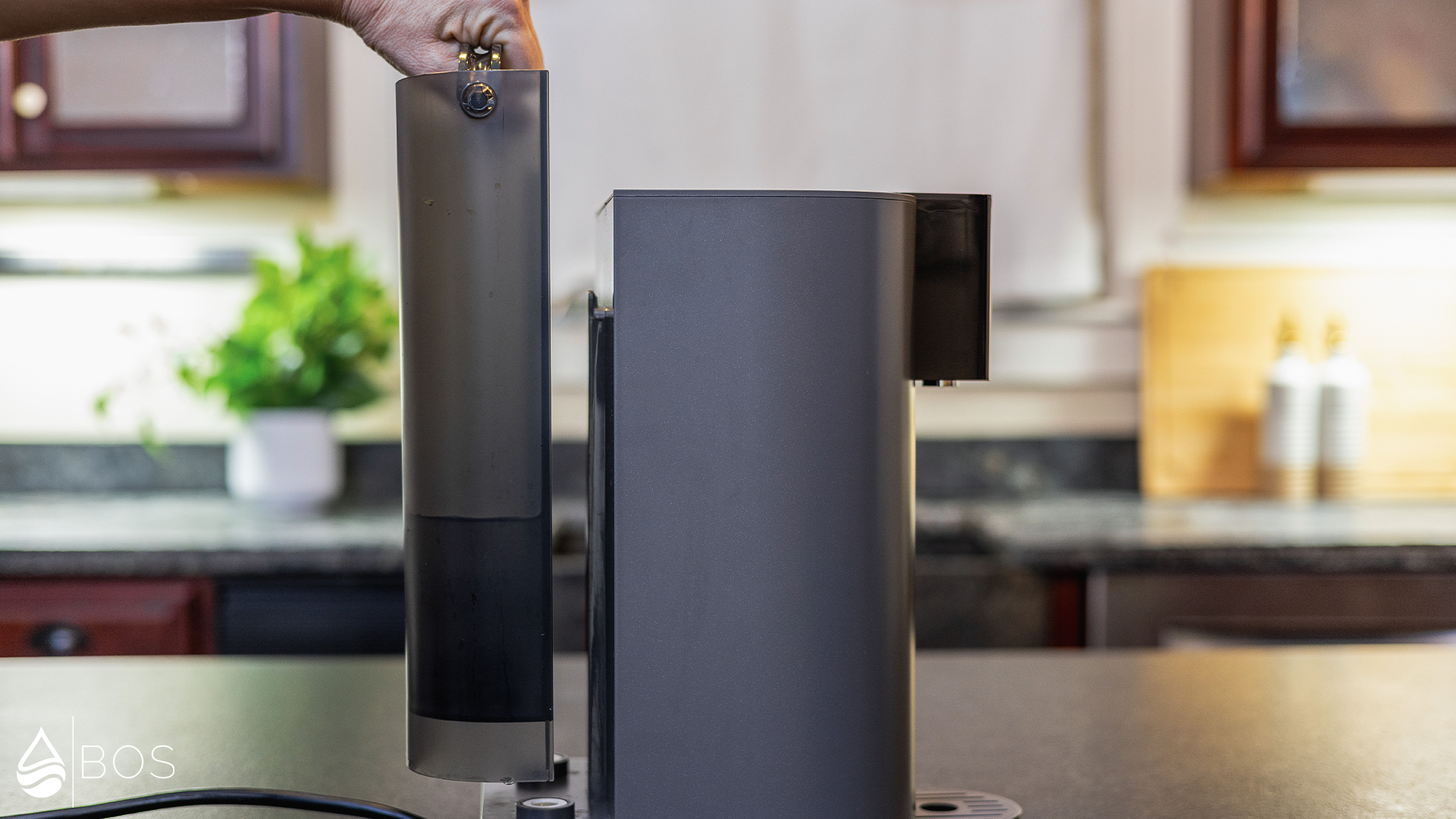
CostsCost scores reflect overall value for money rather than price alone.: /5.00
As of July 13, 2026, the Waterdrop C1H is priced at $299. Using our 5% off discount code (which you can combine with most of Waterdrop’s frequent promotions), you can get the C1H for as little as ~$229. We estimate $120 in annual filter replacement costs, assuming a 6-month cartridge lifespan. A filter subscription would save you an additional 5%. Upfront price is well below average and long-term cost is slightly below average.
Wastewater
We measured very low wastewater, with a pure-to-drain ratio of ~1:0.36 (2024) and ~1:0.37 (2025).
Read Our Full Waterdrop C1H Review
(Use Code C1HBOS for 5% Off on Top of Most Waterdrop Sales!)
5. Best for Cold Water + Cold & Hot Water: Waterdrop A1

Final Rating: /5.00
FiltrationFiltration score combines our lab results and taste testing with NSF/ANSI certifications and 3rd-party contaminant reduction data.: /5.00
Usability: /5.00
CostsCost scores reflect overall value for money rather than price alone.: /5.00
| Type: | Countertop Reverse Osmosis System (Ambient, Hot & Cold) |
| PriceNo short-term sales. (Jul 13, 2026): | $649 (Use Code A1BOS for 3% Off on Top of Most Waterdrop Sales!) |
| Yearly CostEstimate is based on rated/claimed filter life and 500 gallons annual water consumption. No short-term sales. (Jul 13, 2026): | ~$140 (Save 5% with Filter Subscription) |
(Use Code A1BOS for 3% Off on Top of Most Waterdrop Sales!)
Final Rating: /5.00
The Waterdrop A1 is our pick for a cold (or cold + hot) water countertop RO. It achieved excellent results in our 2025 lab tests and produced odorless water that tasted clean (2025 Round 1) or much improved compared to tap water (2025 Round 2). While the system has no NSF/ANSI-certified contaminants, it is well-covered by third-party testing for contaminant reduction. It also offers adequate usability with average upfront and long-term costs.
What We Like Most
- Excellent results in our lab testing.
- Odorless water with clean taste (2025 Round 1) or much better than our tap water but not perfect (2025 Round 2).
- Well-covered by third party testing for contaminant reduction.
- Sturdy but heavy build with a large footprint.
- Easy setup/priming with clear, illustrated instructions, on-screen prompts and QR codes to manual + YouTube tutorial.
- Generally suited for daily use: acceptable ambient and cold dispensing speed without splashing.
- Large, responsive, intuitive touchscreen.
- 6 temp options: Cold (41-50 °F), Ambient, 113, 140, 185, or 203 °F; 4 volume presets + custom.
- ~66 oz hot water up to 203°F (actual: ~195 °F) and ~34 oz cold water down to 41-50 °F (actual: ~44 °F) in one go – sufficient for most uses.
- Feed tank easy to refill; snug fit makes removal slightly harder; water change indicator included.
- Very easy filter replacement: twist in/out, indicator light, QR code on display for reorders.
- Optional child safety lock for hot water.
- Accurate filtered water TDS readings.
- Low wastewater for a countertop RO.
- Bonus features: cooling can be turned off, UV light, vacation mode, night mode, boiling point correction, manual flushing, temperature dispensing light.
What We Don’t Like
- No NSF/ANSI certifications for contaminant reduction.
- No removable pure tank or carafe for instantly accessible water.
- Slow hot water dispensing speed – mitigated by volume presets.
- Only ~20 oz ambient water in one go (rapid stop and go beyond that).
- Compressor noise when chilling is active (can be turned off or disabled via night mode).
- Night mode requires you to program a start + end time.
- Very heavy.
- Third-party customer complaints for older version include: malfunctioning units, leaking, unresponsive displays, insufficient hot or cold temperatures.
Sara’s Video Review
Video Chapters
- 00:00 – Intro
- 00:35 – What Happened So Far
- 02:27 – The New Waterdrop A1
- 02:59 – Does It Still Leach?
- 03:28 – Contaminant Reduction
- 04:22 – Updated Google Sheet
- 04:47 – NSF Standards
- 05:17 – Taste & Odor
- 05:22 – Filter Process
- 06:05 – Usability
- 10:09 – Wastewater
- 10:23 – User Complaints
- 10:52 – Costs
- 11:24 – Summary
- 12:30 – Outro
Filtration: /5.00
1. Lab Results: /5.00 (2025) & /5.00 (2025)
- The Waterdrop A1 removed 13 contaminants to 100% (chlorine, all 4 disinfection byproducts, copper, barium, strontium, iron, manganese, zinc, nitrate, and uranium).
- Not removed to 100% were boron and fluoride.
- TDS reduction was very high (97-98%).
- We detected potential leaching of m+p xylenes and methylene chloride, but at levels below their strictest health guidelines.
Lab Results Charts
| Potentially Harmful | Aesthetic Issues | Feed Water Level | Filtered Water Level | Reduction Rate | |
| Water Disinfectants | |||||
| Chlorine (mg/L) | ✖ | ✖ | ~2 | 0 | 100% |
| Disinfection Byproducts | |||||
| Bromodichloromethane (µg/L) | ✖ | 19.1 | 0 | 100% | |
| Dibromochloromethane (µg/L) | ✖ | 4.88 | 0 | 100% | |
| Chloroform (µg/L) | ✖ | 50.3 | 0 | 100% | |
| Metals | |||||
| Copper (mg/L) | ✖ | ✖ | 0.0078 | 0 | 100% |
| Iron (mg/L) | ✖ | 0.171 | 0 | 100% | |
| Manganese (mg/L) | ✖ | ✖ | 0.0046 | 0 | 100% |
| Barium (mg/L) | ✖ | 0.0289 | 0 | 100% | |
| Boron (mg/L) | ✖ | 0.0131 | 0 | 100% | |
| Strontium (mg/L) | ✖ | 0.098 | 0 | 100% | |
| Salts | |||||
| Nitrate (N) (mg/L) | ✖ | 3.03 | 0 | 100% | |
| Fluoride (mg/L) | ✖ | 1.04 | 0 | 100% | |
| RO Salt Rejection | |||||
| TDS (mg/L) | ✖ | 462 | 14.1 | 97% | |
| Other Parameters | |||||
| pH | 7.7 | 6.5 | |||
| Impurities NOT Detected in Unfiltered Tap Water Sample | |||||
| Methylene Chloride (µg/L) | ✖ | 0 | 0.53 | ||
| Lab Reports: Filtered Water Report, Unfiltered Water Report | |||||
| Chlorine Self Test Photos: Filtered Water, Unfiltered Water | |||||
| Explanation: | |||||
| Full Removal | |||||
| Considerable Reduction | |||||
| Concentration More than Double of Unfiltered Water Sample | |||||
| Potential Leaching Reached or Exceeded the Strictest Public Health Guideline We Could Find | |||||
| Potentially Harmful | Aesthetic Issues | Feed Water Level | Filtered Water Level | Reduction Rate | |
| Water Disinfectants | |||||
| Chlorine (mg/L) | ✖ | ✖ | 0.98 | 0 | 100% |
| Disinfection Byproducts | |||||
| Bromodichloromethane (µg/L) | ✖ | 4.64 | 0 | 100% | |
| Bromoform (µg/L) | ✖ | 4.32 | 0 | 100% | |
| Dibromochloromethane (µg/L) | ✖ | 7.94 | 0 | 100% | |
| Chloroform (µg/L) | ✖ | 1.61 | 0 | 100% | |
| Metals | |||||
| Copper (mg/L) | ✖ | ✖ | 0.11 | 0 | 100% |
| Iron (mg/L) | ✖ | 0.02 | 0 | 100% | |
| Barium (mg/L) | ✖ | 0.04 | 0 | 100% | |
| Boron (mg/L) | ✖ | 0.06 | 0.03 | 50% | |
| Zinc (mg/L) | ✖ | 0.01 | 0 | 100% | |
| Strontium (mg/L) | ✖ | 0.40 | 0 | 100% | |
| Salts | |||||
| Nitrate (N) (mg/L) | ✖ | 1.93 | 0 | 100% | |
| Fluoride (mg/L) | ✖ | 0.69 | <0.1 | Anywhere Between 86% and 99% | |
| Other | |||||
| Uranium (µg/L) | ✖ | 1 | 0 | 100% | |
| RO Salt Rejection | |||||
| TDS (mg/L) | ✖ | 329.4 | 6.6 | 98% | |
| Other Parameters | |||||
| pH | 7.93 | 6.28 | |||
| Impurities NOT Detected in Unfiltered Tap Water Sample | |||||
| m+p Xylenes (µg/L) | ✖ | 0 | 1.32 | ||
| Lab Reports: Filtered Water Report, Unfiltered Water Report | |||||
| Explanation: | |||||
| Full Removal | |||||
| Considerable Reduction | |||||
| Concentration More than Double of Unfiltered Water Sample | |||||
| Potential Leaching Reached or Exceeded the Strictest Public Health Guideline We Could Find | |||||
2. NSF Certifications and Other Test Data
The Waterdrop A1 does not have any NSF/ANSI certifications for contaminant reduction. However, it is well-covered by third-party testing against NSF/ANSI standards 42, 53, 58, and other non-NSF/ANSI standards.
Reported reduction rates include: dissociate chlorine residue (>99.50%), chloramine (97.22%), chloroform (>99.94%), fluoride (99.53%), nitrate (99.38%), TDS (95.34%), copper (>99.84%), arsenic (91.67%), lead (>99.69%), chromium 6 (>97.38%), PFOA (>99.80%), PFOS (>99.10%), total coliforms (>99.99%), and several antibiotics (99.93-99.94%+).
3. Taste and Odor Tests
In our 2025 Round 1 tests, the filtered water was odorless and had a perfectly clean taste. In our 2025 testing Round 2, the water was odorless as well, and the taste was much better than our tap water but not 100% perfect.
Usability: /5.00
Initial setup is very simple but day-to-day use slightly less so. The A1 lacks a carafe for instantly accessible water, and while dispensing is easy and splashless with an acceptable speed for ambient/cold water, hot water is very slow.
Still, the A1 is fast enough for daily use and provides enough water in one go that is sufficiently hot (~195 °F) or cold (~44-50 °F) for most uses – 66 oz or 34 oz, respectively. Cooling took ~20 minutes. Dispensing ambient water is more stop-and-go, yielding only ~20 oz on the first button push but ~11.4 cups altogether from one full feed tank. Volume/temp presets and custom options add convenience and offset slow dispensing speeds.
Refilling is straightforward and an average number of daily refills is needed, but the large, snugly fitting feed tank is harder to remove. Filter changes are a snap, and both processes are simplified by indicator lights on the control panel. The two filter cartridges last 500-1,100 gal or 6-12 months, which means easy, infrequent replacements, plus filtered water TDS readings help monitor filtration status.
Downsides: it’s heavy with a large footprint and makes intermittent compressor noise with the cooling function turned on.
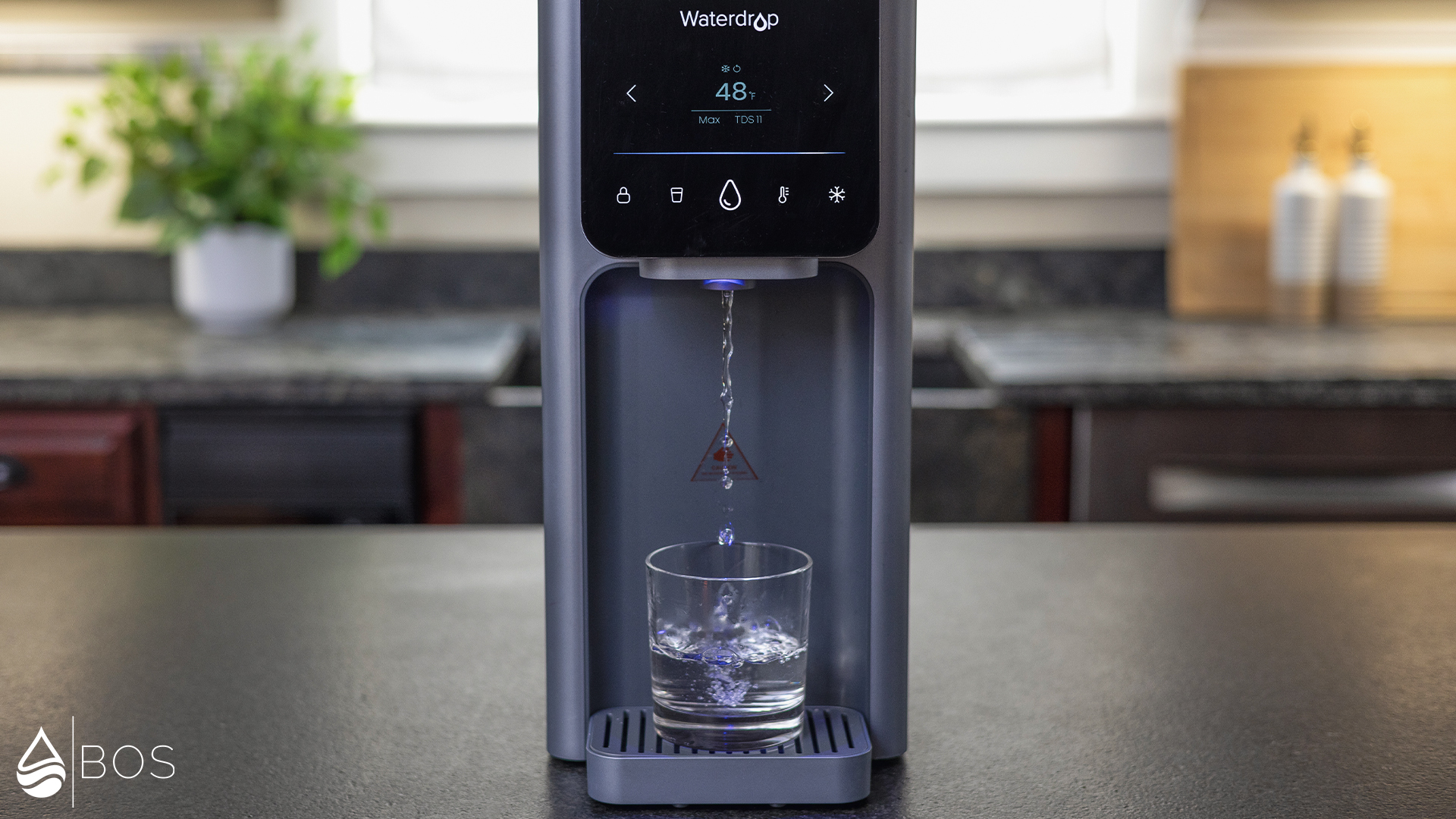
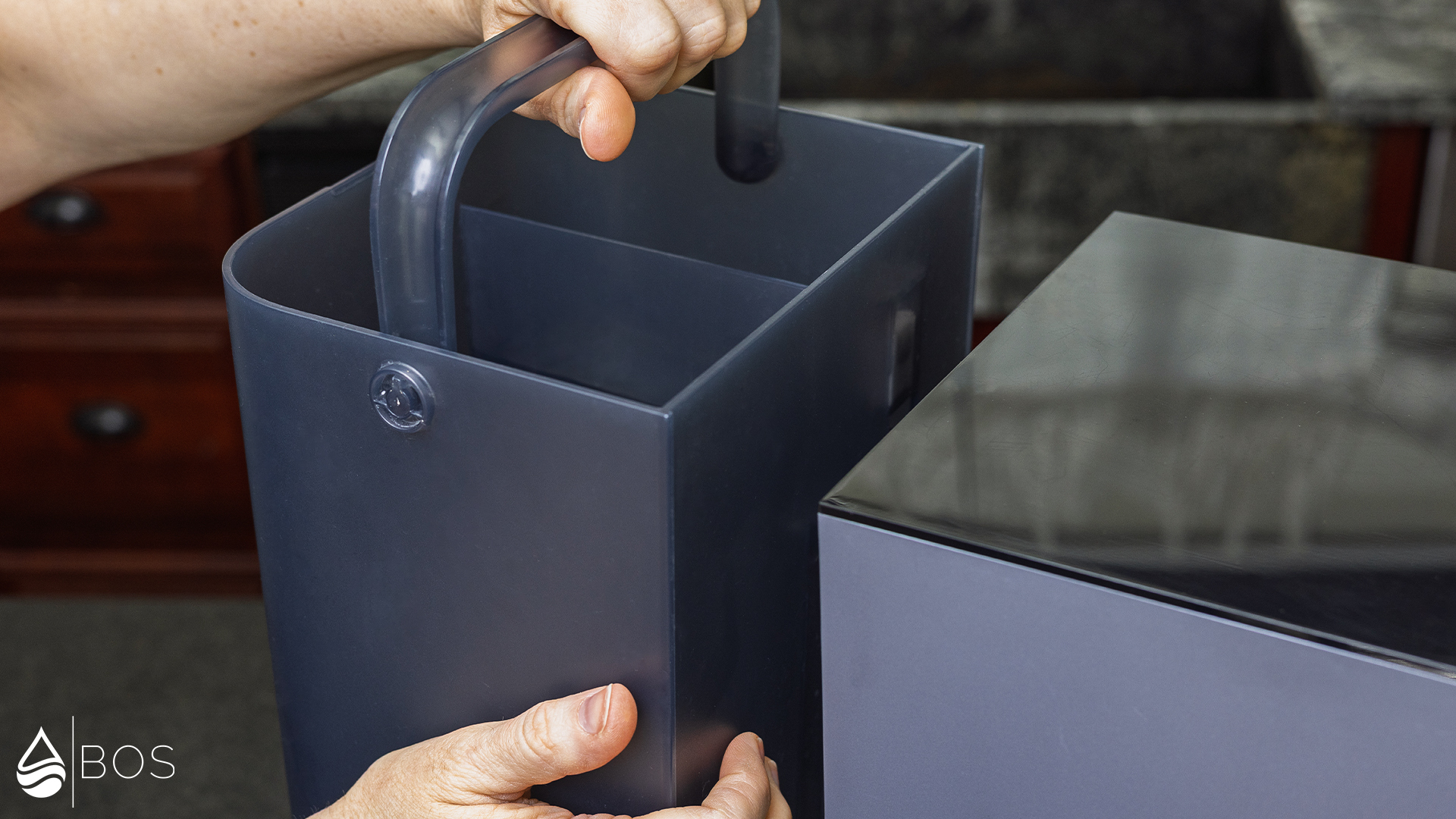
CostsCost scores reflect overall value for money rather than price alone.: /5.00
As of July 13, 2026, the Waterdrop A1 is priced at $649. Using our 3% off discount code (which you can combine with most of Waterdrop’s frequent promotions), you can get the A1 for as little as $510. We estimate $140 in annual filter replacement costs. A filter subscription would save you an additional 5%. Upfront and long-term costs are average.
Wastewater
We measured very low to low wastewater, with a pure-to-drain ratio of ~1:0.36 (2024) and ~1:0.58 (2025).
Read Our Full Waterdrop A1 Review
(Use Code A1BOS for 3% Off on Top of Most Waterdrop Sales!)
6. Runner-Up for Hot Water: APEC ROCT-PLUS
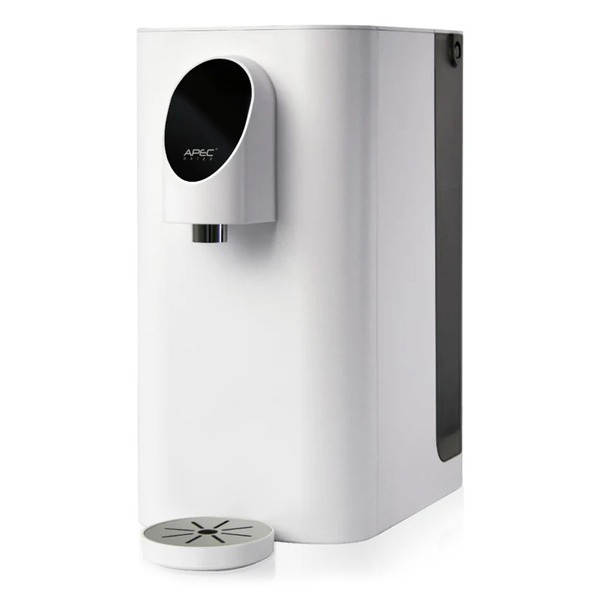
Final Rating: /5.00
FiltrationFiltration score combines our lab results and taste testing with NSF/ANSI certifications and 3rd-party contaminant reduction data.: /5.00
Usability: /5.00
CostsCost scores reflect overall value for money rather than price alone.: /5.00
| Type: | Countertop Reverse Osmosis System (Ambient & Hot) |
| PriceNo short-term sales. (Jul 13, 2026): | $417.99 (Save 5% with Filter Subscription) |
| Yearly CostEstimate is based on rated/claimed filter life and 500 gallons annual water consumption. No short-term sales. (Jul 13, 2026): | ~$86 (Save 10% with Filter Subscription) |
Final Rating: /5.00
The APEC ROCT-PLUS is runner-up for best hot water countertop RO. It achieved excellent results in our lab testing and the filtered water had a clean taste and no odor. However, it has no NSF/ANSI certifications for contaminant reduction nor any third-party testing for contaminant removal. Usability is mediocre and while upfront price is around average, its long-term costs are slightly above average.
What We Like Most
- Excellent results in our lab testing.
- Clean taste with no odor in 2024 and 2025.
- Modern, sturdy build.
- Easy setup/priming with clear instructions but fewer illustrations.
- Generally suited for daily use.
- Ambient + on-demand hot water up to 203°F (realistically ~200°F) without splashing.
- Up to ~32.5 oz (ambient) and 67 oz (hot) water in one go — enough for most use cases.
- Nice control panel with 7 temp presets (ambient, 113, 131, 149, 167, 185, or 203 °F).
- Water change indicator alerts you to empty and refill feed tank.
- Basic water quality indicator shows a color status for purified water – but no numeric TDS readings.
- Easy filter changes – top-lid access, quickly twists in/out, plus a filter-change indicator light.
- Low wastewater for a countertop RO.
- Extras: optional child safety lock for hot water and high-altitude mode (boiling-point correction).
- 2-year warranty upon product registration (1 year without).
What We Don’t Like
- No NSF/ANSI certifications or third-party testing for contaminant reduction.
- No removable pure tank or carafe for instantly accessible water or fridge storage.
- Dispenses rather slowly, especially hot water – and only 1 volume preset.
- Ramps down the pour when you press stop, which takes some getting used to.
- Feed tank is in the back of the unit and a bit awkward to remove.
- Noisy when filtering.
- Slightly above-average annual filter replacement costs.
- Incomplete product listing details on manufacturer’s website.
- Third-party customer complaints include malfunctioning units, poor/unresponsive customer support, and out-of-stock replacement filters.
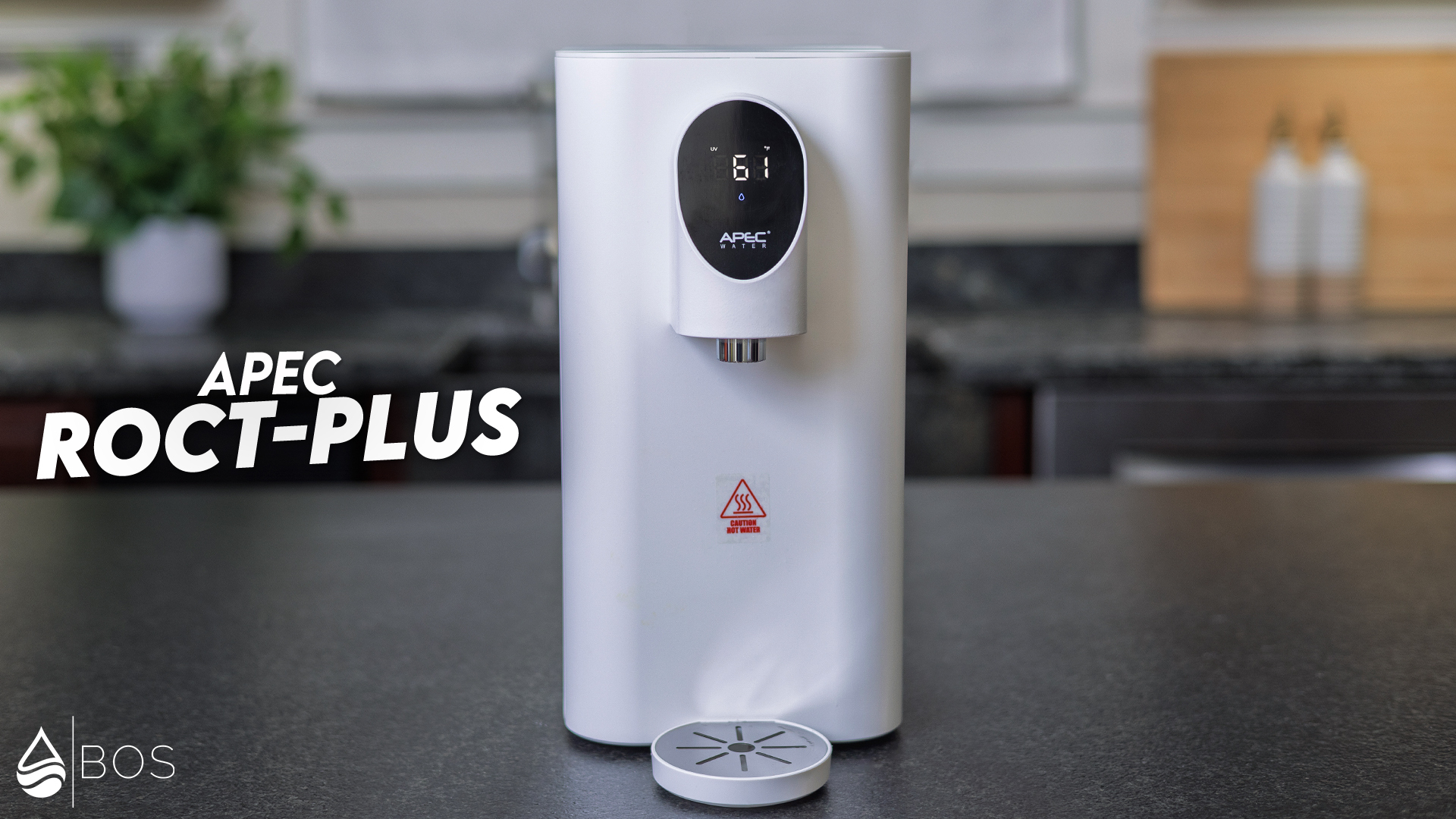
Filtration: /5.00
1. Lab Results: /5.00
- The APEC ROCT-PLUS removed 11 contaminants to 100% (chlorine, all 4 disinfection byproducts, copper, barium, lithium, iron, aluminum, and zinc).
- Not removed to 100% were boron, strontium, and fluoride.
- TDS reduction was good (88%).
- There was no potential leaching observed.
Lab Results Charts
| Potentially Harmful | Aesthetic Issues | Feed Water Level | Filtered Water Level | Reduction Rate | |
| Water Disinfectants | |||||
| Chlorine (mg/L) | ✖ | ✖ | 0.44 | 0 | 100% |
| Disinfection Byproducts | |||||
| Bromodichloromethane (µg/L) | ✖ | 2.68 | 0 | 100% | |
| Bromoform (µg/L) | ✖ | 4.42 | 0 | 100% | |
| Dibromochloromethane (µg/L) | ✖ | 5.32 | 0 | 100% | |
| Chloroform (µg/L) | ✖ | 1.36 | 0 | 100% | |
| Metals | |||||
| Copper (mg/L) | ✖ | ✖ | 0.01 | 0 | 100% |
| Iron (mg/L) | ✖ | 0.01 | 0 | 100% | |
| Aluminum (mg/L) | ✖ | ✖ | 0.01 | 0 | 100% |
| Barium (mg/L) | ✖ | 0.05 | 0 | 100% | |
| Boron (mg/L) | ✖ | 0.1 | 0.02 | 80% | |
| Zinc (mg/L) | ✖ | 0.02 | 0 | 100% | |
| Lithium (mg/L) | ✖ | 0.01 | 0 | 100% | |
| Strontium (mg/L) | ✖ | 0.53 | 0.02 | 96% | |
| Salts | |||||
| Fluoride (mg/L) | ✖ | 0.42 | 0.19 | 55% | |
| RO Salt Rejection | |||||
| TDS (mg/L) | ✖ | 395.2 | 46.2 | 88% | |
| Other Parameters | |||||
| pH | 7.86 | 7 | |||
| Impurities NOT Detected in Unfiltered Tap Water Sample | |||||
| Lab Reports: Filtered Water Report, Unfiltered Water Report | |||||
| Explanation: | |||||
| Full Removal | |||||
| Considerable Reduction | |||||
| Concentration More than Double of Unfiltered Water Sample | |||||
| Potential Leaching Reached or Exceeded the Strictest Public Health Guideline We Could Find | |||||
2. NSF Certifications and Other Test Data
The APEC ROCT-PLUS does not have any NSF/ANSI certifications for contaminant reduction. It also lacks third-party testing for contaminant removal.
3. Taste and Odor Tests
In our 2024 and 2025 tests, the filtered water was odorless and had a perfectly clean taste.
Usability: /5.00
Initial setup is very simple but day-to-day use slightly less pragmatic. The ROCT-PLUS lacks a carafe for instantly accessible water, and while dispensing is easy and splashless with an acceptable speed for ambient water, hot water is very slow.
Still, it’s fast enough for daily use and provides 32.5 oz of ambient or 67 oz of the hottest water at one time and up to ~12.5 cups from one full feed tank. The hot water is hot enough for most uses, nearing kettle temps (~200 °F). Unfortunately, there’s only one volume preset (7 for temperature) plus custom volumes, which is less convenient than multiple volume options. Plus, it’s very noisy when filtering.
It’s a little awkward to refill the feed tank due to its height and location but the unit has a helpful water change indicator light to remind you. The number of required daily refills is average.
Rated filter life for the composite cartridge is 1,056 gal or 12 months, though we could see the effective lifespan being closer to 6 months. Replacements are easy with a filter change indicator light and color-coded, non-numeric pure water TDS readings to monitor the system’s filtration performance.
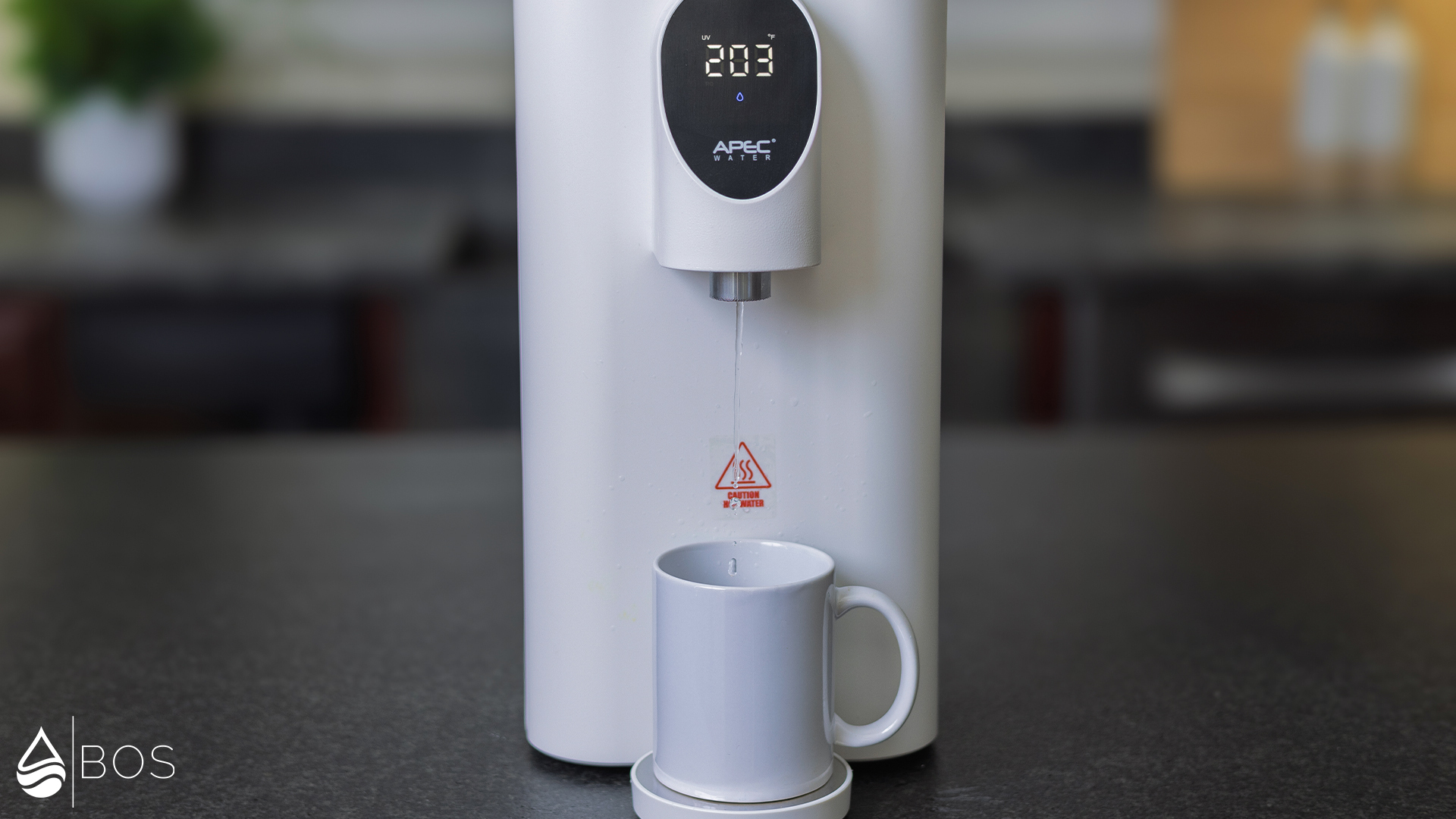
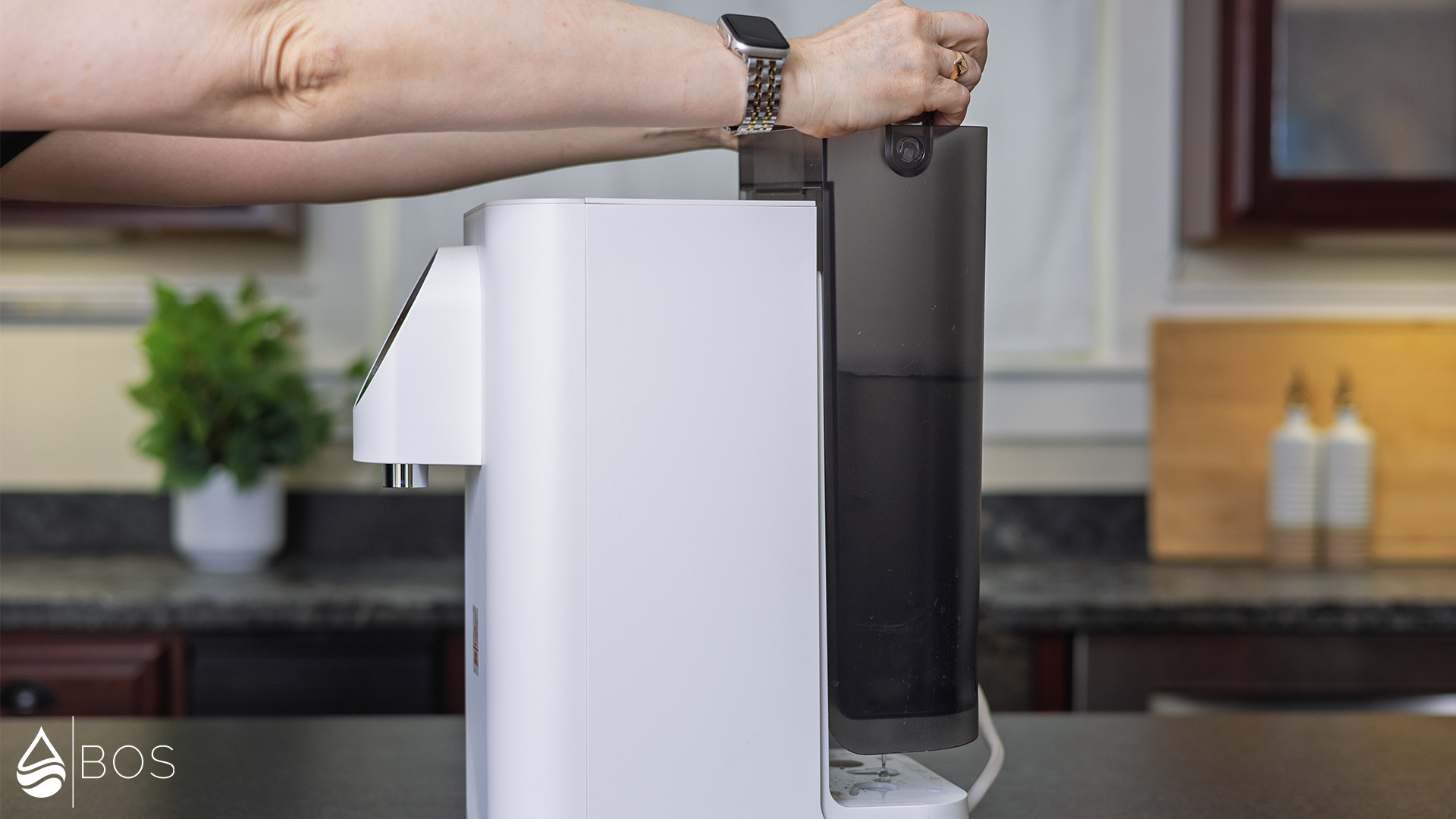
CostsCost scores reflect overall value for money rather than price alone.: /5.00
As of July 13, 2026, the ROCT-PLUS is priced at $417.99. You can save 5% with a filter subscription. We estimate $172 in annual filter replacement costs, assuming a 6-month cartridge lifespan. A filter subscription would save you an additional 10%. Upfront price is around average and long-term cost is slightly above average.
Wastewater
We measured low wastewater, with a pure-to-drain ratio of ~1:0.50 (2024) and ~1:0.49 (2025).
Read Our Full APEC ROCT-PLUS Review
7. Runner-Up for Cold Water: Waterdrop A2
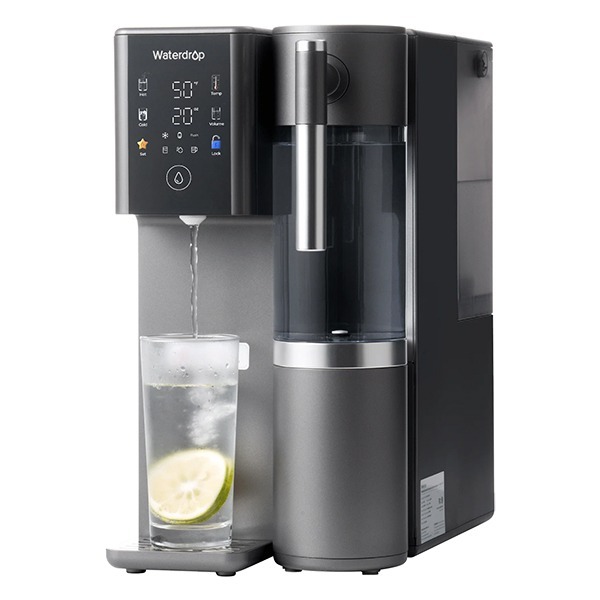
Final Rating: /5.00
FiltrationFiltration score combines our lab results and taste testing with NSF/ANSI certifications and 3rd-party contaminant reduction data.: /5.00
Usability: /5.00
CostsCost scores reflect overall value for money rather than price alone.: /5.00
| Type: | Countertop Reverse Osmosis System (Ambient, Hot & Cold) |
| PriceNo short-term sales. (Jul 13, 2026): | $499 (Use Code WD10BOS for 10% Off!) |
| Yearly CostEstimate is based on rated/claimed filter life and 500 gallons annual water consumption. No short-term sales. (Jul 13, 2026): | ~$70 (Save 5% with Filter Subscription) |
(Use Code WD10BOS for 10% Off!)
Final Rating: /5.00
The Waterdrop A2 is our runner-up for best cold water countertop RO system. It achieved excellent results in our lab testing, and the filtered water had a clean taste and no odor. However, it has no NSF/ANSI certifications for contaminant reduction nor any third-party testing. Finally, it offers solid usability at a well below-average upfront price with average ongoing filter replacement costs.
What We Like Most
- Excellent results in our lab testing.
- Clean taste with no odor.
- Sleek, sturdy build though carafe is lightweight.
- Easy setup/priming with clear illustrated instructions, a quick-start guide, and QR-linked video tutorial.
- Generally suited for daily use with a handy plastic carafe (~5.3 cups) providing instant ambient water + fits in the fridge.
- Large, responsive, intuitive touchscreen to dispense ambient, cold, or hot water without splashing.
- 6 temp presets: Cold, ambient, 113, 149, 185, or 203 °F + custom option (9 °F increments).
- 4 volume presets plus custom option.
- Plenty of hot water (~107 oz) up to 203°F (actual: ~189 °F) in one go.
- Cold water down to 50-59 °F (actual: ~47 °F).
- Easy feed tank refills with water-change indicator.
- Very easy filter changes (quickly click in/out) plus indicator light.
- Low wastewater for a countertop RO.
- Automatic flushing reduces TDS creep and extends RO membrane life.
- Extras: cooling can be turned off, child lock for hot water, favorite mode, UV light, boiling point correction, temperature dispensing light.
- Well below-average upfront price.
What We Don’t Like
- No NSF/ANSI certifications or third-party testing for contaminant reduction.
- Large-sized display font and icons detract from otherwise sleek look.
- Cold dispensing speed is acceptable, but ambient is relatively slow and hot is very slow, though presets help.
- Hottest water only reached ~189 °F in our testing.
- Realistically only ~16 oz of truly cold water per batch (~45 min cooling time).
- Pour ramps down when you press stop, which takes getting used to.
- Automatic flushing may waste water.
- Third-party customer complaints: leaking, setup and flush problems (system gets stuck, repeats or never finishes), hot water not being hot, and cold water not being cold (display showing target temps not matching actual output).
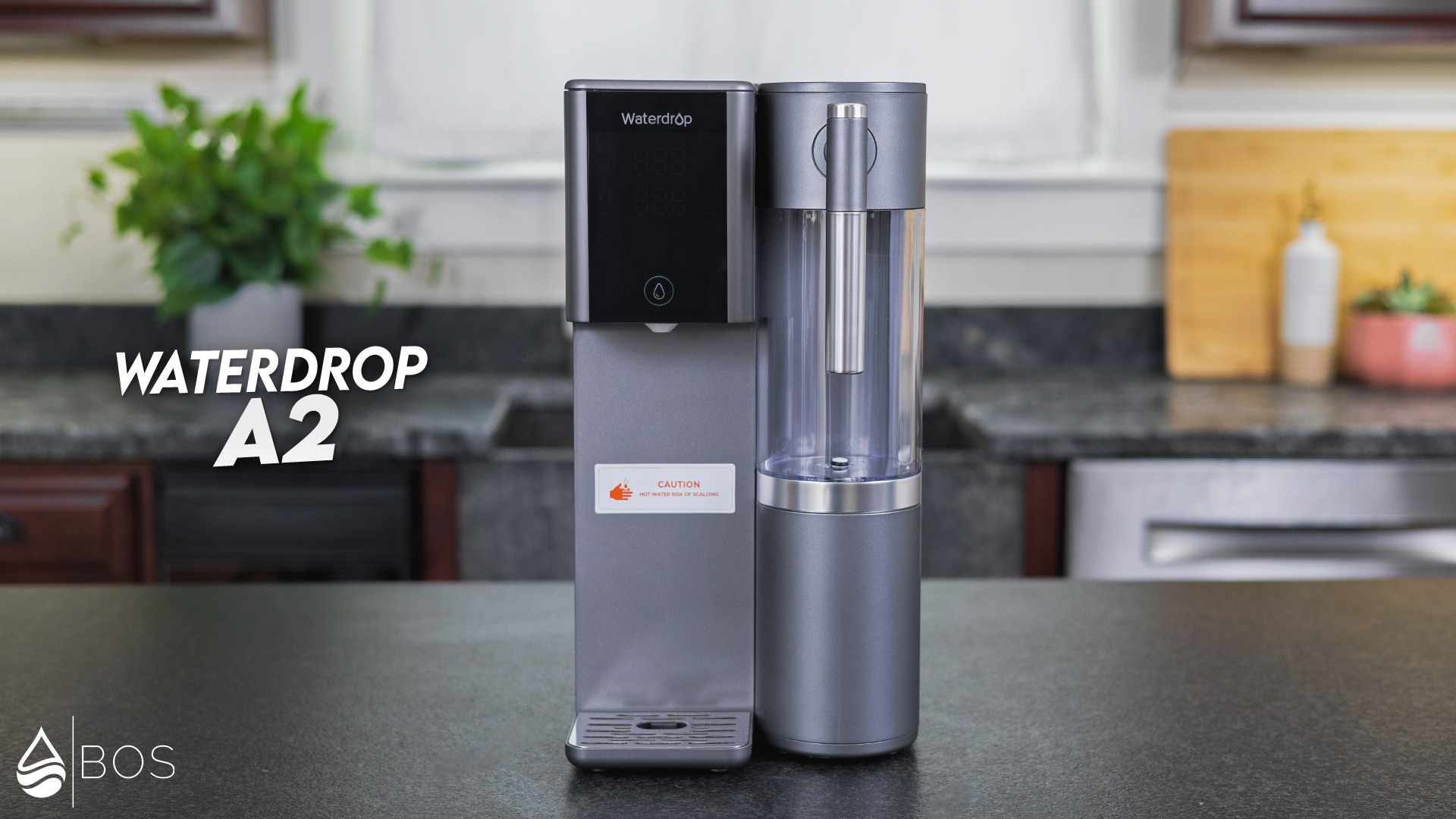
Filtration: /5.00
1. Lab Results: /5.00
- The Waterdrop A2 removed 11 contaminants to 100% (chlorine, all 3 disinfection byproducts, copper, barium, boron, strontium, iron, nitrate, and fluoride).
- Not removed to 100% was manganese.
- TDS reduction was very high (95%).
- We detected potential leaching of zinc, but at a level below the EPA’s secondary standard.
Lab Results Charts
| Potentially Harmful | Aesthetic Issues | Feed Water Level | Filtered Water Level | Reduction Rate | |
| Water Disinfectants | |||||
| Chlorine (mg/L) | ✖ | ✖ | ~2 | 0 | 100% |
| Disinfection Byproducts | |||||
| Bromodichloromethane (µg/L) | ✖ | 19.1 | 0 | 100% | |
| Dibromochloromethane (µg/L) | ✖ | 4.88 | 0 | 100% | |
| Chloroform (µg/L) | ✖ | 50.3 | 0 | 100% | |
| Metals | |||||
| Copper (mg/L) | ✖ | ✖ | 0.0078 | 0 | 100% |
| Iron (mg/L) | ✖ | 0.171 | 0 | 100% | |
| Manganese (mg/L) | ✖ | ✖ | 0.0046 | 0.0029 | 37% |
| Barium (mg/L) | ✖ | 0.0289 | 0 | 100% | |
| Boron (mg/L) | ✖ | 0.0131 | 0 | 100% | |
| Strontium (mg/L) | ✖ | 0.098 | 0 | 100% | |
| Salts | |||||
| Nitrate (N) (mg/L) | ✖ | 3.03 | 0 | 100% | |
| Fluoride (mg/L) | ✖ | 1.04 | 0 | 100% | |
| RO Salt Rejection | |||||
| TDS (mg/L) | ✖ | 462 | 20.9 | 95% | |
| Other Parameters | |||||
| pH | 7.7 | 6.3 | |||
| Impurities NOT Detected in Unfiltered Tap Water Sample | |||||
| Zinc (mg/L) | ✖ | 0 | 0.00686 | ||
| Lab Reports: Filtered Water Report, Unfiltered Water Report
Chlorine Self Test Photos: Filtered Water, Unfiltered Water |
|||||
| Explanation: | |||||
| Full Removal | |||||
| Considerable Reduction | |||||
| Concentration More than Double of Unfiltered Water Sample | |||||
| Potential Leaching Reached or Exceeded the Strictest Public Health Guideline We Could Find | |||||
2. NSF/ANSI Certifications and Other Test Data
The Waterdrop A2 does not have any NSF/ANSI certifications for contaminant reduction. It also lacks third-party testing for contaminant removal.
3. Taste and Odor Tests
In our test, the filtered water was odorless and had a perfectly clean taste.
Usability: /5.00
Initial setup and daily use are very simple. The small plastic carafe (~5.3 cups) provides instantly accessible ambient water, is comfortable to handle, fits in the fridge for chilling and pours smoothly, without splashing. While dispensing into a glass is also easy and splash-free, with an acceptable speed for cold water, ambient water is relatively slow and hot water very slow to pour. That said, 4 volume and 6 temperature presets plus custom options add convenience and offset slow dispensing speeds.
The A2 is still fast enough for daily use, providing ~56 oz of ambient water at one time and up to ~14.1 cups from one full feed tank. It dispensed ample hot water (~107 oz) in one go, though it doesn’t get hot enough for most uses (~189 °F). And while it poured 52 oz on the cold setting at once, the water was only cold (~47-53 °F) for the first ~16 oz and took ~45 min for chilling.
Refilling is easy and there’s a helpful water change indicator light to remind you. The number of required daily refills is below average to average.
Filter replacements are also very simple. Rated filter life for the composite cartridge is 528 gal or 12 months, though we could see the effective lifespan being closer to 6 months. While the system has a useful filter change indicator light, it lacks feed/pure TDS readings to monitor filtration performance over time.
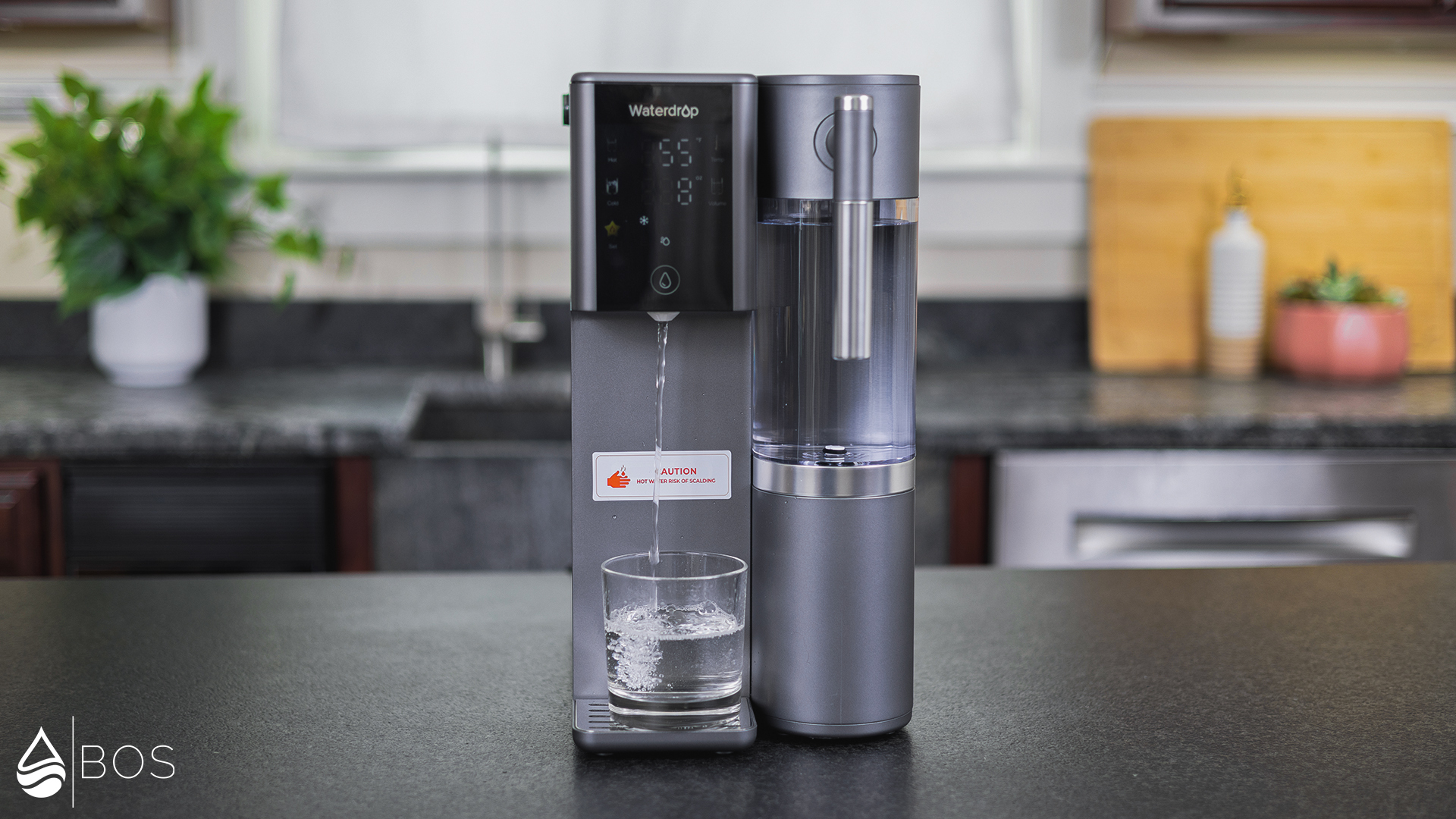
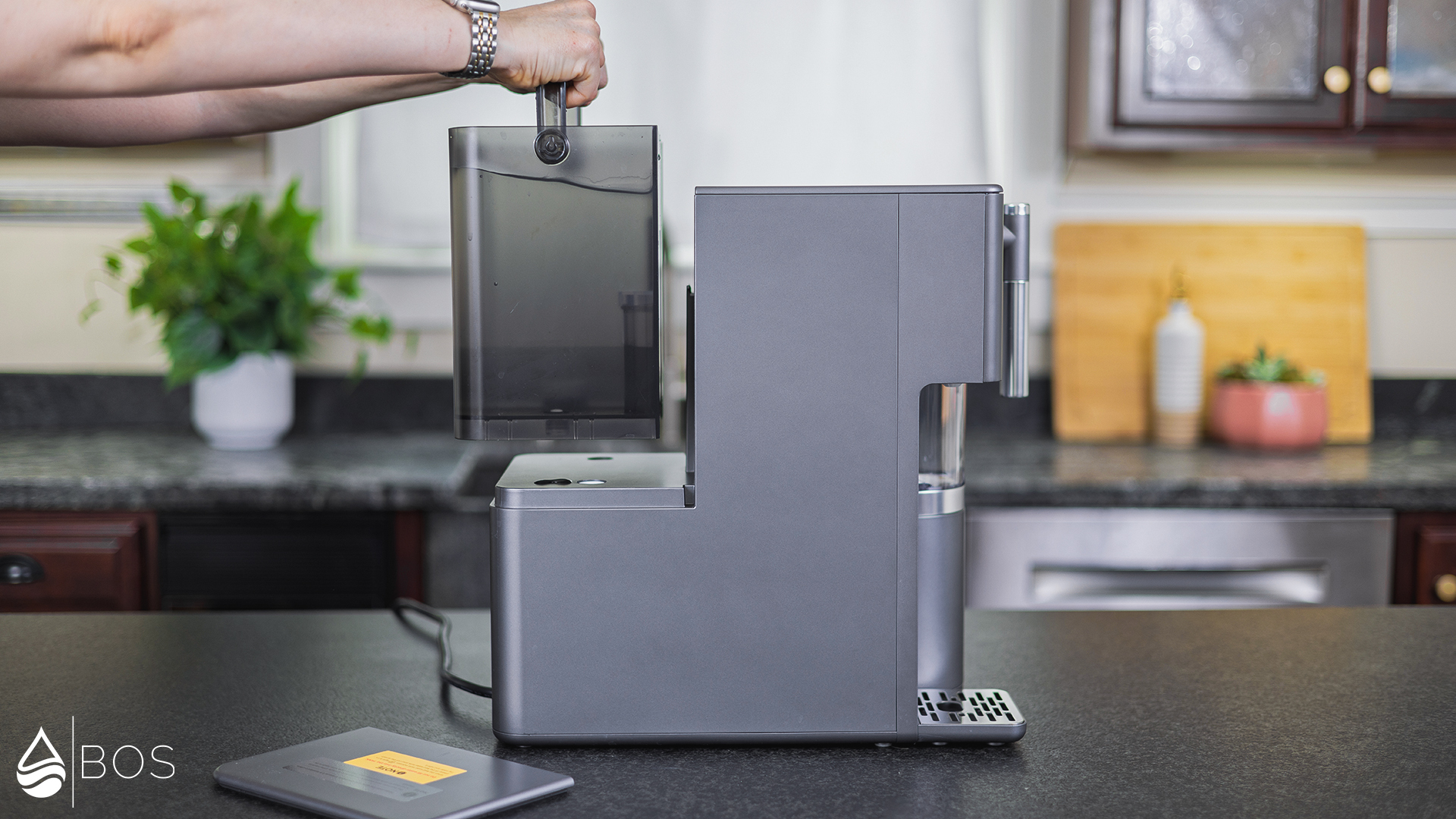
CostsCost scores reflect overall value for money rather than price alone.: /5.00
As of July 13, 2026, the Waterdrop A2 is priced at $499. However, Waterdrop frequently offers sales, so you can realistically get the A2 for as little as $409. Alternatively, you can use our 10% discount code, although it doesn’t stack with sale discounts.
We estimate $140 in annual filter replacement costs, assuming a 6-month cartridge lifespan. A filter subscription would save you an additional 5%. Upfront price is well below average and long-term costs are about average.
Wastewater
We measured low wastewater, with a pure-to-drain ratio of ~1:0.49.
Read Our Full Waterdrop A2 Review
(Use Code WD10BOS for 10% Off!)
Other Countertop Reverse Osmosis Systems We Tested
While the systems above performed best in our testing, we evaluated 18 models in total.
Other Solid Options (Final Rating 3.5 or Higher)
The following systems didn’t make the cut, but may still be worth considering:
- Sans Water Purifier (4.27/5.00)
- Bluevua ROPOT-Lite (4.22/5.00)
- SimPure Y9A (4.14/5.00)
- APEC ROCT-C1 (4.11/5.00)
- SimPure Y7P-BW (4.05/5.00)
- NU Aqua 4-Stage Countertop RO System (4.03/5.00)
- RKIN U1 (3.75/5.00) & U1-W (3.80/5.00)
- Frizzlife WB99-C (3.73/5.00)
Models We Don’t Recommend (Final Rating Lower than 3.5)
These are the systems we don’t recommend based on our test results:
Buying Guide: How to Choose a Countertop Reverse Osmosis System
Struggling to decide on a countertop RO? This guide covers the key points to consider so you can choose the system that best fits your needs.
Water Contaminants
If you’re only concerned with taste and odor, you’re in luck – virtually any countertop reverse osmosis system will deliver a noticeable improvement. These systems are very good at removing the substances that affect how water tastes and smells, and in our testing, every system we looked at substantially improved overall water quality in that regard.
If you’re also concerned about health-related contaminants, countertop reverse osmosis systems are, in general, an excellent choice as well. By combining multiple pre- and post-filtration stages with a reverse osmosis membrane, they’re designed to reduce a wide range of potentially harmful substances.
That said, not all systems perform exactly the same, and some are better at removing certain contaminants than others. If you want to ensure you’re getting the level of protection you expect, it’s worth checking what’s actually in your water and whether the system you’re considering is tested – and ideally, certified – to reduce those specific substances. There are two main ways to approach this:
- Test your home’s water supply:
- Order an inexpensive water test kit online or pick one up at a local hardware store. Your local health department may also provide test kits.
- Alternatively, hire a professional lab to analyze a water sample from your home. This is recommended by both the EPA and us at BOS Water and is generally more reliable than DIY kits. Two examples of such lab services are Tap Score and ETR Labs.
- Gather information about your local water supply:
- Contact your city administration and request annual water quality reports, known as Consumer Confidence Reports (public water utilities are required to provide these for free).
- You can also browse the EPA’s directory to find these reports, which is often faster.
- Another option is the EWG Tap Water Database, which compiles and analyzes the same reports to make public water quality easier to understand.
- Limitations of this approach:
- It doesn’t account for contaminants that may enter your water between the utility and your home.
- It does not apply if you rely on private well water.
Filtration Performance: NSF/ANSI Testing & Certificates
Once you know which contaminants and impurities you’re dealing with, look for a countertop RO system that is NSF/ANSI-certified to reduce them. Alternatively, consider a unit supported by independent third-party test data covering those contaminants – ideally across 100% of the filters’ rated lifespans (or longer).
You should pay particular attention to the following NSF/ANSI standards:
- 42 – water aesthetics (e.g., chlorine, chloramine, taste & odor)
- 53 – health-related contaminants such as asbestos, volatile organic compounds (VOCs), PFOA/PFOS, certain salts like nitrate and fluoride, and heavy metals including lead, mercury, and chromium-6
- 58 – specific to RO systems; indicates the semi-permeable membrane reduces TDS and may also address contaminants like arsenic, nitrate/nitrite, cadmium, lead, barium, radium 226/228, selenium, copper, and cysts
- 401 – emerging contaminants such as pharmaceuticals, herbicides, and pesticides
Did You Know?
NSF/ANSI certification means a water filter has been tested against one or more NSF/ANSI standards using standardized procedures. These tests measure how effectively a filter reduces specific contaminants, such as lead, and allow for meaningful comparisons between different systems. Importantly, certification evaluates contaminant reduction over the entire rated filter lifespan – not just when the filter is new. NSF/ANSI certifications can be issued by NSF, WQA, or IAPMO. All 3 organizations are ANSI-accredited and considered equivalent in that regard. They also operate independently from filter manufacturers, which helps ensure reliable and unbiased results.
Aside from NSF/ANSI certifications, some filter companies also publish their own third-party test data. However, this information should be interpreted with caution, as testing is often conducted only at the beginning of the filter’s life rather than at the end, and may not fully follow the protocols and performance requirements defined by the relevant NSF/ANSI standards.
At BOS Water, we submit both unfiltered and filtered tap water samples to professional labs to assess real-world contaminant reduction performance. We publish the resulting lab data in the filtration tab(s) of our comparison sheet.
Usability
Usability is highly subjective, so it’s difficult to know whether a system will suit your needs and preferences without trying it yourself. Still, you can review the user manual, the product page on the manufacturer’s website, and YouTube videos to get a sense of its key features.
In addition, we cover the usability of each system we test in this guide and in even greater detail in our dedicated reviews – take a look to see whether the model you’re considering fits your specific requirements.
System Assembly and Filter Priming
Fortunately, most countertop ROs are easy to set up and come with clear, illustrated instructions that are sufficient to get you started. Many manufacturers also provide a tutorial video on their website or YouTube.
After choosing a suitable spot for your new appliance, setup typically involves installing the filters (if they’re not pre-installed) and flushing the system according to the manufacturer’s specifications. This usually means running several filtration cycles, discarding the wastewater, and refilling the feed tank after each cycle.
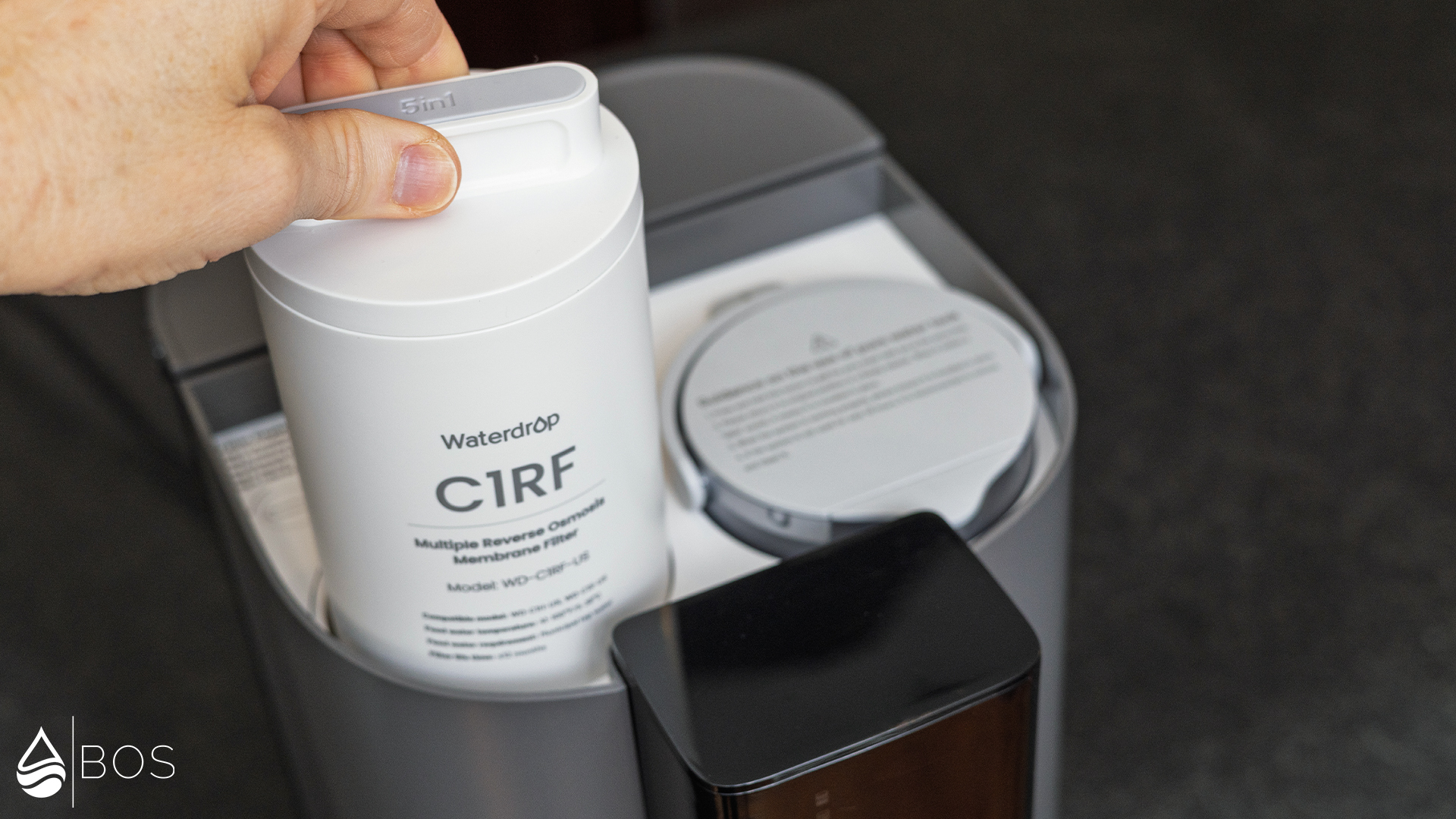
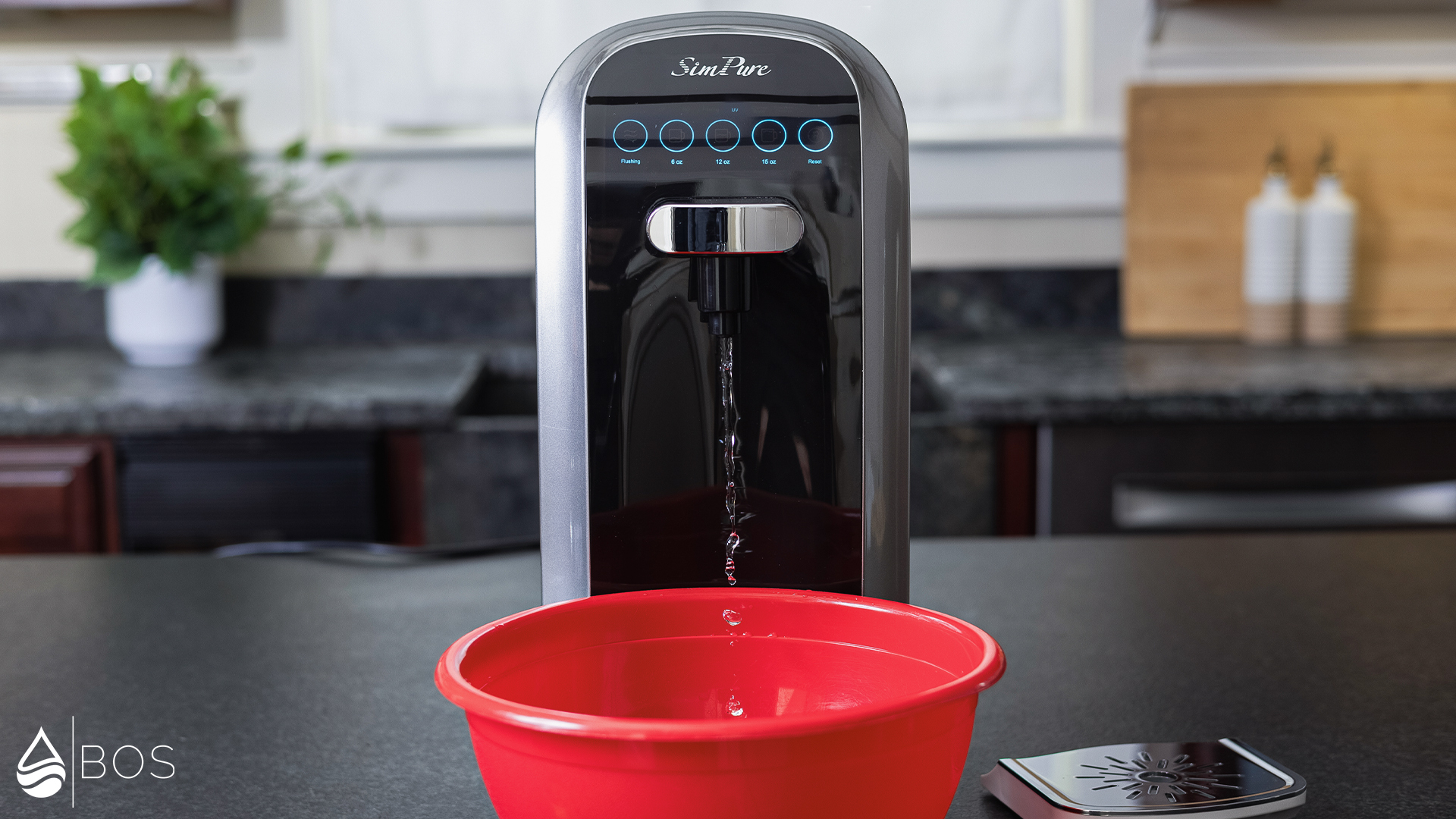
One system we tested, the Crystal Quest Countertop Thunder, differs from the others in that it lacks feed and filtered water tanks. Instead, it attaches directly to your kitchen faucet using an adapter.
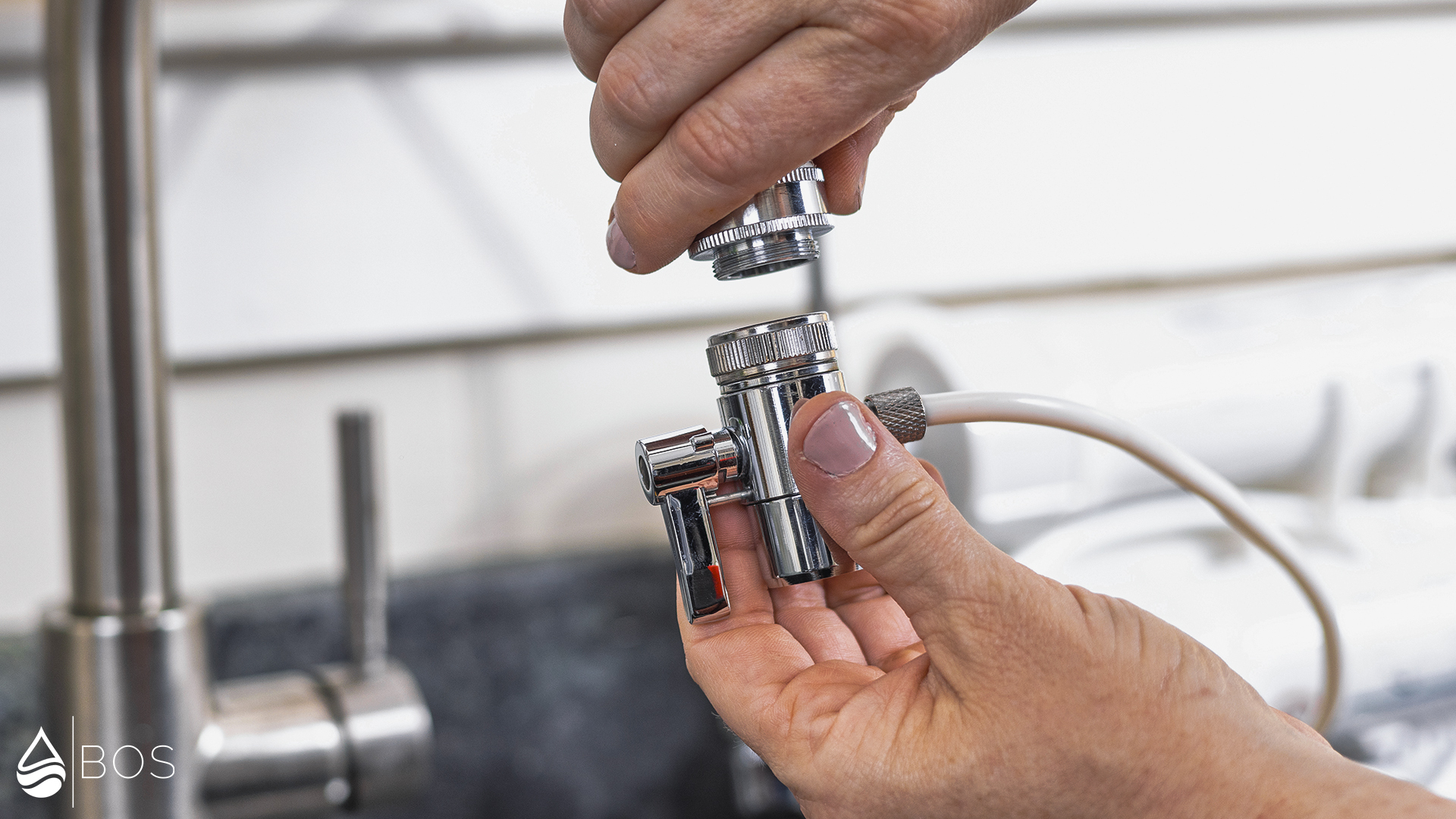
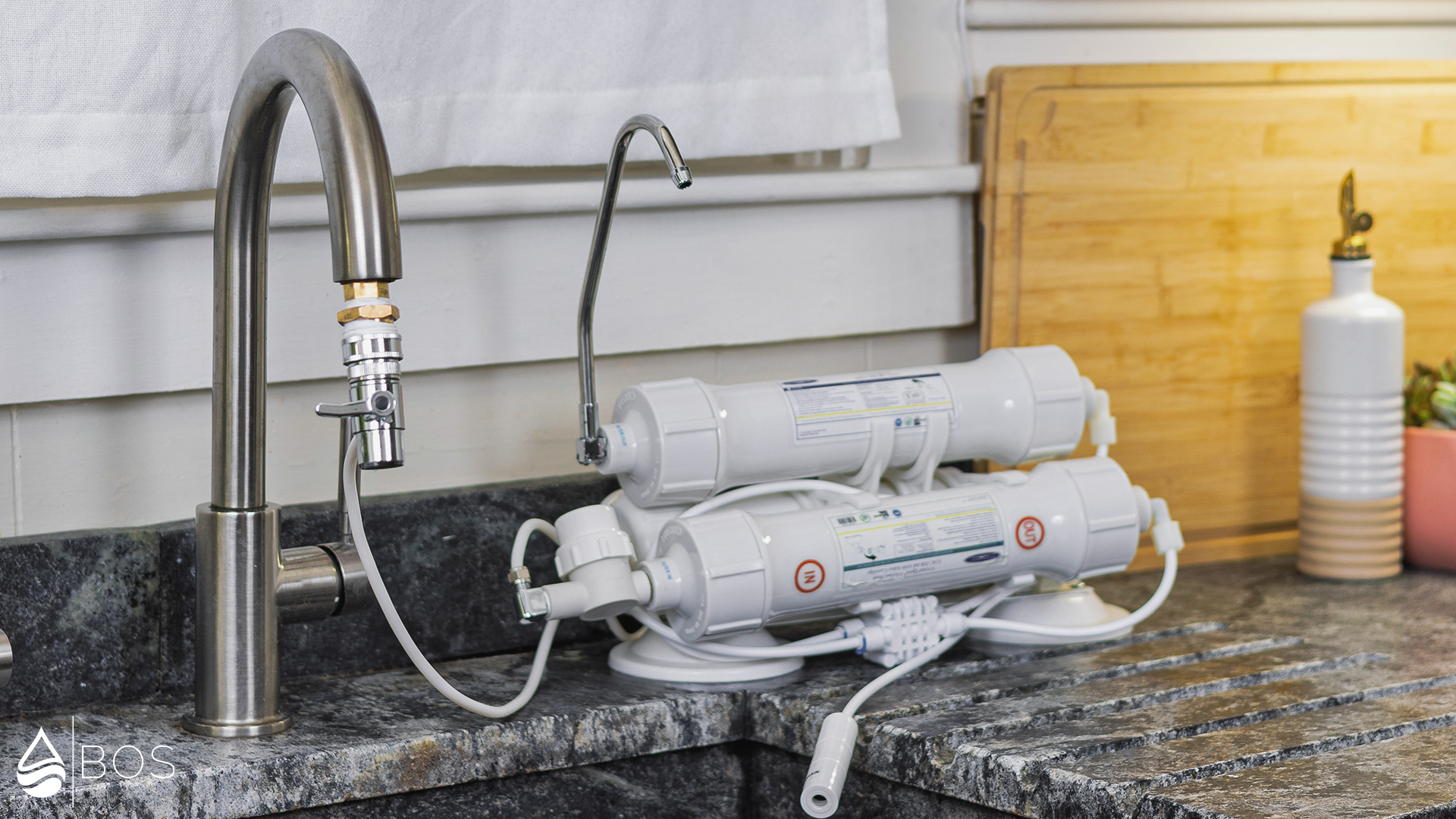
Everyday Use
Please note: the following volume, speed, size, temperature, and weight data reflect our own testing and may vary depending on the user, setting, and mode of measurement.
Speed and Water Capacity
Carafe or No Carafe
One of the first decisions to tackle is whether you want a system with a carafe or removable clean tank to store your filtered water. A carafe adds convenience and speed – once the water is filtered, it’s ready whenever you need it. It pours instantly, sparing you the wait for a cup to dispense, which is often quite slow. You can also store it in the fridge for chilling – especially useful for systems that only produce ambient water.
If you consider stored water essential, next think about the appropriate volume. For example, a large 12-cup removable clean tank may be more practical for bigger households than a smaller 6-cup carafe. The carafes and removable clean tanks in our reviewed systems ranged from ~4.3–12 cups.
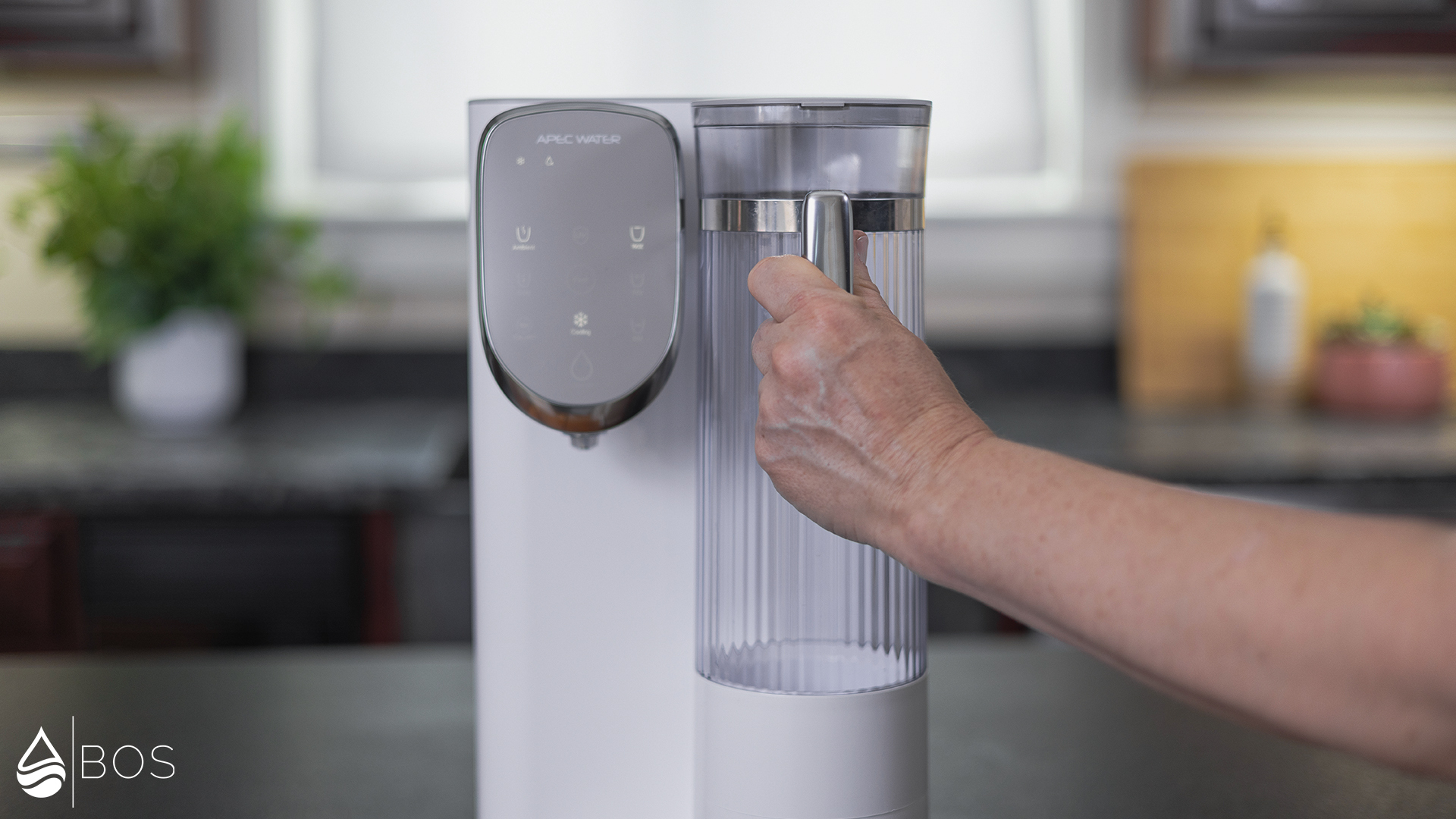
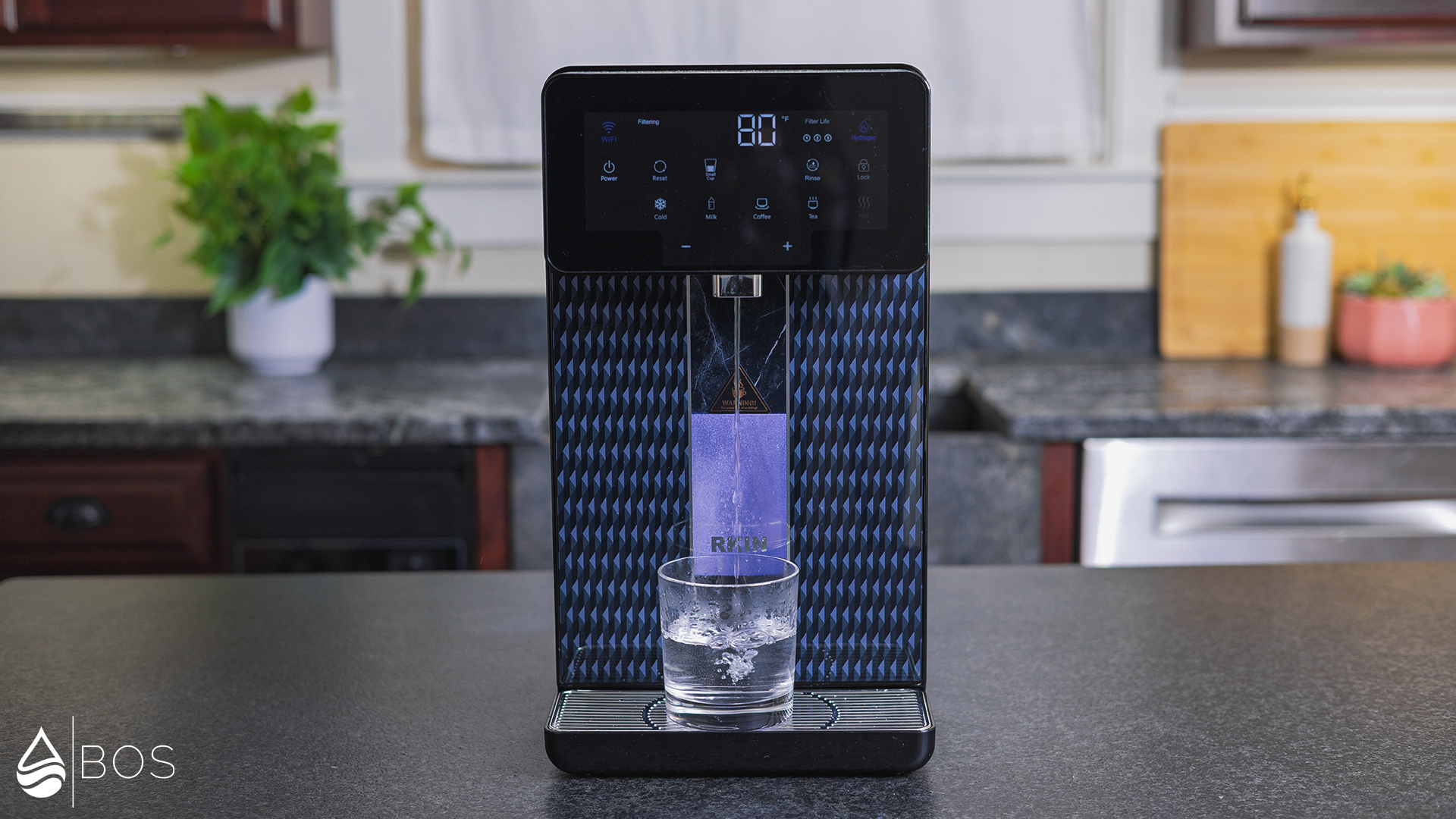
Tank Size(s)
Likewise, feed tank size is important, as you will likely be refilling it multiple times a day. Larger feed tanks generally require fewer refills, but if they’re too large, they can become heavy and cumbersome – especially if the unit is placed in a tight space, positioned with its back against a wall, or if you have limited mobility. In such cases, the inconvenience of an extra daily refill or two may be preferable to handling a bulky tank. For the countertop ROs we reviewed, feed tank capacities ranged from ~11.5–25.3 cups.
The balance between feed tank and clean tank (if available) size also matters. A larger feed tank paired with a smaller carafe or clean tank may result in a typical number of daily refills but require additional filtration cycles. In other words, a single full feed tank may produce more than one full carafe – sometimes two or more – necessitating another processing cycle in between. Not all systems disclose how long it takes to fully process and fill their carafe. In our tests, it took 3:28–6:26 min to produce 4 cups, depending on the model.
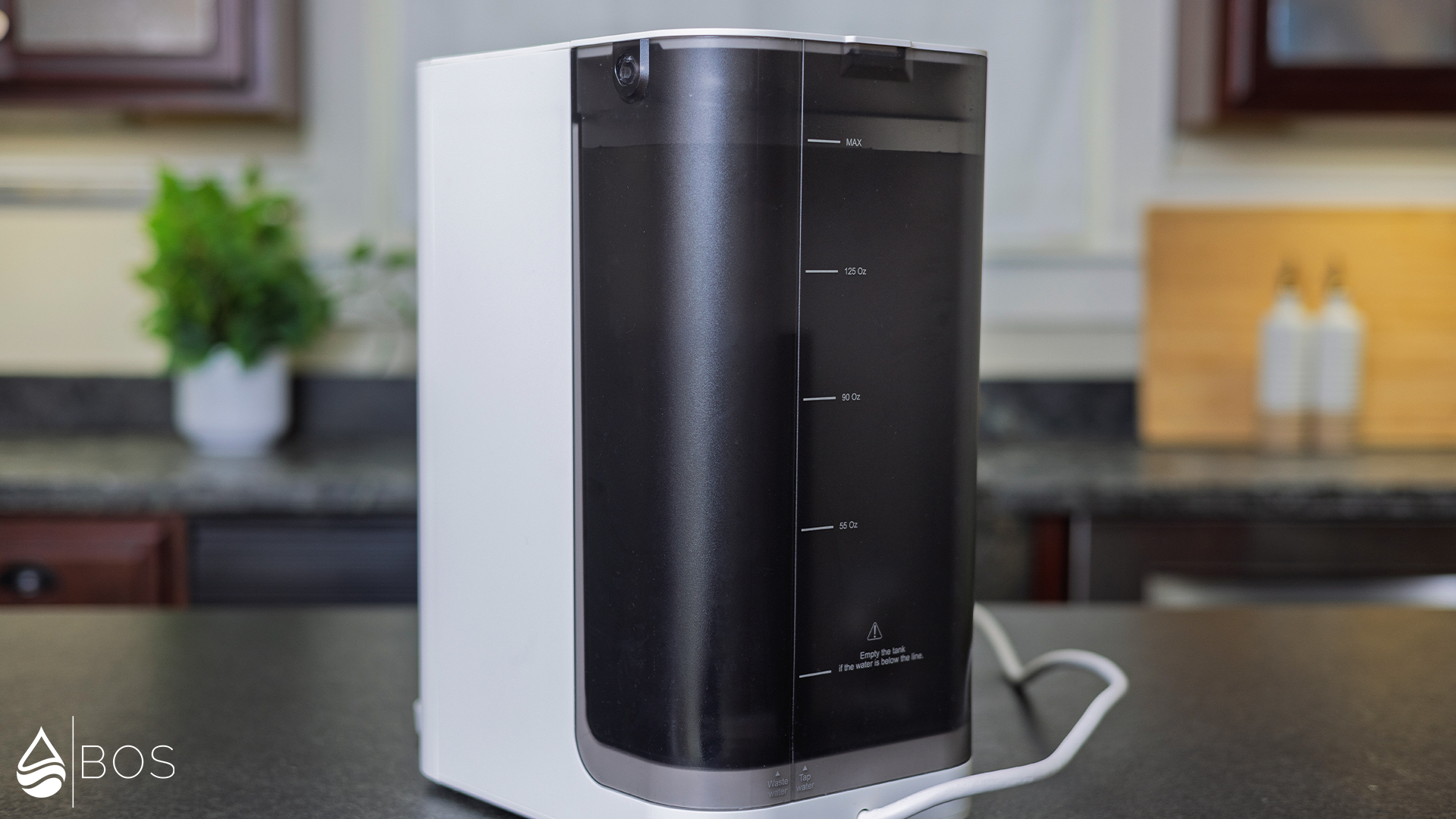
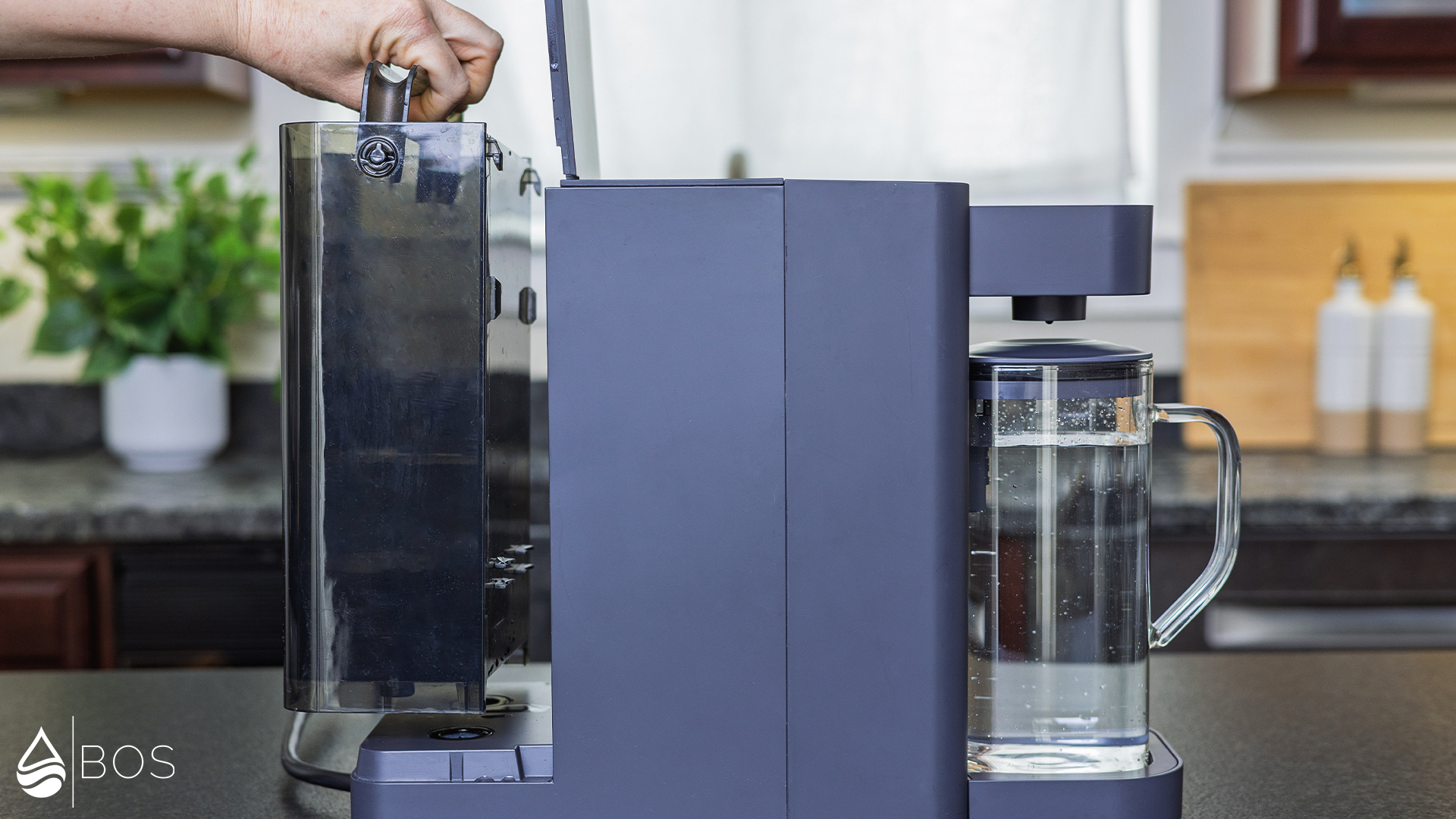
Note: the other countertop RO systems we tested appeared to have some form of internal storage. In several cases, this is explicitly stated in the product description or manual; in others, we inferred it from behavior, as these systems began pre-processing water after refilling the feed tank. For systems without a removable (external) clean tank, the combined pre-processing and dispensing time for 4 cups ranged from 3:15–5:33 min. Only one system did not appear to pre-process water – it dispensed 4 cups in just 1:15 min.
Systems where one full feed tank produces one full clean tank (typically around 8–12 cups) are particularly simple to use: after each cycle, you only need to empty the wastewater and refill. Units we tested that follow this design include the AquaTru Classic (Smart), AquaTru Carafe (Smart), and Bluevua RO100ROPOT.
Check out our comparison sheet to see whether the countertop RO you’re considering includes a carafe or removable clean tank. We also list feed and clean tank sizes and indicate whether a system processes the entire feed tank in a single cycle to help simplify your decision.
On-Demand Dispensing
If having water ready to pour at any time isn’t important to you, you may be perfectly fine waiting a short moment for your glass to fill on demand. In our testing, pump-driven dispensing provided 1 cup of pre-processed ambient water in ~17–55 sec and 4 cups in 1:05–2:21 min, depending on the unit. That may sound quick, but even 20 sec can feel like a long time – especially when you’re in a rush. And keep in mind, you’ll likely be doing this many times a day. Fortunately, some systems address this with volume presets (more info below), which let you select a set amount and step away while the unit dispenses the water automatically instead of waiting by it.
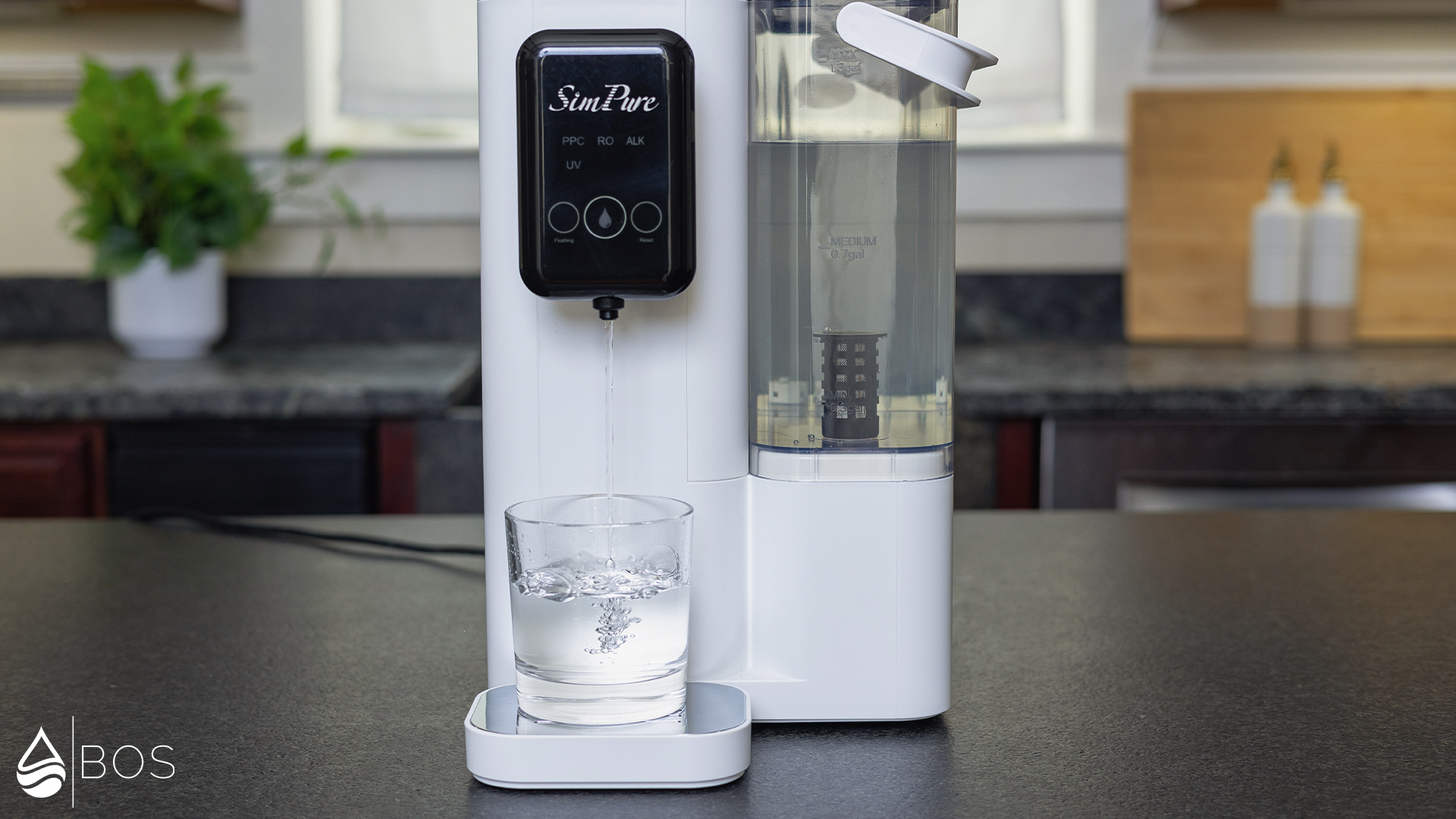
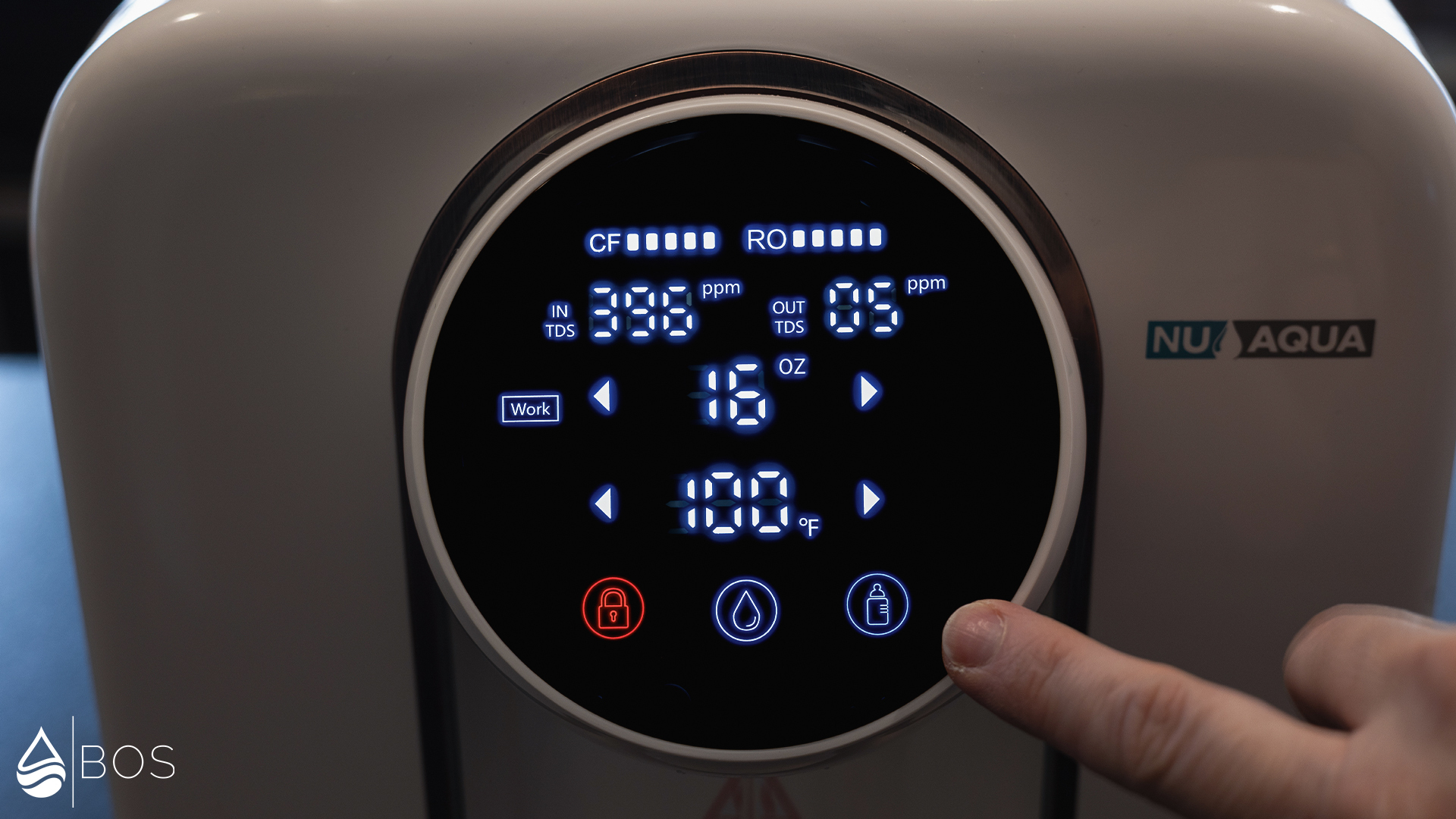
Max Continuous Dispensing
In our Max Continuous Dispensing Tests, we measured how much water a system could provide at once before it needed a refill or a few minutes to filter more – this ranged from 20–128 oz for ambient water. For units that dispense into a carafe or removable clean tank, it’s straightforward: the maximum amount equals the tank’s capacity. For on-demand systems, it’s less obvious, as water is stored internally and not visible. Check the comparison sheet to see how your preferred system fares.
# of Daily Refills
Finally, we measured the maximum amount of water that can be obtained from one full feed tank, allowing for as many cycles of water processing as needed. Combined with your daily water usage, this determines how often you’ll need to refill. The countertop ROs we tested produced anywhere from ~8–19.4 cups of water from one feed tank, necessitating an average of ~3 refills per day to provide ~26–32 cups total. For context, the U.S. Census Bureau reports an average household size of roughly 2.5–3.15 people, which we use as a reference point for this amount of daily water consumption. Systems with smaller feed tanks will typically require more frequent refilling.
Wastewater
All RO systems produce wastewater, though countertop units generally produce less than under sink systems. This is typically expressed as a pure-to-drain ratio. Higher wastewater not only increases water usage but can also lead to more frequent feed tank refills. For the countertop ROs, we classify a ratio of:
- 1:0.4 or better (0.4 gal wasted or less for every 1 gal purified): very low wastewater
- Between 1:0.4 and 1:1 (0.4–1 gal wasted): low wastewater
- Between 1:1 and 1:2 (1–2 gal wasted): high wastewater
- 1:2 or worse (more than 2 gal wasted): very high wastewater
An exception to the “small feed tank = more frequent refills” rule pertains to highly efficient systems – aka those with low wastewater. Even with a smaller feed tank, they may still require only an average number of refills, since a larger share of the input water becomes usable drinking water. Conversely, the opposite is also true: a system with a larger feed tank but relatively high wastewater may still require more frequent refills than you’d expect. Check the comparison sheet to see where each countertop RO falls on the wastewater spectrum.
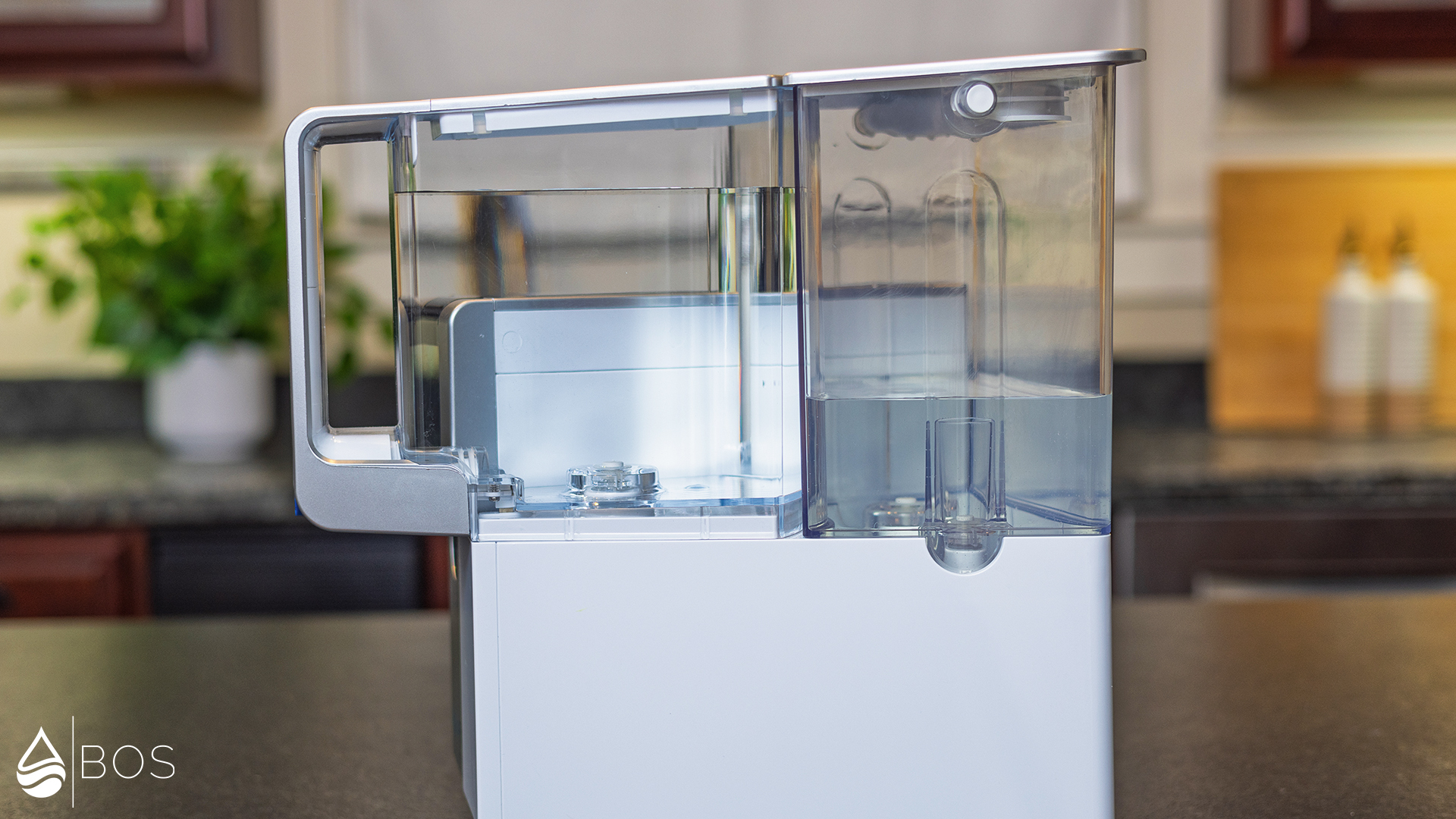
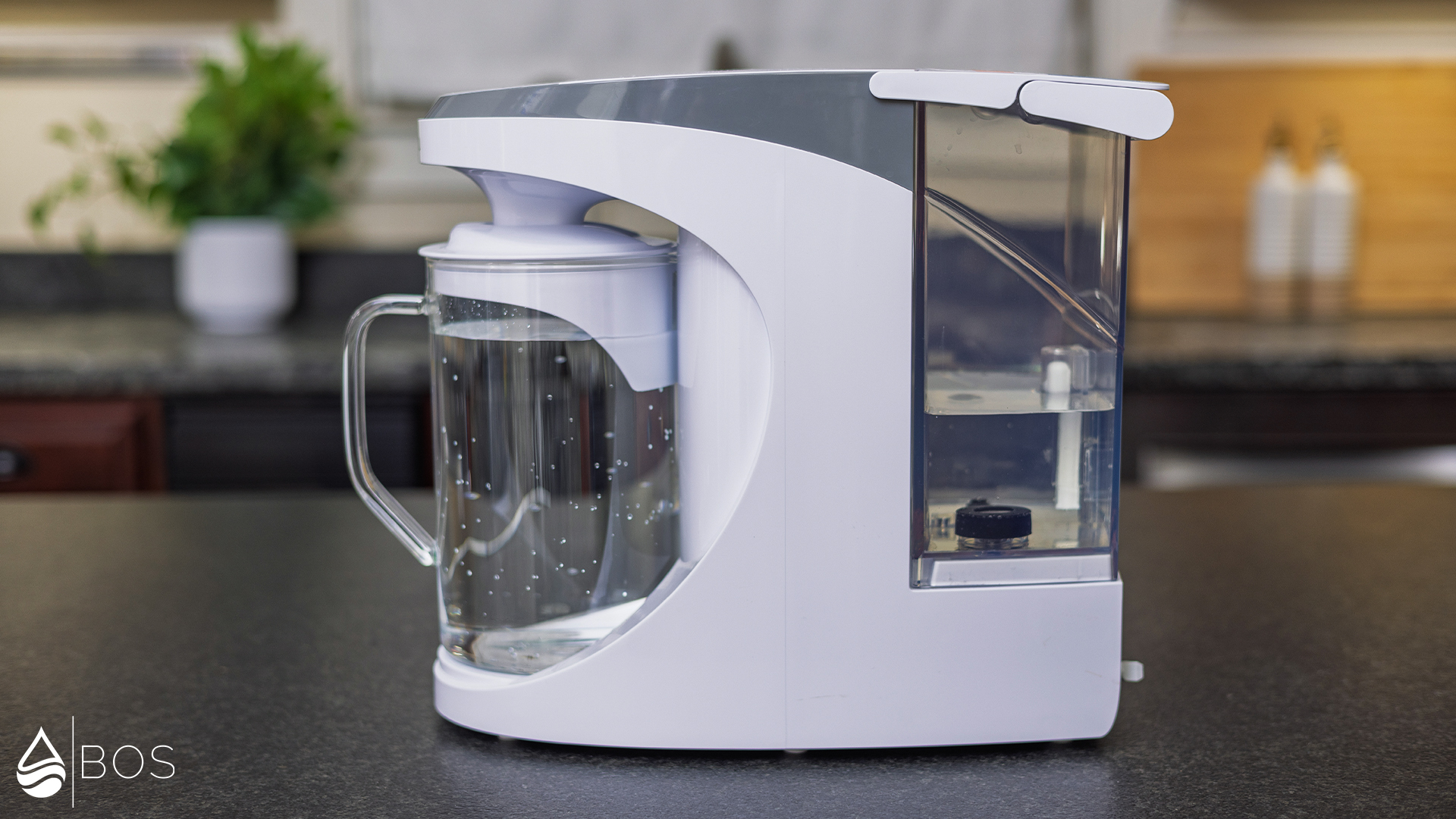
Dispensing
To recap, the two primary modes of dispensing are via a carafe/removable clean tank or directly from the unit’s spout. Some systems offer both, while others limit you to one or the other.
We like the convenience of a carafe – instantly available water is always a plus. However, keep in mind that none of the systems we tested allow you to dispense hot or cold water directly into the included carafe, though you could always store it in the fridge for chilling.
Fortunately, we found all tested carafes comfortable to handle, easy to fit in the fridge, and smooth to pour without splashing, regardless of the system. Materials vary – some are made from borosilicate glass, others from plastic. As mentioned, a couple of units, such as the AquaTru Classic, use removable clean tanks rather than a traditional carafe or pitcher.
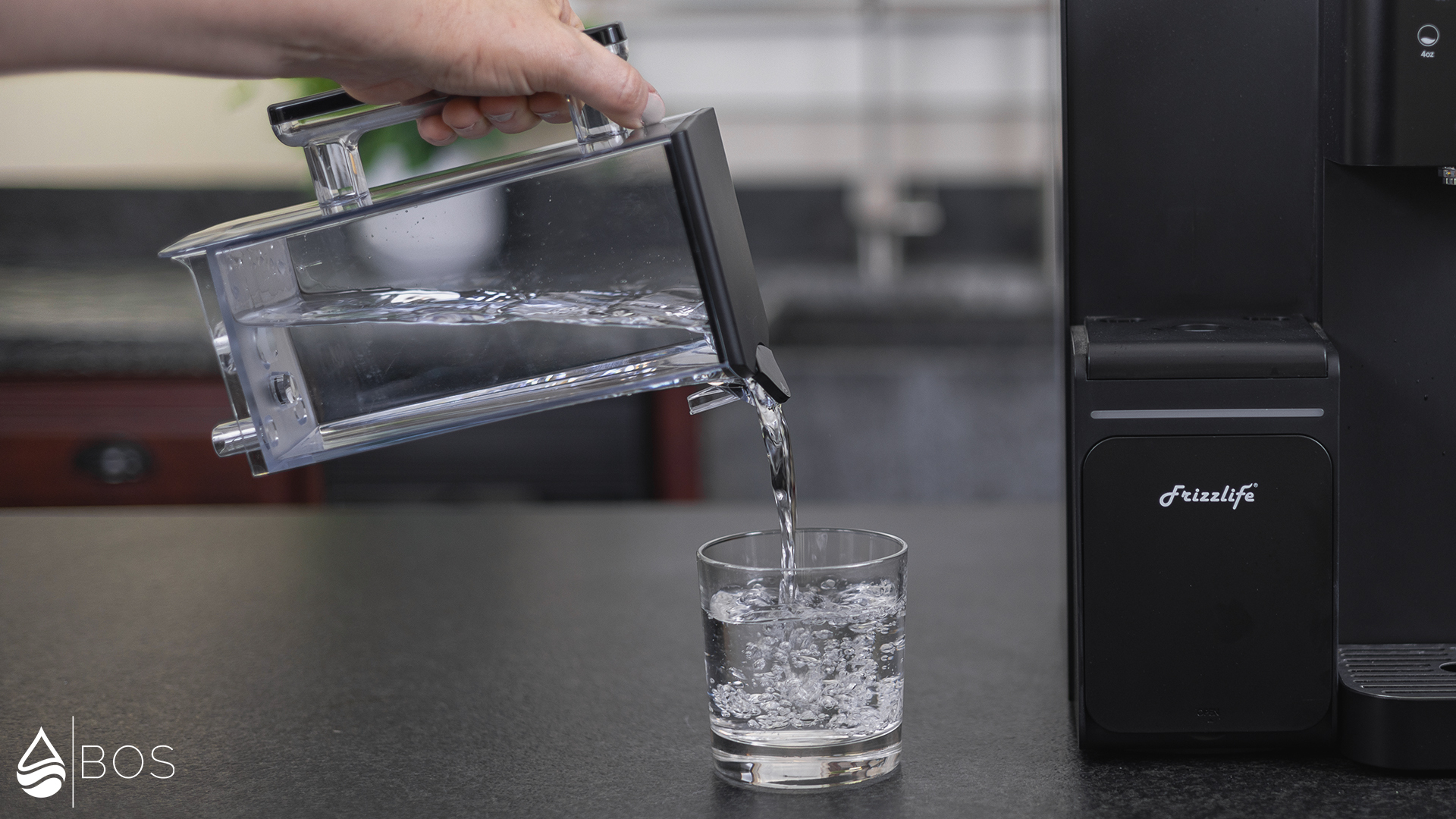
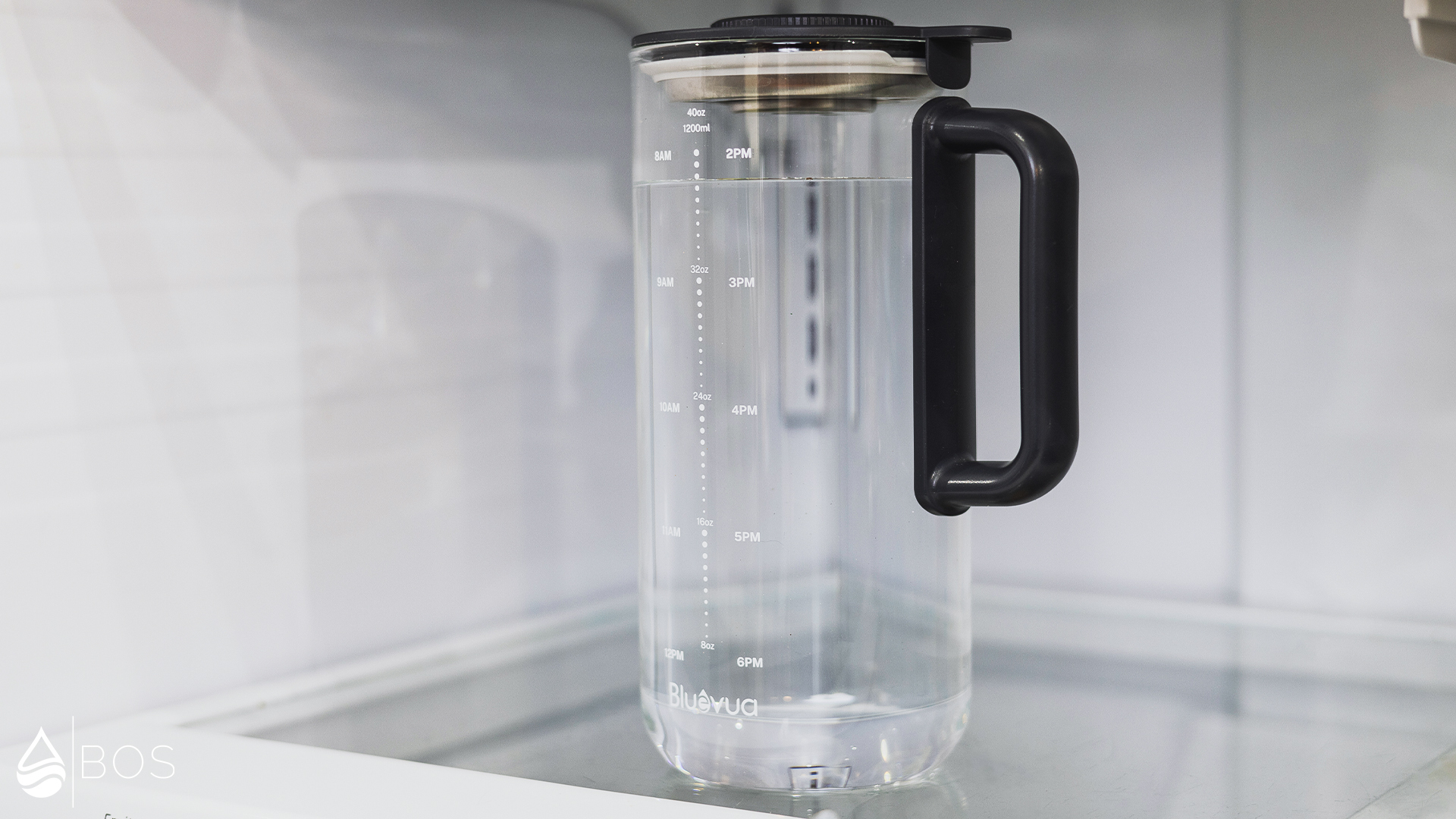
In addition, check the comparison sheet to determine whether the spout height of a given system will accommodate your preferred bottle or pitcher – the systems we tested ranged from 6.5″ to 11.5″. You can also see whether the system allows dispensing into your own container or requires use of the included carafe.
In general, all tested systems dispensed smoothly and without splashing, though some required a brief “ramp-down” to stop – particularly important when dispensing custom amounts. If you don’t anticipate this delay, you may end up overfilling your glass. We highlight which systems behave this way in the comparison sheet so it won’t catch you off guard. Fortunately, most also come equipped with drip trays to catch residual droplets.
Finally, many countertop ROs feature intuitive touchscreen displays. These may include temperature and – as mentioned – volume presets, commonly options like 4, 8, 16, or 20 oz. Volume presets are especially useful for models without a carafe.
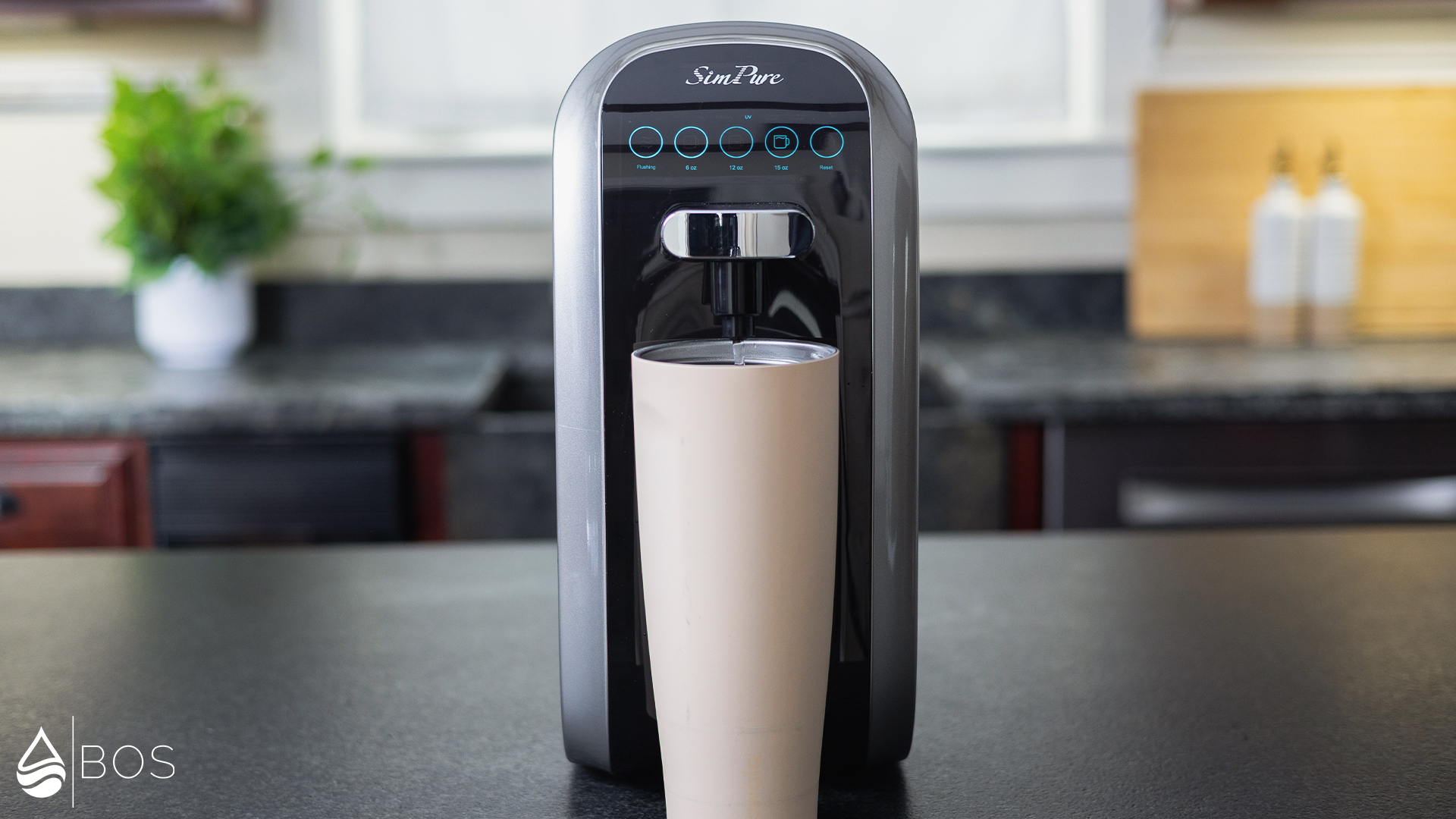
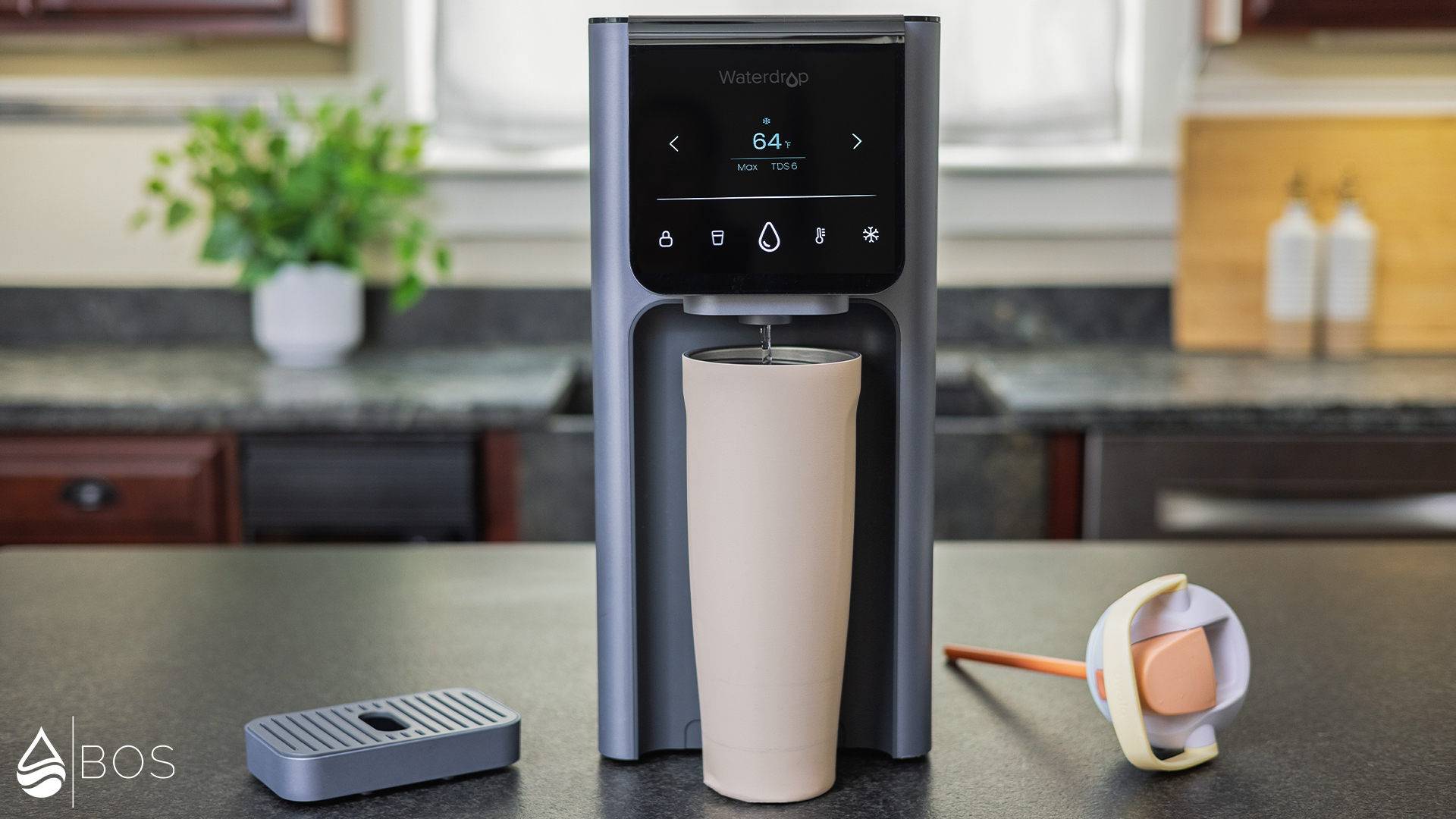
Hot Water
If you’re looking for hot water to prepare tea, coffee, or instant foods, there are a few special considerations. Since water is heated on demand, dispensing hot water from a countertop reverse osmosis system is inevitably slower than cold or ambient water – around 45–53 sec for an 8 oz cup in our trials. In addition to checking the speed test results in the comparison sheet, see whether your preferred system offers multiple volume presets to help offset this longer wait time.
All the systems we analyzed scored a perfect 10/10 for their ability to produce at least 32 oz of hot water at one time (ranging from 48–107 oz), which we estimate is sufficient for most uses.
You’ll also want to consider how hot the water actually gets and whether the unit’s displayed temperature is accurate. We evaluated this by comparing each unit’s presets (when available) against our own thermometer. Spoiler alert: none of the tested units reached their highest advertised temperature, though several came close. A couple of models, however, were significantly off – measuring as much as 14–18 °F below the hottest preset.
More important is whether the maximum temperature is hot enough for your needs, regardless of preset accuracy. In general, 190–195 °F should be sufficient for most beverages and instant foods, while ≥200 °F is ideal. The only tested system that failed to attain this was the Waterdrop A2, reaching a maximum of 188.8 °F; the remaining six reached max temps of ~194–200 °F.
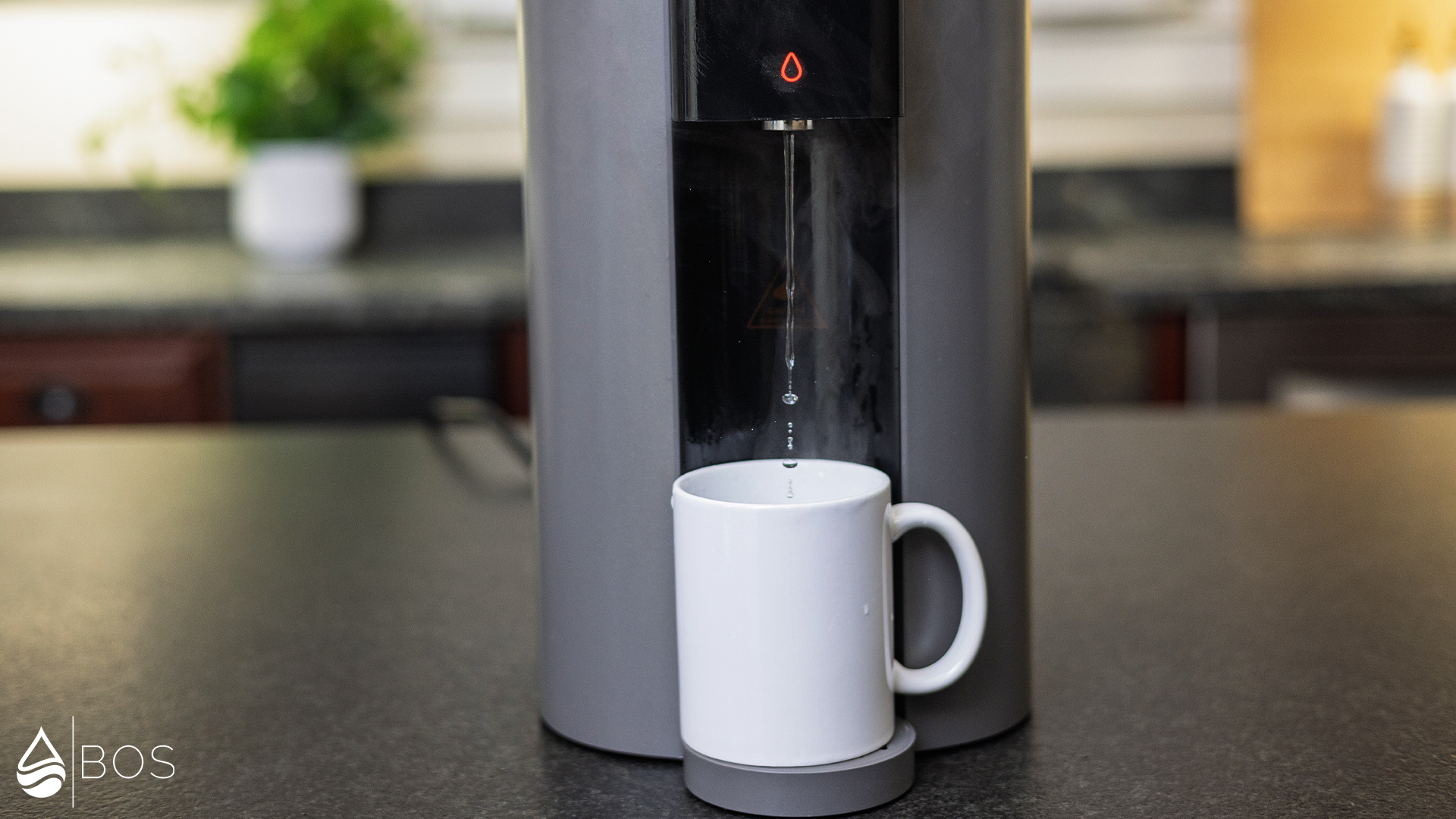
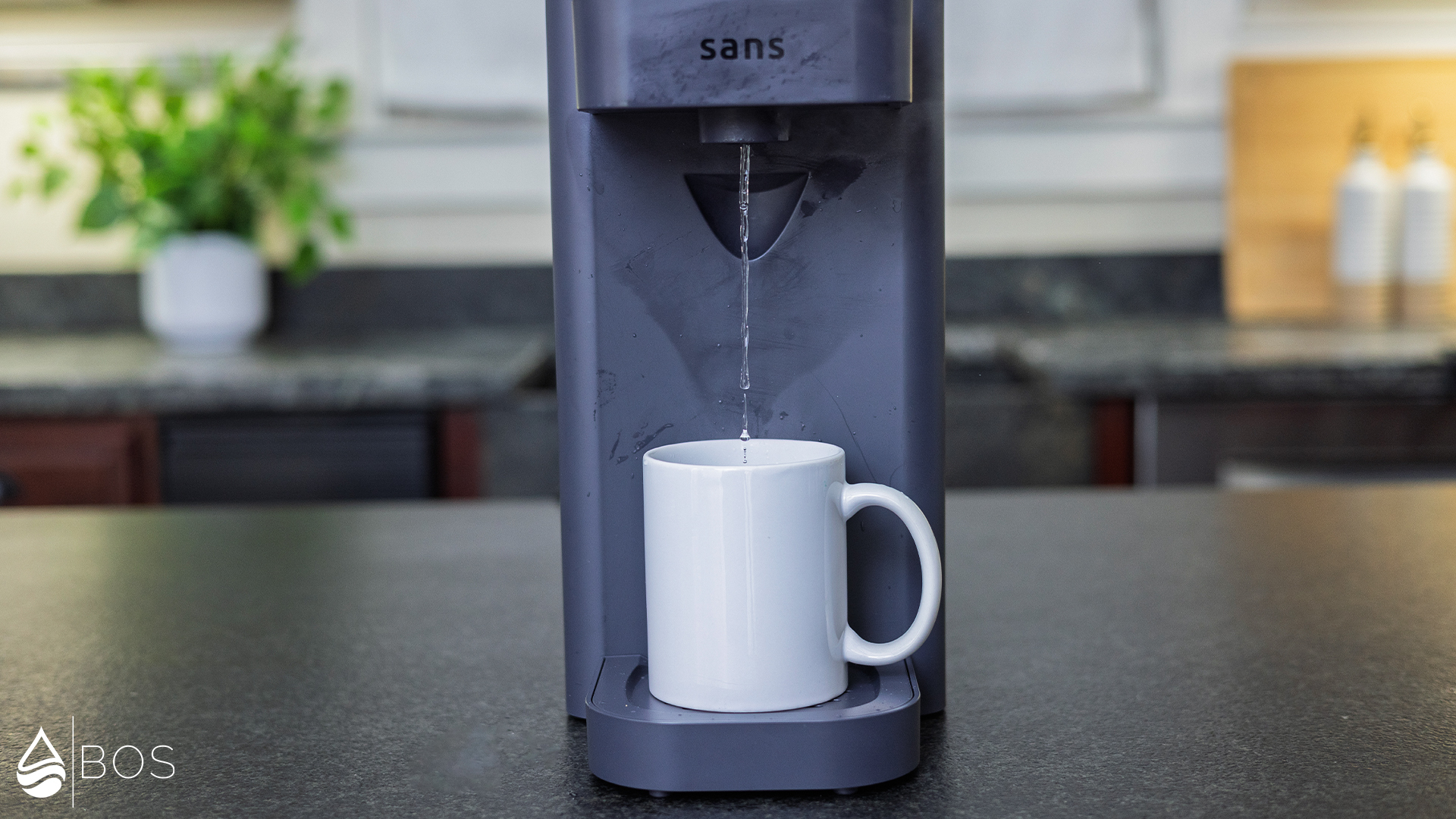
Customizable volume and temperature options are also nice to have, but one feature we consider almost non-negotiable in a hot water RO is a child safety lock, which helps prevent accidental burn injuries. The good news is most systems we reviewed include this feature.
Boiling point correction (high-altitude mode) can be another useful feature found in some systems. It lowers the maximum water temperature to account for reduced boiling points at higher elevations. A few units also include a Favorite Mode, allowing you to save your preferred temperature and volume settings.
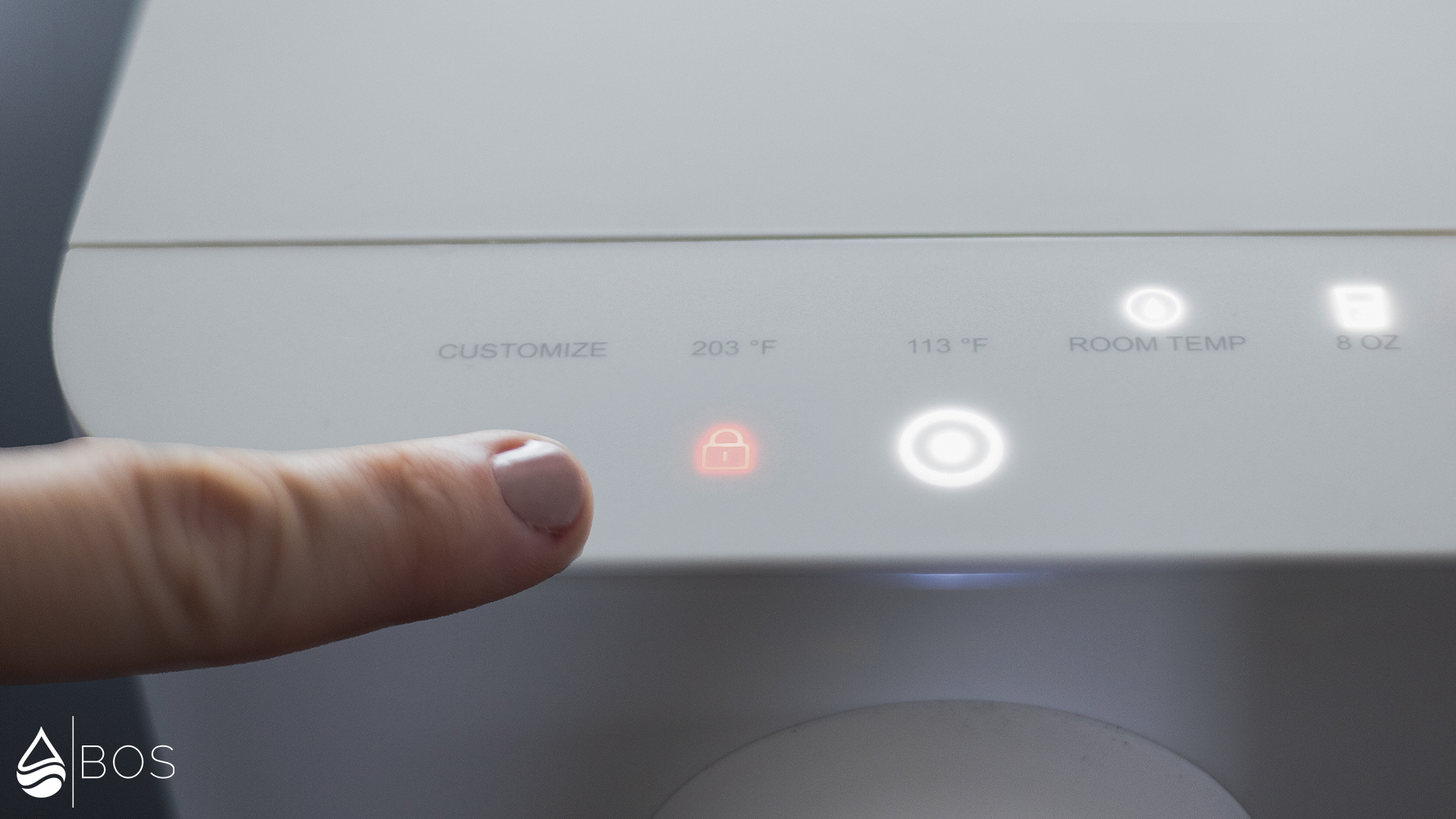
Cold Water
We gave cold water RO systems – and models that combine both hot and cold water – the same treatment as the hot water units, evaluating both actual temperature and maximum dispensed volume. Dispensing speed ranged from about 21–44 sec for 8 oz of cold pre-processed water.
A common issue we observed was that some systems dispensed more water on the cold setting than was properly chilled. In fact, 3 of the 4 tested cold water ROs could continuously dispense up to ~50–90 oz on the cold setting, but only the first ~16 oz were genuinely cold (43–53 °F). One notable exception was the Waterdrop A1, which dispensed the full 34 oz contents of its internal cold water tank in one go – and remained refreshingly cold (~44–50 °F) to the last drop.
Keep in mind that chilling water takes time – about 20–45 min in our tests, depending on the unit. Also, cooling is optional on all tested systems and can be turned off to save energy or reduce noise from intermittent compressor cycling.
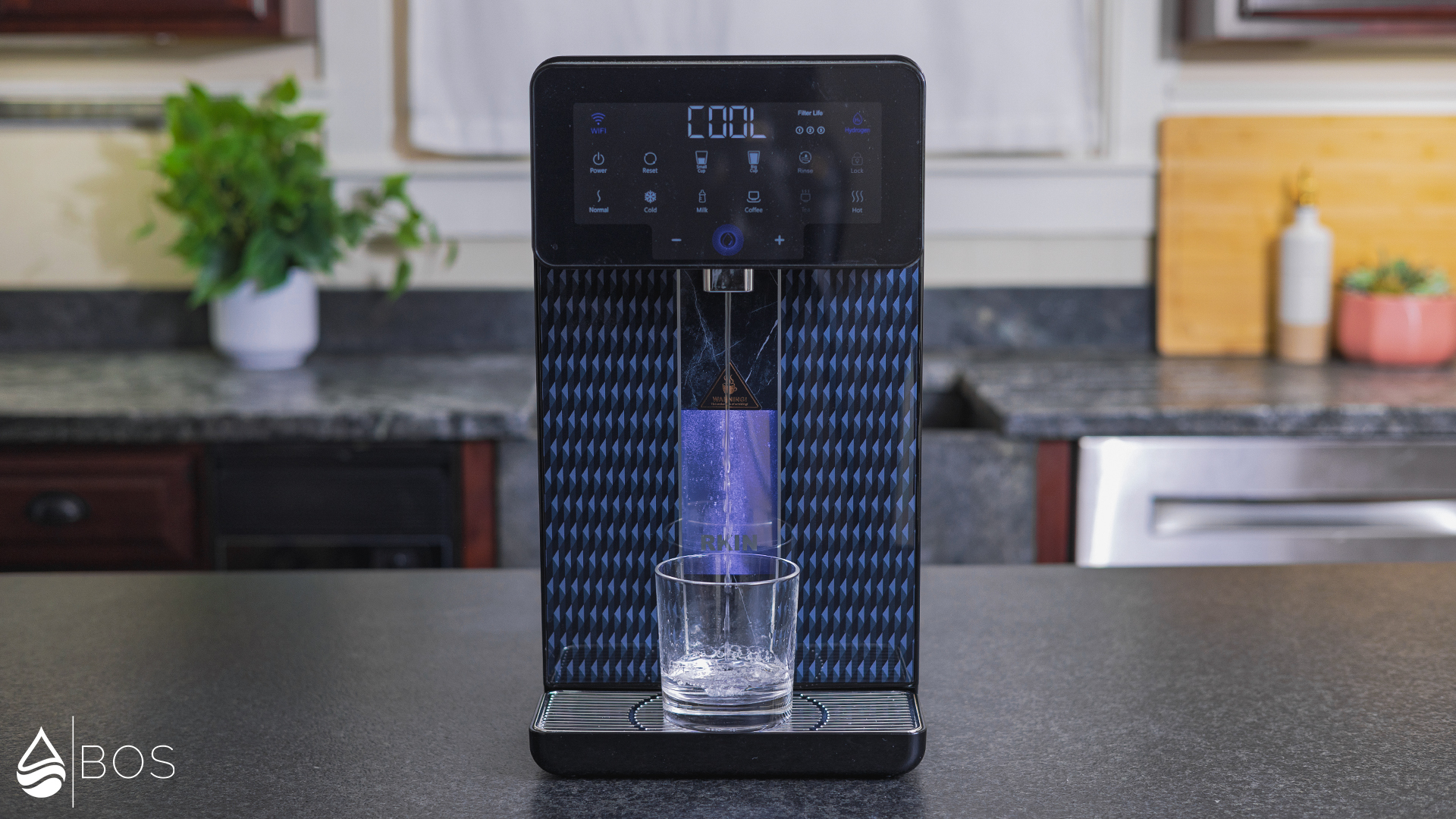
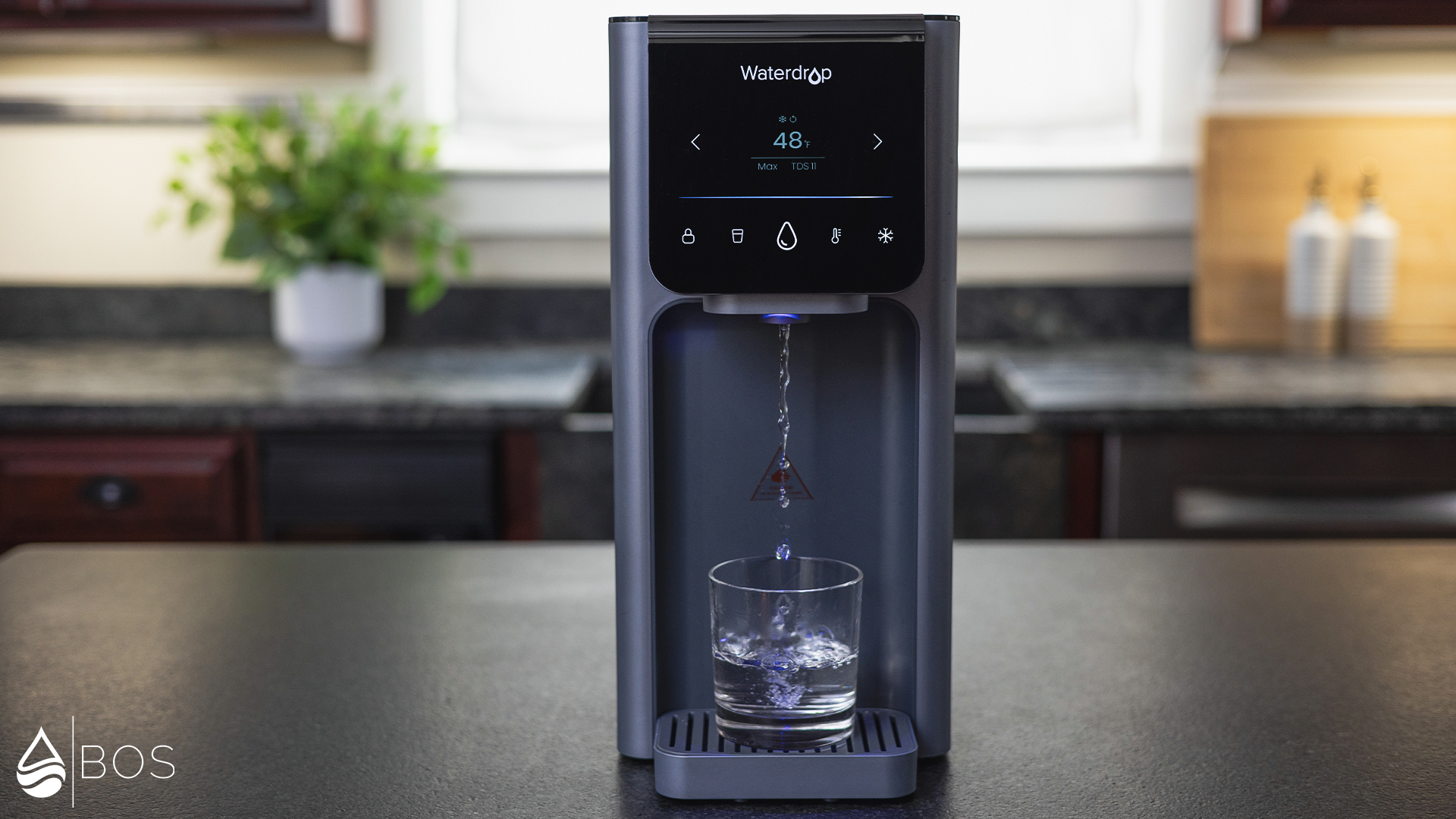
Refilling & Size
The refilling process is the same for almost all systems: the feed tank needs to be removed and the wastewater discarded before adding fresh tap water. Usually, a max fill line is present to guide you.
As mentioned above, larger feed tanks mean fewer refills but they are also heavier and potentially more challenging to lift and place back on the base. Careful consideration of where you set up your system can prevent recurring headaches later on. We recommend not only checking the unit’s dimensions (listed in the comparison sheet), but also the location and size of the feed tank for the system you’re evaluating. In many cases, it’s positioned at the back of the machine, which can make access difficult if the unit is placed against a wall or in a tight space without enough clearance.
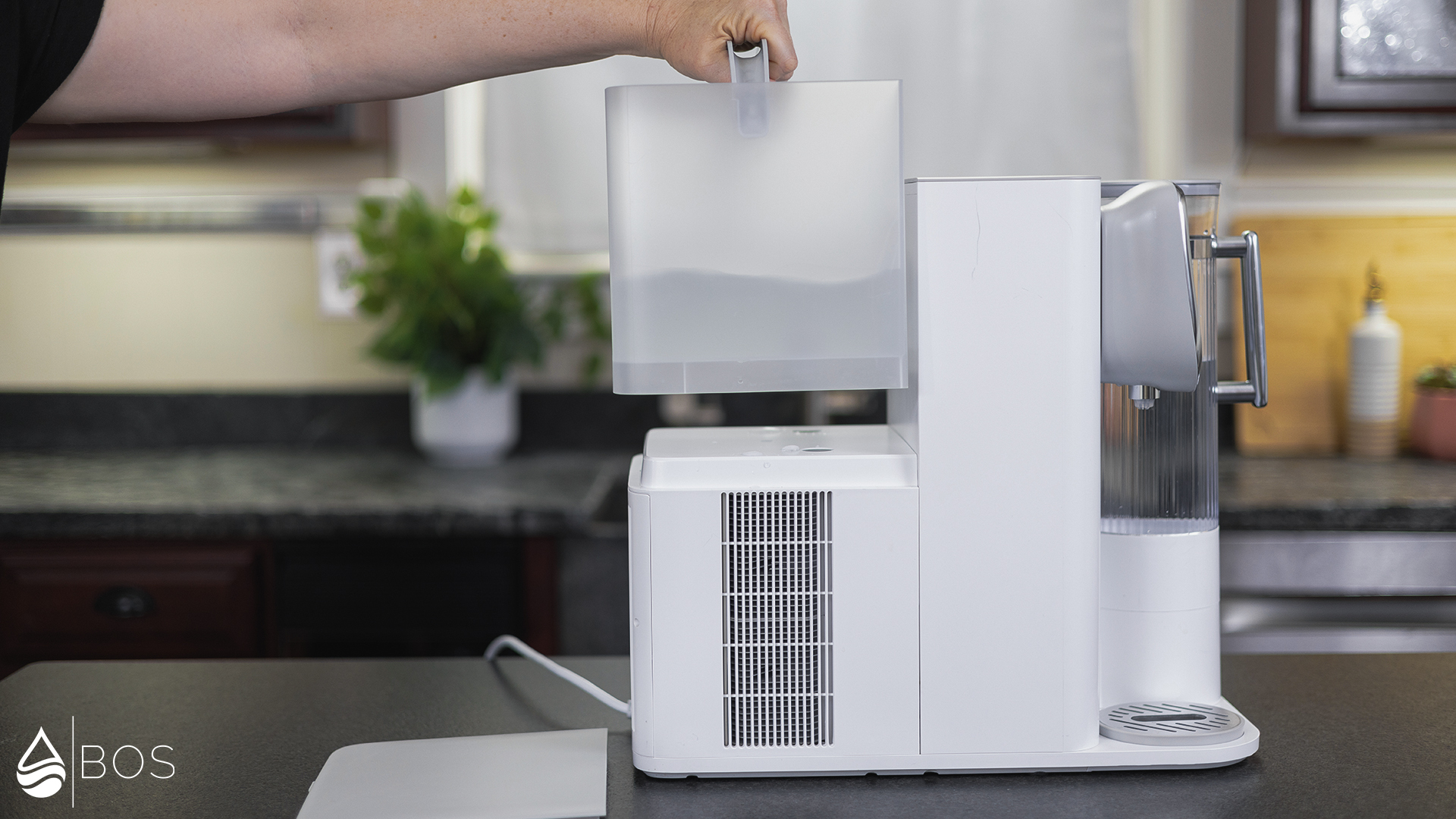
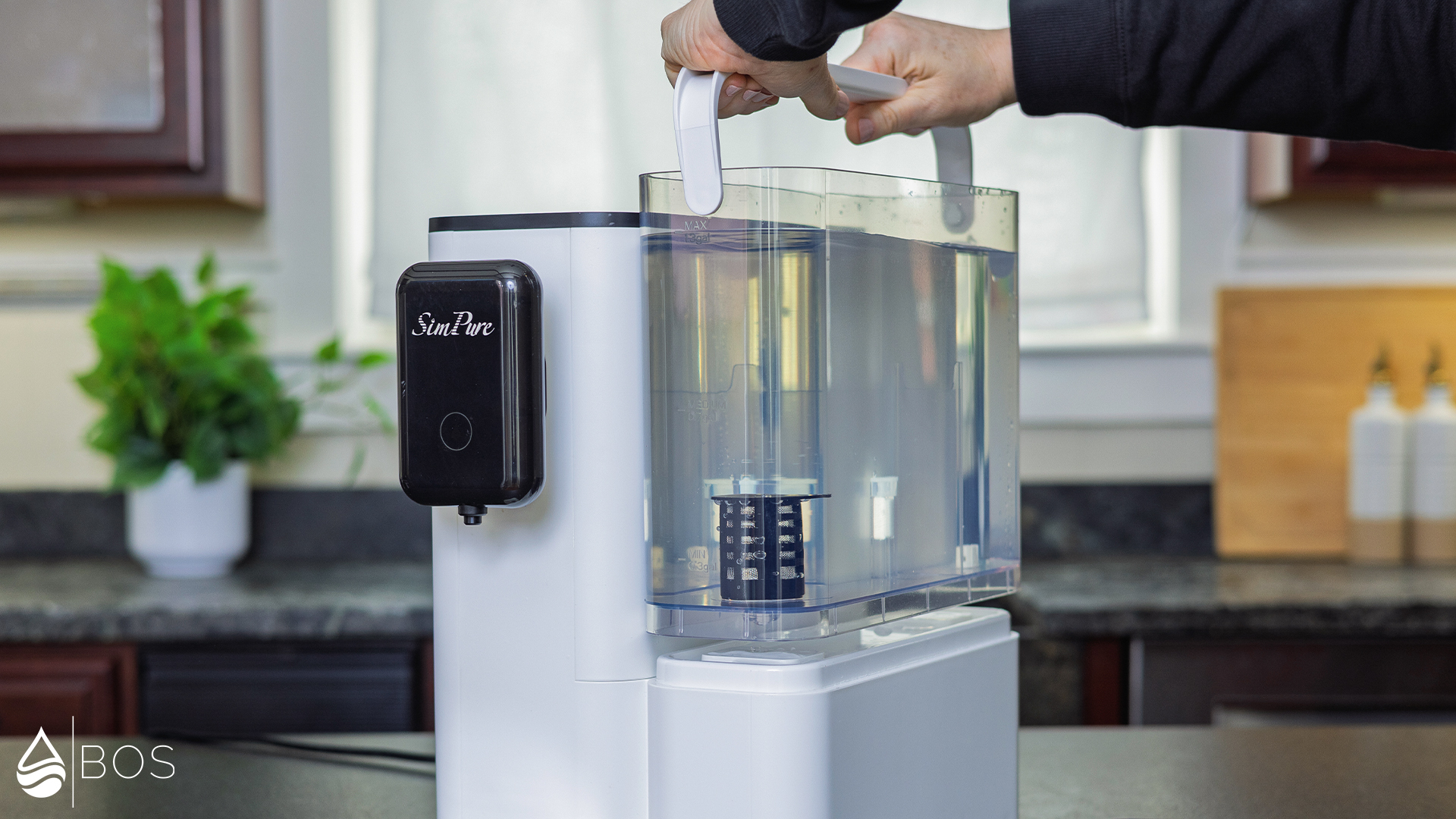
All the systems we reviewed except the tankless Crystal Quest feature some form of water shortage/water change indicator to remind you when it’s time to empty wastewater and refill. This is usually a light on the display panel, but in the case of the Bluevua RO100ROPOT, a beeping alert is used instead.
As discussed earlier, refill frequency ultimately depends on both feed tank size and wastewater efficiency – smaller tanks and higher wastewater systems will generally require more frequent refilling.
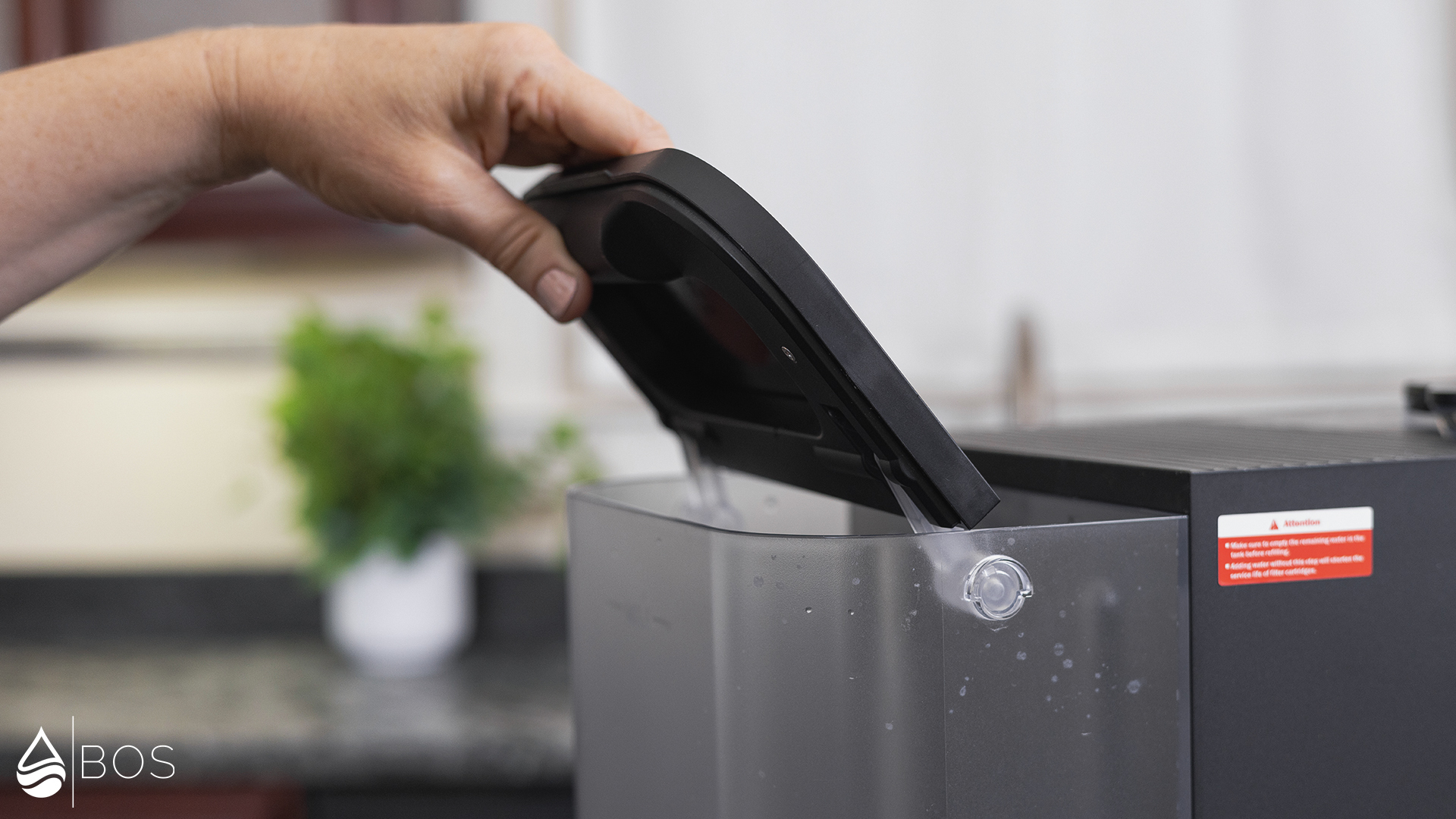
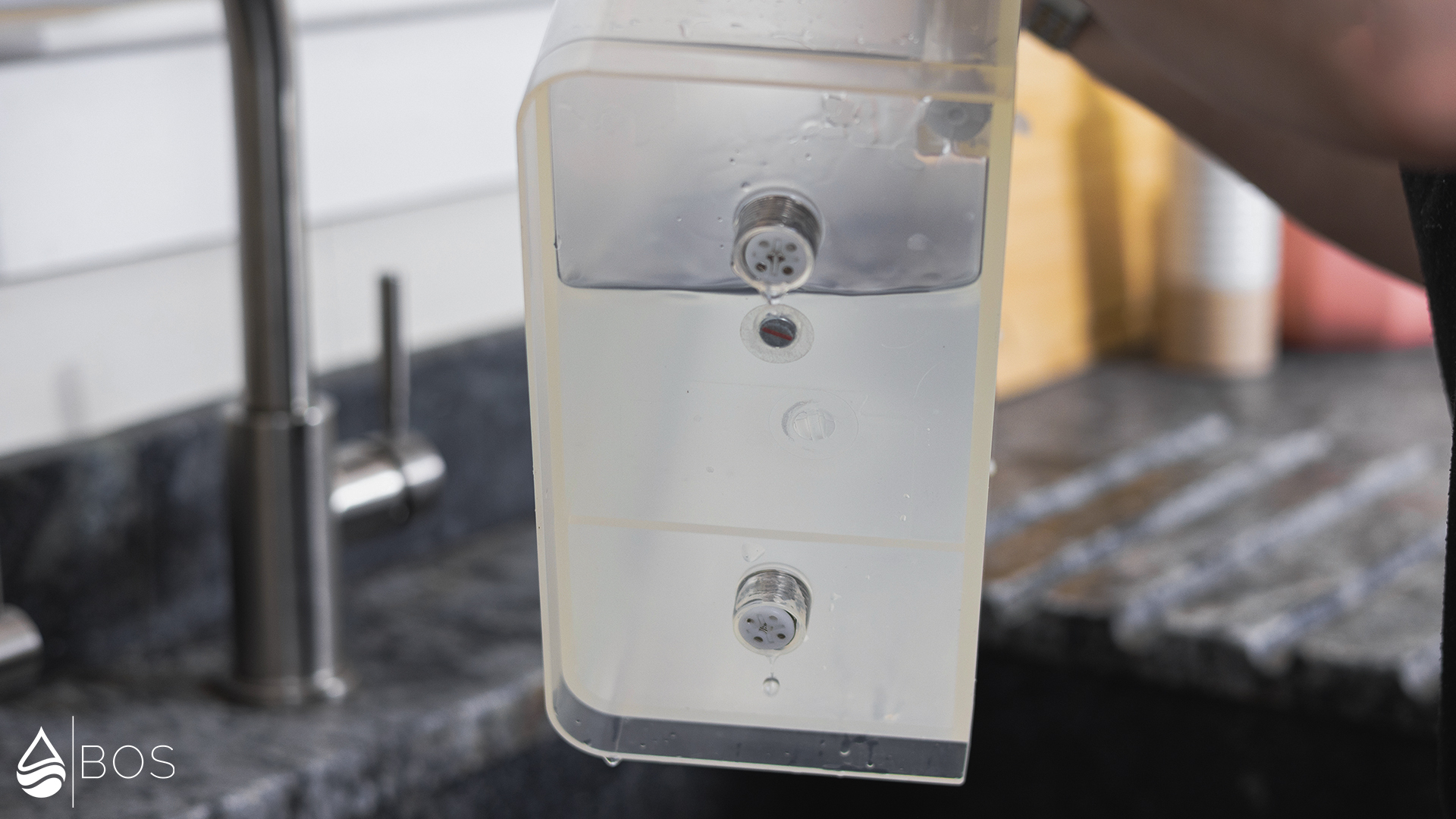
Finally, overall unit size may matter if countertop space is limited, and weight can vary enough to be a factor if you plan to move or reposition the system regularly. For reference, tested systems ranged from 90.25–174.80 in² and 7.8–34.6 lb; all are sufficiently low profile to fit under a standard kitchen cabinet set 18″ above counter height.
Filter Replacement and Other Maintenance Tasks
Consider both the rated filter life and your average water consumption to determine how often you’ll need to replace each filter. While the replacement process is usually straightforward, higher-than-average usage will require more frequent changes.
At the same time, be cautious about claimed filter lifespans when they are not supported by NSF/ANSI certifications or third-party testing across 100% or more of the rated filter life.
Every system we reviewed – except the Crystal Quest – includes filter replacement indicators to let you know when it’s time to change them. While some models use a single composite filter that combines the pre-filter, RO membrane, and post-filter, others rely on separate cartridges for each stage. As a result, depending on the system, you may be replacing one filter every 6–12 months or 3–4 filters every 6–24 months. While the swaps themselves are typically quick and easy, keep in mind that you’ll need to flush the system each time a filter is replaced – just as you did during initial setup.
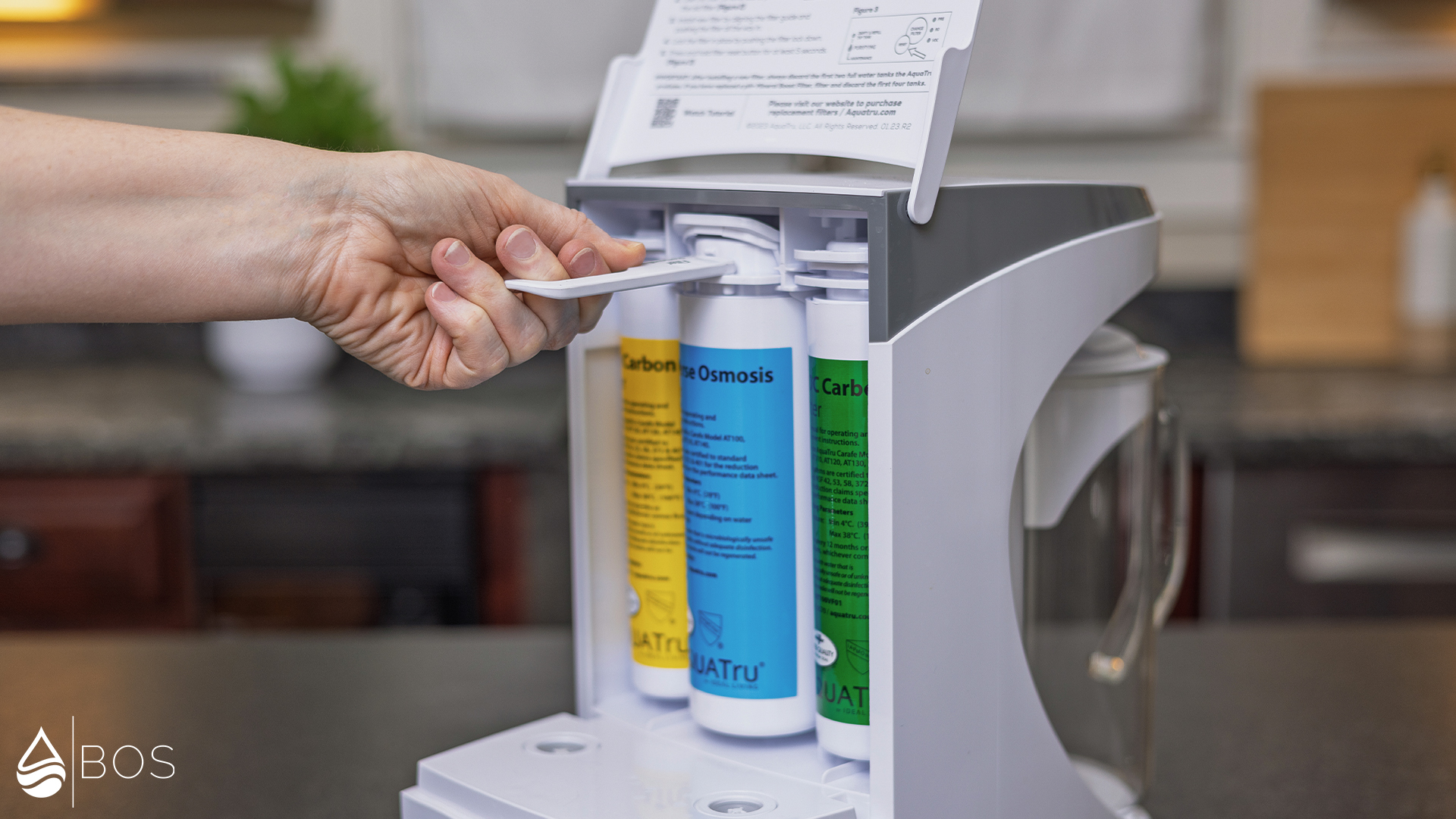
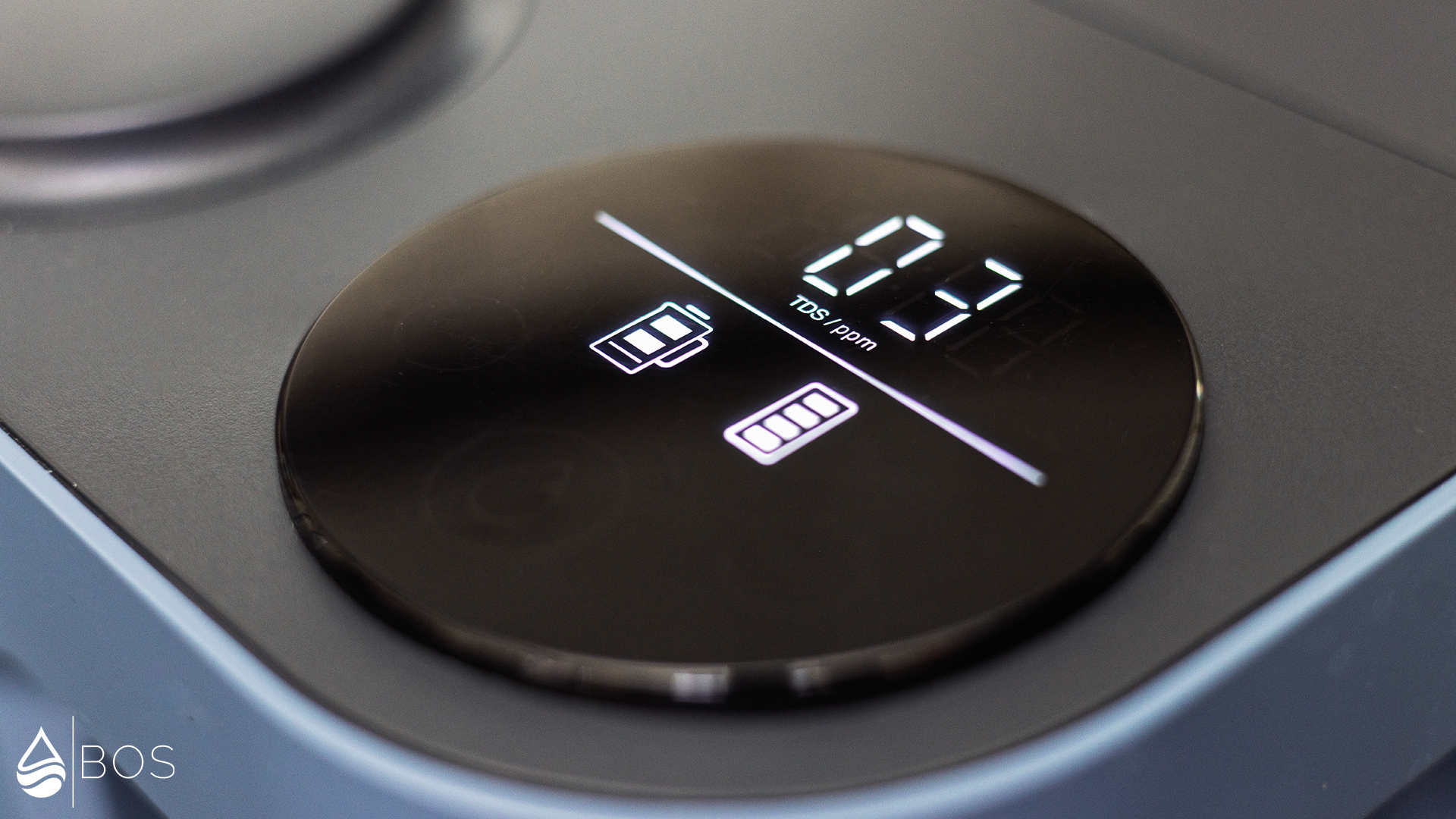
Some countertop ROs also include built-in sensors that measure the TDS of the feed and/or filtered water. Feed water readings provide insight into your tap water quality, while filtered water readings offer a snapshot of the system’s performance at that moment. In addition to replacement indicators, monitoring TDS trends over time can help you spot filter degradation.
Several systems also offer automatic or manual flushing, which can extend RO membrane life and help reduce TDS creep. However, flushing may also increase water waste.
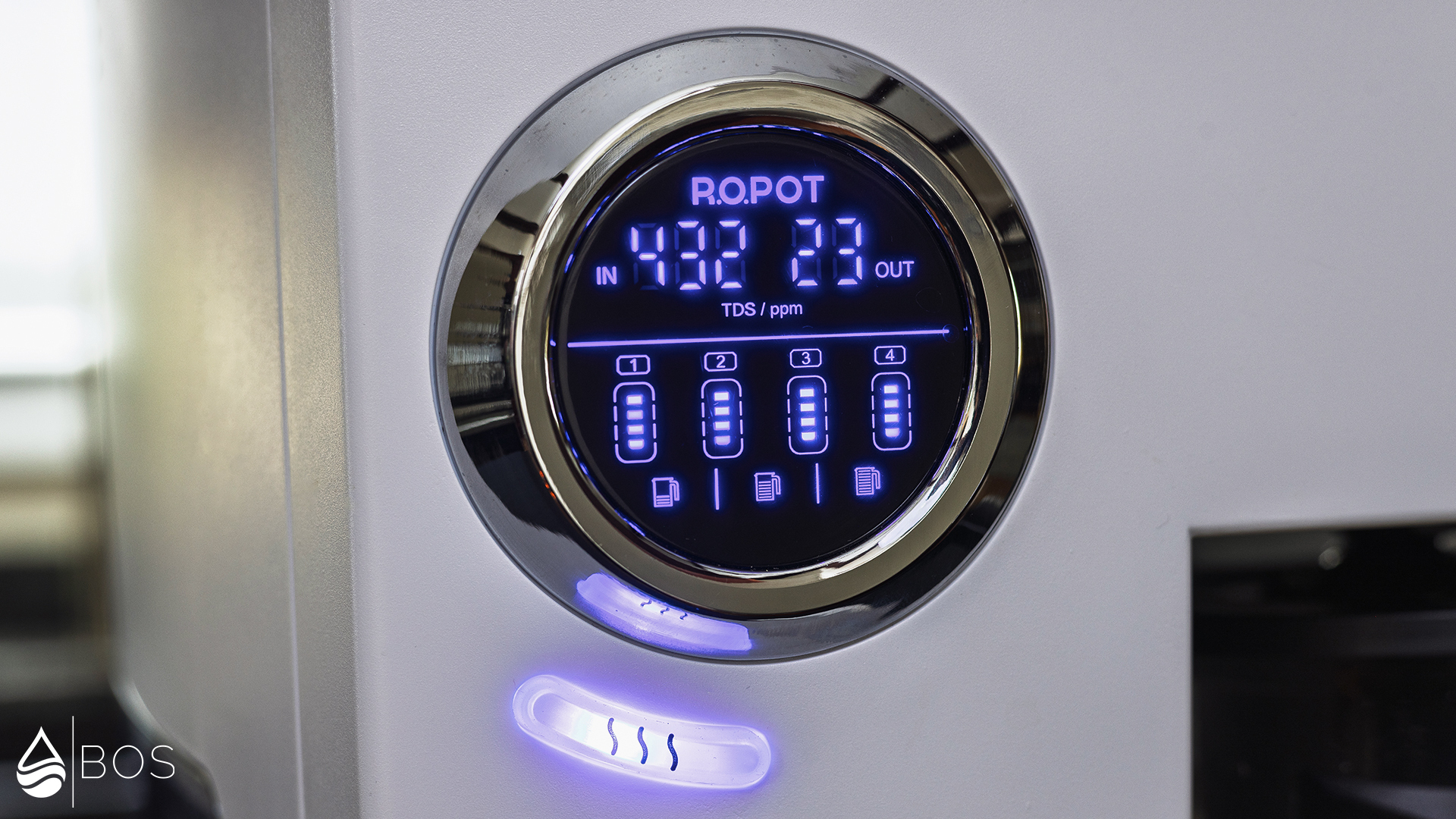
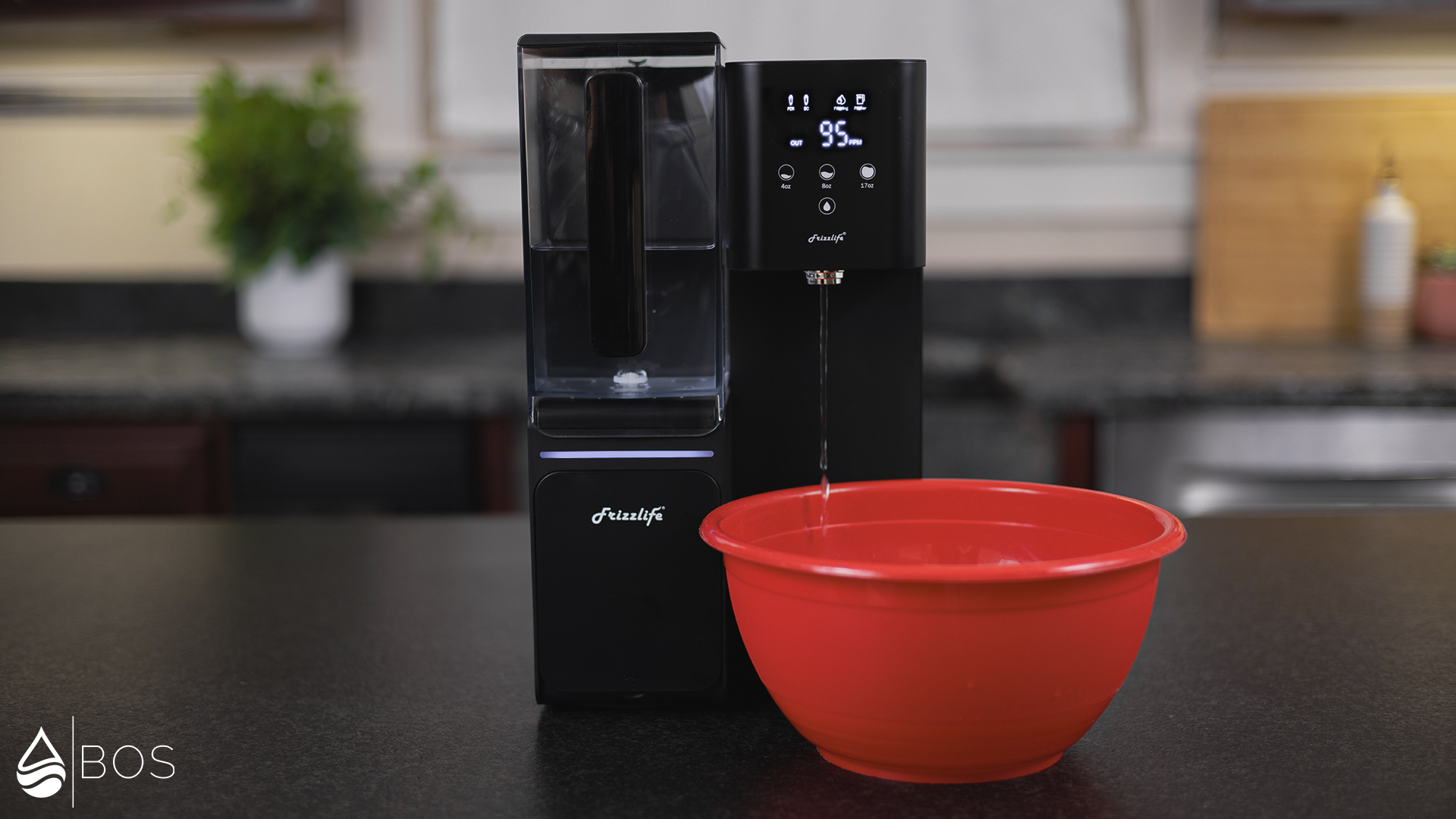
Budget & Costs
The upfront price of a countertop reverse osmosis system is only one part of the equation. Long-term replacement filter costs are often more important and largely depend on the price and lifespan of the cartridges.
When estimating costs, advertised filter lifespans should be viewed cautiously – especially if a system is not supported by NSF/ANSI certifications or third-party testing across 100%+ of the rated filter life. To err on the side of caution, more frequent filter changes may be prudent for systems without this backing – for example, replacing a filter twice per year even if it’s rated for 12 months but lacks NSF/ANSI-certified contaminant reduction.
Check our comparison sheet and detailed reviews for discount codes, which may help reduce either the upfront cost or ongoing replacement filter expenses. In addition, some manufacturers offer discounts on the RO system or filters when you sign up for a subscription.
Additional Considerations
After weighing filtration performance, usability, and costs, what else is left to consider? A few additional factors may still matter to you:
- Product warranty: The systems we’ve reviewed range from 1-year to lifetime warranties, and a couple also offer satisfaction guarantees (though restocking fees may still apply).
- Remineralization: Some ROs utilize a mineral/alkaline post-filter to restore minerals like calcium and magnesium, raise the pH to prevent acidity, and enhance the water’s flavor. This may be an optional cartridge or a required component of the system.
- UV light post-filter: When present, this exposes filtered water to germicidal UVC radiation prior to dispensing, helping inactivate microorganisms. In our view, it should not be relied upon to make non-potable water safe to drink, but rather to help control microbial regrowth in stored water and prevent off-tastes from stagnation.
- Noise: Some systems were noticeably noisy during filtration or when the compressor activated for cooling.
- Setup issues: A couple of systems gave us trouble during initial setup. For example, the APEC ROCT-C1 displayed an error code that even APEC support could not identify and stopped filtering during priming, though a replacement unit worked as expected. The Crystal Quest Countertop Thunder lacked priming instructions but was easy enough to connect to a standard kitchen faucet; however, it was so slow in our tests that we found it impractical to use.
- Specific usability: Several systems have unique attributes that impact daily use. For example:
- The Frizzlife WB99-C has a feed water tank lid that doubles as a carrying handle, which makes it very awkward to remove, refill, and replace on its base.
- The RKIN U1 is also challenging to refill: it has a large, heavy feed tank that latches via hooks onto the back of the unit, plus the max fill line goes right up to the tank divider. Water can spill over from the fresh tap water compartment into the wastewater compartment if you are not careful.
- The Waterdrop C1H uses an internal tank that’s removable at the push of a button. The tank has a handle, spout, and a removable lid, and it fits in the fridge. It can be topped up while still installed. However, once the tank is removed, the system won’t function, meaning you can’t dispense water.
For more detailed information about the particular usability flaws and features of all the tested systems, please check out the comparison sheet and detailed reviews.
- Design: Aesthetics range from utilitarian to modern. Some models are available in multiple colors, and a few include temperature indicator lights that illuminate your glass during dispensing.
- Materials: Carafes, when included, may be made from borosilicate glass or plastic. Even systems with glass components typically include internal plastic parts that come into contact with water. Most modern countertop ROs use BPA-free materials, often also free from phthalates. Some systems, such as the AquaTru Classic and AquaTru Carafe, use medical-grade Tritan plastic, which is BPA, BPS, and phthalate-free and considered a higher-quality material.
- App connectivity: A few systems, such as the AquaTru Classic Smart, AquaTru Carafe Smart, and RKIN U1-W, offer app connectivity. Depending on the model, apps can track feed and filtered water quality (TDS), gallons filtered, water consumption, and filter status. They may also provide maintenance reminders and allow filter purchases. The U1-W even supports remote control (e.g., turning the unit on/off, selecting temperature, or dispensing volume).
- Little extras: A few systems include additional features that may appeal to some users:
- The Bluevua ROPOT-Lite includes a glass fruit infuser basket, though it reduces water capacity and cannot be used with the remineralization filter.
- The Waterdrop A1 offers a Night Mode to reduce noise and energy use, as well as an Off-Home (Vacation) Mode that drains internal tanks.
- The RKIN U1 (and U1-W) offer a hydrogen post-filter that produces hydrogen-enriched water. RKIN claims the dissolved molecular hydrogen may act as an antioxidant, potentially reducing oxidative stress.
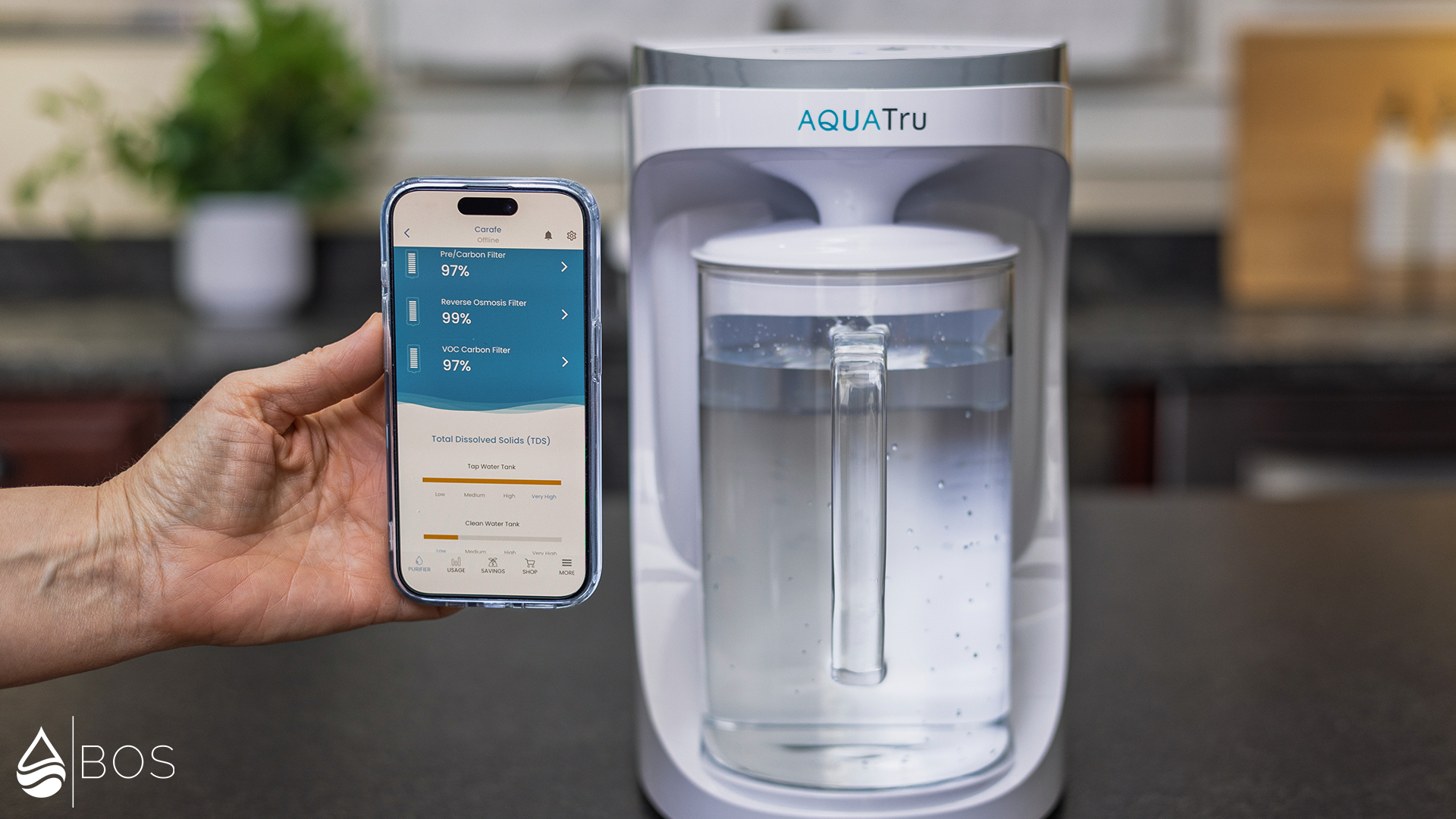
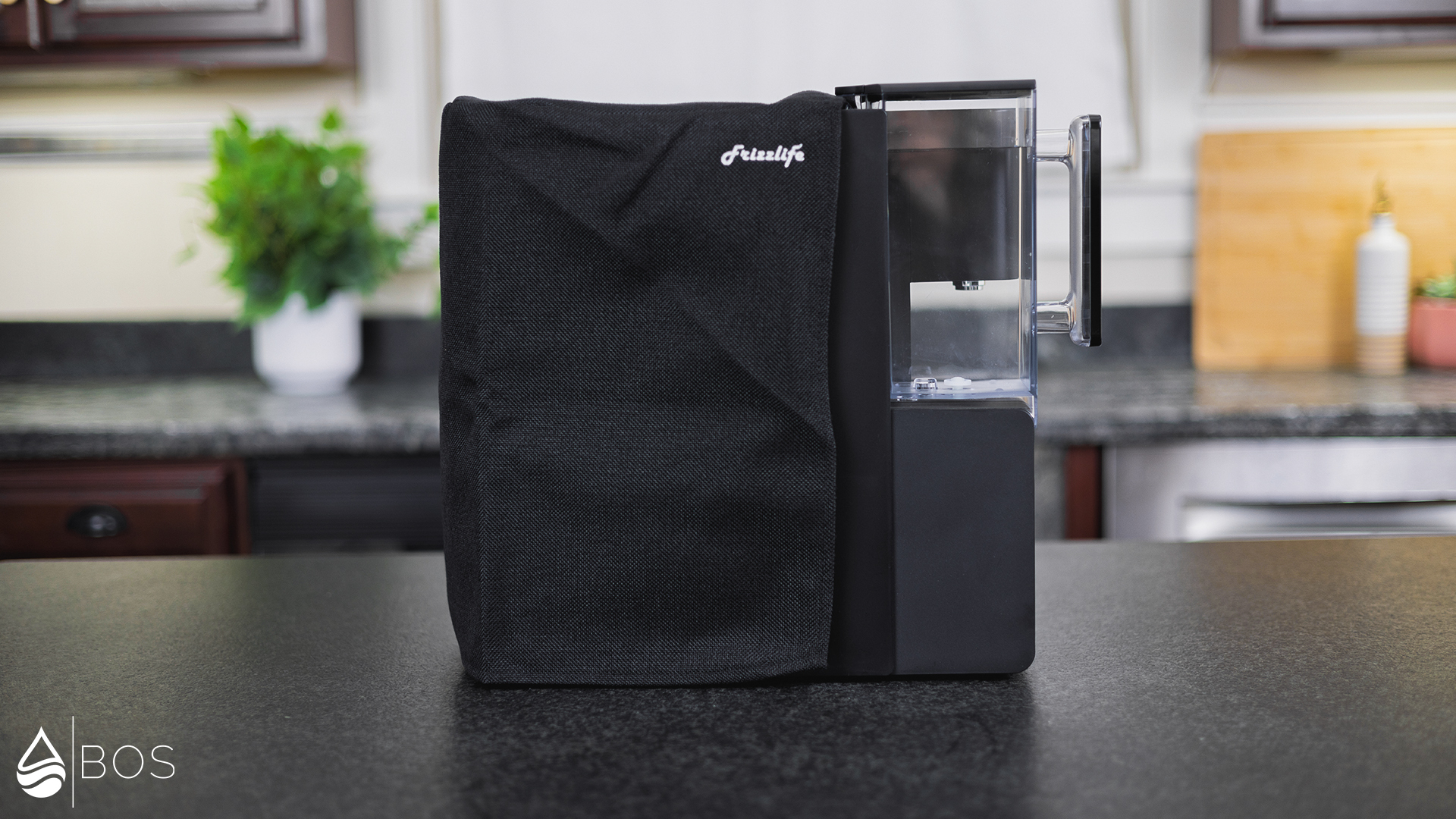
In Summary
There’s a lot to consider when shopping for a countertop RO. The good news is that these systems offer broad contaminant reduction, so it’s difficult to go completely wrong when choosing a model. Still, not all perform exactly the same, so it’s worth identifying what’s in your water and confirming that your chosen system is tested – and ideally certified – to reduce those specific contaminants. From there, factor in your budget, household water usage, and any usability preferences before making your final decision.
Frequently Asked Questions about Countertop Reverse Osmosis Systems
1. Are countertop reverse osmosis systems effective?
Yes, countertop RO systems are highly effective. Aside from bad taste and odor, they can remove a wide range of contaminants (e.g., chlorine/chloramine, heavy metals, fluoride, nitrates, and organic compounds) and typically produce very low-TDS water.
2. Do countertop reverse osmosis systems remove microplastics?
Yes, countertop RO systems do remove microplastics. RO membranes have extremely small pore sizes (~0.0001 microns), while microplastics are typically defined as particles ranging from 1 μm to 5 mm. This large size difference makes RO highly effective at rejecting them.
3. Do countertop reverse osmosis systems remove PFAS?
Yes, countertop RO systems are effective at reducing PFAS compounds, often to very low levels. This is not only due to the RO membrane itself, but also the carbon pre and post-filters, which adsorb PFAS. Some systems may also use ion exchange media, which can further enhance PFAS reduction.
4. What are the negatives of reverse osmosis?
Wastewater production (in our testing, the average ratio was ~1:0.61, which is significantly lower than traditional tank-based under-sink RO systems), slower filtration, removal of beneficial minerals, and – depending on the design – the need for electricity (most countertop RO systems use a booster pump and therefore require power).
5. Where does wastewater go in a countertop RO system?
In most countertop RO systems, wastewater is rerouted back into the feed tank for recycling, helping reduce overall waste. Some systems may have a separate compartment within the feed tank to keep wastewater and fresh water apart, but that’s less common. In practice, you typically empty the tank before refilling with fresh tap water.
About the Author(s)

Sara has been a lifelong home-improvement fan (she’s been hooked on This Old House since she was five) and taught herself any project she didn’t already know by watching YouTube tutorials. She is also an award-winning filmmaker. Armed with this skillset, Sara installs, primes, samples, uses, and maintains nearly every point-of-use water treatment system we test – then brings her results to life on camera for our YouTube channel.

Raoul has a background in mechanical engineering and has been writing about home water treatment since 2015. He designs our product review processes, analyzes the results, and ties everything together. As editor-in-chief, he tries hard to keep the whole operation running smoothly behind the scenes.