

This page contains affiliate links. Learn more.
About This Guide
In 2 rounds, we tested and compared 18 gravity water filters, including 1 custom setup for which we combined the best system housing with the best filter element. For each gravity filter, we:
- Hands-on experience: Set up, used, and maintained it.
- Filtration effectiveness: Sent unfiltered and filtered tap water samples to professional labs for analysis in order to determine real-life contaminant reduction capabilities. Plus, we checked for NSF/ANSI certifications and other test data.
- More testing: Performed taste & odor and filtration/dispensing speed tests.
- All other product aspects: Considered initial + long-term costs, warranties, additional features, frequent customer complaints, etc.
Don’t Feel Like Reading?
Video Chapters
- 00:00 – Intro
- 00:50 – General Info
- 01:58 – All Gravity Filters We Tested
- 04:57 – Our Top Pick (Pt. 1 – Filtration)
- 13:43 – Our Top Pick (Pt. 2 – Usability)
- 24:20 – Our Top Pick (Pt. 3 – Cost)
- 27:57 – Best for Non-Potable Water: Alexapure Pro
- 36:56 – Best Budget Pick: Phoenix
- 40:58 – Remaining Systems (Quick-Fire Round)
- 51:40 – Wrapping Up
Video Chapters
- 00:00 – Intro
- 01:00 – Our Top Pick
- 10:26 – Best for Non-Potable Water
- 15:39 – Best Budget Pick
- 19:13 – Wrapping Up
Video Chapters
- 00:00 – Intro
- 01:24 – 3 Pathogen Classes
- 03:28 – Scope
- 04:37 – The 5 Filters We Tested
- 05:53 – How We Tested
- 10:24 – Lab Results
- 14:14 – Putting It in Perspective
- 19:42 – Alexapure Pro (Additional Details)
- 21:50 – Warning!
- 22:59 – Wrapping Up
Our Top 4 Gravity Filters at a Glance
| Model | Image | Rating | Buy Here | ||||||||||||||||||
|---|---|---|---|---|---|---|---|---|---|---|---|---|---|---|---|---|---|---|---|---|---|
|
Custom: Phoenix 2.25-Gallon System with Patriot Pure Nanomesh Filters |

|

|
Check Current Price (System) Check Current Price (Filters) |
||||||||||||||||||
|
|||||||||||||||||||||
|
Phoenix 2.25-Gallon System with Carbon Filters |
|

|
Check Current Price | ||||||||||||||||||
|
|||||||||||||||||||||
|
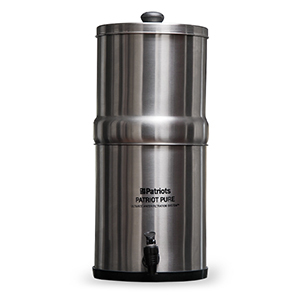
Patriot Pure Ultimate Water Filtration System (Old Model) |
|
|
Check Current Price (System) Check Current Price (Filters) |
||||||||||||||||||
|
|||||||||||||||||||||
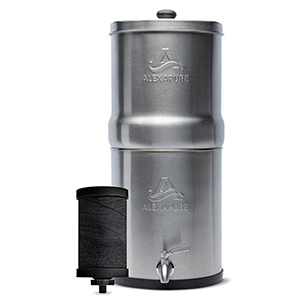
| Alexapure Pro |
|
|
Check Current Price | ||||||||||||||||||
|
|||||||||||||||||||||
17 + 1 Gravity Water Filters Compared

| Gravity Water Filter | Custom: Phoenix 2.25-Gallon (Patriot Pure Nanomesh Filters) |
Phoenix 2.25-Gallon (Carbon Filters) |
Patriot Pure Ultimate Water Filtration System (Old Model) | Alexapure Pro | Phoenix 2.25-Gallon (Carbon + POSTreat Steel Fluoride Reduction Filters) |
Rorra Countertop System | Purewell 2.25G (K-Series Black Carbon Filters + Fluoride Filter Elements) |
British Berkefeld SS2 (Ultra Fluoride Filters) |
Purewell 2.25G (K-Series Black Carbon Filters) |
Culligan Scout | Big Berkey (Phoenix Gravity New Millennium Edition Filters) |
Santevia Gravity Water System | British Berkefeld SS2 (Ultra Sterasyl Filters) |
BOROUX Legacy (BOROUX Foundation + BOROUX Proactive Fluoride Filters) |
Waterdrop King (Black Filters + Fluoride Filters) |
Radiant Life SS Gravity Countertop Filter | Big Berkey (Black Berkey Filters + PF-2 Fluoride Filters) |
ProOne Traveler+ (G2.0 5″ Filter) |
|---|---|---|---|---|---|---|---|---|---|---|---|---|---|---|---|---|---|---|
| Purchase Links & Codes | ||||||||||||||||||
| Image | |
|
|
|
|
 |
 |
 |
 |
 |
 |
 |
 |
 |
 |
 |
|
 |
| FINAL RATING | ||||||||||||||||||
|
|
|
|
|||||||||||||||
| Final Rating | 4.39/5.00 | 4.18/5.00 | 4.08/5.00 | 3.81/5.00 | 3.71/5.00 | 3.65/5.00 | 3.60/5.00 | 3.36/5.00 | 3.33/5.00 | 3.11/5.00 | 2.96/5.00 | 2.84/5.00 | 2.66/5.00 | 2.39/5.00 | 2.30/5.00 | 1.69/5.00 | 3.56/5.00 | 2.41/5.00 |
| Verdict (Best For) | #1 Overall (Most Effective Filtration + Best All-Rounder) | #1 Budget Pick + #1 for Usability with Solid Filtration Results | Most Effective Filtration but Lower Usability | #1 for Bacteria, Viruses & Cysts | ||||||||||||||
| Comment | Our Ultimate Custom Combo! | We Tested the Old System Model (Uses Same Filters as the New) | Rely on a Gravity Filter for Germ Removal Only as a Last Resort! | Better Suited for Broad Contaminant Removal (Compared to Ultra Sterasyl Filters) | Officially Endorsed Black Berkey Filter Substitute | Better Suited for PFAS Reduction (Compared to Ultra Fluoride Filters) | EPA Stop-Sale Order Has Rendered Black Berkey Replacement Filters Unavailable | Discontinued (Also Applies to Newer G3.0 Filters) | ||||||||||
| Buy Here | Check Current Price (Phoenix System) Check Current Price (Patriot Pure Nanomesh Filters) | Check Current Price | Check Current Price (New System Model + 1 Filter) Check Current Price (Additional Filters) | Check Current Price | Check Current Price | Check Current Price | Check Current Price | Check Current Price (Authorized Seller: Lehman's Home and Garden) | Check Current Price | Check Current Price | Check Current Price (System) Check Current Price (Phoenix Gravity New Millennium Edition Filters) | Check Current Price | Check Current Price (Authorized Seller: Lehman's Home and Garden) | Check Current Price (System Incl. Foundation Filters) Check Current Price (Fluoride Filters) | Check Current Price | Check Current Price | Check Current Price (System Incl. Black Berkey Filters) Check Current Price (Fluoride Filters) | Check Current Price |
| Discount Code | BOS10 - 10% Off Phoenix System! |
BOS10 - 10% Off! |
BOS10 - 10% Off! |
BOSWATER5BERKEY - 5% Off! |
WD10BOS - 10% Off! |
BOSWATER5BERKEY - 5% Off! |
||||||||||||
| Score Overview | ||||||||||||||||||
| FiltrationFiltration score combines our lab results and taste testing with NSF/ANSI certifications and 3rd-party contaminant reduction data. | 4.26/5.00 | 3.80/5.00 | 4.26/5.00 | 3.76/5.00 | 3.30/5.00 | 3.61/5.00 | 3.15/5.00 | 3.26/5.00 | 2.46/5.00 | 3.33/5.00 | 1.99/5.00 | 2.29/5.00 | 2.20/5.00 | 1.10/5.00 | 0.95/5.00 | 0.00/5.00 | 3.20/5.00 | 1.38/5.00 |
| UsabilityUsability scores include optional manufacturer-offered water level spigots and tank stands. | 4.22/5.00 | 4.50/5.00 | 3.26/5.00 | 3.98/5.00 | 4.46/5.00 | 4.05/5.00 | 4.23/5.00 | 3.44/5.00 | 4.29/5.00 | 3.72/5.00 | 4.20/5.00 | 3.16/5.00 | 3.51/5.00 | 4.21/5.00 | 4.07/5.00 | 3.83/5.00 | 4.19/5.00 | 4.06/5.00 |
| CostsCost scores reflect overall value for money rather than price alone and include optional manufacturer-offered water level spigots and tank stands. | 4.97/5.00 | 5.00/5.00 | 4.37/5.00 | 3.80/5.00 | 4.17/5.00 | 3.37/5.00 | 4.32/5.00 | 3.58/5.00 | 5.00/5.00 | 1.84/5.00 | 4.63/5.00 | 4.20/5.00 | 3.21/5.00 | 4.43/5.00 | 4.55/5.00 | 4.63/5.00 | 4.02/5.00 | 3.88/5.00 |
| Full Analysis | ||||||||||||||||||
| Price (Jul 13, 2026)No short-term sales. | $320.96 (Incl. 2 Nanomesh Filters) | $189 (Incl. 2 Filters, Save $20 with Filter Subscription) | $295.93 (Old System Model When It Was Still in Stock, Incl. 2 Filters) | $399.98 (Incl. 2 Filters) | $259 (Incl. 2 Carbon + 2 Fluoride Filters, Save $20 with Filter Subscription) | $549 (Incl. 1 Filter, Save $100 with Filter Subscription) | $229 (Incl. 2 Black Carbon + 2 Fluoride Filters + Stand) | $340 (Incl. 2 Filters) | $148.99 (Incl. 2 Filters + Stand) | $199 (Incl. 2 Filters + Stand) | $544 (Incl. 2 Phoenix Gravity New Millennium Edition Filters) | $179.99 | $305 (Incl. 4 Filters + Stand) | $485 (Incl. 2 Foundation + 2 Fluoride Filters) | $259.99 (Incl. 2 Black + 2 Fluoride Filters + Water Level Spigot) | $379 (Incl. 2 Filters + Stand) | $521 (Incl. 2 Black Berkey + 2 Fluoride Filters) | $292.90 (When It Was Still in Stock, Incl. 2 G2.0 5″ Filters + Stand) |
| Tap Water Lab Results | 2026: 4.49/5.00The score is derived from testing the Patriot Pure Nanomesh filter in the Patriot Pure system, which is nearly identical to the Phoenix system. | 2026: 4.38/5.00 | 2026: 4.49/5.00 | 2026: 4.42/5.00 2024: 4.08/5.00 |
2026: 3.75/5.00 | 2026: 4.23/5.00 | 2024: 4.15/5.00 | 2026: 3.71/5.00 | 2026: 3.46/5.00 | 2026: 3.73/5.00 | 2026: 2.39/5.00 | 2024: 2.79/5.00 | 2024: 2.83/5.00 | 2026: 1.25/5.00 | 2024: 1.95/5.00 | 2026: 0.00/5.00 | 2024: 3.53/5.00 | 2024: 1.75/5.00 |
| Pond Water Lab Results | See Pond Water Results Tab | See Pond Water Results Tab | See Pond Water Results Tab | See Pond Water Results Tab | See Pond Water Results Tab | See Pond Water Results Tab | ||||||||||||
| Taste Tests | 2026: Clean | 2026: Clean | 2026: Clean | 2026: Clean 2024: Clean |
2026: Clean | 2026: Clean | 2024: Clean | 2026: Clean | 2026: Clean | 2026: Clean | 2026: Clean | 2024: Clean with a Nice Mineral Taste | 2024: Clean | 2026: Clean | 2024: Clean | 2026: Clean | 2024: Clean | 2024: Clean |
| Odor Tests | 2026: No Odor | 2026: No Odor | 2026: No Odor | 2026: No Odor 2024: No Odor |
2026: No Odor | 2026: No Odor | 2024: No Odor | 2026: No Odor | 2026: No Odor | 2026: No Odor | 2026: No Odor | 2024: No Odor | 2024: No Odor | 2026: No Odor | 2024: No Odor | 2026: No Odor | 2024: No Odor | 2024: No Odor |
| Speed Test: Dispensing 1 Cup from Full Lower Reservoir (Filtered Water) | ~2 sec | ~2 sec | ~5.25 sec | ~2.5 sec | ~2 sec | ~8.25 sec | ~2.5 sec | ~3.5 sec | ~2.5 sec | ~2.5 sec | ~4 sec | ~5.5 sec | ~3.5 sec | ~4.25 sec | ~2.25 sec | ~3 sec | ~4 sec | ~2.5 sec |
| Speed Test: Filtering & Dispensing 1 Cup from Full Feed Tank | ~3:53 minNormalized to 2 parallel filter elements for better comparison. Actual test (1 element): 7:45 min. Because the spigot sits above the tank bottom, it took ~43:27 min (normalized; 1:26:54 hr with 1 element) and 34 oz of water to reach dispensing level. | 47 secBecause the spigot sits above the tank bottom, it took 2:25 min and 34 oz of water to reach dispensing level. | ~5:10 minNormalized to 2 parallel filter elements for better comparison. Actual test (1 element): 10:19 min. Because the spigot sits above the tank bottom, it took ~50:35 min (normalized; 1:41:10 hr with 1 element) and 49 oz of water to reach dispensing level. | ~1:03 minNormalized to 2 parallel filter elements for better comparison. Actual test (1 element): 2:06 min. Because the spigot sits above the tank bottom, it took ~5:39 min (normalized; 11:17 min with 1 element) and 44 oz of water to reach dispensing level. | 1:17 minBecause the spigot sits above the tank bottom, it took 9:30 min and 34 oz of water to reach dispensing level. | 57 secBecause the spigot sits above the tank bottom, it took 23 sec and 2 oz of water to reach dispensing level. | 2:36 minBecause the spigot sits above the tank bottom, it took 14:53 min and 37 oz of water to reach dispensing level. | 6:29 minBecause the spigot sits above the tank bottom, it took 46:01 min and 50 oz of water to reach dispensing level. | 1:34 minBecause the spigot sits above the tank bottom, it took 6:20 min and 37 oz of water to reach dispensing level. | 11:51 minBecause the spigot sits above the tank bottom, it took 53:54 min and 37 oz of water to reach dispensing level. | 37 secBecause the spigot sits above the tank bottom, it took 1:11 min and 34 oz of water to reach dispensing level. | 9:33 minBecause the spigot sits above the tank bottom, it took 1:18:35 hr and 42 oz of water to reach dispensing level. | 5:38 minBecause the spigot sits above the tank bottom, it took 40:47 min and 50 oz of water to reach dispensing level. | 1:55 minBecause the spigot sits above the tank bottom, it took 10:41 min and 42 oz of water to reach dispensing level. | 1:02 minBecause the spigot sits above the tank bottom, it took 3:59 min and 32 oz of water to reach dispensing level. | 2:33 minBecause the spigot sits above the tank bottom, it took 14:15 min and 35 oz of water to reach dispensing level. | 1:47 minBecause the spigot sits above the tank bottom, it took 7:07 min and 34 oz of water to reach dispensing level. | ~3:16 minNormalized to 2 parallel filter elements for better comparison. Actual test (1 element): 6:31 min. Because the spigot sits above the tank bottom, it took ~26:10 min (normalized; 52:19 min with 1 element) and 39 oz of water to reach dispensing level. |
| Speed Test: Filtering & Dispensing 4 Cups from Full Feed Tank | ~34:12 minNormalized to 2 parallel filter elements for better comparison. Actual test (1 element): 1:08:24 hr. Because the spigot sits above the tank bottom, it took ~43:27 min (normalized; 1:26:54 hr with 1 element) and 34 oz of water to reach dispensing level. | 2:52 minBecause the spigot sits above the tank bottom, it took 2:25 min and 34 oz of water to reach dispensing level. | ~34:47 minNormalized to 2 parallel filter elements for better comparison. Actual test (1 element): 1:09:33 hr. Because the spigot sits above the tank bottom, it took ~50:35 min (normalized; 1:41:10 hr with 1 element) and 49 oz of water to reach dispensing level. | ~5:05 minNormalized to 2 parallel filter elements for better comparison. Actual test (1 element): 10:10 min. Because the spigot sits above the tank bottom, it took ~5:39 min (normalized; 11:17 min with 1 element) and 44 oz of water to reach dispensing level. | 3:39 minBecause the spigot sits above the tank bottom, it took 9:30 min and 34 oz of water to reach dispensing level. | 5:13 minBecause the spigot sits above the tank bottom, it took 23 sec and 2 oz of water to reach dispensing level. | 11:18 minBecause the spigot sits above the tank bottom, it took 14:53 min and 37 oz of water to reach dispensing level. | 54:24 minBecause the spigot sits above the tank bottom, it took 46:01 min and 50 oz of water to reach dispensing level. | 5:50 minBecause the spigot sits above the tank bottom, it took 6:20 min and 37 oz of water to reach dispensing level. | 49:14 minBecause the spigot sits above the tank bottom, it took 53:54 min and 37 oz of water to reach dispensing level. | 3:05 minBecause the spigot sits above the tank bottom, it took 1:11 min and 34 oz of water to reach dispensing level. | 58:22 minBecause the spigot sits above the tank bottom, it took 1:18:35 hr and 42 oz of water to reach dispensing level. | 38:30 minBecause the spigot sits above the tank bottom, it took 40:47 min and 50 oz of water to reach dispensing level. | 8:01 minBecause the spigot sits above the tank bottom, it took 10:41 min and 42 oz of water to reach dispensing level. | 3:59 minBecause the spigot sits above the tank bottom, it took 3:59 min and 32 oz of water to reach dispensing level. | 13:16 minBecause the spigot sits above the tank bottom, it took 14:15 min and 35 oz of water to reach dispensing level. | 8:07 minBecause the spigot sits above the tank bottom, it took 7:07 min and 34 oz of water to reach dispensing level. | ~18:50 minNormalized to 2 parallel filter elements for better comparison. Actual test (1 element): 37:40 min. Because the spigot sits above the tank bottom, it took ~26:10 min (normalized; 52:19 min with 1 element) and 39 oz of water to reach dispensing level. |
| Speed Test: Filtering & Dispensing Full Feed Tank | ~3:29:42 hrNormalized to 2 parallel filter elements for better comparison. Actual test (1 element): 6:59:23 hr. | 50:03 min | ~3:40:57 hrNormalized to 2 parallel filter elements for better comparison. Actual test (1 element): 7:21:53 hr. | ~1:42:32 hrNormalized to 2 parallel filter elements for better comparison. Actual test (1 element): 3:25:04 hr. | 1:12:37 hr | 16:03 min | 1:53:17 hr | 4:06:30 hr | 1:14:58 hr | 7:06:52 hr | 42:03 min | 5:33:06 hr | 3:52:44 hr | 3:32:12 hr | 2:13:54 hr | 3:30:23 hr | 1:57:10 hr | ~1:40:52 hrNormalized to 2 parallel filter elements for better comparison. Actual test (1 element): 3:21:43 hr. |
| Setup Process Incl. Filter Priming | -Easy to set up and prime with 2 clear fold-out instruction sheets including some illustrations -Tutorial video on YouTube |
-Easy to set up and prime with 2 clear fold-out instruction sheets including some illustrations -Tutorial video on YouTube |
-Easy to set up and prime but the simple instruction booklet is just 1 large sheet folded in half with a lot of text and only 2 illustrations -Tutorial video on YouTube |
-Easy to set up and prime with clear illustrated instruction sheet (black & white) -No faucet priming required (filter arrives wet) -Our 2024 element didn't filter at all until we scrubbed it with a sponge) -Tutorial video on YouTube |
-Easy to set up and prime with 3 clear fold-out instruction sheets including some illustrations -Tutorial video on YouTube |
-Easy to set up and prime with nice and clear illustrated instruction booklet + concise quick-start guide -QR code links to tutorial video on website |
-Easy to set up and prime with clear illustrated instruction booklet -Includes wrench to help install spigot and screwdriver for lid handle -Tutorial video on YouTube |
-Easy to set up and prime but the 2 basic instruction sheets are not easily digestible (black & white, smaller font, only 1 illustration each) -Tutorial video on YouTube |
-Easy to set up and prime with clear illustrated instruction booklet -Includes wrench to help install spigot and screwdriver for lid handle -Tutorial video on YouTube |
-Easy to set up and prime with nice and very clear illustrated instruction booklet -Includes wrench to help install spigot -Each filter comes with a sponge for scrubbing during the priming process -QR code links to installation video |
-Easy to set up and prime with 2 clear illustrated instruction sheets (black & white) -Phoenix filters include a flexible rubber primer that fits various faucet sizes but can slip off easily, especially if not completely dry -Tutorial video on YouTube |
-Easy yet more involved to set up and prime with very clear full-color illustrated instruction booklet and well-organized components -Includes scrubbing pad for pre-filter -Tutorial video on YouTube |
-Easy to set up and prime but the 2 basic instruction sheets are not easily digestible (black & white, smaller font, only 1 illustration each) -Tutorial video on YouTube |
-Easy to set up and prime with clear and detailed instruction booklet + 2 quick-start guides (well-organized with lots of illustrations) -Came with a free automatic filter primer which made priming very convenient and much easier than having to hold the filters at the tap (this was a limited time offer) -Tutorial video on YouTube |
-Easy to set up and prime with clear illustrated instruction booklet -Includes wrench to help install spigot -Tutorial video on YouTube |
-Easy to set up and prime with one-sheet instructions (only 1 illustration) that are mostly easy to follow but lagged behind other systems -QR code links to tutorial video |
-Easy to set up and prime with 2 clear illustrated instruction sheets (black & white) -Tutorial video on YouTube |
-Easy to set up and prime with clear instruction booklet (fewer illustrations than with other systems) -Includes wrench to help install spigot and sponge to scrub filter |
| Everyday Use (Speed & Water Capacity) | -Generally suited for daily use but too slow to filter on demand or larger amounts in a short time -Adding additional filter element(s) would increase speed -Dispensing is extremely fast -With a single feed tank you can fill a 40-oz bottle or 2-Quart pitcher -Includes airlock vent clip to keep filtration/dispensing flowing at full speed |
-Suited for daily use – even filters on demand (1 cup in under 60 seconds) -Adding additional filter element(s) would increase speed -Dispensing is extremely fast -With a single feed tank you can fill a 40-oz bottle or 2-Quart pitcher -Includes airlock vent clip to keep filtration/dispensing flowing at full speed |
-Generally suited for daily use but too slow to filter on demand or larger amounts in a short time -Adding additional filter element(s) would increase speed -Dispensing is fast -With a single feed tank you can fill a 40-oz bottle or 2-Quart pitcher |
-Suited for daily use but on-demand filtering takes patience -Adding additional filter element(s) would increase speed -Dispensing is extremely fast -With a single feed tank you can fill a 40-oz bottle or 2-Quart pitcher |
-Suited for daily use but on-demand filtering takes patience -Adding additional filter element(s) would increase speed -Dispensing is extremely fast -With a single feed tank you can fill a 40-oz bottle or 2-Quart pitcher -Includes airlock vent clip to keep filtration/dispensing flowing at full speed |
-Suited for daily use – even filters on demand (1 cup in under 60 seconds) -Number of parallel filter elements already maxed out -Dispensing is slow -With a single feed tank you can fill a 40-oz bottle or 2-Quart pitcher |
-Suited for daily use but on-demand filtering takes patience -Number of parallel filter elements already maxed out -Dispensing is extremely fast -With a single feed tank you can fill a 40-oz bottle or 2-Quart pitcher |
-Generally suited for daily use but too slow to filter on demand or larger amounts in a short time -Adding additional filter element(s) would increase speed -Dispensing is very fast -With a single feed tank you can fill a 40-oz bottle or 2-Quart pitcher |
-Suited for daily use but on-demand filtering takes patience -Number of parallel filter elements already maxed out -Dispensing is extremely fast -With a single feed tank you can fill a 40-oz bottle or 2-Quart pitcher |
-Generally suited for daily use but too slow to filter on demand or larger amounts in a short time -Number of parallel filter elements already maxed out -Dispensing is extremely fast -With a single feed tank you can fill a 40-oz bottle or 2-Quart pitcher |
-Suited for daily use – even filters on demand (1 cup in under 45 seconds) -Adding additional filter element(s) would increase speed -Dispensing is very fast -With a single feed tank you can fill a 40-oz bottle or 2-Quart pitcher |
-Generally suited for daily use but too slow to filter on demand or larger amounts in a short time -Number of parallel filter elements already maxed out -Dispensing is fast -With a single feed tank you can fill a 40-oz bottle or 2-Quart pitcher |
-Generally suited for daily use but too slow to filter on demand or larger amounts in a short time -Number of parallel filter elements already maxed out -Dispensing is very fast -With a single feed tank you can fill a 40-oz bottle or 2-Quart pitcher |
-Suited for daily use but on-demand filtering takes patience -Adding additional filter element(s) would increase speed -Dispensing is very fast -Requires fewer daily refills than average -With a single feed tank you can fill a 40-oz bottle or 2-Quart pitcher |
-Suited for daily use but on-demand filtering takes patience -Number of parallel filter elements already maxed out -Dispensing is extremely fast -With a single feed tank you can fill a 40-oz bottle or 2-Quart pitcher |
-Suited for daily use but on-demand filtering takes patience -Adding additional filter element(s) would increase speed -Dispensing is extremely fast -With a single feed tank you can fill a 40-oz bottle or 2-Quart pitcher |
-Suited for daily use but on-demand filtering takes patience -Adding additional filter element(s) would increase speed -Dispensing is very fast -With a single feed tank you can fill a 40-oz bottle or 2-Quart pitcher |
-Suited for daily use but on-demand filtering takes patience -Number of parallel filter elements already maxed out -Dispensing is extremely fast -With a single feed tank you can fill a 40-oz bottle or 2-Quart pitcher |
| Everyday Use (Dispensing) | -Easy and without splashing -System must be placed at counter edge to pour -Optional stand lets you push it back and still fit a glass underneath (same seller/brand) -Dispensing the last 34 oz of water requires additional steps |
-Easy and without splashing -System must be placed at counter edge to pour -Optional stand lets you push it back and still fit a glass underneath (same seller/brand) -Dispensing the last 34 oz of water requires additional steps |
-Easy and without splashing -Spigot cover can help prevent leaks but interferes with pouring which becomes annoying -System must be placed at counter edge to pour -Optional stand lets you push it back and still fit a glass underneath (same seller/brand) -Dispensing the last 49 oz of water requires additional steps |
-Easy and without splashing -System must be placed at counter edge to pour -Optional stand lets you push it back and still fit a glass underneath (same seller/brand) -Dispensing the last 44 oz of water requires additional steps |
-Easy and without splashing -System must be placed at counter edge to pour -Optional stand lets you push it back and still fit a glass underneath (same seller/brand) -Dispensing the last 34 oz of water requires additional steps |
-Easy and without splashing but spigot handle must be held open the entire time while pouring -Base lets you push system further on counter and still fit a glass underneath -Nice-Looking rubber mat functions as a drip tray and provides a space to put your glass without it clinking on the counter |
-Easy and without splashing -Tank stand lets you push system further on counter and still fit a glass underneath -Dispensing the last 37 oz of water requires additional steps |
-Easy and without splashing -Plastic handle twists horizontally but has no hard stop and can continue spinning which is less intuitive -System must be placed at counter edge to pour -Optional stand lets you push it back and still fit a glass underneath (same seller/brand) -Dispensing the last 50 oz of water requires additional steps |
-Easy and without splashing -Tank stand lets you push system further on counter and still fit a glass underneath -Dispensing the last 37 oz of water requires additional steps |
-Easy and without splashing -Tank stand lets you push system further on counter and still fit a glass underneath -Dispensing the last 37 oz of water requires additional steps |
-Easy and without splashing -System must be placed at counter edge to pour -Optional stand lets you push it back and still fit a glass underneath (same seller/brand) -Dispensing the last 34 oz of water requires additional steps |
-Easy and without splashing -Base lets you push system further on counter and still fit a glass underneath -Dispensing the last 42 oz of water requires additional steps |
-Easy and without splashing -Tank stand lets you push system further on counter and still fit a glass underneath -Dispensing the last 50 oz of water requires additional steps |
-Easy and without splashing -System must be placed at counter edge to pour -Optional stand lets you push it back and still fit a glass underneath (same seller/brand) -Dispensing the last 42 oz of water requires additional steps |
-Easy and without splashing -System must be placed at counter edge to pour -Optional stand lets you push it back and still fit a glass underneath (same seller/brand) -Dispensing the last 32 oz of water requires additional steps |
-Easy and without splashing -Tank stand (slight wobble) lets you push system further on counter and still fit a glass underneath -Dispensing the last 35 oz of water requires additional steps |
-Easy and without splashing -System must be placed at counter edge to pour -Optional stand lets you push it back and still fit a glass underneath (same seller/brand) -Dispensing the last 34 oz of water requires additional steps |
-Easy and without splashing -Tank stand lets you push system further on counter and still fit a glass underneath -Dispensing the last 39 oz of water requires additional steps |
| Everyday Use (Refilling & Size) | -Easy to refill (no max fill line and instructions do not specify a fill amount) -Plastic edge at filter base prevents contact with the media at that level, leaving ~0.5″ of water in the upper tank -Lid fits loosely -Optional water level spigot for easy monitoring (same seller/brand) |
-Easy to refill (no max fill line and instructions do not specify a fill amount) -Plastic edge at filter base prevents contact with the media at that level, leaving ~0.5″ of water in the upper tank -Lid fits loosely -Optional water level spigot for easy monitoring (same seller/brand) |
-Easy to refill (no max fill line and instructions do not specify a fill amount) -Plastic edge at filter base prevents contact with the media at that level, leaving ~0.5″ of water in the upper tank -Lid fits loosely |
-Easy to refill (instructions state to fill to 1″ from the top) -Plastic edge at filter base prevents contact with the media at that level, leaving ~0.5″ of water in the upper tank -Lid fits loosely |
-Easy to refill (no max fill line and instructions do not specify a fill amount) -Plastic edge at filter base prevents contact with the media at that level, leaving ~0.5″ of water in the upper tank -Lid fits loosely -Optional water level spigot for easy monitoring (same seller/brand) |
-Easy to refill (no max fill line and instructions do not specify a fill amount) -Lid fits perfectly -Water shortage indicator -Fits the standard kitchen cabinet height (18″) -Somewhat larger footprint |
-Easy to refill (instructions state to add as much water as possible) -Plastic edge at filter base prevents contact with the media at that level, leaving ~0.5″ of water in the upper tank -Lid fits loosely -Window in lower tank for water level monitoring (you need a flashlight or look closely to see the level clearly) -Optional water level spigot for easy monitoring (same seller/brand) |
-Easy to refill (no max fill line and instructions do not specify a fill amount) -Plastic edge at filter base prevents contact with the media at that level, leaving ~0.5″ of water in the upper tank -Lid fits loosely -Optional water level spigot for easy monitoring (same seller/brand) |
-Easy to refill (instructions state to add as much water as possible) -Plastic edge at filter base prevents contact with the media at that level, leaving ~0.5″ of water in the upper tank -Lid fits loosely -Window in lower tank for water level monitoring (you need a flashlight or look closely to see the level clearly) -Optional water level spigot for easy monitoring (same seller/brand) |
-Easy to refill (no max fill line and instructions do not specify a fill amount) -Plastic edge at filter base prevents contact with the media at that level, leaving ~0.5″ of water in the upper tank -Lid fits loosely |
-Easy to refill (no max fill line and instructions do not specify a fill amount) -Plastic edge at filter base prevents contact with the media at that level, leaving ~0.5″ of water in the upper tank -Lid fits loosely -Optional water level spigot for easy monitoring (same seller/brand) |
-Easy to refill (no max fill line and instructions do not specify a fill amount) -Plastic edge at filter base prevents contact with the media at that level, leaving ~0.5″ of water in the upper tank -Lid fits perfectly -Much larger footprint -Clear reservoirs for easy water level monitoring |
-Easy to refill (no max fill line and instructions do not specify a fill amount) -Plastic edge at filter base prevents contact with the media at that level, leaving ~0.5″ of water in the upper tank -Lid fits loosely -Optional water level spigot for easy monitoring (same seller/brand) |
-Easy to refill (no max fill line but instructions say to fill completely) -Plastic edge at filter base prevents contact with the media at that level, leaving ~0.5″ of water in the upper tank -Lid fits perfectly -Optional water level spigot for easy monitoring (same seller/brand) |
-Easy to refill (no max fill line and instructions do not specify a fill amount) -Plastic edge at filter base prevents contact with the media at that level, leaving ~0.5″ of water in the upper tank -Lid fits loosely -Water level spigot for easy monitoring |
-Easy to refill (no max fill line and instructions do not specify a fill amount) -Plastic edge at filter base prevents contact with the media at that level, leaving ~0.5″ of water in the upper tank -Lid fits loosely |
-Easy to refill (no max fill line and instructions do not specify a fill amount) -Plastic edge at filter base prevents contact with the media at that level, leaving ~0.5″ of water in the upper tank -Lid fits loosely -Optional water level spigot for easy monitoring (same seller/brand) |
-Easy to refill (no max fill line and instructions do not specify a fill amount) -Plastic edge at filter base prevents contact with the media at that level, leaving ~0.5″ of water in the upper tank -Lid fits loosely |
| Everyday Use (Other) | -Rubber ring prevents scratching/sliding -Rubber-Gripped feet of optional tank stand prevent scratching/sliding |
-Rubber ring prevents scratching/sliding -Rubber-Gripped feet of optional tank stand prevent scratching/sliding |
-Rubber ring prevents scratching/sliding -Rubber-Gripped feet of optional tank stand prevent scratching/sliding |
-Rubber ring prevents scratching/sliding | -Rubber ring prevents scratching/sliding -Rubber-Gripped feet of optional tank stand prevent scratching/sliding |
-Rounded plastic ring on the underside should prevent scratching even on sensitive surfaces but doesn't prevent sliding -Battery-Powered for higher portability |
-Rubber ring prevents scratching/sliding -Rubber-Gripped tank stand feet prevent scratching/sliding |
-Rubber ring prevents scratching/sliding -Rubber-Gripped feet of optional tank stand prevent scratching/sliding |
-Rubber ring prevents scratching/sliding -Rubber-Gripped tank stand feet prevent scratching/sliding |
-Protective mat/non-slip pad for tank stand or counter -Rubber-Gripped tank stand feet prevent scratching/sliding |
-Rubber ring prevents scratching/sliding, but is oversized and detaches when lifted -Rubber-Gripped feet of optional tank stand prevent scratching/sliding |
-No rubber on the plastic underside to prevent sliding; we can also see scratching on sensitive surfaces | -Rubber ring prevents scratching/sliding -Rubber-Gripped tank stand feet prevent scratching/sliding |
-Rubber ring prevents scratching/sliding -Rubber-Gripped feet of optional tank stand prevent scratching/sliding -Removing or replacing the top tank can cause the stainless steel fluoride filter covers to fall off |
-Rubber-Gripped feet of optional tank stand prevent scratching/sliding | -Rubber ring prevents scratching/sliding -Rubber-Gripped tank stand feet prevent scratching/sliding |
-Rubber ring prevents scratching/sliding, but is oversized and detaches when lifted -Rubber-Gripped feet of optional tank stand prevent scratching/sliding |
-Protective mat/non-slip pad for tank stand or counter |
| Outdoor Use (Portability & Durability) | -Sturdy enough to use outdoors -(Stowed) size and weight comparable to competitors |
-Sturdy enough to use outdoors -(Stowed) size and weight comparable to competitors |
-Sturdy enough to use outdoors; plastic spigot is the most vulnerable component -(Stowed) size and weight comparable to competitors |
-Sturdy enough to use outdoors -(Stowed) size and weight comparable to competitors |
-Sturdy enough to use outdoors -(Stowed) size and weight comparable to competitors |
-Not applicable | -Sturdy enough to use outdoors -(Stowed) size and weight comparable to competitors |
-Sturdy enough to use outdoors; plastic spigot is the most vulnerable component -(Stowed) size and weight comparable to competitors |
-Sturdy enough to use outdoors -(Stowed) size and weight comparable to competitors |
-Sturdy enough to use outdoors -(Stowed) size and weight comparable to competitors |
-Sturdy enough to use outdoors; plastic spigot is the most vulnerable component -(Stowed) size and weight comparable to competitors |
-Not applicable | -Sturdy enough to use outdoors -(Stowed) size and weight comparable to competitors |
-Sturdy enough to use outdoors -Includes canvas tote for transporting |
-Sturdy enough to use outdoors; plastic pull-down spigot handle is the most vulnerable component -(Stowed) size and weight comparable to competitors |
-Sturdy enough to use outdoors -(Stowed) size and weight comparable to competitors |
-Sturdy enough to use outdoors; plastic spigot is the most vulnerable component -(Stowed) size and weight comparable to competitors |
-Sturdy enough to use outdoors -(Stowed) size and weight comparable to competitors |
| Filter Replacements | -Easy (filters are easily accessible) | -Easy (filters are easily accessible) | -Easy (filters are easily accessible) | -Easy (filters are easily accessible) | -Easy (filters are easily accessible) | -Easy (filter sits in a metal housing that's easy to remove from the system using the handle) | -Easy (filters are easily accessible) | -Easy (filters are easily accessible) -Front sticker includes space to record filter installation date for replacement tracking |
-Easy (filters are easily accessible) | -Easy (filters are easily accessible) -Each filter comes with a sponge for scrubbing during the priming process |
-Easy (filters are easily accessible) | -Easy (filter elements are easily accessible) but requires a bit more effort | -Easy (filters are easily accessible) -Front sticker includes space to record filter installation date for replacement tracking |
-Easy (filters are easily accessible) | -Easy (filters are easily accessible) | -Easy (filters are easily accessible) | -Easy (filters are easily accessible) | -Easy (filters are easily accessible) |
| Filter Change Indicator? | N | N | N | N | N | Y (90-Day Timer) | N | N | N | N | N | N | N | N | N | N | N | N |
| Feed Water TankMeasurements were taken 1″ below the top. | 1.73 gal | 1.66 gal | 1.74 gal | 1.92 gal | 1.66 gal | 1 gal | 1.65 gal | 1.63 gal | 1.65 gal | 1.65 gal | 1.69 gal | 1.15 gal | 1.62 gal | 2.45 gal | 1.76 gal | 1.9 gal | 1.69 gal | 1.82 gal |
| Clean Water Tank | 2.08 gal | 2.08 gal | 2 gal | 2.18 gal | 1.98 gal | 1.3 gal | 1.89 gal | 2 gal | 2.15 gal | 2 gal | 2 gal | 2.55 gal | 2 gal | 2.78 gal | 1.8 gal | 2.15 gal | 1.78 gal | 2.15 gal |
| Other Sizes | 0.26 gal 1.5 gal 3.25 gal |
0.26 gal 1.5 gal 3.25 gal |
0.26 gal 1.5 gal 3.25 gal |
1.0 gal 1.5 gal 2.9 gal 3.5 gal |
0.25 gal 1.58 gal 3.17 gal |
1.0 gal 1.5 gal 2.9 gal 3.5 gal |
3.0 gal (Venture) | 0.25 gal (Go) 1.5 gal (Travel) 2.75 gal (Light) 3.25 gal (Royal) 4.5 gal (Imperial) 6.0 gal (Crown) |
0.25 gal 1.58 gal 3.17 gal |
1.8 gal (Compact) | 3.25 gal (XL) | 0.25 gal (Go) 1.5 gal (Travel) 2.75 gal (Light) 3.25 gal (Royal) 4.5 gal (Imperial) 6.0 gal (Crown) |
3.0 gal (Big+) | |||||
| Assembled Size (WxHxD)Measurements include top handle and spigot (stand excluded). | 8.5″x19.45″x10.3″ | 8.5″x19.45″x10.3″ | 8.75″x20.2″x10.9″ | 8.75″x20.6″x10.75″ | 8.5″x19.45″x10.3″ | 10.15″x17″x13.25″ | 8.75″x19.6″x10.75″ | 8.5″x18.55″x9.6″ | 8.75″x19.6″x10.75″ | 8.75″x19.25″x11.5″ | 8.5″x19.5″x10.75″ | 12.15″x18.25″x13.25″ | 8.5″x18.55″x9.6″ | 9″x23.25″x10.75″ | 8.7″x20″x12.45″ | 8.5″x20.5″x10.3″ | 8.5″x19.5″x10.75″ | 8.8″x20″x10.2″ |
| Stowed Size (WxHxD)Measurements are with handle and spigot removed, and system nested. | 8.5″x13.25″x8.5″ | 8.5″x13.25″x8.5″ | 8.75″x13″x8.75″ | 8.75″x13.4″x8.75″ | 8.5″x13.25″x8.5″ | 8.75″x11.9″x8.75″ | 8.5″x13″x8.5″ | 8.75″x11.9″x8.75″ | 8.75″x11.2″x8.75″ | 8.5″x13.2″x8.5″ | 8.5″x13″x8.5″ | 9″x15.25″x9″ | 8.7″x11.65″x8.7″ | 8.5″x13″x8.5″ | 8.5″x13.2″x8.5″ | 8.8″x10.5″x8.8″ | ||
| Weight Incl. Wet Filter Cartridge(s)Without stand. | 6.4 lbs | 6.6 lbs | 6.8 lbs | 7.6 lbs | 9.8 lbs | 13.4 lbs | 9.4 lbs | 7.6 lbs | 7.8 lbs | 8.4 lbs | 6.4 lbs | 7.8 lbs | 7.8 lbs | 11 lbs | 10.6 lbs | 6.8 lbs | 8.4 lbs | 7.6 lbs |
| (Optional) Tank Stand/Platform Height | 6.6″ | 6.6″ | ~6″ | 6.125″ | 6.6″ | 5.5″ | 5.8″ | 6″ | 5.8″ | 5.9″ | 5″ | 5.75″ | 6″ | 6″ | 5.9″ | 6″ | 5″ | 5.75″ |
| Max # of Parallel Filter Elements | 4 | 4 | 4 | 4 | 4 | 1 | 2 | 4 | 2 | 2 | 4 | 1 | 4 | 4 | 2 | 4 | 4 | 2 |
| Filter Media/Process | Sediment Filter Layer + Carbon Nanomesh + Coconut Shell Carbon Block Core | Carbon Filters: Official Phoenix Website Says Coconut Shell Granular Activated Carbon Impregnated with "Carbon Adsorbents" | Sediment Filter Layer + Carbon Nanomesh + Coconut Shell Carbon Block Core | Silver-Infused Outer Carbon Block, Ionic Absorption Core (?) | Carbon Filters: Official Phoenix Website Says Coconut Shell Granular Activated Carbon Impregnated with "Carbon Adsorbents" POSTreat Steel Fluoride Reduction Filters: FluoRid Media (AA?) |
Dual-Layer Pleated Electrokinetic Nanofiber | Black Carbon Filters: Silver-Infused Coconut Shell Activated Carbon Block with 0.01-Micron Hollow Fiber Ultrafiltration Membrane Core Fluoride Filters: PP Cotton, Fluoride Reduction Media Layer, PP Cotton, Activated Carbon Layer, PP Cotton |
Ceramic Shell with Core Comprised of Activated Alumina and Lead Removal Media with Activated Carbon, 0.9-Micron Absolute | Silver-Infused Coconut Shell Activated Carbon Block with 0.01-Micron Hollow Fiber Ultrafiltration Membrane Core | Ceramic Shell with Coconut Shell Granular Activated Carbon + Carbon Block Core | Coconut Shell Activated Carbon Block; Microfiltration | Pre-Filter: 0.3-Micron Ceramic Fluoride Removal Filter: Activated Alumina, KDF, GAC, Minerals Stones & Balls, Zeolite Post-Treatment: Mineral Stones (Incl. Maifan Stones and Bio-Ceramic Balls) |
Ceramic Shell with Granular Activated Carbon Core and Lead Removal Media, 0.9-Micron Absolute | Foundation Filters: "Specialized Blend" of Activated Carbon (Block), Contains Silver Fluoride Filters: GAC + Nano-Carbon Outer Layer |
Black Filters: Activated Carbon Block Fluoride Filters: Mesh Screen, Fluoride Reduction Resin (AA?), Cotton, GAC, Non-Woven Fabric |
Ceramic Shell, Activated Carbon Combined with Zeolite Minerals Inside, 0.5-Micron Absolute | Black Berkey Filters: Proprietary Blend Incl. Activated Carbon and Ion Exchange Resin; Microfiltration PF-2 Fluoride Filters: Activated Alumina |
Silver-Infused Outer Ceramic Shell with Coconut Shell Carbon-Based Granular Media Core |
| Summary of NSF/ANSI Certs + Other Testing for Filtration Effectiveness Note: For Non-Potable Water Check Row #47 |
-Well-Covered by NSF/ANSI certifications -Extensive third-party testing to 100-400% filter lifeAll certification/testing is for the Patriot Pure system with Nanomesh filters. The Phoenix system is nearly identical, so the certification results should translate. |
-Only 2 NSF/ANSI certifications (chlorine + taste/odor) -Extensive third-party testing but at least some not over full filter life |
-Well-Covered by NSF/ANSI certifications -Extensive third-party testing to 100-400% filter life |
-No NSF/ANSI certifications -Extensive third-party testing but at least some not over full filter life |
-Only 2 NSF/ANSI certifications (chlorine + taste/odor) -Extensive third-party testing but at least some not over full filter life |
-Rorra claims they are in the process of obtaining formal certifications -Third-Party testing to 100%/120% filter life, but mostly covering "easier-to-remove" organics |
-No NSF/ANSI certifications -Minimal third-party testing, not over the full filter lifespan, and the black carbon filter cartridge shown in testing reports differs from the current cartridge |
-Only 4 NSF/ANSI certifications (for particulates, cyst, turbidity, and microplastics) -Some third-party testing with 6 heavy metals to 200% filter life |
-No NSF/ANSI certifications -Minimal third-party testing, not over the full filter lifespan, and the cartridge shown in testing reports differs from the current cartridge |
-Higher count of NSF/ANSI-certified contaminants but limited in regards to contaminant types mostly covering "easier-to-remove" organics | -Only 2 NSF/ANSI certifications (chlorine + taste/odor); certified to 1,050 gal only vs. 2,750 gal claimed life -Extensive third-party testing but at least some not over full filter life |
-No NSF/ANSI certifications -Extensive third-party testing |
-Only 4 NSF/ANSI certifications (for particulates, cyst, turbidity, and microplastics) -Some third-party testing with at least some to 200% filter life, but mostly covering "easier-to-remove" organics |
-Only 2 NSF/ANSI certifications (for particulates + microplastics) -Extensive third-party testing (gallon volumes vary by contaminant) |
-No NSF/ANSI certifications or third-party testing | -No NSF/ANSI certifications -Website mentions extensive third-party testing but provides only very little supporting information |
-No NSF/ANSI certifications -Extensive third-party testing but at least some not over full filter life |
-No NSF/ANSI certifications -Extensive third-party testing but at least some not over full filter life; filter size (5″ vs. 7″) not specified |
| NSF/ANSI Certs for Filtration Effectiveness (# of Impurities Certified) | 42, 53, 401 (75) - Performance Data SheetAll certification is for the Patriot Pure system with Nanomesh filters. The Phoenix system is nearly identical, so the certification results should translate. | 42 (2) | 42, 53, 401 (75) - Performance Data Sheet | 42 (2) | Pending (?) | 42, 53, 401 (4) - Performance Data Sheet 1 | 42, 53, 401 (13) - Performance Data Sheet | 42 (2) | 42, 53, 401 (4) - Performance Data Sheet 1, Performance Data Sheet 2 | 42, 401 (2) - Performance Data Sheet | ||||||||
| NSF/ANSI + Other 3rd-Party Testing for Filtration Effectiveness (# of Impurities Tested) Note: Not Always Performed throughout Entire Filter Life |
42, 53, 401, Other (195+) - Performance Data Sheet Note: Count May Include Overlap between Certified and Tested ContaminantsAll testing is for the Patriot Pure system with Nanomesh filters. The Phoenix system is nearly identical, so the testing results should translate. |
42, 53, Other (80+) - Performance Data Sheet | 42, 53, 401, Other (195+) - Performance Data Sheet Note: Count May Include Overlap between Certified and Tested Contaminants |
42, 53, P231, Other (200+) - Performance Data Sheet | 42, 53, Other (80+) - Performance Data Sheet | 42, 53, 401 (65+) - Performance Data Sheets | Other (5) - Performance Data Sheets | 42, 53, Other (10) - Performance Data Sheet 1, Performance Data Sheet 2 | Other (4) - Performance Data Sheets | 42, 53, 401, Other (200+) - Performance Data Sheets | 42, 53, 401, Other (91) - Performance Data Sheet | 42, 53, 401, Other (29+) - Performance Data Sheet 1, Performance Data Sheet 2 | 42, 53, 401, Other (85+) - Performance Data Sheets, Fluoride Performance Data Sheet | 42, 53 (14+) - Performance Data | 42, 53, Other (190+) - Performance Data Sheets | 42, 53, 401, P231, Other (240+) - Performance Data Sheet | ||
| Use with Non-Potable Water? | -No test data -Website mentions the filter can trap "Bacteria, viruses, cysts and other biological creeps" -Nanomesh filter manual says: "Do not use with water that is microbiologically unsafe or of unknown quality without adequate disinfection before or after the system." |
-Not mentioned, no test data | -No test data -Website mentions the filter can trap "Bacteria, viruses, cysts and other biological creeps" -Nanomesh filter manual says: "Do not use with water that is microbiologically unsafe or of unknown quality without adequate disinfection before or after the system." |
-Website says: "Transform Water from Virtually ANY Freshwater Source" -Official test data says the "Alexapure filter element qualifies as a microbiological water purifier set forth by the NSF protocol P231 for 200 gallons" -Data lists bacteria (Klebsiella, 99.9999%), virus (Rotavirus, 99.99%), and parasite (Cryptosporidium & Giardia, 99.9%) reduction tested following NSF protocol P231 for 200 gal -Data also lists 100% E. coli reduction tested for 10 gal -Manual says: "Do not use with water that is microbiologically unsafe or of unknown quality without adequate testing and/or disinfection before or after the system." |
-Not mentioned, no test data | -Not mentioned, no test data | -Inconsistent contaminant reduction claims across Purewell website (only E. coli test data found at 99.99% but other bacteria are listed as well, sometimes claiming 99.999% and other times 99.9999% reduction; parasites are listed as 99.9% in some places and 99.99% in others) | -NSF/ANSI-Certified for cyst reduction -Official test data lists bacteria (E. coli & typhoid & Klebsiella Terrigena >99.99%), and parasite (Cryptosporidium & Giardia, >99.99%) reduction |
-Inconsistent contaminant reduction claims across Purewell website (only E. coli test data found at 99.99% but other bacteria are listed as well, sometimes claiming 99.999% and other times 99.9999% reduction; parasites are listed as 99.9% in some places and 99.99% in others) | -Performance data sheet says: "This water treatment device is intended only for use with potable water. Do not use water that is microbiologically unsafe or of unknown quality without proper disinfection before or after the system." | -Not recommended | -Not recommended | -Manual says: "Do not use where water is microbiologically unsafe (...) without adequate disinfection before or after the systems. (...) may be used on disinfected water that may contain filterable Cysts." -NSF/ANSI-Certified for cyst reduction -Official test data lists bacteria (E. coli & typhoid & Klebsiella Terrigena >99.99%), and parasite (Cryptosporidium & Giardia, >99.99%) reduction |
-Website says: "This filter is not intended to filter microorganisms." | -Not recommended | -Not mentioned, no test data | -Not mentioned, no test data | -Website says: "You can filter city and well tap, lake, stream, rain, and river water." -Official test data says the "ProOne-G2.0 filter qualifies as a microbiological water purifier set forth by the NSF protocol P231 for 50 gallons" -Data lists bacteria (Klebsiella, 99.9999%), virus (Rotavirus & poliovirus, 99.99%), and parasite (Giardia, 99.9%) reduction tested following NSF protocol P231 for 50 gal -Data also lists several other bacteria and parasites reduced to >99.999% |
| Rated/Claimed Filter Life | 200 gal per Filter Element | Carbon Filters: 2,750 gal per Element or 12 Months | 200 gal per Filter Element | 200 gal per Filter Element | Carbon Filters: 2,750 gal per Element or 12 Months Fluoride Filters: 530 gal per Element or 4-6 Months |
200 gal per Filter Element or 90 Days | Black Carbon Filters: 3,000 gal per Element or 12 Months Fluoride Filters: Inconsistent Claims across PureWell Website (500 vs. 1,000 gal per Element or 3 vs. 6 Months) |
400 gal per Filter Element or 6 Months | Black Carbon Filters: 3,000 gal per Element or 12 Months | 50 gal per Filter Element or 6 Months | 2,750 gal per Filter Element | Pre-Filter: 1 Year Fluoride Removal Filter: 317 gal or 4 Months Mineral Stones: 2 Years |
400 gal per Filter Element or 6 Months | Foundation Filters: 12 Months per Filter Pair Fluoride Filters: 1,000 gal per Filter Pair |
Black Filters: 3,000 gal per Filter Element Fluoride Filters: 500 gal per Filter Element or 8 Months |
1 Year | Black Berkey Filters: 3,000 gal per Filter Element PF-2 Fluoride Filters: 500 gal per Filter Element |
900 gal per Filter Element or 6 Months |
| Yearly Cost (Jul 13, 2026)Estimate is based on rated/claimed filter life and 500 gallons annual water consumption. No short-term sales. | ~$165 (Using 2 Filters in Parallel) | ~$129 (Using 2 Carbon Filters in Parallel, Save $10 with Filter Subscription) | ~$165 (Using 2 Filters in Parallel) | ~$240 (Using 2 Filters in Parallel) | ~$269 (Using 2 Carbon + 2 Fluoride Filters in Parallel) 2 Carbon Filters: ~$129 (Save $10 with Filter Subscription) 2 Fluoride Filters: ~$140 (If You Refill the FluoRid Media, Save $20 with Filter Subscription) |
~$300 (Save $40 with Filter Subscription) | ~$190 (Using 2 Black Carbon + 2 Fluoride Filters in Parallel) 2 Black Carbon Filters: ~$70 (Save 20-25% with Filter Subscription) 2 Fluoride Filters: ~$120 (Based on Biannual Replacement, Save 20-25% with Filter Subscription) |
~$280 (Using 2 Filters in Parallel) | ~$70 (Using 2 Filters in Parallel, Save 20-25% with Filter Subscription) | ~$546 (Using 2 Filters in Parallel, Save 5% with Filter Subscription) | ~$12 (Using 2 Filters in Parallel) | ~$195 | ~$336 (Using 4 Filters in Parallel) | ~$210 (Using 2 Foundation + 2 Fluoride Filters in Parallel) 2 Foundation Filters: ~$150 (Save $31 with Filter Subscription) 2 Fluoride Filters: ~$60 (If You Replace Just the Cartridge, Save 17.5% with Filter Subscription) |
~$92.5 (Using 2 Black + 2 Fluoride Filters in Parallel) 2 Black Filters: ~$6.5 (Save 5% with Filter Subscription) 2 Fluoride Filters: ~$86 (Save 5% with Filter Subscription) |
~$140 (Using 2 Filters in Parallel) | ~$72 (Using 2 Black Berkey + 2 PF-2 Fluoride Filters in Parallel) 2 Black Berkey Filters: ~$14 (Back When Filters Were Still Available) 2 PF-2 Fluoride Filters: ~$58 |
~$272 (Using 2 Filters in Parallel, When They Were Still in Stock) |
| Product Warranty | Phoenix System: Stainless Steel Chambers (10 Years); Spigot (1 Year); All Other Parts (6 Months) + 100-Day Satisfaction Guarantee Patriot Pure Nanomesh Filters: 1 Year + 90-Day Satisfaction Guarantee |
Stainless Steel Chambers: 10 Years Spigot, Carbon Filters: 1 Year All Other Parts: 6 Months 100-Day Satisfaction Guarantee |
1 Year + 90-Day Satisfaction Guarantee | 1 Year | Stainless Steel Chambers: 10 Years Spigot, Carbon Filters, Fluoride Filter Housings: 1 Year All Other Parts: 6 Months 100-Day Satisfaction Guarantee |
System: 1 Year Filters: 90 Days |
1 Year | 1 Year | 1 Year | 5 Years (Filters Excluded) | Upper and Lower Chambers Including Lid: 1 Year Filters: 1 Year |
System: 90 Days, 10 Years upon Product Registration Filters: 30 Days |
1 Year | System: Lifetime + 101-Day Satisfaction Guarantee ($16 Return Fee) Foundation Filters: 1 Year + 101-Day Satisfaction Guarantee ($16 Return Fee) Fluoride Filter Cartridges: 6 Months + 60-Day Satisfaction Guarantee ($16 Return Fee) Fluoride Filter Shells: Lifetime + 60-Day Satisfaction Guarantee ($16 Return Fee) |
1 Year | Stainless Steel Parts: 1 Year Filters: 6 Months |
Upper and Lower Chambers Including Lid: 1 Year Black Berkey Filters: 2 Years PF-2 Fluoride Filters: 6 Months |
Stainless Steel Parts: 5 Years Filters: 1 Year |
| Claimed to Be Made in | USA (Filters Only) | USA (Filters Only) | USA (Filters Only) | USA (Filters Only) | UK | UK | USA (Filters Only) | USA (Filters Only) | ||||||||||
| (More) Features/Pros | -Nice, highly reflective finish (but more prone to smudges) -Feels sturdy and well built (304 stainless steel tanks and spigot) -Comes with a stainless steel water bottle -Very nice packaging (extensive bubble wrap and tanks wrapped in mesh-like cloth instead of standard plastic) |
-Nice, highly reflective finish (but more prone to smudges) -Feels sturdy and well built (304 stainless steel tanks and spigot) -Cleanable filters -Comes with a stainless steel water bottle -Very nice packaging (extensive bubble wrap and tanks wrapped in mesh-like cloth instead of standard plastic) |
-Stainless steel tanks feel sturdy and well built overall, though there appears to be minor rust forming around one of the plugged holes | -Nice, simple look (matte finish blends in with surroundings and is less prone to smudges) -Feels sturdy and well built (304 stainless steel tanks, stainless steel spigot) -Cleanable filters -Each filter includes a rubber cap to prevent drying during long periods of non-use |
-Nice, highly reflective finish (but more prone to smudges) -Feels sturdy and well built (304 stainless steel tanks and spigot) -Cleanable filters -Fluoride filters are refillable and use stainless steel housings -Comes with a stainless steel water bottle -Very nice packaging (extensive bubble wrap and tanks wrapped in mesh-like cloth instead of standard plastic) |
-Sleek, modern look (matte finish blends in with surroundings and is less prone to smudges; matching solid base adds a high-end feel; unique tap-style spigot handle stands out) -Feels very sturdy and well built (heavy; 316L stainless steel - superior to 304) -Very nice packaging |
-Feels sturdy and well built (304 stainless steel tanks, all-metal spigot) -Cleanable filters |
-Nice, highly reflective finish (but more prone to smudges) -Stainless steel tanks feel sturdy and well built -Cleanable filters |
-Feels sturdy and well built (304 stainless steel tanks, all-metal spigot) -Cleanable filters |
-Polished or brushed finish -Feels sturdy and well built (stainless steel tanks, stainless steel spigot) -Cleanable filters |
-Nice, highly reflective finish (but more prone to smudges) -304 stainless steel tanks feel sturdy and well built -Cleanable filters |
-Cleanable ceramic pre-filter | -Nice, highly reflective finish (but more prone to smudges) -Feels sturdy and well built (stainless steel tanks, all-metal spigot) -Cleanable filters |
-Nice, simple look (no plastic knob on lid for a cleaner appearance; elegant spigot handle design) -Comes in 4 colors -Feels sturdy and well built (304 stainless steel tanks and spigot) -Cleanable filters -Came with a free glass pitcher (this was a limited time offer) -Very nice, thoughtful, eco-friendly packaging |
-Nice, highly reflective finish (but more prone to smudges) -304 stainless steel tanks feel sturdy and well built |
-Nice, highly reflective finish (but more prone to smudges) -Feels sturdy and well built (304 stainless steel tanks, stainless steel spigot) -Cleanable filters |
-Nice, highly reflective finish (but more prone to smudges) -304 stainless steel tanks feel sturdy and well built -Cleanable filters |
-Polished or brushed finish -Feels sturdy and well built (304 stainless steel tanks and spigot) -Cleanable filters |
| (More) Cons | -System name looks like sticker letters instead of embossed branding, giving it a cheaper appearance -All-Plastic spigot |
-Moderate shine that easily smudges -Company website does not convey trust |
-All-Plastic spigot | -Moderate shine that easily smudges -Company website does not convey trust |
-Polished finish: moderate shine that easily smudges | -All-Plastic spigot | -Plastic construction (BPA/BPS-free SAN plastic) -Plastic can get scratched up and has the potential to look worn over time |
-Metal spigot but with plastic pull-down handle which seems prone to loosening or breaking over time | -All-Plastic spigot | -Testing a G2.0 m filter element in the ProOne pitcher, benzene was also detected in the filtered water at or above the strictest health guideline -Polished finish: moderate shine that easily smudges |
||||||||
| Frequent Complaints from Third-Party Customer Reviews | -Phoenix system: water bypassing filter elements; leaking; overall quality issues -Patriot Pure Nanomesh filters: delayed or incomplete shipments; extremely slow filtration; poor customer service; bad taste/odor |
-Ineffective filtration -Water bypassing filter elements -Leaking -Overall quality issues |
-Leaking -Delayed or incomplete shipments -Extremely slow filtration -Poor customer service -Bad taste/odor |
-Ineffective filtration -Customer service issues -Filters not reaching claimed life -Leaking |
-Ineffective filtration -Water bypassing filter elements -Leaking -Overall quality issues |
-Note: not that many customer reviews yet | -Clogged filters -Leaking -Confusing setup |
-Note: not that many customer reviews yet | -Clogged filters -Leaking -Confusing setup |
-Extremely slow filtration -High ongoing maintenance cost due to short filter life -Leaking -Confusing setup/instructions -Bad taste/odor |
-Note: not that many customer reviews yet -Leaking |
-Overall quality/design issues -Leaking -Slow filtration -Cloudy water -Issues with mold/mildew/algae -Bad taste |
-Note: not that many customer reviews yet -Extremely slow filtration -Ineffective filtration |
-Bad taste -Priming issues -Filters clogging rapidly |
-Leaking -Corroding tanks -Bad taste/odor |
-Note: not that many customer reviews yet | -Clogged filters -Ineffective filtration -Did not reach claimed filter life -Priming issues -Leaking -Overpriced |
-Customer service issues -Bad taste/odor -Extremely slow filtration -Leaking |
| Gravity Water Filter | Custom: Phoenix 2.25-Gallon (Patriot Pure Nanomesh Filters) |
Phoenix 2.25-Gallon (Carbon Filters) |
Patriot Pure Ultimate Water Filtration System (Old Model) | Alexapure Pro | Phoenix 2.25-Gallon (Carbon + POSTreat Steel Fluoride Reduction Filters) |
Rorra Countertop System | British Berkefeld SS2 (Ultra Fluoride Filters) |
Purewell 2.25G (K-Series Black Carbon Filters) |
Culligan Scout | Big Berkey (Phoenix Gravity New Millennium Edition Filters) |
BOROUX Legacy (BOROUX Foundation + BOROUX Proactive Fluoride Filters) |
Radiant Life SS Gravity Countertop Filter | ||
|---|---|---|---|---|---|---|---|---|---|---|---|---|---|---|
| Purchase Links & Codes | ||||||||||||||
| Image | |
|
|
|
|
|
|
|
|
|
|
|
||
| Lab Reports | Filtered Water Report | Filtered Water Report | Filtered Water Report | Filtered Water Report | Filtered Water Report | Filtered Water Report | Filtered Water Report | Filtered Water Report | Filtered Water Report | Filtered Water Report | Filtered Water Report | Filtered Water Report | ||
| Unfiltered Water Report | Unfiltered Water Report | Unfiltered Water Report | Unfiltered Water Report | Unfiltered Water Report | Unfiltered Water Report | Unfiltered Water Report | Unfiltered Water Report | Unfiltered Water Report | Unfiltered Water Report | Unfiltered Water Report | Unfiltered Water Report | |||
| Chlorine Self Test Photos | Filtered Water | Filtered Water | Filtered Water | Filtered Water | Filtered Water | Filtered Water | Filtered Water | Filtered Water | Filtered Water | Filtered Water | Filtered Water | Filtered Water | ||
| Unfiltered Water | Unfiltered Water | Unfiltered Water | Unfiltered Water | Unfiltered Water | Unfiltered Water | Unfiltered Water | Unfiltered Water | Unfiltered Water | Unfiltered Water | Unfiltered Water | Unfiltered Water | |||
| Comment | Lab results are for the Patriot Pure Nanomesh filter in the Patriot Pure system. The Phoenix system is nearly identical, so the results should translate. | |||||||||||||
| Reduction Rates for Undesirable Impurities & Contaminants | ||||||||||||||
| Potentially Harmful | Aesthetic Issues | |||||||||||||
| Water Disinfectants | ||||||||||||||
| Chlorine | ✖ | ✖ | 100% | 100% | 100% | 100% | 100% | 100% | 100% | 100% | 100% | 100% | 100% | 100% |
| Disinfection Byproducts | ||||||||||||||
| Bromodichloromethane | ✖ | 100% | 100% | 100% | 100% | 100% | 100% | 87% | 100% | 100% | 100% | 93% | 100% | |
| Dibromochloromethane | ✖ | 100% | 100% | 100% | 100% | 100% | 100% | 100% | 100% | 100% | 100% | 100% | 100% | |
| Chloroform | ✖ | 100% | 100% | 100% | 100% | 100% | 100% | 82% | 91% | 100% | 100% | 85% | 85% | |
| Metals | ||||||||||||||
| Copper | ✖ | ✖ | 100% | 100% | 100% | 90% | 89% | 88% | 76% | 87% | 100% | 93% | 100% | 100% |
| Iron | ✖ | 100% | 100% | 100% | 100% | 100% | 100% | 100% | 100% | 100% | 100% | 100% | 100% | |
| Manganese | ✖ | ✖ | 100% | 78% | 100% | 100% | 100% | 100% | 34% Increase | 18% Increase | 47% | 100% | 100% | 100% |
| Barium | ✖ | 98% | 69% | 98% | 98% | 100% | 100% | 100% | 32% | 97% | 69% | 91% | 69% | |
| Boron | ✖ | 94% | 100% | 94% | 100% | 100% | 58% | 93% | 94% | 91% | 100% | 100% | 83% | |
| Strontium | ✖ | 91% Increase | 2% | 91% Increase | 28% | 100% | 100% | 86% | 7% Increase | 76% | 9% Increase | 100% | 49% | |
| Salts | ||||||||||||||
| Nitrate (N) | ✖ | 100% | 90% | 100% | 91% | 93% | 60% | 89% | 96% | 90% | 96% | 95% | 51% | |
| Fluoride | ✖ | 100% | 56% | 100% | 76% | 88% | 4% | 100% | 19% | 100% | 15% | 100% | 100% | |
| Impurities NOT Detected in Unfiltered Tap Water Sample | ||||||||||||||
| Aluminum (mg/L) | ✖ | ✖ | 0.052 | 0.944 | 0.0613 | |||||||||
| Zinc (mg/L) | ✖ | 0.0246 | 0.00576 | 0.0184 | ||||||||||
| Nickel (mg/L) | ✖ | 0.00166 | 0.00176 | |||||||||||
| Methylene Chloride (µg/L) | ✖ | 3.21 | 5.42 | 2.48 | ||||||||||
| Chromium (Total) (mg/L) | ✖ | 0.0022 | ||||||||||||
| Arsenic (mg/L) | ✖ | 0.00255 | ||||||||||||
| Molybdenum (mg/L) | ✖ | 0.00247 | 0.00219 | |||||||||||
| Vanadium (mg/L) | ✖ | 0.00823 | ||||||||||||
| Toluene (µg/L) | ✖ | 1.73 | ||||||||||||
| Benzene (µg/L) | ✖ | 1.41 | ||||||||||||
| Silver (mg/L) | ✖ | 0.00275 | 0.009 | 0.00194 | 0.00514 | |||||||||
| Chloromethane (µg/L) | ✖ | 11.4 | ||||||||||||
| Explanation: | ||||||||||||||
| Full Removal | ||||||||||||||
| Considerable Reduction | ||||||||||||||
| Concentration More than Double of Unfiltered Water Sample | ||||||||||||||
| Potential Leaching Reached or Exceeded the Strictest Public Health Guideline We Could Find | ||||||||||||||
| Raw Data | ||||||||||||||
| Water Disinfectants (Unfiltered | Filtered) |
||||||||||||||
| Chlorine (mg/L) | ~2 | 0 | ~2 | 0 | ~2 | 0 | ~2 | 0 | ~2 | 0 | ~2 | 0 | ~2 | 0 | ~2 | 0 | ~2 | 0 | ~2 | 0 | ~2 | 0 | ~2 | 0 | ||
| Disinfection Byproducts (Unfiltered | Filtered) |
||||||||||||||
| Bromodichloromethane (µg/L) | 8.63 | 0 | 15.7 | 0 | 8.63 | 0 | 8.41 | 0 | 8.63 | 0 | 8.63 | 0 | 8.41 | 1.11 | 8.41 | 0 | 8.41 | 0 | 8.41 | 0 | 8.63 | 0.63 | 8.63 | 0 | ||
| Dibromochloromethane (µg/L) | 4 | 0 | 4.60 | 0 | 4 | 0 | 3.22 | 0 | 4 | 0 | 4 | 0 | 3.22 | 0 | 3.22 | 0 | 3.22 | 0 | 3.22 | 0 | 4 | 0 | 4 | 0 | ||
| Chloroform (µg/L) | 8.6 | 0 | 29.1 | 0 | 8.6 | 0 | 9.42 | 0 | 8.6 | 0 | 8.6 | 0 | 9.42 | 1.67 | 9.42 | 0.89 | 9.42 | 0 | 9.42 | 0 | 8.6 | 1.25 | 8.6 | 1.31 | ||
| Metals (Unfiltered | Filtered) |
||||||||||||||
| Copper (mg/L) | 0.0171 | 0 | 0.0242 | 0 | 0.0171 | 0 | 0.0158 | 0.00158 | 0.0171 | 0.0018 | 0.0171 | 0.00204 | 0.0158 | 0.00385 | 0.0158 | 0.0021 | 0.0158 | 0 | 0.0158 | 0.00116 | 0.0171 | 0 | 0.0171 | 0 | ||
| Iron (mg/L) | 0.102 | 0 | 0.0504 | 0 | 0.102 | 0 | 0.108 | 0 | 0.102 | 0 | 0.102 | 0 | 0.108 | 0 | 0.108 | 0 | 0.108 | 0 | 0.108 | 0 | 0.102 | 0 | 0.102 | 0 | ||
| Manganese (mg/L) | 0.00508 | 0 | 0.00965 | 0.00217 | 0.00508 | 0 | 0.00558 | 0 | 0.00508 | 0 | 0.00508 | 0 | 0.00558 | 0.00747 | 0.00558 | 0.00657 | 0.00558 | 0.00297 | 0.00558 | 0 | 0.00508 | 0 | 0.00508 | 0 | ||
| Barium (mg/L) | 0.0457 | 0.00112 | 0.0416 | 0.0127 | 0.0457 | 0.00112 | 0.0449 | 0.00105 | 0.0457 | 0 | 0.0457 | 0 | 0.0449 | 0 | 0.0449 | 0.0305 | 0.0449 | 0.00113 | 0.0449 | 0.0141 | 0.0457 | 0.00434 | 0.0457 | 0.0141 | ||
| Boron (mg/L) | 0.12 | 0.00765 | 0.104 | 0 | 0.12 | 0.00765 | 0.12 | 0 | 0.12 | 0 | 0.12 | 0.0503 | 0.12 | 0.00836 | 0.12 | 0.00681 | 0.12 | 0.0112 | 0.12 | 0 | 0.12 | 0 | 0.12 | 0.0202 | ||
| Strontium (mg/L) | 0.132 | 0.252 | 0.113 | 0.111 | 0.132 | 0.252 | 0.128 | 0.0926 | 0.132 | 0 | 0.132 | 0 | 0.128 | 0.0173 | 0.128 | 0.137 | 0.128 | 0.0305 | 0.128 | 0.139 | 0.132 | 0 | 0.132 | 0.0667 | ||
| Salts (Unfiltered | Filtered) |
||||||||||||||
| Nitrate (N) (mg/L) | 3.66 | 0 | 2.91 | 0.303 | 3.66 | 0 | 3.61 | 0.319 | 3.66 | 0.247 | 3.66 | 1.48 | 3.61 | 0.391 | 3.61 | 0.14 | 3.61 | 0.378 | 3.61 | 0.147 | 3.66 | 0.175 | 3.66 | 1.78 | ||
| Fluoride (mg/L) | 1.07 | 0 | 0.973 | 0.429 | 1.07 | 0 | 1.01 | 0.245 | 1.07 | 0.124 | 1.07 | 1.03 | 1.01 | 0 | 1.01 | 0.82 | 1.01 | 0 | 1.01 | 0.857 | 1.07 | 0 | 1.07 | 0 | ||
| Aesthetic Parameters (Unfiltered | Filtered) |
||||||||||||||
| TDS (mg/L) | 329 | 378 | 511 | 503 | 329 | 378 | 328 | 344 | 329 | 407 | 329 | 346 | 328 | 450 | 328 | 349 | 328 | 415 | 328 | 345 | 329 | 417 | 329 | 408 | ||
| Other Parameters (Unfiltered | Filtered) |
||||||||||||||
| pH | 7.6 | 7.9 | 7.9 | 8.0 | 7.6 | 7.9 | 7.5 | 7.8 | 7.6 | 8.8 | 7.6 | 8.6 | 7.5 | 7.3 | 7.5 | 7.8 | 7.5 | 7.5 | 7.5 | 8.5 | 7.6 | 8.2 | 7.6 | 10 | ||
| Gravity Water Filter | Alexapure Pro | Purewell 2.25G (K-Series Black Carbon Filters + Fluoride Filter Elements) |
Santevia Gravity Water System | British Berkefeld SS2 (Ultra Sterasyl Filters) |
Waterdrop King (Black Filters + Fluoride Filters) |
Big Berkey (Black Berkey Filters + PF-2 Fluoride Filters) |
ProOne Traveler+ (G2.0 5″ Filter) |
||
|---|---|---|---|---|---|---|---|---|---|
| Purchase Links & Codes | |||||||||
| Image | |
|
|
|
|
|
|
||
| Lab Reports (Please ignore results for bacteria as we didn't sample in a sterile environment.) | Filtered Water Report | Filtered Water Report | Filtered Water Report | Filtered Water Report | Filtered Water Report | Filtered Water Report | Filtered Water Report | ||
| Unfiltered Water Report | Unfiltered Water Report | Unfiltered Water Report | Unfiltered Water Report | Unfiltered Water Report | Unfiltered Water Report | Unfiltered Water Report | |||
| Reduction Rates for Undesirable Impurities & Contaminants | |||||||||
| Potentially Harmful | Aesthetic Issues | ||||||||
| Water Disinfectants | |||||||||
| Chlorine | ✖ | ✖ | 100% | 100% | 100% | 100% | 100% | 100% | 100% |
| Disinfection Byproducts | |||||||||
| Bromodichloromethane | ✖ | 100% | 100% | 100% | 100% | 100% | 100% | 76% | |
| Bromoform | ✖ | 100% | 100% | 100% | 100% | 100% | 100% | 100% | |
| Dibromochloromethane | ✖ | 100% | 100% | 100% | 100% | 100% | 100% | 81% | |
| Chloroform | ✖ | 100% | 100% | 63% Increase | 100% | 100% | 100% | 100% | |
| Metals | |||||||||
| Copper | ✖ | ✖ | 100% | 100% | 100% | 100% | 83% | 100% | 100% |
| Barium | ✖ | 100% | 75% | 0% | 75% | 25% | 100% | 125% Increase | |
| Boron | ✖ | 100% | 100% | 83% | 100% | 17% | 100% | 33% | |
| Lithium | ✖ | 0% | 0% | 0% | 0% | 0% | 100% | 0% | |
| Strontium | ✖ | 24% | 61% | 46% | 57% | 24% | 98% | 30% | |
| Salts | |||||||||
| Nitrate (N) | ✖ | 100% | 100% | 100% | 15% | 100% | 8% | 24% | |
| Fluoride | ✖ | 20% | 47% Increase | 27% | 3% Increase | 7% | 67% | Anywhere between 67% and 99% | |
| Other | |||||||||
| Uranium | ✖ | 100% | 100% | 100% | 0% | 100% | 100% | 100% | |
| Impurities NOT Detected in Unfiltered Tap Water Sample | |||||||||
| Aluminum (mg/L) | ✖ | ✖ | 0.03 | 0.19 | 0.01 | 0.02 | 0.65 | 1.01 | |
| Silver (mg/L) | ✖ | 0.04 | |||||||
| Styrene (µg/L) | ✖ | 0.64 | |||||||
| Benzene (µg/L) | ✖ | 0.72 | |||||||
| Vanadium (mg/L) | ✖ | 0.02 | |||||||
| Zinc (mg/L) | ✖ | 0.14 | 0.01 | ||||||
| Iron (mg/L) | ✖ | 0.22 | |||||||
| Manganese (mg/L) | ✖ | ✖ | 0.01 | 0.01 | 0.03 | ||||
| Nickel (mg/L) | ✖ | 0.95Health guideline applies to water-soluble nickel compounds. | |||||||
| Explanation: | |||||||||
| Full Removal | |||||||||
| Considerable Reduction | |||||||||
| Concentration More than Double of Unfiltered Water Sample | |||||||||
| Potential Leaching Reached or Exceeded the Strictest Public Health Guideline We Could Find | |||||||||
| Raw Data | |||||||||
| Water Disinfectants (Unfiltered | Filtered) |
|||||||||
| Chlorine (mg/L) | 0.96 | 0 | 0.96 | 0 | 0.96 | 0 | 0.96 | 0 | 0.96 | 0 | 0.96 | 0 | 0.96 | 0 | ||
| Disinfection Byproducts (Unfiltered | Filtered) |
|||||||||
| Bromodichloromethane (µg/L) | 2.68 | 0 | 2.68 | 0 | 2.68 | 0 | 2.68 | 0 | 2.68 | 0 | 2.68 | 0 | 2.68 | 0.65 | ||
| Bromoform (µg/L) | 3.19 | 0 | 3.19 | 0 | 3.19 | 0 | 3.19 | 0 | 3.19 | 0 | 3.19 | 0 | 3.19 | 0 | ||
| Dibromochloromethane (µg/L) | 5.27 | 0 | 5.27 | 0 | 5.27 | 0 | 5.27 | 0 | 5.27 | 0 | 5.27 | 0 | 5.27 | 1 | ||
| Chloroform (µg/L) | 1.07 | 0 | 1.07 | 0 | 1.07 | 1.74 | 1.07 | 0 | 1.07 | 0 | 1.07 | 0 | 1.07 | 0 | ||
| Metals (Unfiltered | Filtered) |
|||||||||
| Copper (mg/L) | 0.06 | 0 | 0.06 | 0 | 0.06 | 0 | 0.06 | 0 | 0.06 | 0.01 | 0.06 | 0 | 0.06 | 0 | ||
| Barium (mg/L) | 0.04 | 0 | 0.04 | 0.01 | 0.04 | 0.04 | 0.04 | 0.01 | 0.04 | 0.03 | 0.04 | 0 | 0.04 | 0.09 | ||
| Boron (mg/L) | 0.06 | 0 | 0.06 | 0 | 0.06 | 0.01 | 0.06 | 0 | 0.06 | 0.05 | 0.06 | 0 | 0.06 | 0.04 | ||
| Lithium (mg/L) | 0.01 | 0.01 | 0.01 | 0.01 | 0.01 | 0.01 | 0.01 | 0.01 | 0.01 | 0.01 | 0.01 | 0 | 0.01 | 0.01 | ||
| Strontium (mg/L) | 0.46 | 0.35 | 0.46 | 0.18 | 0.46 | 0.25 | 0.46 | 0.2 | 0.46 | 0.35 | 0.46 | 0.01 | 0.46 | 0.32 | ||
| Salts (Unfiltered | Filtered) |
|||||||||
| Nitrate (N) (mg/L) | 1.72 | 0 | 1.72 | 0 | 1.72 | 0 | 1.72 | 1.46 | 1.72 | 0 | 1.72 | 1.58 | 1.72 | 1.31 | ||
| Fluoride (mg/L) | 0.3 | 0.24 | 0.3 | 0.44 | 0.3 | 0.22 | 0.3 | 0.31 | 0.3 | 0.28 | 0.3 | 0.1 | 0.3 | <0.1 | ||
| Other (Unfiltered | Filtered) |
|||||||||
| Uranium (µg/L) | 1 | 0 | 1 | 0 | 1 | 0 | 1 | 1 | 1 | 0 | 1 | 0 | 1 | 0 | ||
| Aesthetic Parameters (Unfiltered | Filtered) |
|||||||||
| TDS (mg/L) | 309 | 291 | 309 | 306 | 309 | 413.4 | 309 | 307.2 | 309 | 293.4 | 309 | 194.4 | 309 | 285.6 | ||
| Other Parameters (Unfiltered | Filtered) |
|||||||||
| pH | 7.79 | 8.02 | 7.79 | 8.31 | 7.79 | 9.18 | 7.79 | 8.6 | 7.79 | 6.25 | 7.79 | 8.2 | 7.79 | 8.05 | ||
| Gravity Water Filter | Custom: Phoenix 2.25-Gallon (Patriot Pure Nanomesh Filters) |
Patriot Pure Ultimate Water Filtration System (Old Model) | Alexapure Pro | British Berkefeld SS2 (Ultra Fluoride Filters) |
Purewell 2.25G (K-Series Black Carbon Filters) |
British Berkefeld SS2 (Ultra Sterasyl Filters) |
Pond |
|---|---|---|---|---|---|---|---|
| Purchase Links & Codes | |||||||
| Image | |
|
|
|
|
|
|
| Lab Reports | Filtered Water Report | Filtered Water Report | Filtered Water Report | Filtered Water Report | Filtered Water Report | Filtered Water Report | Unfiltered Water Report |
| Comment | Lab results are for the Patriot Pure Nanomesh filter in the Phoenix 2.25-Gallon system. The old Patriot Pure system is nearly identical, so the results should translate. | Lab results are for the British Berkefeld Ultra Sterasyl filters in the Big Berkey system. The British Berkefeld system is nearly identical, so the results should translate. | |||||
| Reduction Rates for Coliform Bacteria & Turbidity | |||||||
| E. coli | |||||||
| Detected Cells (CFU/100 mL) | 63.1 | 63.1 | 0 | 0 | 0 | 0 | 325.5 |
| Reduction Rate | 80.61% | 80.61% | >99.69% | >99.69% | >99.69% | >99.69% | |
| Log Reduction | 0.71-log | 0.71-log | >2.51-log | >2.51-log | >2.51-log | >2.51-log | |
| Total Coliform | |||||||
| Detected Cells (CFU/100 mL) | >2419.6 | >2419.6 | 0 | 78.8 | >2419.6 | 0 | >2419.6 |
| Reduction Rate | Undefined | Undefined | >99.96% | >96.74% | Undefined | >99.96% | |
| Log Reduction | Undefined | Undefined | >3.38-log | >1.49-log | Undefined | >3.38-log | |
| Turbidity | |||||||
| Detected Level (NTU) | 0.74 | 0.74 | 0.29 | 2.55 | 0.86 | 6.42 | 9.46 |
| Reduction Rate | 92% | 92% | 97% | 73% | 91% | 32% | |
| Explanation: | |||||||
| Highest Achievable Reduction Rate | |||||||
| Insufficient Reduction | |||||||

To learn more about our testing procedure, check our editorial guidelines.
Gravity Water Filter Reviews
1. Best Overall: Phoenix 2.25-Gallon System with Patriot Pure Nanomesh Filters (Custom Combo)

Final Rating: /5.00
FiltrationFiltration score combines our lab results and taste testing with NSF/ANSI certifications and 3rd-party contaminant reduction data.: /5.00
UsabilityUsability scores include optional manufacturer-offered water level spigots and tank stands.: /5.00
CostsCost scores reflect overall value for money rather than price alone and include optional manufacturer-offered water level spigots and tank stands.: /5.00
| Type: | Gravity Water Filter |
| PriceNo short-term sales. Incl. 2x Nanomesh Filters (Jul 13, 2026): | $320.96 (Use Code BOS10 for 10% Off Phoenix System!) |
| Yearly CostEstimate is based on rated/claimed filter life and 500 gallons annual water consumption. No short-term sales. for 2 Parallel Nanomesh Filters (Jul 13, 2026): | ~$165 |
(Use Code BOS10 for 10% Off Phoenix System!)
Final Rating: /5.00
The customized Phoenix 2.25-gallon system housing with Patriot Pure Nanomesh filters is our #1 gravity water filter combo overall, top pick for filtration, and the best all-rounder out of the tested systems. It achieved solid results in our 2026 lab test and is well-covered by NSF/ANSI certifications for contaminant reduction. In addition, it has extensive third-party testing to 100-400% filter life for nearly 200 impurities. Plus, it produced odorless water that tasted perfectly clean and offers solid usability at slightly above-average upfront but well below-average ongoing costs.
What We Like Most
- Solid results in our 2026 lab testing.
- Clean taste with no odor.
- Well-covered by 75 NSF/ANSI certifications for contaminant reduction.
- Extensive third-party testing for contaminant reduction to 100-400% filter life.
- Sturdy 304 stainless steel construction including spigot – suitable for outdoor use and portable when stowed.
- Easy setup/priming with clear instructions (incl. a few illustrations) + helpful YouTube tutorial.
- Generally suited for daily use.
- Supports up to 4 filter cartridges; parallel arrangement increases filtration speed.
- Extremely fast dispensing with no leaking or dripping after spigot is closed.
- Optional tank stand allows pouring without placing the system at the counter edge.
- Airlock vent clip maintains full filtration/dispensing flow.
- Easy refilling; optional water level spigot aids monitoring of clean water supply.
- Rubber ring on clean tank and rubber feet on optional tank stand prevent scratching/sliding.
- Easy filter changes.
- Phoenix system warranty: 10 years (tanks); 100-day satisfaction guarantee.
- Nanomesh filter: 90-day satisfaction guarantee.
- Filters made in the USA (?)
- Includes stainless steel water bottle and very nice packaging.
- Well below-average annual filter replacement costs.
What We Don’t Like
- No microbiological test data; website claims removal of “bacteria, viruses, cysts and other biological contaminants.”
- High-shine, reflective finish prone to smudges.
- Too slow for on-demand use or high-volume output with 2 filters; performance improves with additional filters.
- Cannot fit a 40-oz bottle or pitcher under the spigot, even with the optional stand.
- Doesn’t fit under standard height kitchen cabinets (18″ clearance).
- No filter change indicator.
- Slightly above-average upfront cost.
- Third-party complaints about the Phoenix system include water bypass, leaking, and overall quality concerns.
- Customer complaints about Patriot Pure Nanomesh filters include delayed/incomplete shipments, very slow filtration, poor support, and bad taste/odor.
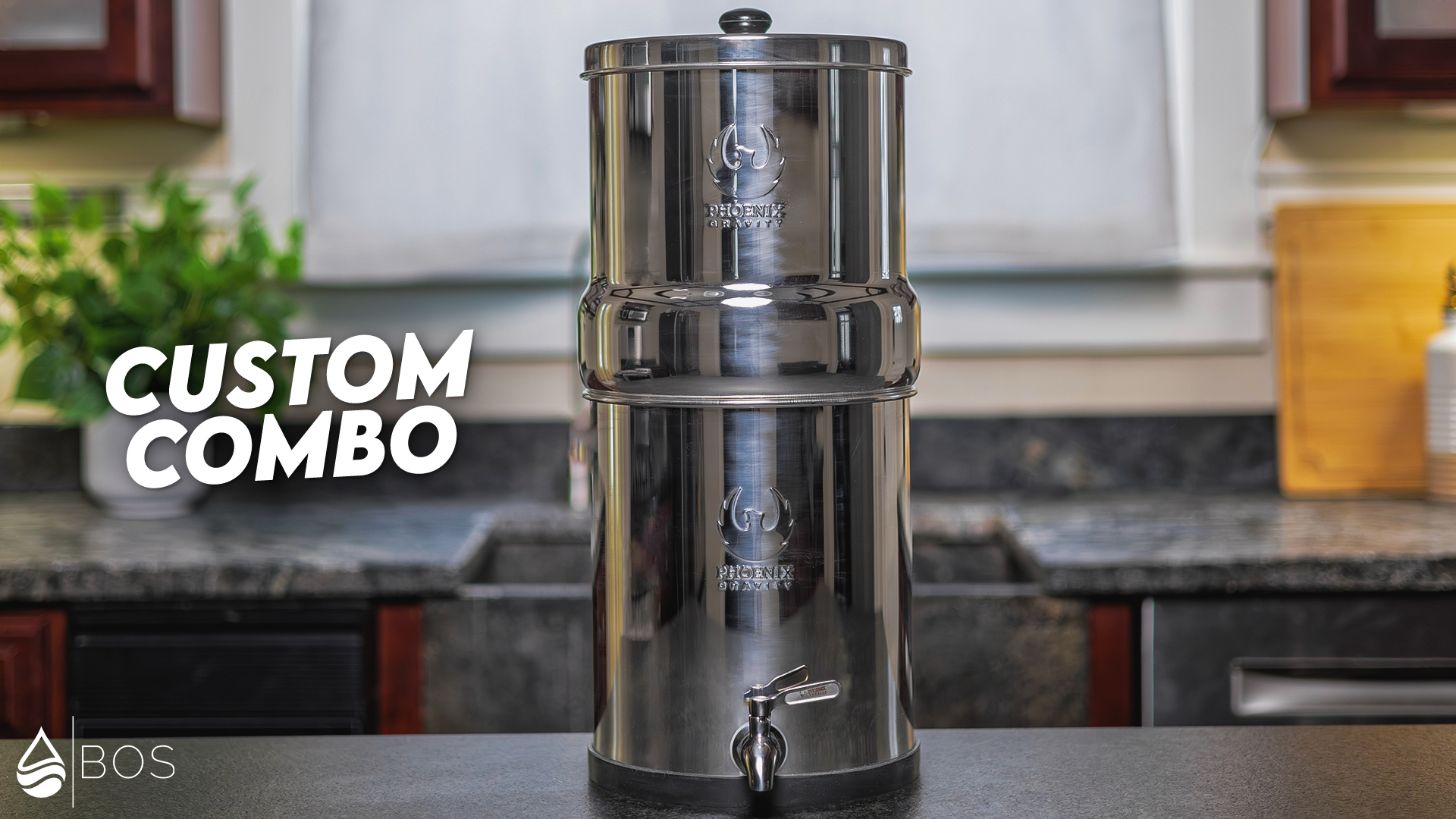
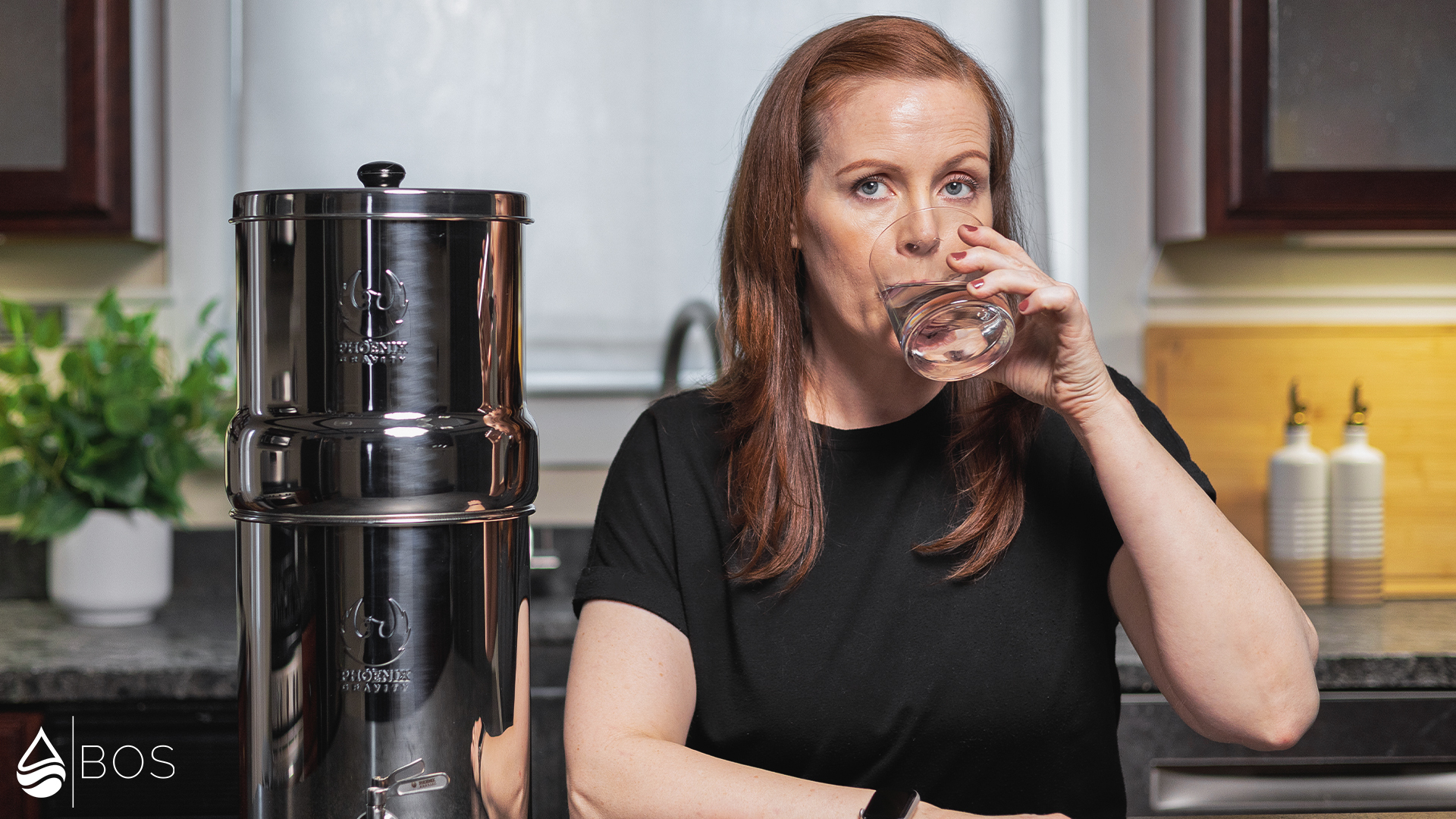
Filtration: /5.00
1. Lab Results: /5.00
- The Patriot Pure Nanomesh filter removed 9 contaminants to 100% (chlorine, all 3 disinfection byproducts, copper, iron, manganese, nitrate, and fluoride).
- Not removed to 100% were barium and boron.
- Strontium increased post-filtration, but was still below its strictest health guideline.
- There was no potential leaching observed.
- Failed to fully remove E. coli or total coliforms from pond water. Turbidity was significantly reduced.
Lab Results Charts
| Potentially Harmful | Aesthetic Issues | Feed Water Level | Filtered Water Level | Reduction Rate | |
| Water Disinfectants | |||||
| Chlorine (mg/L) | ✖ | ✖ | ~2 | 0 | 100% |
| Disinfection Byproducts | |||||
| Bromodichloromethane (µg/L) | ✖ | 8.63 | 0 | 100% | |
| Dibromochloromethane (µg/L) | ✖ | 4 | 0 | 100% | |
| Chloroform (µg/L) | ✖ | 8.6 | 0 | 100% | |
| Metals | |||||
| Copper (mg/L) | ✖ | ✖ | 0.0171 | 0 | 100% |
| Iron (mg/L) | ✖ | 0.102 | 0 | 100% | |
| Manganese (mg/L) | ✖ | ✖ | 0.00508 | 0 | 100% |
| Barium (mg/L) | ✖ | 0.0457 | 0.00112 | 98% | |
| Boron (mg/L) | ✖ | 0.12 | 0.00765 | 94% | |
| Strontium (mg/L) | ✖ | 0.132 | 0.252 | 91% Increase | |
| Salts | |||||
| Nitrate (N) (mg/L) | ✖ | 3.66 | 0 | 100% | |
| Fluoride (mg/L) | ✖ | 1.07 | 0 | 100% | |
| Other Parameters | |||||
| pH | 7.6 | 7.9 | |||
| Impurities NOT Detected in Unfiltered Tap Water Sample | |||||
| Lab Reports: Filtered Water Report, Unfiltered Water Report | |||||
| Chlorine Self Test Photos: Filtered Water, Unfiltered Water | |||||
| Explanation: | |||||
| Full Removal | |||||
| Considerable Reduction | |||||
| Concentration More than Double of Unfiltered Water Sample | |||||
| Potential Leaching Reached or Exceeded the Strictest Public Health Guideline We Could Find | |||||
| Feed Water Level | Filtered Water Level | Reduction Rate | Log Reduction | |
| Bacteria | ||||
| E. coli (CFU/100 mL) | 325.5 | 63.1 | 80.61% | 0.71-log |
| Total Coliform (CFU/100 mL) | >2419.6 | >2419.6 | Undefined | Undefined |
| Turbidity | ||||
| Turbidity (NTU) | 9.46 | 0.74 | 92% | |
| Lab Reports: Filtered Water Report, Unfiltered Water Report | ||||
| Explanation: | ||||
| Highest Achievable Reduction Rate | ||||
| Insufficient Reduction | ||||
2. NSF Certifications and Other Test Data
Patriot Pure Nanomesh filters are certified by the NSF for the reduction of 75 important contaminants against NSF/ANSI standards 42, 53, and 401. (Certifications are for the Nanomesh filters in the original Patriot Pure system. The Phoenix system is nearly identical, so these results should translate).
These certifications include: chlorine (99.99%), arsenic V (97.60-99.90%), cadmium (93.80-98.00%), chromium (95.50-96.50%), copper (98.90-99.90%), lead (99.90%), mercury (99.90%), selenium (98.20-99.90%), PFOA (99.90%), PFOS (99.90%), 50 VOCs (99.50%-99.90%) and several emerging contaminants, including trace pharmaceuticals, pesticides, and industrial chemicals (94.00-99.90%).
Plus, it has extensive third-party testing to 100-400% filter life against NSF/ANSI standards 42, 53, 401 and other non-NSF/ANSI standards for nearly 200 contaminants – although some overlap may exist with certified contaminants (and there’s no test data on germs).
Additional third-party reduction rates include: dozens of VOCs & semi-volatiles (99.90%), pesticides (77.70-99.90%; most 99.90%), chloroform (99.90%), and other PFAS (99.90%).
3. Taste and Odor Tests
In our test, the filtered water was odorless and had a perfectly clean taste.
Usability: /5.00
Initial setup is easy. Daily use is straightforward as well: simply fill the upper chamber with water to ~1″ below the rim when the lower chamber is empty. Used with 2 parallel filters, this produces up to ~27.7 cups of filtered water in ~3:30 hours, which is fast enough for most households and means the number of required daily refills is average. Though it’s not on-demand capable and not ideal for producing large amounts in a short time, adding up to 2 more filters would increase speed.
Dispensing is extremely fast and splash-free, and the included airlock vent clip keeps filtration/dispensing flowing at full speed. The sturdy 304 stainless steel tanks and spigot are stowable & suited for outdoor use, and the system may be placed on the optional tank stand for easy pouring into a cup.
Refilling is simple with the optional water level spigot.
The filter elements last 200 gal each, which means easy, infrequent replacements, but there’s no filter change indicator to remind you.
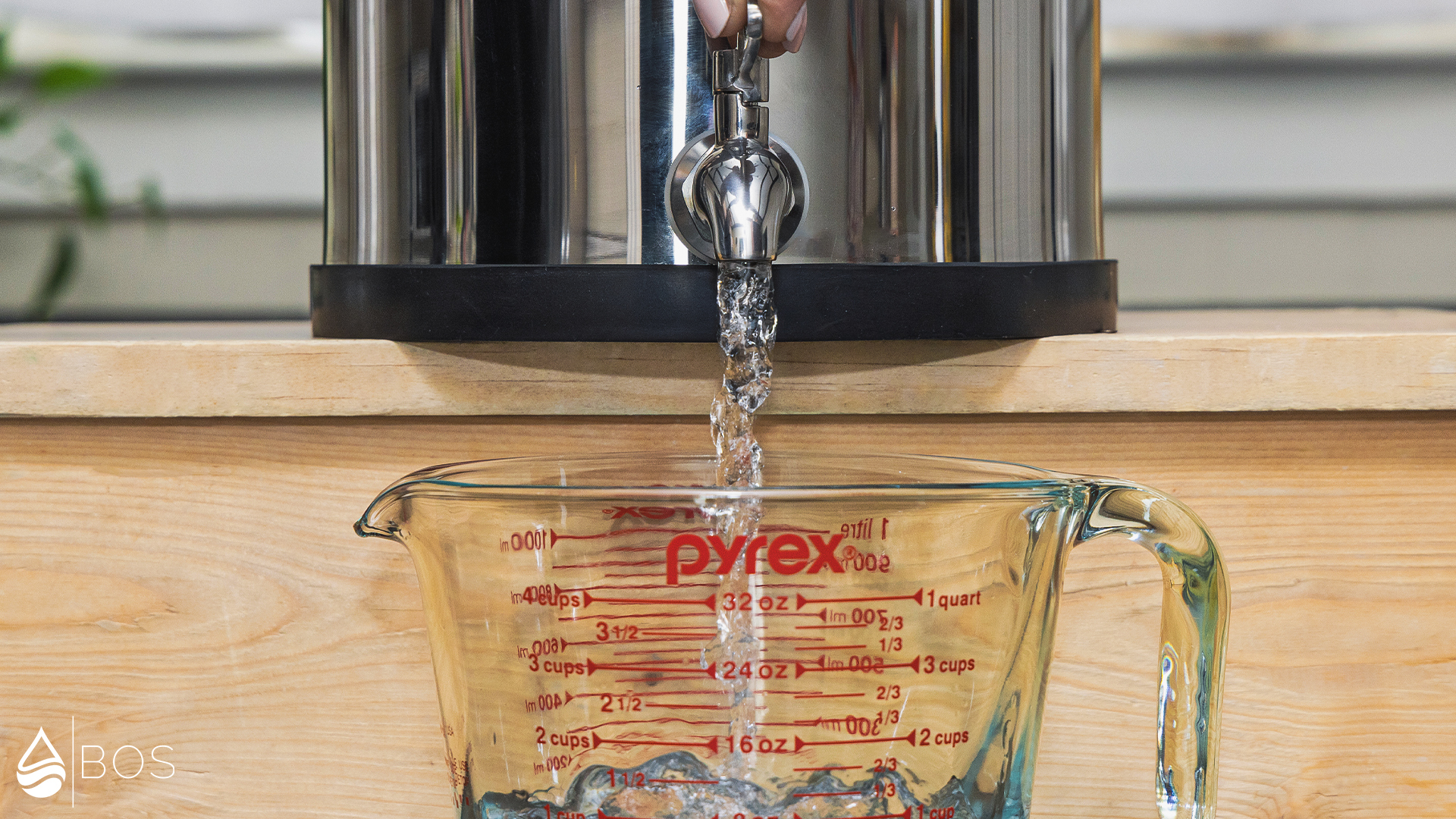
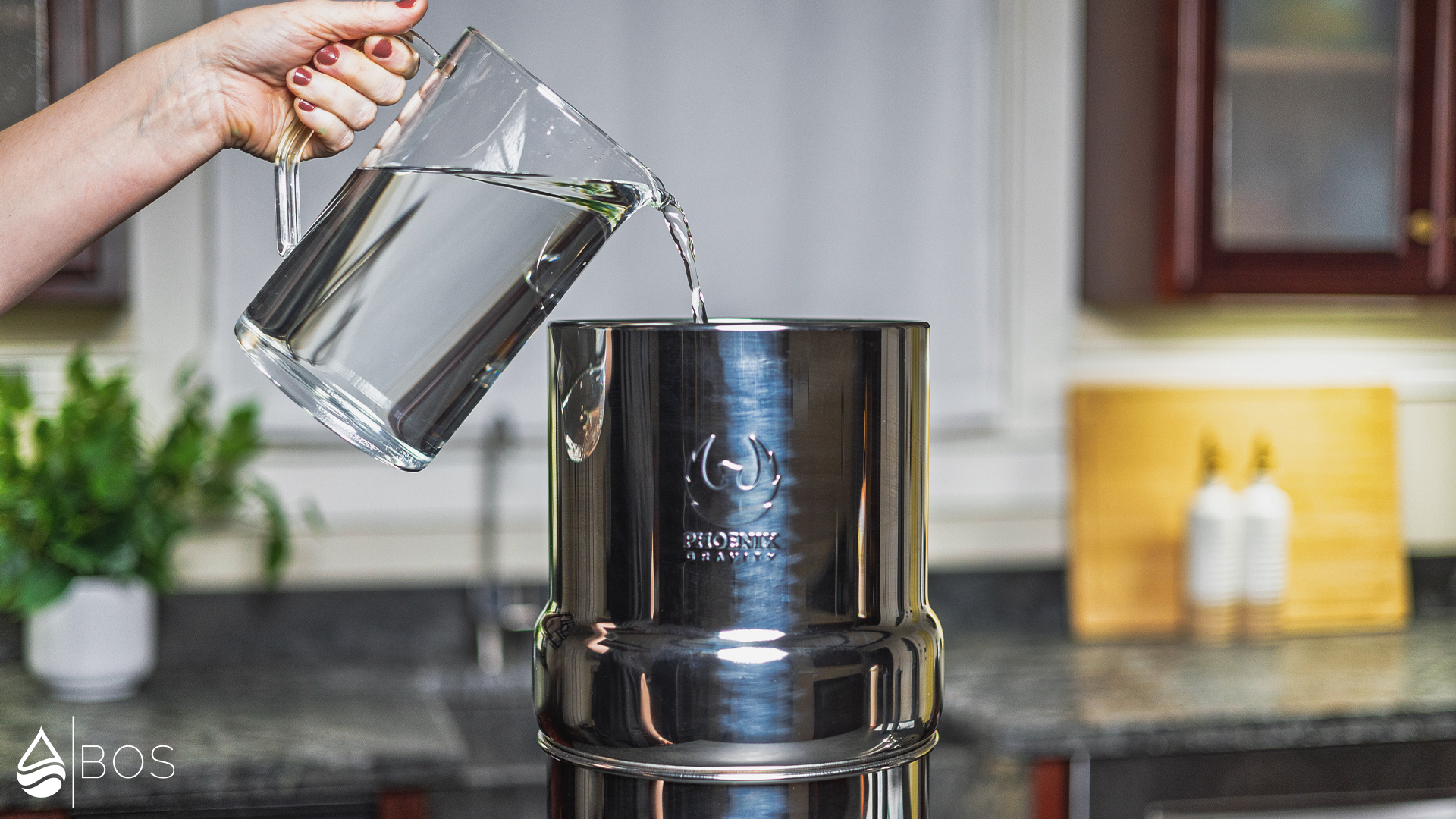
CostsCost scores reflect overall value for money rather than price alone and include optional manufacturer-offered water level spigots and tank stands.: /5.00
As of July 13, 2026, the custom Phoenix 2.25-gal system including two Patriot Pure Nanomesh filters is priced at $320.96. Adding the optional water level spigot ($74) and tank stand ($52), and applying our 10% discount code to the Phoenix system and stand brings the upfront total to $422.86.
We estimate $165 in annual filter replacement costs for two parallel filters. Upfront price is slightly above average and long-term cost is well below average.
Read Our Full Custom Gravity Water Filter Combo Review
(Use Code BOS10 for 10% Off Phoenix System!)
2. #1 Budget Pick (+ #1 for Usability): Phoenix 2.25-Gallon with Carbon Filters
Final Rating: /5.00
FiltrationFiltration score combines our lab results and taste testing with NSF/ANSI certifications and 3rd-party contaminant reduction data.: /5.00
UsabilityUsability scores include optional manufacturer-offered water level spigots and tank stands.: /5.00
CostsCost scores reflect overall value for money rather than price alone and include optional manufacturer-offered water level spigots and tank stands.: /5.00
| Type: | Gravity Water Filter |
| PriceNo short-term sales. Incl. 2x Carbon Filters (Jul 13, 2026): | $189 (Use Code BOS10 for 10% Off; Save Additional $20 with Filter Subscription) |
| Yearly CostEstimate is based on rated/claimed filter life and 500 gallons annual water consumption. No short-term sales. for 2 Parallel Carbon Filters (Jul 13, 2026): | ~$129 (Save $10 with Filter Subscription) |
(Use Code BOS10 for 10% Off!)
Final Rating: /5.00
The Phoenix 2.25-gallon system with carbon filters is our top budget pick and #1 choice for usability out of the tested gravity filters. It achieved solid results in our 2026 lab testing and the filtered water tasted perfectly clean with no odor. However, it has only 2 NSF/ANSI-certified contaminants (chlorine and taste/odor), and at least some of its extensive third-party testing was not performed over the full filter life. It offers great usability with slightly below-average upfront and well below-average ongoing costs.
What We Like Most
- Solid results in our 2026 lab testing.
- Clean taste with no odor.
- Extensive third-party testing for contaminant reduction but at least some not to 100% filter life.
- Sturdy 304 stainless steel construction including spigot – suitable for outdoor use and portable when stowed.
- Easy setup/priming with clear instructions (incl. a few illustrations) + helpful YouTube tutorial.
- Suited for daily use + filters on-demand (1 cup in <1 min).
- Supports up to 4 parallel filtration paths which increases speed.
- Extremely fast dispensing with no leaking or dripping after spigot is closed.
- Optional tank stand allows pouring without placing the system at the counter edge.
- Airlock vent clip maintains full filtration/dispensing flow.
- Easy refilling; optional water level spigot aids monitoring of clean water supply.
- Rubber ring on clean tank and rubber feet on optional tank stand prevent scratching/sliding.
- Easy filter changes + cartridges can be cleaned to restore flow rate.
- Phoenix system warranty: 10 years (tanks); 100-day satisfaction guarantee.
- Includes stainless steel water bottle and very nice packaging.
- Below-average upfront and ongoing costs.
What We Don’t Like
- Only 2 NSF/ANSI certifications for contaminant reduction (chlorine + taste/odor).
- No microbiological test data (for outdoor use).
- High-shine, reflective finish prone to smudges.
- Cannot fit a 40-oz bottle or pitcher under the spigot, even with the optional stand.
- Doesn’t fit under standard height kitchen cabinets (18″ clearance).
- No filter change indicator.
- Third-party complaints include ineffective filtration, water bypass, leaking, and overall quality concerns.
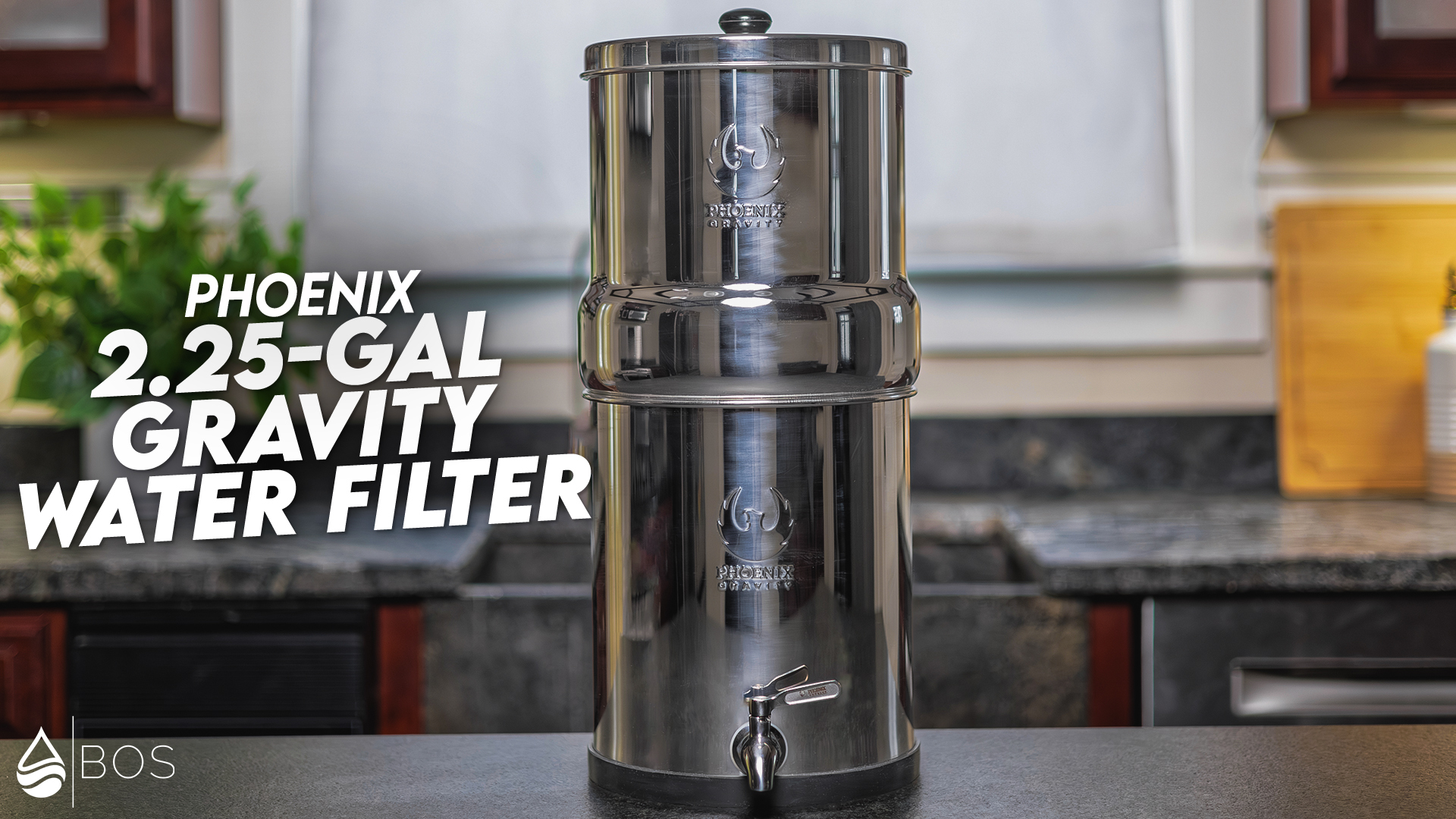
Filtration: /5.00
1. Lab Results: /5.00
- The Phoenix’s carbon filters removed 7 contaminants to 100% (chlorine, all 3 disinfection byproducts, copper, iron, and boron).
- Not removed to 100% were manganese, barium, strontium, nitrate and fluoride.
- We detected potential leaching of silver, but at a level below the EPA secondary standard.
Lab Results Charts
| Potentially Harmful | Aesthetic Issues | Feed Water Level | Filtered Water Level | Reduction Rate | |
| Water Disinfectants | |||||
| Chlorine (mg/L) | ✖ | ✖ | ~2 | 0 | 100% |
| Disinfection Byproducts | |||||
| Bromodichloromethane (µg/L) | ✖ | 15.7 | 0 | 100% | |
| Dibromochloromethane (µg/L) | ✖ | 4.60 | 0 | 100% | |
| Chloroform (µg/L) | ✖ | 29.1 | 0 | 100% | |
| Metals | |||||
| Copper (mg/L) | ✖ | ✖ | 0.0242 | 0 | 100% |
| Iron (mg/L) | ✖ | 0.0504 | 0 | 100% | |
| Manganese (mg/L) | ✖ | ✖ | 0.00965 | 0.00217 | 78% |
| Barium (mg/L) | ✖ | 0.0416 | 0.0127 | 69% | |
| Boron (mg/L) | ✖ | 0.104 | 0 | 100% | |
| Strontium (mg/L) | ✖ | 0.113 | 0.111 | 2% | |
| Salts | |||||
| Nitrate (N) (mg/L) | ✖ | 2.91 | 0.303 | 90% | |
| Fluoride (mg/L) | ✖ | 0.973 | 0.429 | 56% | |
| Other Parameters | |||||
| pH | 7.9 | 8.0 | |||
| Impurities NOT Detected in Unfiltered Tap Water Sample | |||||
| Silver (mg/L) | ✖ | 0 | 0.00275 | ||
| Lab Reports: Filtered Water Report, Unfiltered Water Report | |||||
| Chlorine Self Test Photos: Filtered Water, Unfiltered Water | |||||
| Explanation: | |||||
| Full Removal | |||||
| Considerable Reduction | |||||
| Concentration More than Double of Unfiltered Water Sample | |||||
| Potential Leaching Reached or Exceeded the Strictest Public Health Guideline We Could Find | |||||
2. NSF Certifications and Other Test Data
The Phoenix has only 2 NSF certifications for contaminant reduction against NSF/ANSI standard 42 for chlorine (99.90%) and taste/odor.
However, it has extensive third-party testing against NSF/ANSI standards 42, 53 and other non-NSF/ANSI standards for more than 80 contaminants, but at least some was not performed over the full filter life (and there’s no test data on germs).
Listed reduction rates include: chlorine (99.90%), chloramines (99.90%), lead (94.00-99.90%), PFOA (>99.00%), PFOS (>99.50%), PFOA + PFOS (>99.66%), aluminum (99.90%), antimony (99.90%), arsenic (99.90%), beryllium (99.90%), boron (99.90%), barium (99.90%), chromium (97.20%), manganese (99.90%), mercury (99.90%), nickel (99.90%), selenium (99.90%), nitrates (99.00%), nitrites (99.90%), fluoride (75.50%), and dozens of VOCs (99.90%).
3. Taste and Odor Tests
In our test, the filtered water was odorless and had a perfectly clean taste.
Usability: /5.00
Initial setup is easy. Daily use is straightforward as well: simply fill the upper chamber with water to ~1″ below the rim when the lower chamber is empty. Used with 2 parallel filters, this produces up to ~26.6 cups of filtered water in ~50:03 min, which is quite fast and means the number of required daily refills is average. It’s even on-demand capable (1 cup <1 min) and ideal for producing large amounts quickly. Adding up to 2 more filters would further increase speed.
Dispensing is extremely fast and splash-free, and the included airlock vent clip keeps filtration/dispensing flowing full tilt. The sturdy 304 stainless steel tanks and spigot are stowable & suited for outdoor use, and the system may be placed on the optional tank stand for easy pouring into a cup.
Refilling is simple with the optional water level spigot.
The cleanable carbon filter elements last 2,750 gal or 12 months each, which means easy, infrequent replacements, but there’s no filter change indicator to remind you.
CostsCost scores reflect overall value for money rather than price alone and include optional manufacturer-offered water level spigots and tank stands.: /5.00
As of July 13, 2026, the Phoenix 2.25-gal system including two carbon filters is priced at $189. Adding the optional water level spigot ($74) and tank stand ($52), and applying our 10% discount code to the Phoenix system and stand, brings the upfront total to $290.90. You can save an additional $20 with a filter subscription (deducted before our 10% discount code gets applied).
We estimate $129 in annual filter replacement costs for two parallel filters. Plus, you can save an additional $10 with a filter subscription. Upfront price is slightly below average and long-term cost is well below average.
Read Our Full Phoenix 2.25-Gallon Gravity Water Filter Review
(Use Code BOS10 for 10% Off!)
Support BOS Water’s Mission!
Every coffee helps us test more products and bring you unbiased results!
3. Very Effective Filtration but Lower Usability: Patriot Pure Ultimate Water Filtration System (Old Model)

Final Rating: /5.00
FiltrationFiltration score combines our lab results and taste testing with NSF/ANSI certifications and 3rd-party contaminant reduction data.: /5.00
UsabilityUsability scores include optional manufacturer-offered water level spigots and tank stands.: /5.00
CostsCost scores reflect overall value for money rather than price alone and include optional manufacturer-offered water level spigots and tank stands.: /5.00
| Type: | Gravity Water Filter |
| PriceNo short-term sales. Incl. 2x Filters (Jul 13, 2026): | $295.93 (Old System Model When It Was Still in Stock) |
| Yearly CostEstimate is based on rated/claimed filter life and 500 gallons annual water consumption. No short-term sales. for 2 Parallel Filters (Jul 13, 2026): | ~$165 |
Final Rating: /5.00
The Patriot Pure Ultimate Water Filtration System (old model) features the best filtration out of the tested gravity filters – tied with the #1 overall custom combo – but ranks lower in usability. It achieved solid results in our 2026 lab test and is well-covered by NSF/ANSI certifications for contaminant reduction. In addition, it has extensive third-party testing to 100-400% filter life for nearly 200 impurities and produced odorless water that tasted perfectly clean. Usability, on the other hand, is only mediocre, though upfront and ongoing costs are average to well below average.
What We Like Most
- Solid results in our 2026 lab testing.
- Clean taste with no odor.
- Well-covered by 75 NSF/ANSI certifications for contaminant reduction.
- Extensive third-party testing for contaminant reduction to 100-400% filter life.
- Sturdy stainless steel upper + lower chambers – suitable for outdoor use and portable when stowed.
- Easy setup/priming but only 1 instruction sheet (just 2 illustrations) + helpful YouTube tutorial.
- Generally suited for daily use.
- Supports up to 4 filter cartridges; parallel arrangement increases filtration speed.
- Fast, splash-free dispensing with no leaking or dripping after spigot is closed.
- Optional tank stand allows pouring without placing the system at the counter edge.
- Easy refilling.
- Rubber ring on clean tank and rubber feet on optional tank stand prevent scratching/sliding.
- Easy filter changes.
- 90-day satisfaction guarantee.
- Filters made in the USA (?)
- Low ongoing filter replacement costs.
What We Don’t Like
- No microbiological test data; website claims removal of “bacteria, viruses, cysts and other biological contaminants.”
- Scant rust seemingly formed around one of the plugged holes.
- Cheaper appearance – logo resembles sticker lettering (not embossed metal).
- Too slow for on-demand use or high-volume output with 2 filters; performance improves with additional filters.
- Plastic spigot feels more breakable than SS + cover hinders dispensing.
- Cannot fit a 40-oz bottle or pitcher under the spigot, even with the optional stand.
- No water level spigot or window to monitor clean water level.
- Doesn’t fit under standard height kitchen cabinets (18″ clearance).
- No filter change indicator.
- Customer complaints include leaking, delayed/incomplete shipments, very slow filtration, poor support, and bad taste/odor.
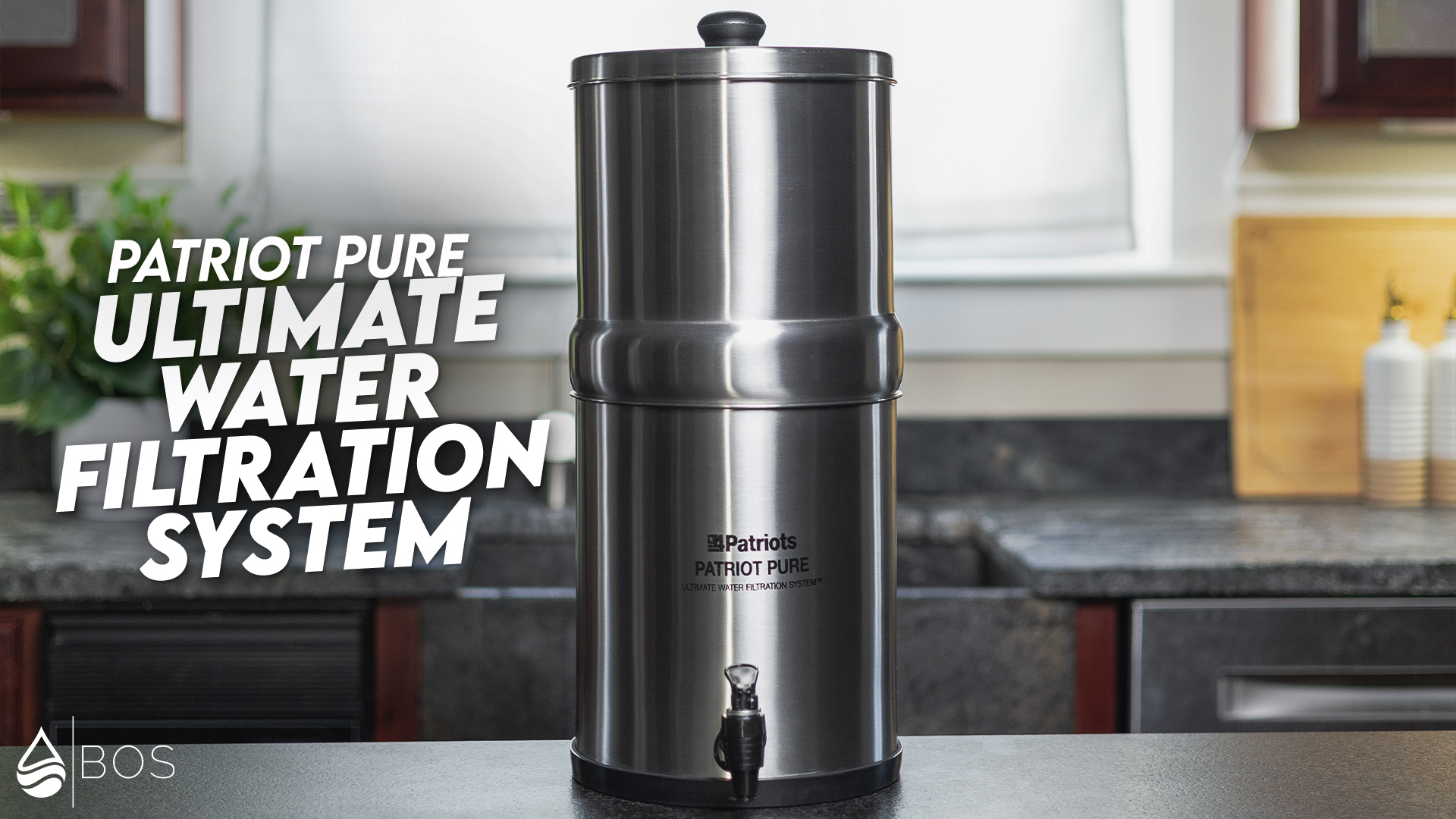
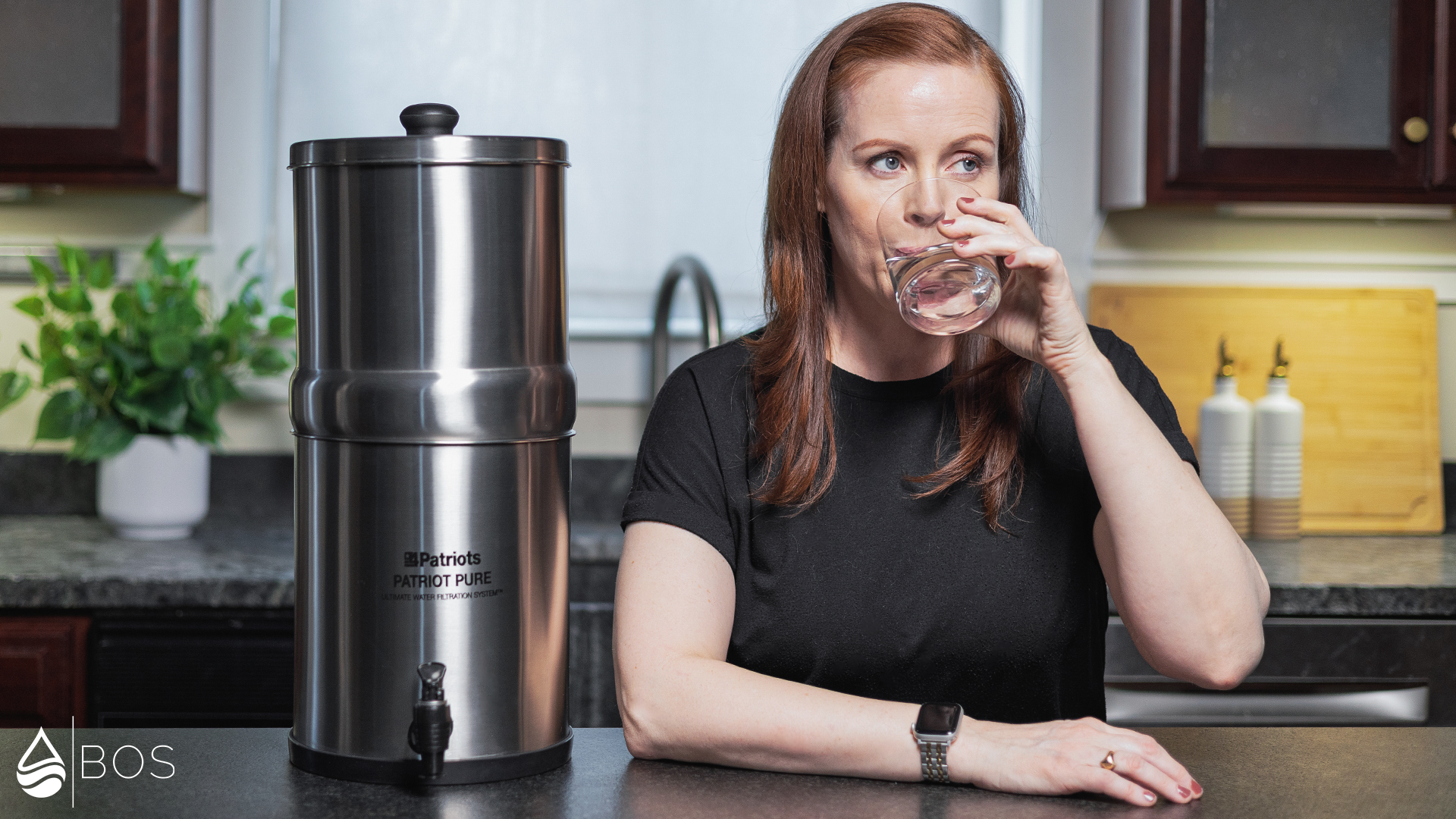
Filtration: /5.00
1. Lab Results: /5.00
- The Patriot Pure Ultimate removed 9 contaminants to 100% (chlorine, all 3 disinfection byproducts, copper, iron, manganese, nitrate, and fluoride).
- Not removed to 100% were barium and boron.
- Strontium increased post-filtration, but was still below its strictest health guideline.
- There was no potential leaching observed.
- Failed to fully remove E. coli or total coliforms from pond water. Turbidity was significantly reduced.
Lab Results Charts
| Potentially Harmful | Aesthetic Issues | Feed Water Level | Filtered Water Level | Reduction Rate | |
| Water Disinfectants | |||||
| Chlorine (mg/L) | ✖ | ✖ | ~2 | 0 | 100% |
| Disinfection Byproducts | |||||
| Bromodichloromethane (µg/L) | ✖ | 8.63 | 0 | 100% | |
| Dibromochloromethane (µg/L) | ✖ | 4 | 0 | 100% | |
| Chloroform (µg/L) | ✖ | 8.6 | 0 | 100% | |
| Metals | |||||
| Copper (mg/L) | ✖ | ✖ | 0.0171 | 0 | 100% |
| Iron (mg/L) | ✖ | 0.102 | 0 | 100% | |
| Manganese (mg/L) | ✖ | ✖ | 0.00508 | 0 | 100% |
| Barium (mg/L) | ✖ | 0.0457 | 0.00112 | 98% | |
| Boron (mg/L) | ✖ | 0.12 | 0.00765 | 94% | |
| Strontium (mg/L) | ✖ | 0.132 | 0.252 | 91% Increase | |
| Salts | |||||
| Nitrate (N) (mg/L) | ✖ | 3.66 | 0 | 100% | |
| Fluoride (mg/L) | ✖ | 1.07 | 0 | 100% | |
| Other Parameters | |||||
| pH | 7.6 | 7.9 | |||
| Impurities NOT Detected in Unfiltered Tap Water Sample | |||||
| Lab Reports: Filtered Water Report, Unfiltered Water Report | |||||
| Chlorine Self Test Photos: Filtered Water, Unfiltered Water | |||||
| Explanation: | |||||
| Full Removal | |||||
| Considerable Reduction | |||||
| Concentration More than Double of Unfiltered Water Sample | |||||
| Potential Leaching Reached or Exceeded the Strictest Public Health Guideline We Could Find | |||||
| Feed Water Level | Filtered Water Level | Reduction Rate | Log Reduction | |
| Bacteria | ||||
| E. coli (CFU/100 mL) | 325.5 | 63.1 | 80.61% | 0.71-log |
| Total Coliform (CFU/100 mL) | >2419.6 | >2419.6 | Undefined | Undefined |
| Turbidity | ||||
| Turbidity (NTU) | 9.46 | 0.74 | 92% | |
| Lab Reports: Filtered Water Report, Unfiltered Water Report | ||||
| Explanation: | ||||
| Highest Achievable Reduction Rate | ||||
| Insufficient Reduction | ||||
2. NSF Certifications and Other Test Data
The Patriot Pure is certified by the NSF for the reduction of 75 important contaminants against NSF/ANSI standards 42, 53, and 401.
These certifications include: chlorine (99.99%), arsenic V (97.60-99.90%), cadmium (93.80-98.00%), chromium (95.50-96.50%), copper (98.90-99.90%), lead (99.90%), mercury (99.90%), selenium (98.20-99.90%), PFOA (99.90%), PFOS (99.90%), 50 VOCs (99.50%-99.90%) and several emerging contaminants, including trace pharmaceuticals, pesticides, and industrial chemicals (94.00-99.90%).
Plus, it has extensive third-party testing to 100-400% filter life against NSF/ANSI standards 42, 53, 401 and other non-NSF/ANSI standards for nearly 200 contaminants – although some overlap may exist with certified contaminants (and there’s no test data on germs).
Additional third-party reduction rates include: dozens of VOCs & semi-volatiles (99.90%), pesticides (77.70-99.90%; most 99.90%), chloroform (99.90%), and other PFAS (99.90%).
3. Taste and Odor Tests
In our test, the filtered water was odorless and had a perfectly clean taste.
Usability: /5.00
Initial setup is easy though instructions are somewhat minimal. Daily use is straightforward: simply fill the upper chamber with water to ~1″ below the rim when the lower chamber is empty. Used with 2 parallel filters, this produces up to ~27.8 cups of filtered water in ~3:41 hours. This is fast enough for most households and means the number of required daily refills is average. Though it’s not on-demand capable and not ideal for producing large amounts in a short time, adding up to 2 more filters would increase speed.
Dispensing is fast and splash-free. The sturdy stainless steel tanks (stowable & suited for outdoor use) may be placed on the optional tank stand for easy pouring. The cover on the plastic spigot prevents leaks but annoyingly tends to interfere with dispensing. We also may have spotted minor rust forming around a plugged hole in the upper tank.
Refilling is simple, but the lack of a sight window or water level spigot means you must lift the upper chamber to monitor the clean water level.
The filter elements last 200 gal each, which means easy, infrequent replacements, but there’s no filter change indicator to remind you.
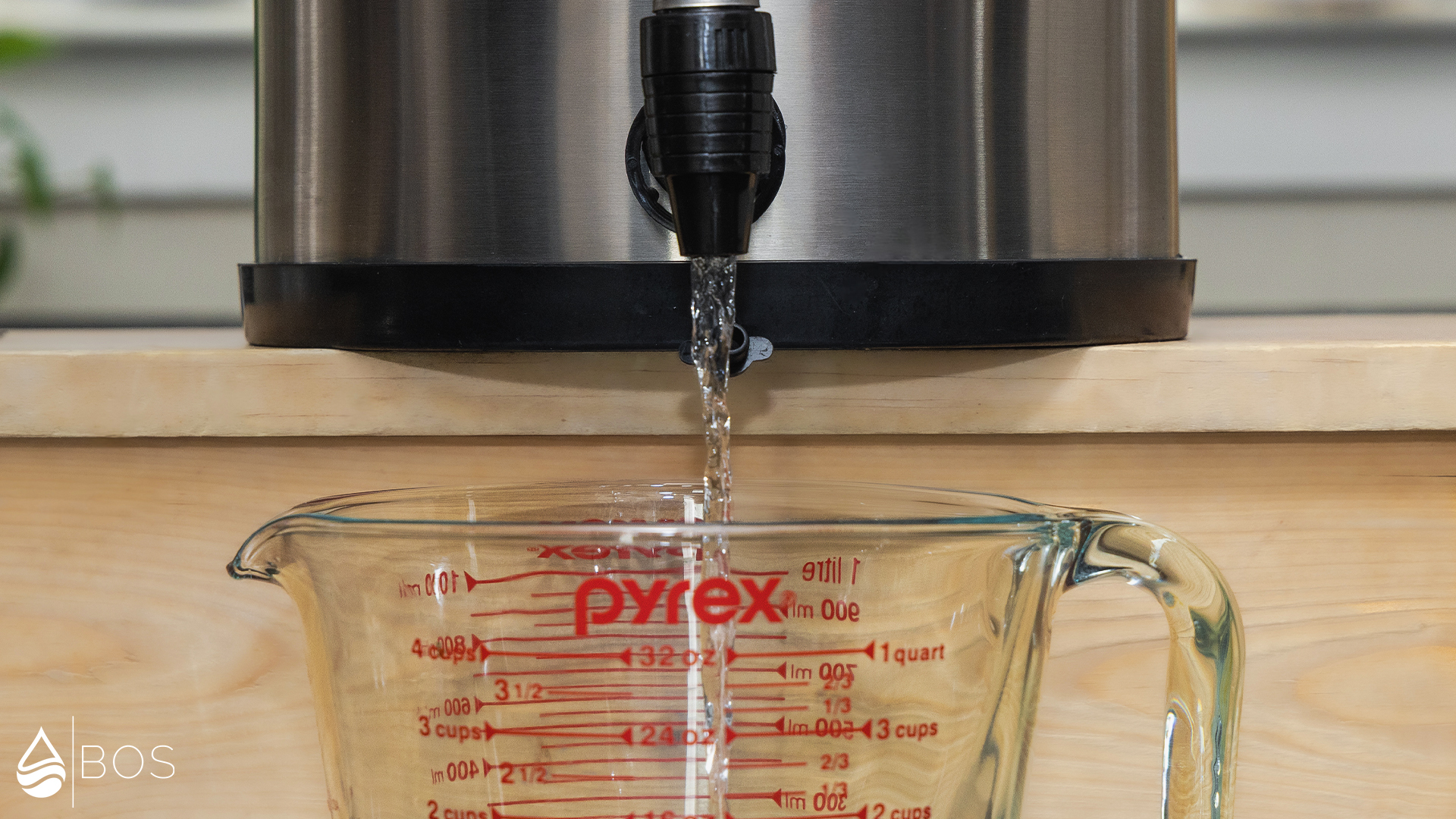
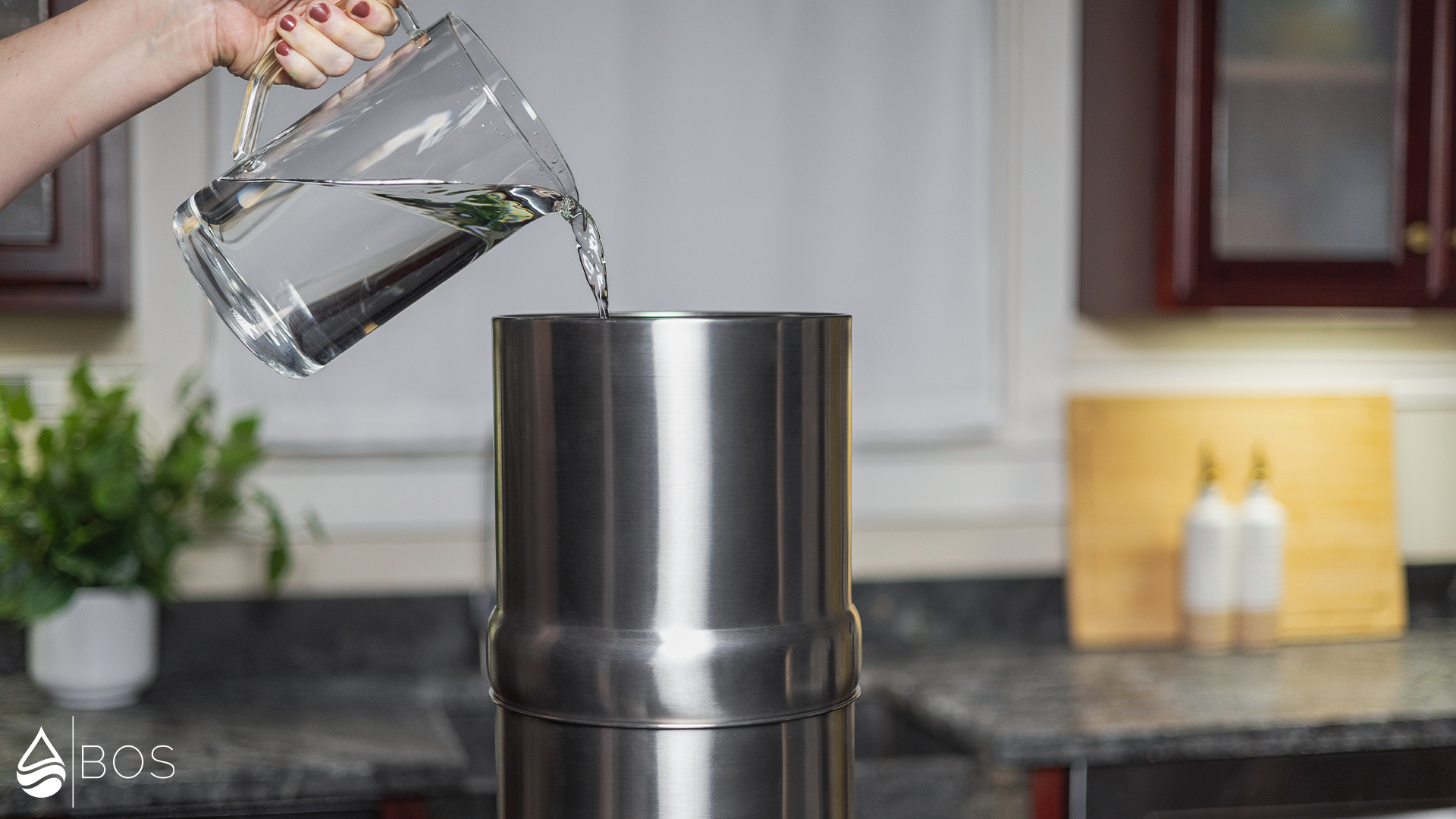
CostsCost scores reflect overall value for money rather than price alone and include optional manufacturer-offered water level spigots and tank stands.: /5.00
As of July 13, 2026, the Patriot Pure Ultimate Water Filtration System including two filters is priced at $295.93. Adding the optional tank stand ($49.95) brings the upfront total to $345.88.
We estimate $165 in annual filter replacement costs for two parallel filters. Upfront price is average and long-term cost is well below average.
Read Our Full Patriot Pure Ultimate Water Filtration System Review
4. Best for Emergency-Only Germ Filtration: Alexapure Pro

Final Rating: /5.00
FiltrationFiltration score combines our lab results and taste testing with NSF/ANSI certifications and 3rd-party contaminant reduction data.: /5.00
UsabilityUsability scores include optional manufacturer-offered water level spigots and tank stands.: /5.00
CostsCost scores reflect overall value for money rather than price alone and include optional manufacturer-offered water level spigots and tank stands.: /5.00
| Type: | Gravity Water Filter |
| PriceNo short-term sales. Incl. 2x Filters (Jul 13, 2026): | $399.98 |
| Yearly CostEstimate is based on rated/claimed filter life and 500 gallons annual water consumption. No short-term sales. for 2 Parallel Filters (Jul 13, 2026): | ~$240 |
Final Rating: /5.00
The Alexapure Pro is our top pick for last-resort germ removal in non-potable water, ideally combined with true disinfection methods. It achieved solid results in our 2024 & 2026 lab tests and produced odorless water that tasted perfectly clean. While this system has extensive third-party testing for contaminant reduction – including bacteria, viruses, and parasites – at least some wasn’t performed over the full filter life. Plus, it has no NSF/ANSI-certified contaminants. Usability is adequate, with slightly above-average upfront and around-average ongoing costs.
What We Like Most
- Solid results in our 2024 & 2026 lab testing.
- Clean taste with no odor.
- Extensive third-party testing for contaminant reduction (at least some not to 100% filter life) including bacteria, viruses, & parasites.
- Sturdy 304 stainless steel construction + SS spigot – suitable for outdoor use and portable when stowed.
- Nice matte finish – less prone to smudges.
- Easy setup/priming (filters arrive wet) + clear, illustrated instruction sheet and helpful YouTube tutorial.
- Suited for daily use.
- Supports up to 4 parallel filtration paths which increases speed.
- Extremely fast dispensing with no leaking or dripping after spigot is closed.
- Optional tank stand allows pouring without placing the system at the counter edge.
- Easy refilling.
- Rubber ring on clean tank prevents scratching/sliding.
- Easy filter changes + cleanable filters (maintains filtration speed) + filter caps (prevent drying out).
- Filters claimed to be made in the USA.
What We Don’t Like
- No NSF/ANSI certifications for contaminant reduction.
- Cartridge didn’t filter until scrubbed with a sponge (2024).
- On-demand filtration requires a little patience with 2 filters.
- Cannot fit a 40-oz bottle or pitcher under the spigot, even with the optional stand (+ it lacks non-slip feet).
- Doesn’t fit under standard height kitchen cabinets (18″ clearance).
- No water level spigot or window to monitor clean water level.
- No filter change indicator.
- Slightly above-average upfront cost.
- Third-party complaints include ineffective filtration, customer service issues, filters not reaching claimed life, and leaking.
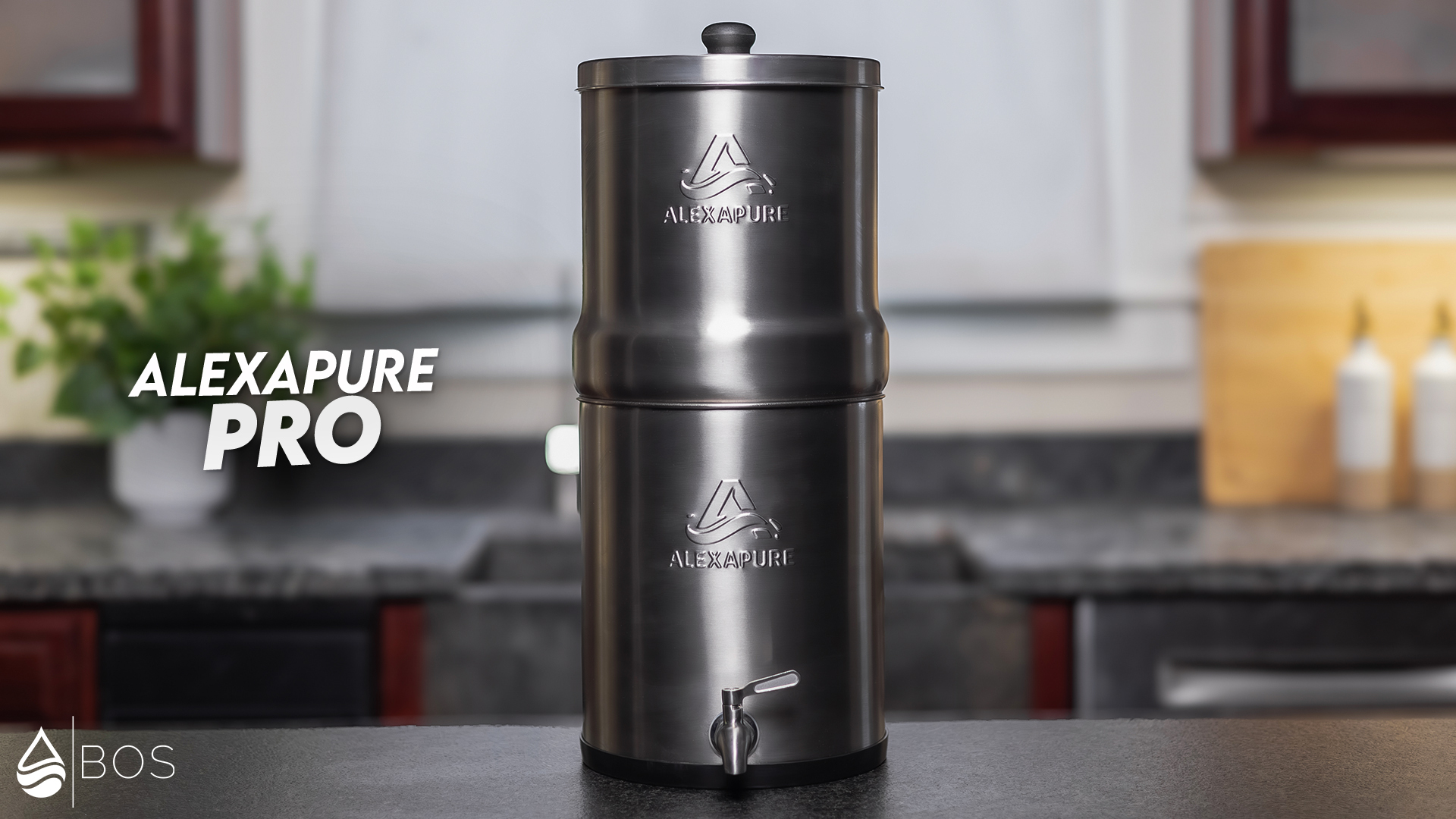
Filtration: /5.00
1. Lab Results: /5.00 (2026) & /5.00 (2024)
- The Alexapure Pro removed 9 contaminants to 100% (chlorine, all 4 disinfection byproducts, iron, manganese, boron, and uranium).
- Not removed to 100% were copper, barium, lithium, strontium, nitrate, and fluoride.
- We detected potential leaching of aluminum and silver, but at levels below their strictest health guideline or EPA secondary standard, as applicable.
- Fully removed E. coli and total coliforms from pond water. Turbidity was significantly reduced.
Lab Results Charts
| Potentially Harmful | Aesthetic Issues | Feed Water Level | Filtered Water Level | Reduction Rate | |
| Water Disinfectants | |||||
| Chlorine (mg/L) | ✖ | ✖ | ~2 | 0 | 100% |
| Disinfection Byproducts | |||||
| Bromodichloromethane (µg/L) | ✖ | 8.41 | 0 | 100% | |
| Dibromochloromethane (µg/L) | ✖ | 3.22 | 0 | 100% | |
| Chloroform (µg/L) | ✖ | 9.42 | 0 | 100% | |
| Metals | |||||
| Copper (mg/L) | ✖ | ✖ | 0.0158 | 0.00158 | 90% |
| Iron (mg/L) | ✖ | 0.108 | 0 | 100% | |
| Manganese (mg/L) | ✖ | ✖ | 0.00558 | 0 | 100% |
| Barium (mg/L) | ✖ | 0.0449 | 0.00105 | 98% | |
| Boron (mg/L) | ✖ | 0.12 | 0 | 100% | |
| Strontium (mg/L) | ✖ | 0.128 | 0.0926 | 28% | |
| Salts | |||||
| Nitrate (N) (mg/L) | ✖ | 3.61 | 0.319 | 91% | |
| Fluoride (mg/L) | ✖ | 1.01 | 0.245 | 76% | |
| Other Parameters | |||||
| pH | 7.5 | 7.8 | |||
| Impurities NOT Detected in Unfiltered Tap Water Sample | |||||
| Aluminum (mg/L) | ✖ | ✖ | 0 | 0.052 | |
| Silver (mg/L) | ✖ | 0 | 0.009 | ||
| Lab Reports: Filtered Water Report, Unfiltered Water Report | |||||
| Chlorine Self Test Photos: Filtered Water, Unfiltered Water | |||||
| Explanation: | |||||
| Full Removal | |||||
| Considerable Reduction | |||||
| Concentration More than Double of Unfiltered Water Sample | |||||
| Potential Leaching Reached or Exceeded the Strictest Public Health Guideline We Could Find | |||||
| Potentially Harmful | Aesthetic Issues | Feed Water Level | Filtered Water Level | Reduction Rate | |
| Water Disinfectants | |||||
| Chlorine (mg/L) | ✖ | ✖ | 0.96 | 0 | 100% |
| Disinfection Byproducts | |||||
| Bromodichloromethane (µg/L) | ✖ | 2.68 | 0 | 100% | |
| Bromoform (µg/L) | ✖ | 3.19 | 0 | 100% | |
| Dibromochloromethane (µg/L) | ✖ | 5.27 | 0 | 100% | |
| Chloroform (µg/L) | ✖ | 1.07 | 0 | 100% | |
| Metals | |||||
| Copper (mg/L) | ✖ | ✖ | 0.06 | 0 | 100% |
| Barium (mg/L) | ✖ | 0.04 | 0 | 100% | |
| Boron (mg/L) | ✖ | 0.06 | 0 | 100% | |
| Lithium (mg/L) | ✖ | 0.01 | 0.01 | 0% | |
| Strontium (mg/L) | ✖ | 0.46 | 0.35 | 24% | |
| Salts | |||||
| Nitrate (N) (mg/L) | ✖ | 1.72 | 0 | 100% | |
| Fluoride (mg/L) | ✖ | 0.3 | 0.24 | 20% | |
| Other | |||||
| Uranium (µg/L) | ✖ | 1 | 0 | 100% | |
| Other Parameters | |||||
| pH | 7.79 | 8.02 | |||
| Impurities NOT Detected in Unfiltered Tap Water Sample | |||||
| Aluminum (mg/L) | ✖ | ✖ | 0 | 0.03 | |
| Silver (mg/L) | ✖ | 0 | 0.04 | ||
| Lab Reports: Filtered Water Report, Unfiltered Water Report | |||||
| Explanation: | |||||
| Full Removal | |||||
| Considerable Reduction | |||||
| Concentration More than Double of Unfiltered Water Sample | |||||
| Potential Leaching Reached or Exceeded the Strictest Public Health Guideline We Could Find | |||||
| Feed Water Level | Filtered Water Level | Reduction Rate | Log Reduction | |
| Bacteria | ||||
| E. coli (CFU/100 mL) | 325.5 | 0 | >99.69% | >2.51-log |
| Total Coliform (CFU/100 mL) | >2419.6 | 0 | >99.96% | >3.38-log |
| Turbidity | ||||
| Turbidity (NTU) | 9.46 | 0.29 | 97% | |
| Lab Reports: Filtered Water Report, Unfiltered Water Report | ||||
| Explanation: | ||||
| Highest Achievable Reduction Rate | ||||
| Insufficient Reduction | ||||
2. NSF Certifications and Other Test Data
The Alexapure Pro does not have any NSF/ANSI certifications for contaminant reduction.
However, it has extensive third-party testing against NSF/ANSI standards 42 & 53, NSF protocol P231 (covers germs), and other non-NSF/ANSI standards for more than 200 contaminants, but at least some was not performed over the full filter life.
Listed reduction rates include: free chlorine (>99.90%), chloramines (>99.90%), aluminum (>99.90%), antimony (>99.90%), arsenic (>99.90%), beryllium (>99.90%), lead (>96.40%), manganese (>99.90%), mercury (>99.90%), selenium (>99.90%), nitrates (>98.20%), nitrites (>99.90%), sodium fluoride (>97.60%), dozens of VOCs, pesticides/herbicides, semi-volatile organics and trace pharmaceuticals (>99.90%), uranium (>99.90%), gross beta (≥97.80%), and gross alpha (≥96.00%).
Under NSF protocol P231 (200 gallons), microbes were reduced as follows: bacteria (99.9999%), viruses (99.99%) & parasites (99.90%). Plus, 100% E. coli reduction was observed for up to 10 gal (not tested to a cited NSF/ANSI standard or NSF protocol).
3. Taste and Odor Tests
In our 2024 and 2026 tests, the filtered water was odorless and had a perfectly clean taste.
Usability: /5.00
Initial setup is easy. Daily use is straightforward as well: simply fill the upper chamber with water to ~1″ below the rim when the lower chamber is empty. Used with 2 parallel filters, this produces up to ~30.7 cups of filtered water in ~1:43 hours, which is pretty fast and means the number of required daily refills is average. Adding up to 2 more filters would further increase speed and even facilitate on-demand dispensing (1 cup in <1 min).
Dispensing is extremely fast and splash-free. The sturdy 304 stainless steel tanks and SS spigot are stowable (outdoor-friendly) and have a nice, smudge-resistant matte finish. The optional tank stand makes pouring into a cup easy, but it lacks non-slip feet, so it might slide around.
Refilling is simple, but the lack of a sight window or water level spigot means you must lift the upper chamber to monitor the clean water level.
The cleanable filters have a cap to prevent drying out when not in use. These elements last 200 gal each, which means easy, infrequent replacements, but there’s no filter change indicator to remind you.
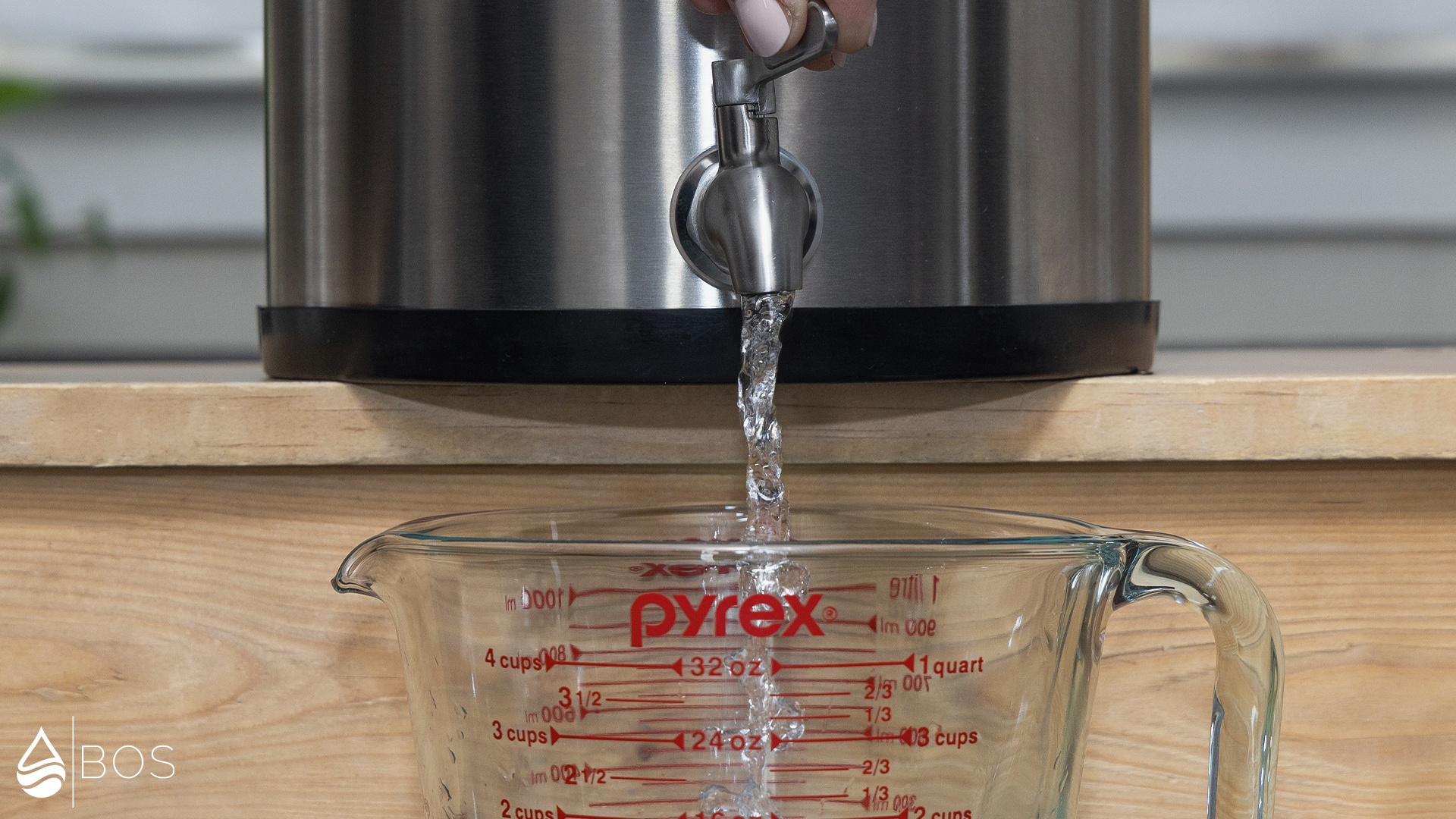
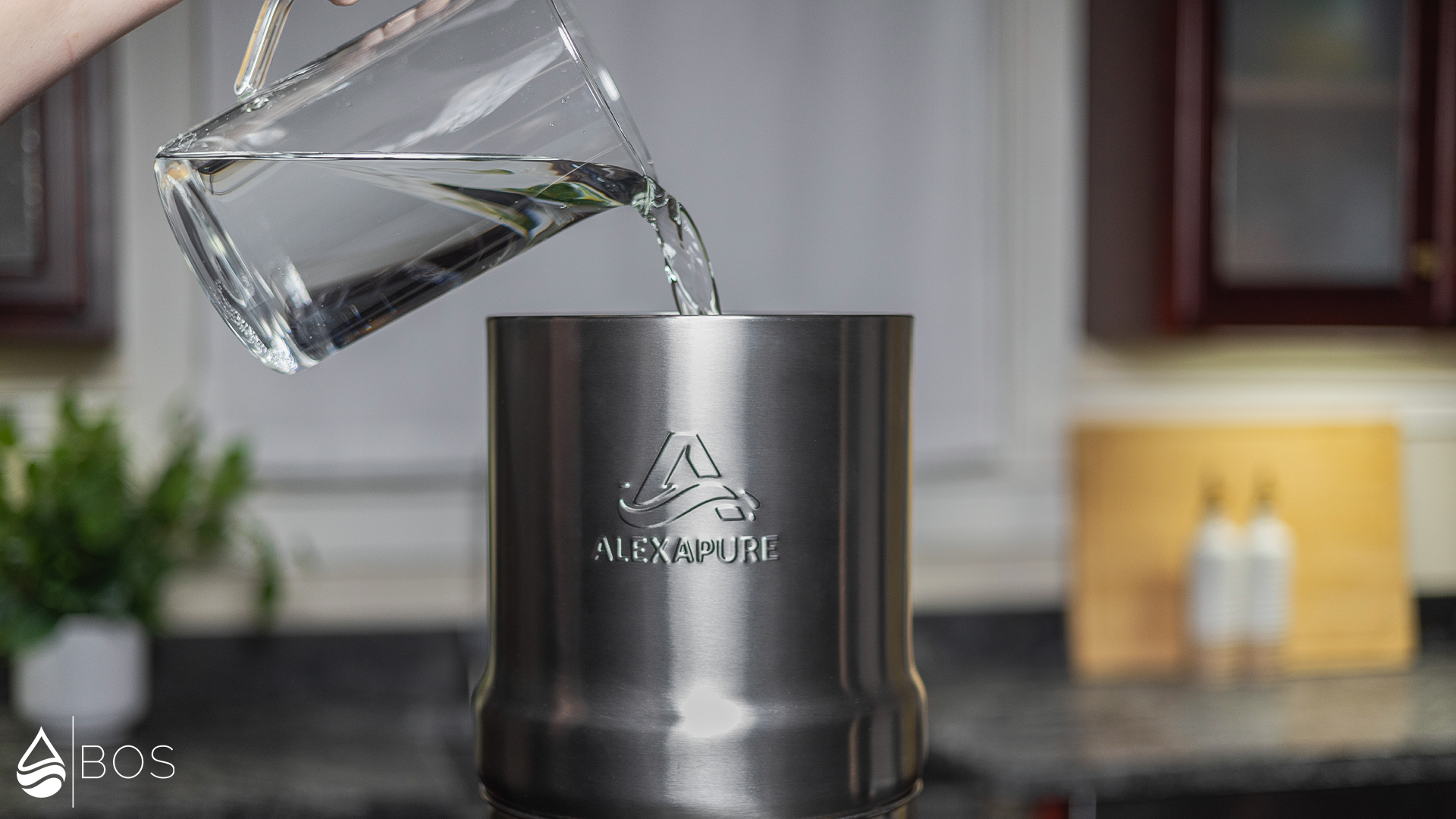
CostsCost scores reflect overall value for money rather than price alone and include optional manufacturer-offered water level spigots and tank stands.: /5.00
As of July 13, 2026, the Alexapure Pro including two filters is priced at $399.98. Adding the optional tank stand ($44.95) brings the upfront total to $444.93.
We estimate $240 in annual filter replacement costs for two parallel filters. Upfront price is slightly above average and long-term cost is around average.
Other Gravity Water Filters We Tested
While the systems above performed best in our testing, we evaluated 18 setups in total.
Other Solid Options (Final Rating 3.5 or Higher)
The following systems/setups didn’t make the cut, but may still be worth considering:
- Phoenix 2.25-gal Gravity Water Filter with Carbon + Fluoride Filters (3.71/5.00)
- Rorra Countertop System (3.65/5.00)
- Purewell 2.25G with Carbon + Fluoride Filters (3.60/5.00)
- Big Berkey (3.56/5.00)
Setups We Don’t Recommend (Final Rating Lower than 3.5)
These are the systems/setups we don’t recommend based on our test results:
- British Berkefeld SS2 with Ultra Fluoride Filters (3.36/5.00)
- Purewell 2.25G with Carbon Filters (3.33/5.00)
- Culligan Scout (3.11/5.00)
- Big Berkey + Phoenix Gravity New Millennium Edition Filters (2.96/5.00)
- Santevia Gravity Water System (2.84/5.00)
- British Berkefeld SS2 with Ultra Sterasyl Filters (2.66/5.00)
- ProOne Traveler+ (2.41/5.00)
- BOROUX Legacy (2.39/5.00)
- Waterdrop King (2.30/5.00)
- Radiant Life SS Gravity Countertop Filter (1.69/5.00)
Buying Guide: How to Choose a Gravity Water Filter
In the market for a gravity water filter but overwhelmed by your options? This guide covers the key points to consider so you can choose the system that best fits your needs.
Note: in this guide, “gravity water filter” means a countertop system: the freestanding, often stainless-steel units with an upper fill tank and a lower collection tank. Other types of filters are gravity-powered too, such as standard pitcher filters and the hanging bag filters used for backpacking, but we don’t cover them here.
Tap Water Contaminants
If you’re only concerned with taste and odor of your tap water, you primarily need a gravity filter that targets aesthetic contaminants (especially chlorine/chloramine). Fortunately, options abound: in our independent lab analysis, every tested system completely removed chlorine.
However, if you’re also concerned about health-related contaminants, you need to make sure the gravity filter you’re buying is capable of reducing the specific harmful substances that may be present in your water supply. There are two main ways to approach this:
- Conduct a test of your home’s water supply:
- Order an inexpensive water test kit online or visit a local hardware store and test the water yourself. Your local health department may also offer test kits.
- Alternatively, hire a professional lab to analyze a sample of water taken from your home. This is recommended by both the EPA and us at BOS Water and is more reliable than DIY home test kits. Two examples of such lab services are Tap Score and ETR Labs.
- Collect information about your city or town’s water supply:
- Contact your city administration and request annual water quality reports, called Consumer Confidence Reports (every public water utility is required to provide these for free).
- Alternatively, you can browse the EPA’s directory to find these reports, which is usually faster.
- Another option is to use this link to access the EWG Tap Water Database, which aggregates and analyzes the same Consumer Confidence Reports to make public water quality easier to assess.
- Problems with this approach:
- You can’t tell whether additional contaminants may enter your water along the way from the utility to your home.
- This approach does not apply if you rely on private well water.
Non-Potable Water
If your primary focus is making non-potable water safe to drink (say, as part of your emergency preparedness planning or for use while camping), microbial reduction is going to be of the utmost importance. Here, “microbes” refers to the three main groups of waterborne pathogens: bacteria, viruses, and parasites such as protozoal cysts.
But in our opinion, gravity filtration should always be paired with another disinfection method, such as chemical treatment or boiling. Not all gravity systems disclose their filtration (micron) ratings, but many rely on microfiltration, meaning their filter’s pore size is between about 0.1 microns and 10 microns (the range varies slightly depending on the source). Such systems are not capable of fully removing tiny viral particles, which require much finer filtration to trap effectively. Depending on the pore size, these filters may be effective at removing much larger protozoal cysts and bacteria, but you would still need another disinfection step to ensure viral reduction.
Additionally, mechanical filtration alone does not inactivate pathogens, and bacteria can survive or regrow within the filter due to biofilm formation. Plus, filter integrity failures and maintenance issues can go unnoticed, providing no residual or verifiable protection.
Filtration Performance: NSF/ANSI Testing & Certificates
Once you know which contaminants and impurities you’re dealing with, look for a gravity filter system that is NSF/ANSI-certified to reduce those substances. Alternatively, you can consider a unit backed by independent third-party test data covering the relevant contaminants, ideally through 100% of the filter’s rated life (or longer).
You should pay particular attention to the following NSF/ANSI standards and protocols:
- 42 – water aesthetics (i.e., chlorine, chloramine, and taste & odor)
- 53 – health-related contaminants such as asbestos, volatile organic compounds (VOCs), cysts, PFOA/PFOS, certain salts including nitrate and fluoride, and heavy metals including lead, mercury, and chromium-6
- 401 – emerging contaminants like over-the-counter and prescription drugs, herbicides, and pesticides
- (NSF protocol) P231 – microbial reduction (i.e., bacteria, parasites, and viruses)
Did You Know?
NSF/ANSI certification means a water filter has been tested against one or more NSF/ANSI standards using standardized testing procedures. These procedures are designed to measure how effectively a filter reduces a specific contaminant, such as lead. Standardized testing is important because it allows for meaningful comparisons between different water filters. In addition, during NSF/ANSI certification, a filter is tested for contaminant reduction across its entire rated filter life, not just at the beginning. NSF/ANSI certifications can be awarded by NSF, WQA, and IAPMO. All three organizations are ANSI-accredited and equivalent in that sense. They are also independent from the applying water filter company, which makes their certification results reliable.
Aside from NSF/ANSI certifications, a filter company may also publish its own third-party test data. However, such data should always be interpreted cautiously, as testing is often performed only at the beginning of the filter’s life rather than at or near the end, and may not fully follow the test protocols and performance requirements defined in the applicable NSF/ANSI standards.
At BOS Water, we submit unfiltered and filtered tap water samples to professional labs for analysis to determine the real-world contaminant reduction performance of each gravity water filter. We share the resulting lab data in the filtration tab(s) of our comparison sheet.
Microbial reduction testing isn’t part of our standard review process, since we typically test using treated city water – which contains too few microbes to yield meaningful reduction data. That said, we recognize many people are interested in gravity water filters specifically for worst-case, emergency scenarios, where water quality is uncertain. So, we went a step further: we tested every gravity system in our lineup that claimed to remove microbes using a sample of pond water.
Unfortunately, we couldn’t find a professional lab that accepts a private water sample for virus detection, and no surrogate method was available. Our testing was therefore limited to bacteria (total coliforms and E. coli) and, by extension, parasites (cysts) – any filter capable of removing bacteria should readily remove much larger cysts. Finally, we measured turbidity (water cloudiness) reduction as an additional data point.
On NSF Protocol P231
Devices certified against NSF P231 have passed rigorous testing for bacteria, virus, and cyst reduction, though this is an expensive undertaking for the manufacturer, and currently no gravity water filters have it.
Alternatively, successful third-party testing to NSF P231 permits manufacturers to apply for EPA registration of their device as a microbiological water purifier, which means the system may be used as a standalone treatment on microbially unsafe water. However, the EPA does not independently test the validity of a device’s microbial reduction claims prior to its sale or distribution, so your confidence and comfort level in a filter’s third-party testing would still dictate whether you incorporate additional disinfection.
That said, a few of the systems we tested do have at least some third-party data behind their microbial reduction claims (covering bacteria, viruses, and parasites), though not always through 100% of the filter’s rated life. These are the Alexapure Pro, Purewell, British Berkefeld (with the Ultra Sterasyl or Ultra Fluoride filters), and ProOne Traveler+. Of those, the British Berkefeld with either filter stands out as the only system with an actual NSF/ANSI certification for germ removal: NSF/ANSI 53 for cyst reduction. Keep in mind, though, that a cyst-reduction certification covers only the larger protozoal parasites, not the much smaller viruses that are hardest to filter out.
So, to bring it together: with no P231 certification or EPA microbiological water purifier registration behind any of the systems we tested, we believe they should always be paired with another disinfection method for non-potable water.
Usability
Usability is often so subjective that it’s hard to know if a water filter will suit your needs and preferences without having the chance to test it out. Fortunately, most gravity filter systems are very similar in their design, often to the point that you can mix and match the housing (i.e., the tanks and spigot) from one system with filters from another. Plus, a quick skim through user manuals, manufacturer websites, or YouTube videos is typically sufficient to assess their relevant features.
In addition, we cover all usability aspects of each system we test in detail in this comparison and our dedicated reviews. Check those out to see whether the model you’re considering meets your specific requirements.
Initial Assembly and Filter Priming
Fortunately, most gravity water filter systems are very easy to set up and come with clear, illustrated instructions to get you started. A handful came with relatively scant directions, but they all have tutorial videos (or similar) on their website or YouTube if additional guidance is needed.
After choosing a suitable spot, setup typically involves washing the tanks, spigot, and other components with soap and water prior to installing the filters. Some filters must first be flushed using your tap, often by way of a priming button, flexible rubber primer or similar implement. Others have a ceramic outer shell that must be scrubbed prior to installation. A few are simply installed directly and primed by flushing the whole system with one or more feed tanks’ worth of water, discarding each batch in-between.
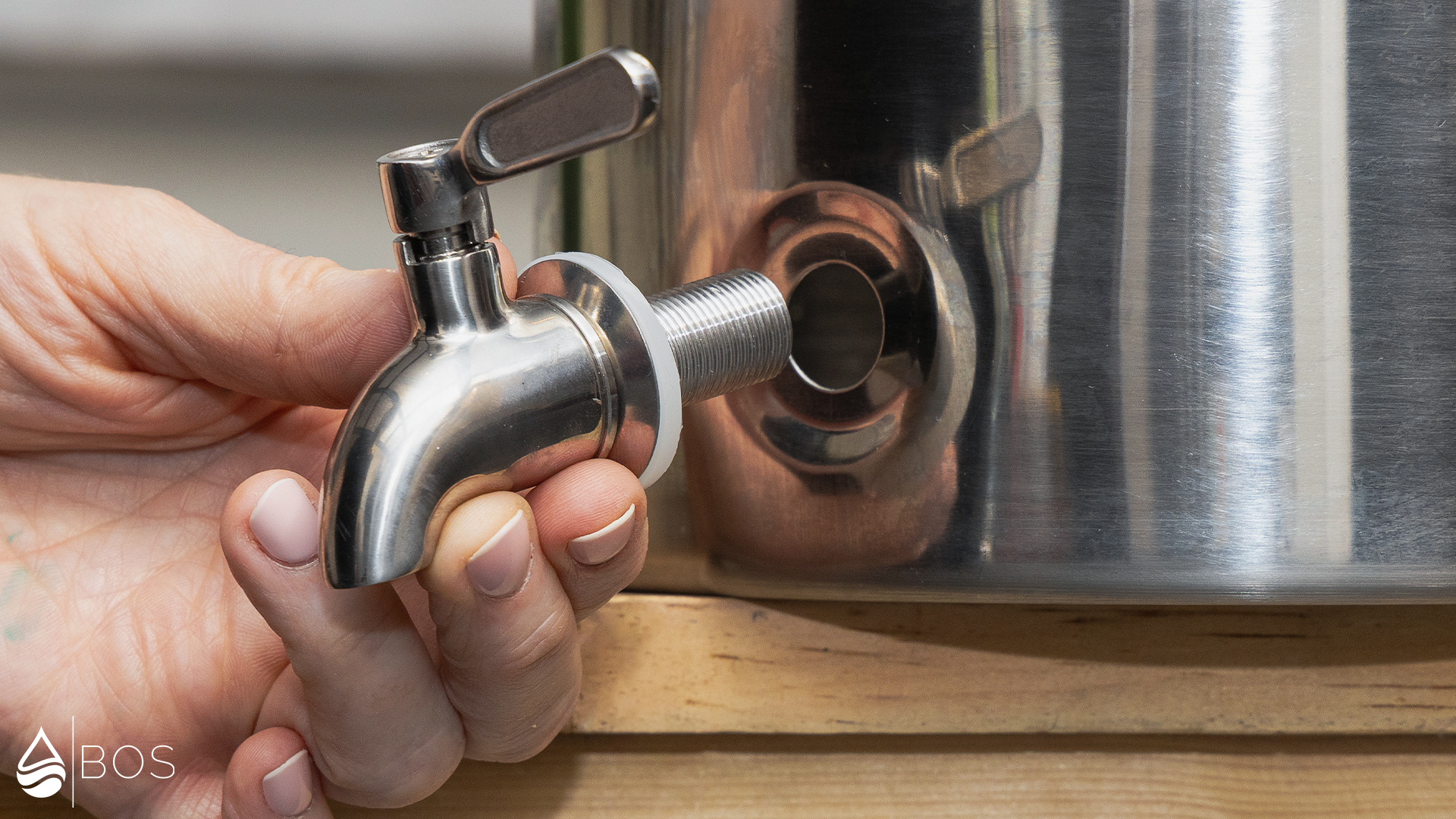
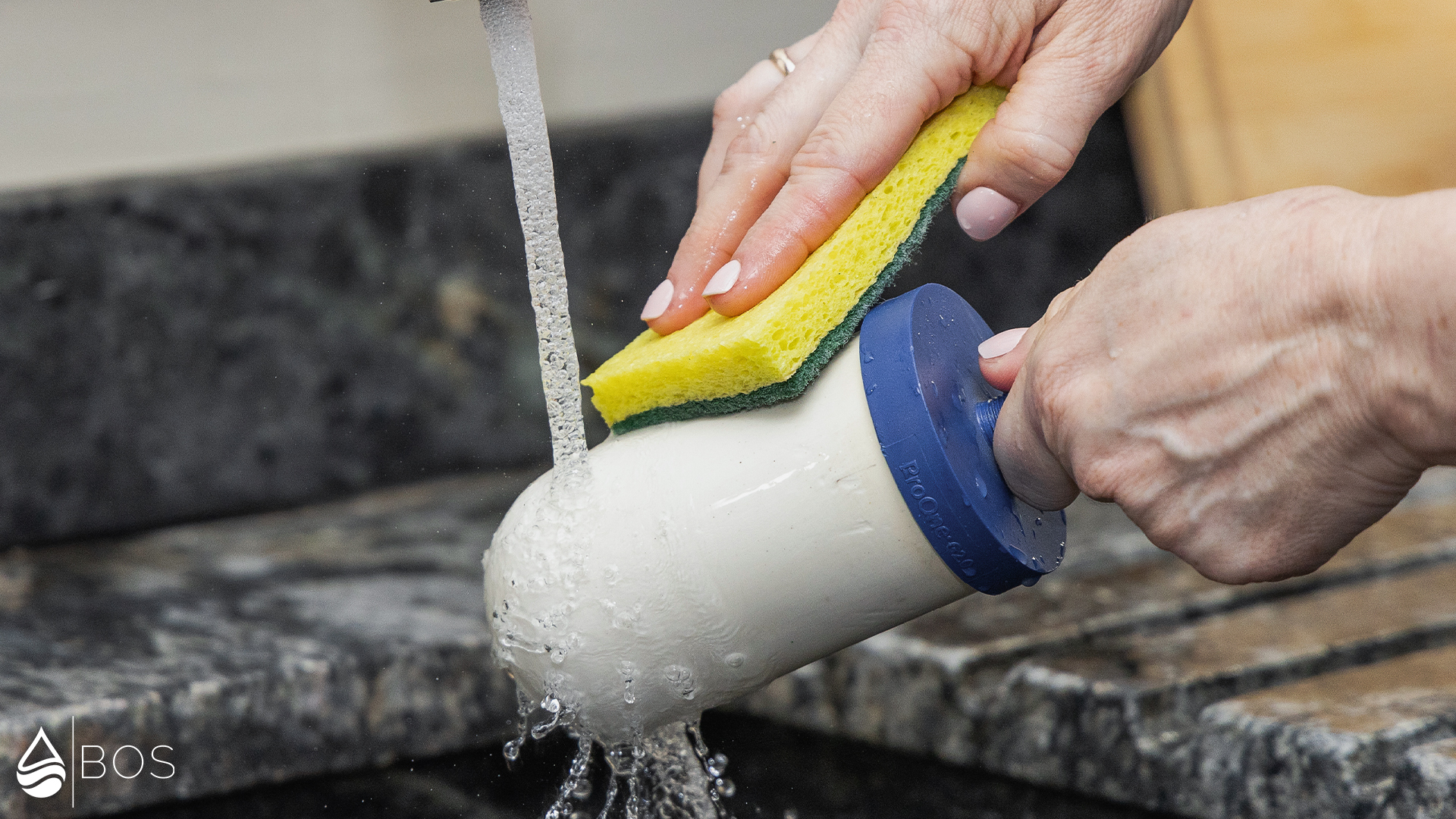
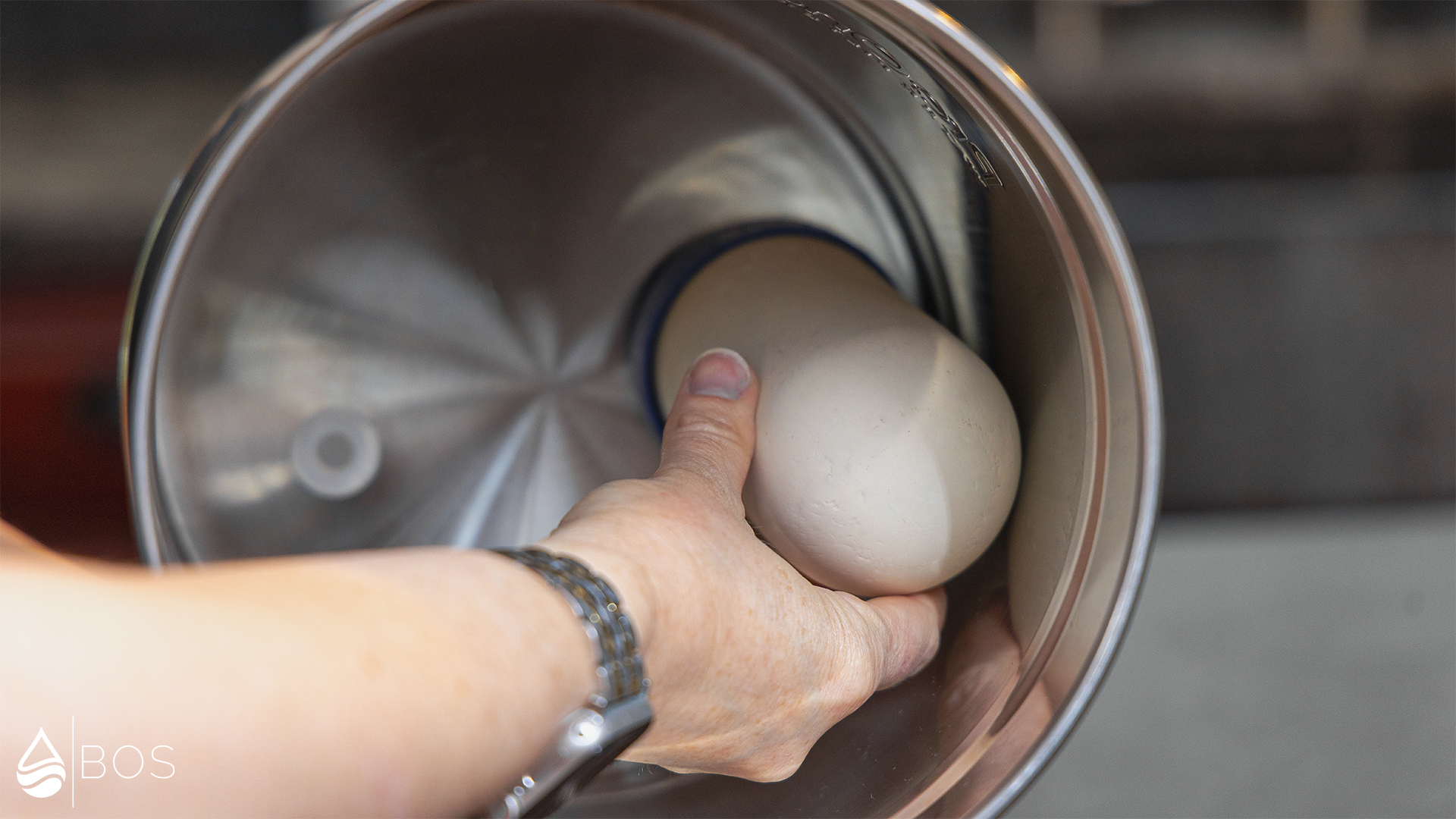
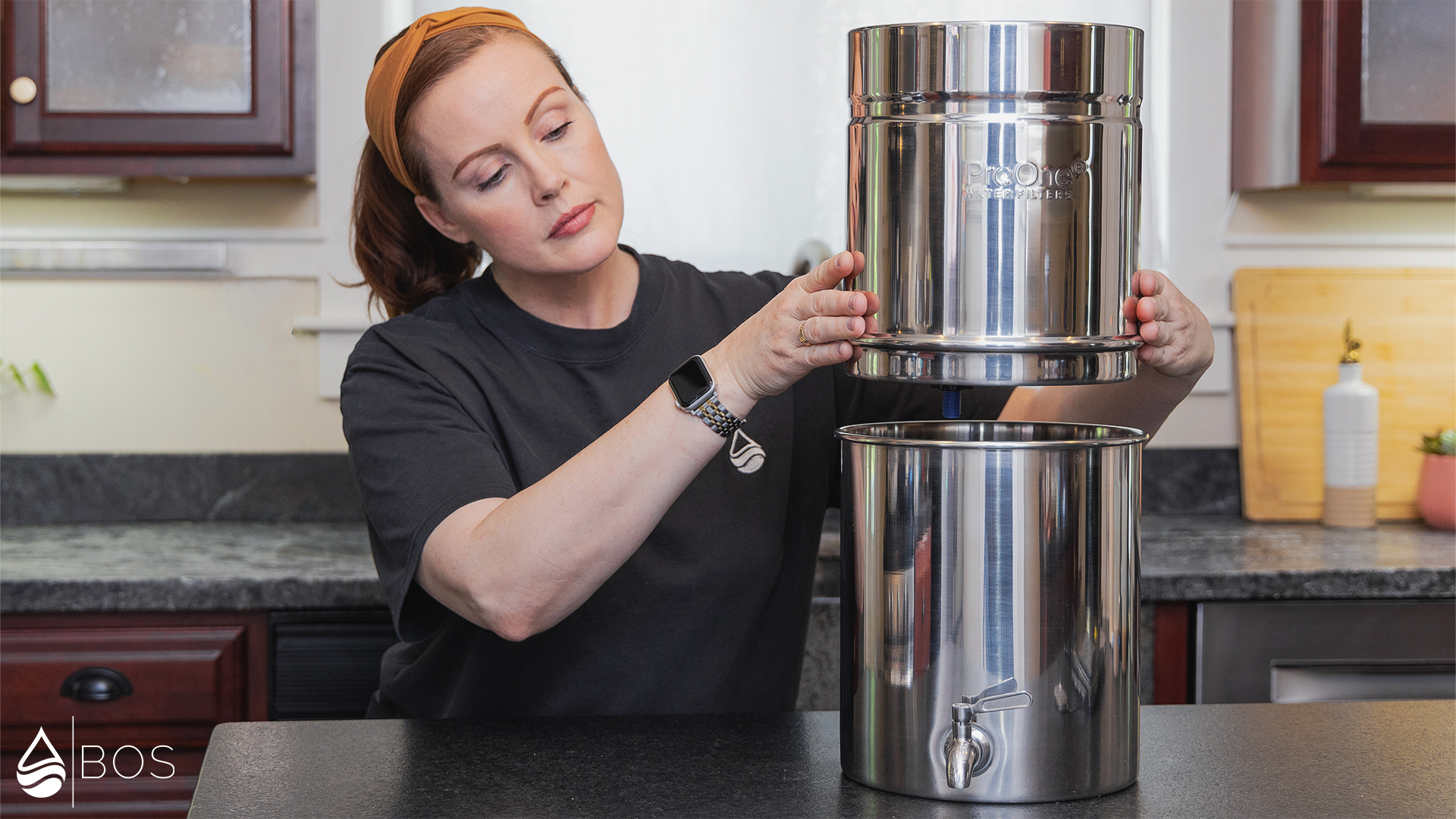
An honorable mention for ease of filter priming goes to the BOROUX Legacy, which came with an automatic filter primer that made this step a cakewalk (though this seems to have been a special offer). We were less impressed with the Santevia, as its slightly fussier setup required soaking, scrubbing, and flushing the filters as well as boiling mineral stones.
Everyday Use
Please note: the following volume, speed, size, and weight data reflect our own testing and may vary depending on the user, setting, and mode of measurement.
Common Design Traits
The following traits are common to nearly all gravity water filters, and several of them directly affect how to interpret our capacity and speed measurements.
Parallel Flow Paths
Gravity systems all share the same fundamental design: filter(s) are installed in hole(s) in the base of the upper tank. Water is added to the upper tank, which then percolates through the filters under the influence of gravity and is collected in the clean tank below. Any holes in the upper tank not occupied by filters must be plugged.
Most gravity systems can accommodate more than one filter element at a time – as many as four in some tested models. This creates parallel flow paths for the water to traverse, and filtration speed increases in proportion with each additional installed element.
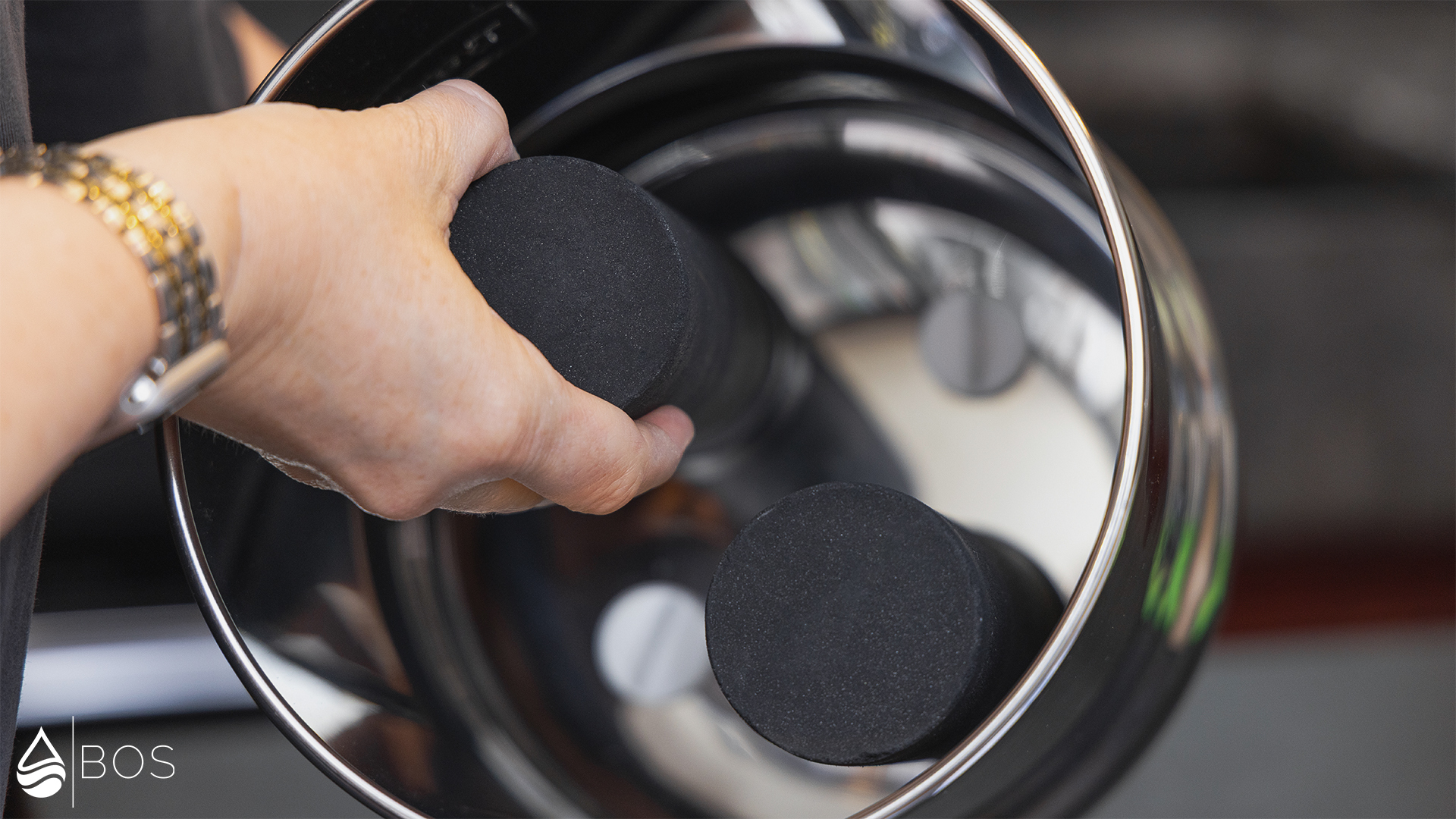
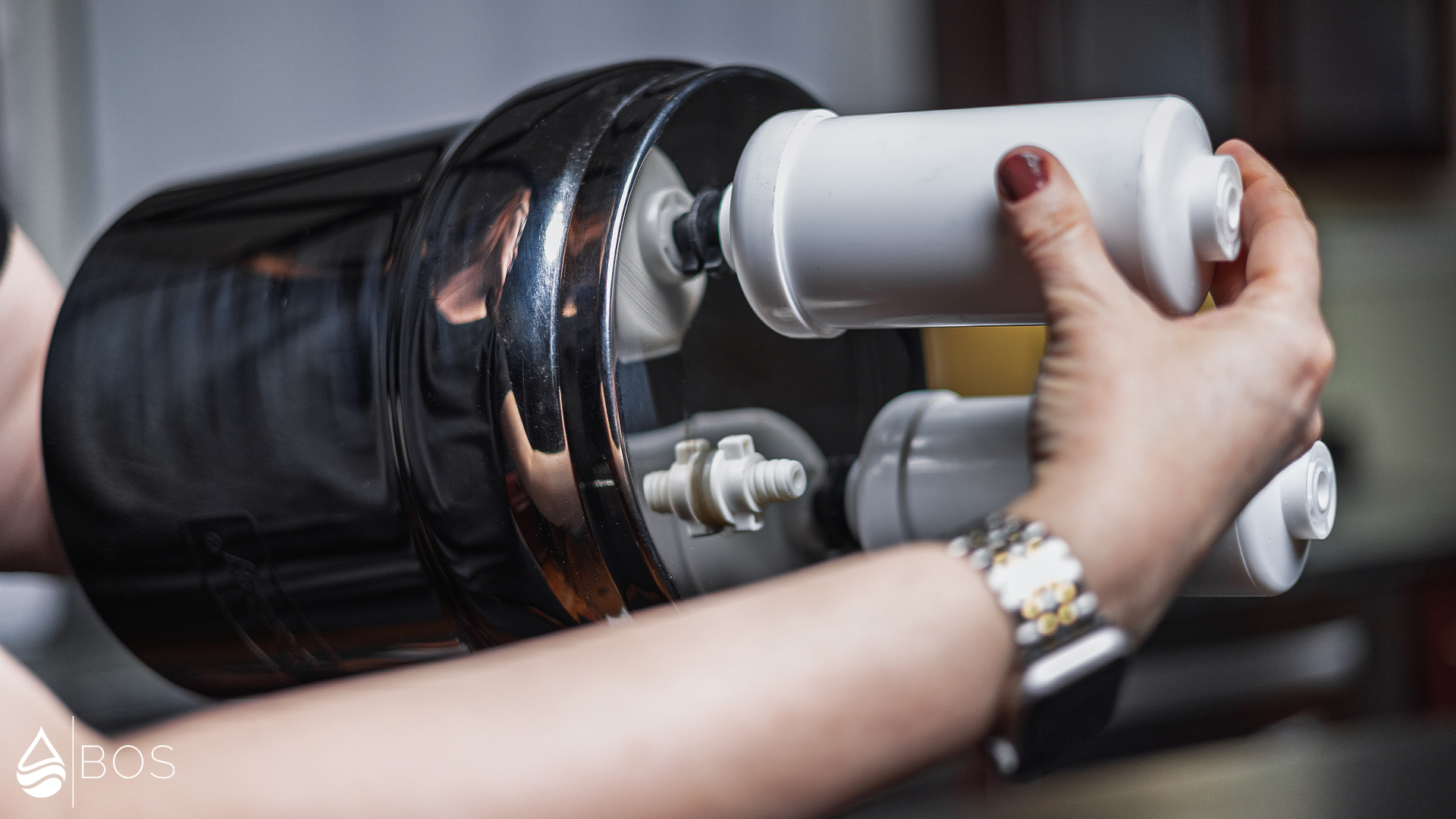
Spigot Height
Another common design feature pertains to spigot placement, which typically sits slightly above the bottom of the lower tank. This causes two related issues:
- Some amount of water, usually a few cups’ worth, must first be processed and collected in the lower tank before any can be dispensed. Practically, this matters the most when you have run out of clean water and you are starting from an empty system. In this case, you must wait until water reaches “dispensing level” before you can pour the first drop. It also affects how we report filtration speeds for each tested system. We measured the time to filter and dispense 1 or 4 cups both before and after this requisite volume had been processed. In some cases, it took an extra hour or more, which may be a dealbreaker for those who prioritize on-demand filtration.
- This same residual volume of water cannot be poured unless you tilt the tank forward or manually ladle it out.
The lone exception to this design flaw pertains to the Rorra. It comes with an integrated stand, so it was possible to place its spigot very low in the clean tank, the bottom of which is gently graded toward the spout. This allows virtually all the filtered water in the lower tank to be dispensed – no tilting or scooping required.
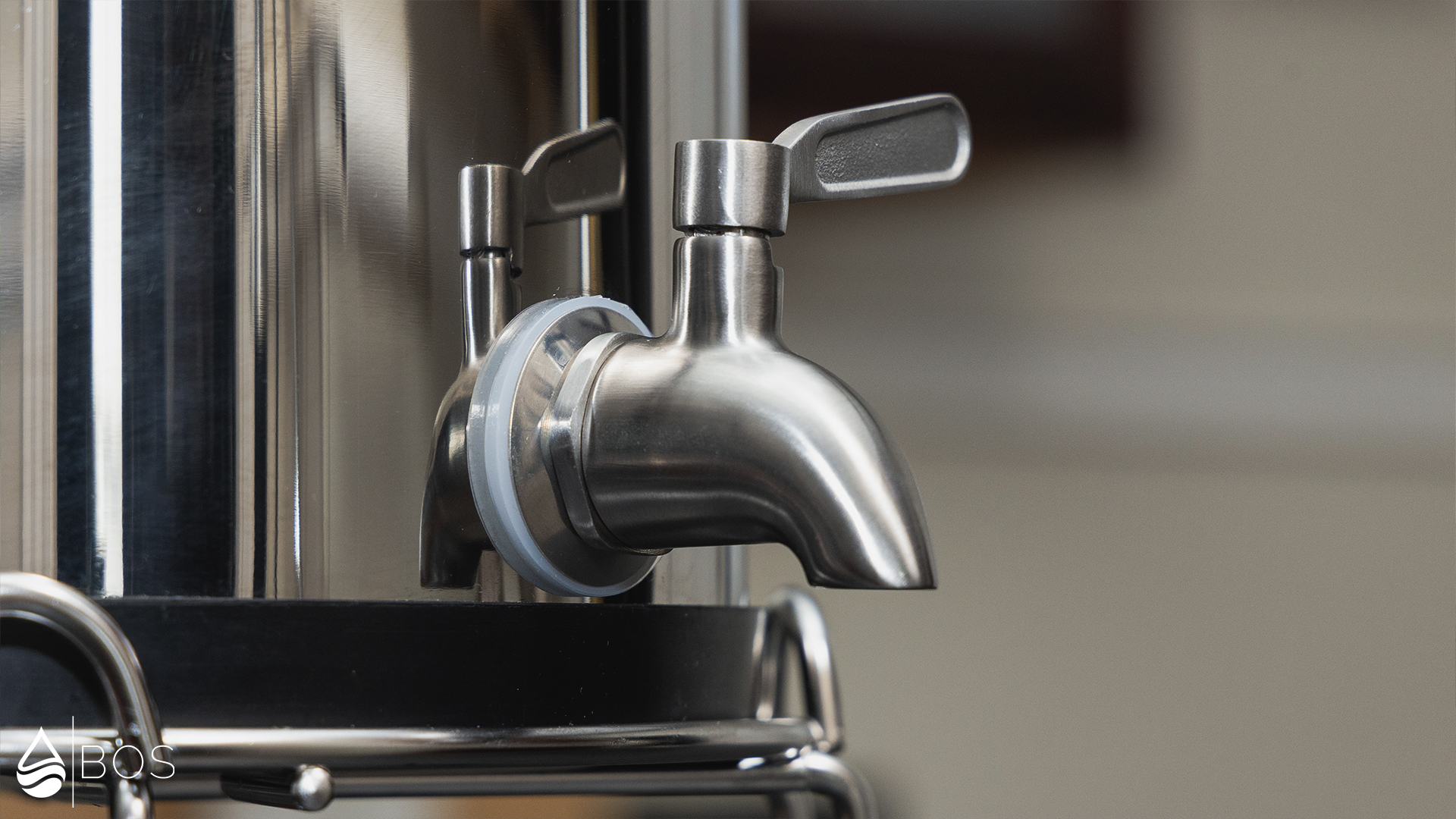
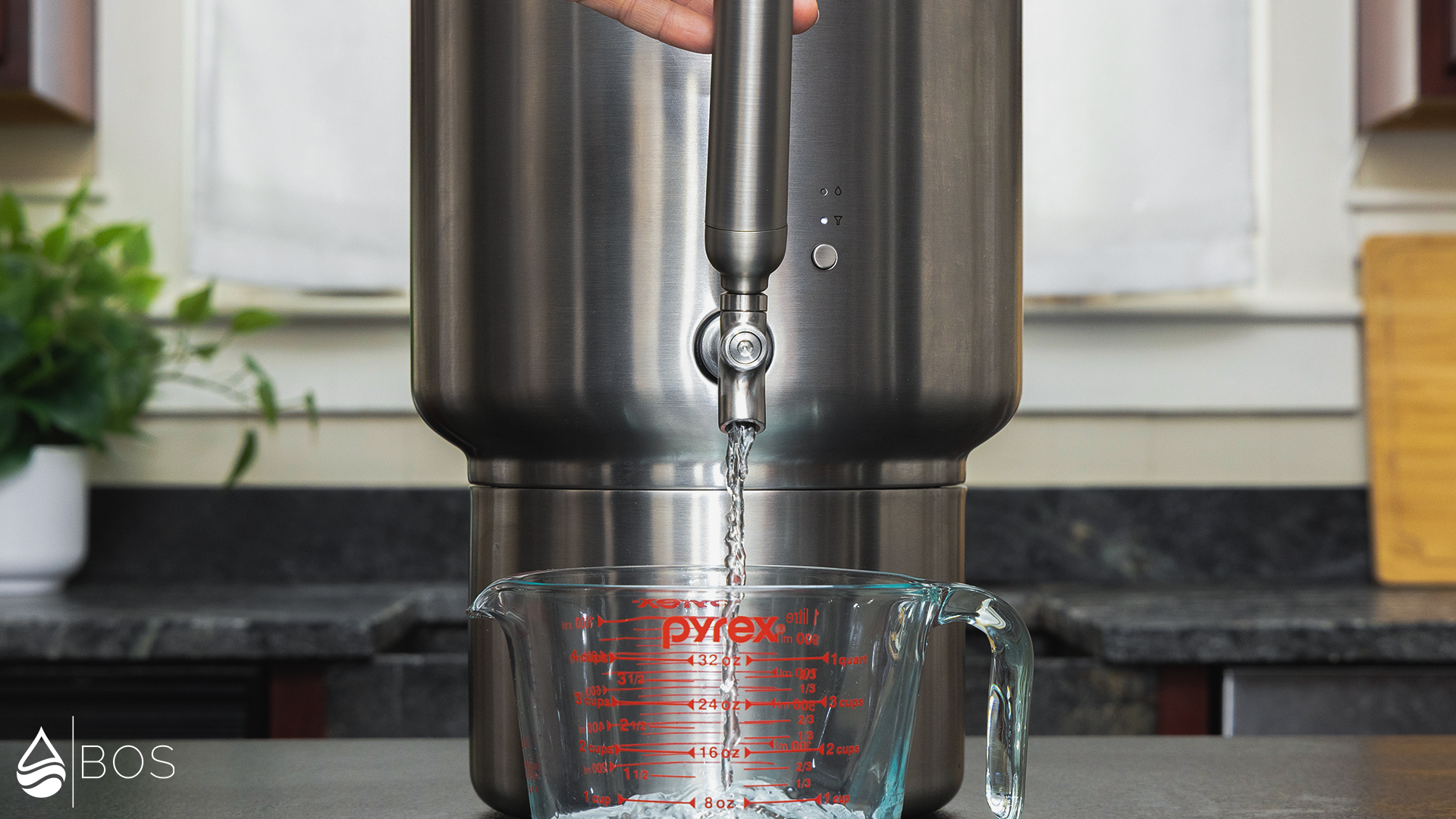
Plastic Filter Base
Another nearly universal finding is the presence of a plastic base that surrounds each filter and prevents water from contacting the filtration media at that level. This renders ~0.5″ of water in the feed tank unusable, and practically speaking, means there will always be a small amount of unfiltered water in the upper tank. In our testing, we did not subtract this small volume of unusable water from our reported feed tank measurements because it varies depending on the number of filter elements installed.
Once again, the Rorra is a notable exception. Though its filter does have some plastic components, it is encased in a stainless steel cover and neatly fits into a depression in the bottom of the upper chamber. This smart design allows essentially all the water in the upper chamber to filter into the lower chamber.
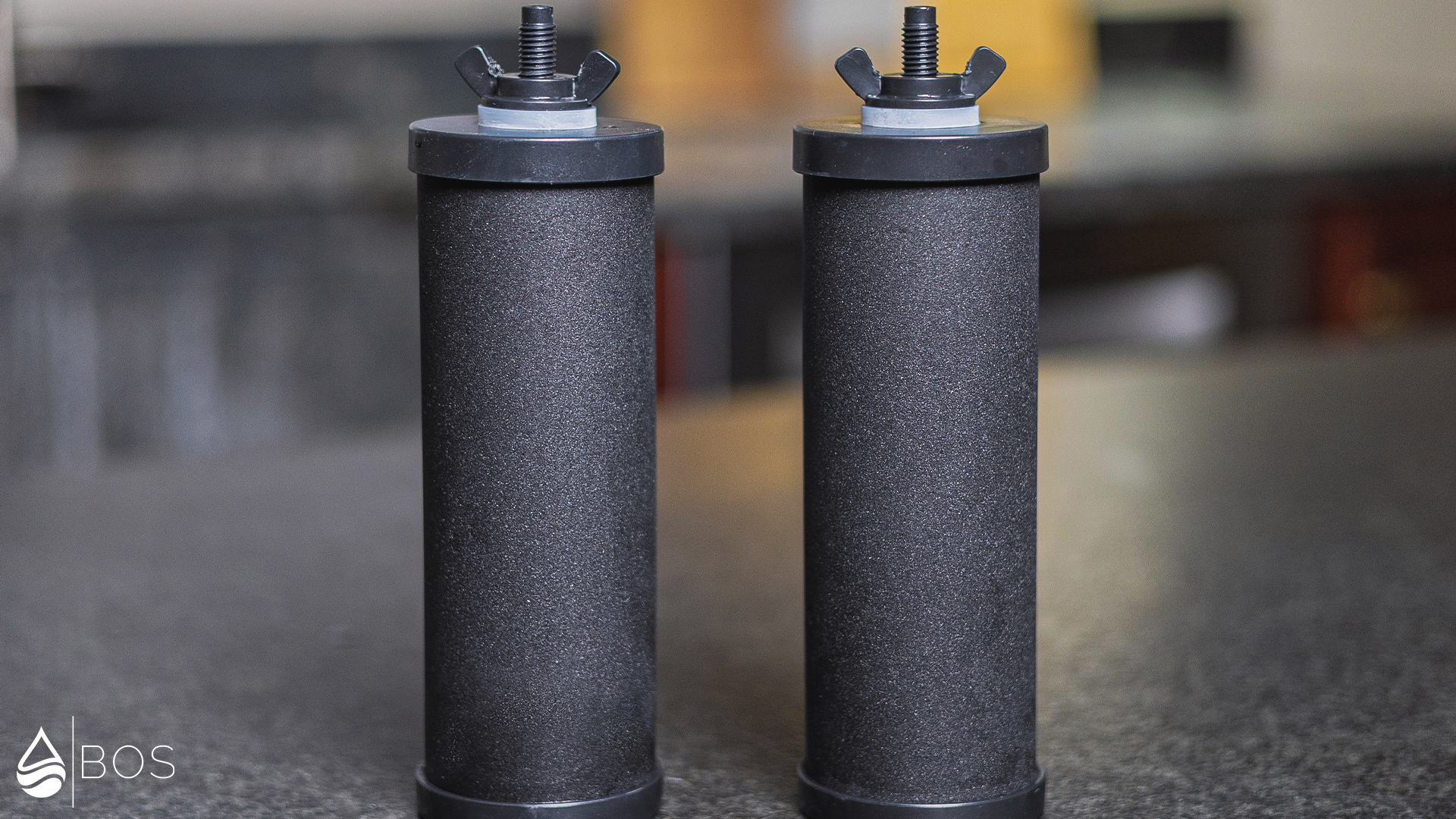
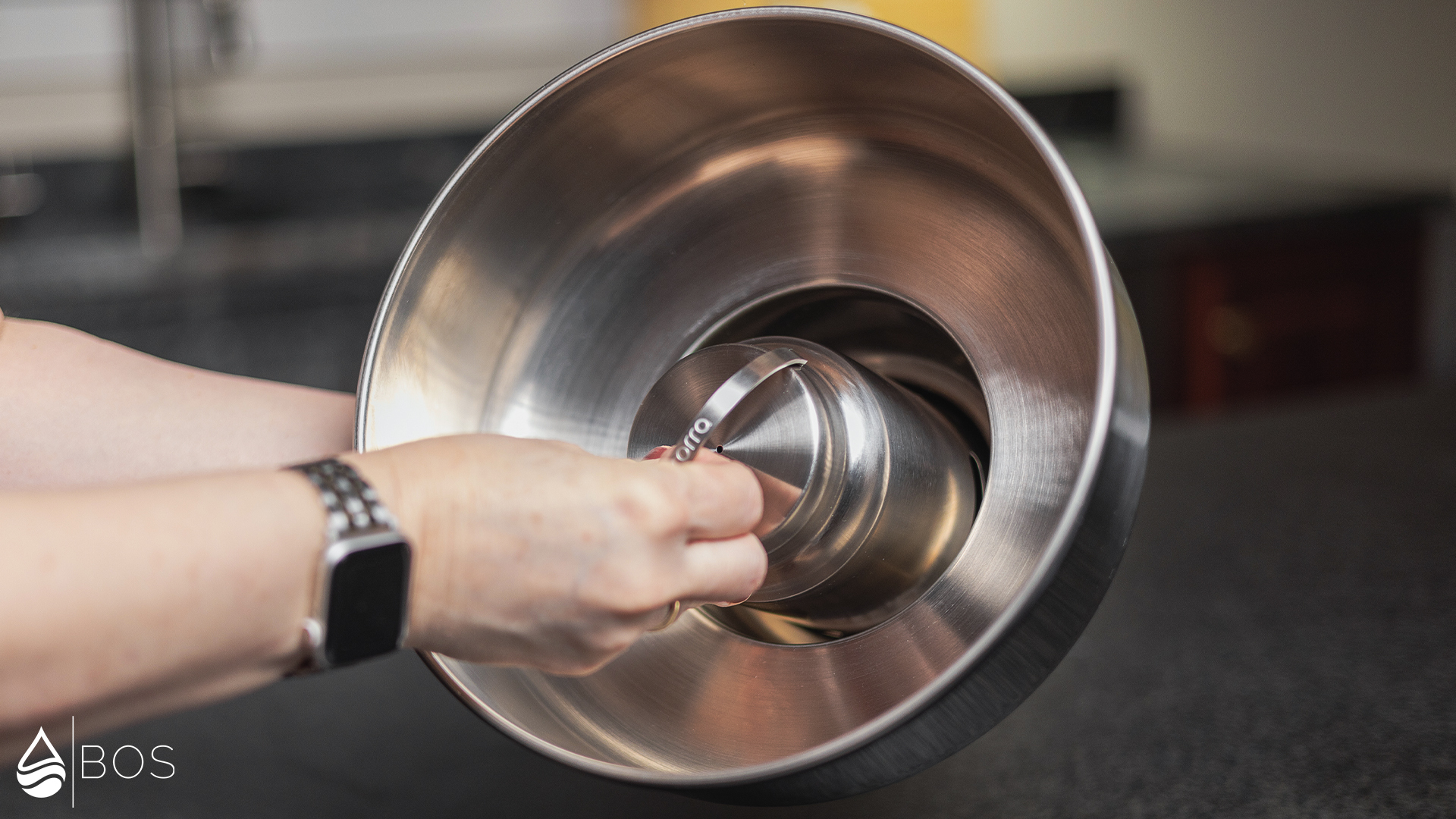
Balanced Tank Capacities
Most gravity systems feature well-balanced upper and lower tanks, so you can fill the feed tank up to the top and the filtered water will nearly fill the clean tank without risk of overflowing.
That said, in our testing, upper chamber capacity measurements and speed tests were performed with water filled to ~1″ below the rim and the filters installed to reflect real-world use and reduce spill risk. Lower chamber measurements were taken at the maximum fill level with the filters installed, allowing the upper tank to be placed without causing overflow.
Speed and Water Capacity
For any given gravity system, filtration speed is proportional to the weight of the water in the upper tank as well as the number of parallel flow paths. Filtration is fastest when the upper chamber is full and tapers off as it empties. Also, each additional filter element, and thus flow path, multiplies the total flow rate by a factor of up to 2.
Some of the systems we evaluated came with a single filter but could house more if desired. In these instances, we normalized our test data to two filters for better comparison to the majority of the other systems in our lineup. Relevant examples include the Alexapure Pro, as well as our customized combo, the Phoenix 2.25-gal with Patriot Pure Nanomesh filters.
Rarely, a unit included four filters with the base model (for example, the British Berkefeld with Ultra Sterasyl filters), so it was tested with all four installed in parallel.
Other models can only house a single filter (or have a single filtration path), including the Rorra and the Santevia. For these systems, there is no way to increase filtration speed by installing more parallel filters.
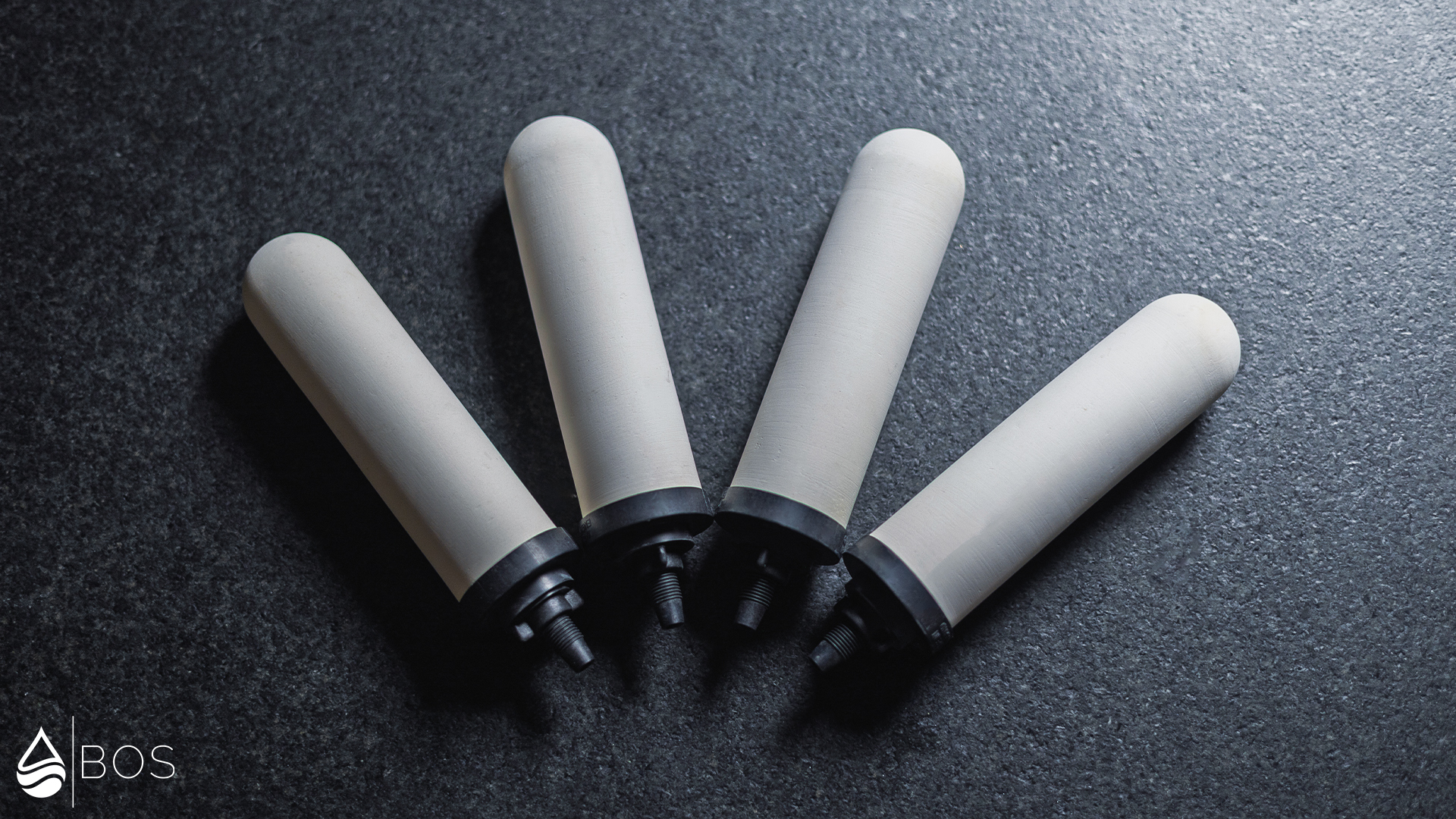
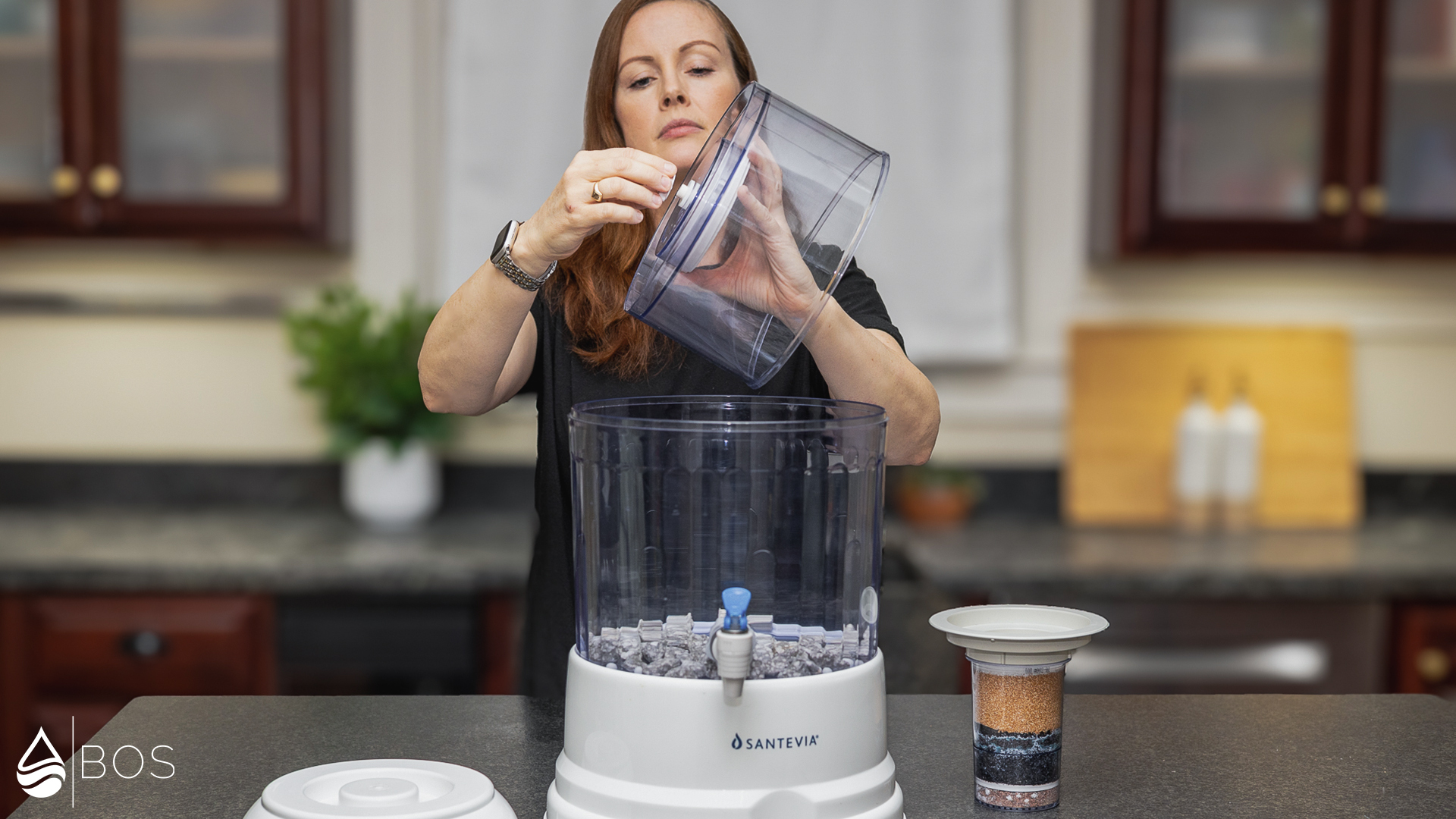
The most common scenario we encountered was two included filters with the capacity to install up to two more.
Given the above variability, making an apples-to-apples comparison of water processing speed is a bit challenging, so be sure to check out the comparison sheet to see how each system stacks up. We made sure to indicate how many filter(s) were installed and whether the number of parallel elements was already maxed out for each system we tested. If you are keen on a particular model but put off by a slower reported filtration rate, check to see if it can accommodate additional filters to boost speed before declaring it out of the running.
Plus, for almost all water filtration methods, there’s a tradeoff between filtration speed and filtration effectiveness. Contaminant removal is highly dependent on contact time between the water and the filter media – longer contact times generally lead to better results, and vice versa.
Filtration Speed
With these considerations in mind, the time to filter and dispense 1 cup of water (based on a full feed tank, an empty clean tank, and starting the clock when water reached dispensing level) ranged from 37 seconds to 11:51 minutes. When adding the extra time required to reach the dispensing level, the gap widened, taking anywhere from 1:20 minutes to 1:28 hours to dispense 1 cup.
We repeated this analysis for filtering and dispensing 4 cups, where it took 2:52 to 58:22 minutes when the clean tank water was already at dispensing level. This jumped to 4:16 min to 2:17 hours for 4 cups when starting from an empty clean tank.
Finally, we examined the time to filter and dispense the full feed tank. Ranging from 16:03 min to 7:07 hours, it’s clear that some systems are better suited for producing larger volumes in a short time than others.
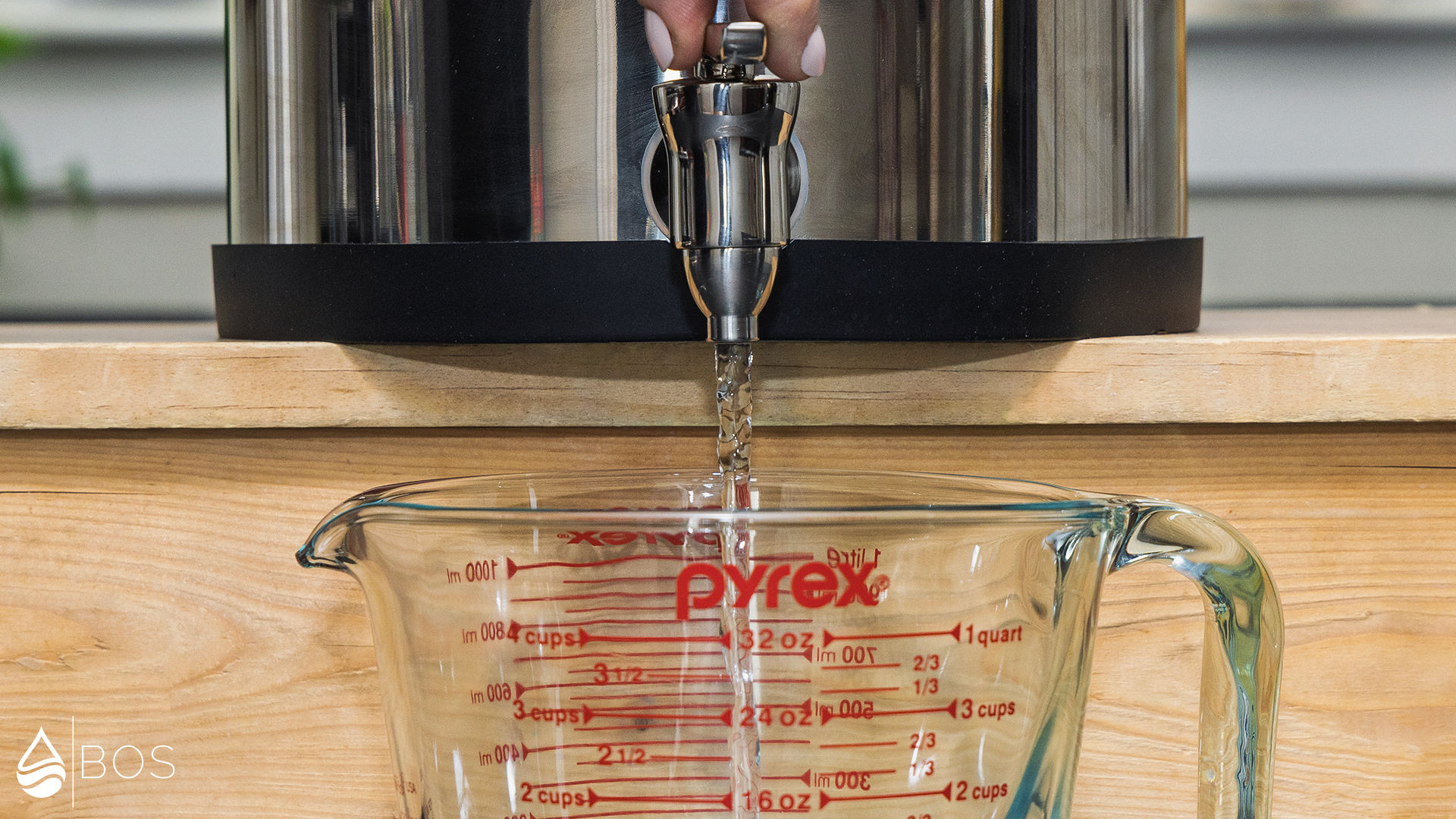
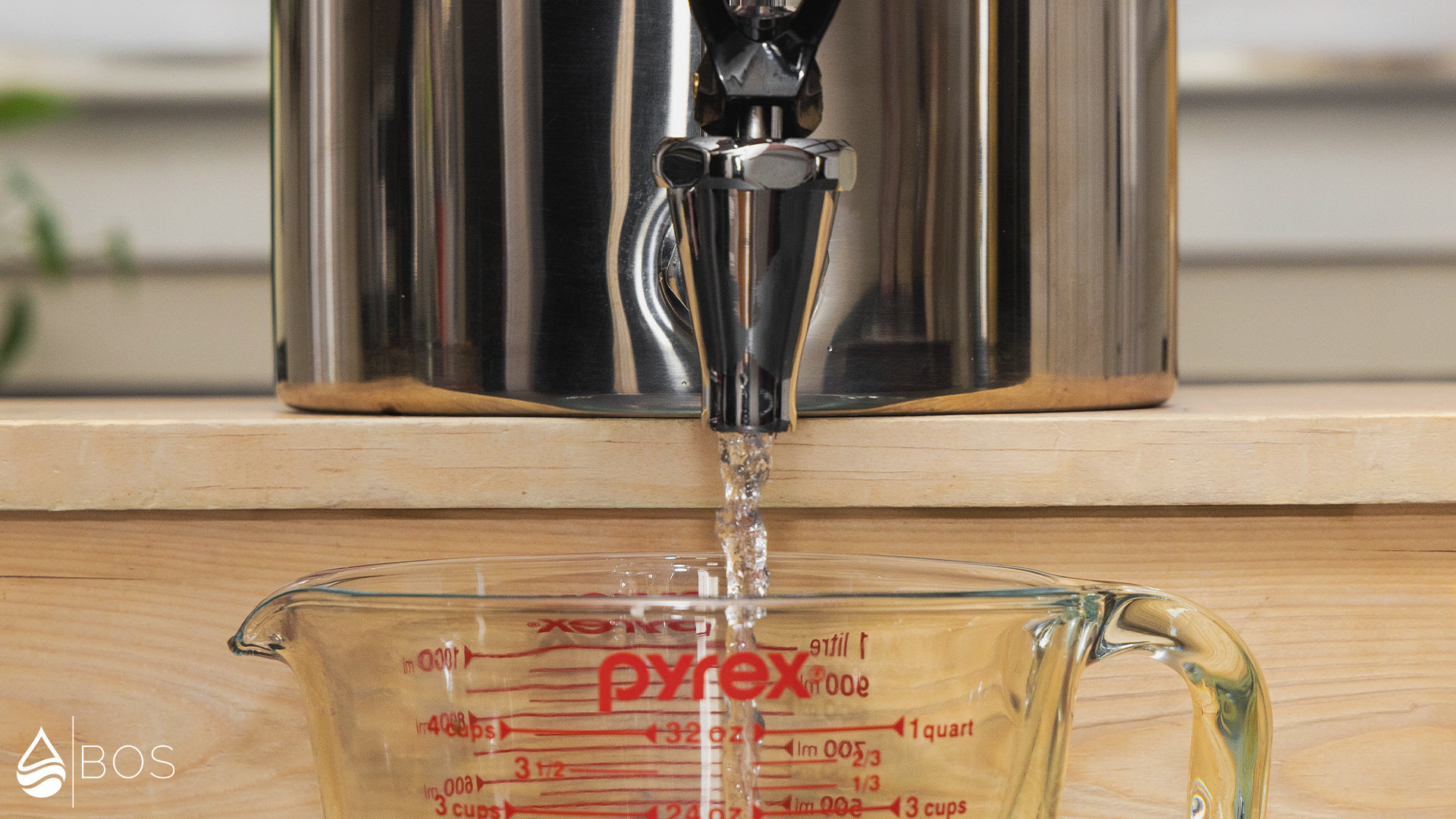
On-Demand Dispensing
We define on-demand dispensing as processing and pouring 1 cup of water in <1 minute. In general, most gravity systems are too slow to facilitate true on-demand dispensing, especially when starting from an empty system. However, a few systems did achieve this benchmark or got quite close, such as the Phoenix 2.25-gallon with carbon filters and the Rorra.
Take a look at the comparison sheet to see if your preferred system is on-demand capable.
Tank Size(s)
Many manufacturers offer their gravity systems in multiple size options, though we focused primarily on the ~2.25-gal models when available for our own testing. Most of the feed tanks (upper chambers) in our analysis therefore fall in the 1.62 to 1.92-gal (25.9 to 30.7-cup) range, with clean tanks (lower chambers) measuring 1.78 to 2.18-gal (28.5 to 34.9-cup).
Outliers include the Rorra and Santevia, which sport more modest 1.00-gal (16-cup) or 1.15-gal (18.4-cup) feed tanks, respectively (1.30 gal/20.8-cup vs 2.55-gal/40.8-cup clean tanks). On the other end of the spectrum is the 3.00-gal BOROUX Legacy. It has the largest capacity of the tested systems, with correspondingly roomy 2.45-gal (39.2-cup) upper and 2.78-gal (44.5-cup) lower chambers.
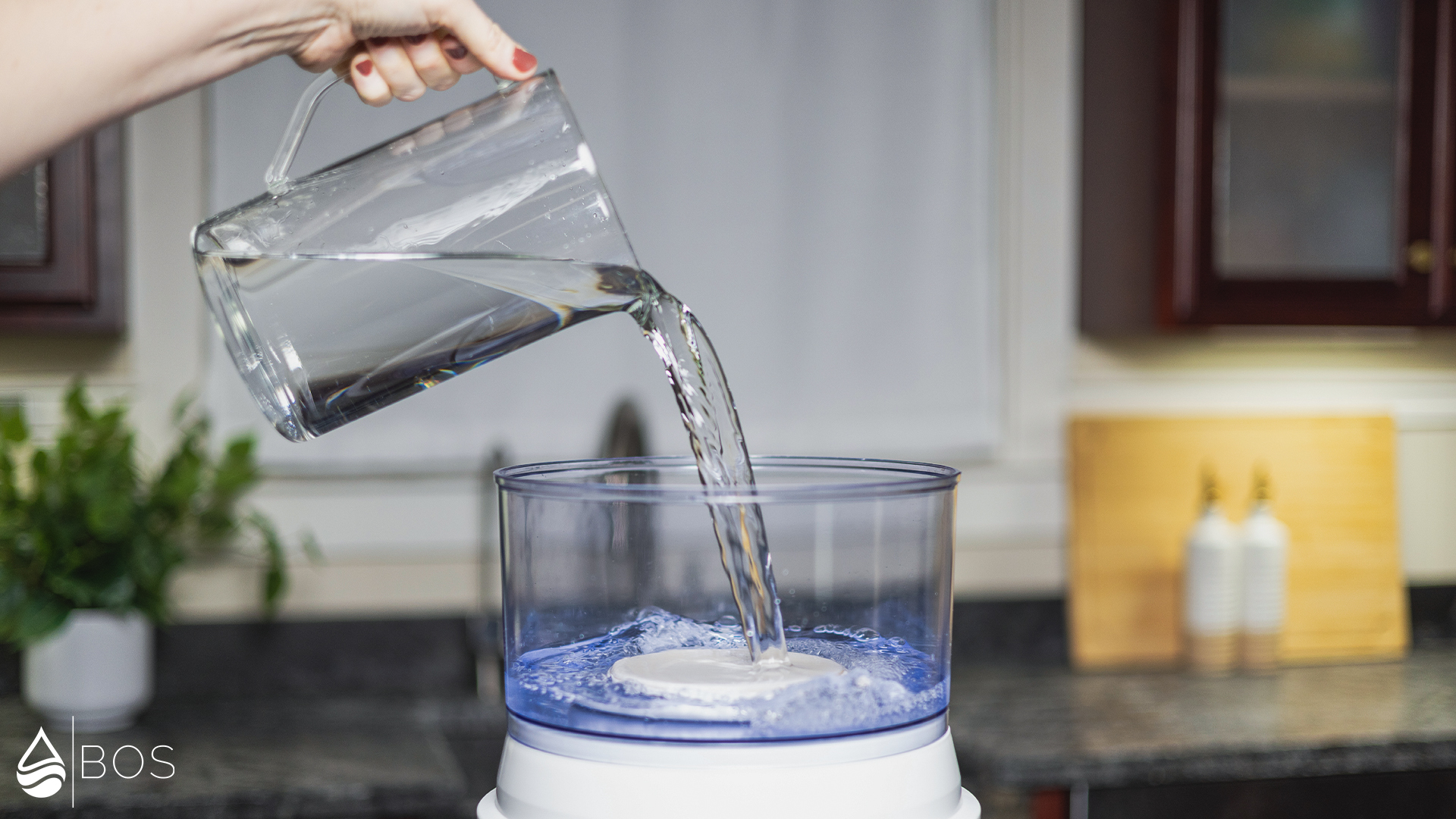
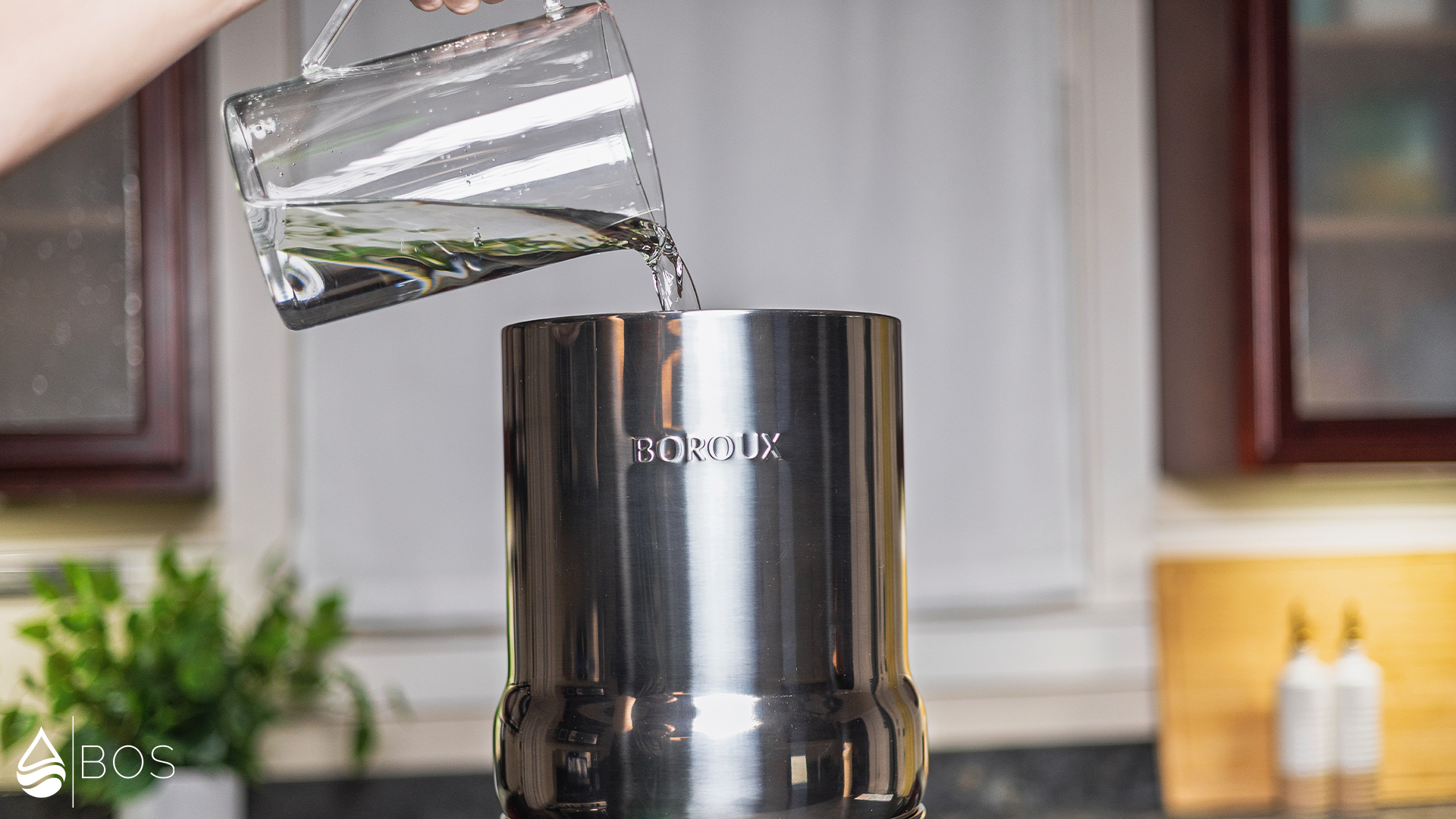
Dispensing
Most tested gravity filters dispensed water smoothly and without splashing, unless the spigot was fully opened very quickly. Spigot materials are typically plastic or stainless steel, with some even 304 or 316L grade. SS is the obvious preference, especially if you’ll be using your system outdoors or taking it on the go.
Flow is usually fast to extremely fast, with most systems pouring a cup in ~2-5.5 seconds from a full clean tank when dispensing speed is at its fastest. Some systems also include an air lock vent clip to keep filtration and dispensing flowing at full speed.
However, the Rorra was rather slow at 8.25 seconds for 1 cup. This isn’t surprising, as it has the smallest clean tank of the lot and gravity-dependent dispensing slows in proportion to the weight of the stored water. This system also has a unique tap-style spigot, but it must be held open the entire time while pouring, which can get tedious when dispensing larger volumes.
While none of the spigots leaked or dripped after pouring, a few had annoying quirks to contend with. For example, the Patriot Pure Ultimate’s plastic spigot has a cover that tends to interfere with dispensing. Likewise, the plastic spigot handle of the British Berkefeld SS2 (with Ultra Fluoride filters) twists horizontally to dispense. It lacks a hard stop, so it continues to spin around once opened.
Most gravity systems must be placed at the counter edge to pour, due to the spigot’s position near the bottom of the lower tank. For this reason, all offer a base or tank stand (sometimes sold separately), which elevates the system ~5-6.6″ off your counter. This enables you to push it back from the edge and still fit a glass underneath, though you won’t be able to fit something larger under the spout, such as a 40-oz bottle or 2-quart carafe.
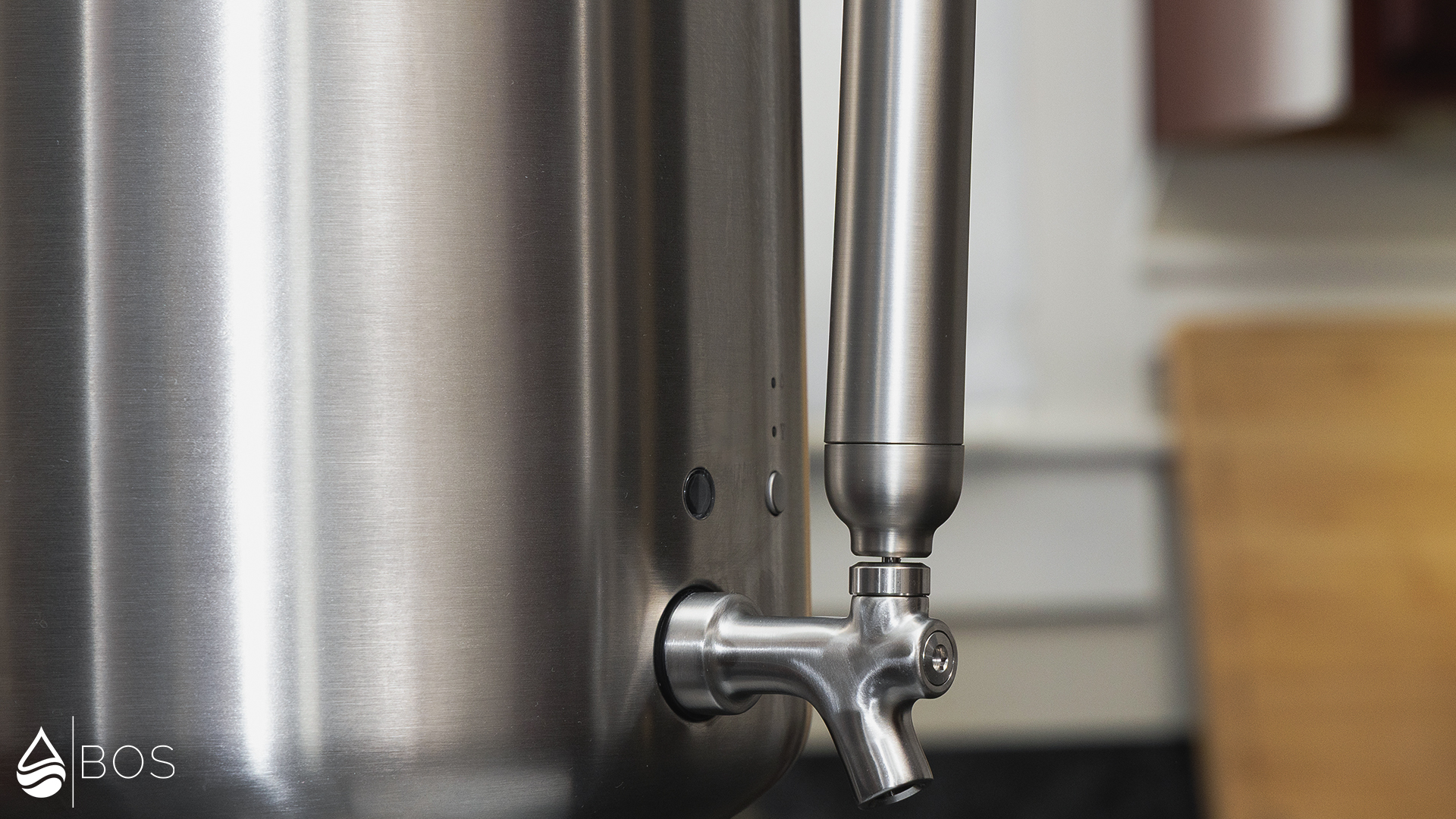
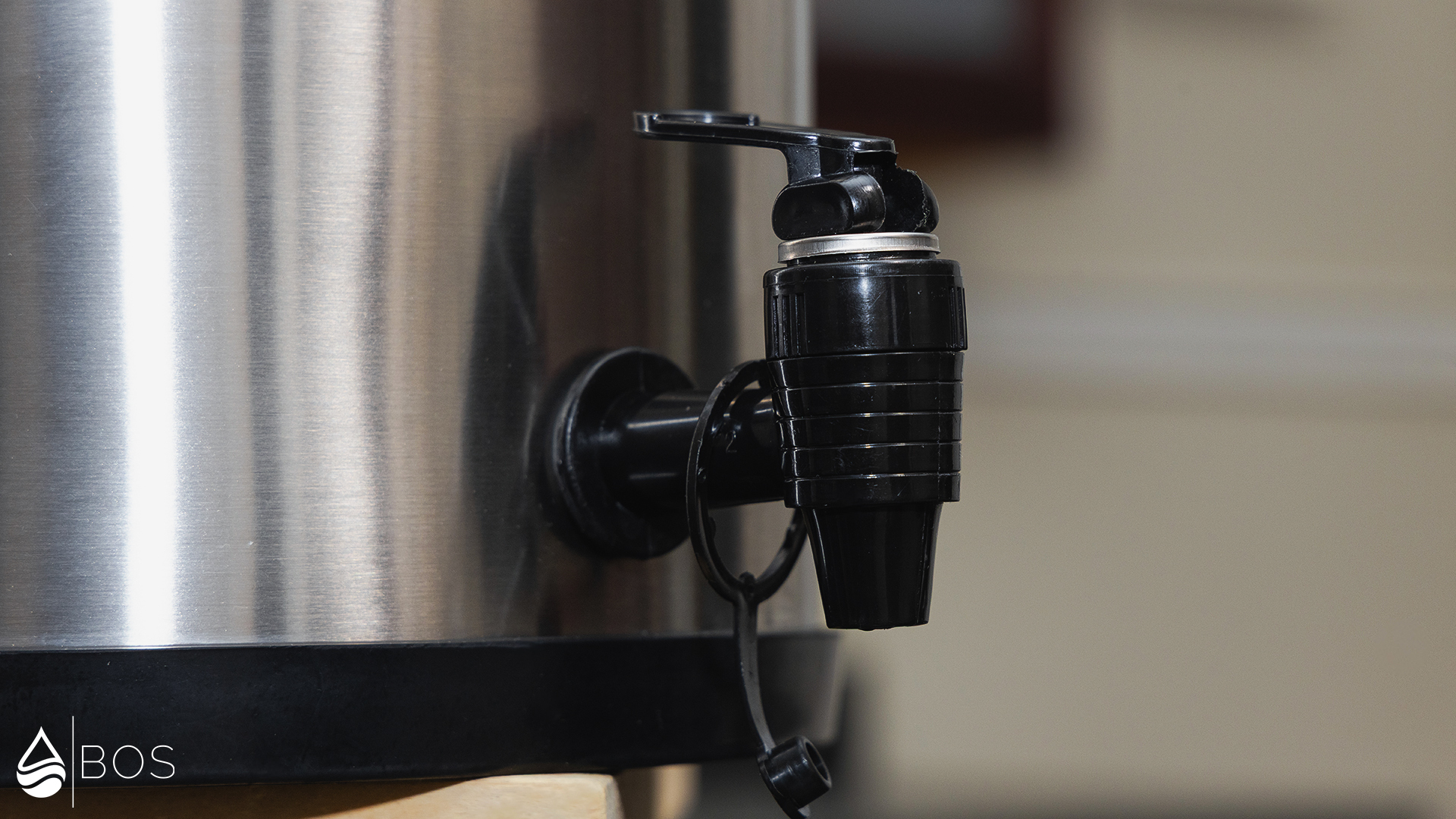
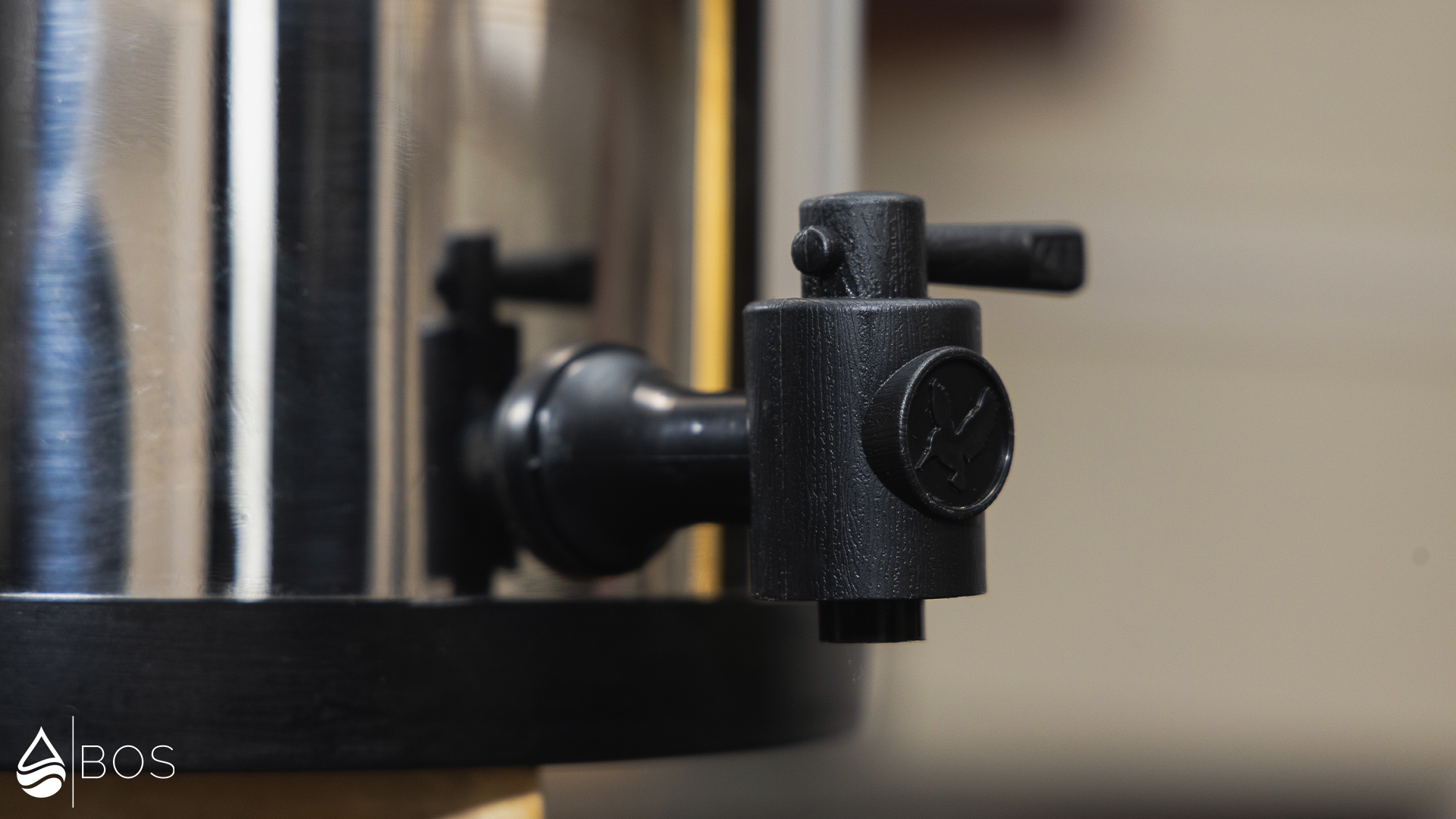
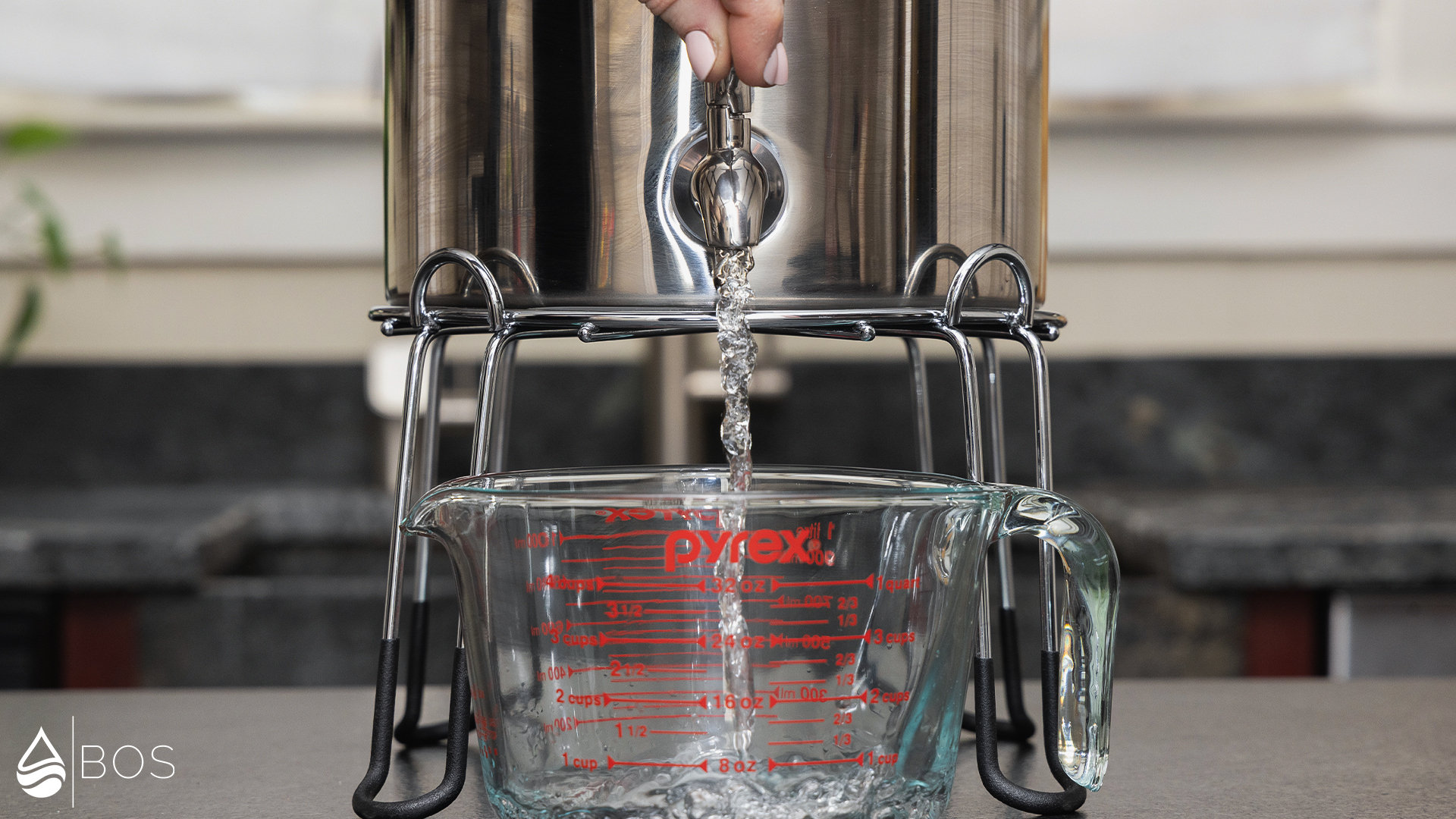
Refilling & Size
Refilling
The refilling process is the same for all systems: simply use a pitcher or other container to fill the upper chamber with water. You can also remove the upper tank and fill it directly at your sink.
The units we tested lacked max fill lines, however, and instructions often do not specify a fill amount (as mentioned previously, filling up to 1″ from the top is a good rule of thumb).
Feed tank size and your personal water usage will determine the number of daily refills you need to perform. Assuming ~26–32 cups of daily water consumption for average US households, all the systems we tested require 1-2 daily refills. For context, the U.S. Census Bureau reports an average household size of roughly 2.5–3.15 people, which we use as a reference point for this amount of daily water usage.
However, we expect actual refilling frequency will vary depending on each household’s needs and preferences. Given the relatively slow filtration speed inherent to gravity systems, most users likely would not want to wait until the feed tank is empty and the clean water fully depleted before refilling. Realistically, it is more practical to top off the feed tank at strategic times, such as before heading out to work or before bed, so the longer wait time is less disruptive. That said, this requires some ongoing judgment from the user to ensure that the added feed water volume does not cause the clean tank to overflow.
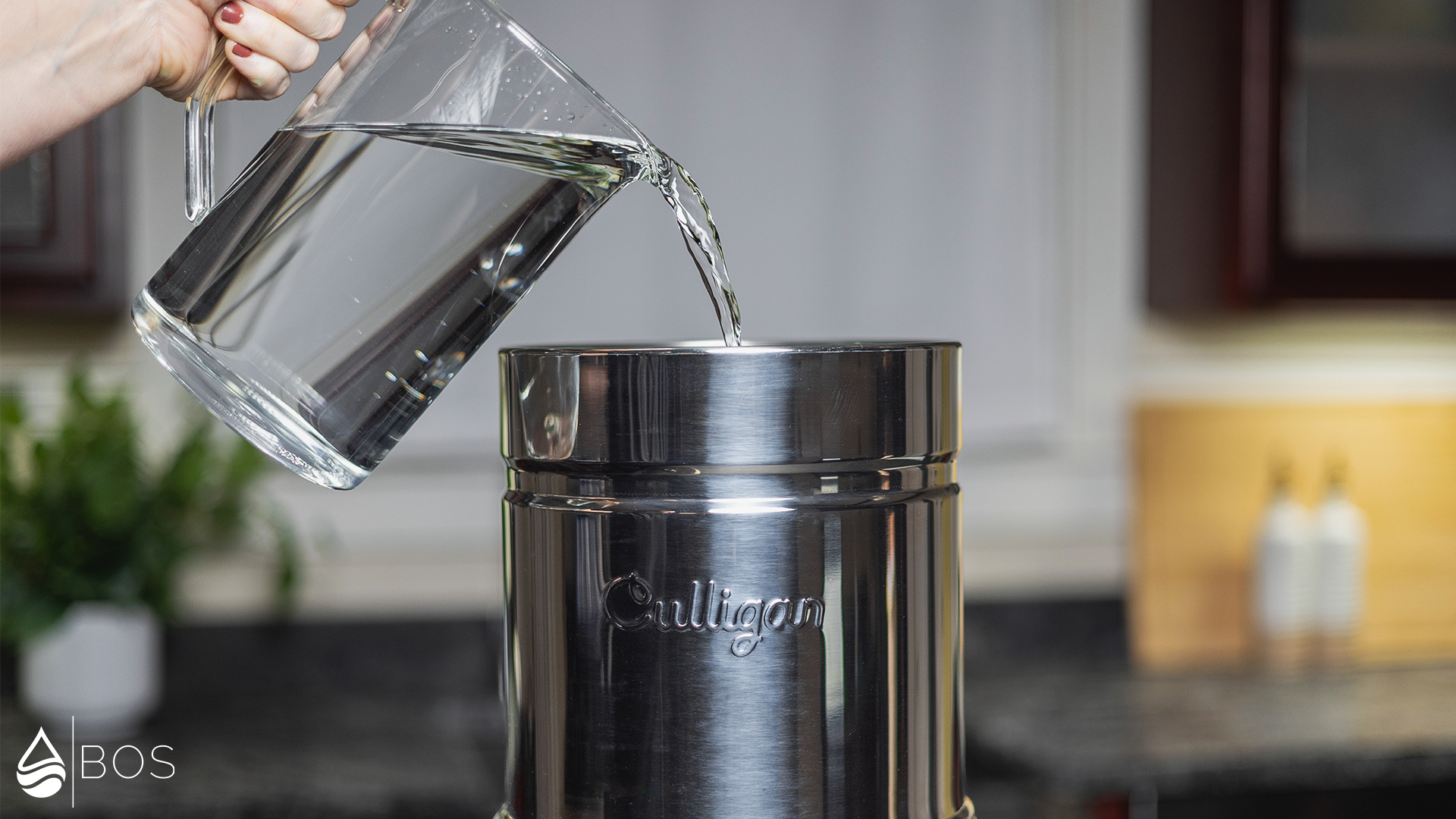
Water Level Spigots
While large feed tanks mean infrequent refills, they can be a challenge to lift, especially if they contain unfiltered water. Plus, except for the Rorra, all the systems we reviewed lack a water shortage indicator to alert you when to refill (though the Santevia’s clear reservoirs make indicator lights unnecessary). For the remainder, we highly recommend selecting a model that offers a water level spigot, which is often sold separately. This enables you to keep an eye on your clean water level without having to repeatedly lift the upper tank to do so.
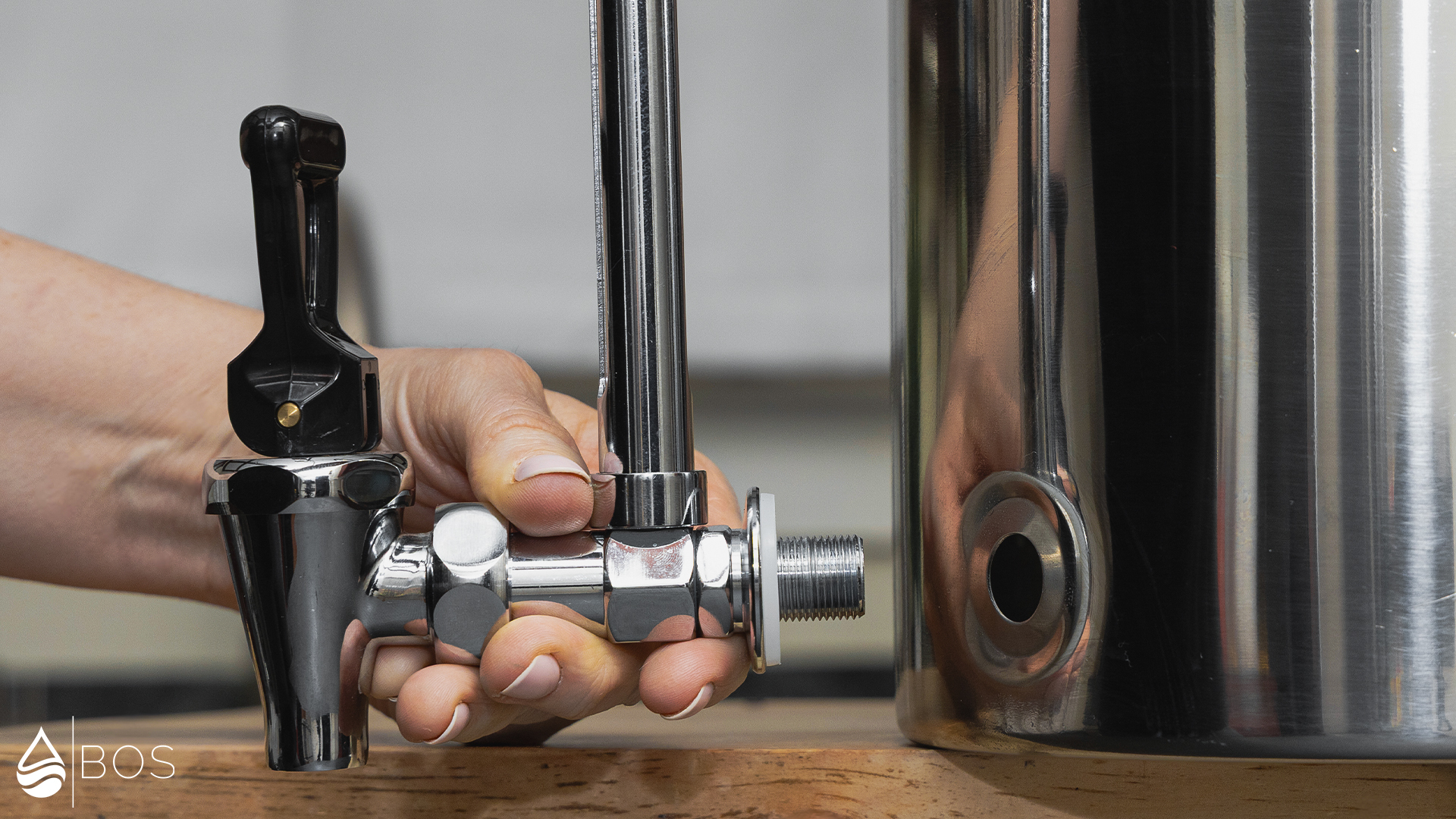
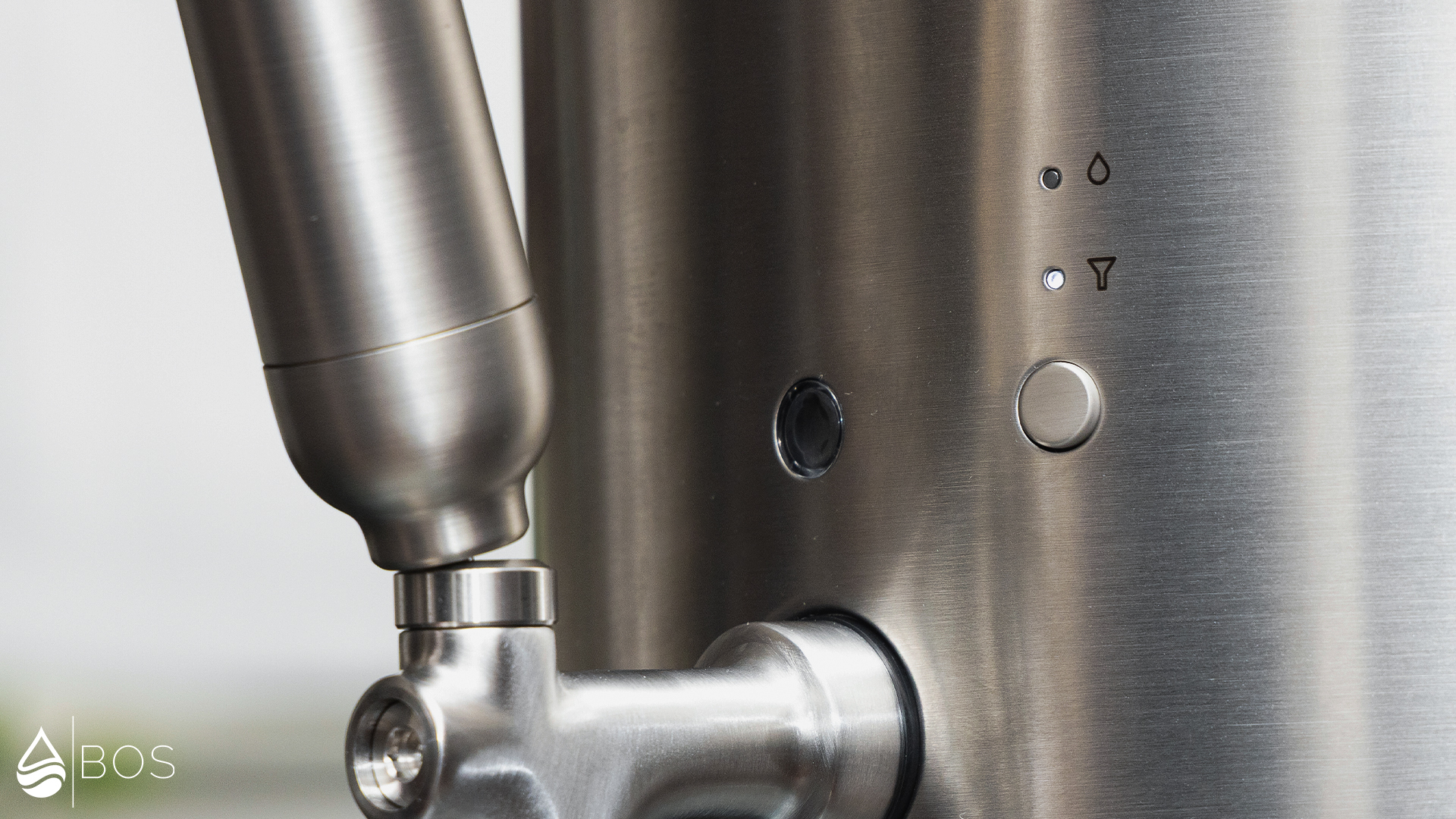
Weight and Dimensions
Most of the gravity systems we tested share a very similar build, which translates to comparable weights and dimensions when adjusted for the number of installed filters. Typically, they have stainless steel tanks, a footprint of 56.75–63.62 in² and a weight of 6.4–8.4 lb with two wet filters installed (or 7.8-11.0 lb with four wet filters).
However, at over 18″ high, they are generally too tall to fit under standard kitchen cabinets set 18″ above counter height; using a tank stand further increases height. On the other hand, these units are stowable; nested, with the knob and spigot removed, they become considerably more compact, enhancing their portability. In addition to their weather-resistant SS construction, this makes them suitable for outdoor use.
The Rorra and Santevia are the two exceptions to the aforementioned size and build standards. Neither is designed or advertised for outdoor use, and they are not stowable, either. That said, the Rorra is battery-powered for better portability – you won’t need an electrical outlet for its indicator lights to work properly.
Despite its very large footprint (115.94 in²), the Santevia weighs about average for the gravity systems we tested due to its mostly plastic construction. The Rorra, on the other hand, is heavy at 13.4 lb with its single filter installed. However, it’s the only system in our lineup that is sufficiently low profile to fit under most standard kitchen cabinets, coming in at 17″ tall when sitting on its base, though its footprint is still relatively large (80.91 in²).
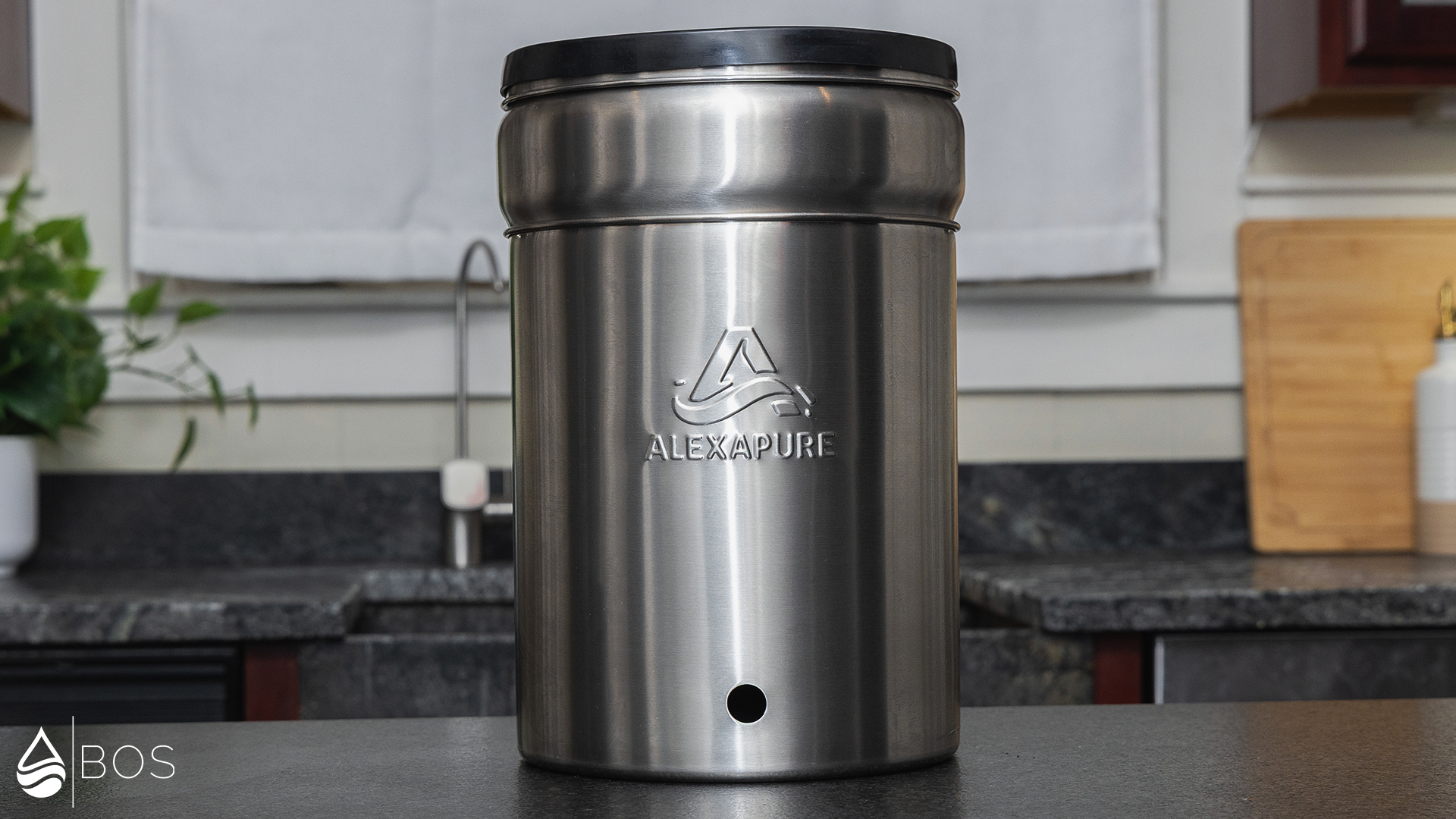
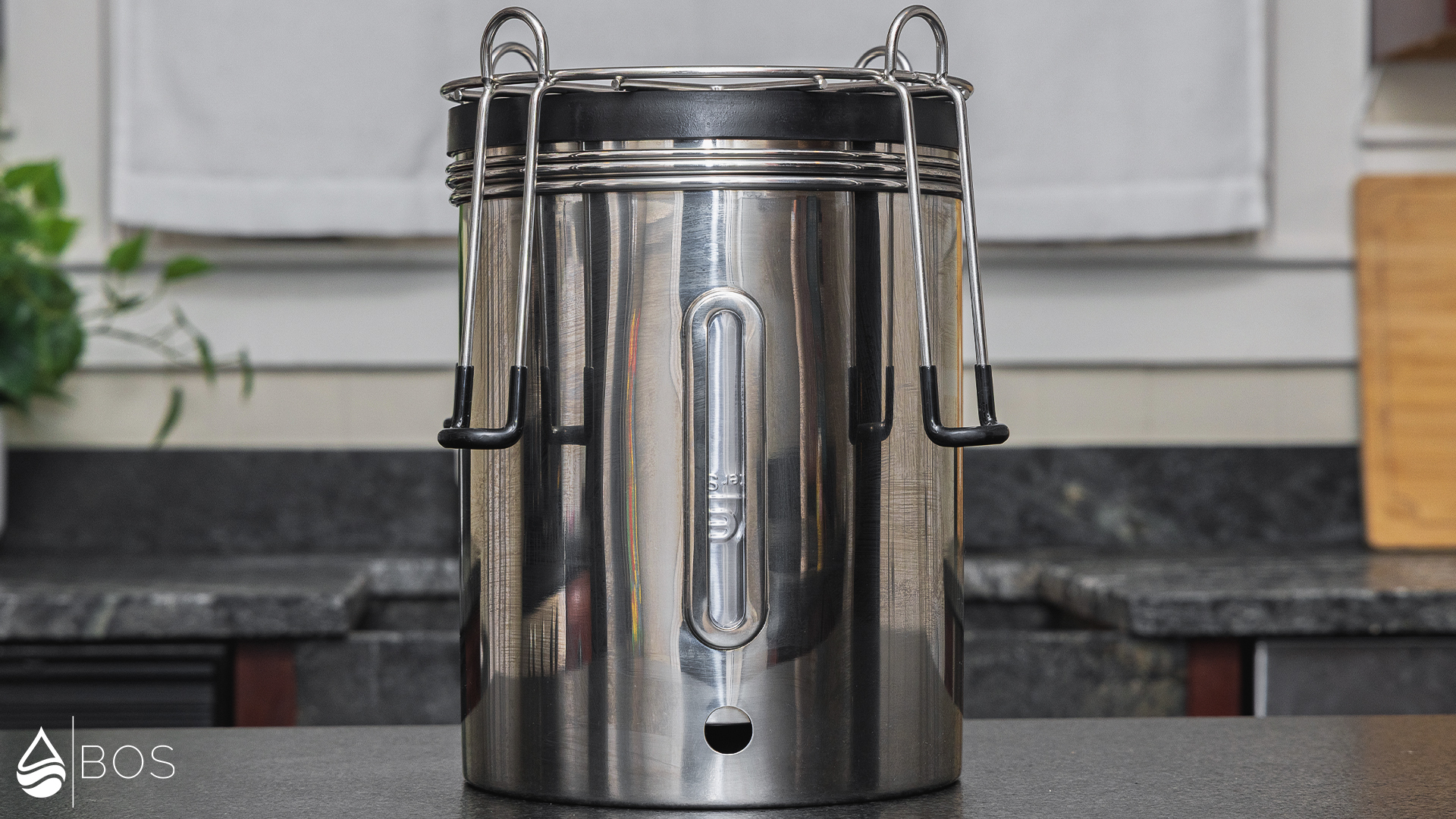
Counter Protection
Check to see if the system has a rubber ring on the bottom tank or rubber feet on the tank stand to prevent scratching or sliding on your countertops (most do). Alternatively, a non-slip mat (like the one included with the Culligan Scout) serves the same purpose.
Filter Replacement and Other Maintenance Tasks
Consider both the rated filter life and your average water consumption to determine how often you’ll need to replace each filter. While the replacement process is usually straightforward, higher-than-average usage will require more frequent replacements.
At the same time, be skeptical of the claimed filter lifespans, especially when they are not supported by NSF/ANSI certifications or third-party testing through 100% of the rated filter life. We are especially dubious of claimed filtering capacities in the thousands of gallons per filter without substantive testing – for some filter pairs, this works out to replacements as infrequently as every 11-12 years, which seems very unrealistic.
For example: assuming ~500 gallons of annual water consumption for average US households, you may wish to replace two filters (each rated for 3,000 gal) once a year if they lack NSF/ANSI-certified contaminants or extensive third-party testing to full filter life.
With the exception of the Rorra, none of the gravity systems have filter replacement indicators that let you know when it’s time to change them, so keeping track of your approximate water usage will be important. The British Berkefeld SS2 has a sticker on the bottom tank with a space to record the installation date, but you’ll still have to remember to keep tabs on it.
Recall that most of these systems can accommodate more than one filter element in parallel. Plus, some models offer an optional, add-on fluoride removal filter, which typically screws onto the primary filter stem protruding from the underside of the feed tank.
Therefore, depending on the system and configuration, you may be changing a single filter once every ~2.5-12 months, or up to 8 filters nearly as often. While the swaps themselves are fairly straightforward, keep in mind that you’ll need to prime the filters each time they are replaced – just like when you set up your system before the first use.
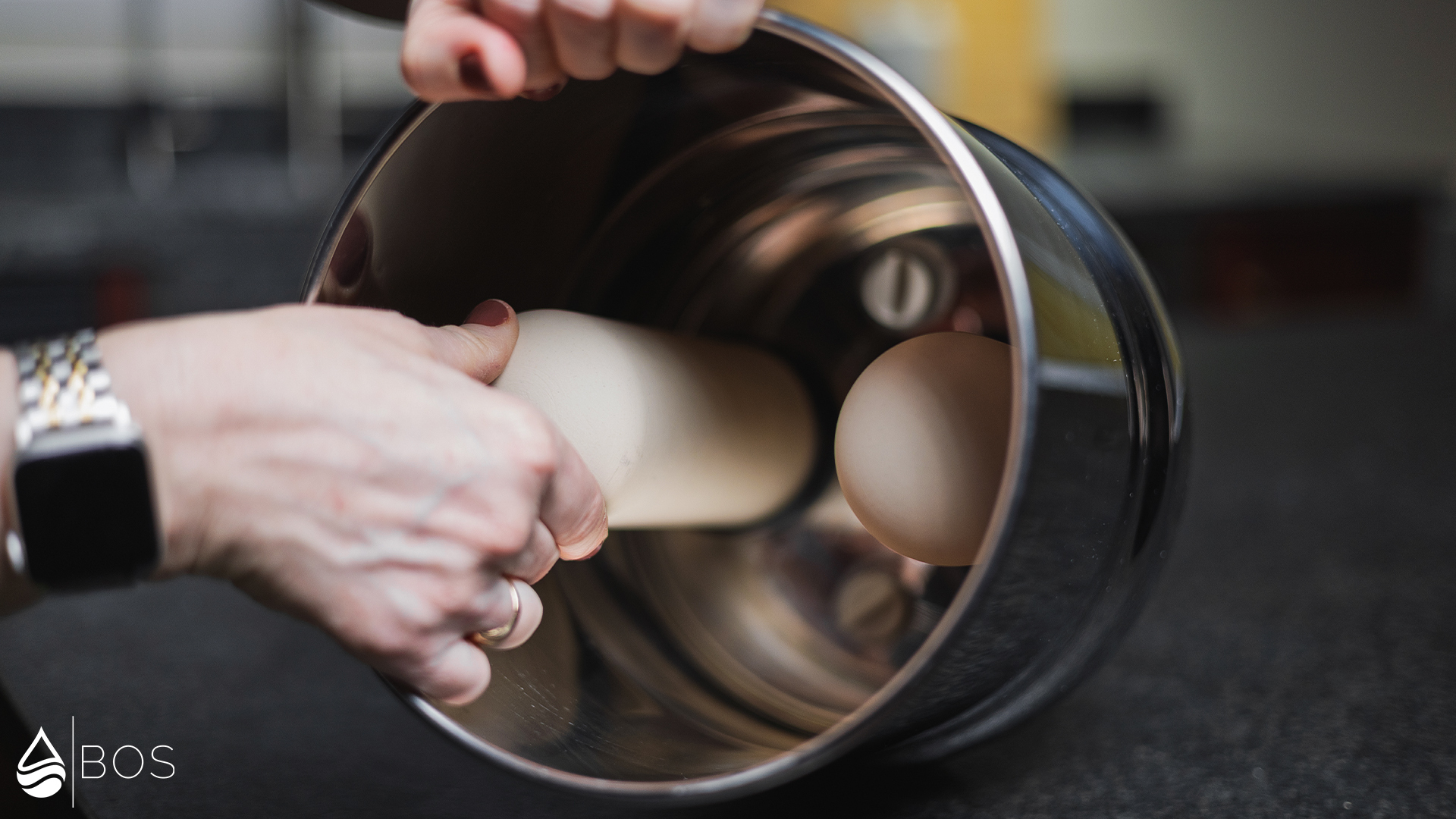
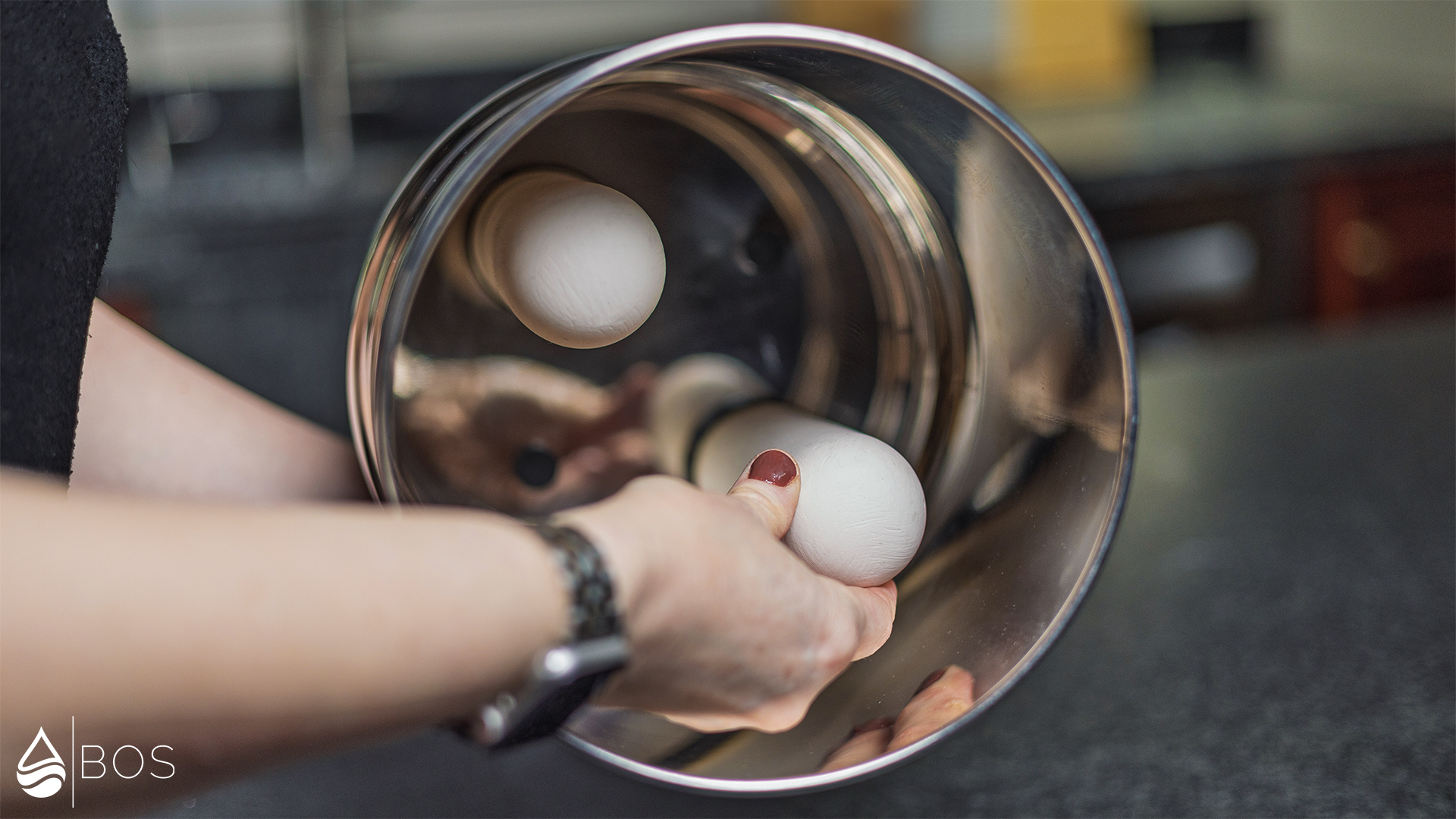
Budget & Costs
The upfront price of a gravity water filter system is only one part of the equation. Long-term replacement filter costs are often more important and largely depend on the price and lifespan of the filter elements.
When estimating costs, view claimed filter lifespans cautiously – especially if a system is not supported by NSF/ANSI certifications or third-party testing across the full rated filter life as discussed above. To err on the side of caution, more frequent filter changes may be prudent for systems without this backing.
Check our comparison sheet and detailed reviews for discount codes, which may help reduce either the upfront cost or ongoing replacement filter expenses. In addition, some manufacturers offer discounts on filters when you sign up for a subscription.
Additional Considerations
After weighing filtration performance, usability, and costs, what else is left to consider? A few additional factors may still matter to you:
- Customization: with the exception of the Rorra and the Santevia, most systems have nearly identical housing, and the filters can be used interchangeably. Choose the housing that suits your needs and preferences and pick the filters with the best filtration performance.
- Product warranty: The systems we’ve reviewed range from 6-month to lifetime warranties depending on the component(s), and a few also offer satisfaction guarantees (though restocking fees may still apply).
- Appearance: Many systems’ stainless steel tanks have a highly reflective finish that easily shows fingerprints or scuffs, though a few units are matte and relatively smudge-resistant. Occasionally, they come in different color or finish options (i.e., polished vs brushed). Most units look quite similar, though a few have subtle design touches that add refinement, such as the absence of a plastic knob on the lid or a unique spigot/handle.
- Materials: Most systems come with stainless steel tanks and spigots, with some featuring 304 or even 316L SS for better durability and corrosion resistance. We noted possible minor rust formation in the upper chamber of one unit (the Patriot Pure Ultimate), making a strong case for choosing higher-quality SS when possible. A few systems utilize plastic spigots or spigot handles, which may be more vulnerable to wear and tear or damage during transportation or outdoor use. The Santevia is the only system made almost entirely of BPA/BPS-free SAN plastic, which seems more likely to get scratched or worn over time compared to SS.
- “Made in” claims: some buyers may prefer products claimed to be made in the U.S. or U.K.
- Cleanable filters: some filters can be scrubbed with an abrasive pad to remove build-up that may slow filtration.
- Little extras: A few gravity filters have added features that may appeal to some users:
- The Alexapure Pro has filter caps to prevent drying during long periods of non-use.
- The Phoenix POSTreat Steel fluoride reduction filters are refillable and use SS housings.
- The Rorra has a nice non-slip rubber mat to hold your glass, which doubles as a drip tray.
- Some gravity filters come with freebies, such as a SS water bottle, glass pitcher, canvas tote for carrying, or automatic water filter primer.
- A few systems come packaged in premium or eco-friendly materials.
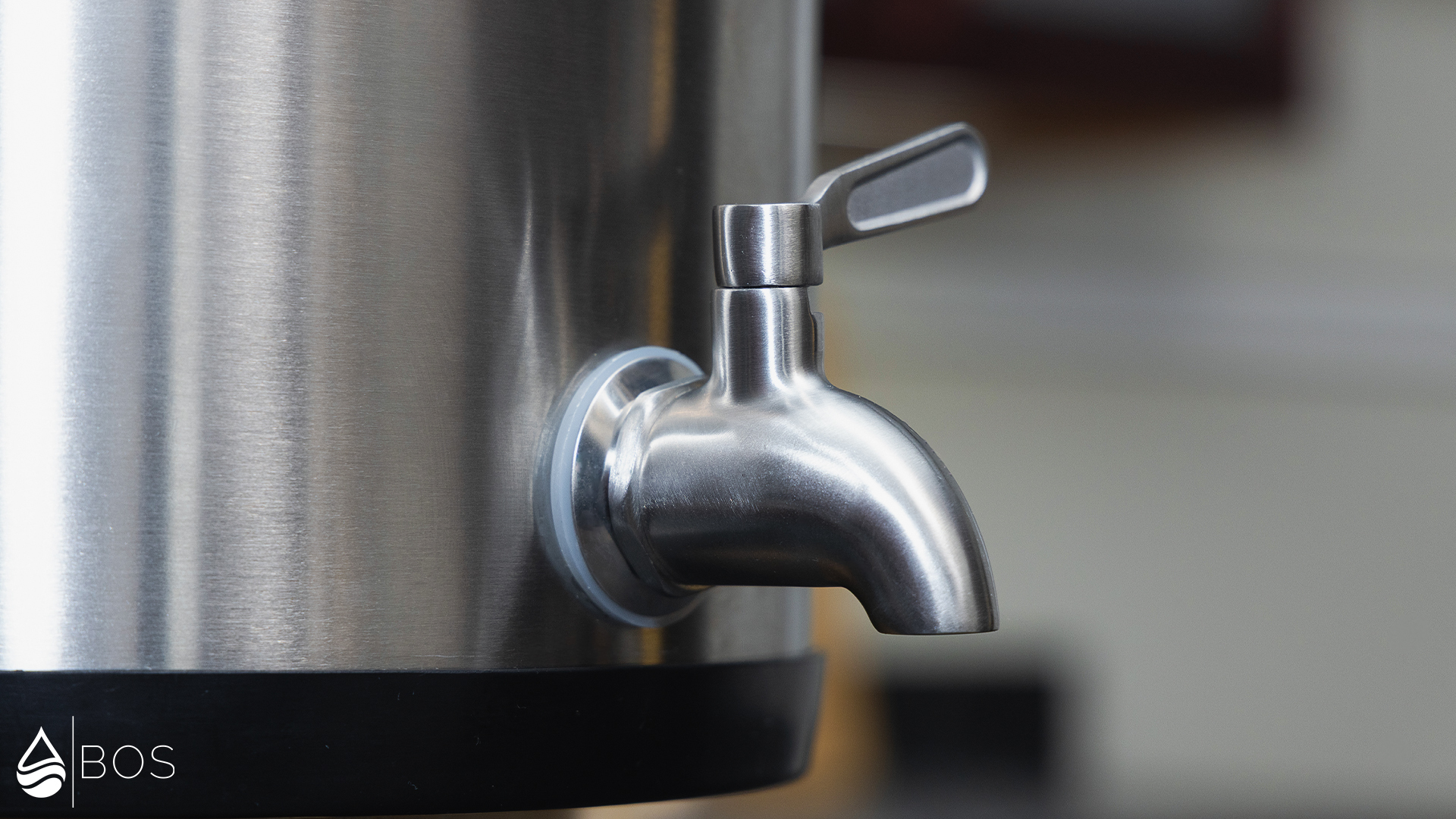
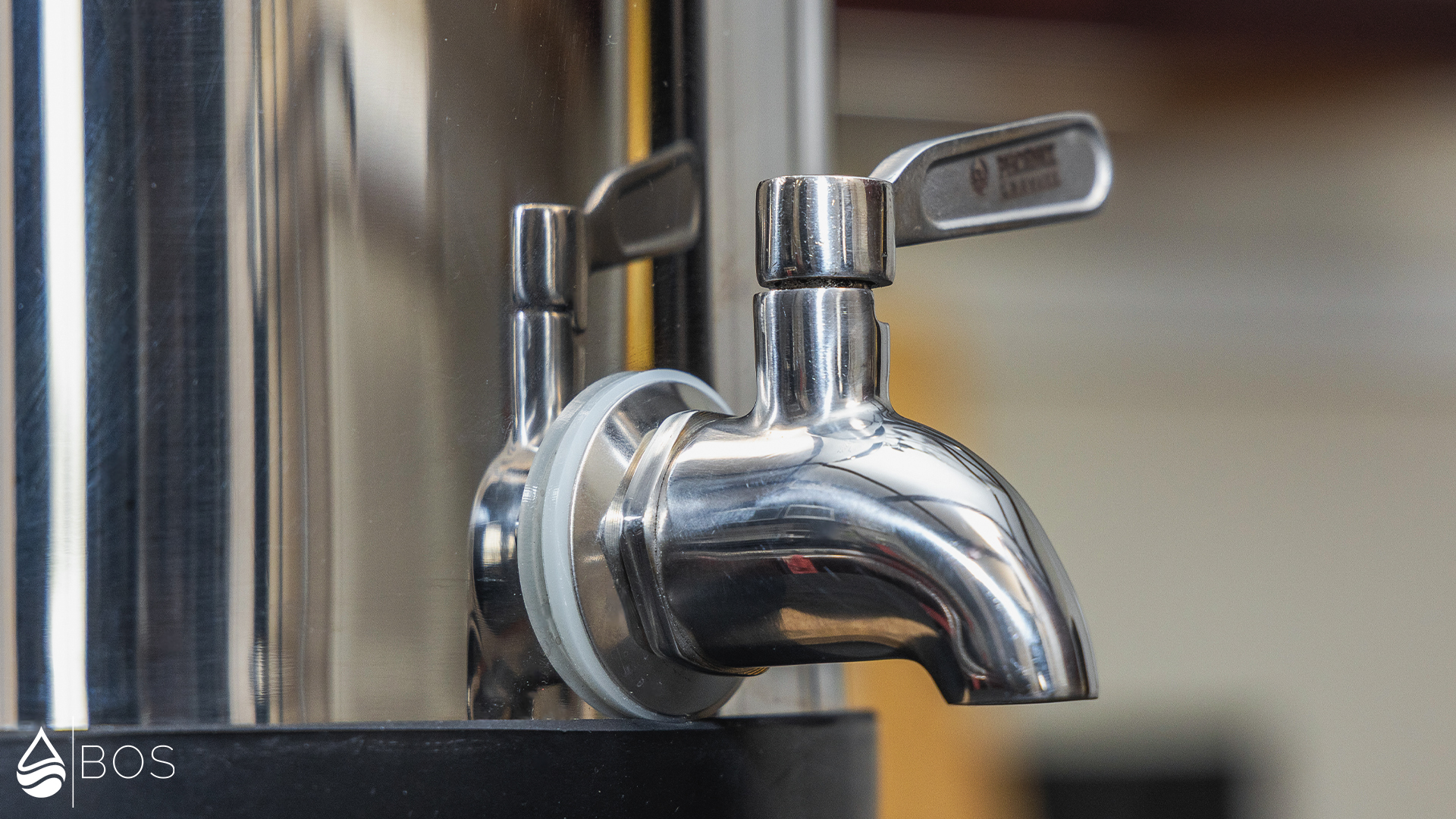
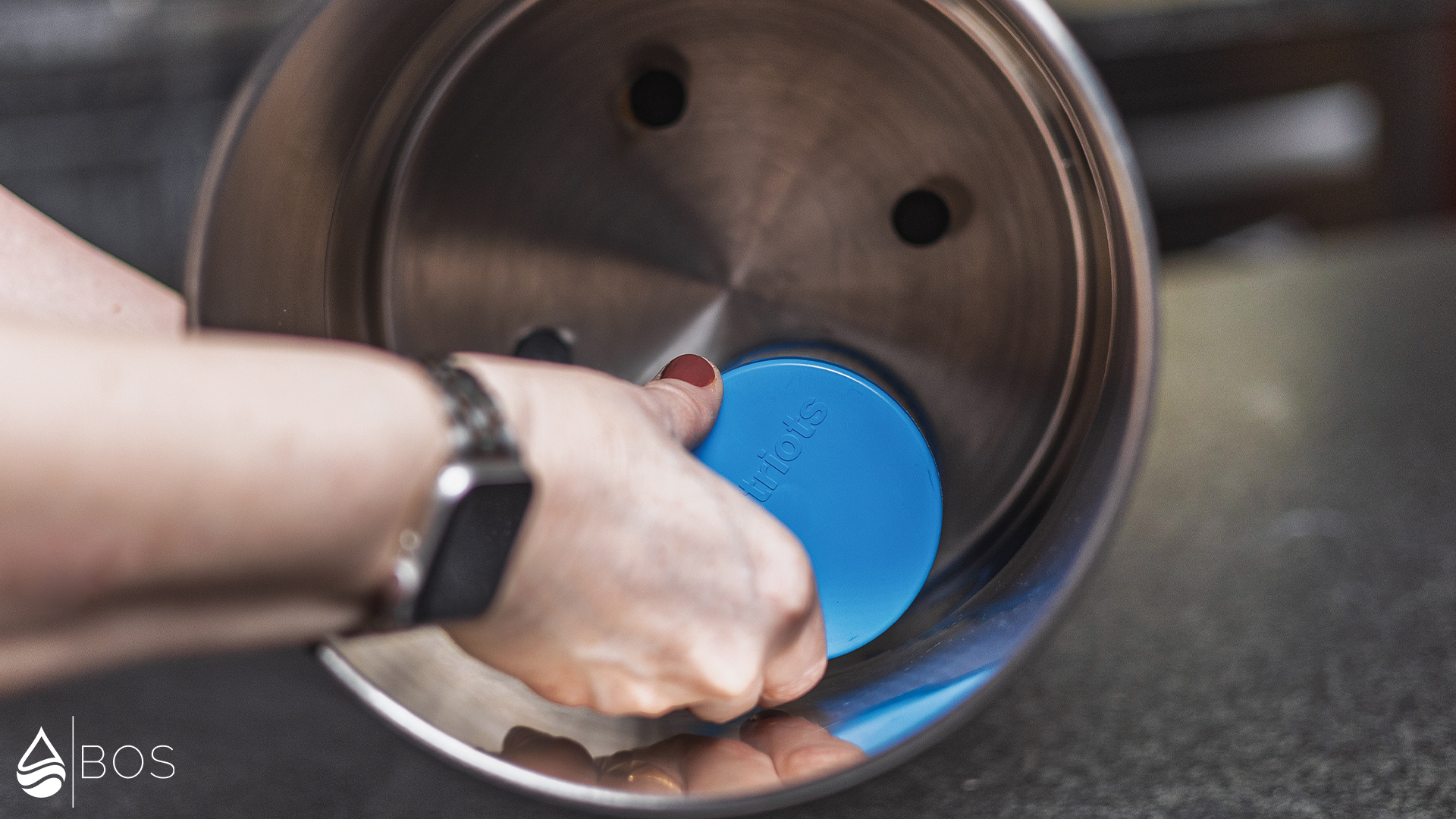
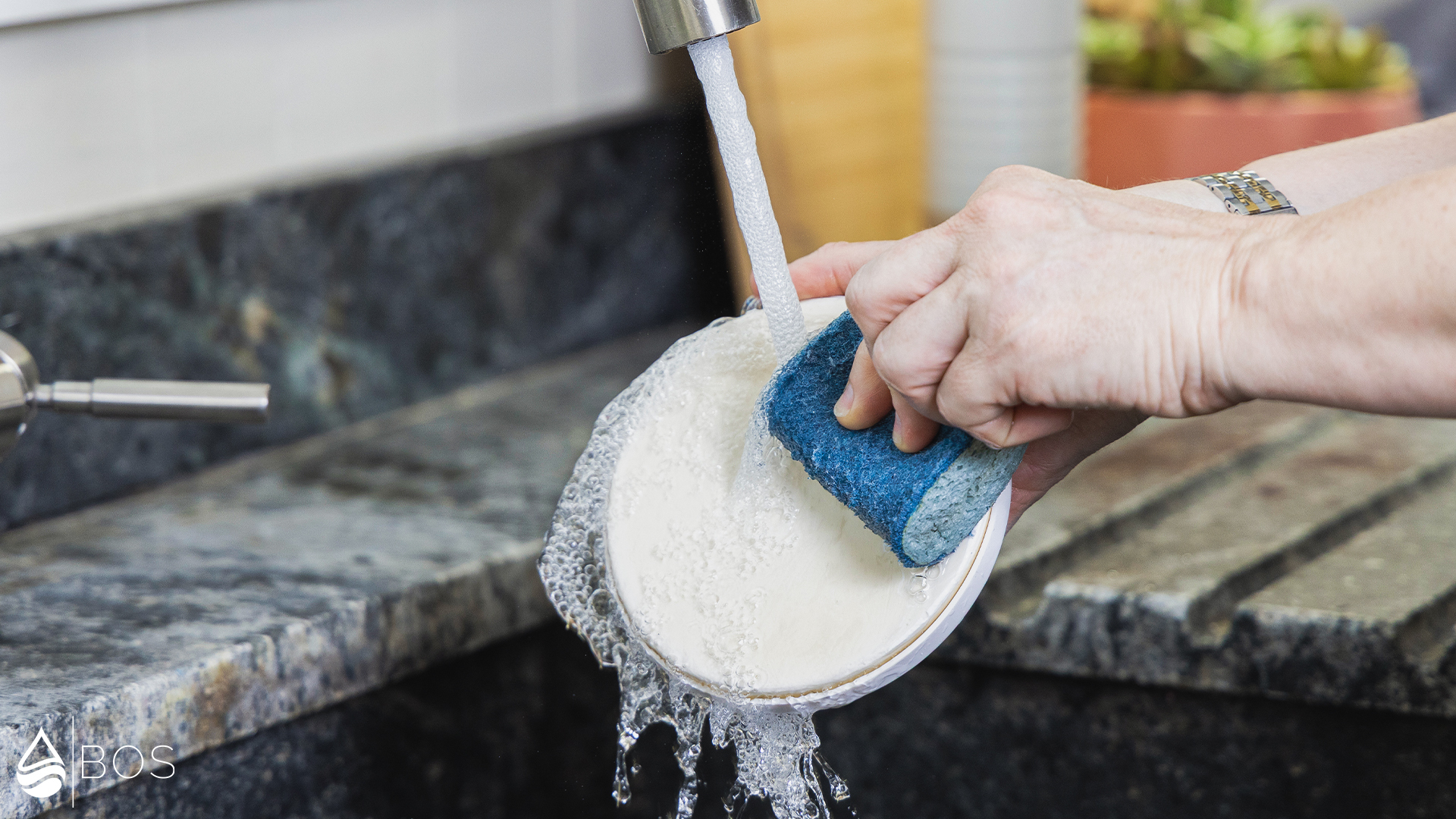
In Summary
There’s a lot to consider when shopping for a gravity water filter, and if we’re being honest, the overall filtration performance of many tested systems was underwhelming. The good news is most share very similar build and design elements, so it’s possible to mix and match the housing that has the features you want with the filters that accomplish the contaminant reduction you need.
It’s worth identifying what’s in your water and confirming that your chosen system is tested – and ideally certified – to reduce those specific contaminants. But regardless of your particular use case, we wouldn’t rely solely on any of these gravity systems to ensure your water is germ-free. Plan on combining other disinfection methods, like bleach or boiling, with gravity filtration to keep you and your family safe from harmful bacteria, viruses, and parasites when dealing with non-potable water.
Finally, factor in your budget, household water usage, and any usability preferences before making your final decision.
Frequently Asked Questions about Gravity Water Filters
1. Are gravity water filters effective?
It depends on what you want them to remove. For taste and odor, yes: in our tests, every system made our water taste and smell perfectly clean. For health-related contaminants, though, our independent lab analysis found that effectiveness varies widely from one system to the next, so look for a unit that is NSF/ANSI-certified (or backed by solid third-party test data) for the specific substances in your water. Our test results can also help you compare specific models.
2. Can gravity water filters make non-potable water safe to drink?
It depends on the model, but in theory, testing says one can. Gravity filters approach this through mechanical filtration, which needs a pore size small enough (<0.01 micron) to target even the smallest pathogens — viruses. Comparing the systems on this page, we found only one tested — though not certified — against NSF Protocol P231 for microbial reduction: the Alexapure Pro, which covers all three relevant pathogen types (bacteria, viruses, cysts). A few other makers claim their systems work for non-potable water too, but without data to back it up. And even Alexapure recommends disinfecting the water before or after filtration rather than relying on the filter alone. Our rule of thumb: treat gravity filtration as one layer, not the whole solution — pair it with boiling or chemical treatment. That said, in a true worst-case scenario with no other option, the Alexapure Pro is the one we'd reach for.
3. Do gravity water filters remove fluoride?
Some do, based on our lab testing and the manufacturers’ test data. Side note: Several systems offer optional fluoride filters that screw onto the primary filter stems.
4. How often do you need to replace the filter elements?
It depends on the rated filter life and your household’s water quality and usage. The filters compared above are rated anywhere between 50 and 3,000 gallons and/or between 90 days and 1 year. That said, be skeptical of extremely long claimed filter lives if not backed by NSF certification or thorough third-party testing.
5. How can I speed up a slow gravity water filter?
Filtration speed is proportional to the weight of the water in the upper tank and the number of parallel flow paths. Keeping the feed tank topped up helps, and most systems can accommodate additional filter elements – each extra element multiplies the total flow rate by a factor of up to 2. Note that some models, like the Rorra and the Santevia, can only house a single filter. Also, some filter elements can be scrubbed with a sponge or similar to remove sediment or scale buildup from their surface, which can help restore flow speed to its original rate.
About the Author(s)

Sara has been a lifelong home-improvement fan (she’s been hooked on This Old House since she was five) and taught herself any project she didn’t already know by watching YouTube tutorials. She is also an award-winning filmmaker. Armed with this skillset, Sara installs, primes, samples, uses, and maintains nearly every point-of-use water treatment system we test – then brings her results to life on camera for our YouTube channel.

Raoul has a background in mechanical engineering and has been writing about home water treatment since 2015. He designs our product review processes, analyzes the results, and ties everything together. As editor-in-chief, he tries hard to keep the whole operation running smoothly behind the scenes.