

This page contains affiliate links. Learn more.
About This Guide
In 2 rounds, we tested and compared 14 water filter pitchers. For each pitcher, we:
- Hands-on experience: Set up, used, and maintained it.
- Filtration effectiveness: Sent unfiltered and filtered tap water samples to a professional lab for analysis in order to determine real-life contaminant reduction capabilities. Plus, we checked for NSF/ANSI certifications and other test data.
- More testing: Performed taste & odor and filtration speed tests.
- All other product aspects: Considered initial + long-term costs, warranties, additional features, frequent customer complaints, etc.
Don’t Feel Like Reading?
Video Chapters
- 00:00 – Intro
- 00:33 – What’s New
- 01:10 – Our 14 Pitchers
- 03:00 – Top Pick: Clearly Filtered
- 12:21 – Runner-Up: Culligan (and ZeroWater)
- 23:20 – For Usability: Epic Pure
- 26:22 – Budget Pick: Brita Everyday Elite
- 28:07 – Hard Water: Waterdrop Chubby
- 28:57 – Bacteria & Parasites: LifeStraw
- 30:16 – Seychelle RAD & Aquagear
- 32:03 – LARQ Pitcher PureVis
- 33:35 – PUR Plus 11-Cup
- 35:09 – Summary
Our Top 4 Water Filter Pitchers at a Glance
| Model | Image | Rating | Buy Here | ||||||||||||||
|---|---|---|---|---|---|---|---|---|---|---|---|---|---|---|---|---|---|
| Clearly Filtered Water Pitcher |
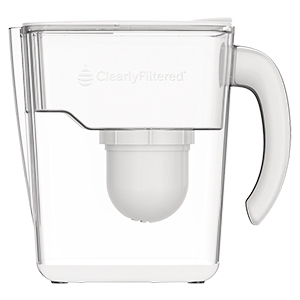
|

|
Check Current Price | ||||||||||||||
|
|||||||||||||||||
| Culligan 10 Cup Pitcher |

|

|
Check Current Price | ||||||||||||||
|
|||||||||||||||||
| Epic Pure |

|
|
Check Current Price | ||||||||||||||
|
|||||||||||||||||
| Brita Everyday Elite Water Filter Pitcher |

|

|
Check Current Price | ||||||||||||||
|
|||||||||||||||||
14 Water Filter Pitchers Compared

| Water Filter Pitcher | Clearly Filtered Water Pitcher | Culligan 10 Cup Pitcher | Epic Pure | Brita Everyday Elite Water Filter Pitcher | Waterdrop Chubby | LifeStraw Home 10-Cup | ZeroWater 10-Cup Ready-Pour | Up & Up (Target) Water Filtration Pitcher Navy 7 Cup | Seychelle RAD | Aquagear | PUR PLUS 11-Cup | LARQ Pitcher PureVis (With Advanced Filter) |
Kirkland Signature (Costco) Water Filter Pitcher | ProOne (With Old G2.0 M Filter) |
||||||||||||||||||||||||||||||
|---|---|---|---|---|---|---|---|---|---|---|---|---|---|---|---|---|---|---|---|---|---|---|---|---|---|---|---|---|---|---|---|---|---|---|---|---|---|---|---|---|---|---|---|---|
| Purchase Links & Codes | ||||||||||||||||||||||||||||||||||||||||||||
|
||||||||||||||||||||||||||||||||||||||||||||
| Image | |
|
|
|
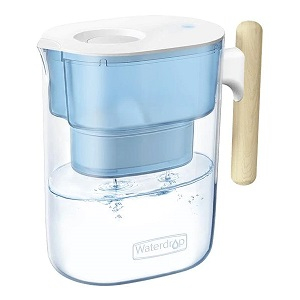 |
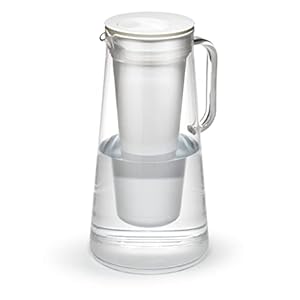 |
 |
 |
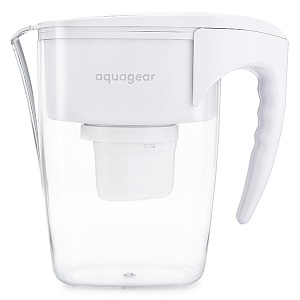 |
 |
 |
|||||||||||||||||||||||||||||||||
| FINAL RATING | ||||||||||||||||||||||||||||||||||||||||||||
|
|
|
|
|||||||||||||||||||||||||||||||||||||||||
| Final Rating | 4.22/5.00 | 3.98/5.00 | 4.10/5.00 | 3.81/5.00 | 3.31/5.00 | 3.78/5.00 | 3.75/5.00 | 3.59/5.00 | 3.48/5.00 | 3.35/5.00 | 3.34/5.00 | 3.28/5.00 | 4.05/5.00 | 1.19/5.00 | ||||||||||||||||||||||||||||||
| Verdict (Best For) | #1 Overall (Most Effective Filtration + Best All-Rounder) | Runner-Up for Most Effective Filtration | #1 for Usability | #1 Budget Pick | Ideal to Protect Your Coffee Maker & Kettle From Limescale | For Bacteria & Parasites | ||||||||||||||||||||||||||||||||||||||
| Comment | Rely on a Pitcher for Germ Removal Only as a Last Resort! | Discontinued? | Discontinued? | |||||||||||||||||||||||||||||||||||||||||
| Buy Here | clearlyfiltered.com | Amazon | epicwaterfilters.com | Amazon | waterdropfilter.com | Amazon | Amazon | target.com | Amazon | drinkaquagear.com | Amazon | livelarq.com | Currently Not Available | Currently Not Available | ||||||||||||||||||||||||||||||
| Discount Code | BOS10 – 10% Off! |
BOSEpic – 20% Off! |
||||||||||||||||||||||||||||||||||||||||||
| Score Overview | ||||||||||||||||||||||||||||||||||||||||||||
| FiltrationFiltration score combines our lab results and taste testing with NSF/ANSI certifications and 3rd-party contaminant reduction data. | 4.50/5.00 | 4.50/5.00 | 3.73/5.00 | 3.33/5.00 | 2.42/5.00 | 3.94/5.00 | 4.50/5.00 | 2.97/5.00 | 3.28/5.00 | 3.07/5.00 | 2.87/5.00 | 3.12/5.00 | 3.72/5.00 | 0.39/5.00 | ||||||||||||||||||||||||||||||
| Usability | 4.10/5.00 | 3.50/5.00 | 4.60/5.00 | 4.05/5.00 | 4.30/5.00 | 3.10/5.00 | 3.50/5.00 | 4.05/5.00 | 3.45/5.00 | 3.50/5.00 | 3.30/5.00 | 3.90/5.00 | 4.10/5.00 | 1.00/5.00 | ||||||||||||||||||||||||||||||
| CostsCost scores reflect overall value for money rather than price alone. | 3.50/5.00 | 2.90/5.00 | 4.73/5.00 | 5.00/5.00 | 5.00/5.00 | 3.98/5.00 | 1.74/5.00 | 5.00/5.00 | 4.09/5.00 | 4.03/5.00 | 4.78/5.00 | 3.16/5.00 | 5.00/5.00 | 3.77/5.00 | ||||||||||||||||||||||||||||||
| Full Analysis | ||||||||||||||||||||||||||||||||||||||||||||
| PriceNo short-term sales. (Sep 16, 2025) | $100 (Save 10% With Filter Subscription) | $34.99 | $79 (Save 15% With Filter Subscription) | $40.99 | $27.49 | $49.95 | $37.99 | $17.99 | $89.95 | $69.95 | $24.99 | $168 (Save $29 With Filter Subscription) | $29.99 (While It Was Still in Stock) | $73.95 (While It Was Still in Stock) | ||||||||||||||||||||||||||||||
| Lab Results | 2025: 4.97/5.00 2024: 4.16/5.00 |
2025: 4.84/5.00 | 2025: 3.85/5.00 2024: 3.60/5.00 |
2025: 4.11/5.00 2024: 3.38/5.00 |
2025: 3.43/5.00 2024: 3.52/5.00 |
2025: 4.33/5.00 2024: 4.11/5.00 |
2025: 5.00/5.00 2024: 4.47/5.00 |
2024: 4.22/5.00 | 2025: 4.38/5.00 | 2025: 4.07/5.00 2024: 3.42/5.00 |
2025: 2.78/5.00 2024: 3.98/5.00 |
2025: 3.89/5.00 | 2024: 4.55/5.00 | 2024: 0.67/5.00 | ||||||||||||||||||||||||||||||
| Taste Tests | 2025: Much Improved Compared to Our Tap Water but Not 100% Perfect 2024: Clean |
2025: Much Improved Compared to Our Tap Water but Not 100% Perfect | 2025: Much Improved Compared to Our Tap Water but Not 100% Perfect 2024: Little Taste Remaining |
2025: Much Improved Compared to Our Tap Water but Not 100% Perfect 2024: Some Taste Remaining |
2025: Much Improved Compared to Our Tap Water but Not 100% Perfect 2024: Clean |
2025: Much Improved Compared to Our Tap Water but Not 100% Perfect 2024: Clean |
2025: Improved Overall Compared to Our Tap Water but With Very Faint Plastic Taste 2024: Clean |
2024: Some Taste Remaining | 2025: Much Improved Compared to Our Tap Water but Not 100% Perfect | 2025: Much Improved Compared to Our Tap Water but Not 100% Perfect 2024: Some Taste Remaining |
2025: Much Improved Compared to Our Tap Water but Not 100% Perfect 2024: Some Taste Remaining |
2025: Much Improved Compared to Our Tap Water but Not 100% Perfect | 2024: Some Taste Remaining | 2024: Clean | ||||||||||||||||||||||||||||||
| Odor Tests | 2025: No Odor 2024: No Odor |
2025: No Odor | 2025: No Odor 2024: No Odor |
2025: No Odor 2024: No Odor |
2025: No Odor 2024: No Odor |
2025: No Odor 2024: No Odor |
2025: No Odor 2024: No Odor |
2024: No Odor | 2025: No Odor | 2025: No Odor 2024: No Odor |
2025: No Odor 2024: No Odor |
2025: No Odor | 2024: No Odor | 2024: No Odor | ||||||||||||||||||||||||||||||
| Filtration Speed Tests (4 Cups) | 2025: 13:31 min 2024 (Priming Issue?): 29:30 min |
2025: 5:04 min | 2025: 8:41 min 2024: 9:30 min |
2025: 2:38 min 2024: 2:30 min |
2025: 1:58 min 2024: 1:42 min |
2025: 6:26 min 2024: 13:30 min |
2025: 4:13 min 2024: 5:47 min |
2024: 2:55 min | 2025: 2:34 min | 2025: 4:46 min 2024: 3:45 min |
2025: 11:14 min 2024: 6:20 min |
2025: 4:30 min | 2024: 3:30 min | 2024: ~90% Filtered at 12 Hours | ||||||||||||||||||||||||||||||
| Setup Process Incl. Filter Priming | -Easy and Straightforward -Pushing Water Through the Filter Cartridge With Priming Bag Cuts Wait Time by Avoiding Real-Time Filtration -Clearly Laid Out Directions With Illustrations for Each Step -QR Code Links to Tutorial Video |
-Easy and Straightforward -Clearly Laid Out Directions With Illustrations for Each Step -QR Code Links to Tutorial Video |
-Easy and Straightforward -Comes With a Nice Booklet With Clear Illustrations for Each Step, but the Written Instructions Are a Bit Annoying (Long-Winded, Cutesy Phrasing Makes It Harder to Figure Out What Steps to Take) -Tutorial Video on YouTube |
-Easy and Straightforward -Clearly Laid Out Directions With Illustrations for Each Step -Tutorial Video on YouTube |
-Easy and Straightforward -Clearly Laid Out Directions With Illustrations for Each Step |
-Easy and Straightforward With a Couple Extra Steps Due to 2 Separate Filter Elements -Clearly Laid Out Directions With Illustrations for Each Step -Tutorial Video on YouTube |
-Easy and Straightforward -Clearly Laid Out Directions With Illustrations for Each Step |
-Easy and Straightforward | -Our Faucet Was Too Big for the Flushing Assembly to Fit Around So We Had to Push It Up Against the Faucet With Force Which Was Inconvenient and Could Be Difficult for Someone Older or With Limited Mobility -Includes a Basic Instruction Sheet With Brief Directions and Photos (Explains the Process Clearly but Appears Low Effort) |
-Our Faucet Was Too Big for the Flushing Assembly to Fit Around So We Had to Push It Up Against the Faucet With Force Which Was Inconvenient and Could Be Difficult for Someone Older or With Limited Mobility -Clearly Laid Out Directions With Illustrations for Each Step -QR Code Links to Tutorial Video |
-Easy and Straightforward -Clearly Laid Out Directions With Illustrations for Each Step -Tutorial Video on YouTube |
-Easy and Straightforward -Instruction Booklet Is Nice but Tiny, With a Very Small Font – Though the Clear Illustrations for Each Step Help -Connecting the App Is Easy on iOS |
-Easy and Straightforward | -Easy and Straightforward but Filter Priming Is Extremely Slow -Tutorial Video on YouTube |
||||||||||||||||||||||||||||||
| Everyday Use (Speed & Water Capacity) | -Suited for Daily Use but On-Demand Filtering Takes Patience -Larger Feed & Filtered Capacity Means Fewer Refills -Fits in Fridge (Both Shelves and Door) -Big Enough to Fill a Large 40-oz Bottle With a Single Refill |
-Suited for Daily Use but On-Demand Filtering Takes Patience -Smaller Feed or Combined Capacity Means More Refills -Fits in Fridge (Both Shelves and Door) -Not Big Enough to Fill a Large 40-oz Bottle With a Single Refill |
-Suited for Daily Use but On-Demand Filtering Takes Patience -Larger Feed & Filtered Capacity Means Fewer Refills -Fits in Fridge (Both Shelves and Door) -Big Enough to Fill a Large 40-oz Bottle With a Single Refill |
-Suited for Daily Use – Even Filters On Demand (1 Cup in Under 45 Seconds) -Smaller Feed or Combined Capacity Means More Refills -Fits in Fridge (Both Shelves and Door) -Big Enough to Fill a Large 40-oz Bottle With a Single Refill |
-Suited for Daily Use – Even Filters On Demand (1 Cup in Under 30 Seconds) -Fits in Fridge (Both Shelves and Door) -Big Enough to Fill a Large 40-oz Bottle With a Single Refill |
-Suited for Daily Use but On-Demand Filtering Takes Patience -Smaller Feed or Combined Capacity Means More Refills -Probably Too Large to Fit Most Fridges Without Moving Shelves Around (It Didn’t Fit Ours) -Not Big Enough to Fill a Large 40-oz Bottle With a Single Refill |
-Suited for Daily Use but On-Demand Filtering Takes Patience -Fits in Fridge (Both Shelves and Door) -Big Enough to Fill a Large 40-oz Bottle With a Single Refill |
-Suited for Daily Use – Even Filters On Demand (1 Cup in Under 45 Seconds) -Fits in Fridge (Both Shelves and Door) |
-Suited for Daily Use – Even Filters On Demand (1 Cup in Under 45 Seconds) -Larger Feed & Filtered Capacity Means Fewer Refills -Fits in Fridge (Both Shelves and Door) -Big Enough to Fill a Large 40-oz Bottle With a Single Refill |
-Suited for Daily Use but On-Demand Filtering Takes Patience -Larger Feed & Filtered Capacity Means Fewer Refills -Fits in Fridge (Both Shelves and Door) -Big Enough to Fill a Large 40-oz Bottle With a Single Refill |
-Suited for Daily Use but On-Demand Filtering Takes Patience -Fits in Fridge (Both Shelves and Door) -Big Enough to Fill a Large 40-oz Bottle With a Single Refill |
-Suited for Daily Use but On-Demand Filtering Takes Patience -Smaller Feed or Combined Capacity Means More Refills -Fits in Fridge (Both Shelves and Door) -Not Big Enough to Fill a Large 40-oz Bottle With a Single Refill |
-Suited for Daily Use – Even Filters On Demand (1 Cup in Under 60 Seconds) -Fits in Fridge (Both Shelves and Door) |
-Filtration Speed Is Extremely Slow and Impractical for Daily Use -Fits in Fridge (Both Shelves and Door) |
||||||||||||||||||||||||||||||
| Everyday Use (Handling & Pouring) | -Large Handle Provides a Comfortable, Secure Grip -Relatively Heavy -Pours Fine With Slow, Controlled Pouring, but Splashes in a Wide Pattern If Poured Too Quickly -Unfiltered Water May Escape From the Flip-Top Lid If Tilted Too Steeply While Pouring |
-Nice, Thick Handle Feels Comfortable -Relatively Heavy -Pours Smoothly Without Spilling Even When Pouring Fast |
-Round Wood Handle Provides for a Very Comfortable Grip -Pours Smoothly Without Spilling Even When Pouring Fast |
-Very Comfortable in the Hand -Relatively Light -Pours Smoothly Without Spilling Even When Pouring Fast -Unfiltered Water Leaked Through a Gap Near the Spout and Mixed With Filtered Water While Pouring |
-Round Wood Handle Provides for a Very Comfortable Grip -Pours Smoothly Without Spilling Even When Pouring Fast -Unfiltered Water May Escape From the Pour-Through Tab If Tilted Too Steeply While Pouring |
-Pitcher Is Tall and Bottom-Heavy With a High, Small Handle Making Pouring a Little Awkward -Pours Smoothly Without Spilling Even When Pouring Fast -Unfiltered Water May Escape From the Pour-Through Tab If Tilted Too Steeply While Pouring |
-Handling the Pitcher Feels Good and Seems Designed for Two-Handed Use -Relatively Heavy -Pours Smoothly but If You Pour Too Fast or Hold It Too Steeply to Get the Last Bit of Water the Lid May Fall Off -Pour Spout on the Bottom Allows Dispensing Without Lifting the Pitcher (Button Presses Easily, Feels Sturdy, and Dispenses Smoothly) |
-Lightweight -Pours Nicely Even When Fast |
-Plastic Handle Is Particularly Comfortable With Interior Indentations for Finger Placement -Relatively Light -Pour Spout Cover Often Gets Stuck or Pops Out of Place Causing Water to Spray in All Directions When Pouring and Occasionally Needs to Be Pushed Back Into Position -Lid Can Be Hard to Remove, Doesn’t Align Easily, and Sometimes Pops Off When Pouring |
-Plastic Handle Is Particularly Comfortable With Interior Indentations for Finger Placement -Relatively Light -Pour Spout Cover Often Gets Stuck or Pops Out of Place Causing Water to Spray in All Directions When Pouring and Occasionally Needs to Be Pushed Back Into Position -Lid Can Be Hard to Remove, Doesn’t Align Easily, and Sometimes Pops Off When Pouring |
-Feels Fine in the Hand Though We Prefer a More Round Handle Over the Flat One -Tricky to Pour Cleanly at First (Water Runs Down the Front Until You Find the Sweet Spot) -Unfiltered Water Leaked Through a Gap Near the Spout and Mixed With Filtered Water While Pouring |
-Handling the Pitcher Feels Good (Sturdy but Not Cumbersome) -Pours Smoothly Without Spilling Even When Pouring Fast -Unfiltered Water May Escape From the Pour-Through Tab If Tilted Too Steeply While Pouring |
-Lightweight -Pours Smoothly Without Spilling Even When Pouring Fast |
-Pours Smoothly but If You Hold It Too Steeply to Get the Last Bit of Water the Lid and Upper Reservoir Will Fall Out -Pouring While There Is Still Unfiltered Water in the Reservoir Will Cause the Lid and Reservoir to Fall Out |
||||||||||||||||||||||||||||||
| Everyday Use (Refilling) | -Easy to Refill Thanks to Flip-Top Lid With a Wide Opening -Clear Upper Reservoir Lets You Easily See How Much Water Is Left to Filter |
-Even When Pushed Fully to the Side, the Circular Sliding Lid Still Covers About ⅓ of the Opening (Should Be Fine for Filling but May Get Messy With Faucets That Have a Wide Spray Pattern) | -Easy to Refill With One Hand Thanks to the Flip-Top Lid That Opens by Pressing the Blue Rubber Tab Near the Top of the Handle -Clear Upper Reservoir Lets You Easily See How Much Water Is Left to Filter |
-Easy to Refill With One Hand Thanks to Flip-Top Lid Controlled by a Button Conveniently Located on Top of the Handle -We See the Flip-Top Lid Possibly Breaking Over Time If Not Handled With Care |
-Easy to Refill Thanks to Oval Pour-Through Tab | -Easy to Refill Thanks to Pour-Through Tab (Unless You Have a Very Large Faucet) | -Lid Must Be Removed for Refilling Which Isn’t as Convenient but Is Easy Enough | -Flip Top Lid for Easy Refilling | -Easy to Refill Thanks to Oval Pour-Through Tab (Though the Tab Often Gets Stuck Open and Doesn’t Fall Back Into Place) | -Easy to Refill Thanks to Oval Pour-Through Tab | -Easy to Refill With One Hand Thanks to Flip-Top Lid That Opens by Pressing the Lifted Edge Near the Top of the Handle | -Easy to Refill Thanks to Oval Pour-Through Tab | -Flip Top for Easy Refilling but Doesn’t Close All the Way | -Lid Must Be Removed for Refilling Which Isn’t as Convenient but Is Easy Enough | ||||||||||||||||||||||||||||||
| Everyday Use (Other) | -Built-In TDS Meter Accurately Reads the Clean Water in the Reservoir and Is Also Removable | -Includes Free, Accurate TDS Meter (Stores Conveniently in the Top of the Lid) | -App Is Easy to Use and Accurately Tracks Water Consumption -App Encourages Reaching Hydration Goals and Can Send Alerts to Keep You on Track; Displays Water Saved, Reduced Carbon Footprint, and Reduced Plastic Waste -UV-C Light Eliminates Heterotrophic Bacteria (Not a Health Concern!) in Clean Water Reservoir That May Otherwise Cause Bad Taste & Odor Especially With Stagnant Water or Old Filter Cartridges -Light Activates Automatically (Upon Refill/Every 6 Hours) and Manually (Using App/Lambda Button) |
|||||||||||||||||||||||||||||||||||||||||
| Filter Replacements | -Very Easy | -Very Easy -Frequent Replacements Required If Following 20-gal Rated Filter Life |
-Very Easy | -Very Easy | -Very Easy | -Very Easy With a Couple Extra Steps Due to 2 Separate Filter Elements | -Very Easy -Frequent Replacements Required If Following 15-gal Rated Filter Life |
-Very Easy | -Very Easy | -Very Easy | -Very Easy | -Very Easy | -Very Easy | -Very Easy | ||||||||||||||||||||||||||||||
| Filter Change Indicator? | N | N (TDS Meter) | Y (90-Day Timer) | Y (Tracks Refills) | Y (90-Day Timer) | N | N (TDS Meter) | Y (Analog Calendar Ring) | N | N | Y (Timer?) | Y (Sensor + App Track Gallons Filtered/Filter Age; Light Ring Alert) | Y | N | ||||||||||||||||||||||||||||||
| Upper Reservoir (Feed Water) | 8.5 Cups | 3.5 Cups | 8 Cups | 5 Cups | 5.75 Cups | 4 Cups | 6.25 Cups | 7 Cups | 7 Cups | 6 Cups | 4.25 Cups | |||||||||||||||||||||||||||||||||
| Lower Reservoir (Filtered Water) | 11.5 Cups | 9.25 Cups | 11 Cups | 11.5 Cups | 12.25 Cups | 15.25 Cups | 12.5 Cups | ~7 Cups | 10 Cups | 10 Cups | 12.5 Cups | 8.5 Cups | ~10 Cups | ~6.75 Cups | ||||||||||||||||||||||||||||||
| Dimensions (WxHxD) | 5.25″x10.5″x11.8″ | 5″x10.5″x10″ | 5.4″x10.8″x10.75″ | 6″x10.4″x10.4″ | 5.25″x10″x10.5″ | 6.25″x12.75″x7″ | 5″x11″x11.5″ | 4.17″x10.43″x10.24″ | 5.5″x10.5″x11.25″ | 5.5″x10.5″x11.25″ | 5″x10.5″x11″ | 5″x10.2″x10″ | 6″x9.75″x10″ | 5″x10.5″x10.5″ | ||||||||||||||||||||||||||||||
| Weight Incl. Wet Filter Cartridge | 2 lb 15.6 oz | 3 lb 5 oz | 2 lb 4.2 oz | 1 lb 9.03 oz | 2 lb 8 oz | 2 lb 0.46 oz | 3 lb 1.16 oz | 1 lb 14.79 oz | 1 lb 12.44 oz | 2 lb 4.6 oz | 2 lb 12.67 oz | |||||||||||||||||||||||||||||||||
| Filter Media/Process | Woven Sediment Filter Screen + Granular Activated Carbon + Proprietary Composite Layer (Based on Ion Exchange, No Activated Alumina or Bone Char) | Particle Filtration + Activated Carbon + KDF + Ion Exchange Resin | Activated Carbon Block + Ion Exchange Resin | Activated Carbon + Absorbents in Fibrous Matrix, Lined with Silver | Non-Woven Fabric + Coconut-Shell GAC + Ion Exchange Resin + Activated Carbon Fiber | Microfiltration Membrane (0.2 Microns) Activated Carbon + Ion Exchange Resin |
Particle Filtration + Activated Carbon + KDF + Ion Exchange Resin | Activated Carbon + Ion Exchange Resin | No Details Provided | Activated Carbon + Ion Exchange Resin | Granular Activated Carbon + Ion Exchange Resin + Particle Filtration | Activated Carbon + “Nano Zero” Filtration + UV-C Disinfection | Activated Carbon (Presumably) | Ceramic Shell + Carbon-Based Core | ||||||||||||||||||||||||||||||
| Summary of NSF/ANSI Certs + Other Testing for Filtration Effectiveness | -Only 2 NSF/ANSI Certifications for Contaminant Reduction (Chlorine + Taste/Odor) -Pretty Much Fully Covered by Third-Party Testing for Contaminant Reduction to 200% Filter Life -Listed Results Are Maximum Removal Percentages (Per Clearly Filtered, for Most Contaminants the Max and Average Removal Rates Were Nearly Identical) |
-Higher Count of NSF/ANSI-Certified Contaminants but With Some Important Ones Missing Like Nitrate and VOCs | -No NSF/ANSI Certifications for Contaminant Reduction -Pretty Much Fully Covered by Third-Party Testing for Contaminant Reduction to 100% Filter Life |
-Highest Count of NSF/ANSI-Certified Contaminants but Limited in Regards to Contaminant Types Mostly Covering “Easier-to-Remove” Organics | -Only 2 NSF/ANSI Certifications for Contaminant Reduction (Chlorine + Taste/Odor) and No Additional Third-Party Testing | -Only a Handful of NSF/ANSI Certifications Mostly Covering “Easier-to-Remove” Impurities -Some Third-Party Testing for Contaminant Reduction to 200% Filter Life (Focus: Bacteria & Parasites) |
-Handful of NSF/ANSI Certifications Covering Important Contaminants and Extensive Third-Party Testing for Metal/Salt Reduction to 100% Filter Life (We Miss Most Organics) | -Only a Handful of NSF/ANSI Certifications for Contaminant Reduction Covering “Easier-to-Remove” Impurities and No Additional Third-Party Testing | -No NSF/ANSI Certifications for Contaminant Reduction -Product Description Mentions Third-Party Testing for Contaminant Reduction but the Lab Reports on Seychelle’s Website Seem to Be for a Different Pitcher Model |
-No NSF/ANSI Certifications for Contaminant Reduction -Third-Party Testing for Dozens of Impurities and to 100% Filter Life but Limited in Regards to Contaminant Types Mostly Covering “Easier-to-Remove” Organics |
-Higher Count of NSF/ANSI-Certified Contaminants but Limited in Regards to Contaminant Types Mostly Covering “Easier-to-Remove” Organics | -No NSF/ANSI Certifications for Contaminant Reduction -Third-Party Testing for Dozens of Impurities and to 100% Filter Life but Limited in Regards to Contaminant Types Mostly Covering “Easier-to-Remove” Organics |
-Higher Count of NSF/ANSI-Certified Contaminants but Limited in Regards to Contaminant Types Mostly Covering “Easier-to-Remove” Organics | -No NSF/ANSI Certifications for Contaminant Reduction -Extensive Third-Party Testing for Contaminant Reduction but at Least Some Not to Full Claimed Filter Life |
||||||||||||||||||||||||||||||
| NSF/ANSI Certs for Filtration Effectiveness (# of Impurities Certified) | 42 (2) | 42, 53, 401 (28) – Performance Data Sheet | 42, 53, 401, 53 (33) – Performance Data Sheet | 42 (2) | 42, 53, 401 (6) – Performance Data Sheet | 42, 53 (7) – Performance Data Sheet | 42, 53, 401 (8) | 42, 53, 401, 42, 53, 401 (27) – Performance Data Sheet | 42, 53, 401 (16) | |||||||||||||||||||||||||||||||||||
| NSF/ANSI + Other 3rd-Party Testing for Filtration Effectiveness (# of Impurities Tested) Note: Not Always Performed Throughout Entire Filter Life |
42, 53, 401, Other (355) – Performance Data | 42, 53, 401, Other (212) – Performance Data Sheet | 53, 401, P231, Other (53) – Performance Data Sheet | 42, 53, Other (24) – Performance Data Sheet | 42, 53, 401, Other (80) – Performance Data Sheet | 42, 53, 401 (67) – Performance Data Sheet | 42, 53, 401, P231, Other (250+) – Performance Data Sheet | |||||||||||||||||||||||||||||||||||||
| Rated/Claimed Filter Life | 100 gal | 20 gal | 150 gal | 120 gal | 200 gal or 3 Months | Microfiltration Membrane: 264 gal Carbon Filter: 40 gal |
15 gal | 40 gal | 150 gal | 120 gal | 40 gal | 60 gal | 40 gal | 225 gal | ||||||||||||||||||||||||||||||
| Yearly CostEstimate is based on rated/claimed filter life and 300 gallons annual water consumption. No short-term sales. (Sep 16, 2025) | ~$155 (Save 10% With Filter Subscription) | ~$205 (Save ~20% With Filter Subscription) | ~$106 (Save 15% With Filter Subscription) | ~$40-45 | ~$56 (Save 5% With Filter Subscription) | ~$130-135 | ~$285 | ~$30 | ~$100 (Save 10% With Filter Subscription) | ~$125 (Save 20% With Filter Subscription) | ~$70 | ~$160 (Save ~20% With Filter Subscription) | ~$30 | ~$55 | ||||||||||||||||||||||||||||||
| Product Warranty | Lifetime (2 Years) | 90 Days | Lifetime Warranty + Satisfaction Guarantee | 90 Days | 3 Months | 3 Years | 90 Days | Unknown Warranty, 1-Year Satisfaction Guarantee | 90 Days | Lifetime | 90 Days | 1 Year | ? | 120 Days | ||||||||||||||||||||||||||||||
| Claimed to Be Made in | USA | USA (Filters Only) | USA (Filter Media Only) | UK (Filters Only) | ||||||||||||||||||||||||||||||||||||||||
| (More) Features/Pros | -Medical-Grade Tritan Is Free From BPA, BPS, Phthalate, and Estrogen & Androgen Activity (According to Clearly Filtered) | -Gray Handle and Reservoir Give the Pitcher a More Sophisticated Look -Feels Sturdy and Well-Built, Especially the Reservoir and Handle Made From Thicker Plastic -BPA-Free |
-Wooden Handle and Blue Rubber Tab Create a Stylish, Modern Look -Feels Sturdy and Well Built -Medical-Grade Tritan Is Free From BPA & BPS -Recycling Program (Receive 1 Free Filter in Exchange for 5 Used Ones) -All of the Packaging Appeared to Be Eco-Friendly |
-3 Colors to Choose From -BPA-Free |
-Looks Great -3 Colors to Choose From -Nice Wooden Handle Gives It a More Organic Feel -Feels Sturdy and Well Built -Replaceable Filter Life Indicator -BPA-Free |
-Looks More Modern -Several Different Colors to Choose From -Pitcher (Not Filter) Is Dishwasher-Safe -BPA-Free |
-Feels Sturdy and Well Built -BPA-Free -Recycling Program |
-1 Extra Filter Cartridge Included -Pitcher (Not Filter) Is Dishwasher-Safe -BPA-Free |
-BPA-Free | -BPA-Free -Pre-Paid Recycling Program |
-2 Colors to Choose From -Pitcher (Not Filter) Is Dishwasher-Safe -BPA-Free |
-Upscale, Modern Look -2 Colors to Choose From -Feels Very Sturdy and Well Built -Powered by Easily Rechargeable Lithium Battery (PureVis Wand) Lasting Up to 1 Month -Pitcher (Without Wand and Filter) Is Dishwasher-Safe -BPA & Phthalate-Free |
-1 Extra Filter Cartridge Included -BPA-Free |
-Includes Fruit Infuser -Cleanable Filters |
||||||||||||||||||||||||||||||
| (More) Cons | -“0 TDS Approach” Can Be Misleading (0 TDS Does Not Necessarily Mean Pure Water) | –Testing Another ZeroWater Filter Element in the 32-Cup Dispenser Also Showed Potential Problems Filtering Chloroform -“0 TDS Approach” Can Be Misleading (0 TDS Does Not Necessarily Mean Pure Water) -Pitcher Has a Blue Tint Which Not Everyone May Like |
-We Lack Information on Filter Process | –Testing Another PUR PLUS Filter Cartridge in PUR’s 30-Cup Dispenser, Barium and Boron Were Also Detected in the Filtered Water at or Above Health Guidelines | -Potable Water Only! | -We Lack Information on Filter Process | –Testing the G2.0 5″ Filter Element in the ProOne Traveler+, Benzene Was Also Detected in the Filtered Water at or Above the Strictest Health Guideline | |||||||||||||||||||||||||||||||||||||
| Frequent Complaints From Third-Party Customer Reviews | -Clogged Filters/Slow Flow -Reservoir + Lid Instability/Leaking/Spills -Pouring Issues -Heavy/Bulky |
-Very Short Filter Life (Needs Replacement in Days) -Bad Taste/Odor -Inconsistent TDS Readings -Bad Design/Ergonomics |
-Cracked Plastic -Lid/Flap Problems -Water Leaking/Spilling When Pouring -Slow Filtration |
-Cracked Plastic -Filter Indicator Light Failures -Leaks -Design Flaws |
-Bad Taste/Smell -Mold or Algae Growth -Flow Too Slow/Fast -Pouring Design Flaws |
-Cracked Plastic (Leaking) -Slow Filtration -Reservoir Too Small -Poor Ergonomics & Design |
-Issues With Taste & Smell (Fishy, Sour, Metallic, Chemical) -Slow Filtration/Clogged Filters -Poor Design (Especially Lid Falling Off When Pouring) -Leaking Filters |
-Note: Not That Many Reviews Yet | Please Note: No 3rd-Party Reviews Found, While Seychelle.com Shows Only Positive Feedback | -Taste Issues -Slow Filtration and Clogged Filters -Design Flaws |
-Cracked Plastic -Lid Falling Off When Pouring -Clogged Filters |
-Malfunctioning UV Wand -Water Spilling When Pouring -Issues With Refill Flap -Taste Issues -Unhelpful Customer Service -App: iOS Seems Fine but Android Users Report Major Problems (Connection Issues, Tracking Failures, and More) |
-Taste Issues -Lid Won’t Close -Messy Pouring -Plastic May Crack |
-Clogged Filters -Leaking Filters |
||||||||||||||||||||||||||||||
| Water Filter Pitcher | Clearly Filtered Water Pitcher | Culligan 10 Cup Pitcher | Epic Pure | Brita Everyday Elite Water Filter Pitcher | Waterdrop Chubby | LifeStraw Home 10-Cup | ZeroWater 10-Cup Ready-Pour | Seychelle RAD | Aquagear | PUR PLUS 11-Cup | LARQ Pitcher PureVis (With Advanced Filter) |
||||||||||||||||||||||||||||||
|---|---|---|---|---|---|---|---|---|---|---|---|---|---|---|---|---|---|---|---|---|---|---|---|---|---|---|---|---|---|---|---|---|---|---|---|---|---|---|---|---|---|
| Purchase Links & Codes | |||||||||||||||||||||||||||||||||||||||||
|
|||||||||||||||||||||||||||||||||||||||||
| Image | |
|
|
|
|
|
|
|
|
|
| ||||||||||||||||||||||||||||||
| Lab Reports (Ultra-High Chloroform) | Filtered Water Report | Filtered Water Report | Filtered Water Report | Filtered Water Report | Filtered Water Report | Filtered Water Report | Filtered Water Report | Filtered Water Report | Filtered Water Report | Filtered Water Report | Filtered Water Report | ||||||||||||||||||||||||||||||
| Unfiltered Water Report | Unfiltered Water Report | Unfiltered Water Report | Unfiltered Water Report | Unfiltered Water Report | Unfiltered Water Report | Unfiltered Water Report | Unfiltered Water Report | Unfiltered Water Report | Unfiltered Water Report | Unfiltered Water Report | |||||||||||||||||||||||||||||||
| Lab Reports (VOCs Re-Test) | No Re-Test Needed | Filtered Water Report | No Re-Test Needed | Filtered Water Report | Filtered Water Report | No Re-Test Needed | Filtered Water Report | No Re-Test Needed | No Re-Test Needed | No Re-Test Needed | Filtered Water Report | ||||||||||||||||||||||||||||||
| Unfiltered Water Report | Unfiltered Water Report | Unfiltered Water Report | Unfiltered Water Report | Unfiltered Water Report | |||||||||||||||||||||||||||||||||||||
| Chlorine Self Test Photos | Filtered Water | Filtered Water | Filtered Water | Filtered Water | Filtered Water | Filtered Water | Filtered Water | Filtered Water | Filtered Water | Filtered Water | Filtered Water | ||||||||||||||||||||||||||||||
| Unfiltered Water | Unfiltered Water | Unfiltered Water | Unfiltered Water | Unfiltered Water | Unfiltered Water | Unfiltered Water | Unfiltered Water | Unfiltered Water | Unfiltered Water | Unfiltered Water | |||||||||||||||||||||||||||||||
| Reduction Rates for Undesirable Impurities & Contaminants | |||||||||||||||||||||||||||||||||||||||||
| Potentially Harmful | Aesthetic Issues | ||||||||||||||||||||||||||||||||||||||||
| Water Disinfectants | |||||||||||||||||||||||||||||||||||||||||
| Chlorine | ✖ | ✖ | 100% | 100% | 100% | 100% | 100% | 100% | 100% | 100% | 100% | 100% | 100% | ||||||||||||||||||||||||||||
| Disinfection Byproducts (Ultra-High Chloroform)* | |||||||||||||||||||||||||||||||||||||||||
| Bromodichloromethane | ✖ | 100% | 100% | 100% | 96% | 85% | 100% | 96% | 100% | 100% | 100% | 83% | |||||||||||||||||||||||||||||
| Dibromochloromethane | ✖ | 100% | 100% | 100% | 100% | 84% | 100% | 100% | 100% | 100% | 100% | 78% | |||||||||||||||||||||||||||||
| Chloroform | ✖ | 100% | 97% | 100% | 98% | 89% | 100% | 94% | 100% | 100% | 100% | 86% | |||||||||||||||||||||||||||||
| Disinfection Byproducts (VOCs Re-Test)* | |||||||||||||||||||||||||||||||||||||||||
| Bromodichloromethane | ✖ | No Re-Test Needed | 100% | No Re-Test Needed | 100% | 87% | No Re-Test Needed | 45% | No Re-Test Needed | No Re-Test Needed | No Re-Test Needed | 100% | |||||||||||||||||||||||||||||
| Dibromochloromethane | ✖ | No Re-Test Needed | 100% | No Re-Test Needed | 100% | 100% | No Re-Test Needed | 44% | No Re-Test Needed | No Re-Test Needed | No Re-Test Needed | 100% | |||||||||||||||||||||||||||||
| Chloroform | ✖ | No Re-Test Needed | 86% | No Re-Test Needed | 100% | 83% | No Re-Test Needed | 41% | No Re-Test Needed | No Re-Test Needed | No Re-Test Needed | 100% | |||||||||||||||||||||||||||||
| Metals | |||||||||||||||||||||||||||||||||||||||||
| Copper | ✖ | ✖ | 100% | 45% | 100% | 88% | 63% | 90% | 82% | 100% | 100% | 100% | 63% | ||||||||||||||||||||||||||||
| Iron | ✖ | 100% | 100% | 100% | 100% | 9% | 100% | 100% | 100% | 100% | 100% | 26% | |||||||||||||||||||||||||||||
| Manganese | ✖ | ✖ | 100% | 64% | 144% Increase | 100% | 19% | 100% | 100% | 100% | 100% | 22% | 33% | ||||||||||||||||||||||||||||
| Barium | ✖ | 100% | 100% | 6% | 95% | 78% | 100% | 100% | 100% | 100% | 2,271% Increase | 85% | |||||||||||||||||||||||||||||
| Boron | ✖ | 100% | 100% | 100% | 22% | 6% | 20% | 100% | 22% | 5% | 4,456% Increase | 103% Increase | |||||||||||||||||||||||||||||
| Strontium | ✖ | 100% | 100% | 33% Increase | 52% | 76% | 100% | 100% | 70% | 50% | 72% | 74% | |||||||||||||||||||||||||||||
| Salts | |||||||||||||||||||||||||||||||||||||||||
| Nitrate (N) | ✖ | 96% | 100% | 100% | 46% | 49% | 58% | 100% | 72% | 20% | 100% | 65% | |||||||||||||||||||||||||||||
| Fluoride | ✖ | 100% | 100% | 100% | 11% | 18% | 10% | 100% | 30% | 10% | 100% | 66% | |||||||||||||||||||||||||||||
| Aesthetic Parameters | |||||||||||||||||||||||||||||||||||||||||
| Hardness (Limescale) | ✖ | 55% | 100% | 7% Increase | 9% | 75% | 81% | 100% | 27% Increase | 156% Increase | 90% | 44% | |||||||||||||||||||||||||||||
| Impurities NOT Detected in Unfiltered Tap Water Sample | |||||||||||||||||||||||||||||||||||||||||
| Methylene Chloride (µg/L) | ✖ | 1.63 | |||||||||||||||||||||||||||||||||||||||
| Zinc (mg/L) | ✖ | 0.054 | |||||||||||||||||||||||||||||||||||||||
| Silver (mg/L) | ✖ | 0.0082 | 0.0012 | 0.0046 | |||||||||||||||||||||||||||||||||||||
| Cobalt (mg/L) | ✖ | 0.0012 | |||||||||||||||||||||||||||||||||||||||
| Titanium (mg/L) | 0.00205 | 0.0092 | 0.00228 | ||||||||||||||||||||||||||||||||||||||
| *For our lab results score, whichever DBP reduction result was higher (original or re-test) was used. | |||||||||||||||||||||||||||||||||||||||||
| Explanation: | |||||||||||||||||||||||||||||||||||||||||
| Full Removal | |||||||||||||||||||||||||||||||||||||||||
| Considerable Reduction | |||||||||||||||||||||||||||||||||||||||||
| Concentration More Than Double of Unfiltered Water Sample | |||||||||||||||||||||||||||||||||||||||||
| Potential Leaching Reached or Exceeded the Strictest Public Health Guideline We Could Find | |||||||||||||||||||||||||||||||||||||||||
| Raw Data | |||||||||||||||||||||||||||||||||||||||||
| Water Disinfectants (Unfiltered | Filtered) |
|||||||||||||||||||||||||||||||||||||||||
| Chlorine (mg/L) | ~2 | 0 | ~2 | 0 | ~2 | 0 | ~2 | 0 | ~2 | 0 | ~2 | 0 | ~2 | 0 | ~2 | 0 | ~2 | 0 | ~2 | 0 | ~2 | 0 | ||||||||||||||||||||||||||||||
| Disinfection Byproducts (Ultra-High Chloroform) (Unfiltered | Filtered) |
|||||||||||||||||||||||||||||||||||||||||
| Bromodichloromethane (µg/L) | 19.9 | 0 | 19.9 | 0 | 19.9 | 0 | 19.9 | 0.7 | 19.9 | 3.05 | 19.9 | 0 | 19.9 | 0.75 | 19.9 | 0 | 19.9 | 0 | 19.9 | 0 | 19.9 | 3.29 | ||||||||||||||||||||||||||||||
| Dibromochloromethane (µg/L) | 5.81 | 0 | 5.81 | 0 | 5.81 | 0 | 5.81 | 0 | 5.81 | 0.92 | 5.81 | 0 | 5.81 | 0 | 5.81 | 0 | 5.81 | 0 | 5.81 | 0 | 5.81 | 1.26 | ||||||||||||||||||||||||||||||
| Chloroform (µg/L) | 1,670 | 0 | 1,670 | 48 | 1,670 | 0.87 | 1,670 | 38.5 | 1,670 | 190 | 1,670 | 0 | 1,670 | 98.2 | 1,670 | 0.6 | 1,670 | 0 | 1,670 | 0.86 | 1,670 | 228 | ||||||||||||||||||||||||||||||
| Disinfection Byproducts (VOCs Re-Test) (Unfiltered | Filtered) |
|||||||||||||||||||||||||||||||||||||||||
| Bromodichloromethane (µg/L) | 15.5 | 0 | 15.5 | 0 | 15.5 | 2.03 | 15.5 | 8.48 | 15.5 | 0 | ||||||||||||||||||||||||||||||||||||
| Dibromochloromethane (µg/L) | 4.24 | 0 | 4.24 | 0 | 4.24 | 0 | 4.24 | 2.38 | 4.24 | 0 | ||||||||||||||||||||||||||||||||||||
| Chloroform (µg/L) | 34.7 | 4.71 | 34.7 | 0 | 34.7 | 5.93 | 34.7 | 20.4 | 34.7 | 0 | ||||||||||||||||||||||||||||||||||||
| Metals (Unfiltered | Filtered) |
|||||||||||||||||||||||||||||||||||||||||
| Copper (mg/L) | 0.0136 | 0 | 0.0136 | 0.0075 | 0.0136 | 0 | 0.0136 | 0.0017 | 0.0136 | 0.005 | 0.0136 | 0.0013 | 0.0136 | 0.0024 | 0.0136 | 0 | 0.0136 | 0 | 0.0136 | 0 | 0.0136 | 0.005 | ||||||||||||||||||||||||||||||
| Iron (mg/L) | 0.0763 | 0 | 0.0763 | 0 | 0.0763 | 0 | 0.0763 | 0 | 0.0763 | 0.0695 | 0.0763 | 0 | 0.0763 | 0 | 0.0763 | 0 | 0.0763 | 0 | 0.0763 | 0 | 0.0763 | 0.0561 | ||||||||||||||||||||||||||||||
| Manganese (mg/L) | 0.0036 | 0 | 0.0036 | 0.0013 | 0.0036 | 0.0088 | 0.0036 | 0 | 0.0036 | 0.0029 | 0.0036 | 0 | 0.0036 | 0 | 0.0036 | 0 | 0.0036 | 0 | 0.0036 | 0.0028 | 0.0036 | 0.0024 | ||||||||||||||||||||||||||||||
| Barium (mg/L) | 0.0407 | 0 | 0.0407 | 0 | 0.0407 | 0.0383 | 0.0407 | 0.002 | 0.0407 | 0.0088 | 0.0407 | 0 | 0.0407 | 0 | 0.0407 | 0 | 0.0407 | 0 | 0.0407 | 0.965 | 0.0407 | 0.0062 | ||||||||||||||||||||||||||||||
| Boron (mg/L) | 0.0153 | 0 | 0.0153 | 0 | 0.0153 | 0 | 0.0153 | 0.012 | 0.0153 | 0.0144 | 0.0153 | 0.0123 | 0.0153 | 0 | 0.0153 | 0.012 | 0.0153 | 0.0146 | 0.0153 | 0.697 | 0.0153 | 0.0311 | ||||||||||||||||||||||||||||||
| Strontium (mg/L) | 0.112 | 0 | 0.112 | 0 | 0.112 | 0.149 | 0.112 | 0.0541 | 0.112 | 0.0265 | 0.112 | 0 | 0.112 | 0 | 0.112 | 0.0337 | 0.112 | 0.0559 | 0.112 | 0.0315 | 0.112 | 0.0289 | ||||||||||||||||||||||||||||||
| Salts (Unfiltered | Filtered) |
|||||||||||||||||||||||||||||||||||||||||
| Nitrate (N) (mg/L) | 2.74 | 0.123 | 2.74 | 0 | 2.74 | 0 | 2.74 | 1.47 | 2.74 | 1.41 | 2.74 | 1.15 | 2.74 | 0 | 2.74 | 0.754 | 2.74 | 2.2 | 2.74 | 0 | 2.74 | 0.965 | ||||||||||||||||||||||||||||||
| Fluoride (mg/L) | 0.925 | 0 | 0.925 | 0 | 0.925 | 0 | 0.925 | 0.824 | 0.925 | 0.756 | 0.925 | 0.828 | 0.925 | 0 | 0.925 | 0.649 | 0.925 | 0.83 | 0.925 | 0 | 0.925 | 0.314 | ||||||||||||||||||||||||||||||
| Aesthetic Parameters (Unfiltered | Filtered) |
|||||||||||||||||||||||||||||||||||||||||
| TDS (mg/L) | 461 | 422 | 461 | 0 | 461 | 435 | 461 | 422 | 461 | 435 | 461 | 423 | 461 | 0 | 461 | 586 | 461 | 566 | 461 | 441 | 461 | 528 | ||||||||||||||||||||||||||||||
| Hardness (mg/L) | 59.89 | 26.71 | 59.89 | 0.25 | 59.89 | 63.92 | 59.89 | 54.67 | 59.89 | 15.16 | 59.89 | 11.36 | 59.89 | 0.25 | 59.89 | 76.3 | 59.89 | 153.23 | 59.89 | 6.1 | 59.89 | 33.67 | ||||||||||||||||||||||||||||||
| Other Parameters (Unfiltered | Filtered) |
|||||||||||||||||||||||||||||||||||||||||
| pH | 7.8 | 8 | 7.8 | 5.8 | 7.8 | 7.3 | 7.8 | 7.7 | 7.8 | 7 | 7.8 | 7.6 | 7.8 | 5.9 | 7.8 | 7.7 | 7.8 | 7.6 | 7.8 | 7.2 | 7.8 | 7.3 | ||||||||||||||||||||||||||||||
| Water Filter Pitcher | Clearly Filtered Water Pitcher | Epic Pure | Brita Everyday Elite Water Filter Pitcher | Waterdrop Chubby | LifeStraw Home 10-Cup | ZeroWater 10-Cup Ready-Pour | Up & Up (Target) Water Filtration Pitcher Navy 7 Cup | Aquagear | PUR PLUS 11-Cup | Kirkland Signature (Costco) Water Filter Pitcher | ProOne (With Old G2.0 M Filter) |
||||||||||||||||||||||||||||||||||||||||||
|---|---|---|---|---|---|---|---|---|---|---|---|---|---|---|---|---|---|---|---|---|---|---|---|---|---|---|---|---|---|---|---|---|---|---|---|---|---|---|---|---|---|---|---|---|---|---|---|---|---|---|---|---|---|
| Purchase Links & Codes | |||||||||||||||||||||||||||||||||||||||||||||||||||||
|
|||||||||||||||||||||||||||||||||||||||||||||||||||||
| Image | |
|
|
|
|
|
|
|
|||||||||||||||||||||||||||||||||||||||||||||
| Lab Reports (Please ignore results for bacteria as we didn’t sample in a sterile environment.) | Filtered Water Report, Unfiltered Water Report for 1st Round of Testing (Priming Issue) | Filtered Water Report | Filtered Water Report | Filtered Water Report | Filtered Water Report | Filtered Water Report | Filtered Water Report | Filtered Water Report | Filtered Water Report | Filtered Water Report | Filtered Water Report | ||||||||||||||||||||||||||||||||||||||||||
| Filtered Water Report #1, Filtered Water Report #2, Unfiltered Water Report for 2nd Round of Testing | Unfiltered Water Report | Unfiltered Water Report | Unfiltered Water Report | Unfiltered Water Report | Unfiltered Water Report | Unfiltered Water Report | Unfiltered Water Report | Unfiltered Water Report | Unfiltered Water Report | Unfiltered Water Report | |||||||||||||||||||||||||||||||||||||||||||
| Reduction Rates for Undesirable Impurities & Contaminants | |||||||||||||||||||||||||||||||||||||||||||||||||||||
| Potentially Harmful | Aesthetic Issues | ||||||||||||||||||||||||||||||||||||||||||||||||||||
| Water Disinfectants | |||||||||||||||||||||||||||||||||||||||||||||||||||||
| Chlorine | ✖ | ✖ | 100% (Avg of 3) | 100% | 100% | 100% | 100% | 100% | 100% | 100% | 100% | 100% | 100% | ||||||||||||||||||||||||||||||||||||||||
| Disinfection Byproducts | |||||||||||||||||||||||||||||||||||||||||||||||||||||
| Bromodichloromethane | ✖ | 100% | 100% | 100% | 100% | 100% | 100% | 100% | 100% | 100% | 100% | 100% | |||||||||||||||||||||||||||||||||||||||||
| Bromoform | ✖ | 100% | 100% | 100% | 100% | 100% | 100% | 100% | 100% | 100% | 100% | 100% | |||||||||||||||||||||||||||||||||||||||||
| Dibromochloromethane | ✖ | 100% | 100% | 100% | 100% | 100% | 100% | 100% | 100% | 100% | 100% | 100% | |||||||||||||||||||||||||||||||||||||||||
| Metals | |||||||||||||||||||||||||||||||||||||||||||||||||||||
| Copper | ✖ | ✖ | 100% (Avg of 3) | 100% | 100% | 100% | 100% | 1,100% Increase | 100% | 100% | 100% | 100% | 100% | ||||||||||||||||||||||||||||||||||||||||
| Barium | ✖ | 100% (Avg of 3) | 0% | 100% | 100% | 100% | 100% | 100% | 100% | 1,200% Increase | 100% | 200% Increase | |||||||||||||||||||||||||||||||||||||||||
| Boron | ✖ | 14% (Avg of 3) | 75% | 25% | 25% | 50% | 75% | 50% | 0% | 50% | 50% | 75% | |||||||||||||||||||||||||||||||||||||||||
| Lithium | ✖ | 100% (Avg of 3) | 100% Increase | 0% | 0% | 100% | 100% | 0% | 100% Increase | 100% | 0% | 0% | |||||||||||||||||||||||||||||||||||||||||
| Strontium | ✖ | 100% (Avg of 3) | 72% Increase | 56% | 78% | 100% | 100% | 89% | 17% | 94% | 89% | 56% | |||||||||||||||||||||||||||||||||||||||||
| Salts | |||||||||||||||||||||||||||||||||||||||||||||||||||||
| Nitrate (N) | ✖ | 6% (Avg of 3) | 100% | 21% | 32% | Anywhere Between 70% and 99% | 100% | Anywhere Between 70% and 99% | 100% | Anywhere Between 70% and 99% | 100% | 13% | |||||||||||||||||||||||||||||||||||||||||
| Fluoride (Flawed? More Info Below!) | ✖ | 184% Increase (Avg of 3) | 59% | 15% Increase | 0% | 7% | Anywhere Between 78% and 99% | 2% | 28% Increase | 20% Increase | 4% Increase | 76% | |||||||||||||||||||||||||||||||||||||||||
| Other | |||||||||||||||||||||||||||||||||||||||||||||||||||||
| Uranium | ✖ | 100% (Avg of 3) | 100% | 57% | 71% | 86% | 100% | 86% | 29% | 100% | 100% | 100% | |||||||||||||||||||||||||||||||||||||||||
| Aesthetic Parameters | |||||||||||||||||||||||||||||||||||||||||||||||||||||
| Hardness (Limescale) | ✖ | 95% (Avg of 3) | 17% Increase | 24% | 77% | 97% | 100% | 88% | 114% Increase | 99% | 87% | 13% | |||||||||||||||||||||||||||||||||||||||||
| Impurities NOT Detected in Unfiltered Tap Water Sample | |||||||||||||||||||||||||||||||||||||||||||||||||||||
| Aluminum (mg/L) | ✖ | ✖ | 0.08 | 0.01 | 0.01 | 0.01 | 0.01 | ||||||||||||||||||||||||||||||||||||||||||||||
| Iron (mg/L) | ✖ | 0.05 | 0.04 | 0.01 | 0.01 | ||||||||||||||||||||||||||||||||||||||||||||||||
| Silver (mg/L) | ✖ | 0.03 | 0.02 | 0.05 | 0.01 | 0.05 | 0.07 | 0.01 | |||||||||||||||||||||||||||||||||||||||||||||||
| Methylene Chloride (µg/L) | ✖ | 0.71 | 1.4 | ||||||||||||||||||||||||||||||||||||||||||||||||||
| Benzene (µg/L) | ✖ | 0.59 | |||||||||||||||||||||||||||||||||||||||||||||||||||
| Vanadium (mg/L) | ✖ | 0.01 | |||||||||||||||||||||||||||||||||||||||||||||||||||
| Radon (pCi/L) | ✖ | 471 | |||||||||||||||||||||||||||||||||||||||||||||||||||
| Zinc (mg/L) | ✖ | 0.03 | 0.01 | 0.07 | |||||||||||||||||||||||||||||||||||||||||||||||||
| Titanium (mg/L) | 0.09 | 0.03 | 0.09 | ||||||||||||||||||||||||||||||||||||||||||||||||||||
| Explanation: | |||||||||||||||||||||||||||||||||||||||||||||||||||||
| Full Removal | |||||||||||||||||||||||||||||||||||||||||||||||||||||
| Considerable Reduction | |||||||||||||||||||||||||||||||||||||||||||||||||||||
| Concentration More Than Double of Unfiltered Water Sample | |||||||||||||||||||||||||||||||||||||||||||||||||||||
| Potential Leaching Reached or Exceeded the Strictest Public Health Guideline We Could Find | |||||||||||||||||||||||||||||||||||||||||||||||||||||
| Fluoride-Alkalinity Correlation Study | |||||||||||||||||||||||||||||||||||||||||||||||||||||
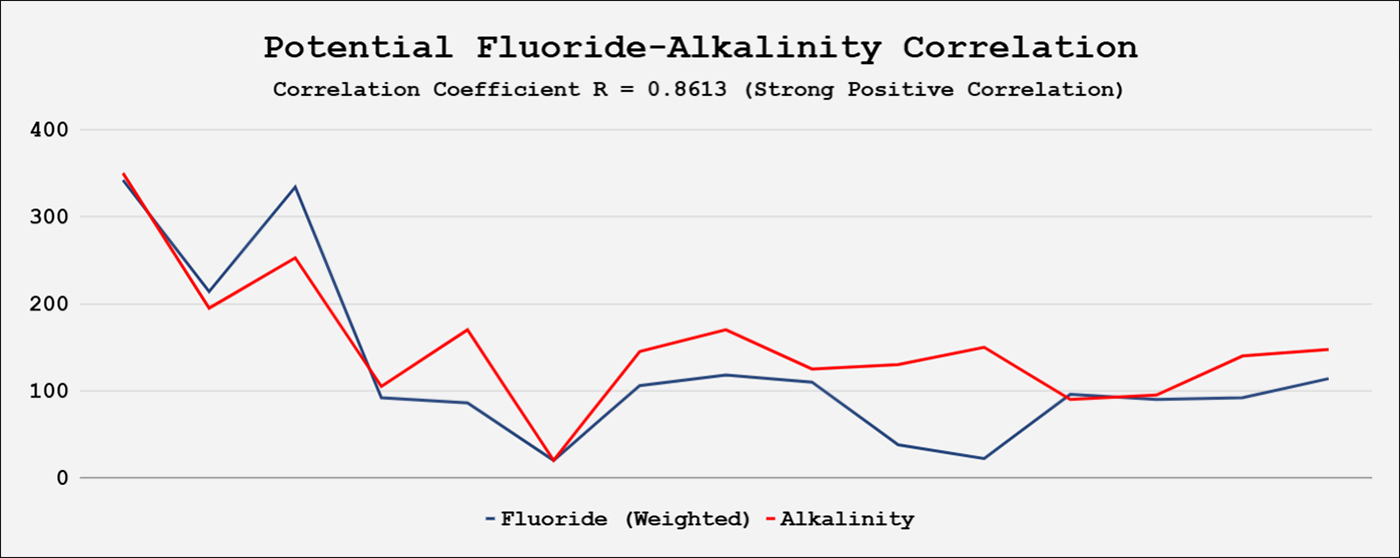
| Fluoride levels were measured using method SM 4500-F-C which has known interferences. One is a positive error from alkalinity, meaning higher water alkalinity can lead to a reported fluoride level that is higher than the actual fluoride level in the water. This was substantiated by our fluoride-alkalinity correlation study outlined below. Higher water alkalinity levels strongly correlated (R = 0.8613) with higher observed fluoride levels. We also visualized said correlation with a diagram. Put simply: We assume fluoride levels from our lab reports must be taken with a grain of salt – they may be flawed! |
|||||||||||||||||||||||||||||||||||||||||||||||||||||
| Fluoride | CF Sample #1 | CF Sample #2 | CF Sample #3 | Waterdrop | LifeStraw | ZeroWater | Brita | Aquagear | PUR | Epic | ProOne | Kirkland Signature | Up & Up | Unfiltered Sample #1 | Unfiltered Sample #2 | ||||||||||||||||||||||||||||||||||||||
| (mg/L) | 1.71 | 1.07 | 1.67 | 0.46 | 0.43 | <0.1 | 0.53 | 0.59 | 0.55 | 0.19 | 0.11 | 0.48 | 0.45 | 0.46 | 0.57 | ||||||||||||||||||||||||||||||||||||||
| Weighted (x200) for Visualization | 342 | 214 | 334 | 92 | 86 | 20 | 106 | 118 | 110 | 38 | 22 | 96 | 90 | 92 | 114 | ||||||||||||||||||||||||||||||||||||||
| Alkalinity | CF Sample #1 | CF Sample #2 | CF Sample #3 | Waterdrop | LifeStraw | ZeroWater | Brita | Aquagear | PUR | Epic | ProOne | Kirkland Signature | Up & Up | Unfiltered Sample #1 | Unfiltered Sample #2 | ||||||||||||||||||||||||||||||||||||||
| (mg/L) | 350 | 195 | 252.6 | 105 | 170 | 20 | 145 | 170 | 125 | 130 | 150 | 90 | 95 | 140 | 147.5 | ||||||||||||||||||||||||||||||||||||||
 |
|||||||||||||||||||||||||||||||||||||||||||||||||||||
| Raw Data | |||||||||||||||||||||||||||||||||||||||||||||||||||||
| Water Disinfectants (Unfiltered | Filtered) |
|||||||||||||||||||||||||||||||||||||||||||||||||||||
| Chlorine (mg/L) | 1st Round: 0.2 | 0 2nd Round: 0.15 | 0 and 0 |
0.2 | 0 | 0.2 | 0 | 0.2 | 0 | 0.2 | 0 | 0.2 | 0 | 0.2 | 0 | 0.2 | 0 | 0.2 | 0 | 0.2 | 0 | 0.2 | 0 | ||||||||||||||||||||||||||||||||||||||||||
| Disinfection Byproducts (Unfiltered | Filtered) |
|||||||||||||||||||||||||||||||||||||||||||||||||||||
| Bromodichloromethane (µg/L) | 0.58 | 0 | 0.58 | 0 | 0.58 | 0 | 0.58 | 0 | 0.58 | 0 | 0.58 | 0 | 0.58 | 0 | 0.58 | 0 | 0.58 | 0 | 0.58 | 0 | 0.58 | 0 | ||||||||||||||||||||||||||||||||||||||||||
| Bromoform (µg/L) | 0.75 | 0 | 0.75 | 0 | 0.75 | 0 | 0.75 | 0 | 0.75 | 0 | 0.75 | 0 | 0.75 | 0 | 0.75 | 0 | 0.75 | 0 | 0.75 | 0 | 0.75 | 0 | ||||||||||||||||||||||||||||||||||||||||||
| Dibromochloromethane (µg/L) | 0.94 | 0 | 0.94 | 0 | 0.94 | 0 | 0.94 | 0 | 0.94 | 0 | 0.94 | 0 | 0.94 | 0 | 0.94 | 0 | 0.94 | 0 | 0.94 | 0 | 0.94 | 0 | ||||||||||||||||||||||||||||||||||||||||||
| Metals (Unfiltered | Filtered) |
|||||||||||||||||||||||||||||||||||||||||||||||||||||
| Copper (mg/L) | 1st Round: 0.01 | 0 2nd Round: 0.02 | 0 and 0 |
0.01 | 0 | 0.01 | 0 | 0.01 | 0 | 0.01 | 0 | 0.01 | 0.12 | 0.01 | 0 | 0.01 | 0 | 0.01 | 0 | 0.01 | 0 | 0.01 | 0 | ||||||||||||||||||||||||||||||||||||||||||
| Barium (mg/L) | 1st Round: 0.01 | 0 2nd Round: 0.01 | 0 and 0 |
0.01 | 0.01 | 0.01 | 0 | 0.01 | 0 | 0.01 | 0 | 0.01 | 0 | 0.01 | 0 | 0.01 | 0 | 0.01 | 0.13 | 0.01 | 0 | 0.01 | 0.03 | ||||||||||||||||||||||||||||||||||||||||||
| Boron (mg/L) | 1st Round: 0.04 | 0.01 2nd Round: 0.03 | 0.03 and 0.04 |
0.04 | 0.01 | 0.04 | 0.03 | 0.04 | 0.03 | 0.04 | 0.02 | 0.04 | 0.01 | 0.04 | 0.02 | 0.04 | 0.04 | 0.04 | 0.02 | 0.04 | 0.02 | 0.04 | 0.01 | ||||||||||||||||||||||||||||||||||||||||||
| Lithium (mg/L) | 1st Round: 0.01 | 0 2nd Round: 0.02 | 0 and 0 |
0.01 | 0.02 | 0.01 | 0.01 | 0.01 | 0.01 | 0.01 | 0 | 0.01 | 0 | 0.01 | 0.01 | 0.01 | 0.02 | 0.01 | 0 | 0.01 | 0.01 | 0.01 | 0.01 | ||||||||||||||||||||||||||||||||||||||||||
| Strontium (mg/L) | 1st Round: 0.18 | 0 2nd Round: 0.2 | 0 and 0 |
0.18 | 0.31 | 0.18 | 0.08 | 0.18 | 0.04 | 0.18 | 0 | 0.18 | 0 | 0.18 | 0.02 | 0.18 | 0.15 | 0.18 | 0.01 | 0.18 | 0.02 | 0.18 | 0.08 | ||||||||||||||||||||||||||||||||||||||||||
| Salts (Unfiltered | Filtered) |
|||||||||||||||||||||||||||||||||||||||||||||||||||||
| Nitrate (N) (mg/L) | 1st Round: 1.65 | <0.5 2nd Round: 1.42 | 1.89 and 1.69 |
1.65 | 0 | 1.65 | 1.31 | 1.65 | 1.12 | 1.65 | <0.5 | 1.65 | 0 | 1.65 | <0.5 | 1.65 | 0 | 1.65 | <0.5 | 1.65 | 0 | 1.65 | 1.43 | ||||||||||||||||||||||||||||||||||||||||||
| Fluoride (mg/L) (Flawed? More Info Above!) | 1st Round: 0.46 | 1.71 2nd Round: 0.57 | 1.07 and 1.67 |
0.46 | 0.19 | 0.46 | 0.53 | 0.46 | 0.46 | 0.46 | 0.43 | 0.46 | <0.1 | 0.46 | 0.45 | 0.46 | 0.59 | 0.46 | 0.55 | 0.46 | 0.48 | 0.46 | 0.11 | ||||||||||||||||||||||||||||||||||||||||||
| Other (Unfiltered | Filtered) |
|||||||||||||||||||||||||||||||||||||||||||||||||||||
| Uranium (µg/L) | 1st Round: 7 | 0 2nd Round: 6 | 0 and 0 |
7 | 0 | 7 | 3 | 7 | 2 | 7 | 1 | 7 | 0 | 7 | 1 | 7 | 5 | 7 | 0 | 7 | 0 | 7 | 0 | ||||||||||||||||||||||||||||||||||||||||||
| Aesthetic Parameters (Unfiltered | Filtered) |
|||||||||||||||||||||||||||||||||||||||||||||||||||||
| TDS (mg/L) | 1st Round: 223.5 | 1680 2nd Round: 216.1 | 334.9 and 519.1 |
223.5 | 282.7 | 223.5 | 214.3 | 223.5 | 189.1 | 223.5 | 225.1 | 223.5 | 0.6 | 223.5 | 181.6 | 223.5 | 513.1 | 223.5 | 180.6 | 223.5 | 175.9 | 223.5 | 213.4 | ||||||||||||||||||||||||||||||||||||||||||
| Hardness (mg/L) | 1st Round: 111.9 | 4.6 2nd Round: 113.6 | 7.9 and 2.9 |
111.9 | 130.4 | 111.9 | 85.4 | 111.9 | 25.6 | 111.9 | 3 | 111.9 | 0.3 | 111.9 | 13.2 | 111.9 | 239.7 | 111.9 | 1.6 | 111.9 | 14.5 | 111.9 | 97.5 | ||||||||||||||||||||||||||||||||||||||||||
| Other Parameters (Unfiltered | Filtered) |
|||||||||||||||||||||||||||||||||||||||||||||||||||||
| Alkalinity (mg/L) | 1st Round: 140 | 350 2nd Round: 147.5 | 195 and 252.5 |
140 | 130 | 140 | 145 | 140 | 105 | 140 | 170 | 140 | 20 | 140 | 95 | 140 | 170 | 140 | 125 | 140 | 90 | 140 | 150 | ||||||||||||||||||||||||||||||||||||||||||
| pH | 1st Round: 7.77 | 6.41 2nd Round: 8.18 | 8.32 and 8.56 |
7.77 | 7.81 | 7.77 | 7.84 | 7.77 | 7.38 | 7.77 | 8.02 | 7.77 | 6.26 | 7.77 | 7.14 | 7.77 | 7.98 | 7.77 | 7.5 | 7.77 | 7.31 | 7.77 | 7.99 | ||||||||||||||||||||||||||||||||||||||||||

Water Filter Pitcher Reviews
1. Best Overall Pitcher (Most Effective Filtration + Best All-Rounder): Clearly Filtered

Final Rating: /5.00
FiltrationFiltration score combines our lab results and taste testing with NSF/ANSI certifications and 3rd-party contaminant reduction data.: /5.00
Usability: /5.00
CostsCost scores reflect overall value for money rather than price alone.: /5.00
| Type: | Water Filter Pitcher |
| PriceNo short-term sales. (Sep 16, 2025): | $100 (Use Code BOS10 for 10% Off; Save Additional 10% With Filter Subscription) |
| Yearly CostEstimate is based on rated/claimed filter life and 300 gallons annual water consumption. No short-term sales. (Sep 16, 2025): | ~$155 (Save 10% With Filter Subscription) |
(Use Code BOS10 for 10% Off!)
Final Rating: /5.00
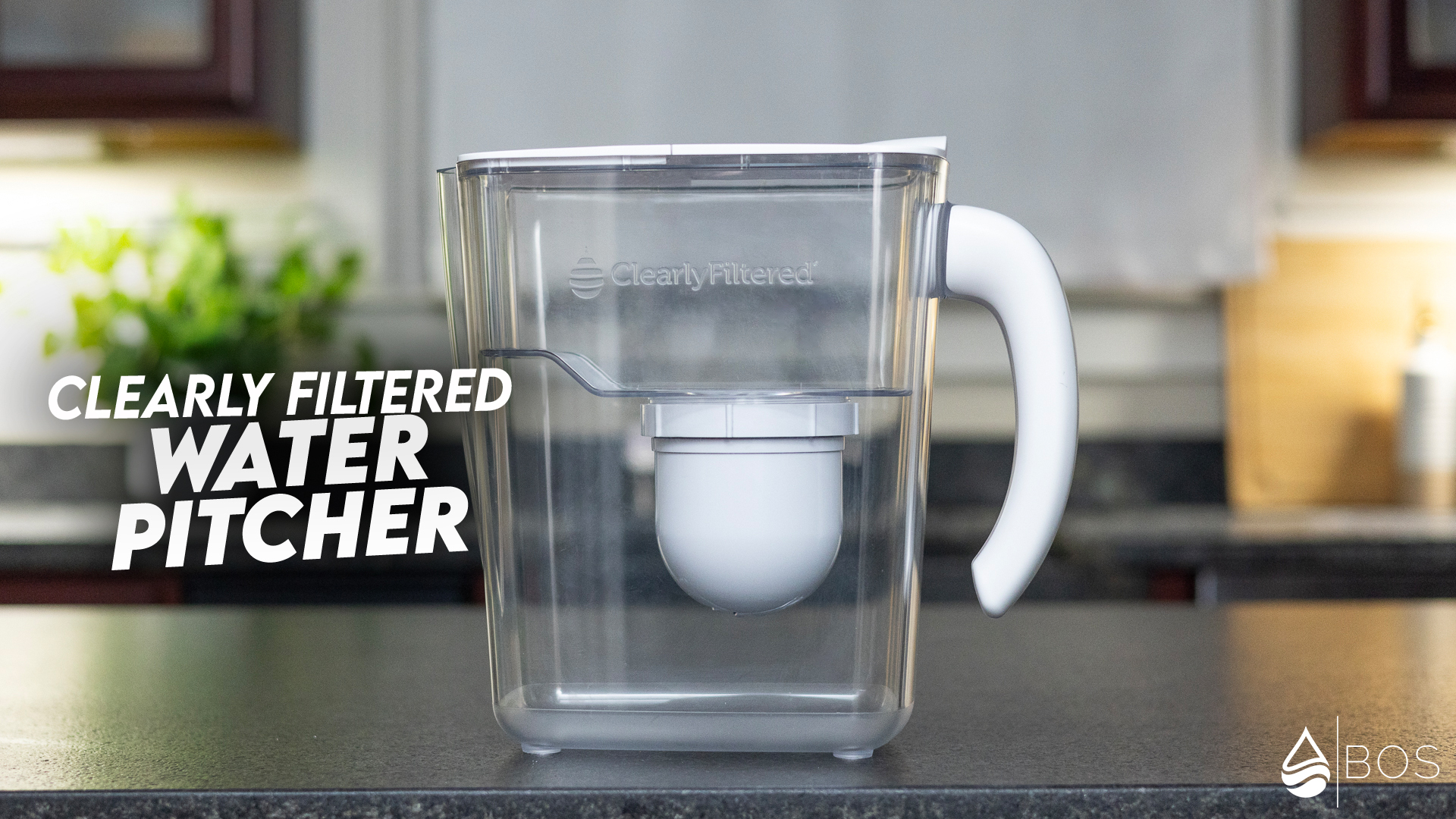
For us, the Clearly Filtered is the best water filter pitcher. It provides very effective filtration, removing most impurities in our lab tests, and is bolstered by extensive third-party testing to 200% filter life. In taste testing, results ranged from greatly improved compared to tap water to perfect. Usability is solid, and while upfront and long-term costs are above average, they’re reasonable.
What We Like Most
- Achieved solid results in our 2024 and excellent results in our 2025 lab testing.
- Filtered water tasted perfectly clean with no odor (2024 test). Filtered water had a much better taste and no odor (2025 test).
- Pretty much fully covered by third-party testing for contaminant reduction to 200% filter Life.
- Medical-grade Tritan plastic build with a large, comfortably fitting handle, free from BPA, BPS, phthalates and estrogen & androgen activity (according to Clearly Filtered).
- Easy to set up with clear, illustrated instructions, a QR code-linked tutorial video, and a priming bag that makes it easy for water to be pushed through the filter cartridge, reducing waiting time.
- Fast enough for daily use with a large feed and filtered water capacity, requiring fewer refills.
- Large enough to fill a 40-oz bottle with a single refill while fitting comfortably in fridge shelves and doors.
- Easy to refill thanks to its wide-opening flip-top with a clear upper reservoir indicating how much water remains to be filtered.
- Filters are easy to replace, with a long 100-gallon filter life.
- Backed by a 2-year warranty.
What We Don’t Like
- Only 2 actual NSF/ANSI certifications (chlorine + taste/odor reduction).
- On-demand filtering takes patience.
- Splashes in a wide pattern if poured too quickly, and if the pitcher is tilted too steeply, unfiltered water may escape from the flip-top lid.
- No filter life indicator.
- Well above-average upfront + estimated annual filter replacement cost.
- Third-party customer complaints include clogged filters leading to slow flow, reservoir and lid instability, heaviness or bulkiness, and pouring issues.
Filtration: /5.00
1. Lab Results: /5.00 (2025) & /5.00 (2024)
- The Clearly Filtered could remove almost all contaminants to 100% (chlorine, 4 disinfection byproducts, copper, barium, lithium, strontium, iron, manganese, and uranium).
- Not removed to 100% were boron, nitrate, and fluoride.
- We detected potential leaching of silver, titanium, and cobalt, but all at levels below the strictest available health guidelines.
Lab Results Charts
| Potentially Harmful | Aesthetic Issues | Feed Water Level | Filtered Water Level | Reduction Rate | |
| Water Disinfectants | |||||
| Chlorine (mg/L) | ✖ | ✖ | ~2 | 0 | 100% |
| Disinfection Byproducts (Ultra-High Chloroform) | |||||
| Bromodichloromethane (µg/L) | ✖ | 19.9 | 0 | 100% | |
| Dibromochloromethane (µg/L) | ✖ | 5.81 | 0 | 100% | |
| Chloroform (µg/L) | ✖ | 1,670 | 0 | 100% | |
| Metals | |||||
| Copper (mg/L) | ✖ | ✖ | 0.0136 | 0 | 100% |
| Iron (mg/L) | ✖ | 0.0763 | 0 | 100% | |
| Manganese (mg/L) | ✖ | ✖ | 0.0036 | 0 | 100% |
| Barium (mg/L) | ✖ | 0.0407 | 0 | 100% | |
| Boron (mg/L) | ✖ | 0.0153 | 0 | 100% | |
| Strontium (mg/L) | ✖ | 0.112 | 0 | 100% | |
| Salts | |||||
| Nitrate (N) (mg/L) | ✖ | 2.74 | 0.123 | 96% | |
| Fluoride (mg/L) | ✖ | 0.925 | 0 | 100% | |
| Aesthetic Parameters | |||||
| Hardness (mg/L) | ✖ | 59.89 | 26.71 | 55% | |
| Other Parameters | |||||
| pH | 7.8 | 8 | |||
| Impurities NOT Detected in Unfiltered Tap Water Sample | |||||
| Cobalt (mg/L) | ✖ | 0 | 0.0012 | ||
| Titanium (mg/L) | 0 | 0.00205 | |||
| Lab Reports: Filtered Water Report, Unfiltered Water Report | |||||
| Chlorine Self Test Photos: Filtered Water, Unfiltered Water | |||||
| Explanation: | |||||
| Full Removal | |||||
| Considerable Reduction | |||||
| Concentration More Than Double of Unfiltered Water Sample | |||||
| Potential Leaching Reached or Exceeded the Strictest Public Health Guideline We Could Find | |||||
| Potentially Harmful | Aesthetic Issues | Feed Water Level | Filtered Water Level | Reduction Rate | |
| Water Disinfectants | |||||
| Chlorine (mg/L) | ✖ | ✖ | 1st Round: 0.2 2nd Round: 0.15 |
1st Round: 0 2nd Round: 0 | 0 |
100% (Avg of 3) |
| Disinfection Byproducts | |||||
| Bromodichloromethane (µg/L) | ✖ | 0.58 | 0 | 100% | |
| Bromoform (µg/L) | ✖ | 0.75 | 0 | 100% | |
| Dibromochloromethane (µg/L) | ✖ | 0.94 | 0 | 100% | |
| Metals | |||||
| Copper (mg/L) | ✖ | ✖ | 1st Round: 0.01 2nd Round: 0.02 |
1st Round: 0 2nd Round: 0 | 0 |
100% (Avg of 3) |
| Barium (mg/L) | ✖ | 1st Round: 0.01 2nd Round: 0.01 |
1st Round: 0 2nd Round: 0 | 0 |
100% (Avg of 3) | |
| Boron (mg/L) | ✖ | 1st Round: 0.04 2nd Round: 0.03 |
1st Round: 0.01 2nd Round: 0.03 | 0.04 |
14% (Avg of 3) | |
| Lithium (mg/L) | ✖ | 1st Round: 0.01 2nd Round: 0.02 |
1st Round: 0 2nd Round: 0 | 0 |
100% (Avg of 3) | |
| Strontium (mg/L) | ✖ | 1st Round: 0.18 2nd Round: 0.2 |
1st Round: 0 2nd Round: 0 | 0 |
100% (Avg of 3) | |
| Salts | |||||
| Nitrate (N) (mg/L) | ✖ | 1st Round: 1.65 2nd Round: 1.42 |
1st Round: <0.5 2nd Round: 1.89 | 1.69 |
6% (Avg of 3) | |
| Fluoride (mg/L) (Flawed?) | ✖ | 1st Round: 0.46 2nd Round: 0.57 |
1st Round: 1.71 2nd Round: 1.07 | 1.67 |
184% Increase (Avg of 3) | |
| Other | |||||
| Uranium (µg/L) | ✖ | 1st Round: 7 2nd Round: 6 |
1st Round: 0 2nd Round: 0 | 0 |
100% (Avg of 3) | |
| Aesthetic Parameters | |||||
| Hardness (mg/L) | ✖ | 1st Round: 111.9 2nd Round: 113.6 |
1st Round: 4.6 2nd Round: 7.9 | 2.6 |
95% (Avg of 3) | |
| Other Parameters | |||||
| Alkalinity (mg/L) | 1st Round: 140 2nd Round: 147.5 |
1st Round: 350 2nd Round: 195 | 252.5 |
85% Increase (Avg of 3) | ||
| pH | 1st Round: 7.77 2nd Round: 8.18 |
1st Round: 6.41 2nd Round: 8.32 | 8.56 |
|||
| Impurities NOT Detected in Unfiltered Tap Water Sample | |||||
| Silver (mg/L) | ✖ | 0 | 0.03 | 0.02 | 0.05 | ||
| Titanium (mg/L) | 0 | 0.09 | 0.03 | 0.09 | |||
| Lab Reports for 1st Round of Testing (Priming Issue): Filtered Water Report, Unfiltered Water Report | |||||
| Lab Reports for 2nd Round of Testing: Filtered Water Report #1, Filtered Water Report #2, Unfiltered Water Report | |||||
| Explanation: | |||||
| Full Removal | |||||
| Considerable Reduction | |||||
| Concentration More Than Double of Unfiltered Water Sample | |||||
| Potential Leaching Reached or Exceeded the Strictest Public Health Guideline We Could Find | |||||
2. NSF/ANSI Certifications and Other Test Data
We have WQA certification for only 2 contaminants (chlorine and taste/odor) under NSF/ANSI Standard 42. However, extensive third-party testing shows reduction of 355 contaminants through 200% of the rated filter life, covering NSF/ANSI Standards 42, 53, 401, and additional non-NSF/ANSI standards – more than any other pitcher we tested.
Reported reduction rates include chlorine (>99.52%), chloramine (>99.68%), fluoride (>99.54%), heavy metals like aluminum (>99.13%), antimony (>98.00%), arsenic (98.00%), chromium 6 (99.68%), lead (99.34%), and uranium (96.67%), many herbicides (98.09-99.99%+), microplastics (>99.99%), 9 PFAS (95.00-99.50%+), dozens of pesticides (98.19-99.98%+), trace pharmaceuticals (98.40-99.99%+), radiological elements (98.00-98.04%+), semi-volatiles (98.51-99.99%+), and nearly 100 VOCs (98.49-99.99%+)
3. Taste and Odor Tests
In our 2024 and 2025 tests, taste ranged from much better than tap water to perfectly clean, with odor completely eliminated.
Usability: /5.00
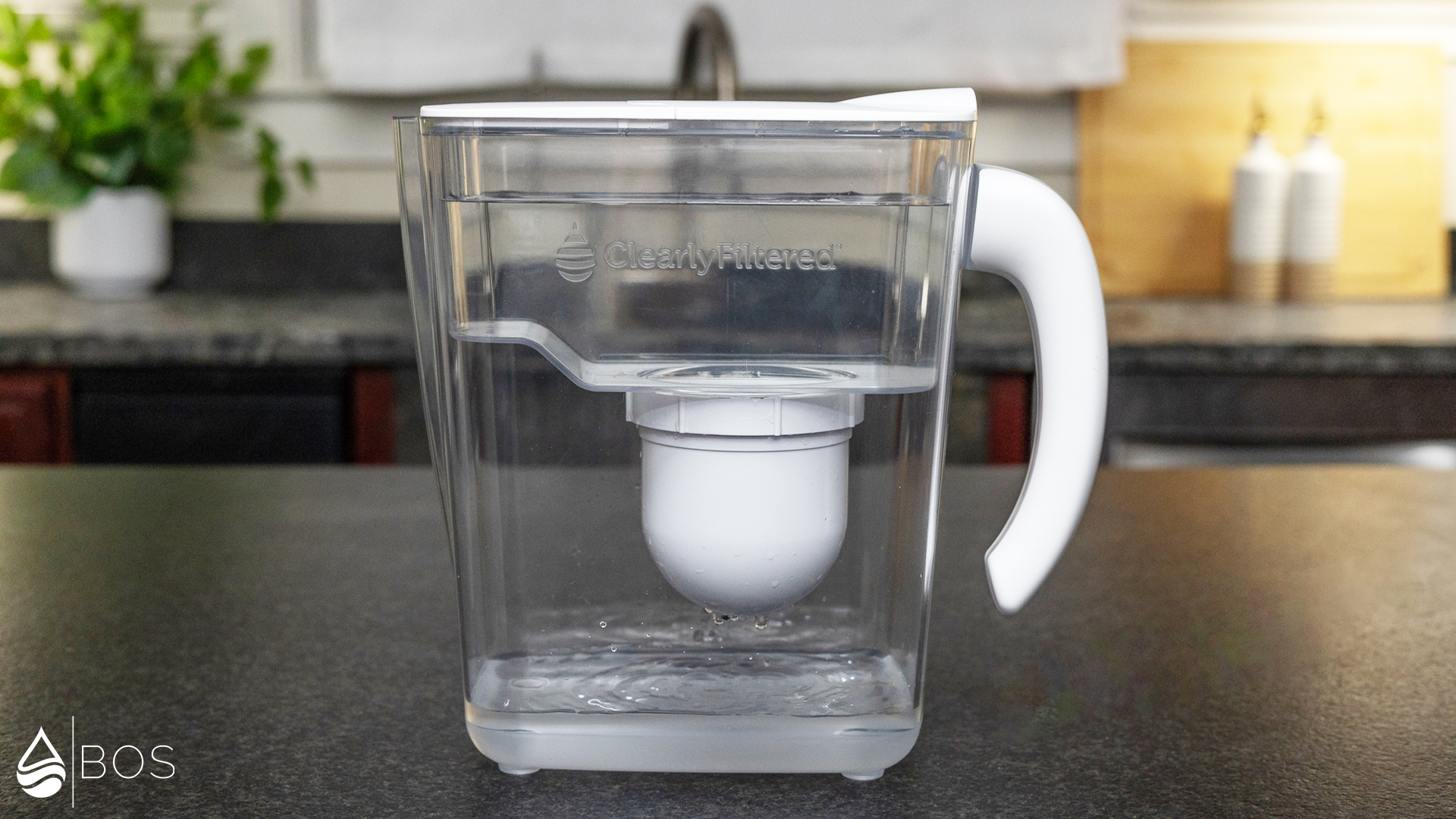
The Clearly Filtered pitcher is easy to set up, use, and maintain. The included priming bag cuts down on filter priming time; its 100-gallon rated filter life means easy, infrequent replacements, though it lacks a filter replacement indicator.
Its ample feed/filtered capacities store plenty of water, requiring fewer refills while still fitting in the fridge. Refills are easy thanks to the flip-top lid and clear upper reservoir to monitor the filtering process. It also filters fast enough to meet your daily needs, though on-demand filtering takes patience. The large plastic handle is comfortable, but this pitcher is on the heavy side and splashing may occur if pouring too quickly.

CostsCost scores reflect overall value for money rather than price alone.: /5.00
As of September 16, 2025, the Clearly Filtered is priced at $100. Applying our 10% discount code reduces the upfront cost to $90, and choosing a filter subscription would provide you another 10% off. We estimate $155 in annual filter replacement costs (you can save 10% with a filter subscription). Both upfront and long-term cost are higher than average.
Read Our Full Clearly Filtered Water Pitcher Review
(Use Code BOS10 for 10% Off!)
2. Runner-Up Pitcher for Most Effective Filtration: Culligan 10 Cup

Final Rating: /5.00
FiltrationFiltration score combines our lab results and taste testing with NSF/ANSI certifications and 3rd-party contaminant reduction data.: /5.00
Usability: /5.00
CostsCost scores reflect overall value for money rather than price alone.: /5.00
| Type: | Water Filter Pitcher |
| PriceNo short-term sales. (Sep 16, 2025): | $34.99 |
| Yearly CostEstimate is based on rated/claimed filter life and 300 gallons annual water consumption. No short-term sales. (Sep 16, 2025): | ~$205 (Save ~20% With Filter Subscription) |
Final Rating: /5.00
The Culligan takes our #2 spot for the pitcher with the most effective filtration as it completely removed most contaminants in our lab test, has a higher count of NSF/ANSI certifications for contaminant reduction, and its filtered water tasted much better than our tap water. Usability is adequate and upfront price is low. However, long-term costs are well above average.
What We Like Most
- Achieved excellent results in our 2025 lab testing for contaminant reduction.
- Filtered water had a much better taste and no odor.
- Higher count of NSF/ANSI-certified contaminants, but important ones like nitrates and VOCs are missing.
- Feels sturdy and well-built thanks to its substantial, comfortable handle and thick grey plastic reservoir, giving the pitcher a modern, sophisticated look. Made from BPA-free materials.
- Setup is easy with clear, illustrated instructions and a QR-linked tutorial video.
- Fits comfortably in both fridge shelves and doors and pours smoothly without spilling even when pouring fast.
- Well below-average upfront cost.
What We Don’t Like
- “0 TDS approach” can be misleading, as it doesn’t necessarily mean pure water.
- On-demand filtering takes patience.
- Smaller capacity means you’ll need to refill more often and can’t fill a large 40 oz bottle with 1 refill.
- Circular sliding lid has a limited opening, which can make refilling under wide-spray faucets a bit messy.
- Short 20-gallon filter lifespan means frequent replacements, which are easy but can get tedious.
- No filter life indicator (though the TDS meter helps track performance).
- Well above-average annual filter replacement costs.
- Short 90-day warranty.
- Third-party customer complaints include very short filter life, bad taste and odor, inconsistent TDS readings, and an unergonomic design.

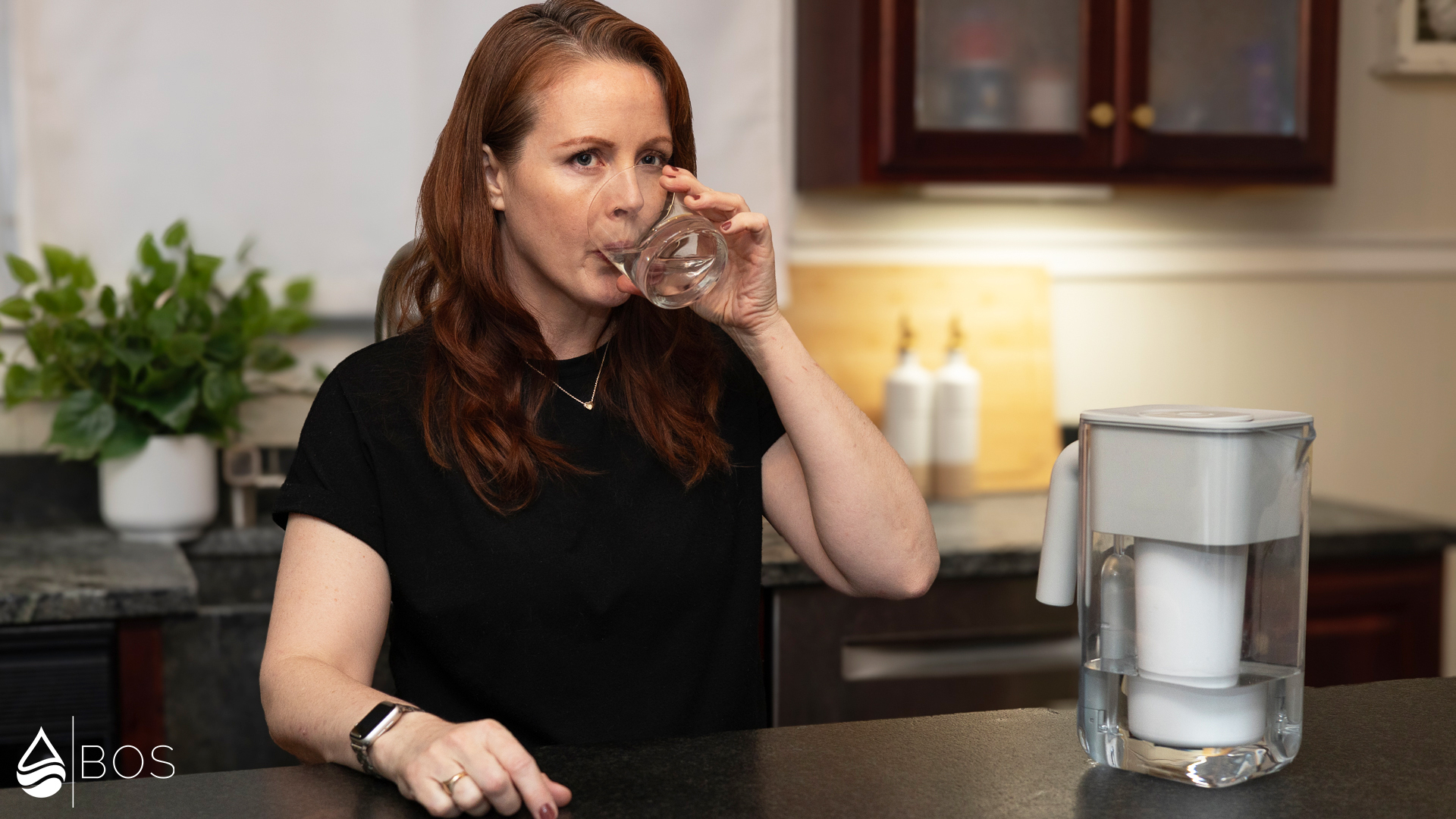
Filtration: /5.00
1. Lab Results: /5.00
- The Culligan could remove almost all contaminants to 100% (chlorine, 2 disinfection byproducts, iron, barium, boron, strontium, nitrate, and fluoride).
- Not removed to 100% were chloroform, copper, and manganese.
- There was no evidence of potential leaching of any contaminant.
Lab Results Charts
| Potentially Harmful | Aesthetic Issues | Feed Water Level | Filtered Water Level | Reduction Rate | |
| Water Disinfectants | |||||
| Chlorine (mg/L) | ✖ | ✖ | ~2 | 0 | 100% |
| Disinfection Byproducts (Ultra-High Chloroform) | |||||
| Bromodichloromethane (µg/L) | ✖ | 19.9 | 0 | 100% | |
| Dibromochloromethane (µg/L) | ✖ | 5.81 | 0 | 100% | |
| Chloroform (µg/L) | ✖ | 1,670 | 48 | 97% | |
| Disinfection Byproducts (VOCs Re-Test) | |||||
| Bromodichloromethane (µg/L) | ✖ | 15.5 | 0 | 100% | |
| Dibromochloromethane (µg/L) | ✖ | 4.24 | 0 | 100% | |
| Chloroform (µg/L) | ✖ | 34.7 | 4.71 | 86% | |
| Metals | |||||
| Copper (mg/L) | ✖ | ✖ | 0.0136 | 0.0075 | 45% |
| Iron (mg/L) | ✖ | 0.0763 | 0 | 100% | |
| Manganese (mg/L) | ✖ | ✖ | 0.0036 | 0.0013 | 64% |
| Barium (mg/L) | ✖ | 0.0407 | 0 | 100% | |
| Boron (mg/L) | ✖ | 0.0153 | 0 | 100% | |
| Strontium (mg/L) | ✖ | 0.112 | 0 | 100% | |
| Salts | |||||
| Nitrate (N) (mg/L) | ✖ | 2.74 | 0 | 100% | |
| Fluoride (mg/L) | ✖ | 0.925 | 0 | 100% | |
| Aesthetic Parameters | |||||
| Hardness (mg/L) | ✖ | 59.89 | 0.25 | 100% | |
| Other Parameters | |||||
| pH | 7.8 | 5.8 | |||
| Impurities NOT Detected in Unfiltered Tap Water Sample | |||||
| Lab Reports (Ultra-High Chloroform): Filtered Water Report, Unfiltered Water Report | |||||
| Lab Reports (VOCs Re-Test): Filtered Water Report, Unfiltered Water Report | |||||
| Chlorine Self Test Photos: Filtered Water, Unfiltered Water | |||||
| Explanation: | |||||
| Full Removal | |||||
| Considerable Reduction | |||||
| Concentration More Than Double of Unfiltered Water Sample | |||||
| Potential Leaching Reached or Exceeded the Strictest Public Health Guideline We Could Find | |||||
2. NSF/ANSI Certifications and Other Test Data
We have IAPMO certification for 28 contaminants against NSF/ANSI standards 42, 53, and 401. Reported reduction rates include lead (98.80-98.90%), mercury (94.20-96.60%), chromium 6 (99.40-99.50%), fluoride (99.70%), total PFAS (99.70%), and emerging compounds (96.60-99.40%).
Despite these important certifications, some key impurities are not covered (e.g. nitrate and VOCs). There is no additional third-party testing beyond these certifications.
3. Taste and Odor Tests
In our test, the filtered water had a much better taste than our tap water and no odor.
Usability: /5.00
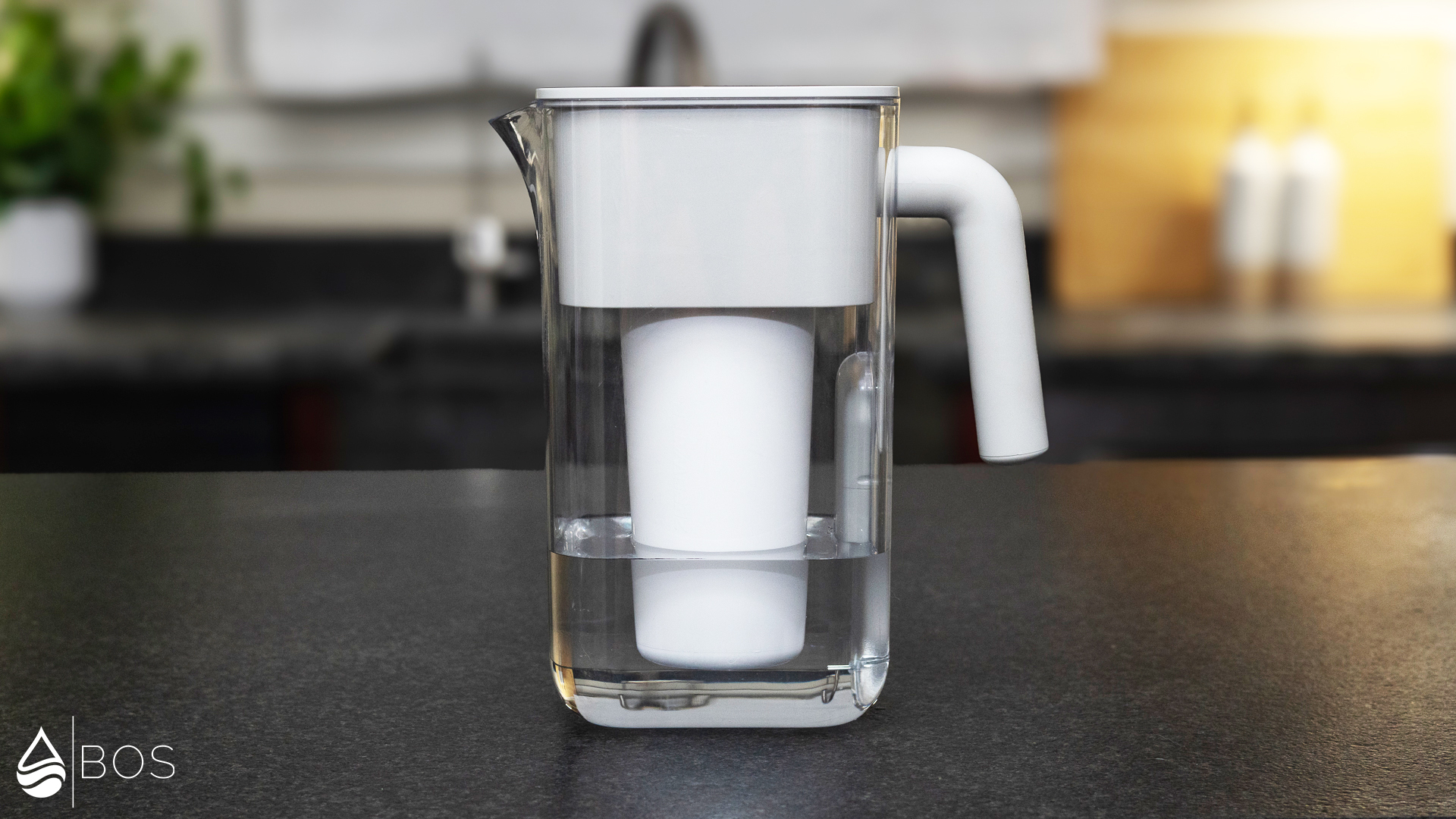
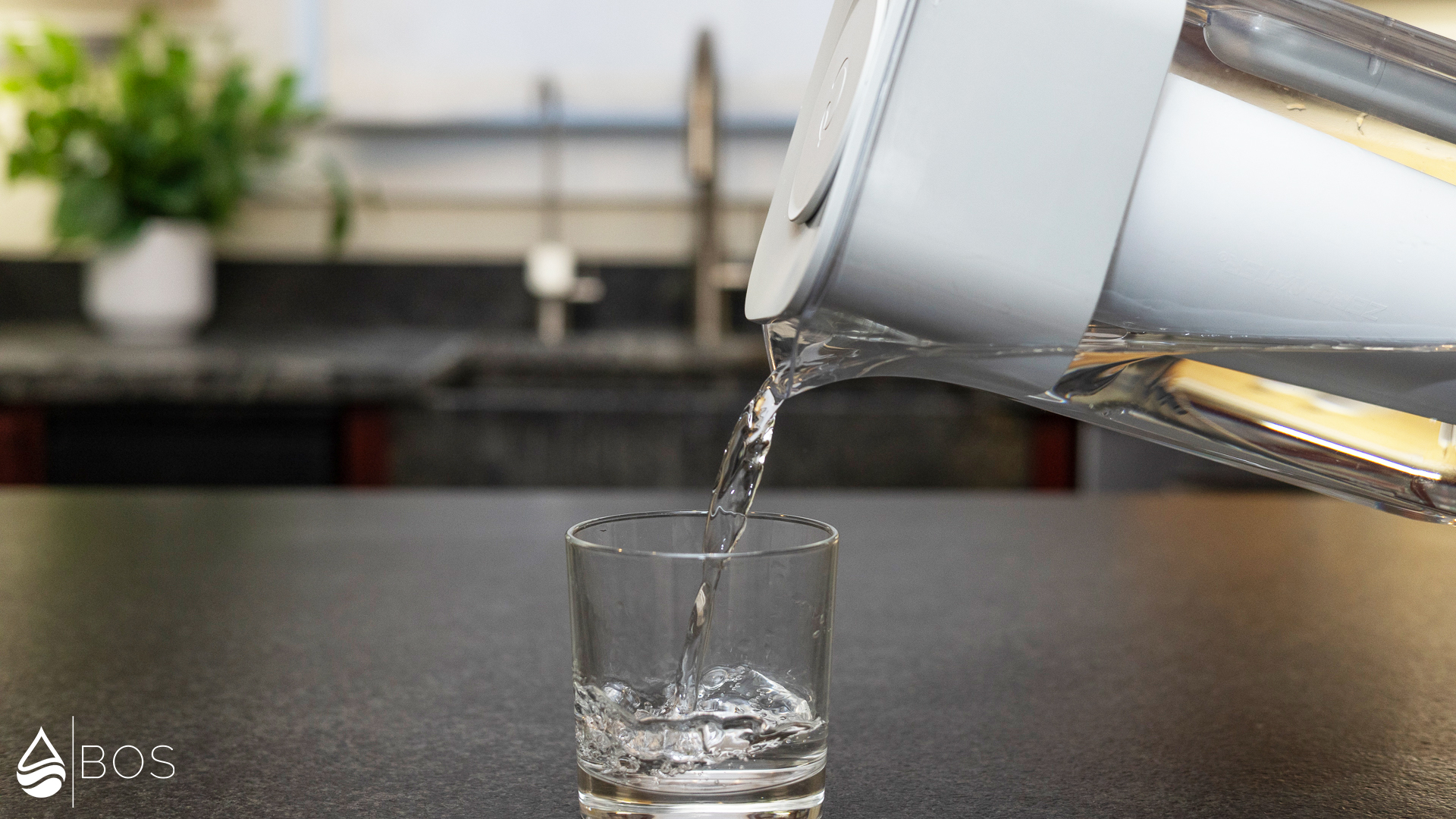
The Culligan pitcher is sturdy, attractive, and easy to set up, use, and maintain, and it fits easily in the fridge. However, it is slightly impractical for daily use, largely due to its small feed and unbalanced feed-to-filtered capacities, which require frequent refills. The refill opening is also somewhat small, which may cause issues with wide-spray faucets.
While filtration is fast enough for most households, on-demand filtering requires patience. The large plastic handle is comfortable and makes for smooth pouring, but the pitcher is on the heavy side. Its short 20-gallon rated filter life means frequent replacements, and while it lacks a filter-replacement indicator, it does include a TDS meter.
CostsCost scores reflect overall value for money rather than price alone.: /5.00
As of September 16, 2025, the Culligan is priced at $34.99. We estimate $205 in annual filter replacement costs. While upfront price is lower than average, long-term costs are well above average.
Support BOS Water’s Mission!
Every coffee helps us test more products and bring you unbiased results!
3. #1 Pitcher for Usability: Epic Pure

Final Rating: /5.00
FiltrationFiltration score combines our lab results and taste testing with NSF/ANSI certifications and 3rd-party contaminant reduction data.: /5.00
Usability: /5.00
CostsCost scores reflect overall value for money rather than price alone.: /5.00
| Type: | Water Filter Pitcher |
| PriceNo short-term sales. (Sep 16, 2025): | $79 (Use Code BOSEpic for 20% Off or Save 15% With Filter Subscription) |
| Yearly CostEstimate is based on rated/claimed filter life and 300 gallons annual water consumption. No short-term sales. (Sep 16, 2025): | ~$106 (Save 15% With Filter Subscription) |
(Use Code BOSEpic for 20% Off!)
Final Rating: /5.00
The Epic Pure is our top choice water filter pitcher if usability is your focus. It achieved adequate results in our 2024/2025 lab tests and is pretty much fully covered by third-party testing to 100% filter life. It improved the taste of our water, ranging from a little taste remaining to much improved, eliminated odor, and offers great usability at affordable upfront and ongoing costs.
What We Like Most
- Filtered water had a little taste left and no odor (2024). Filtered water had a much better taste and no odor (2025).
- Pretty much fully covered by third-party testing for contaminant reduction to 100% filter Life.
- Modern, sturdy design made from BPA- and BPS-free medical-grade Tritan plastic.
- Setup is straightforward (written instructions are long-winded but there are illustrations for each step + video).
- Filters fast enough for daily use (clear reservoir allows you to monitor).
- Large feed and filtered capacity (still fits the fridge) means fewer refills required and you can fill a 40-oz bottle with 1 refill.
- Wood handle provides for a very comfortable grip. Pours smoothly even when pouring fast.
- Flip-top opens easily by pressing the rubber tab near the handle.
- Easy to maintain with a long 150-gallon filter life; replacements are simple, tracked by a built-in 90-day indicator.
- Slightly below average annual filter replacement cost (upfront price is about average).
- Lifetime warranty and satisfaction guarantee.
- Recycling program offers 1 free filter for every 5 recycled.
What We Don’t Like
- Considerable amount of methylene chloride detected in filtered water in our 2025 lab testing (still below strictest health guidelines).
- Higher level of strontium detected in filtered water in our 2024 lab testing (still below strictest health guidelines).
- No actual NSF/ANSI certifications for contaminant reduction.
- On-demand filtering takes patience.
- Third-party customer complaints include cracked plastic, lid/flap problems, water leakage and spillage when pouring and slow filtration rate.


Filtration: /5.00
1. Lab Results: /5.00 (2025) & /5.00 (2024)
- The Epic Pure could remove most contaminants to 100% (chlorine, 4 disinfection byproducts, copper, iron, nitrate, and uranium).
- Not removed to 100% were barium, boron, lithium, strontium, manganese, and fluoride. Strontium increased post-filtration but remained below the strictest health guideline. The same was true for manganese which stayed below the California OEHHA notification level.
- In addition, we detected potential leaching of aluminum and methylene chloride, but both at levels below their strictest health guidelines.
Lab Results Charts
| Potentially Harmful | Aesthetic Issues | Feed Water Level | Filtered Water Level | Reduction Rate | |
| Water Disinfectants | |||||
| Chlorine (mg/L) | ✖ | ✖ | ~2 | 0 | 100% |
| Disinfection Byproducts (Ultra-High Chloroform) | |||||
| Bromodichloromethane (µg/L) | ✖ | 19.9 | 0 | 100% | |
| Dibromochloromethane (µg/L) | ✖ | 5.81 | 0 | 100% | |
| Chloroform (µg/L) | ✖ | 1,670 | 0.87 | 100% | |
| Metals | |||||
| Copper (mg/L) | ✖ | ✖ | 0.0136 | 0 | 100% |
| Iron (mg/L) | ✖ | 0.0763 | 0 | 100% | |
| Manganese (mg/L) | ✖ | ✖ | 0.0036 | 0.0088 | 144% Increase |
| Barium (mg/L) | ✖ | 0.0407 | 0.0383 | 6% | |
| Boron (mg/L) | ✖ | 0.0153 | 0 | 100% | |
| Strontium (mg/L) | ✖ | 0.112 | 0.149 | 33% Increase | |
| Salts | |||||
| Nitrate (N) (mg/L) | ✖ | 2.74 | 0 | 100% | |
| Fluoride (mg/L) | ✖ | 0.925 | 0 | 100% | |
| Aesthetic Parameters | |||||
| Hardness (mg/L) | ✖ | 59.89 | 63.92 | 7% Increase | |
| Other Parameters | |||||
| pH | 7.8 | 7.3 | |||
| Impurities NOT Detected in Unfiltered Tap Water Sample | |||||
| Methylene Chloride (µg/L) | ✖ | 0 | 1.63 | ||
| Lab Reports (Ultra-High Chloroform): Filtered Water Report, Unfiltered Water Report | |||||
| Chlorine Self Test Photos: Filtered Water, Unfiltered Water | |||||
| Explanation: | |||||
| Full Removal | |||||
| Considerable Reduction | |||||
| Concentration More Than Double of Unfiltered Water Sample | |||||
| Potential Leaching Reached or Exceeded the Strictest Public Health Guideline We Could Find | |||||
| Potentially Harmful | Aesthetic Issues | Feed Water Level | Filtered Water Level | Reduction Rate | |
| Water Disinfectants | |||||
| Chlorine (mg/L) | ✖ | ✖ | 0.2 | 0 | 100% |
| Disinfection Byproducts | |||||
| Bromodichloromethane (µg/L) | ✖ | 0.58 | 0 | 100% | |
| Bromoform (µg/L) | ✖ | 0.75 | 0 | 100% | |
| Dibromochloromethane (µg/L) | ✖ | 0.94 | 0 | 100% | |
| Metals | |||||
| Copper (mg/L) | ✖ | ✖ | 0.01 | 0 | 100% |
| Barium (mg/L) | ✖ | 0.01 | 0.01 | 0% | |
| Boron (mg/L) | ✖ | 0.04 | 0.01 | 75% | |
| Lithium (mg/L) | ✖ | 0.01 | 0.02 | 100% Increase | |
| Strontium (mg/L) | ✖ | 0.18 | 0.31 | 72% Increase | |
| Salts | |||||
| Nitrate (N) (mg/L) | ✖ | 1.65 | 0 | 100% | |
| Fluoride (mg/L) (Flawed?) | ✖ | 0.46 | 0.19 | 59% | |
| Other | |||||
| Uranium (µg/L) | ✖ | 7 | 0 | 100% | |
| Aesthetic Parameters | |||||
| Hardness (mg/L) | ✖ | 111.9 | 130.4 | 17% Increase | |
| Other Parameters | |||||
| Alkalinity (mg/L) | 140 | 130 | 7% | ||
| pH | 7.77 | 7.81 | |||
| Impurities NOT Detected in Unfiltered Tap Water Sample | |||||
| Aluminum (mg/L) | ✖ | ✖ | 0 | 0.08 | |
| Methylene Chloride (µg/L) | ✖ | 0 | 0.71 | ||
| Lab Reports: Filtered Water Report, Unfiltered Water Report | |||||
| Explanation: | |||||
| Full Removal | |||||
| Considerable Reduction | |||||
| Concentration More Than Double of Unfiltered Water Sample | |||||
| Potential Leaching Reached or Exceeded the Strictest Public Health Guideline We Could Find | |||||
2. NSF/ANSI Certifications and Other Test Data
The Epic Pure has no NSF/ANSI certifications for contaminant reduction. However, it is pretty much fully covered by extensive third-party testing to 100% filter life against NSF/ANSI standards 42, 53, 401, and other non-NSF/ANSI standards covering 212 different impurities.
Reported reduction rates include VOCs (92.60-99.70%+), semi-volatiles (87.00-99.80%+), pesticides (99.00-99.90%+), herbicides (98.90-99.90%+), trace pharmaceuticals and other emerging contaminants (90.00-99.20%+), microplastics (99.62%), a bunch of radiological elements (>99.73%), PFOA (>99.60%), PFOS (>99.80%), lead (99.94%), mercury (91.80%), chromium 6 (99.20%), arsenic (94.00%), beryllium (98.00%), and aluminum (76.70%).
3. Taste and Odor Tests
In our 2024 and 2025 tests, taste ranged from a little remaining taste to much improved from our tap water but not perfect. Odor was completely eliminated both years.
Usability: /5.00
The Epic Pure pitcher is very easy to setup, use, and maintain.
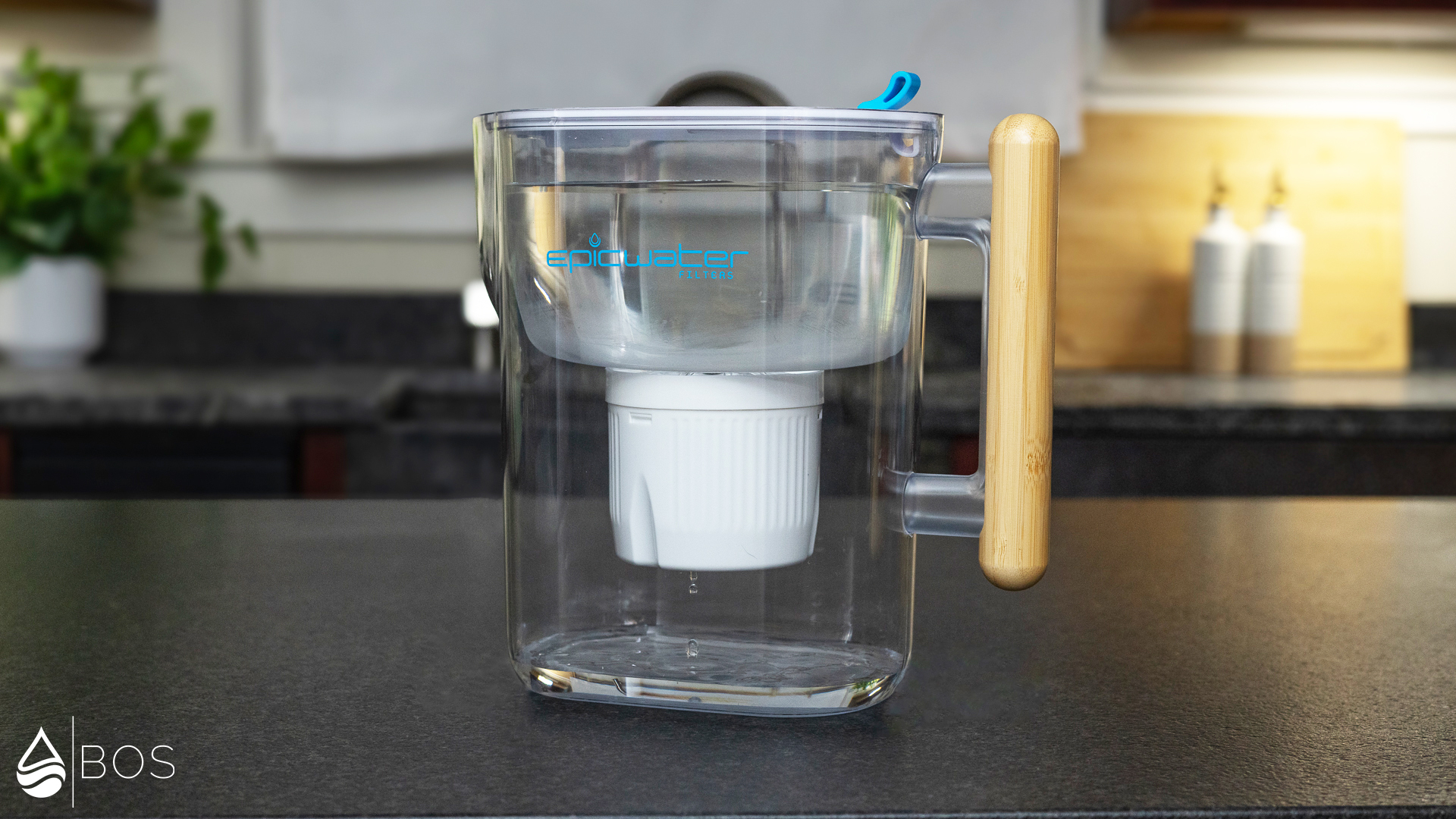
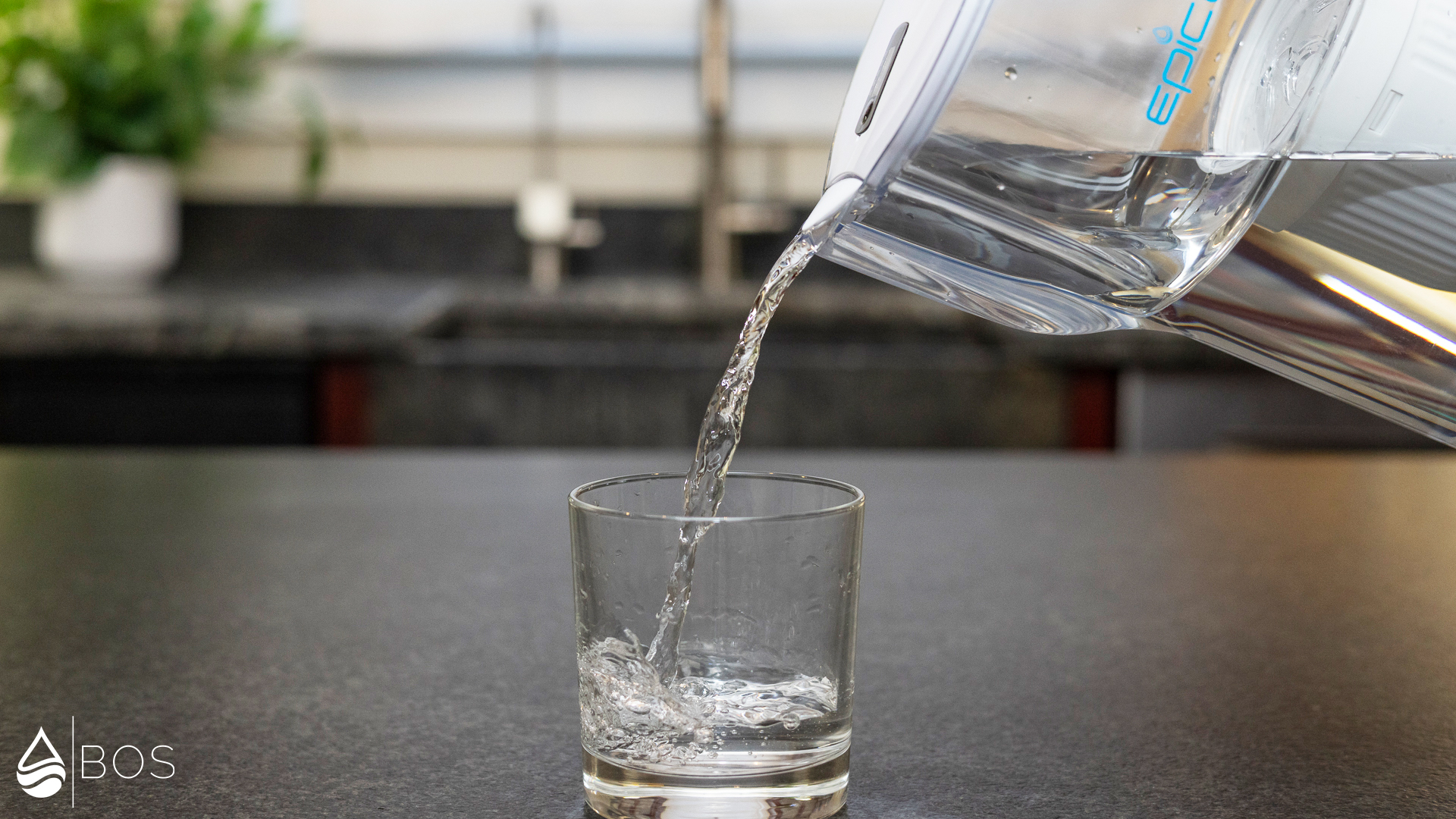
Its ample feed/filtered capacities store plenty of water, requiring fewer refills while still fitting in the fridge. It also filters fast enough to meet your daily needs, though on-demand filtering takes patience. One-handed refills are easy thanks to the flip-top lid, and the clear upper reservoir allows you to monitor the filtering process. The comfortable wood handle allows for smooth pouring. Filter replacements are easy and infrequent thanks to the long 150-gallon rated filter life and built-in 90 day timer.
CostsCost scores reflect overall value for money rather than price alone.: /5.00
As of September 16, 2025, the Epic Pure is priced at $79. Applying our 20% off discount code reduces the upfront cost to $63.20; alternatively, choosing a filter subscription would provide you 15% off. We estimate $106 in annual filter replacement costs, and you can save 15% with a filter subscription. Upfront price is around average and long-term cost is slightly below average.
Read Our Full Epic Pure Review
(Use Code BOSEpic for 20% Off!)
4. Best Budget Pick: Brita Everyday Elite

Final Rating: /5.00
FiltrationFiltration score combines our lab results and taste testing with NSF/ANSI certifications and 3rd-party contaminant reduction data.: /5.00
Usability: /5.00
CostsCost scores reflect overall value for money rather than price alone.: /5.00
| Type: | Water Filter Pitcher |
| PriceNo short-term sales. (Sep 16, 2025): | $40.99 |
| Yearly CostEstimate is based on rated/claimed filter life and 300 gallons annual water consumption. No short-term sales. (Sep 16, 2025): | ~$40-45 |
Final Rating: /5.00
In our opinion, the Brita Everyday Elite is the best budget water filter pitcher. It achieved mediocre to solid results in our 2024/2025 lab tests and has the highest count of NSF/ANSI certifications for contaminant reduction of the pitchers we tested so far, though mostly limited to easier-to-remove organics. In taste testing, results ranged from some remaining taste compared to our tap water to much improved. Usability is solid, and upfront and long-term costs are well below average.
What We Like Most
- Achieved solid results in our 2025 lab testing.
- Filtered water had a much better taste and no odor (2025 test).
- Highest count of NSF/ANSI-certified contaminants of all tested pitchers but mostly limited to “easier-to-remove” organics.
- Made from BPA-free materials and available in 3 colors.
- Setup is easy with clear step-by-step illustrations, plus a YouTube tutorial for quick reference.
- Fast enough for daily use and on-demand filtering (1 cup in under 45 seconds).
- Comfortable to hold + pours smoothly without spilling, even when pouring fast.
- Smaller feed capacity means more frequent refills, but it’s still large enough to fill a 40-oz bottle with 1 refill.
- Easy one-handed refilling using flip-top lid.
- Fits comfortably on fridge shelves and in doors.
- Filters are easy to replace. Filter life indicator tracks refills.
- Well below-average upfront and annual filter replacement costs.
What We Don’t Like
- Achieved mediocre results in our 2024 lab testing.
- Filtered water was odor-free but had some remaining taste (2024 test).
- Flip-top lid doesn’t seem very sturdy.
- Unfiltered water leaked through a gap near the spout when pouring which led to mixing with filtered water.
- Short 90-day warranty.
- Third-party customer complaints include cracked plastic, filter indicator light failures, leaks, and design flaws.


Filtration: /5.00
1. Lab Results: /5.00 (2025) & /5.00 (2024)
- The Brita Everyday Elite could remove 7 contaminants to 100% (chlorine, 4 disinfection byproducts, iron, and manganese).
- Not removed to 100% were copper, barium, boron, lithium, strontium, nitrate, fluoride, and uranium.
- In addition, we detected potential leaching of aluminum, silver, and titanium, but all at levels below the strictest available health guidelines.
Lab Results Charts
| Potentially Harmful | Aesthetic Issues | Feed Water Level | Filtered Water Level | Reduction Rate | |
| Water Disinfectants | |||||
| Chlorine (mg/L) | ✖ | ✖ | ~2 | 0 | 100% |
| Disinfection Byproducts (Ultra-High Chloroform) | |||||
| Bromodichloromethane (µg/L) | ✖ | 19.9 | 0.7 | 96% | |
| Dibromochloromethane (µg/L) | ✖ | 5.81 | 0 | 100% | |
| Chloroform (µg/L) | ✖ | 1,670 | 38.5 | 98% | |
| Disinfection Byproducts (VOCs Re-Test) | |||||
| Bromodichloromethane (µg/L) | ✖ | 15.5 | 0 | 100% | |
| Dibromochloromethane (µg/L) | ✖ | 4.24 | 0 | 100% | |
| Chloroform (µg/L) | ✖ | 34.7 | 0 | 100% | |
| Metals | |||||
| Copper (mg/L) | ✖ | ✖ | 0.0136 | 0.0017 | 88% |
| Iron (mg/L) | ✖ | 0.0763 | 0 | 100% | |
| Manganese (mg/L) | ✖ | ✖ | 0.0036 | 0 | 100% |
| Barium (mg/L) | ✖ | 0.0407 | 0.002 | 95% | |
| Boron (mg/L) | ✖ | 0.0153 | 0.012 | 22% | |
| Strontium (mg/L) | ✖ | 0.112 | 0.0541 | 52% | |
| Salts | |||||
| Nitrate (N) (mg/L) | ✖ | 2.74 | 1.47 | 46% | |
| Fluoride (mg/L) | ✖ | 0.925 | 0.824 | 11% | |
| Aesthetic Parameters | |||||
| Hardness (mg/L) | ✖ | 59.89 | 54.67 | 9% | |
| Other Parameters | |||||
| pH | 7.8 | 7.7 | |||
| Impurities NOT Detected in Unfiltered Tap Water Sample | |||||
| Silver (mg/L) | ✖ | 0 | 0.0082 | ||
| Titanium (mg/L) | 0 | 0.0092 | |||
| Lab Reports (Ultra-High Chloroform): Filtered Water Report, Unfiltered Water Report | |||||
| Lab Reports (VOCs Re-Test): Filtered Water Report, Unfiltered Water Report | |||||
| Chlorine Self Test Photos: Filtered Water, Unfiltered Water | |||||
| Explanation: | |||||
| Full Removal | |||||
| Considerable Reduction | |||||
| Concentration More Than Double of Unfiltered Water Sample | |||||
| Potential Leaching Reached or Exceeded the Strictest Public Health Guideline We Could Find | |||||
| Potentially Harmful | Aesthetic Issues | Feed Water Level | Filtered Water Level | Reduction Rate | |
| Water Disinfectants | |||||
| Chlorine (mg/L) | ✖ | ✖ | 0.2 | 0 | 100% |
| Disinfection Byproducts | |||||
| Bromodichloromethane (µg/L) | ✖ | 0.58 | 0 | 100% | |
| Bromoform (µg/L) | ✖ | 0.75 | 0 | 100% | |
| Dibromochloromethane (µg/L) | ✖ | 0.94 | 0 | 100% | |
| Metals | |||||
| Copper (mg/L) | ✖ | ✖ | 0.01 | 0 | 100% |
| Barium (mg/L) | ✖ | 0.01 | 0 | 100% | |
| Boron (mg/L) | ✖ | 0.04 | 0.03 | 25% | |
| Lithium (mg/L) | ✖ | 0.01 | 0.01 | 0% | |
| Strontium (mg/L) | ✖ | 0.18 | 0.08 | 56% | |
| Salts | |||||
| Nitrate (N) (mg/L) | ✖ | 1.65 | 1.31 | 21% | |
| Fluoride (mg/L) (Flawed?) | ✖ | 0.46 | 0.53 | 15% Increase | |
| Other | |||||
| Uranium (µg/L) | ✖ | 7 | 3 | 57% | |
| Aesthetic Parameters | |||||
| Hardness (mg/L) | ✖ | 111.9 | 85.4 | 24% | |
| Other Parameters | |||||
| Alkalinity (mg/L) | 140 | 145 | 4% Increase | ||
| pH | 7.77 | 7.84 | |||
| Impurities NOT Detected in Unfiltered Tap Water Sample | |||||
| Aluminum (mg/L) | ✖ | ✖ | 0 | 0.01 | |
| Silver (mg/L) | ✖ | 0 | 0.01 | ||
| Lab Reports: Filtered Water Report, Unfiltered Water Report | |||||
| Explanation: | |||||
| Full Removal | |||||
| Considerable Reduction | |||||
| Concentration More Than Double of Unfiltered Water Sample | |||||
| Potential Leaching Reached or Exceeded the Strictest Public Health Guideline We Could Find | |||||
2. NSF/ANSI Certifications and Other Test Data
It is certified for the reduction of 33 contaminants by the WQA against NSF/ANSI standards 42, 53, and 401 and by the IAPMO against NSF/ANSI standard 53. These certifications include reduction of chlorine (97.40%), taste and odor, many “easier-to-remove” organics and a few heavy metals. Reported reduction rates include lead (99.50-99.60%), mercury (95.50-95.90%), a number of emerging compounds (93.00-99.00%+), PFOA/PFOS (98.10%) and several VOCs (91.20-99.00%).
3. Taste and Odor Tests
In our 2024 and 2025 tests, taste ranged from some remaining taste to much improved compared to our tap water (but not perfect). Both years, odor was completely eliminated.
Usability: /5.00
The Brita Everyday Elite is easy to set up, use, and maintain, and it fits in the fridge. Its large filtered reservoir is paired with a smaller feed, requiring more frequent refills, though filtration is fast enough for most U.S. households and can even be done on demand (1 cup in under 45 seconds).
The pitcher has a comfortable handle and pours smoothly without spills. However, we had to allow our pitcher to fully process all the water, or else unfiltered water leaked through a gap and mixed with filtered water while pouring. The flip-top lid makes one-handed refills easy, though we have concerns about its longevity. Filter changes are easy and infrequent, thanks to its long 120-gallon rated life and filter replacement indicator that tracks your refills.
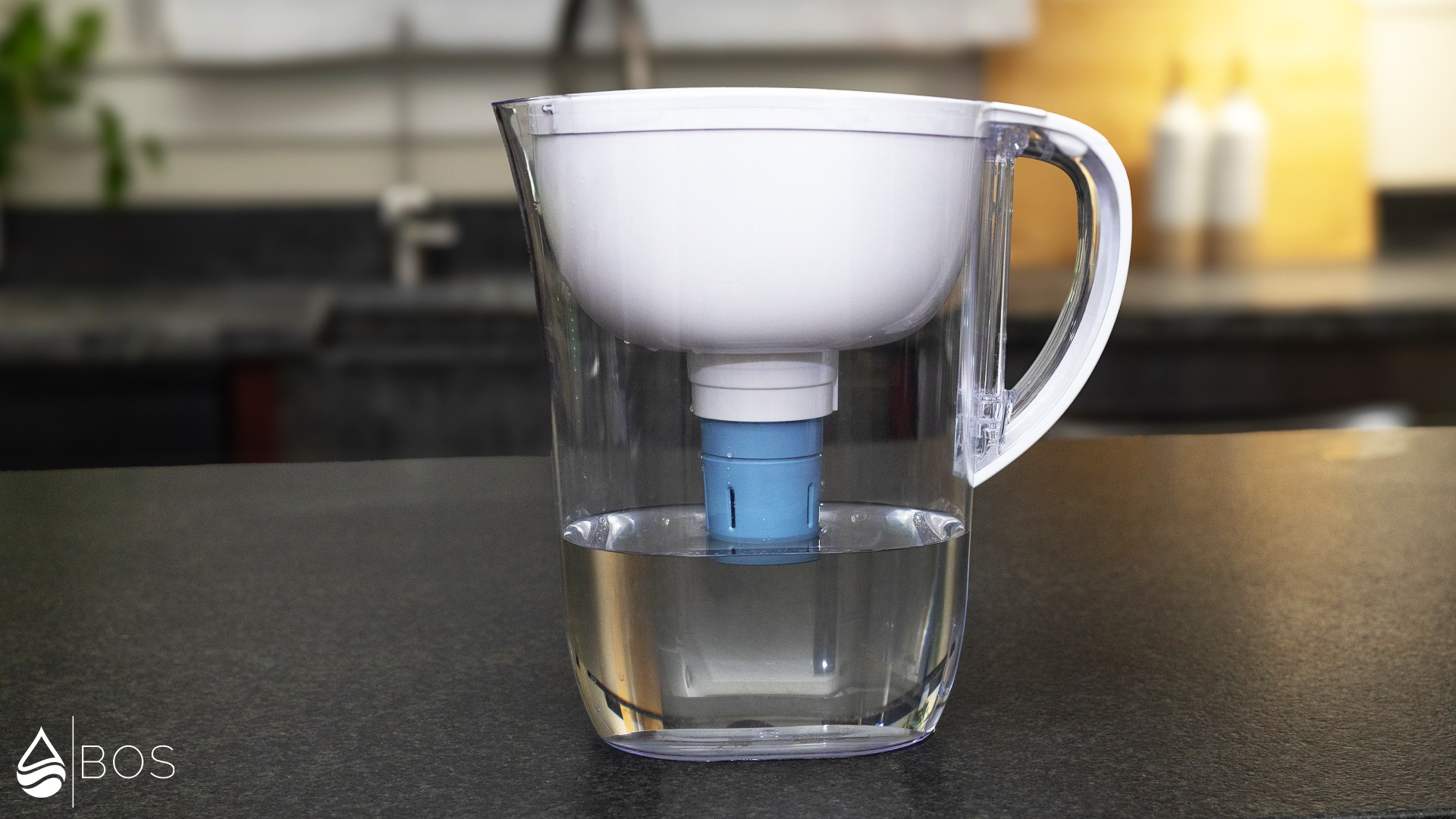

CostsCost scores reflect overall value for money rather than price alone.: /5.00
As of September 16, 2025, the Brita is priced at $40.99, and we estimate $40-45 in annual filter replacement costs – both well below average.
Read Our Full Brita Everyday Elite Review
5. Ideal Pitcher to Protect Your Coffee Maker & Kettle From Limescale: Waterdrop Chubby

Final Rating: /5.00
FiltrationFiltration score combines our lab results and taste testing with NSF/ANSI certifications and 3rd-party contaminant reduction data.: /5.00
Usability: /5.00
CostsCost scores reflect overall value for money rather than price alone.: /5.00
| Type: | Water Filter Pitcher |
| PriceNo short-term sales. (Sep 16, 2025): | $27.49 |
| Yearly CostEstimate is based on rated/claimed filter life and 300 gallons annual water consumption. No short-term sales. (Sep 16, 2025): | ~$56 (Save 5% With Filter Subscription) |
Final Rating: /5.00
In our opinion, the Waterdrop Chubby is ideal to protect your kettle or coffee maker from limescale buildup. In our 2024/2025 lab tests it achieved adequate to mediocre results overall but reduced water hardness by 75%-77%; it only has 2 NSF/ANSI certifications for contaminant reduction and no third party testing. In taste testing, results ranged from much improved compared to our tap water to clean. Usability is solid, and upfront and long-term costs are well below average.
What We Like Most
- Filtered water tasted perfectly clean with no odor (2024 test). Filtered water had a much better taste and no odor (2025 test).
- Sturdy, well-built design with BPA-free materials and a comfortable round wooden handle with organic look.
- Easy setup with clear, illustrated instructions.
- Fast on-demand filtration speed (1 cup in under 30 seconds).
- Large enough to fill a 40-oz bottle in one refill while still fitting in fridge shelves and door.
- Pours smoothly even when pouring fast.
- Easy to refill.
- Filters are easy to replace also thanks to filter life indicator (90-day timer).
- Well below-average upfront and long-term cost.
What We Don’t Like
- Achieved mediocre results in our 2025 lab testing.
- Only 2 NSF/ANSI certifications for contaminant reduction (chlorine + taste/odor) and no additional third-party testing.
- Unfiltered water may escape from the pour-through tab if pitcher is tilted too steeply.
- Short 3-month warranty.
- Third‑party complaints about bad taste/smell, mold or algae growth, inconsistent flow speed, and design flaws.

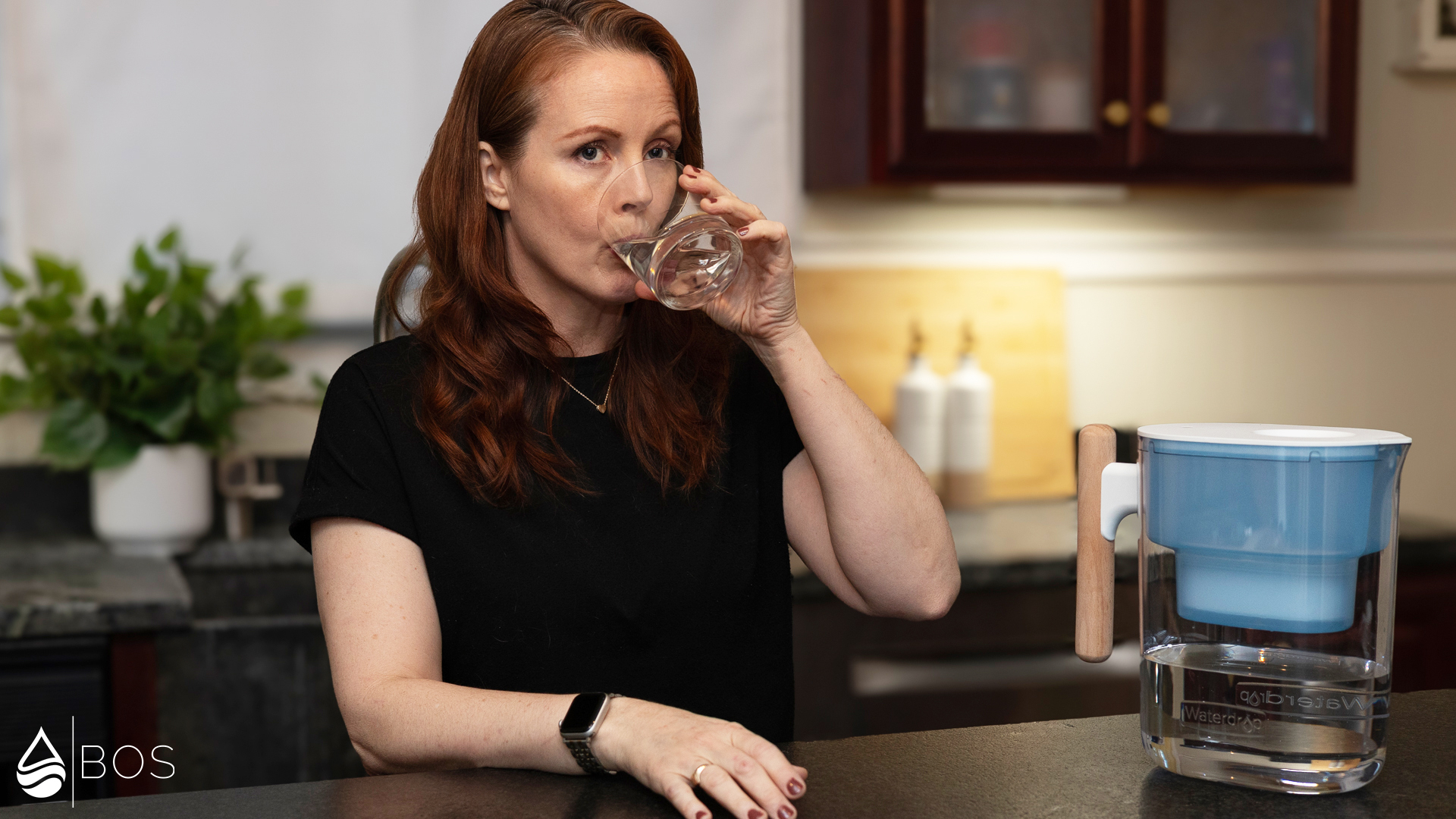
Filtration: /5.00
1. Lab Results: /5.00 (2025) & /5.00 (2024)
- The Waterdrop Chubby could remove only 3 contaminants to 100% (chlorine and 2 disinfection byproducts).
- Not removed to 100% were bromodichloromethane, chloroform, copper, iron, manganese, barium, boron, lithium, strontium, nitrate, fluoride, and uranium. Iron increased post-filtration in 2024 but remained below the EPA secondary standard.
- Hardness/limescale reduced by 77% in 2024 and by 75% in 2025.
- In addition, we detected potential leaching of aluminum but at a level below the strictest available health guidelines.
Lab Results Charts
| Potentially Harmful | Aesthetic Issues | Feed Water Level | Filtered Water Level | Reduction Rate | |
| Water Disinfectants | |||||
| Chlorine (mg/L) | ✖ | ✖ | ~2 | 0 | 100% |
| Disinfection Byproducts (Ultra-High Chloroform) | |||||
| Bromodichloromethane (µg/L) | ✖ | 19.9 | 3.05 | 85% | |
| Dibromochloromethane (µg/L) | ✖ | 5.81 | 0.92 | 84% | |
| Chloroform (µg/L) | ✖ | 1,670 | 190 | 89% | |
| Disinfection Byproducts (VOCs Re-Test) | |||||
| Bromodichloromethane (µg/L) | ✖ | 15.5 | 2.03 | 87% | |
| Dibromochloromethane (µg/L) | ✖ | 4.24 | 0 | 100% | |
| Chloroform (µg/L) | ✖ | 34.7 | 5.93 | 83% | |
| Metals | |||||
| Copper (mg/L) | ✖ | ✖ | 0.0136 | 0.005 | 63% |
| Iron (mg/L) | ✖ | 0.0763 | 0.0695 | 9% | |
| Manganese (mg/L) | ✖ | ✖ | 0.0036 | 0.0029 | 19% |
| Barium (mg/L) | ✖ | 0.0407 | 0.0088 | 78% | |
| Boron (mg/L) | ✖ | 0.0153 | 0.0144 | 6% | |
| Strontium (mg/L) | ✖ | 0.112 | 0.0265 | 76% | |
| Salts | |||||
| Nitrate (N) (mg/L) | ✖ | 2.74 | 1.41 | 49% | |
| Fluoride (mg/L) | ✖ | 0.925 | 0.756 | 18% | |
| Aesthetic Parameters | |||||
| Hardness (mg/L) | ✖ | 59.89 | 15.16 | 75% | |
| Other Parameters | |||||
| pH | 7.8 | 7 | |||
| Impurities NOT Detected in Unfiltered Tap Water Sample | |||||
| Lab Reports (Ultra-High Chloroform): Filtered Water Report, Unfiltered Water Report | |||||
| Lab Reports (VOCs Re-Test): Filtered Water Report, Unfiltered Water Report | |||||
| Chlorine Self Test Photos: Filtered Water, Unfiltered Water | |||||
| Explanation: | |||||
| Full Removal | |||||
| Considerable Reduction | |||||
| Concentration More Than Double of Unfiltered Water Sample | |||||
| Potential Leaching Reached or Exceeded the Strictest Public Health Guideline We Could Find | |||||
| Potentially Harmful | Aesthetic Issues | Feed Water Level | Filtered Water Level | Reduction Rate | |
| Water Disinfectants | |||||
| Chlorine (mg/L) | ✖ | ✖ | 0.2 | 0 | 100% |
| Disinfection Byproducts | |||||
| Bromodichloromethane (µg/L) | ✖ | 0.58 | 0 | 100% | |
| Bromoform (µg/L) | ✖ | 0.75 | 0 | 100% | |
| Dibromochloromethane (µg/L) | ✖ | 0.94 | 0 | 100% | |
| Metals | |||||
| Copper (mg/L) | ✖ | ✖ | 0.01 | 0 | 100% |
| Barium (mg/L) | ✖ | 0.01 | 0 | 100% | |
| Boron (mg/L) | ✖ | 0.04 | 0.03 | 25% | |
| Lithium (mg/L) | ✖ | 0.01 | 0.01 | 0% | |
| Strontium (mg/L) | ✖ | 0.18 | 0.04 | 78% | |
| Salts | |||||
| Nitrate (N) (mg/L) | ✖ | 1.65 | 1.12 | 32% | |
| Fluoride (mg/L) (Flawed?) | ✖ | 0.46 | 0.46 | 0% | |
| Other | |||||
| Uranium (µg/L) | ✖ | 7 | 2 | 71% | |
| Aesthetic Parameters | |||||
| Hardness (mg/L) | ✖ | 111.9 | 25.6 | 77% | |
| Other Parameters | |||||
| Alkalinity (mg/L) | 140 | 105 | 25% | ||
| pH | 7.77 | 7.38 | |||
| Impurities NOT Detected in Unfiltered Tap Water Sample | |||||
| Aluminum (mg/L) | ✖ | ✖ | 0 | 0.01 | |
| Iron (mg/L) | ✖ | 0 | 0.05 | ||
| Lab Reports: Filtered Water Report, Unfiltered Water Report | |||||
| Explanation: | |||||
| Full Removal | |||||
| Considerable Reduction | |||||
| Concentration More Than Double of Unfiltered Water Sample | |||||
| Potential Leaching Reached or Exceeded the Strictest Public Health Guideline We Could Find | |||||
2. NSF/ANSI Certifications and Other Test Data
It only has 2 NSF certifications for contaminant reduction against NSF/ANSI standard 42 for chlorine and taste/odor and has no additional third-party testing.
3. Taste and Odor Tests
In our 2024 and 2025 tests, taste ranged from much improved compared to our tap water to clean. Both years, odor was completely eliminated.
Usability: /5.00
The Waterdrop Chubby is simple to set up, use, and maintain, and it fits in the fridge. It requires an average number of daily refills, made easy with the pour-through tab. Filtration is fast enough for most U.S. households and can even be done on demand (1 cup in under 30 seconds). The pitcher has a comfortable wood handle and pours smoothly without spills. However, we had to allow our pitcher to fully process all the water, or else unfiltered water escaped from the pour-through tab when tilted too steeply.
Filter replacements are also very easy – we estimate 4 annually for most households – and there’s a 90-day timer to remind you.

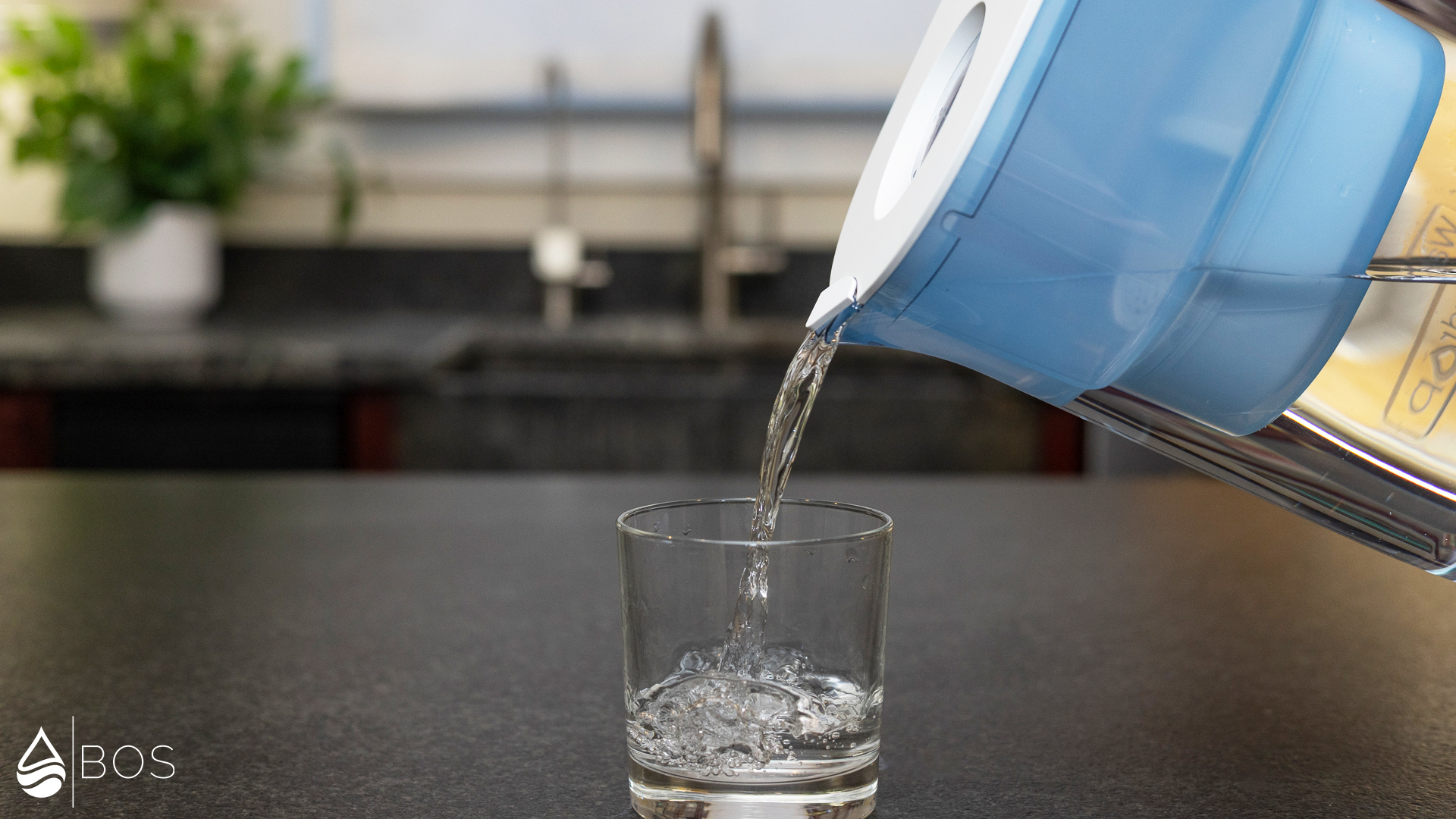
CostsCost scores reflect overall value for money rather than price alone.: /5.00
As of September 16, 2025, the Waterdrop Chubby is priced at $27.49. We estimate $56 in annual filter replacement costs and you can save 5% with a filter subscription. Both upfront and long-term costs are well below average.
Read Our Full Water Chubby Pitcher Review
6. Pitcher for Emergency-Only Germ Reduction: LifeStraw Home 10-Cup
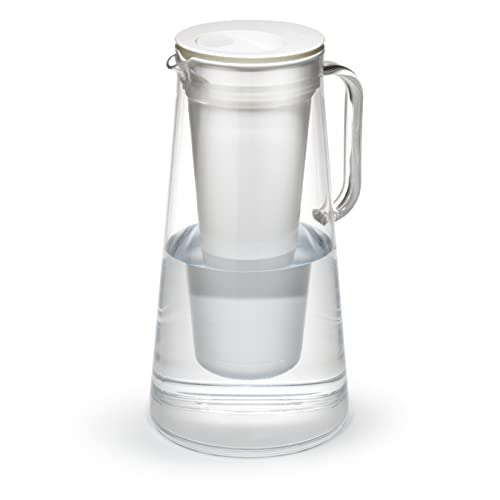
Final Rating: /5.00
FiltrationFiltration score combines our lab results and taste testing with NSF/ANSI certifications and 3rd-party contaminant reduction data.: /5.00
Usability: /5.00
CostsCost scores reflect overall value for money rather than price alone.: /5.00
| Type: | Water Filter Pitcher |
| PriceNo short-term sales. (Sep 16, 2025): | $49.95 |
| Yearly CostEstimate is based on rated/claimed filter life and 300 gallons annual water consumption. No short-term sales. (Sep 16, 2025): | ~$130-135 |
Final Rating: /5.00
We recommend the LifeStraw as a last-resort for germ removal in non-potable water, ideally combined with true disinfection methods. It performed solidly in our lab tests and over half of its third-party testing against 53 contaminants covers pathogenic bacteria and parasites – it has a few NSF/ANSI certifications for chemical removal as well. The pitcher improved water taste – ranging from noticeably better to clean – eliminated odor, and has average overall costs. Usability is mediocre.
What We Like Most
- Achieved solid results in our 2024 and 2025 lab testing.
- Filtered water tasted perfectly clean with no odor (2024 test). Filtered water had a much better taste and no odor (2025 test).
- Some third-party testing for contaminant reduction to 200% filter life (focus: bacteria & parasites).
- Looks modern and is available in different colors.
- Pitcher (not the filter) is dishwasher-safe and built with BPA-free materials.
- Setup is easy with clear, illustrated instructions and a YouTube tutorial video.
- Easy to refill thanks to the pour-through tab.
- Pours smoothly without spilling even when pouring fast.
- Filter replacements are very easy.
- Slightly below-average upfront price compared to other water filter pitchers.
- 3-year warranty.
What We Don’t Like
- Considerable amount of methylene chloride detected in filtered water in our 2024 lab testing (still below strictest health guidelines).
- Only a handful of NSF/ANSI certifications mostly covering “easier-to-remove” impurities.
- On-demand filtering requires patience.
- Smaller feed capacity means more frequent refills + you can’t fill a 40-oz bottle with a single refill.
- May be too tall to fit in most fridges without adjusting shelves.
- Bottom-heavy design with a high, small handle makes pouring a little awkward.
- Unfiltered water may leak from the pour-through tab if tilted too steeply.
- No filter life indicator.
- We estimate annual filter replacement cost to be slightly above the category average.
- Frequent third-party customer complaints about cracked plastic, slow filtration, small feed reservoir, and ergonomic/design concerns.


Filtration: /5.00
1. Lab Results: /5.00 (2025) & /5.00 (2024)
- The LifeStraw could remove 9 contaminants to 100% (chlorine, 4 disinfection byproducts, manganese, strontium, lithium, and barium).
- Not removed to 100% were copper, iron, boron, nitrate, fluoride, and uranium. Iron increased post-filtration (2024) but remained below the level set by the EPA secondary standard.
- In addition, we detected potential leaching of aluminum and methylene chloride, but both at levels below their strictest health guidelines.
Lab Results Charts
| Potentially Harmful | Aesthetic Issues | Feed Water Level | Filtered Water Level | Reduction Rate | |
| Water Disinfectants | |||||
| Chlorine (mg/L) | ✖ | ✖ | ~2 | 0 | 100% |
| Disinfection Byproducts (Ultra-High Chloroform) | |||||
| Bromodichloromethane (µg/L) | ✖ | 19.9 | 0 | 100% | |
| Dibromochloromethane (µg/L) | ✖ | 5.81 | 0 | 100% | |
| Chloroform (µg/L) | ✖ | 1,670 | 0 | 100% | |
| Metals | |||||
| Copper (mg/L) | ✖ | ✖ | 0.0136 | 0.0013 | 90% |
| Iron (mg/L) | ✖ | 0.0763 | 0 | 100% | |
| Manganese (mg/L) | ✖ | ✖ | 0.0036 | 0 | 100% |
| Barium (mg/L) | ✖ | 0.0407 | 0 | 100% | |
| Boron (mg/L) | ✖ | 0.0153 | 0.0123 | 20% | |
| Strontium (mg/L) | ✖ | 0.112 | 0 | 100% | |
| Salts | |||||
| Nitrate (N) (mg/L) | ✖ | 2.74 | 1.15 | 58% | |
| Fluoride (mg/L) | ✖ | 0.925 | 0.828 | 10% | |
| Aesthetic Parameters | |||||
| Hardness (mg/L) | ✖ | 59.89 | 11.36 | 81% | |
| Other Parameters | |||||
| pH | 7.8 | 7.6 | |||
| Impurities NOT Detected in Unfiltered Tap Water Sample | |||||
| Lab Reports (Ultra-High Chloroform): Filtered Water Report, Unfiltered Water Report | |||||
| Chlorine Self Test Photos: Filtered Water, Unfiltered Water | |||||
| Explanation: | |||||
| Full Removal | |||||
| Considerable Reduction | |||||
| Concentration More Than Double of Unfiltered Water Sample | |||||
| Potential Leaching Reached or Exceeded the Strictest Public Health Guideline We Could Find | |||||
| Potentially Harmful | Aesthetic Issues | Feed Water Level | Filtered Water Level | Reduction Rate | |
| Water Disinfectants | |||||
| Chlorine (mg/L) | ✖ | ✖ | 0.2 | 0 | 100% |
| Disinfection Byproducts | |||||
| Bromodichloromethane (µg/L) | ✖ | 0.58 | 0 | 100% | |
| Bromoform (µg/L) | ✖ | 0.75 | 0 | 100% | |
| Dibromochloromethane (µg/L) | ✖ | 0.94 | 0 | 100% | |
| Metals | |||||
| Copper (mg/L) | ✖ | ✖ | 0.01 | 0 | 100% |
| Barium (mg/L) | ✖ | 0.01 | 0 | 100% | |
| Boron (mg/L) | ✖ | 0.04 | 0.02 | 50% | |
| Lithium (mg/L) | ✖ | 0.01 | 0 | 100% | |
| Strontium (mg/L) | ✖ | 0.18 | 0 | 100% | |
| Salts | |||||
| Nitrate (N) (mg/L) | ✖ | 1.65 | <0.5 | Anywhere Between 70% and 99% | |
| Fluoride (mg/L) (Flawed?) | ✖ | 0.46 | 0.43 | 7% | |
| Other | |||||
| Uranium (µg/L) | ✖ | 7 | 1 | 86% | |
| Aesthetic Parameters | |||||
| Hardness (mg/L) | ✖ | 111.9 | 3 | 97% | |
| Other Parameters | |||||
| Alkalinity (mg/L) | 140 | 170 | 21% Increase | ||
| pH | 7.77 | 8.02 | |||
| Impurities NOT Detected in Unfiltered Tap Water Sample | |||||
| Aluminum (mg/L) | ✖ | ✖ | 0 | 0.01 | |
| Iron (mg/L) | ✖ | 0 | 0.04 | ||
| Methylene Chloride (µg/L) | ✖ | 0 | 1.4 | ||
| Lab Reports: Filtered Water Report, Unfiltered Water Report | |||||
| Explanation: | |||||
| Full Removal | |||||
| Considerable Reduction | |||||
| Concentration More Than Double of Unfiltered Water Sample | |||||
| Potential Leaching Reached or Exceeded the Strictest Public Health Guideline We Could Find | |||||
2. NSF/ANSI Certifications and Other Test Data
It is certified for the reduction of 6 contaminants by the NSF against NSF/ANSI Standards 42, 53, and 401, including chlorine (>97.00%), lead (>98.90%), and microplastics (>99.999%).
It also has third-party testing for the reduction of 53 contaminants to 200% filter life against NSF/ANSI standards 53, 401, NSF P231 and other non-NSF standards. Included are pesticides/herbicides (95.00-99.94%+), PFOA/PFOS, various emerging contaminants (88.85-99.45%+), 4 heavy metals including chromium 3 (>84.70%) and barium (>99.21%), as well as several pathogenic bacteria (>99.999999%) and parasites (>99.999%).
3. Taste and Odor Tests
In our 2024 and 2025 tests, taste ranged from much improved from our tap water to clean. Odor was completely eliminated both years.
Usability: /5.00
The LifeStraw pitcher is easy to setup and maintain though slightly impractical for daily use. Its small feed relative to filtered capacity necessitates more frequent refills, though it stores plenty of water and filters fast enough for most US households. It’s too tall to fit in most standard fridges without moving shelves around.
Bottom-heavy with a high, small handle, the LifeStraw feels somewhat awkward and unbalanced, though it pours smoothly without spills. Care must be taken not to tilt too steeply while there’s still unfiltered water left, or it may escape from the pour-through tab.
Refilling is fairly easy but subject to faucet size and adjustments may be needed to avoid splashing. The two-part filter assembly is simple to replace with the carbon filter requiring more frequent changes (7.5x annually). There is no filter indicator to remind you.


CostsCost scores reflect overall value for money rather than price alone.: /5.00
As of September 16, 2025, the LifeStraw is priced at $49.95, and we estimate $130-135 in annual filter replacement costs. Upfront price is slightly below average and long-term cost is slightly above average.
Read Our Full LifeStraw Home 10-Cup Review
7. Admirable Filtration but No Match for Better-Priced Pitchers: ZeroWater 10-Cup Ready-Pour

Final Rating: /5.00
FiltrationFiltration score combines our lab results and taste testing with NSF/ANSI certifications and 3rd-party contaminant reduction data.: /5.00
Usability: /5.00
CostsCost scores reflect overall value for money rather than price alone.: /5.00
| Type: | Water Filter Pitcher |
| PriceNo short-term sales. (Sep 16, 2025): | $37.99 |
| Yearly CostEstimate is based on rated/claimed filter life and 300 gallons annual water consumption. No short-term sales. (Sep 16, 2025): | ~$285 |
Final Rating: /5.00
We were impressed by the ZeroWater 10-Cup Ready-Pour, as it achieved solid (2024) and excellent (2025) results in our lab tests. Plus, it has a few important NSF/ANSI certifications for contaminant reduction and third-party testing to 100% filter life for 24 impurities – primarily for metal/salt removal. In taste tests, the filtered water ranged from better than our tap water but with a faint plastic flavor added to a clean taste. Usability is adequate and the upfront price is low, though ongoing costs are substantially higher than average.
What We Like Most
- Achieved solid results in our 2024 and excellent results in our 2025 lab testing.
- Filtered water tasted perfectly clean with no odor (2024 test).
- Handful of NSF/ANSI certifications covering important contaminants and extensive third-party testing for metal/salt reduction to 100% filter life (we miss most organics).
- Sturdy, well-built design with BPA-free materials.
- Setup is easy with clear, illustrated instructions.
- Feels good to handle and pours smoothly.
- Convenient push-button dispensing.
- Big enough to fill a 40-oz bottle with a single refill while still fitting easily in fridge shelves and doors.
- Filter replacements are very easy.
- Well below-average upfront price compared to other water filter pitchers.
What We Don’t Like
- Higher level of copper detected in filtered water in our 2024 lab testing (below strictest health guidelines).
- Inconsistent DBP reduction was observed in our newest tests, and testing yet another ZeroWater filter element also showed potential problems filtering chloroform.
- Filtered water was odor-free but had a very faint plastic taste (2025 test).
- “0 TDS approach” can be misleading (0 TDS does not necessarily mean pure water).
- On-demand filtering requires patience.
- Lid may fall off when pouring too fast or holding the pitcher too steeply.
- Lid must be removed for refilling.
- Very short 15-gallon filter lifespan requiring frequent replacements.
- No filter life indicator (though the included TDS meter helps track status).
- We estimate the annual filter replacement cost to be substantially above the category average.
- Short 90-day warranty.
- Frequent third-party customer complaints include issues with taste and smell, slow filtration/clogged filters, poor design, and leaking filters.

Filtration: /5.00
1. Lab Results: /5.00 (2025) & /5.00 (2024)
- The ZeroWater could remove 9 contaminants to 100% (chlorine, 2 disinfection byproducts, barium, lithium, strontium, manganese, nitrate, and uranium).
- Not removed to 100% were bromodichloromethane, chloroform, copper (even increased by 1,100% in 2024 but was still below the strictest health guideline), boron, and fluoride.
- In addition, we detected potential leaching of aluminum, iron, and zinc, but all at levels below the strictest available health guidelines or EPA secondary standards, as applicable.
Lab Results Charts
| Potentially Harmful | Aesthetic Issues | Feed Water Level | Filtered Water Level | Reduction Rate | |
| Water Disinfectants | |||||
| Chlorine (mg/L) | ✖ | ✖ | ~2 | 0 | 100% |
| Disinfection Byproducts (Ultra-High Chloroform) | |||||
| Bromodichloromethane (µg/L) | ✖ | 19.9 | 0.75 | 96% | |
| Dibromochloromethane (µg/L) | ✖ | 5.81 | 0 | 100% | |
| Chloroform (µg/L) | ✖ | 1,670 | 98.2 | 94% | |
| Disinfection Byproducts (VOCs Re-Test) | |||||
| Bromodichloromethane (µg/L) | ✖ | 15.5 | 8.48 | 45% | |
| Dibromochloromethane (µg/L) | ✖ | 4.24 | 2.38 | 44% | |
| Chloroform (µg/L) | ✖ | 34.7 | 20.4 | 41% | |
| Metals | |||||
| Copper (mg/L) | ✖ | ✖ | 0.0136 | 0.0024 | 82% |
| Iron (mg/L) | ✖ | 0.0763 | 0 | 100% | |
| Manganese (mg/L) | ✖ | ✖ | 0.0036 | 0 | 100% |
| Barium (mg/L) | ✖ | 0.0407 | 0 | 100% | |
| Boron (mg/L) | ✖ | 0.0153 | 0 | 100% | |
| Strontium (mg/L) | ✖ | 0.112 | 0 | 100% | |
| Salts | |||||
| Nitrate (N) (mg/L) | ✖ | 2.74 | 0 | 100% | |
| Fluoride (mg/L) | ✖ | 0.925 | 0 | 100% | |
| Aesthetic Parameters | |||||
| Hardness (mg/L) | ✖ | 59.89 | 0.25 | 100% | |
| Other Parameters | |||||
| pH | 7.8 | 5.9 | |||
| Impurities NOT Detected in Unfiltered Tap Water Sample | |||||
| Lab Reports (Ultra-High Chloroform): Filtered Water Report, Unfiltered Water Report | |||||
| Lab Reports (VOCs Re-Test): Filtered Water Report, Unfiltered Water Report | |||||
| Chlorine Self Test Photos: Filtered Water, Unfiltered Water | |||||
| Explanation: | |||||
| Full Removal | |||||
| Considerable Reduction | |||||
| Concentration More Than Double of Unfiltered Water Sample | |||||
| Potential Leaching Reached or Exceeded the Strictest Public Health Guideline We Could Find | |||||
| Potentially Harmful | Aesthetic Issues | Feed Water Level | Filtered Water Level | Reduction Rate | |
| Water Disinfectants | |||||
| Chlorine (mg/L) | ✖ | ✖ | 0.2 | 0 | 100% |
| Disinfection Byproducts | |||||
| Bromodichloromethane (µg/L) | ✖ | 0.58 | 0 | 100% | |
| Bromoform (µg/L) | ✖ | 0.75 | 0 | 100% | |
| Dibromochloromethane (µg/L) | ✖ | 0.94 | 0 | 100% | |
| Metals | |||||
| Copper (mg/L) | ✖ | ✖ | 0.01 | 0.12 | 1,100% Increase |
| Barium (mg/L) | ✖ | 0.01 | 0 | 100% | |
| Boron (mg/L) | ✖ | 0.04 | 0.01 | 75% | |
| Lithium (mg/L) | ✖ | 0.01 | 0 | 100% | |
| Strontium (mg/L) | ✖ | 0.18 | 0 | 100% | |
| Salts | |||||
| Nitrate (N) (mg/L) | ✖ | 1.65 | 0 | 100% | |
| Fluoride (mg/L) (Flawed?) | ✖ | 0.46 | <0.1 | Anywhere Between 78% and 99% | |
| Other | |||||
| Uranium (µg/L) | ✖ | 7 | 0 | 100% | |
| Aesthetic Parameters | |||||
| Hardness (mg/L) | ✖ | 111.9 | 0.3 | 100% | |
| Other Parameters | |||||
| Alkalinity (mg/L) | 140 | 20 | 86% | ||
| pH | 7.77 | 6.26 | |||
| Impurities NOT Detected in Unfiltered Tap Water Sample | |||||
| Aluminum (mg/L) | ✖ | ✖ | 0 | 0.01 | |
| Iron (mg/L) | ✖ | 0 | 0.01 | ||
| Zinc (mg/L) | ✖ | 0 | 0.03 | ||
| Lab Reports: Filtered Water Report, Unfiltered Water Report | |||||
| Explanation: | |||||
| Full Removal | |||||
| Considerable Reduction | |||||
| Concentration More Than Double of Unfiltered Water Sample | |||||
| Potential Leaching Reached or Exceeded the Strictest Public Health Guideline We Could Find | |||||
2. NSF/ANSI Certifications and Other Test Data
The pitcher is certified for the reduction of 7 contaminants by the IAPMO against NSF/ANSI standards 42 and 53. These certifications include chlorine (97.50%), lead (95.90-99.70%), PFOA/PFOS (94.90%), and hexavalent chromium (99.60%).
It also has third-party testing for the removal of 24 substances against NSF/ANSI standards 42, 53 and other non-NSF/ANSI standards, primarily covering metals and salts (most organics are not covered) to 100% filter life. Listed reduction rates include: antimony (99.00%), arsenic 5 (98.00%), beryllium (99.90%), cyanide (99.90%), nitrate (98.00%), and fluoride (99.00%).
3. Taste and Odor Tests
In our 2024 and 2025 tests, taste ranged from better than our tap water with a faint plastic flavor added to clean. Both years, odor was completely eliminated.
Usability: /5.00
The ZeroWater is easy to set up, use, and maintain, and it fits in the fridge. It requires an average number of daily refills – easy to do but you have to remove the lid. Filtration is fast enough for most U.S. households but on-demand filtering takes patience.
The ZeroWater feels good in hand, though plan to use both when pouring from the top of the pitcher – we felt the need to support it in front. It pours smoothly but the lid may fall off if you pour too fast or tilt it too steeply to get the remaining bit of water out. The sturdy pour spout on the bottom allows for smooth dispensing without lifting the pitcher.
Filter replacements are also very easy – if following its 15-gallon rated filter life, we estimate every 2-3 weeks for most households. There’s no filter replacement indicator but a TDS meter.
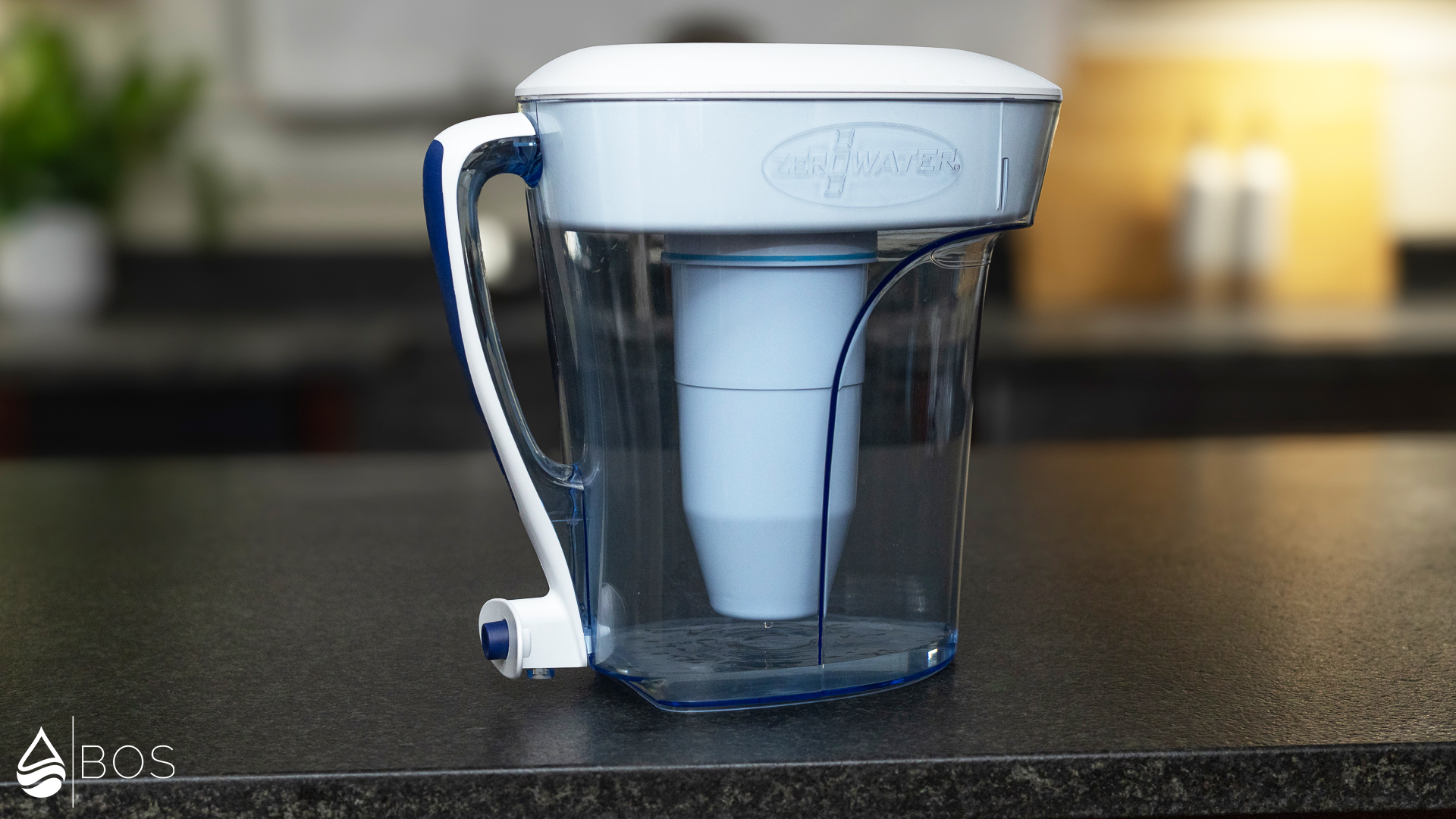

CostsCost scores reflect overall value for money rather than price alone.: /5.00
As of September 16, 2025, the ZeroWater is priced at $37.99, and we estimate $285 in annual filter replacement costs. While upfront price is well below average, long-term costs are substantially higher than average.
Other Water Filter Pitchers We Tested
While the pitchers above performed best in our testing, we evaluated 14 models in total.
Other Solid Options (Final Rating 3.5 or Higher)
The following pitchers didn’t make the cut, but may still be worth considering:
Models We Don’t Recommend (Final Rating Lower Than 3.5)
These are the pitchers we don’t recommend based on our test results:
Buying Guide: How to Choose a Water Filter Pitcher
Trying to figure out which water filter pitcher is right for you? This guide covers the key points to consider so you can choose a system that actually fits your needs.
Water Contaminants
If you’re only concerned with taste and odor, you mainly need a pitcher that targets aesthetic contaminants (especially chlorine/chloramine). But if you’re also concerned about health-related contaminants, you need to make sure the pitcher you’re buying is capable of reducing the specific harmful substances that may be present in your water supply. There are two main ways to approach this:
- Conduct a test of your home’s water supply:
- Order an inexpensive water test kit online or visit a local hardware store and test the water yourself. Your local health department may also offer test kits.
- Alternatively, hire a professional lab to analyze a sample of water taken from your home. This is recommended by both the EPA and us at BOS Water and is more reliable than DIY home test kits. Two examples of such lab services are Tap Score and ETR Labs.
- Collect information about your city or town’s water supply:
- Contact your city administration and request annual water quality reports, called Consumer Confidence Reports (every public water utility is required to provide these for free).
- Alternatively, you can browse the EPA’s directory to find these reports, which is usually faster.
- Another option is to use this link to access the EWG Tap Water Database, which aggregates and analyzes the same Consumer Confidence Reports to make public water quality easier to assess.
- Problems with this approach:
- You can’t tell whether additional contaminants may enter your water along the way from the utility to your home.
- This approach does not apply if you rely on private well water.
Filtration Performance: NSF/ANSI Testing & Certificates
Once you know which contaminants and impurities you’re dealing with, look for a water filter pitcher that is NSF/ANSI-certified to reduce those substances. Alternatively, you can consider a pitcher backed by independent third-party test data covering the relevant contaminants through ideally 100% of the filter’s rated life (or longer).
You should pay particular attention to the following NSF/ANSI standards:
- 42 – water aesthetics (i.e., chlorine, chloramine, and taste & odor)
- 53 – health-related contaminants such as asbestos, volatile organic compounds (VOCs), PFOA/PFOS, certain salts including nitrate and fluoride, and heavy metals including lead, mercury, and chromium-6
- 401 – emerging contaminants like over-the-counter and prescription drugs, herbicides, and pesticides
At BOS Water, we submit unfiltered and filtered tap water samples to a professional lab for analysis to determine the real-world contaminant reduction performance of each pitcher filter. We share the resulting lab data in the filtration tab(s) of our comparison sheet.
Did You Know?
NSF/ANSI certification means a water filter has been tested against one or more NSF/ANSI standards using standardized testing procedures. These procedures are designed to measure how effectively a filter reduces a specific contaminant, such as lead. Standardized testing is important because it allows for meaningful comparisons between different water filters. In addition, during NSF/ANSI certification, a filter is tested for contaminant reduction across its entire rated filter life, not just at the beginning. NSF/ANSI certifications can be awarded by NSF, WQA, and IAPMO. All three organizations are ANSI-accredited and equivalent in that sense. They are also independent from the applying water filter company, which makes their certification results reliable.
Aside from NSF/ANSI certifications, a filter company may also publish its own third-party test data. However, such data should always be interpreted cautiously, as testing is often performed only at the beginning of the filter’s life rather than at or near the end, and may not fully follow the test protocols and performance requirements defined in the applicable NSF/ANSI standards.
Usability
We get it – it’s hard to judge a pitcher’s usability before you actually get the chance to use it. Still, you can review the user manual, the product listing on the manufacturer’s website, and videos on YouTube to gather useful information in advance.
In addition, we cover all usability aspects of each pitcher we test in detail in this comparison and our dedicated reviews. Check those out to see whether the model you’re considering meets your specific requirements.
Pitcher Assembly and Filter Priming
Fortunately, most water filter pitchers are easy to set up. In most cases, the filter is inserted into the upper feed reservoir, sometimes after first rinsing or soaking it. The feed reservoir is then filled with water, and one or more batches of filtered water are discarded prior to first use.
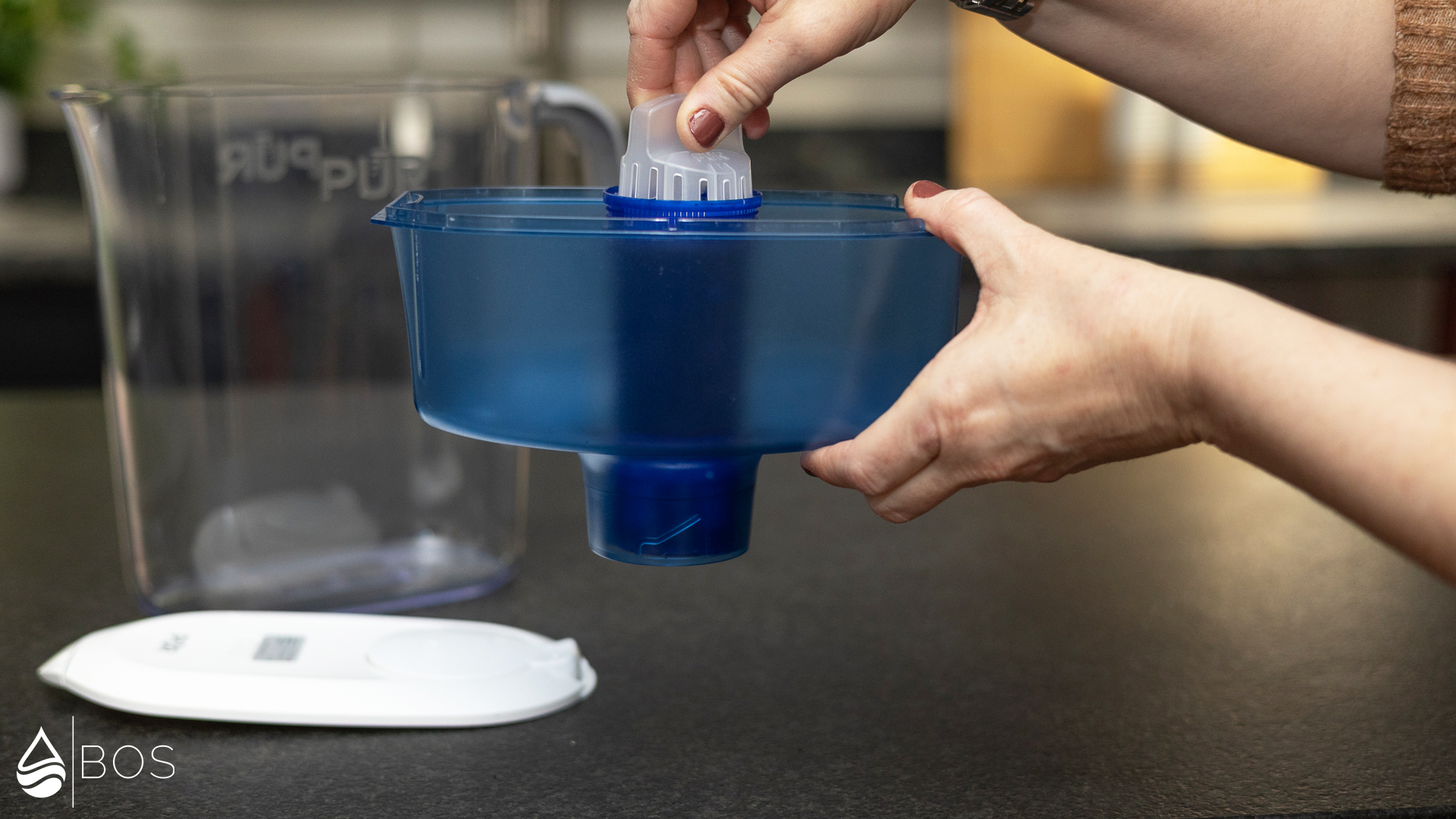

Most pitchers come with clear, illustrated instructions that are sufficient to get you started. Many manufacturers also provide a tutorial video on their website or YouTube, occasionally with a linked QR code for easy access.
Some pitchers include filter priming assemblies that attach directly to your faucet. Depending on the size and shape of your faucet, you may run into fit or compatibility issues.
One pitcher, the Clearly Filtered, includes a priming bag that forcefully pushes water through the filter prior to installation. This reduces the overall priming time, as you don’t need to wait for real-time filtration during setup.
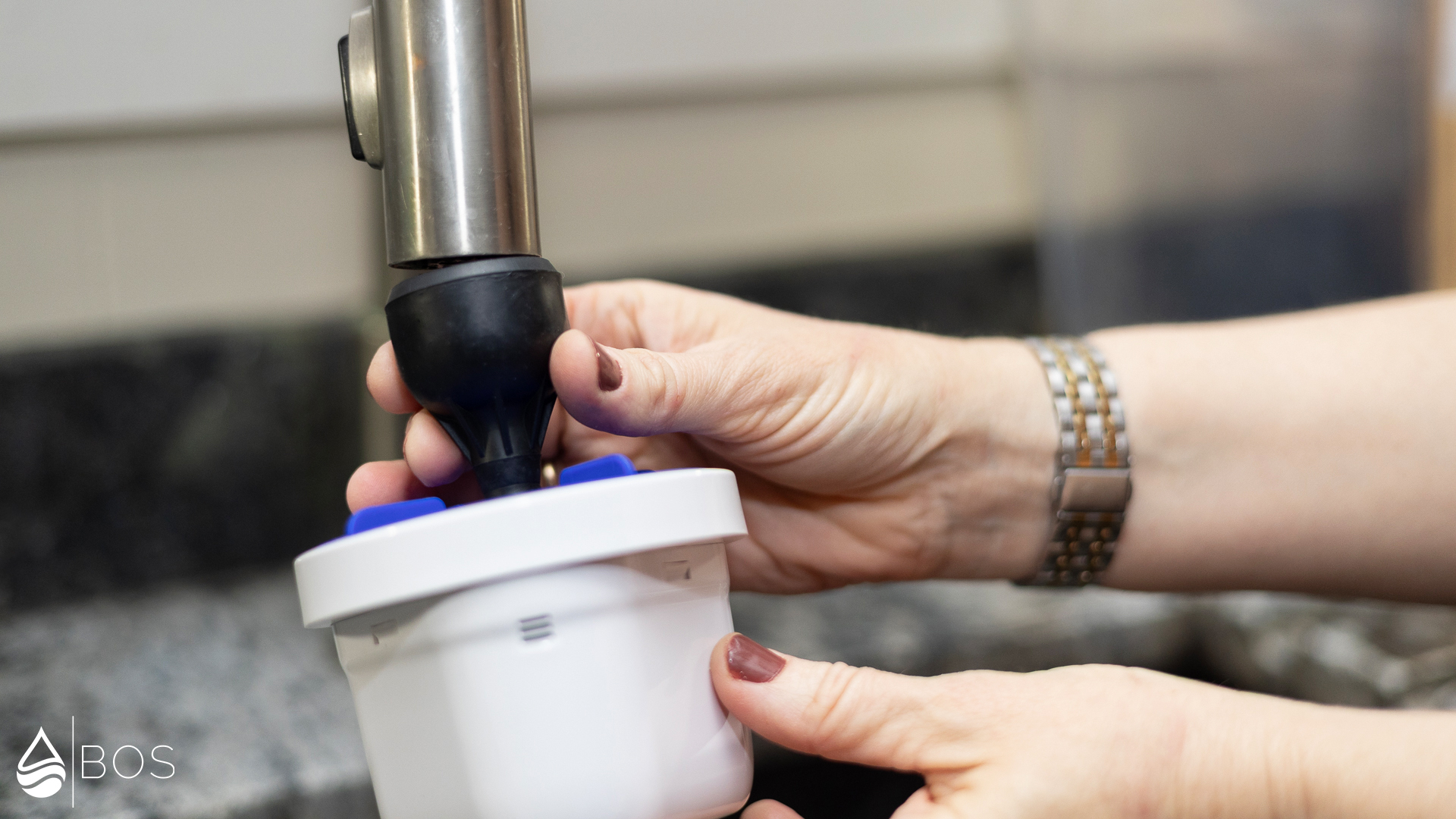
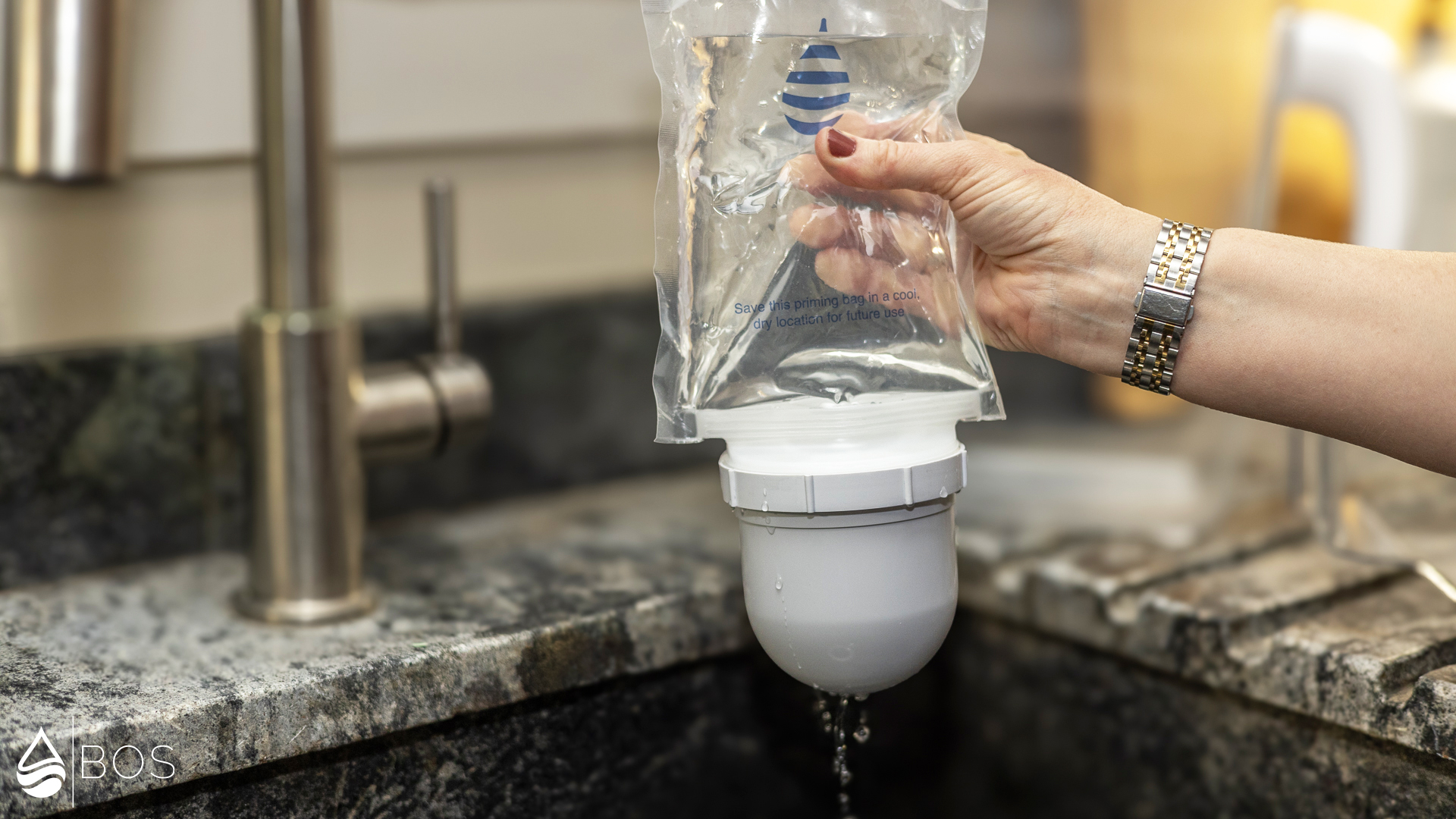
Everyday Use
Filtration Speed and Water Capacity
With almost all water filtration methods, there’s a tradeoff between filtration speed and filtration effectiveness. Contaminant removal is highly dependent on contact time between the water and the filter media — longer contact times generally lead to better results, and vice versa.
Consider your household size: a very slow pitcher or one with small feed or filtered reservoirs is unlikely to be a good fit for larger households. If you want to handle occasional “thirst bursts,” you’ll want a pitcher that can filter a sufficient volume of water quickly enough to meet the needs of multiple people. Check out our comparison sheet to compare filtration speed test results, fewer or more daily refills than average, feed and filtered reservoir sizes, on-demand filtering capabilities, and whether a pitcher can fill a large 40-oz bottle with a single refill.
Note that while larger feed and filtered reservoirs store more water and require fewer refills, they also make for a larger and heavier pitcher. A full 10-cup pitcher, for example, can be quite heavy to lift and pour. Of course, you can choose not to fill your pitcher all the way, but that means you’ll need to refill it more often. Likewise, pitchers with unbalanced reservoir designs — where the filtered capacity is two to four times larger than the feed capacity — require more frequent top-ups. Finally, check the dimensions to make sure the pitcher will fit on your fridge door or shelves.

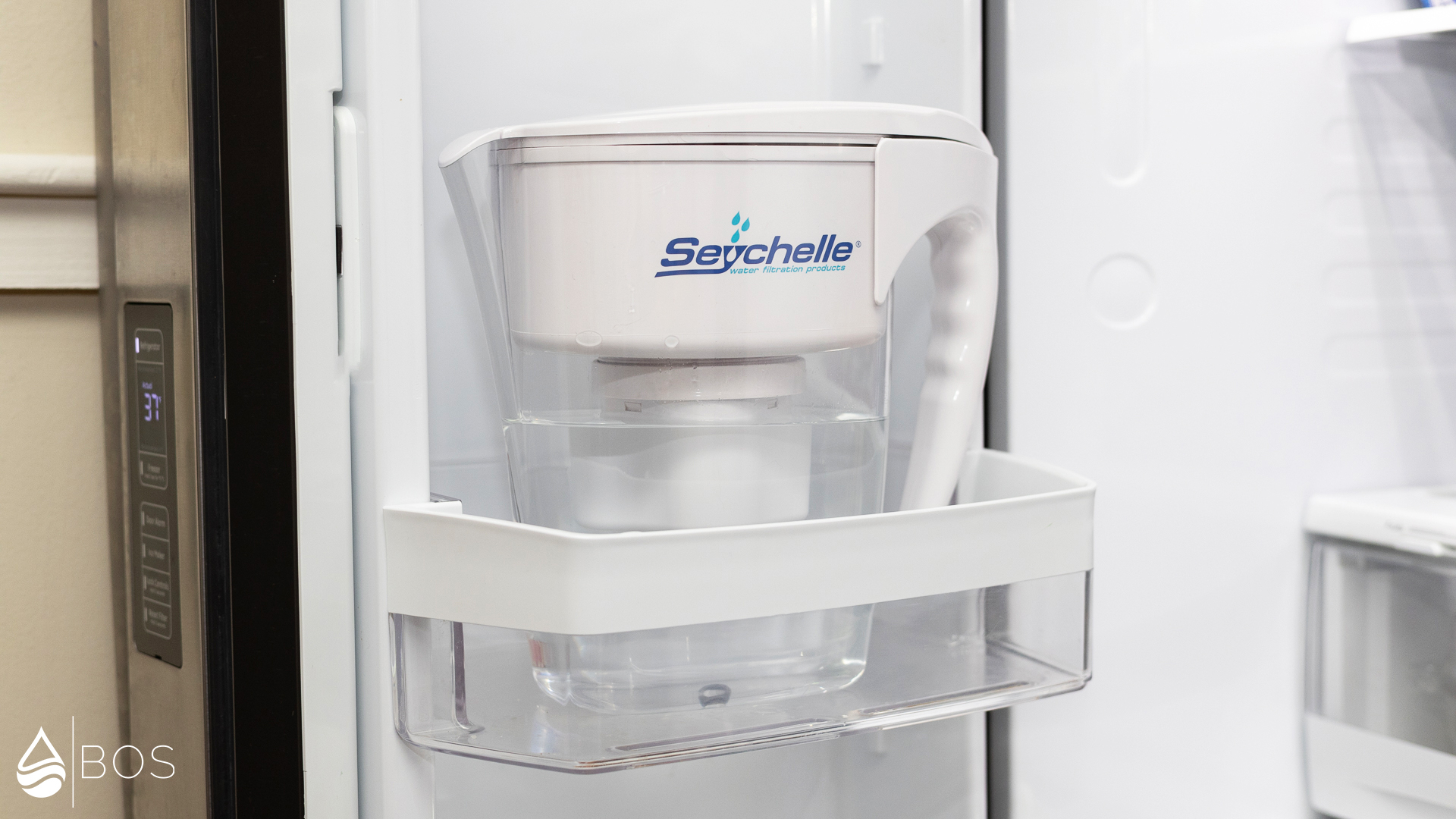
Handling & Pouring
Consider the pitcher’s size and weight (without water). Heavier pitchers may feel sturdier or contain more filter media (which can improve filtration performance), but they can also be more difficult to handle.
Look at the shape and structure of the handle — flat or curved, thick or thin, plastic or wood — and consider what will feel most natural and comfortable to hold.
Does the pitcher have a dispensing spout so that you don’t need to lift and pour it? (Most pitchers do not.)
Some handling issues are difficult to predict without physically using the pitcher. For example, during our testing, we found that some pitchers tend to mix unfiltered water with filtered water when pouring, especially if tilted too steeply. To prevent this, you must allow all unfiltered water in the feed reservoir to be fully processed first. Others have a tendency to splash if poured too quickly.
Other documented issues include pour spouts getting stuck and causing messy pouring, lids that are hard to reattach or that pop off during pouring, and pour-through tabs that get stuck open during refilling. We address these and other pouring concerns in our reviews, where we highlight quirks and pitfalls observed for each model. We tested them all so you don’t have to — check the usability sections to see whether the pitcher you’re considering has any undesirable handling characteristics.
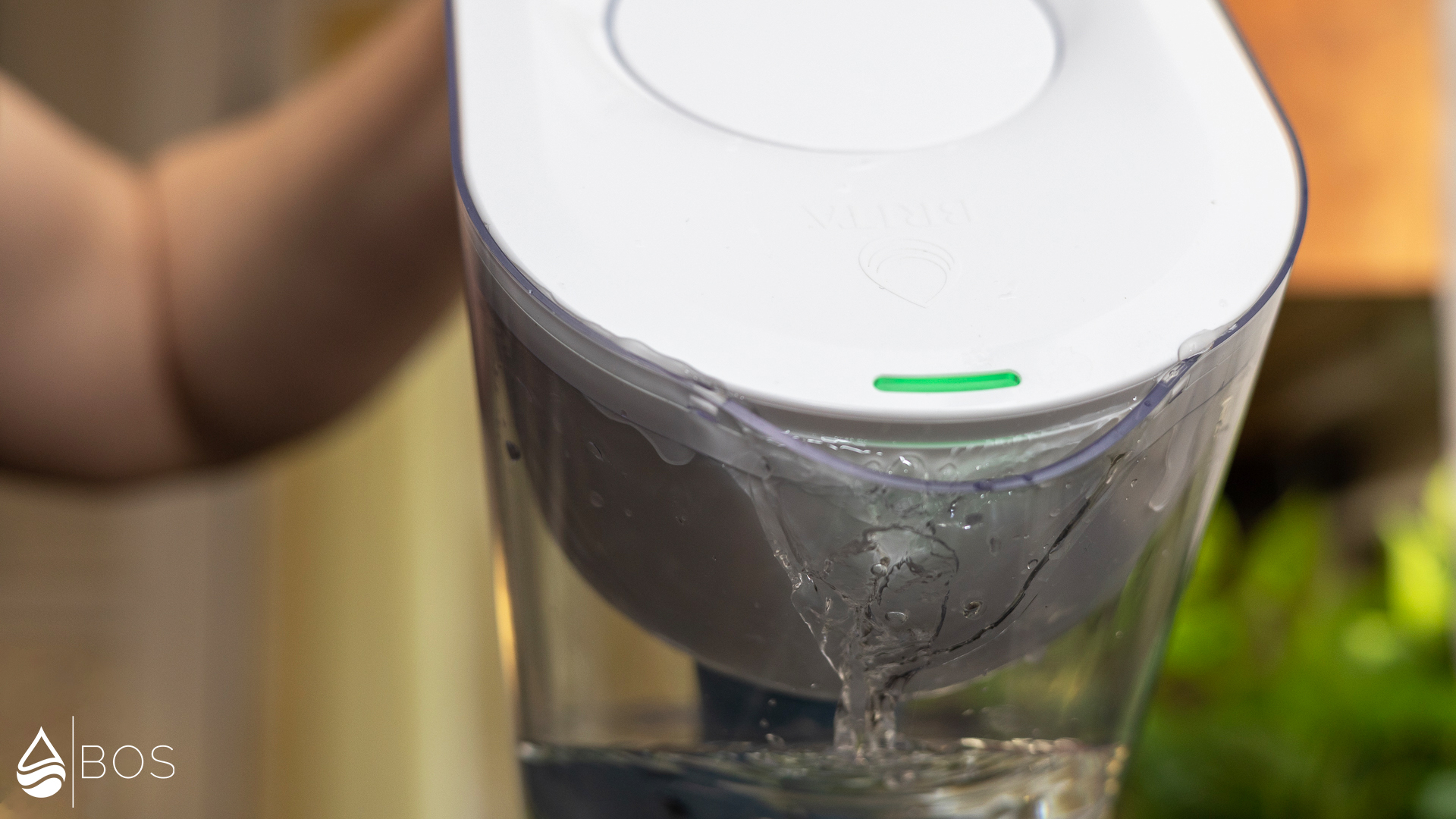
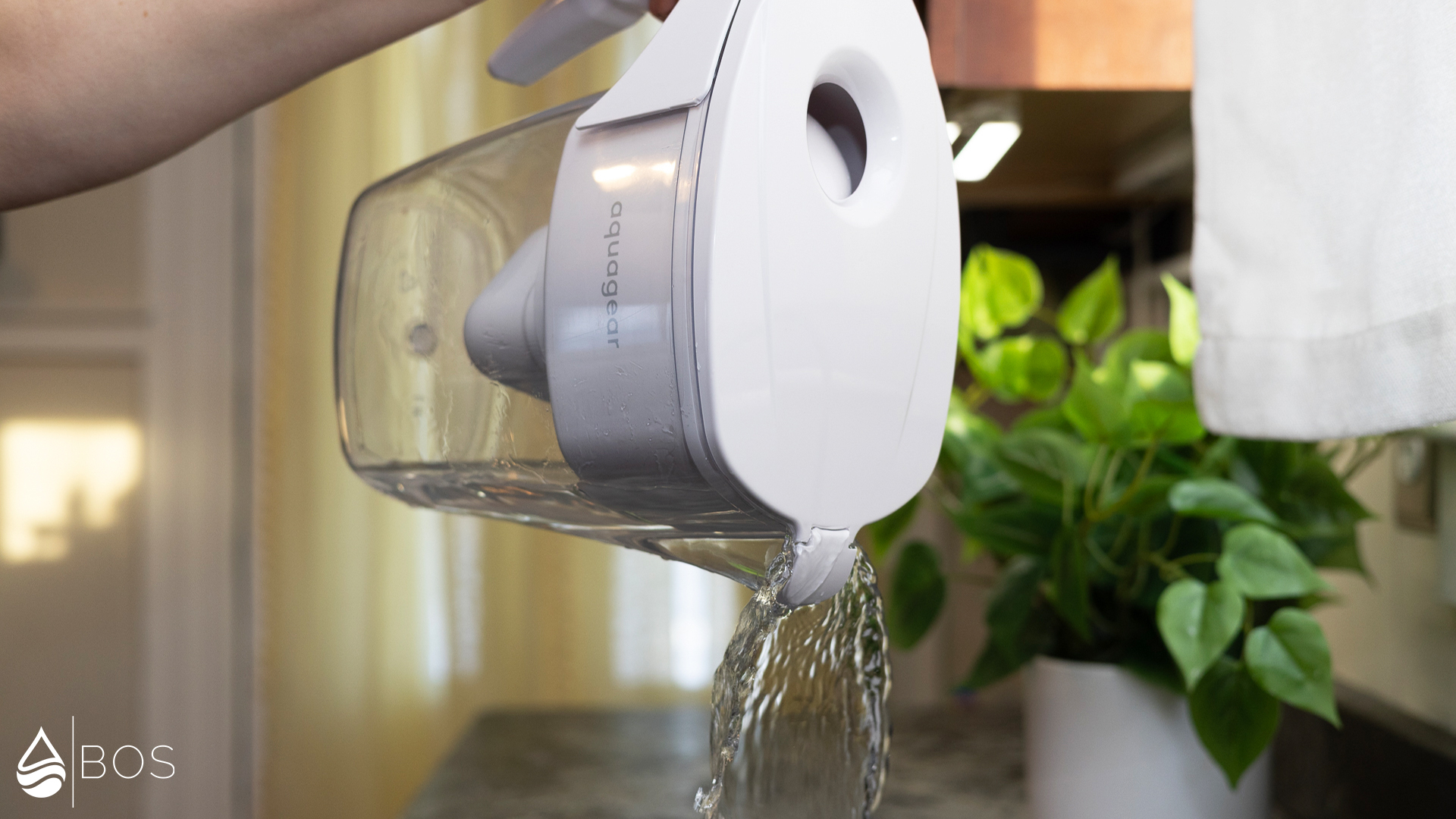
Refilling
Flip-top lids, pour-through tabs, and removable lids are the most common options, with the first two generally being more convenient.
Depending on the size and spray pattern of your faucet, pour-through tabs can sometimes be messier than flip-top lids.
Some pitchers feature clear upper reservoirs, allowing you to see how much water remains to be filtered. This helps prevent pouring while unfiltered water is still present in the feed reservoir, reducing the risk of leakage.
Expect more frequent refills with smaller feed and filtered reservoir capacities.

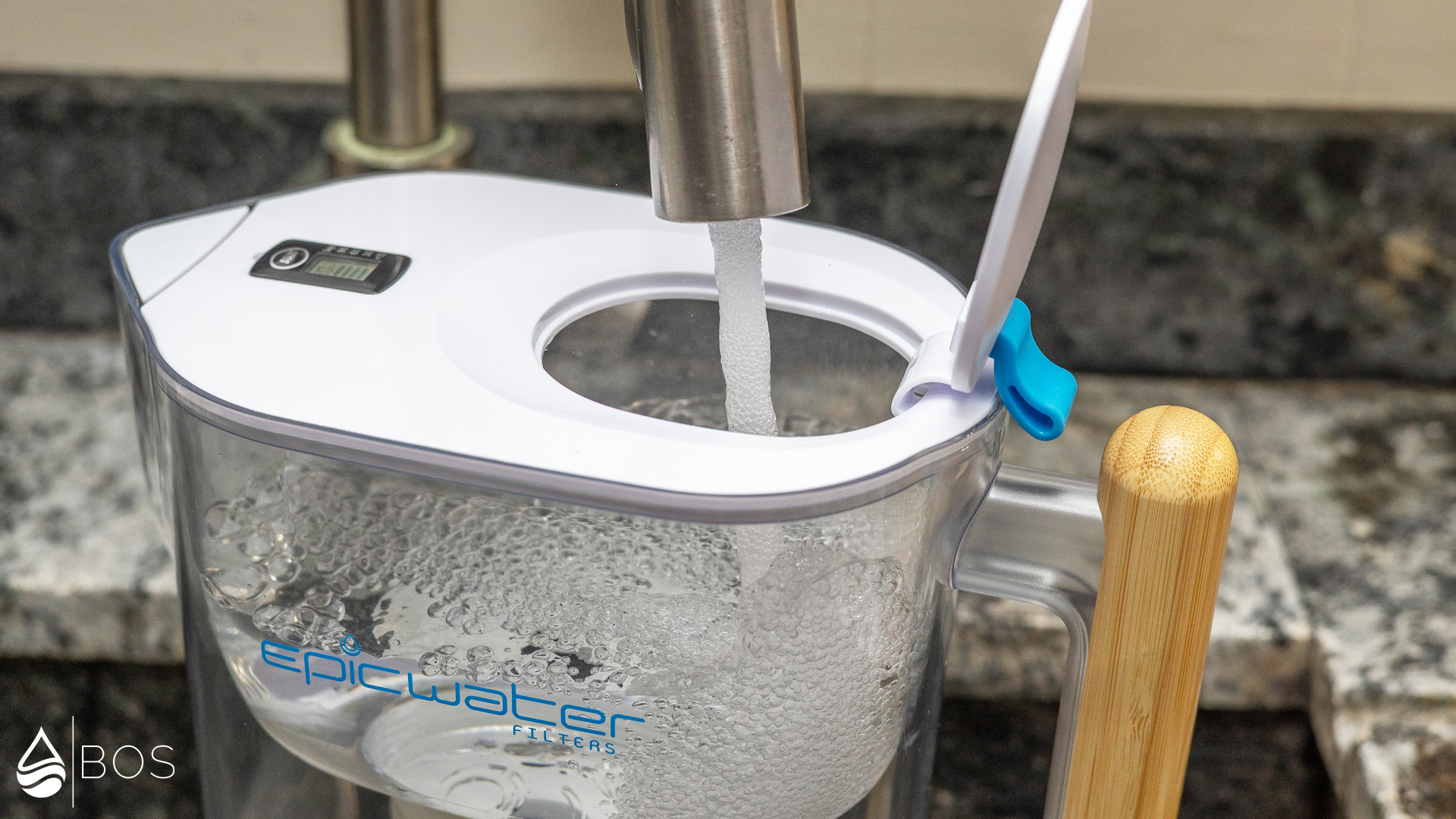
Filter Replacement and Other Maintenance Tasks
Consider both the rated filter life and your average water consumption to determine how often you’ll need to replace filters. While the replacement process is usually straightforward, changing filters every two to three weeks can become tedious (and expensive).
At the same time, be skeptical of claims about unusually long filter lifespans, especially when they are not supported by NSF/ANSI certifications or third-party testing through 100% of the rated filter life.
Some pitchers include filter replacement indicators that track either elapsed time or the number of refills. Others may feature built-in TDS meters, though we’re not fans of using TDS measurements to assess water quality. You can read why here.
That said, we’re not particularly enthusiastic about filter life indicators either. They’re often inaccurate and typically track time rather than actual water usage. If you do want a pitcher with a filter life indicator, we recommend choosing one that tracks refills or actual water usage instead of elapsed time. Two pitchers we tested that do this are the Brita Everyday Elite (tracks refills) and the LARQ Pitcher PureVis (uses a sensor and app to track water usage). As discussed in the next section, a filter’s capacity — and therefore its lifespan — is usually measured in gallons, which makes tracking actual water volume more meaningful than tracking time alone.
Regardless of whether the pitcher you choose includes a filter life indicator, you can always take the old-fashioned approach: write down the date of your last filter change and estimate your average daily water consumption.
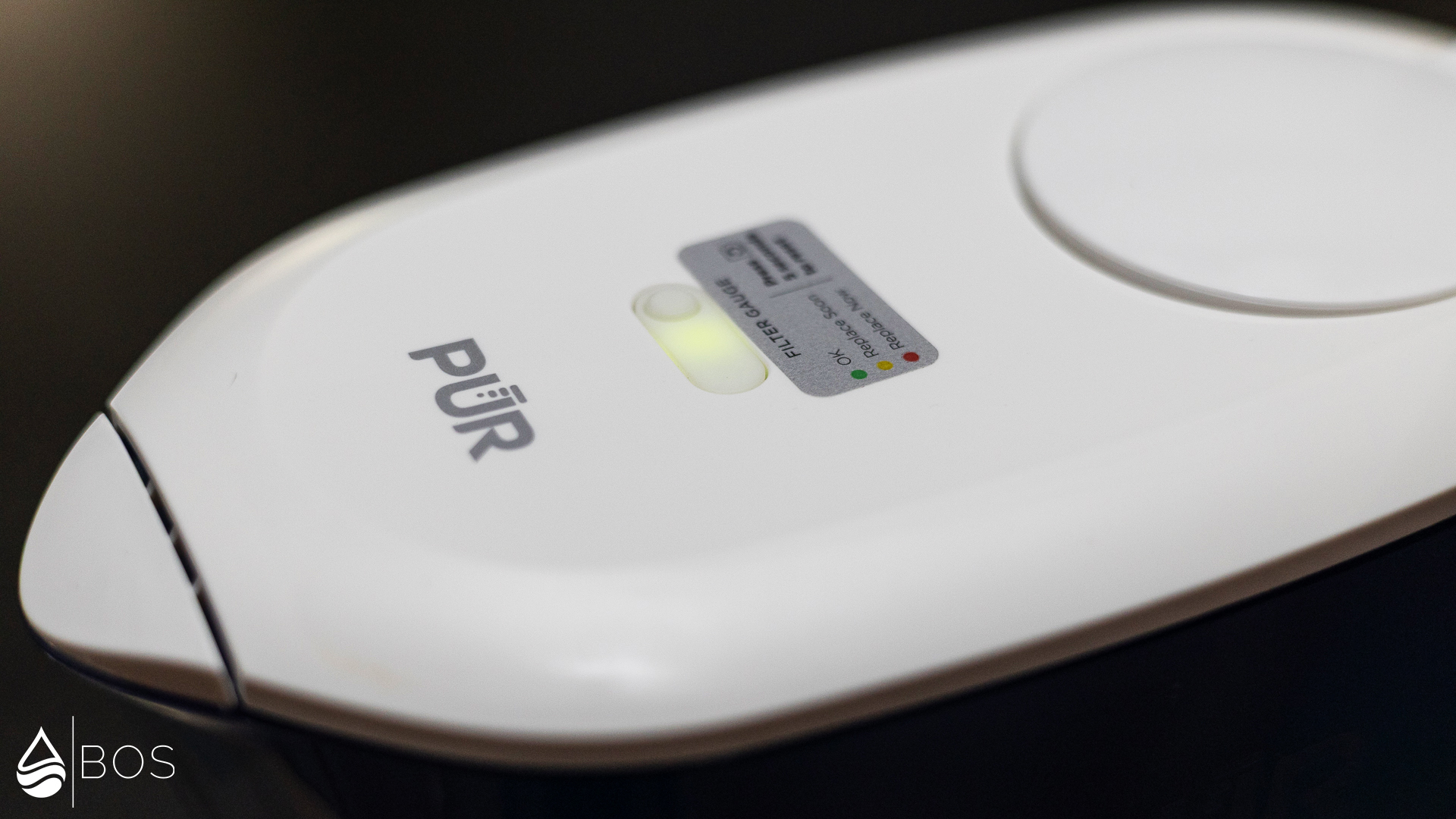
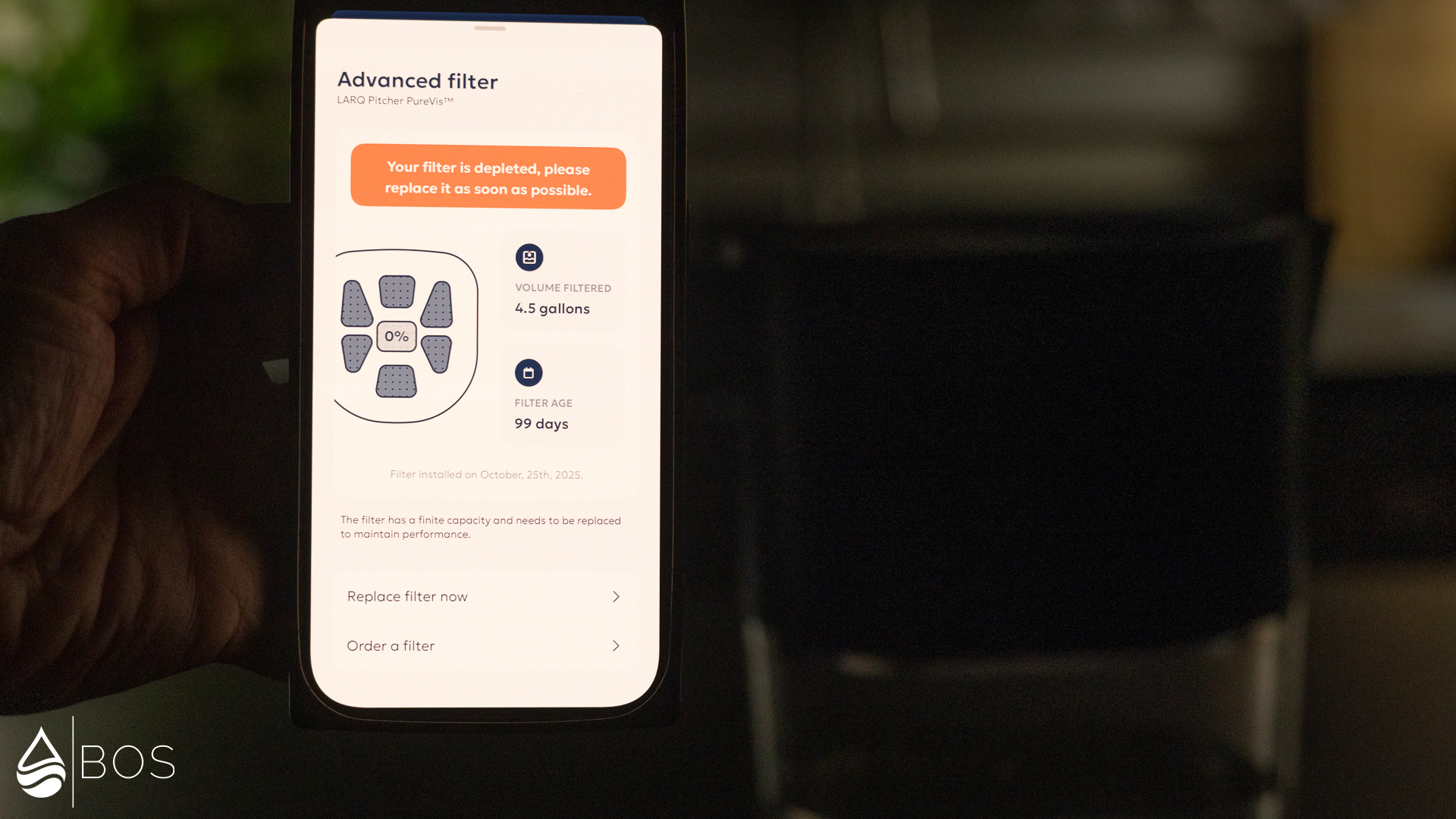
Budget & Costs
The upfront price of a water filter pitcher is only one part of the equation. Long-term replacement filter costs are often more important and largely depend on the price and lifespan of replacement cartridges.
- A cartridge’s lifespan depends on its water filtering capacity, which determines how often it needs to be replaced.
- Capacities typically range from around 15–20 gallons of filtered water (about 2–3 weeks of use) to roughly 150 gallons (up to about 6 months). Some pitchers with a longer rated filter life (for example, 200 gallons) still include a time-based cutoff. In other words, a 200-gallon rated filter may actually be limited to 200 gallons or 3 months, whichever comes first.
When estimating costs, filtering capacity is a critical factor. A more expensive filter may provide 120 gallons of clean water, while a cheaper one may reach the end of its life after only 40 gallons.
Check out our comparison and detailed pitcher reviews for discount codes, which may help reduce either the upfront cost or ongoing replacement filter expenses. In addition, some manufacturers offer discounts on pitchers or filters when you sign up for a subscription.
Additional Considerations
After weighing filtration performance, usability, and costs, what else is left to consider? A few additional factors may still matter to you:
- Product warranty: the pitchers we’ve reviewed range from no warranty at all to warranties as long as three years.
- “Made in” claims: some buyers may prefer products claimed to be made in the U.S. or U.K.
- Design: some pitchers feature a more modern or organic aesthetic, such as a wooden handle. A few models we tested are also available in multiple colors.
- Materials: is the pitcher made from BPA- or phthalate-free materials? Bisphenol A and phthalates are commonly found in plastics and can leach into water over time. Both are endocrine disruptors with documented adverse health associations. Some pitchers are even made from medical-grade Tritan plastic, which is BPA-, BPS-, and phthalate-free.
- Filter recycling programs: some manufacturers allow you to return used filters in exchange for a new one. Others provide a prepaid shipping label or offer a coupon to help offset shipping costs (but do not provide free filters).
- Dishwasher safe: several pitchers (excluding the filters) are dishwasher safe, which makes routine cleaning easier.
Special Mentions: Pitchers With Unique Features
The LARQ Pitcher PureVis uses a built-in UV-C light to reduce the presence of heterotrophic bacteria, which can impart an unpleasant taste and odor to water. This feature requires a rechargeable battery, which needs periodic charging.
The LifeStraw Home 10-Cup uses a microfiltration membrane designed for microbial reduction in addition to more conventional activated carbon and ion exchange filter media. While it carries NSF/ANSI certifications demonstrating strong pathogen reduction, it should not be used as the sole method of disinfection for non-potable water.
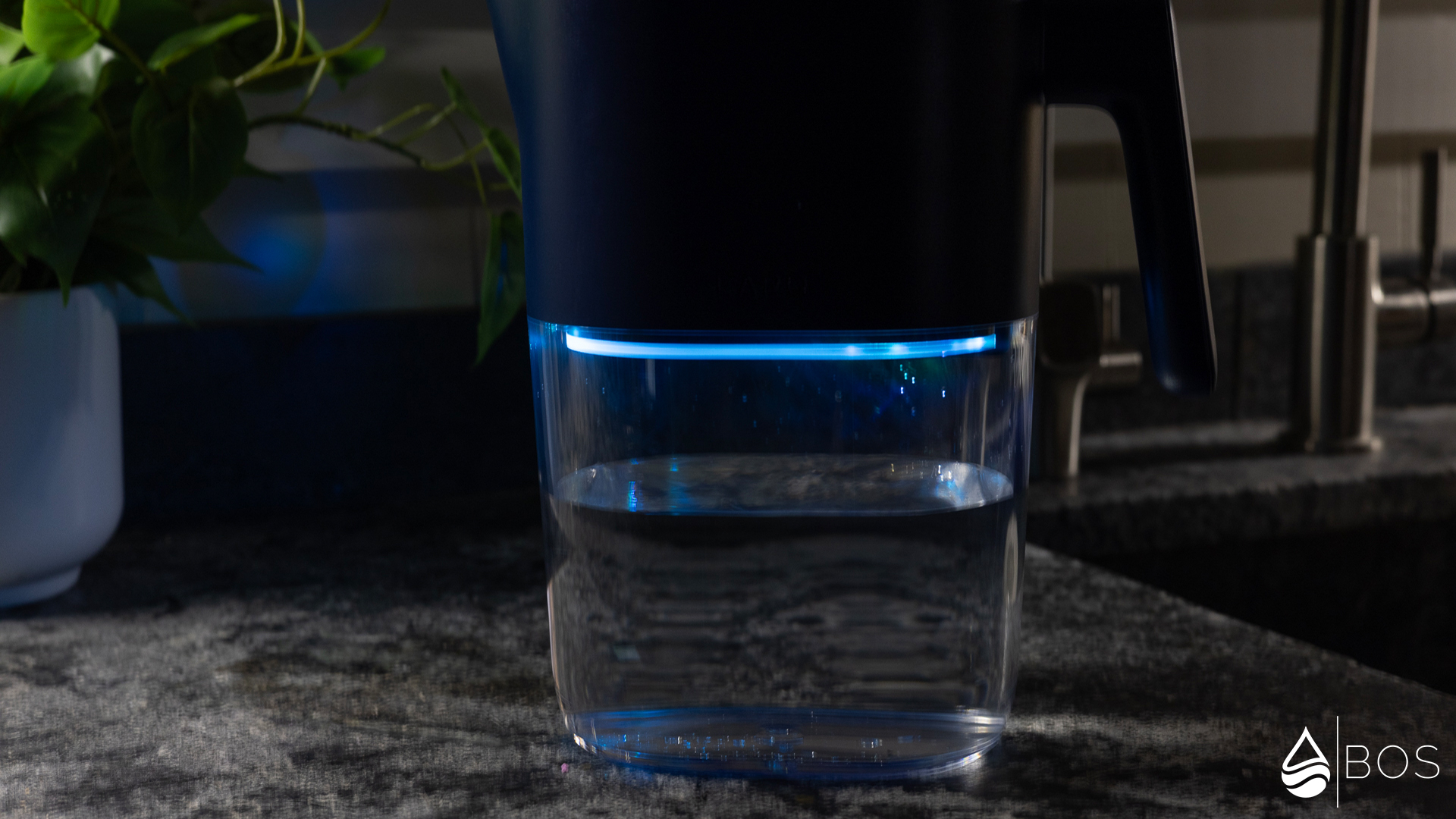
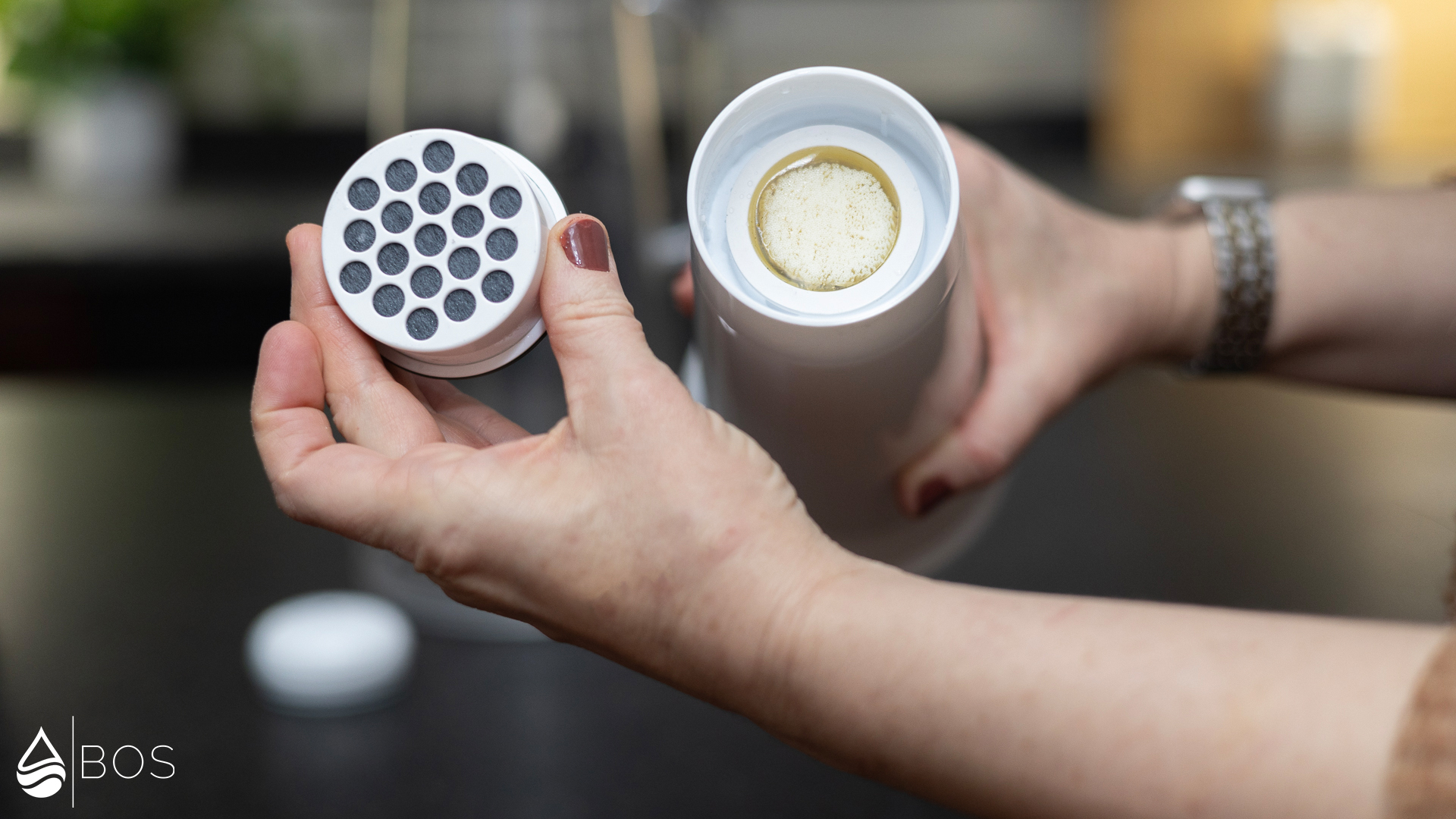
In Summary
There’s a lot to consider when shopping for a water filter pitcher. Start by identifying the contaminants present in your water and choosing a pitcher that can adequately reduce or eliminate them. From there, factor in your budget, household water usage, and any specific usability concerns before making your final decision.
Frequently Asked Questions About Water Filter Pitchers
1. What is the most effective water filter pitcher?
Based on our own lab testing, as well as certifications and third-party testing against NSF/ANSI standards, we consider the Clearly Filtered to be the most effective water filter pitcher.
2. How often should I change the filter cartridge in my water filter pitcher?
Most pitcher filters are rated by gallon capacity, so replacement frequency depends on both water usage and source water quality. Typical pitcher filters are rated between 40 and 150 gallons, though there are exceptions such as ZeroWater (15 gallons) and Culligan (20 gallons). Higher contaminant levels or heavy use may require earlier replacement.
3. How do I properly clean a water filter pitcher?
Disassemble the pitcher and wash all components except the filter cartridge with warm, soapy water, then rinse thoroughly. Some pitchers are dishwasher safe – always check the manufacturer’s guidance. Pay special attention to the filter life indicator, which is often located in the lid and may need to be removed before cleaning. As a general rule, pitchers should be cleaned every 1–2 weeks (or at least monthly) to prevent buildup and biofilm.
4. How does a water filter pitcher work?
Water filter pitchers work using gravity filtration. You fill water into the feed reservoir, and gravity pulls it through the filter into the lower chamber. Most pitcher filters use a combination of filtration media for broad contaminant reduction, commonly including sediment filtration, activated carbon, ion exchange resins, and sometimes KDF or microfiltration membranes.
5. Which is better: a faucet-mounted filter or a water filter pitcher?
Based on our lab testing, the best water filter pitchers removed a broader range of contaminants than the best faucet-mounted filters. The highest-performing faucet filters achieved a lab score of 4.24 out of 5.00, while the top pitcher filters achieved lab scores of 5.00 out of 5.00 or very close.
About the Author(s)

Sara has been a lifelong home-improvement fan (she’s been hooked on This Old House since she was five) and taught herself any project she didn’t already know by watching YouTube tutorials. She is also an award-winning filmmaker. Armed with this skillset, Sara installs, primes, samples, uses, and maintains nearly every point-of-use water treatment systems we test – then brings her results to life on camera for our YouTube channel.

Mike is a former team member who made his mark by contributing to our first big water filter pitcher comparison video and reviewing a couple POE water treatment systems. Beyond the world of water solutions, Mike is a full-time blogger and YouTuber alongside his wife, Ashley. Together, they’ve transformed their passions into a creative space called Joyfully Growing, where they share DIY tutorials and simple home improvement tips to help others love the homes they’re in.

Raoul has a background in mechanical engineering and has been writing about home water treatment since 2015. He designs our product review processes, analyzes the results, and ties everything together. As editor-in-chief, he tries hard to keep the whole operation running smoothly behind the scenes.