

This page contains affiliate links. Learn more.
Our Verdict (Best For)
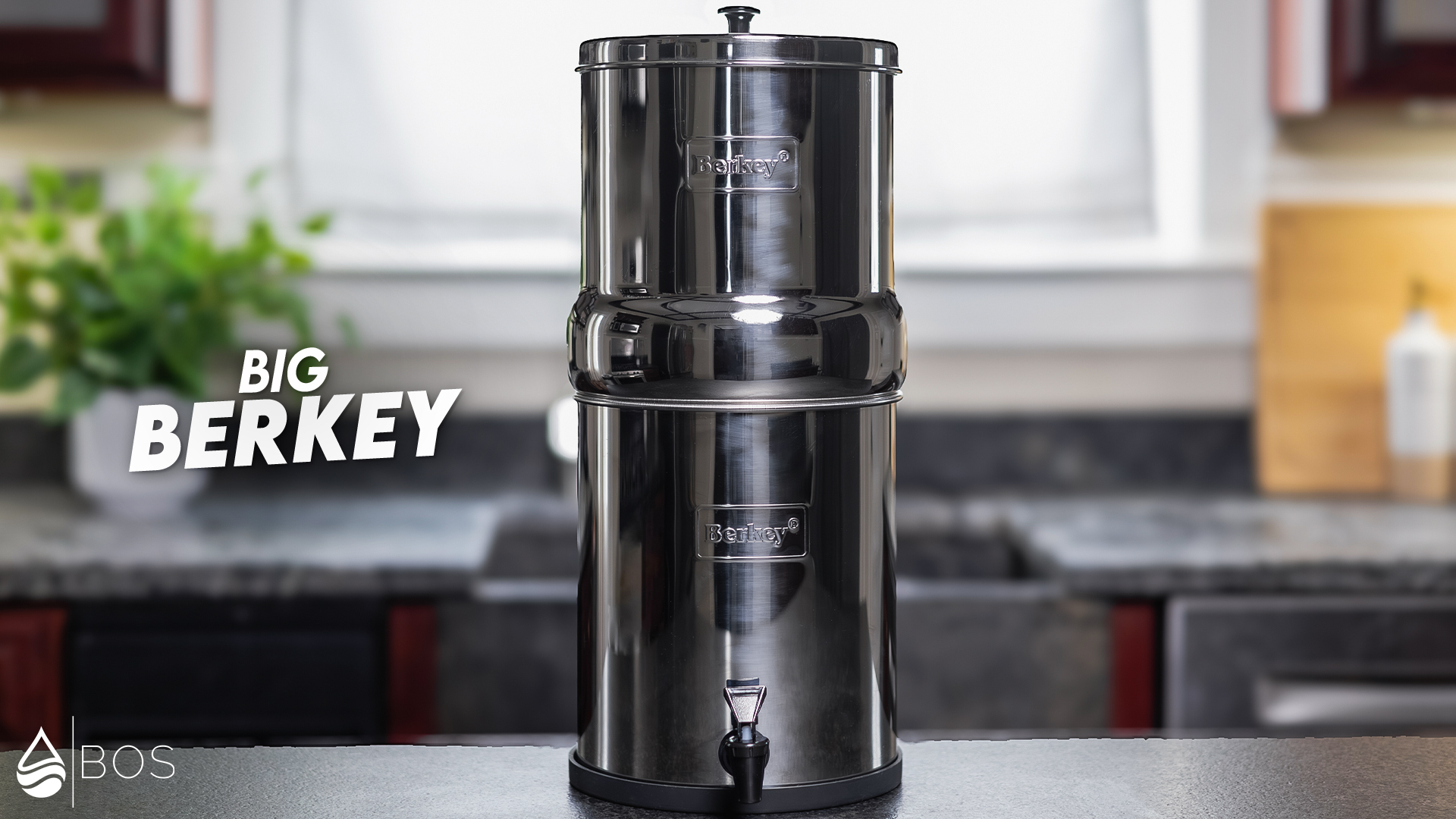
The Big Berkey with 2 Black + 2 PF-2 fluoride filters provided clean-tasting water but may have leached some form of aluminum at concerning levels. It has no NSF/ANSI-certified contaminants and at least some of its broad 3rd-party testing was not to 100% filter life (+ no test data on germs). Still, usability is solid: setup’s easy and filtration is pretty fast, processing the ~27-cup feed tank in ~1:57 hr (even faster with 3–4 filters). The plastic spigot pours fast (no splashing) but is flimsier than stainless steel versions. More pros: easy filter changes; sturdy 304 SS tanks; optional tank stand + water level spigot; stows for portability; filters claimed to be USA-made. More cons: unrealistic 3,000-gal filter life; high upfront (but average ongoing) costs. With an EPA stop-sale order on the Black Berkey filters, even if we did recommend it (we don’t), the Big Berkey is currently not a viable option.
Black Berkey + PF-2 Fluoride Filters & EPA Stop-Sale Order
In this review, we evaluated the Big Berkey with 2x Black Berkey filters + 2x optional PF-2 fluoride filters. However, as of March 2026, an EPA stop-sale order remains in effect, rendering Black Berkey replacement filters unavailable.
The Big Berkey is a gravity (countertop) water filter that doesn’t require a plumbing connection. It’s designed for use as a drinking water filter and can purify both tap water and properly disinfected well water (pre-treatment may be required).
As usual, we’ve tested the system with our own hands:
- Hands-on experience: We assembled, primed, used, and maintained it.
- Filtration effectiveness: We sent an unfiltered and a filtered tap water sample to a professional laboratory for analysis to determine real-world contaminant reduction. We also reviewed NSF/ANSI certifications and other available test data.
- More testing: We conducted taste and odor evaluations as well as filtration and dispensing speed tests.
- All other product aspects: We considered initial and long-term costs, warranties, additional features, frequent customer complaints, and more.
To learn more about our testing procedure, check our editorial guidelines.

Final Rating: /5.00
FiltrationFiltration score combines our lab results and taste testing with NSF/ANSI certifications and 3rd-party contaminant reduction data.: /5.00
UsabilityUsability scores include optional manufacturer-offered water level spigots and tank stands.: /5.00
CostsCost scores reflect overall value for money rather than price alone and include optional manufacturer-offered water level spigots and tank stands.: /5.00
| Type: | Gravity Water Filter |
| PriceNo short-term sales. Incl. 2x Black Berkey + 2x Fluoride Filters (Jul 13, 2026): | $521 (Use Code BOSWATER5BERKEY for 5% Off!) |
| Yearly CostEstimate is based on rated/claimed filter life and 500 gallons annual water consumption. No short-term sales. for 2 Parallel Black Berkey Filters (Jul 13, 2026): | ~$14 (Back When Filters Were Still Available) |
| Yearly CostEstimate is based on rated/claimed filter life and 500 gallons annual water consumption. No short-term sales. for 2 Parallel Fluoride Filters (Jul 13, 2026): | ~$58 |
(Use Code BOSWATER5BERKEY for 5% Off!)
Final Rating: /5.00
What We Like Most
- Clean taste with no odor.
- Extensive third-party testing for contaminant reduction but at least some not to 100% filter life.
- Sturdy 304 stainless steel upper + lower chambers – suitable for outdoor use and portable when stowed.
- Easy setup/priming with 2 illustrated black & white instruction sheets + helpful YouTube tutorial.
- Suited for daily use.
- Supports up to 4 filter cartridges which increases filtration speed.
- Very fast, splash-free dispensing with no leaking or dripping after spigot is closed.
- Optional tank stand allows pouring without placing the system at the counter edge.
- Easy refilling; optional water level spigot aids monitoring of clean water supply.
- Rubber ring on clean tank (oversized) and rubber feet on optional tank stand prevent scratching/sliding.
- Easy filter changes + cleanable Black Berkey filters (maintains filtration speed).
- 2-year warranty for Black Berkey filters.
- Filters claimed to be made in the USA.
What We Don’t Like
- Stop-sale order on Black Berkey filters.
- Fluoride filters showed evidence of potential aluminum leaching above the strictest health guideline.
- No NSF/ANSI certifications for contaminant reduction.
- No microbiological test data (for outdoor use).
- High-shine finish is prone to smudges.
- Plastic spigot feels more breakable than SS.
- On-demand filtering requires patience with 2 filters.
- Cannot fit a 40-oz bottle or pitcher under the spigot, even with the optional stand.
- Doesn’t fit under standard height kitchen cabinets (18″ clearance).
- You may not reach the 3,000-gallon claimed filter life depending on what contaminants you’re trying to remove.
- No filter change indicator.
- High upfront price.
- Customer complaints include clogged filters, ineffective filtration, filters not reaching claimed filter life, priming issues, leaking, and the system being overpriced.
How the Big Berkey Compares to…
17 Other Gravity Water Filters
In this video, Sara explains why the Big Berkey + Black Berkey and optional PF-2 fluoride filters did not become one of our top picks among the 18 gravity water filters we tested.
Please note: Our full guide on the best gravity water filters is available here.
Video Chapters + Comparison Sheet
- Link to Comparison Sheet
- 00:00 – Intro
- 00:50 – General Info
- 01:58 – All Gravity Filters We Tested
- 04:57 – Our Top Pick (Pt. 1 – Filtration)
- 13:43 – Our Top Pick (Pt. 2 – Usability)
- 24:20 – Our Top Pick (Pt. 3 – Cost)
- 27:57 – Best for Non-Potable Water: Alexapure Pro
- 36:56 – Best Budget Pick: Phoenix
- 40:58 – Remaining Systems (Quick-Fire Round)
- 51:40 – Wrapping Up
Full Analysis of the Big Berkey with Black Berkey + Optional PF-2 Fluoride Filters
Filtration: /5.00
The Big Berkey with Black Berkey filters and the optional PF-2 fluoride filters scored 3.20/5.00 for filtration. How? Most importantly, it achieved adequate results in our 2024 lab testing and the filtered water tasted and smelled perfectly clean. While the system has extensive third-party testing, at least some was not performed over the full filter life. Plus, it has no NSF/ANSI certifications for contaminant reduction.
1. Lab Results: /5.00

Remember that our before vs after lab comparison is not an exact science. It’s informational and subject to variability, inaccuracies, and interferences caused by natural fluctuations in water quality, accidental contamination, human error, instrumentation issues, and more. Furthermore, our lab-testing is limited to those contaminants present in our water supplies and at their respective concentrations, which is why the results may contradict third-party test data. As such, our lab-testing can only give us a general idea for how effective a certain water treatment product might be.
In our lab test comparing an unfiltered and a filtered tap water sample, the Big Berkey could remove 10 undesirable impurities and contaminants to below the minimum detection level (so essentially to 100%): chlorine, bromodichloromethane, bromoform, dibromochloromethane, chloroform, copper, barium, boron, lithium, and uranium.
The following substances remained in our water (note: in our view, most concentration increases are generally due to leaching, although natural fluctuations cannot be ruled out):
- Strontium was reduced by 98%.
- Nitrate decreased by 8%.
- Fluoride was reduced by 67%. Berkey’s third-party test data reports 97.90% (calculated average) to >99.90% fluoride reduction with the Black Berkey + PF-2 fluoride filters or only the Black Berkey filters installed, respectively.
Aside from contaminant reduction, we found the following substances in our filtered water that were not present in the unfiltered water:
- Aluminum – At 1.01 ppm, it was 1.68x higher than the strictest aluminum health guideline we could find (California OEHHA, 0.6 ppm), established to prevent neuro- and immunotoxic effects. That said, one possible explanation for the added aluminum is the use of activated alumina (AA) media in the optional fluoride filters, which may have released aluminum oxide that would show up as (total) aluminum in the lab reports. The OEHHA guideline, however, pertains to elemental aluminum; we could not find a health guideline specifically for aluminum oxide, so it is unclear to what extent this benchmark applies here. Still, elemental aluminum leaching from AA is possible depending on water conditions and the media itself. Berkey’s test data reports 99.00-99.10%+ aluminum reduction.
Lab Results Chart
| Potentially Harmful | Aesthetic Issues | Feed Water Level | Filtered Water Level | Reduction Rate | |
| Water Disinfectants | |||||
| Chlorine (mg/L) | ✖ | ✖ | 0.96 | 0 | 100% |
| Disinfection Byproducts | |||||
| Bromodichloromethane (µg/L) | ✖ | 2.68 | 0 | 100% | |
| Bromoform (µg/L) | ✖ | 3.19 | 0 | 100% | |
| Dibromochloromethane (µg/L) | ✖ | 5.27 | 0 | 100% | |
| Chloroform (µg/L) | ✖ | 1.07 | 0 | 100% | |
| Metals | |||||
| Copper (mg/L) | ✖ | ✖ | 0.06 | 0 | 100% |
| Barium (mg/L) | ✖ | 0.04 | 0 | 100% | |
| Boron (mg/L) | ✖ | 0.06 | 0 | 100% | |
| Lithium (mg/L) | ✖ | 0.01 | 0 | 100% | |
| Strontium (mg/L) | ✖ | 0.46 | 0.01 | 98% | |
| Salts | |||||
| Nitrate (N) (mg/L) | ✖ | 1.72 | 1.58 | 8% | |
| Fluoride (mg/L) | ✖ | 0.3 | 0.1 | 67% | |
| Other | |||||
| Uranium (µg/L) | ✖ | 1 | 0 | 100% | |
| Other Parameters | |||||
| pH | 7.79 | 8.2 | |||
| Impurities NOT Detected in Unfiltered Tap Water Sample | |||||
| Aluminum (mg/L) | ✖ | ✖ | 0 | 1.01 | |
| Lab Reports: Filtered Water Report, Unfiltered Water Report | |||||
| Explanation: | |||||
| Full Removal | |||||
| Considerable Reduction | |||||
| Concentration More than Double of Unfiltered Water Sample | |||||
| Potential Leaching Reached or Exceeded the Strictest Public Health Guideline We Could Find | |||||
Non-Potable Water
We have not tested the Big Berkey with a non-potable water source. This evaluation is not currently planned as the EPA stop-sale order has halted the distribution of Black Berkey elements.
2. NSF/ANSI Certifications and Other Test Data
The Big Berkey with Black Berkey plus optional PF-2 fluoride filters does not have any NSF/ANSI certifications for contaminant reduction.
However, it does have extensive third-party testing for nearly 200 contaminants against NSF/ANSI standards 42, 53, and other non-NSF/ANSI standards, though at least some was not performed over the full filter life.
Listed reduction rates include:
- Total chlorine (>85.00%)
- Free chlorine (>99.90%)
- Chloramines (>99.90%)
- Aluminum (99.00-99.10%+)
- Antimony (97.50-99.90%+)
- Arsenic (99.00-99.90%+)
- Barium (>95.00%)
- Beryllium (>99.90%)
- Chromium (95.00-99.90%+)
- Chromium 6 (>99.80%)
- Cobalt (>95.00%)
- Copper (95.00-99.90%+)
- Iron (>99.90%)
- Lead (97.50-99.90%+)
- Manganese (>99.90%)
- Mercury (98.00-99.90%+)
- Molybdenum (>90.00%)
- Nickel (95.00-99.90%+)
- Selenium (97.50-99.90%+)
- Vanadium (>87.50%)
- Zinc (>99.90%)
- Nitrite (>95.00%)
- Fluoride (>99.90%; Black Berkey filters alone)
- Fluoride (97.90% – calculated average; Black Berkey + optional PF-2 fluoride filters over 100-gal)
- Dozens of pesticides/herbicides (75.00-99.90%+, most >99.90%)
- Dozens of other VOCs (most >99.80%)
- Dozens of semi-volatile organics (>99.90%)
- Many trace pharmaceuticals (>99.90%)
- Gross alpha radiologicals (99.38% – calculated average)
- Gross beta radiologicals (96.70% – calculated average)
- Uranium (97.64% – calculated average)
- PFOA (>99.90%)
Reduction rates are per Berkey’s performance data sheets.
Non-Potable Water
The Big Berkey does not carry NSF/ANSI certifications or verified third-party testing for microbiological reduction (e.g., bacteria, cysts, or viruses), and they do not claim that their system is intended for such use.
3. Filtration Process
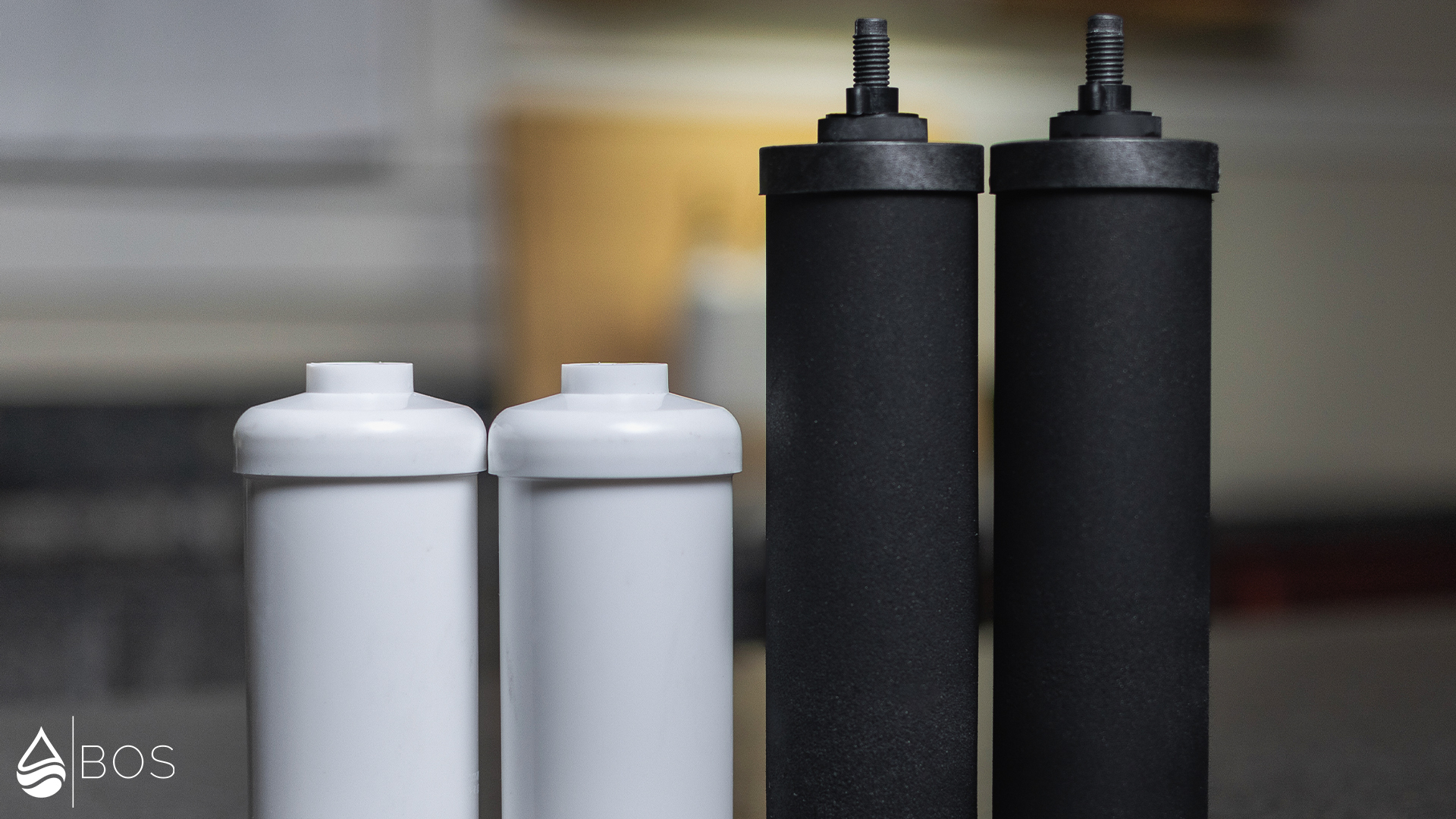
Black Berkey filters utilize a proprietary blend of filtration media including an activated carbon block and ion exchange resin.
Activated carbon removes things like bad tastes and odors, chlorine/chloramine, disinfection byproducts and other organics, as well as certain metals. In addition, the block structure provides fine mechanical filtration due to its smaller pore size compared to granular carbon. Berkey refers to this as “microfiltration,” as the narrow channels in the carbon block act like a sieve to remove even the tiniest particulates. Ion exchange targets dissolved, unwanted ions in the water.
The optional PF-2 fluoride filters contain activated alumina (aluminum oxide), which primarily adsorbs fluoride and arsenic.
4. Taste and Odor Test
In our test, the filtered water was odorless and had a perfectly clean taste.

Usability: /5.00
The Big Berkey achieved a usability score of 4.19/5.00, based on its performance in the following categories:
- Initial system assembly including filter priming (1.00/1.00)
- Everyday use (2.99/3.50)
- Filter replacements (0.20/0.50)
1. Initial Setup & Filter Priming: /1.00
Assembling the Big Berkey is easy. The two black & white instruction sheets provide clear, illustrated directions for each step. There is also a helpful tutorial video on YouTube.
Here’s a quick breakdown of the setup procedure:
- Wash your hands, upper + lower chambers, and spigot.
- Place metal washer on knob screw, then insert the screw through the hole in the lid. Screw on the knob using a screwdriver.
- Place a washer on spigot stem and insert spigot into hole in lower chamber. Place the other washer on stem inside of the lower chamber, followed by the hex nut. Hand-tighten nut until snug.
- Fill any open holes in the upper chamber which will not be holding Black Berkey elements with blocking plugs.
- If provided, install vapor lock clip on edge of lower chamber.
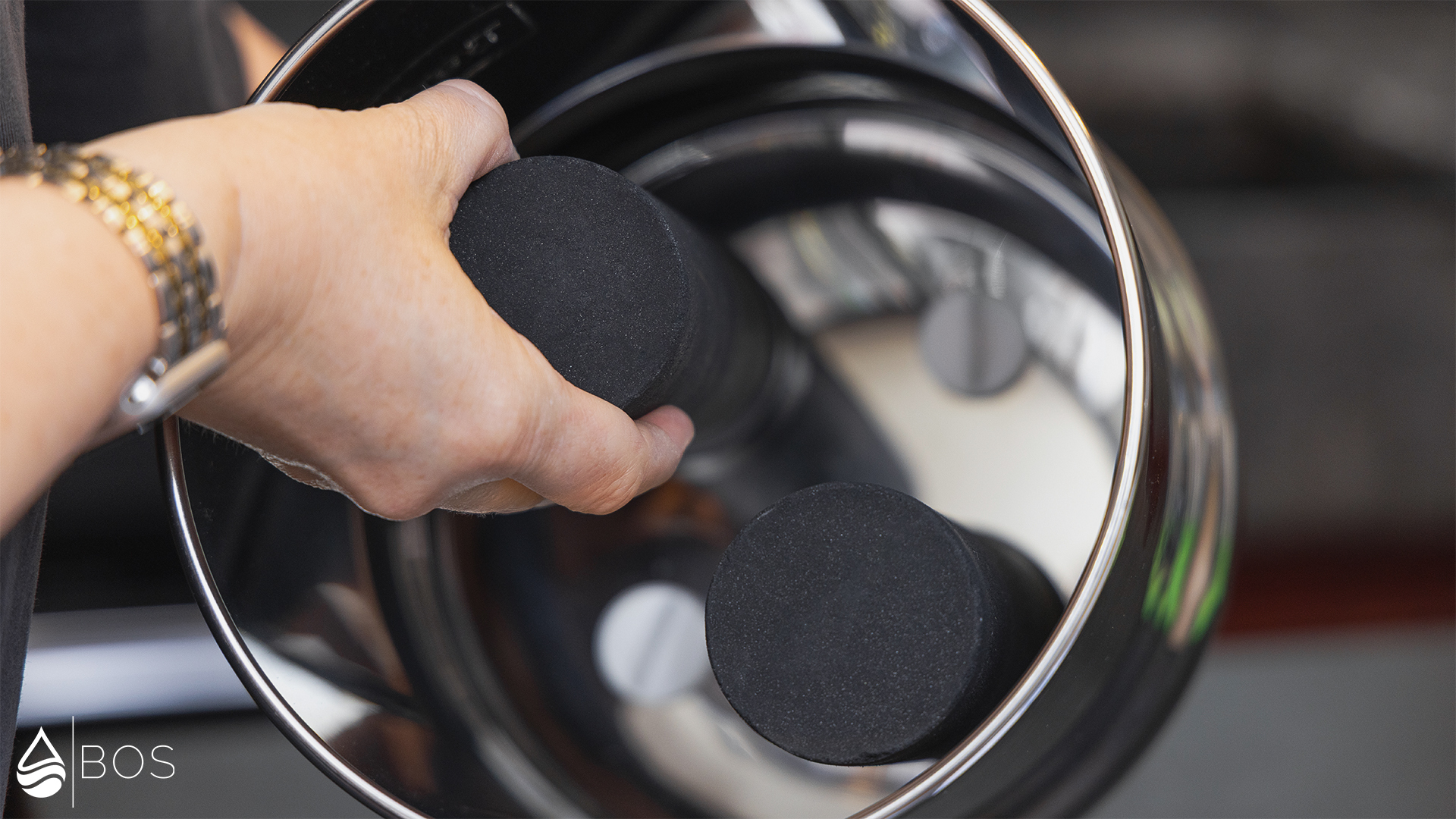
- If present, wipe manufacturing process dust off Black Berkey elements with a Scotch-Brite pad under cold running water.
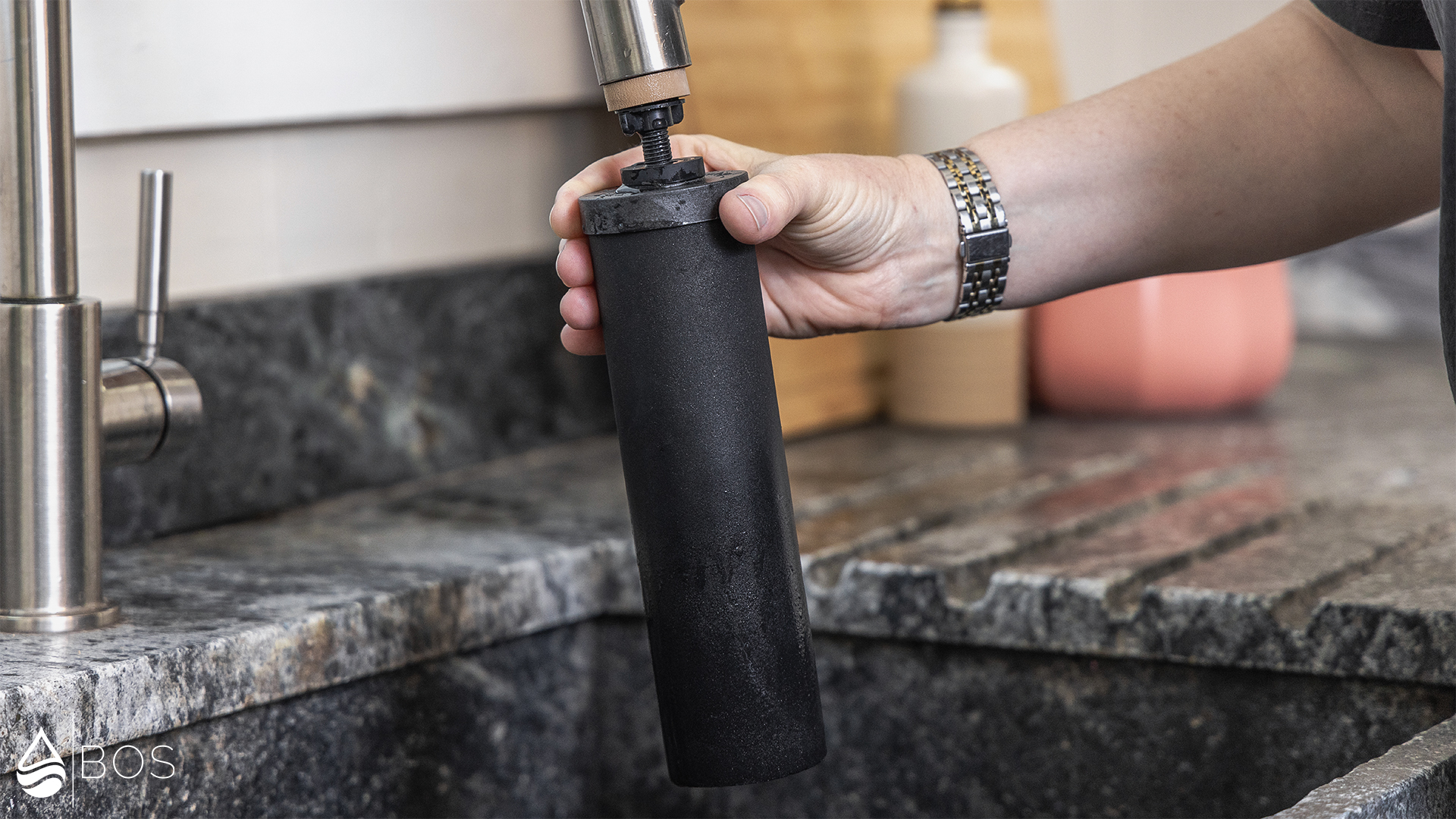
- Prime Black Berkey elements using one of the following: the universal primer (not included with our system), tan priming button, handheld priming pump (purchased separately), or a bottle of water.
- Tan priming button: untwist wing nut on Black Berkey’s threaded stem until the top of wing nut reaches the top of the threads. Place tan priming button on top of wing nut – it will jut slightly above the top of the filter stem.
- Holding the filter stem between your fingers, press tan priming button firmly against faucet to create a seal and slowly turn on cold water.
- Allow water to bead on the surface for 1 minute or until it runs clear and the entire element appears to be saturated.
- Repeat priming process for remaining element(s).
- Install first Black Berkey element: remove wing nut from threaded stem, leaving sealing washer on stem.
- Insert stem into a hole in the inside of the upper chamber and secure in place with a wing nut, screwing on to hand tight.
- Repeat installation for remaining Black Berkey elements.
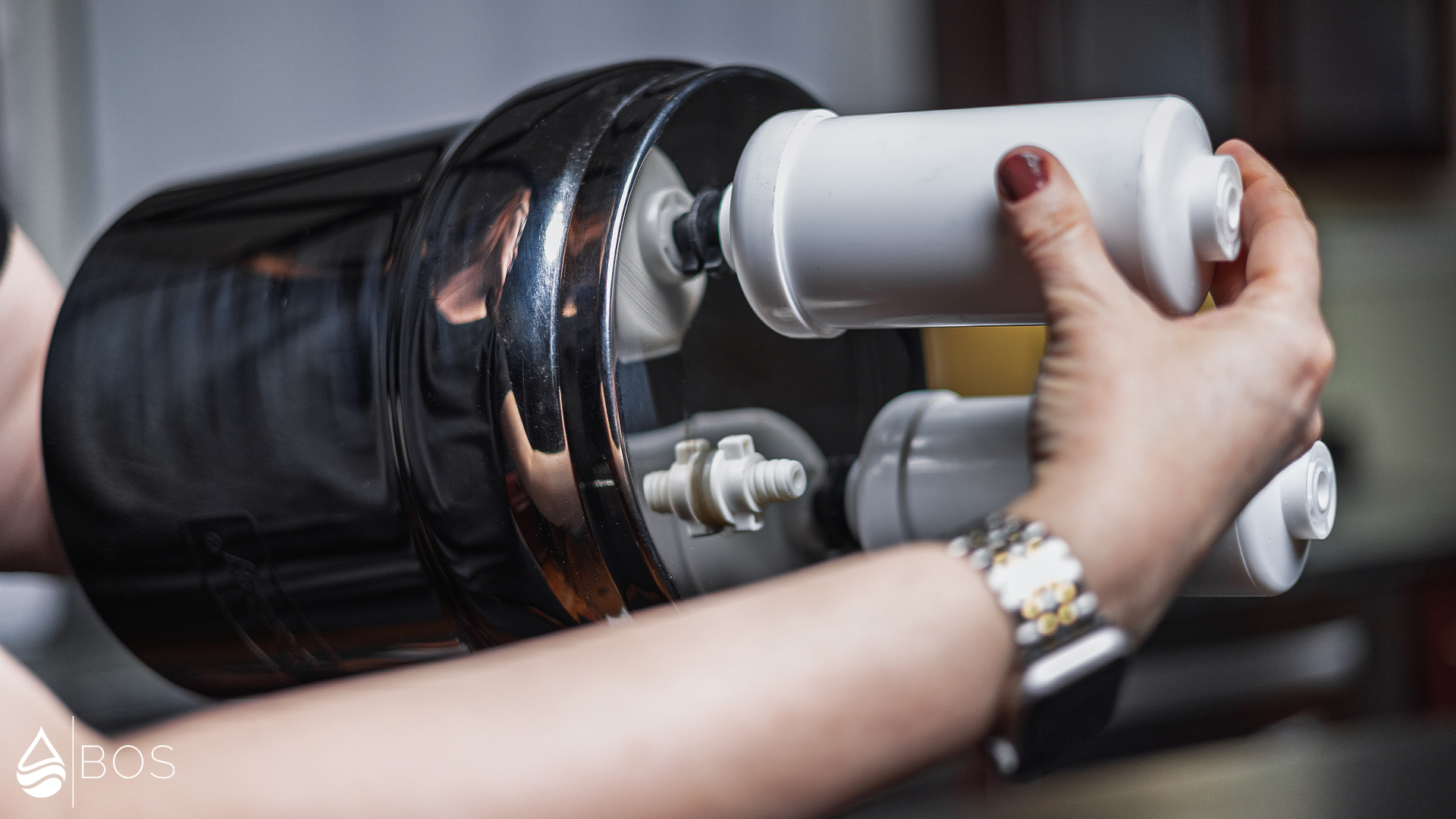
- With caps (blue or black) in place, remove the stickers and wash the exterior of each Berkey PF-2 fluoride element with mild dish soap.
- Remove caps from both ends of the PF-2 fluoride element.
- Place the tan rubber purging button onto one end of the PF-2 fluoride element and align the hole in the button with the hole in the element.
- Press the button up against a sink faucet, creating a seal.
- While holding this assembly against the faucet, gently turn on the cold water, allowing it to percolate through and exit via the other end of the filter.
- Allow water to discharge for at least 20 seconds or until it runs clear, whichever is longer.
- Flip the PF-2 fluoride element the other direction and flush from the opposite end, repeating the above steps. Repeat this purging process for each remaining PF-2 fluoride element.
- Screw the threaded end of each PF-2 fluoride element onto the stem of a Black Berkey element eight turns.
- Ensure rubber ring is attached to lower chamber, then set onto tank stand (if using). Place upper chamber onto lower chamber.
- Fill upper chamber with cold or room temperature water, then cover with lid. Allow water to filter into lower chamber.
- Open the spigot to completely drain the lower chamber, discarding the water. Process additional batches of water as needed until dispensed water is clear.
- Your system is now ready to use.
- Optional red food coloring test (perform without PF-2 fluoride elements installed): to ensure system is assembled properly and there are no internal leaks, add 10 drops (1/8 tsp) of the provided red food coloring for every gallon of water added to the upper chamber. Allow system to filter water and drain water from lower chamber into a cup – if clear, the elements are sealed properly and system is assembled correctly.
- If water has a red/pink hue, system is leaking internally. Place upper chamber onto cups or jars of identical size and repeat test. Clear water indicates the system is ready to use. If a red/pink hue remains in the jar(s), reinstall the affected element(s) or blocking plug(s) where leaking occurs and re-run test.
2. Day-to-Day Use: /3.50
2.1 Speed & Water Capacity: /1.20
Used with two Black Berkey and two PF-2 fluoride filters, the Big Berkey is generally suited for daily use but on-demand filtering, which we define as 1 cup in <1 minute, takes just a little more patience. The system filtered and dispensed 1 cup in ~1:47 min and 4 cups in ~8:07 min in our filtration speed tests. However, it can accommodate up to four filter elements in parallel, which would roughly double filtration speed relative to the two-filter setup tested here and readily enable on-demand dispensing.
Importantly, the spigot sits above the bottom of the lower chamber, so the system must first process and collect ~34 oz of water over ~7:07 min before any can be dispensed. Consequently, starting from an empty system, the total time to filter and dispense 1 cup was ~8:54 min, while dispensing 4 cups took ~15:14 min.
Requiring ~1:57 hr to fully filter and dispense the entire feed tank, the Big Berkey produces large volumes relatively quickly for a gravity system. It’s definitely fast enough to handle 8-10 cup/hour thirst bursts for average US households, which we assume consist of 2.55-3.15 people.
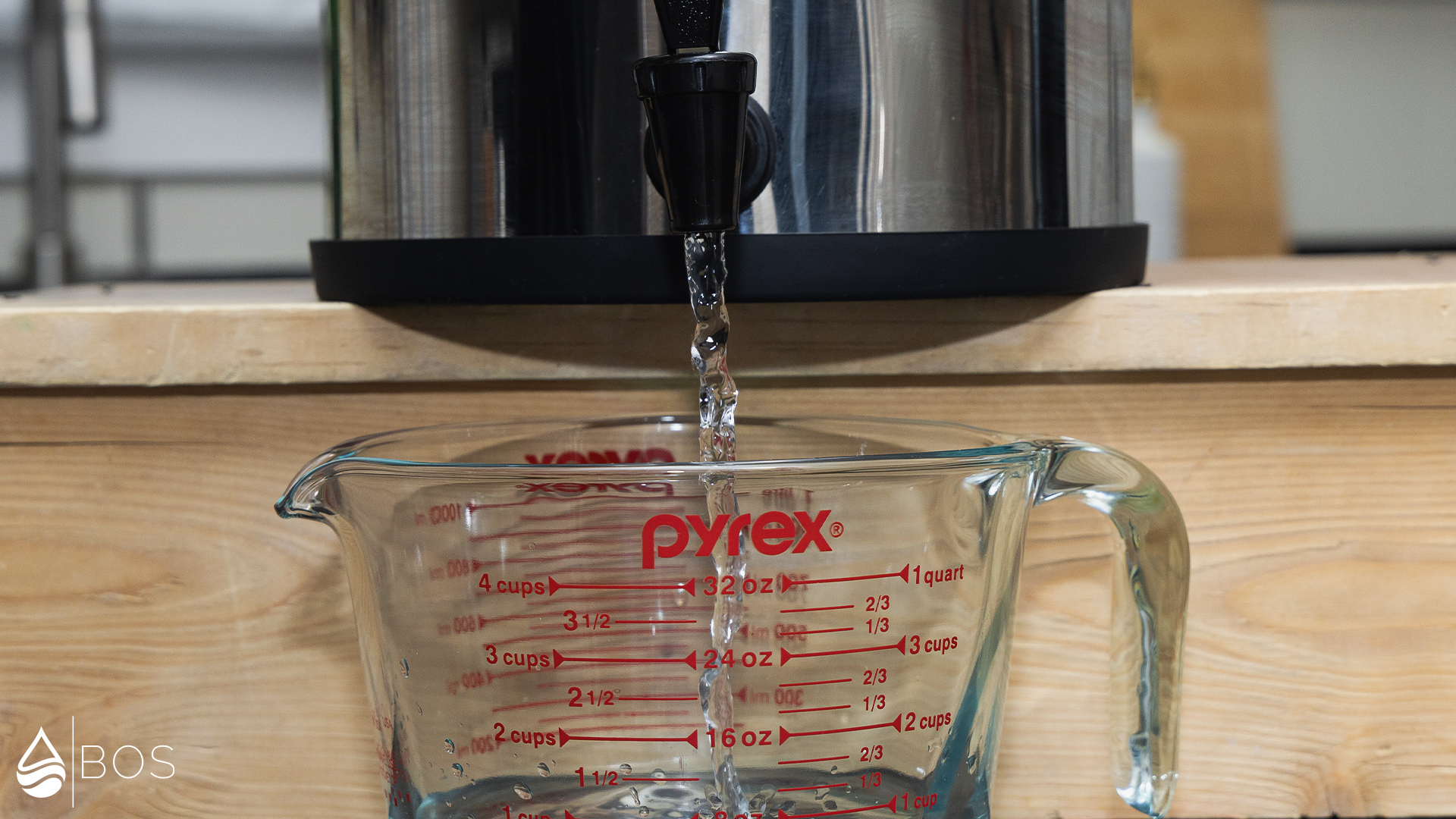
Dispensing filtered water from a full lower reservoir is also very fast – we measured about 4 seconds for 1 cup.
The ample 1.69-gal (~27.0-cup) feed tank* and 1.78-gal (~28.5-cup) clean tank allow you to readily fill a 40-oz bottle or 2-quart pitcher from a single refill. Assuming 25.5–31.5 cups of daily water consumption for the average US households, we estimate 2 daily refills when filling the upper chamber to the top* – consistent with the other gravity water filters we tested.
However, actual refilling frequency will likely vary considerably depending on each household’s needs and preferences. Given the relatively slow filtration speed inherent to gravity systems, most users likely would not want to wait until the feed tank is empty and the clean water fully depleted before refilling. Realistically, it is more practical to top off the feed tank at strategic times, such as before heading out to work or before bed, so the longer wait time is less disruptive. However, this requires some ongoing judgment from the user to ensure that the added feed water volume does not cause the clean tank to overflow.
*Note: Upper chamber capacity measurements were taken with water filled to 1″ below the rim and the filters installed to reflect real-world use and reduce spill risk. Lower chamber measurements were taken at the maximum fill level with the filters installed, allowing the upper tank to be placed without causing overflow. Consequently, our reported capacities may be slightly lower than those stated by the manufacturer. In addition, the plastic base that holds each filter prevents water from contacting the media at that level, leaving ~0.5″ of water in the feed tank unusable. We did not subtract this small volume of unusable water from our reported feed tank measurements because it varies depending on the number of filter elements installed.
2.2 Dispensing: /1.00
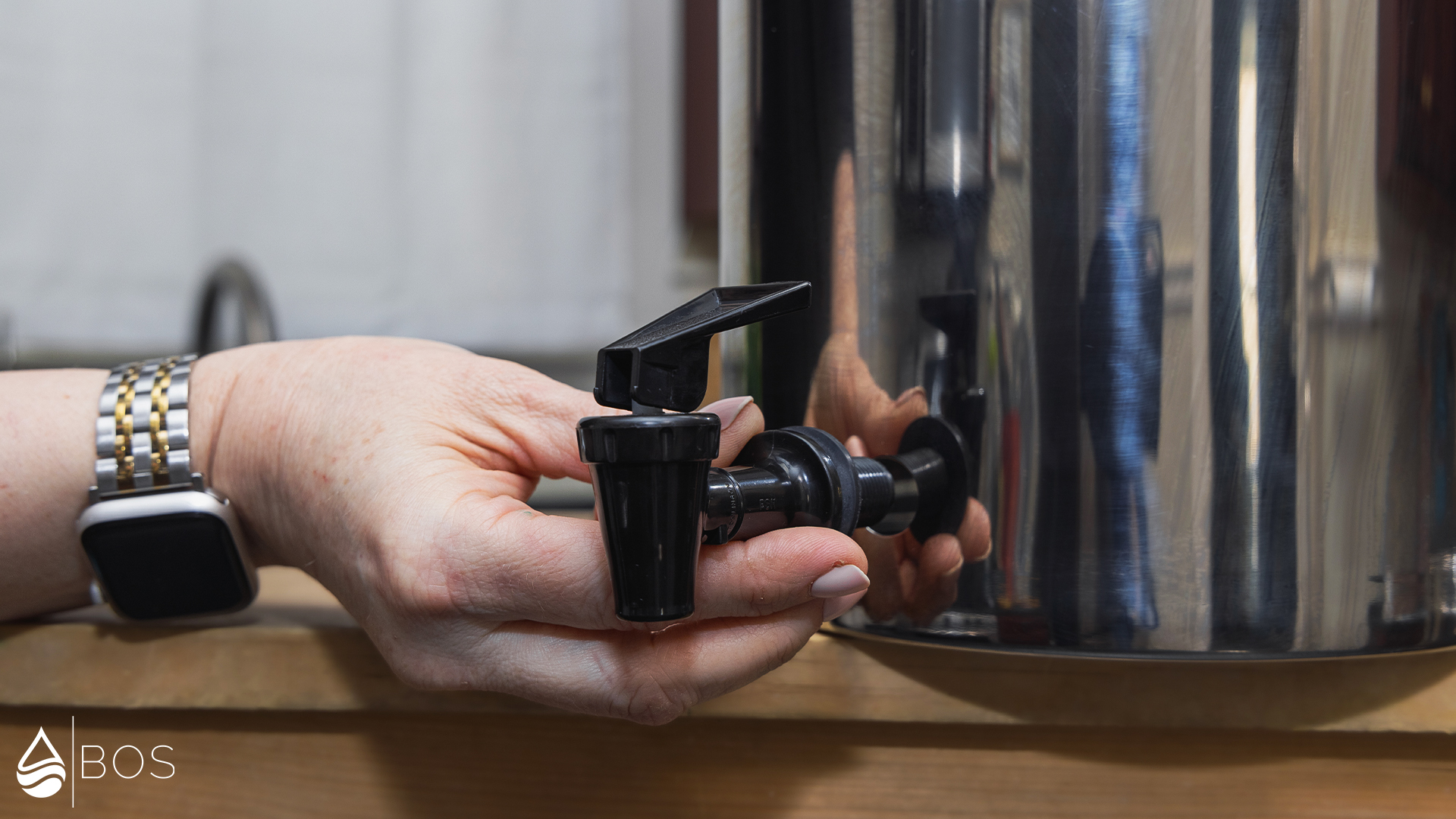
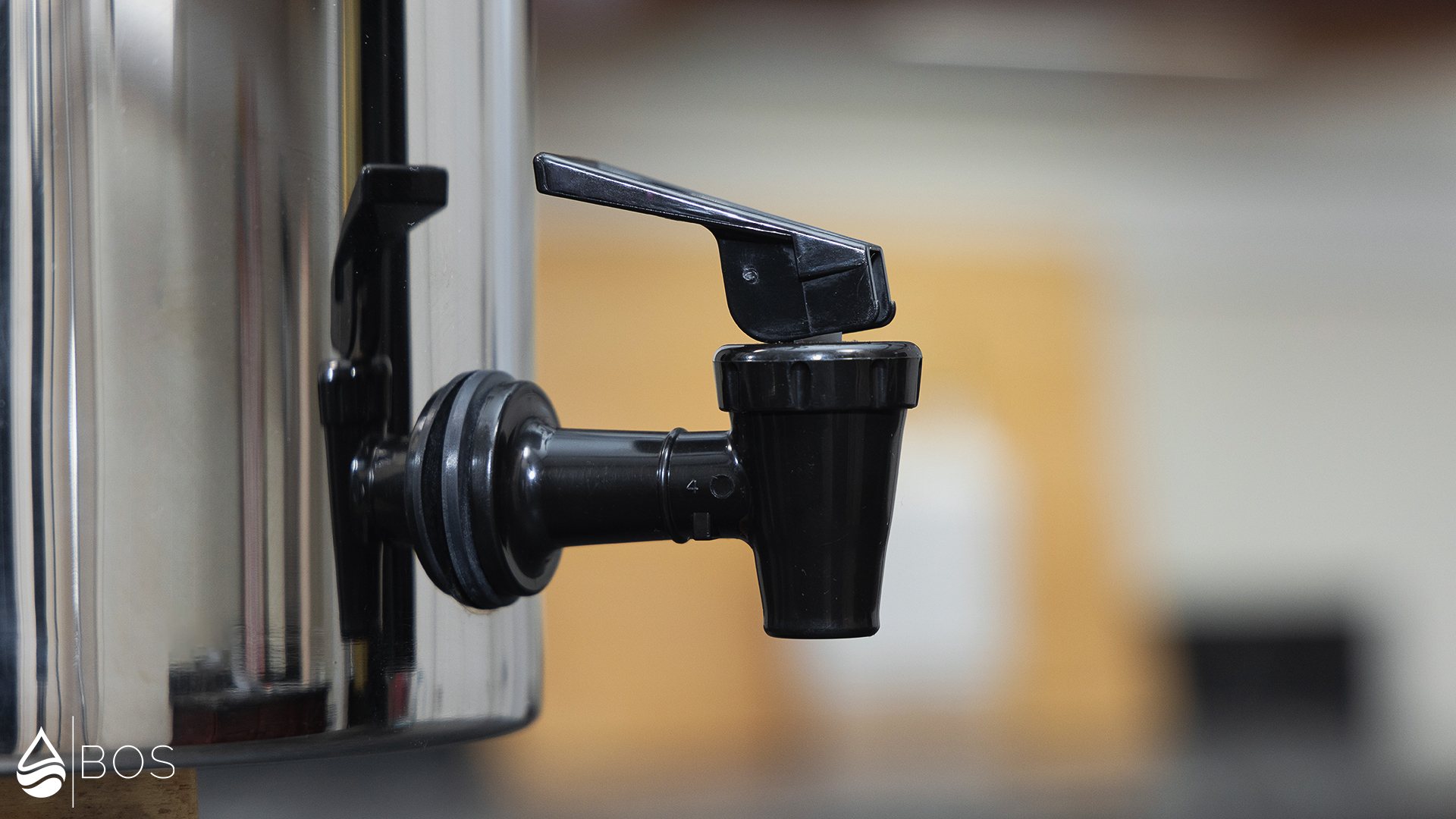
Using a full clean tank, dispensing water is very fast and without splashing, unless the spout is fully opened very quickly. The all-plastic spigot is spring-loaded and pops back into place quickly, and there is no dripping after the pour.
Due to the spout height, the system must be placed at the counter edge to dispense, unless you use the optional tank stand sold by Berkey – this gives you another ~5″ of clearance to fit a glass underneath. That said, you still won’t be able to fit a standard 40-oz bottle or 2-quart pitcher under the spout, even with the added height from the stand.
One downside: dispensing the last 34 oz of water requires additional steps. The spigot sits slightly above the base of the clean tank, which means the last ~4 cups of water cannot be poured unless you tilt the tank forward or manually ladle out the remaining water. However, this is a common limitation and applies to almost all gravity filters we tested.
2.3 Refilling & Size: /1.00
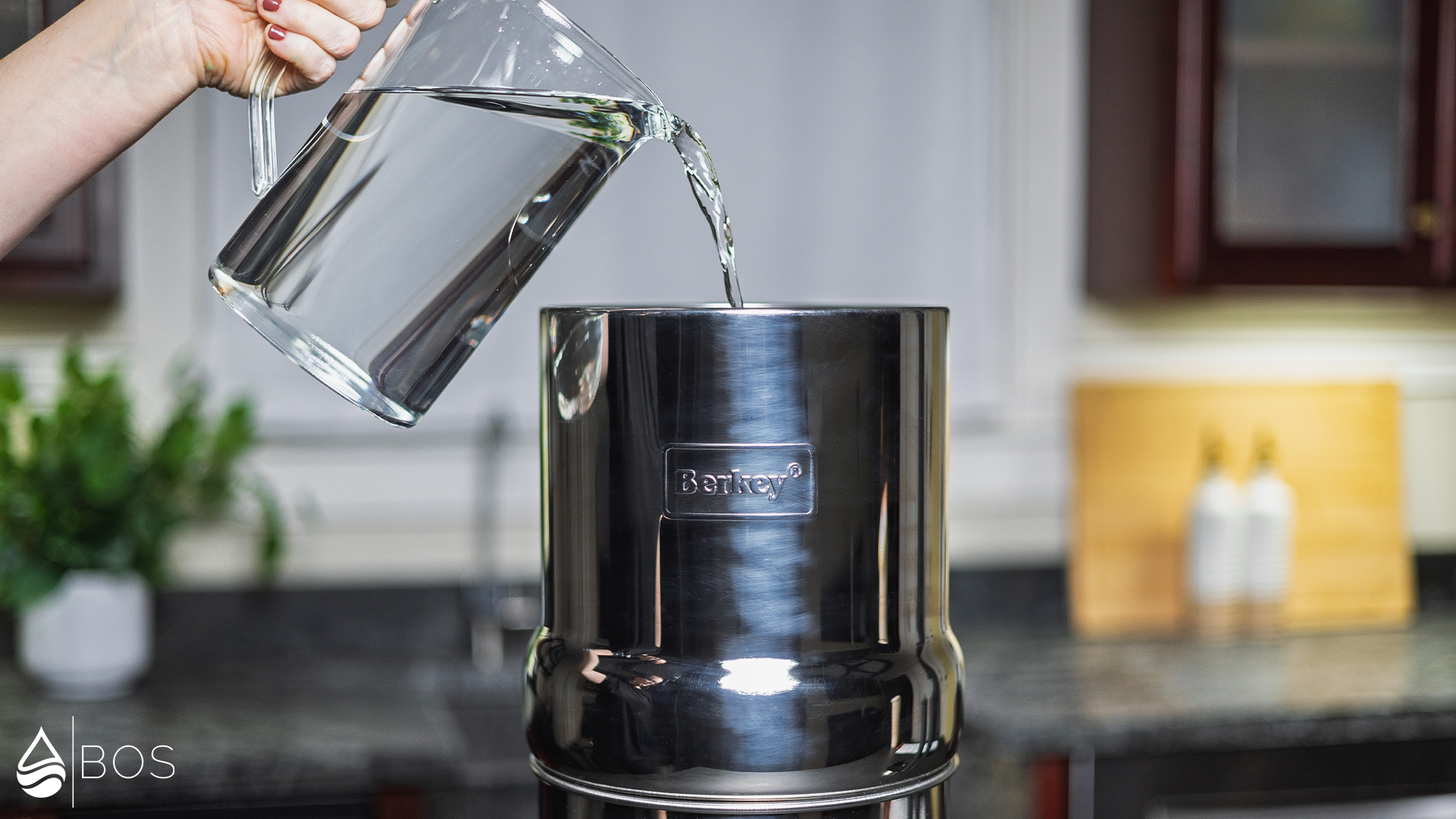
Refilling the Big Berkey is straightforward. Simply use a pitcher or other container to fill the upper chamber with water. There are no max fill lines, however, and instructions do not specify a fill amount.
The included lid fits loosely but still keeps your feed water well covered. Plus, an optional water level spigot can be purchased separately from Berkey for easy monitoring of your clean water level, which we highly recommend. Without it, the only way to accurately gauge the amount of water in the clean tank is to lift the upper chamber – something that can be a challenge depending on how much water remains inside.
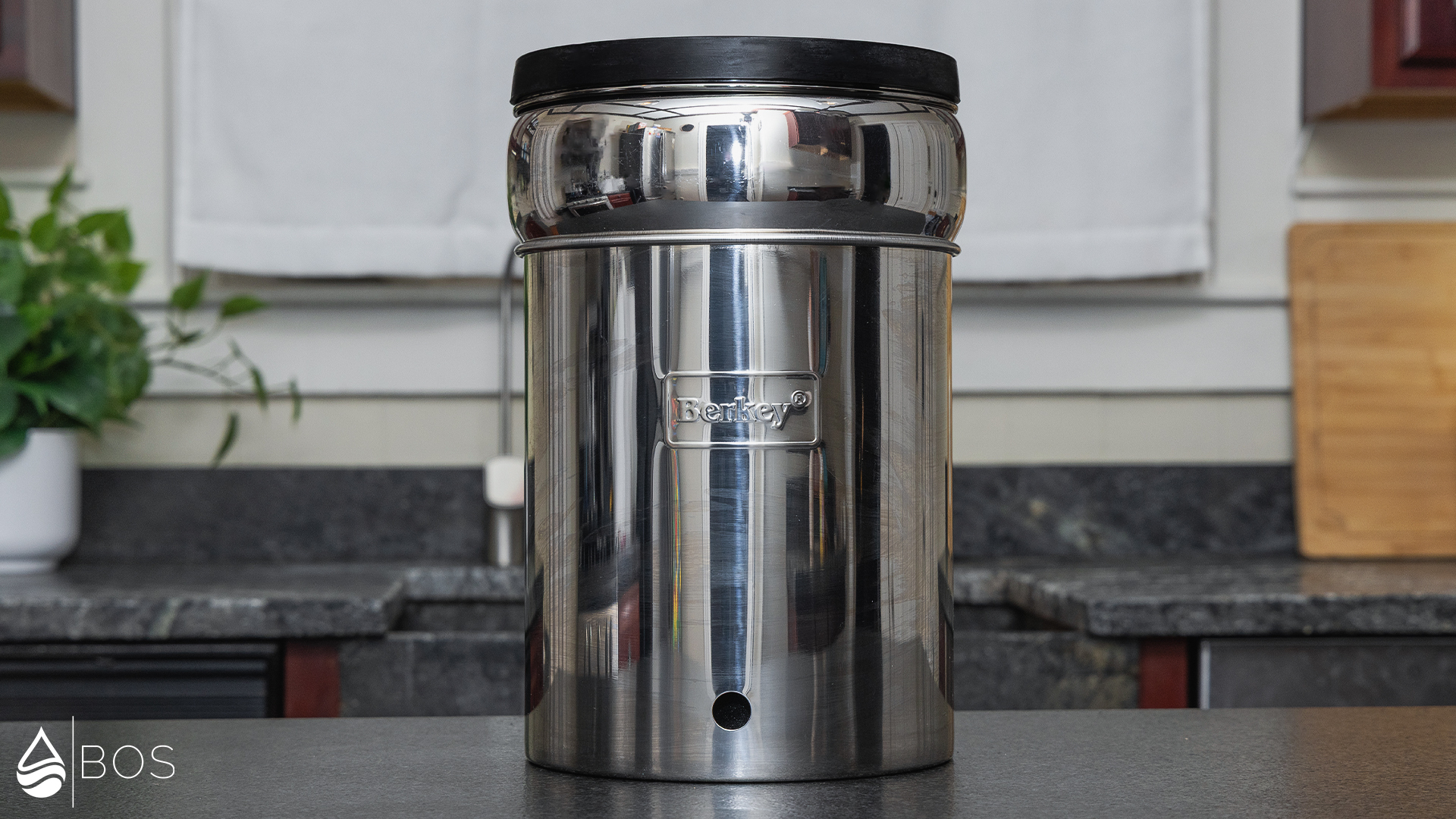
Measuring 8.5″x19.5″x10.75″ (WxHxD) including the lid’s knob and spigot, the Big Berkey doesn’t fit under most kitchen cabinets (18″ clearance). Additionally, using the optional tank stand further increases the height.
At 8.4 lbs with two wet Black Berkey filters + two saturated fluoride filters installed (excluding the stand), its weight is about average for the gravity systems we tested when compared to analogous configurations. Its footprint is also about average, occupying ~56.75 in² (~0.39 ft²).
2.4 Other: /0.30
The Big Berkey includes a rubber ring on the bottom tank, preventing scratching or sliding on your countertops. However, it is oversized and detaches when the tank is lifted.
Alternatively, the optional tank stand comes with rubber-gripped feet which also prevent unwanted movement.
2.5 Outdoor Use
The system seems sturdy enough for outdoor use, especially the 304 stainless steel tanks – the plastic spigot is the most vulnerable component.
Its stowed size of 8.5″x13.2″x8.5″ (WxHxD; knob and spigot removed) and 8.4-lb weight (with two wet carbon filters + two wet fluoride filters and excluding the stand) are comparable to competing systems, making it a relatively portable option as well.
3. Filter Replacements: /0.50
Filter replacements are simple as the filter elements are easily accessible. However, there is no filter change indicator to alert you when it is time to change them.
Rated filter life is 3,000 gal per Black Berkey element; 2 elements therefore have a combined water filtering capacity of 6,000 gal.
The PF-2 fluoride filters have a rated life of 500 gal per element, yielding a combined water filtering capacity of 1,000 gal for the pair.
Assuming 500 gallons of yearly water consumption for the average household, we predict you would have to replace the two Black Berkey filters once every 12 years and the two fluoride filters once every 2 years.
However, given the lack of NSF/ANSI-certified contaminants and considering at least some third-party testing was not performed to full filter life, replacing the Black Berkey elements more frequently may be a safer bet. A ~500-gal or 12-month filter life may be more realistic for the pair, based on similar elements that come with more thorough testing. Therefore, a more conservative approach would be to replace the Black Berkey elements once annually while sticking with the every other year schedule for the PF-2 fluoride filters.

Support BOS Water’s Mission!
Every coffee helps us test more products and bring you unbiased results!
Costs: /5.00
Based on value for money, the Big Berkey incl. optional tank stand, optional water level spigot, two Black Berkey filters + two PF-2 fluoride filters achieved a cost score of 4.02 out of 5.00, indicating it is priced about average for what it offers compared to competing systems (a score of 4.00 represents average value). Notably, its upfront price is well above average, while its annual filter replacement costs are around average compared to the other gravity filter systems we tested.
1. Upfront Price
As of July 13, 2026, the Big Berkey including two Black Berkey filters + two PF-2 fluoride filters is priced at $521. The optional water level spigot and tank stand add another $70 and $46, respectively. However, the seller (The Berkey) frequently offers sales. Using our 5% off discount code (which you can combine with most of The Berkey’s promotions), you can get the system for as little as $556.70, which is well above the $370.33 average across all the tested gravity filter systems.
2. Long-Term Expenses for Filter Replacements
Based on 500 gallons consumption, a 6,000-gal filter life for two Black Berkey elements, and a 1,000-gal filter life for two PF-2 fluoride filter elements, we estimate $72 in annual filter replacement costs, which is well below the $221.83 average across all the tested gravity filter systems.
However, given the lack of NSF/ANSI-certified contaminants or rigorous third-party testing to the full rated filter life, replacing the Black Berkey elements yearly might be a more prudent choice. This would bring annual filter costs to $207 per year, which is around the $221.83 average across all the tested gravity filter systems.
3. Product Warranty
The Big Berkey’s warranty covers the upper and lower chambers, including the lid (1 year), Black Berkey filters (2 years), and PF-2 fluoride filters (6 months).
4. Other Cost Factors
Berkey filters are claimed to be made in the USA.
Additional
1. Construction
The 304 stainless steel tanks feel sturdy and well-built. The all-plastic spigot works as expected but feels more susceptible to damage compared to stainless steel. The housing has a nice, highly reflective finish – some may find this appealing, but it’s also more likely to show smudges.
2. Size Options
Berkey systems come in 7 different sizes: 0.25 (Go), 1.5 (Travel), 2.25 (Big), 2.75 (Light), 3.25 (Royal), 4.5 (Imperial), or 6.0-gal (Crown).
3. Cleanable Filters
You can remove and clean the Black Berkey filters by scrubbing the outside with a stiff brush or a Scotch-Brite pad under cold running water. The manufacturer recommends this after long periods of non-use prior to re-priming and installing the filters plus every 2-3 months to prevent the build-up of minerals that could slow filtration.
4. Frequent Customer Complaints
We read about issues with clogged filters, ineffective filtration, priming issues, and leaking. Others expressed concerns about filters not reaching their claimed filter life or that the system is overpriced.
We did not experience most of these issues firsthand, though the Big Berkey was one of the costlier systems that we evaluated.
Bottom Line: (Right Now) It’s Not a Viable Option (/5.00)
Filtration weighted at 60%, and usability and cost at 20% each, the Big Berkey with Black Berkey filters + PF-2 fluoride filters scored a final rating of 3.56 out of 5.00.
Filtration performance was mediocre: while this configuration completely removed 10 contaminants in our lab test and produced filtered water that tasted and smelled perfectly clean, the PF-2 fluoride filters showed evidence of potential aluminum leaching above the strictest health guideline. While it may be the less concerning activated alumina form, we don’t know for certain based on our lab tests, which only reflect total aluminum. Plus, there are no NSF/ANSI-certified contaminants, and at least some of the extensive third-party testing was not performed to 100% filter life.
On the upside, usability is solid: the system is easy to assemble, and it filters plenty of water relatively quickly for a gravity filter. Plus, it can process water even faster with up to two additional elements installed. Dispensing? Also very fast at 4 seconds per cup with a full clean tank – and no splashing! But you should consider the optional tank stand.
Maintenance is simple with easy filter changes and cleanable Black Berkey filters, though we have our doubts about their stated 6,000-gal water filtering capacity per pair. Overall build quality is good with durable 304 stainless steel tanks, but the plastic spigot seems vulnerable to damage, especially if used in rugged outdoor settings – the optional SS water level spigot is certainly a sturdier alternative that also helps monitor clean tank reserves.
With high upfront and average ongoing costs, we recommend skipping the Big Berkey even if there weren’t a stop-sale order on the Black filter elements, as there are more budget-friendly and better-performing gravity water filters out there.
(Use Code BOSWATER5BERKEY for 5% Off!)
About the Author(s)

Sara has been a lifelong home-improvement fan (she’s been hooked on This Old House since she was five) and taught herself any project she didn’t already know by watching YouTube tutorials. She is also an award-winning filmmaker. Armed with this skillset, Sara installs, primes, samples, uses, and maintains nearly every point-of-use water treatment system we test – then brings her results to life on camera for our YouTube channel.

Raoul has a background in mechanical engineering and has been writing about home water treatment since 2015. He designs our product review processes, analyzes the results, and ties everything together. As editor-in-chief, he tries hard to keep the whole operation running smoothly behind the scenes.