

This page contains affiliate links. Learn more.
Our Verdict (Best For)
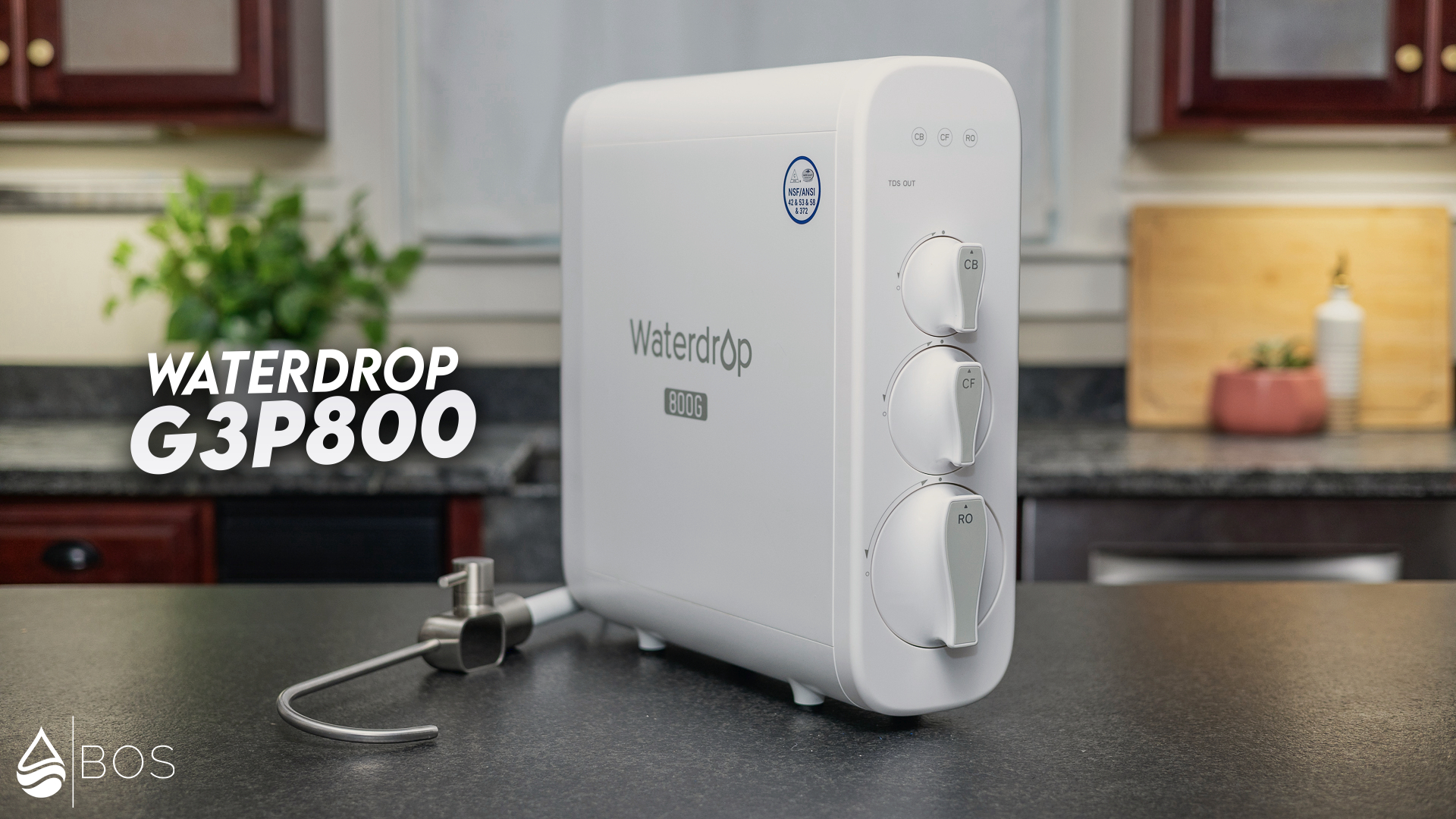
The Waterdrop G3P800 is our #1 tankless RO overall and top filtration pick, producing excellent lab results and clean-tasting water. Its 12 NSF/ANSI certifications cover most key contaminants, and it’s backed by additional third-party testing. Usability is solid: setup’s easy and it dispenses 1 cup (no splashing) in a fast 5.66 sec – suitable for most homes. Filter changes are simple, with indicator lights (and filtered TDS readings) on the faucet/base to remind you. The UV light + leak detection add some peace of mind; the tankless design saves space. Build quality is good, including the modern metal faucet. Wastewater is very low if you dispense large amounts at once; auto-flushing (which extends RO membrane life) creates an extra 28 oz five minutes after the last dispense. Despite its high upfront cost, the Waterdrop G3P800 is still a savvy buy.
The Waterdrop G3P800 is a tankless under sink reverse osmosis system that requires a plumbing connection. It’s designed for use as a drinking water filter and can purify both tap water and properly disinfected well water (pre-treatment may be required).
As usual, we’ve tested the system with our own hands:
- Hands-on experience: We installed, primed, used, and maintained it.
- Filtration effectiveness: Across 2 independent test rounds, we sent unfiltered and filtered tap water samples to professional laboratories for analysis to determine real-world contaminant reduction. Each round used a different filter set, water supply, and lab. We also reviewed NSF/ANSI certifications and other available test data.
- More testing: We conducted taste and odor evaluations as well as dispensing speed, noise, and wastewater tests.
- All other product aspects: We considered initial and long-term costs, warranties, additional features, frequent customer complaints, and more.

Final Rating: /5.00
FiltrationFiltration score combines our lab results and taste testing with NSF/ANSI certifications and 3rd-party contaminant reduction data.: /5.00
Usability: /5.00
CostsCost scores reflect overall value for money rather than price alone.: /5.00
| Type: | Tankless Under Sink Reverse Osmosis System |
| PriceNo short-term sales. (Aug 4, 2026): | $999 (Use Code G3P800BOS for 5% Off on Top of Most Waterdrop Sales!) |
| Yearly CostEstimate is based on rated/claimed filter life and 1000 gallons annual water consumption. No short-term sales. (Aug 4, 2026): | ~$160 (Save 5% with Filter Subscription) |
(Use Code G3P800BOS for 5% Off on Top of Most Waterdrop Sales!)
Final Rating: /5.00
What We Like Most
- Excellent results in our 2025 and 2026 lab testing.
- Clean taste with no odor in both 2025 and 2026.
- NSF/ANSI certifications cover most of the important contaminants with additional third-party testing.
- Tankless design is space-saving.
- Sturdy and well-built with a sleek, modern metal faucet (above-average quality).
- Easy setup with clear, illustrated instruction booklet + sheet and YouTube tutorial video.
- Suited for daily use with fast, splash-free dispensing; booster pump reduces dependence on feed pressure.
- Filtered water TDS readings on faucet and base.
- Built-in leak detection.
- UV LED may inactivate germs + turns off when not needed (energy saving).
- Easy filter changes – quickly twist in/out; filter life indicators on faucet + base.
- Very low wastewater (excluding flush water), also helped by booster pump.
- Automatic flushing reduces TDS creep and extends RO membrane life.
What We Don’t Like
- Faucet display is prone to smudges.
- Flush cycle 5 minutes after dispensing adds to wastewater, especially with low-volume, high-frequency use.
- High upfront price.
- Customer complaints include leaking (from base, housing), poor customer service, more wastewater than advertised, and units that stopped working.
How the Waterdrop G3P800 Compares to…
14 Other Tankless Reverse Osmosis Systems
In this video, Sara explains why the Waterdrop G3P800 became our #1 overall tankless RO and our top pick specifically for filtration.
Please note: Our full guide on the best tankless reverse osmosis systems is available here.
Video Chapters + Comparison Sheet
- Link to Comparison Sheet
- 00:00 – Intro
- 00:38 – What’s New
- 01:46 – 2 Best Tankless ROs
- 07:53 – Top Budget Pick
- 11:18 – Full NSF Certification
- 13:42 – Best for Speed
- 16:02 – For Hot Water
- 18:17 – For Dual Flow
- 20:07 – Wrapping Up
Full Analysis of the Waterdrop G3P800
Filtration: /5.00
The Waterdrop G3P800 scored 4.75/5.00 for filtration. How? Most importantly, it achieved excellent results in both our 2025 and 2026 lab testing, and the filtered water had a clean taste and no odor. In addition, the system has NSF/ANSI certifications covering the majority of important contaminants, supplemented by additional third-party testing.
1. Lab Results: /5.00 (2026) & /5.00 (2025)

Remember that our before vs after lab comparison is not an exact science. It’s informational and subject to variability, inaccuracies, and interferences caused by natural fluctuations in water quality, accidental contamination, human error, instrumentation issues, and more. Furthermore, our lab testing is limited to those contaminants present in our water supplies and at their respective concentrations, which is why the results may contradict third-party test data. As such, our lab testing can only give us a general idea for how effective a certain water treatment product might be.
In our 2025 and 2026 lab tests comparing an unfiltered and a filtered tap water sample, the Waterdrop G3P800 could remove 13 undesirable impurities and contaminants to below the minimum detection level (so essentially to 100%): chlorine, bromodichloromethane*, bromoform*, dibromochloromethane*, chloroform*, copper, iron, manganese, barium, zinc, uranium, lead, and tin.
The following substances remained in our water:
- Boron decreased by 20% in 2025. In 2026, it was reduced by 42%.
- Strontium was reduced by 97% in 2025. In 2026, it was completely removed.
- Nitrate was reduced by a minimum of 79% and up to 99% in 2025. In 2026, it was completely removed. Waterdrop’s third-party test data reports 98.00% nitrate reduction.
- Fluoride was reduced by a minimum of 85% and up to 99% in 2025. In 2026, it was completely removed. That said, we used a different fluoride detection method each year and assume the 2026 method is more accurate. Waterdrop’s performance data sheet for its NSF/ANSI standard 58 certification reports 88.23% fluoride reduction.
Finally, TDS decreased by 90% in 2025. In 2026, it was reduced by 94%. While TDS should not be interpreted independently, as it does not override inadequate removal of individual contaminants, ≥90% TDS reduction is high and shows that the RO membrane works as intended. Waterdrop’s performance data sheet for its NSF/ANSI standard 58 certification reports 93.59% TDS reduction.
*Our unfiltered water sample’s VOC vial arrived shattered at the lab, so VOCs (including the above disinfection byproducts) couldn’t be evaluated. Instead, we used the average VOC results of our 3 other unfiltered water samples from this test round.
Lab Results Charts
| Potentially Harmful | Aesthetic Issues | Feed Water Level | Filtered Water Level | Reduction Rate | |
| Water Disinfectants | |||||
| Chlorine (mg/L) | ✖ | ✖ | ~2 | 0 | 100% |
| Disinfection Byproducts | |||||
| Bromodichloromethane (µg/L) | ✖ | 18.73 | 0 | 100% | |
| Bromoform (µg/L) | ✖ | 0.99 | 0 | 100% | |
| Dibromochloromethane (µg/L) | ✖ | 8.74 | 0 | 100% | |
| Chloroform (µg/L) | ✖ | 34 | 0 | 100% | |
| Metals | |||||
| Copper (mg/L) | ✖ | ✖ | 0.00842 | 0 | 100% |
| Iron (mg/L) | ✖ | 0.099 | 0 | 100% | |
| Manganese (mg/L) | ✖ | ✖ | 0.00331 | 0 | 100% |
| Barium (mg/L) | ✖ | 0.0521 | 0 | 100% | |
| Boron (mg/L) | ✖ | 0.11 | 0.0642 | 42% | |
| Zinc (mg/L) | ✖ | 0.00957 | 0 | 100% | |
| Strontium (mg/L) | ✖ | 0.144 | 0 | 100% | |
| Lead (mg/L) | ✖ | 0.000532 | 0 | 100% | |
| Tin (mg/L) | 0.0203 | 0 | 100% | ||
| Salts | |||||
| Nitrate (N) (mg/L) | ✖ | 2.94 | 0 | 100% | |
| Fluoride (mg/L) | ✖ | 0.936 | 0 | 100% | |
| RO Salt Rejection | |||||
| TDS (mg/L) | ✖ | 329 | 20.9 | 94% | |
| Other Parameters | |||||
| pH | 7.7 | 6.7 | |||
| Impurities NOT Detected in Unfiltered Tap Water Sample | |||||
| Lab Reports: Filtered Water Report, Unfiltered Water Report | |||||
| Chlorine Self Test Photos: Filtered Water, Unfiltered Water | |||||
| Explanation: | |||||
| Full Removal | |||||
| Considerable Reduction | |||||
| Concentration More than Double of Unfiltered Water Sample | |||||
| Potential Leaching Reached or Exceeded the Strictest Public Health Guideline We Could Find | |||||
| Potentially Harmful | Aesthetic Issues | Feed Water Level | Filtered Water Level | Reduction Rate | |
| Water Disinfectants | |||||
| Chlorine (mg/L) | ✖ | ✖ | 1.55 | 0 | 100% |
| Disinfection Byproducts | |||||
| Bromodichloromethane (µg/L) | ✖ | 2.57 | 0 | 100% | |
| Bromoform (µg/L) | ✖ | 1.78 | 0 | 100% | |
| Dibromochloromethane (µg/L) | ✖ | 3.86 | 0 | 100% | |
| Chloroform (µg/L) | ✖ | 1.19 | 0 | 100% | |
| Metals | |||||
| Copper (mg/L) | ✖ | ✖ | 0.06 | 0 | 100% |
| Barium (mg/L) | ✖ | 0.04 | 0 | 100% | |
| Boron (mg/L) | ✖ | 0.05 | 0.04 | 20% | |
| Zinc (mg/L) | ✖ | 0.01 | 0 | 100% | |
| Strontium (mg/L) | ✖ | 0.36 | 0.01 | 97% | |
| Salts | |||||
| Nitrate (N) (mg/L) | ✖ | 2.36 | <0.5 | Anywhere between 79% and 99% | |
| Fluoride (mg/L) | ✖ | 0.68 | <0.1 | Anywhere between 85% and 99% | |
| Other | |||||
| Uranium (µg/L) | ✖ | 1 | 0 | 100% | |
| RO Salt Rejection | |||||
| TDS (mg/L) | ✖ | 310.8 | 30.6 | 90% | |
| Other Parameters | |||||
| pH | 7.66 | 6.32 | |||
| Impurities NOT Detected in Unfiltered Tap Water Sample | |||||
| Lab Reports: Filtered Water Report, Unfiltered Water Report | |||||
| Explanation: | |||||
| Full Removal | |||||
| Considerable Reduction | |||||
| Concentration More than Double of Unfiltered Water Sample | |||||
| Potential Leaching Reached or Exceeded the Strictest Public Health Guideline We Could Find | |||||
2. NSF/ANSI Certifications and Other Test Data
The Waterdrop G3P800 is certified by the IAPMO for the reduction of 12 important contaminants against NSF/ANSI standards 42, 53, and 58 (1,2). These certifications include chlorine (>97.50%), taste/odor, PFOA (>98%), PFOS (>99%), TDS (93.59%), fluoride (88.23%), cadmium (92.17%), chromium 6 (96.38%), selenium (98.47%), barium (97.79%), radium 226/228 (97.79%), and lead. Reduction rates are per the official performance data sheet.
Plus, it has additional third-party testing against NSF/ANSI standards 42, 53, 58, 401, and other, non-NSF/ANSI standards for 83 contaminants.
Listed reduction rates include:
- Dozens of VOCs (95.00-99.00%+)
- TDS (98.00%)
- Fluoride (99.00%)
- Nitrate (98.00%)
- Arsenic (>99.00%)
- Chromium 6 (>99.00%)
- Lead (>99.00%)
- Mercury (>99.00%)
- Barium (>99.00%)
- Copper (>99.00%)
- Chlorate (>99.00%)
- Selenium (>96.00%)
- Total PFAS (>99.00%)
- PFOA (>99.00%)
- PFOS (>99.00%)
- PFNA (>80.00%)
- PFHxS (>96.40%)
- PFHpA (>75.00%)
- Total coliforms (>99.999%)
- Several emerging compounds, including pharmaceuticals, pesticides, and industrial chemicals (90.26-94.32%+)
3. Filtration Process
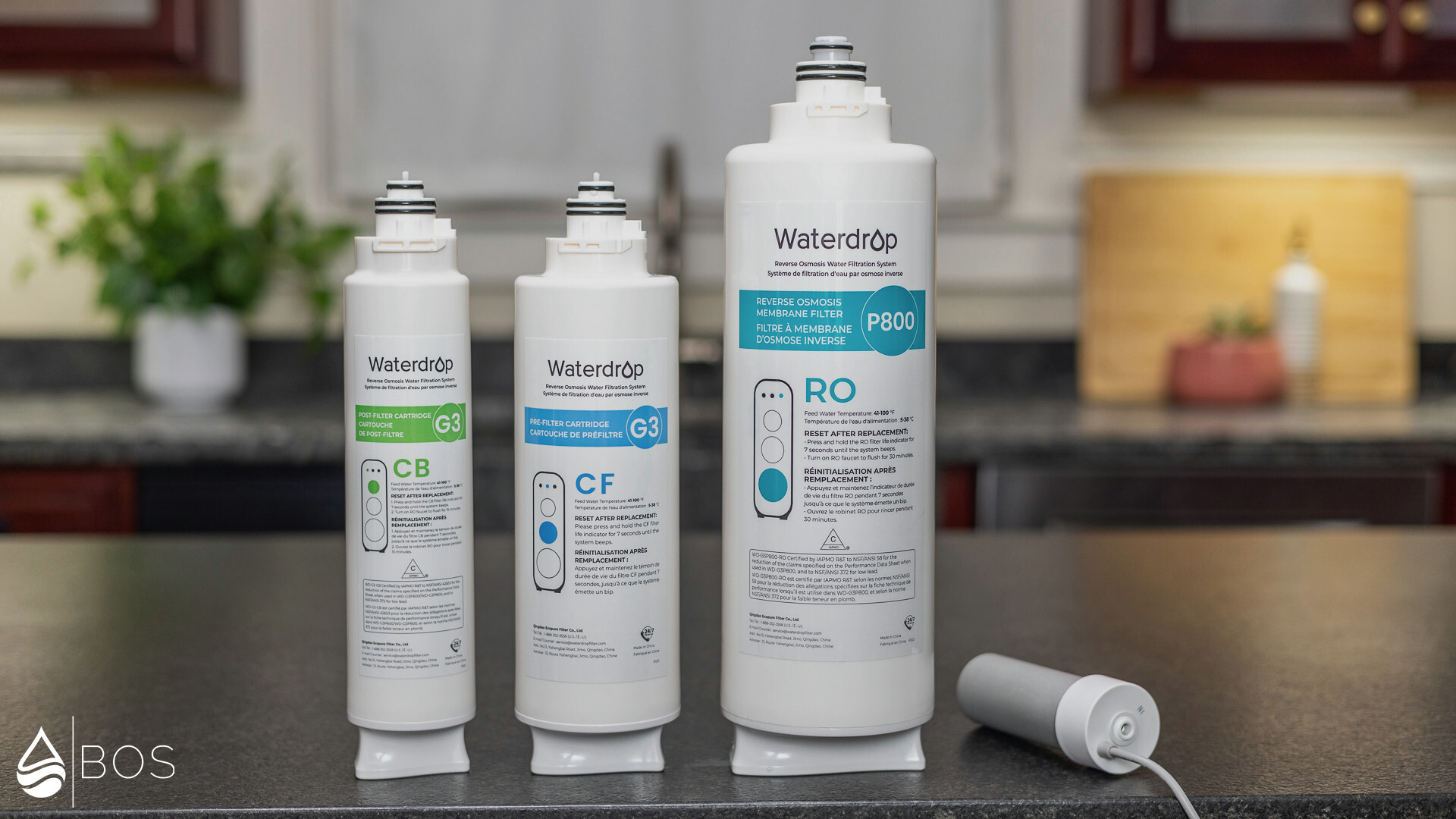
The Waterdrop G3P800 has 3 filter cartridges and a UV light post-filter, which comprise 10 filtration stages. However, the website provides minimal information about the filtration process. For stages 1-9, the system appears to use the following:
- Polypropylene (PP) cotton sediment pre- and post-filters perform mechanical filtration, acting like sieves to remove solid, undissolved particulates such as dirt or rust.
- The coconut shell activated carbon block pre-filter removes things like bad tastes and odors, chlorine/chloramine, disinfection byproducts and other organics, as well as certain metals. By removing chlorine and other contaminants, the pre-filter protects the RO membrane from damage. In addition, the block structure provides fine mechanical filtration due to its smaller pore size compared to granular carbon.
- The scale inhibitor membrane prevents dissolved hard water minerals from precipitating into scale on the RO membrane, thereby extending RO membrane life and maintaining high water production.
- The RO membrane uses reverse osmosis to effectively remove the vast majority of contaminants and minerals.
- The coconut shell activated carbon block post-filter acts as a polishing filter to remove lingering bad tastes/odors and VOCs.
Stage 10 is the UV post-filter, which exposes the filtered water to germicidal UV radiation prior to dispensing, inactivating microorganisms. This provides chemical-free disinfection; however, in our view, it should not be relied upon to make non-potable water safe to drink.
Waterdrop doesn’t disclose the specifications of its UV light, and that matters. Different germs need different UV doses to be inactivated, and dose is the product of light intensity and exposure time. Tankless RO systems push water through the tubing quickly, so exposure time is very short. Without knowing how much UV energy is actually delivered, there’s no way to tell which germs, if any, are being adequately treated. While the UV module is a nice bonus – at least in this case – it doesn’t guarantee water safety.
4. Taste and Odor Tests
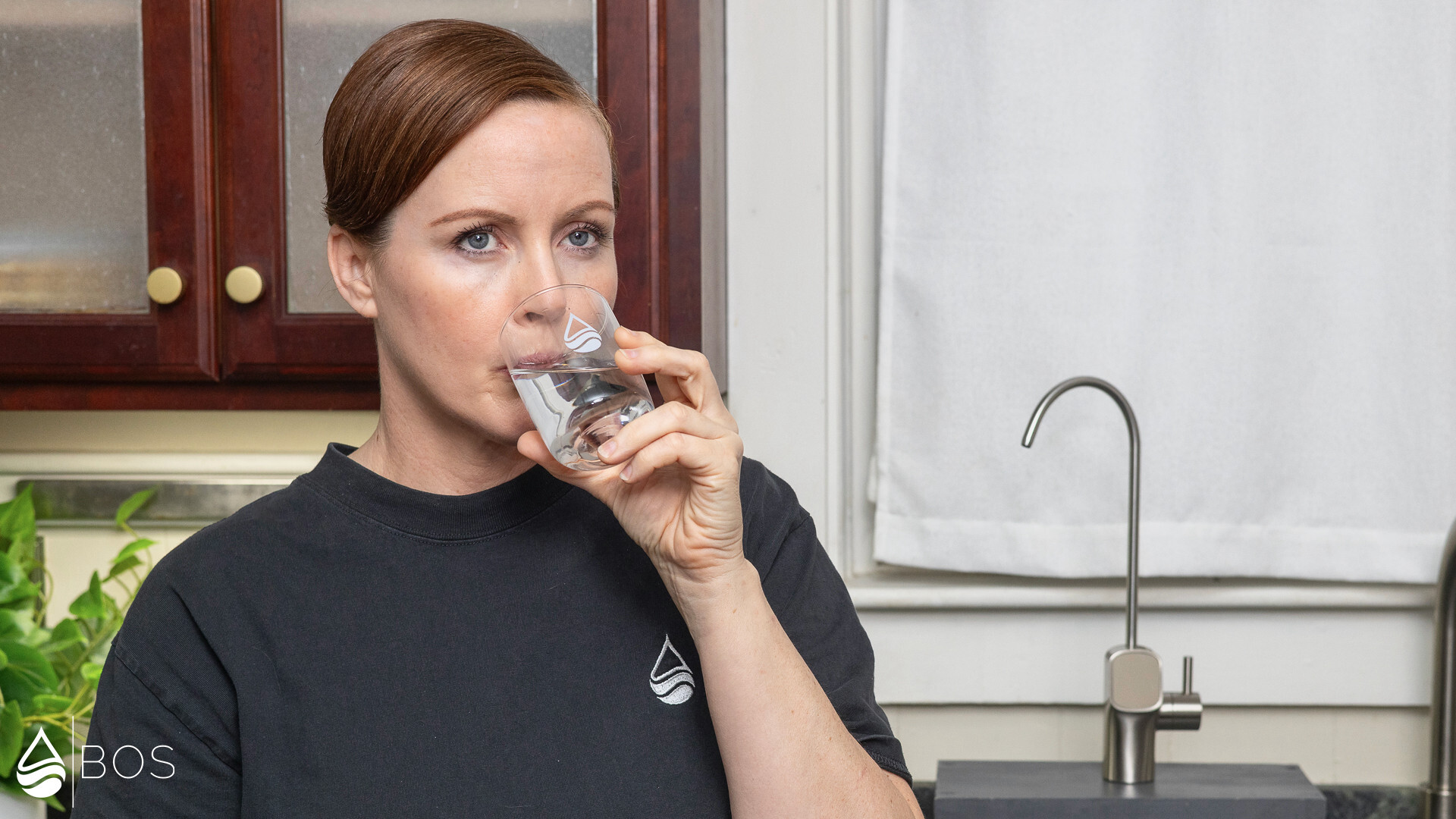
In our 2025 and 2026 tests, the filtered water was odorless and had a perfectly clean taste.
Usability: /5.00
The Waterdrop G3P800 achieved a usability score of 4.46/5.00, based on its performance in the following categories:
- Initial system assembly including filter priming (1.40/1.40)
- Everyday use (2.16/2.70)
- Filter replacements (0.90/0.90)
1. Initial Setup: /1.40
Assembling the Waterdrop G3P800 is easy. In addition to clear, illustrated directions in the instruction booklet, a helpful one-sheet quick setup guide was included. There’s also a tutorial video on YouTube. However, we had to use more force to insert and remove the tubing from the quick-connect fittings compared to some of the other tankless RO systems we tested.
Here’s a quick breakdown of the setup procedure:
- Shut off the cold water supply and turn on kitchen faucet to release the water pressure.
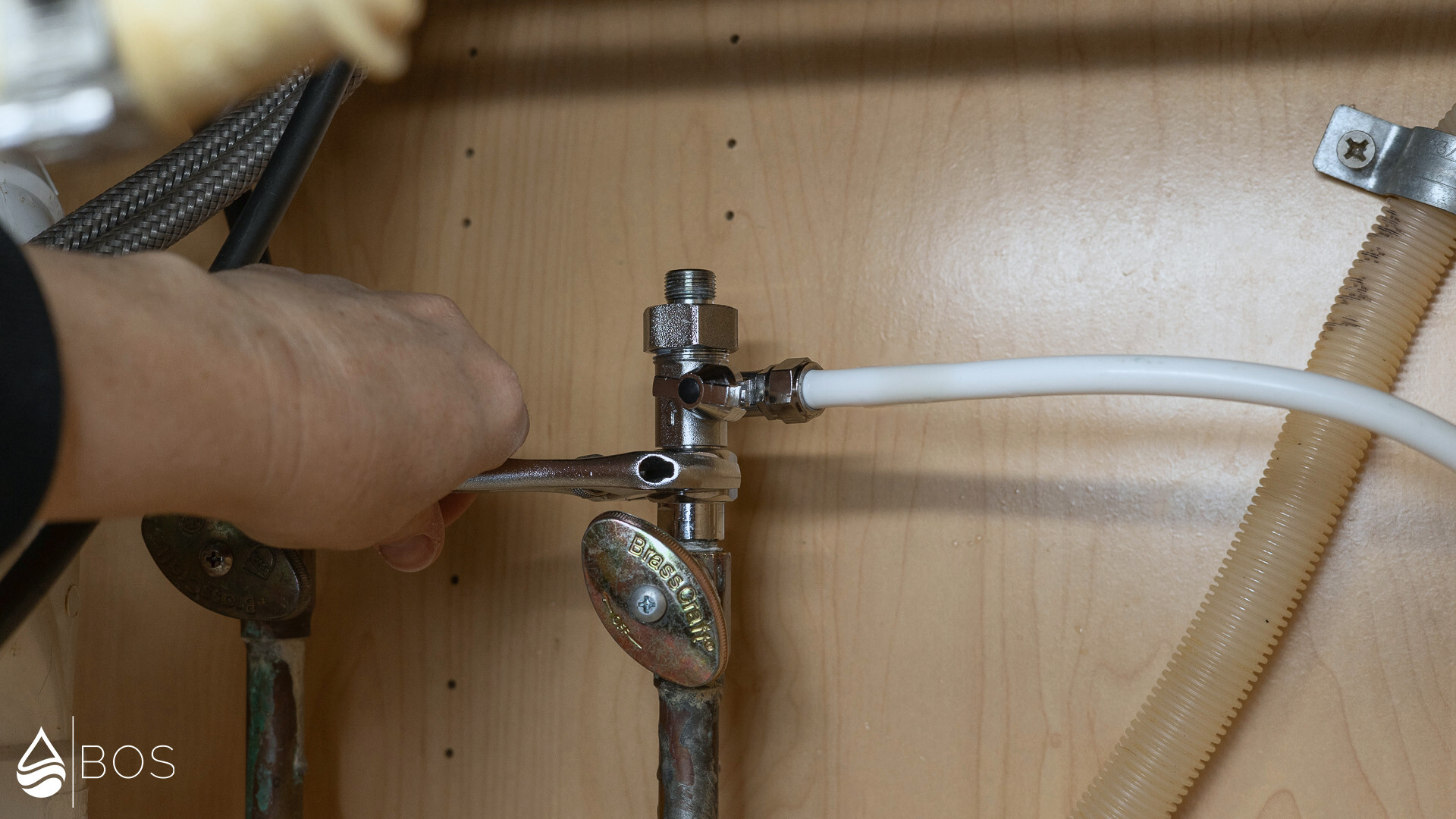
- Disconnect the cold water pipe from its supply valve. Attach the feed water adapter with its washer to the cold water supply valve (⅜″) and tighten using a wrench. To attach to ½″ pipes, first unscrew the converters from the adapter.
- Attach the cold water pipe with its washer to the feed water adapter, tightening with a wrench.
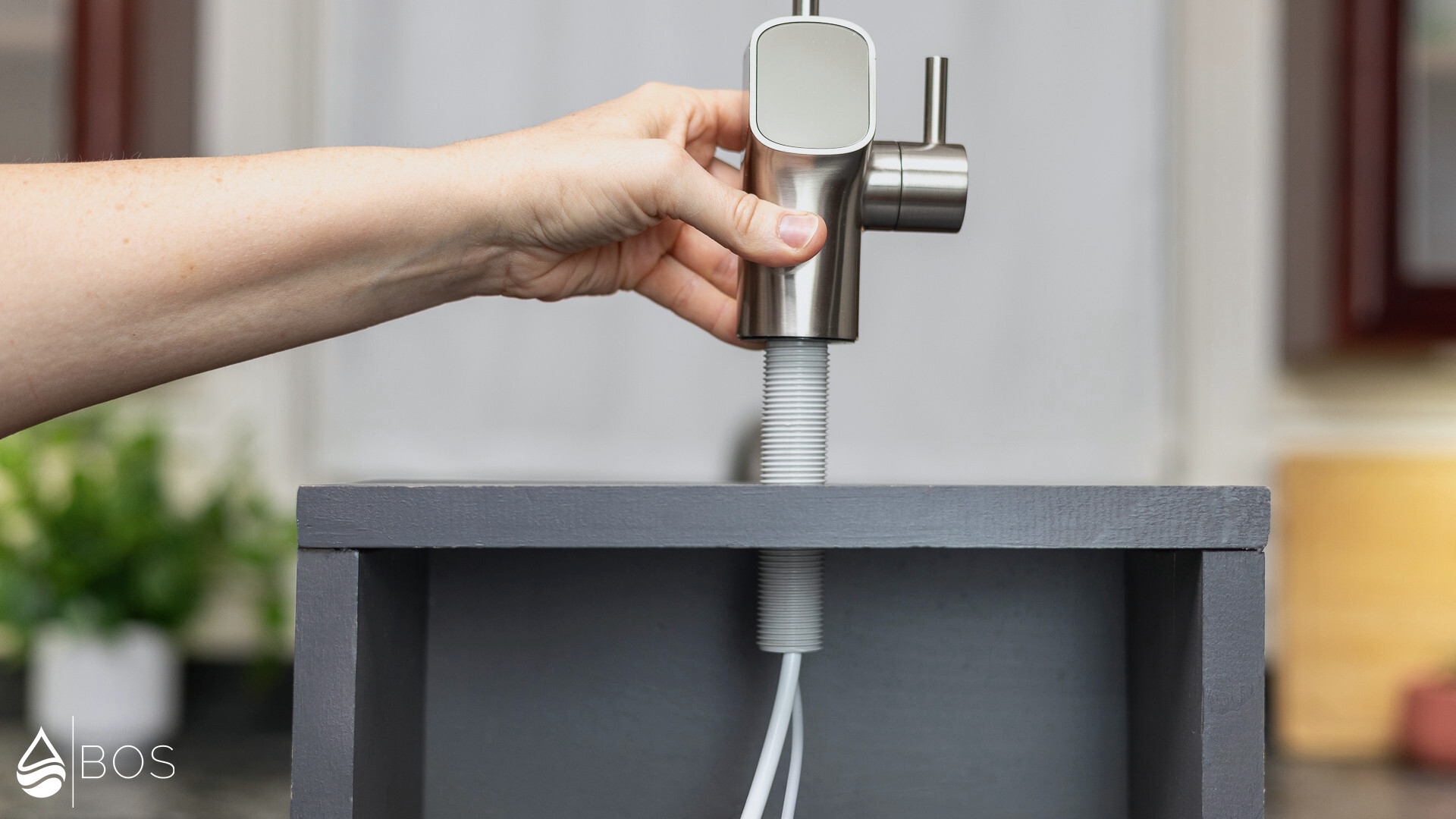
- Drill a 1″ hole into your kitchen sink or countertop if one doesn’t already exist. Insert the faucet spout into the body, then insert the faucet stem, power cord and filtered water tubing into the hole on the countertop.
- From under the sink, slide on the nut and tighten it to secure the faucet.
- Cut faucet’s pre-installed white tubing to an appropriate length to install the UV sterilizer.
- Connect outlet of UV sterilizer to this tubing, then slip on lock clip. Connect inlet of UV sterilizer (with ring lamp) to white PE tubing that will later be installed into the FILTERED port on the system housing. Secure with lock clip.
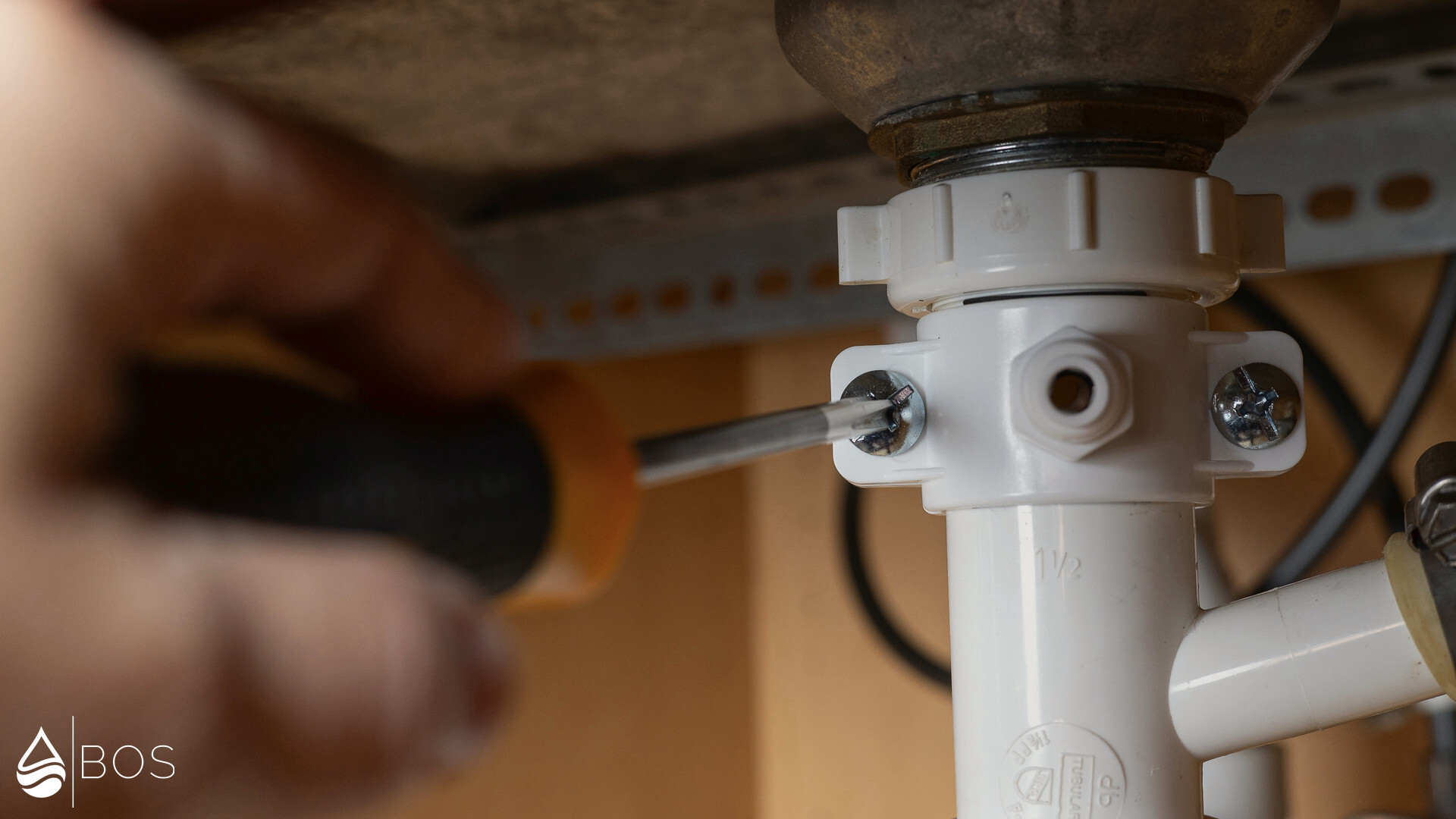
- Stick the foam seal onto the front half of the drain saddle. Drill a ¼″ hole in the drain pipe.
- For non-air gap setups, insert the unmarked end of the red drain tubing into the front plate and then into the drilled hole to ~0.6″. Add the back plate of the drain saddle and tighten using the screws and nuts.
- Place the lock clip on the fitting to secure it.
- Position the housing in desired location (not directly against a cabinet). Confirm tubing is of appropriate length and cut if needed.
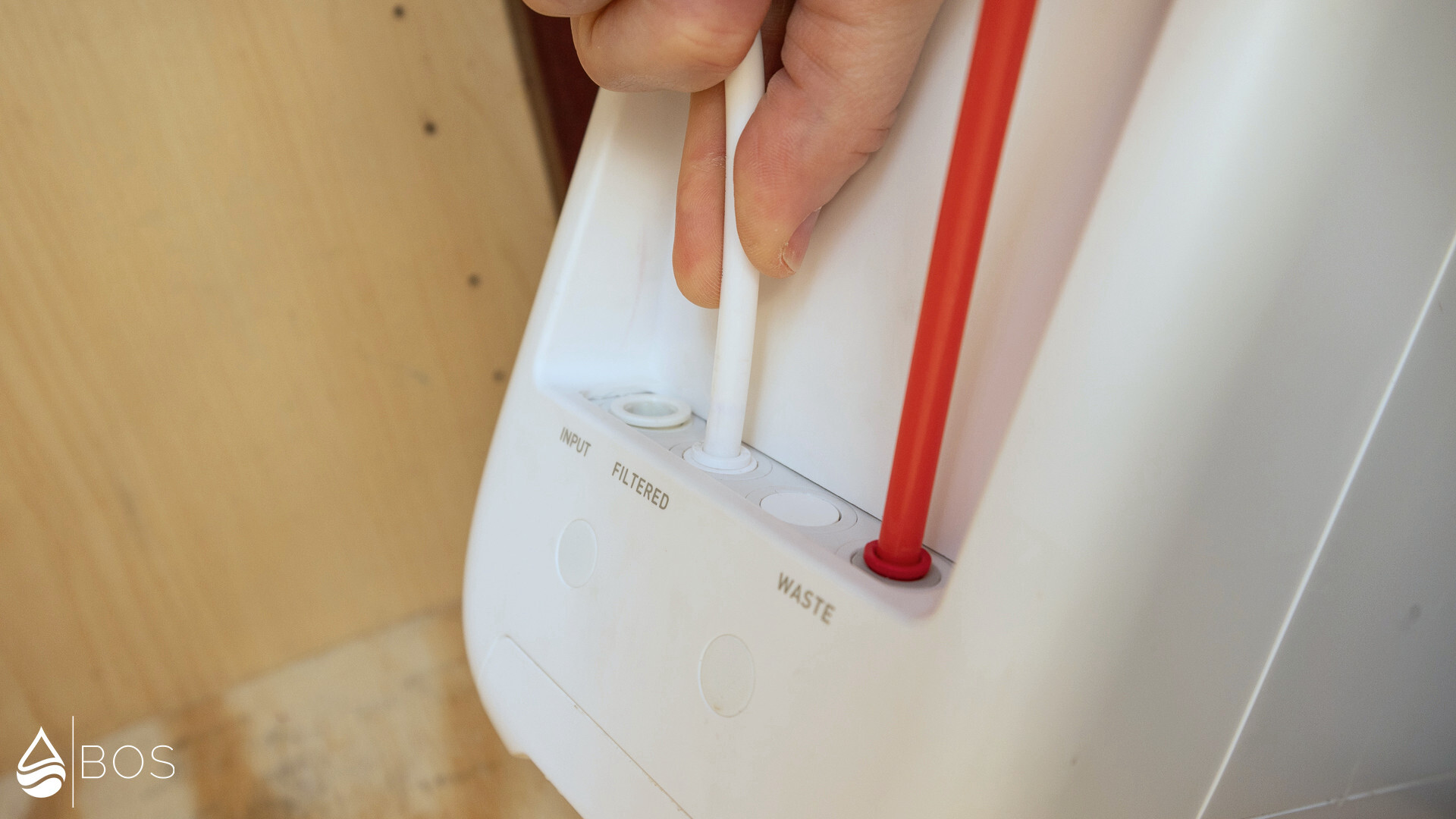
- Remove the plug from the INPUT water port. Insert the free end of the white tubing attached to the feed water adapter into this port to the level of the marking. Place lock clip on the fitting.
- Remove plug from the FILTERED water port. Insert the free end of the white tubing connected to the UV sterilizer into this port to the level of the marking; secure with a lock clip.
- Remove plug from WASTE water port. Insert the free end of the red tubing (attached to drain saddle) to the level of the marking into this port; secure with lock clip.
- Insert power cord from the faucet into the FAUCET connector. Insert power adapter into the POWER port.
- Remove filter packaging, then insert each into the appropriate slot, aligning the arrow with the empty circle on the housing. Twist clockwise to lock (arrow points to a solid circle).
- Turn on cold water supply valve and check for leaks.
- Insert power adapter plug into outlet. System will automatically flush for 5 minutes. Indicator lights on faucet will turn off when flush is complete.
- Turn on RO faucet and run water for 30 minutes, until TDS reading is displayed on the front panel and faucet screen.
- Now your system is ready to use.
2. Day-to-Day Use: /2.70
2.1 Speed & Water Capacity: /2.40
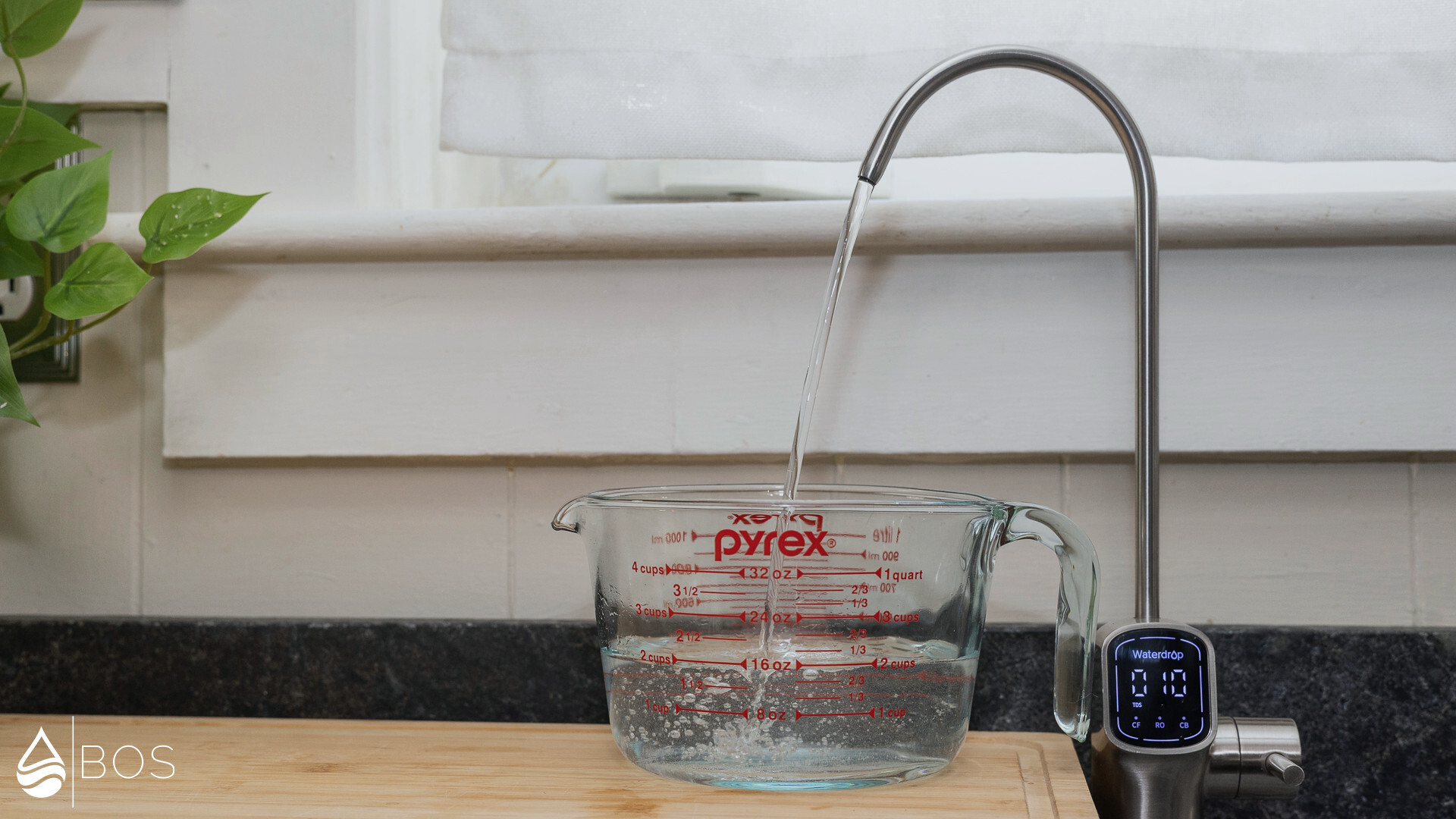
The Waterdrop G3P800 is suited for daily use and offers fast dispensing speed. In our speed tests, it filtered and dispensed 1 cup in 5.66 sec and 4 cups in 21.40 sec when the incoming feed water pressure was around 50 psi. That means it filters fast enough to meet the daily water needs of the average-sized US households (~2.55-3.15 people), including 8-10 cup/hour thirst bursts.
Like most of the tankless ROs we tested, the G3P800 has a built-in booster pump that plays a big role here. It raises the water pressure at the RO membrane, which allows fast on-demand filtering without a storage tank and makes dispensing speed less dependent on your home’s water pressure.
Our projected average 1- and 4-cup dispensing speeds for an 800-GPD system are 5.44 and 21.41 sec. Overall, the Waterdrop G3P800 has average dispensing speeds for an 800-GPD system, with both its 1-cup and 4-cup speeds coming in around the average.
2.2 Dispensing: /0.00
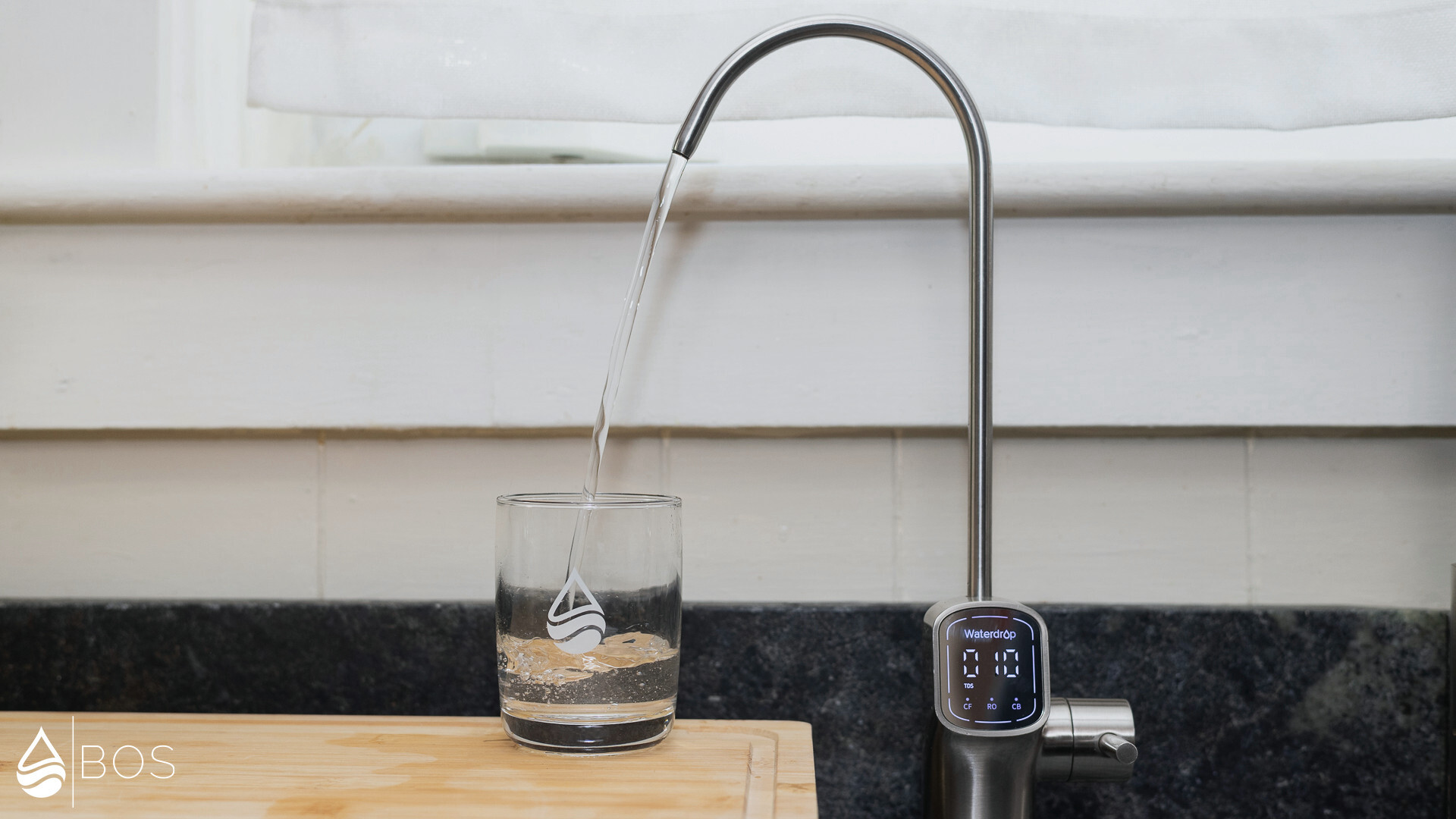
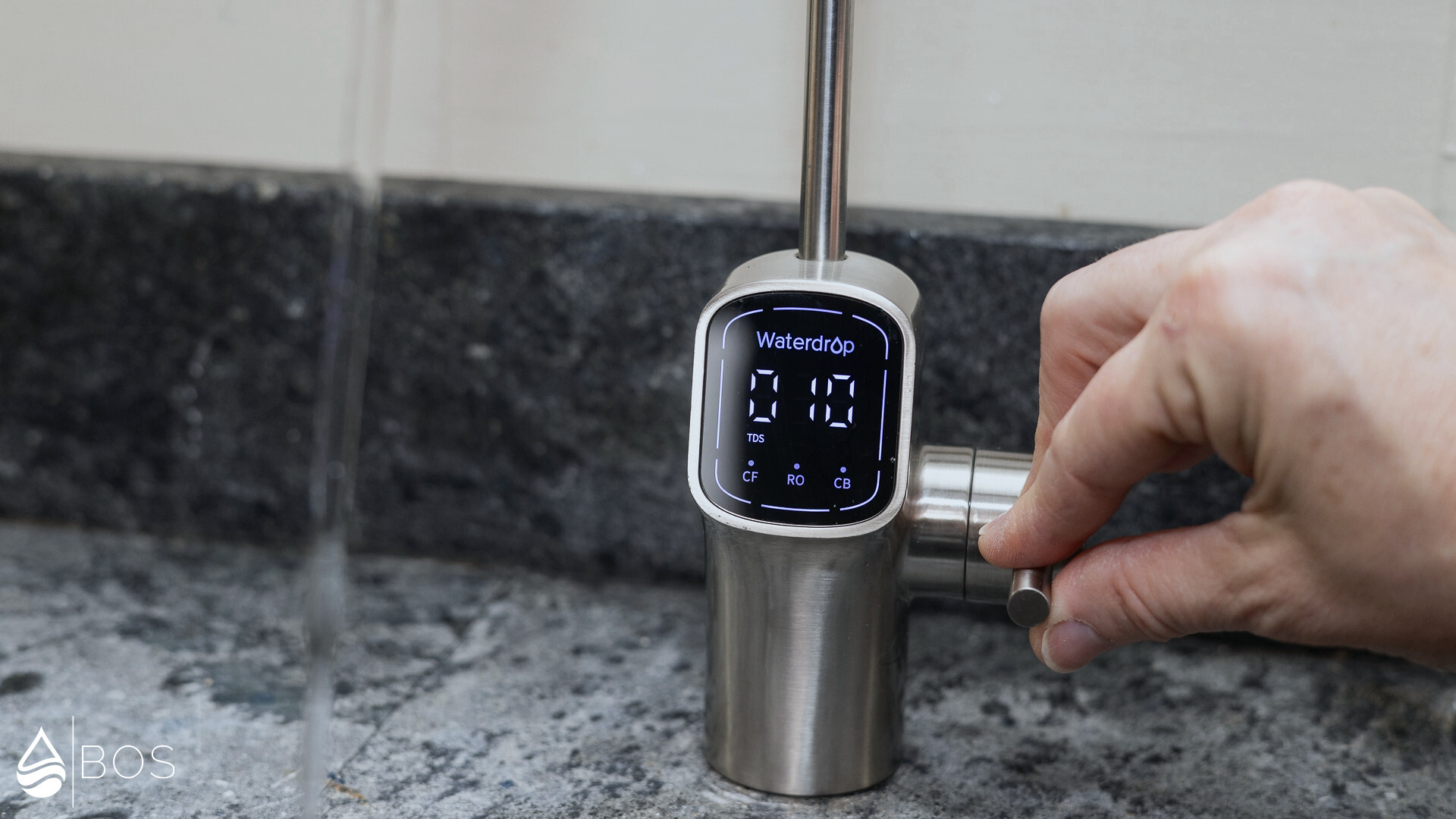
Dispensing water is easy and without splashing, and there is no dripping afterward. Flow speed is readily adjustable by turning the handle, and the spigot can swivel a full 360° to best suit your needs. Plus, dispensing starts and stops promptly, with no ramp up or down – even when quickly turning on the faucet to full flow.
2.3 Other: /0.30
The displays on the faucet and base show filtered water TDS readings.
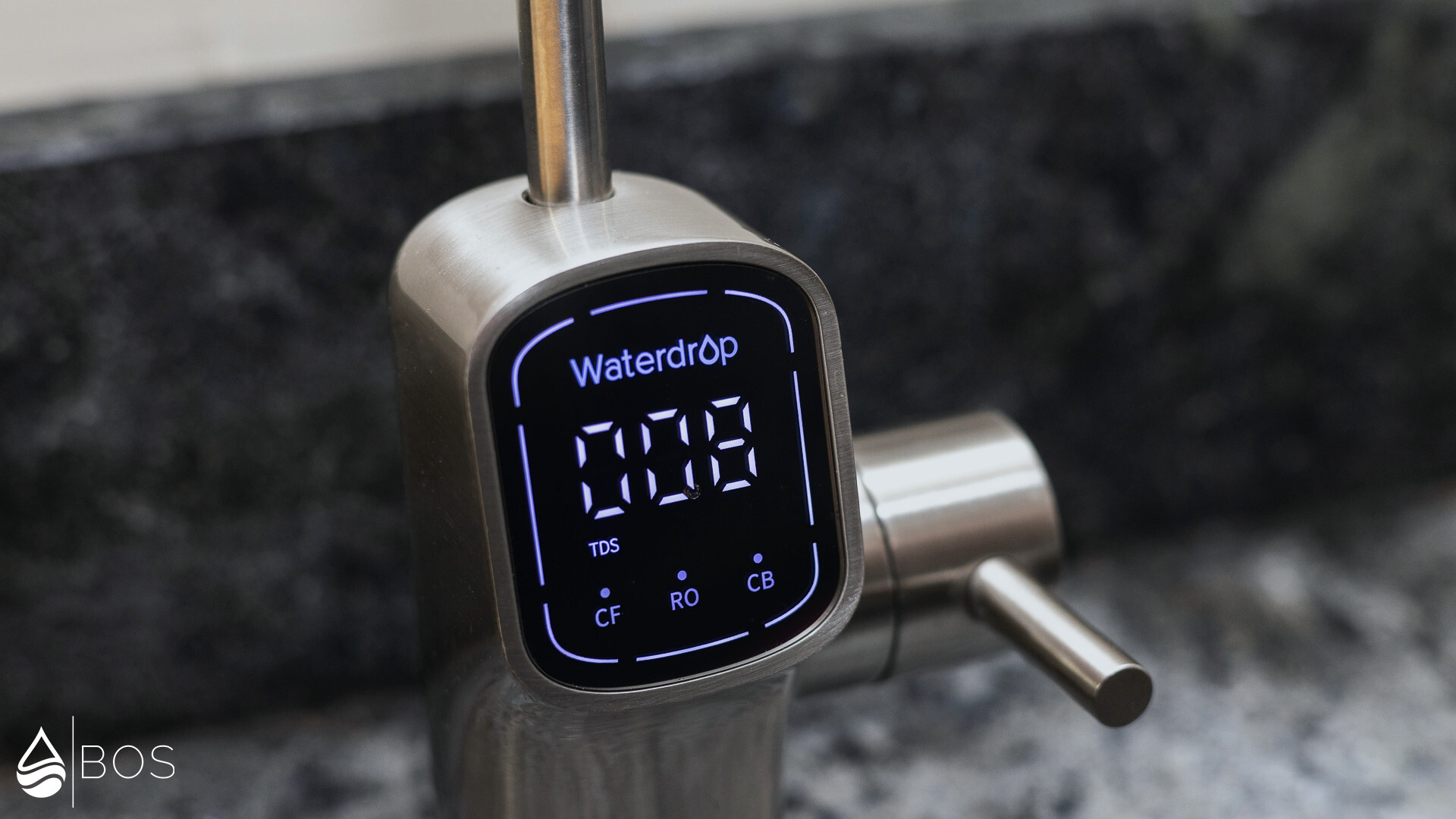
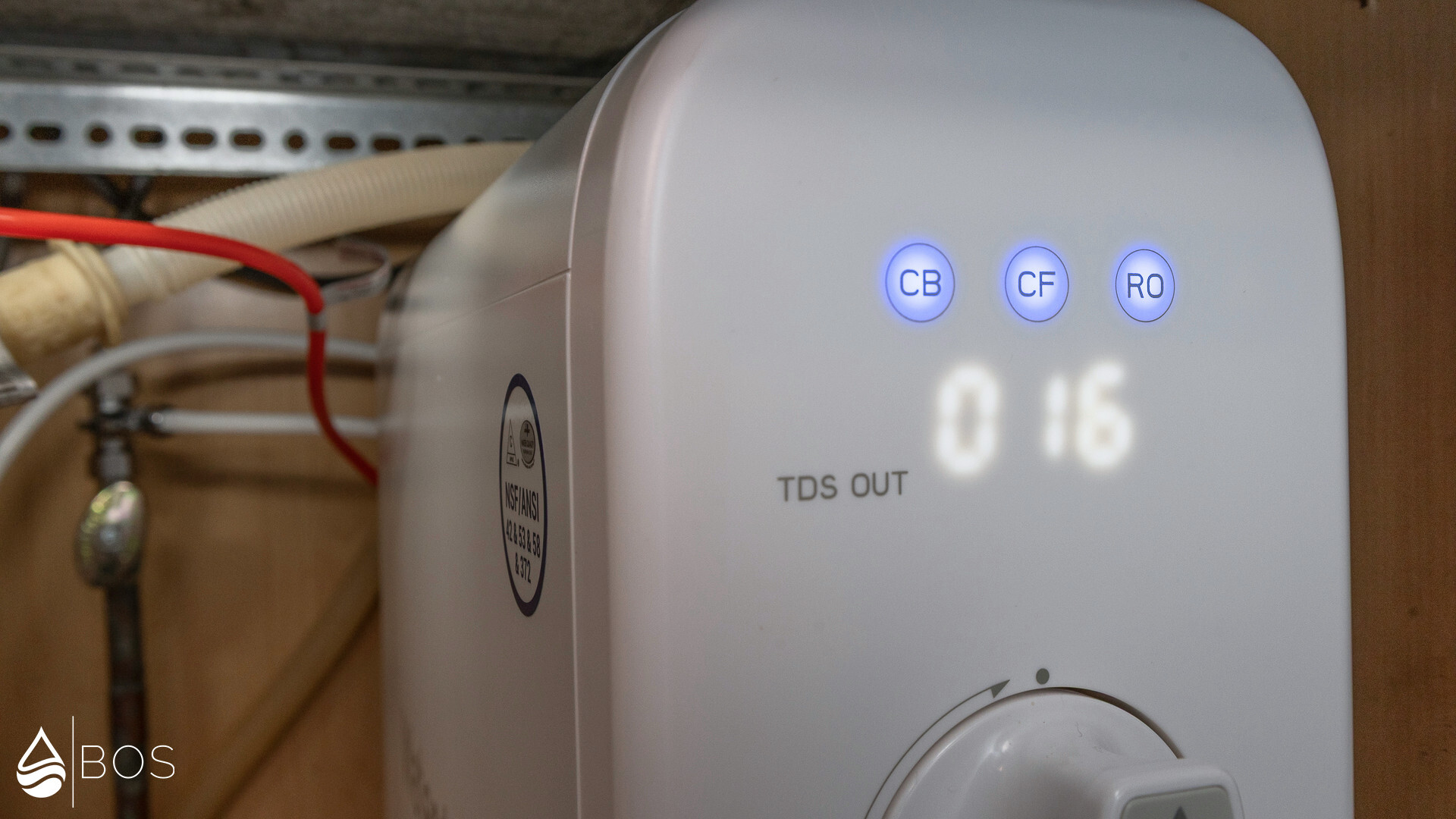
The G3P800 also features built-in leak detection. The faucet/base display an error code when the system senses internal leaks, and the unit makes a continuous buzzing sound to alert you to investigate.
At 5.5″x17.8″x18.15″ (WxHxD) and 29.5 lb with its three wet filter cartridges installed, both the footprint (~99.83 in2/~0.69 ft2) and weight of the base unit are about average for the tankless ROs we tested. The faucet measures 3.15″x13″x5.2″ (WxHxD) – large enough to clearly see the display without looking out of place next to the sink.
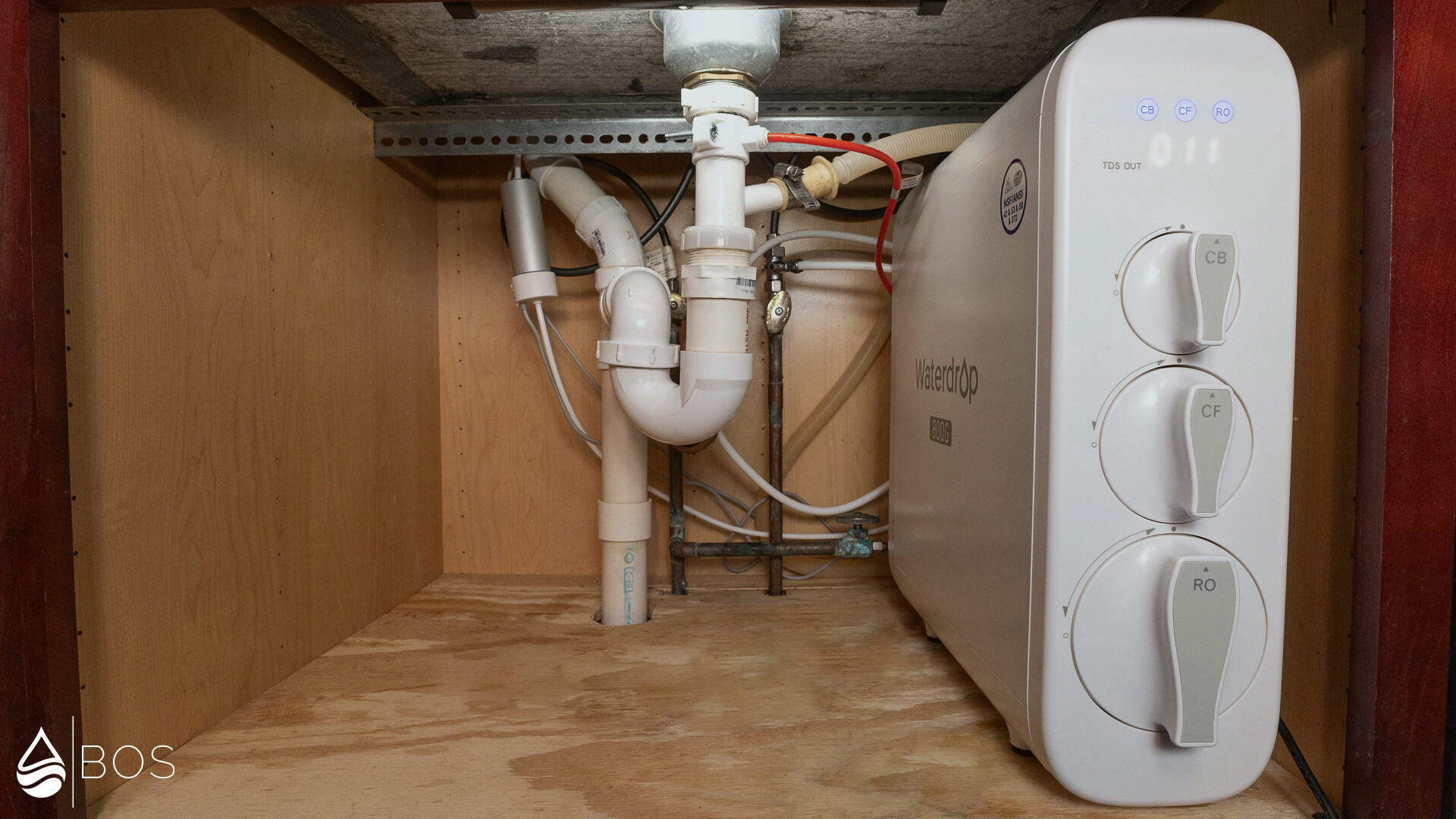
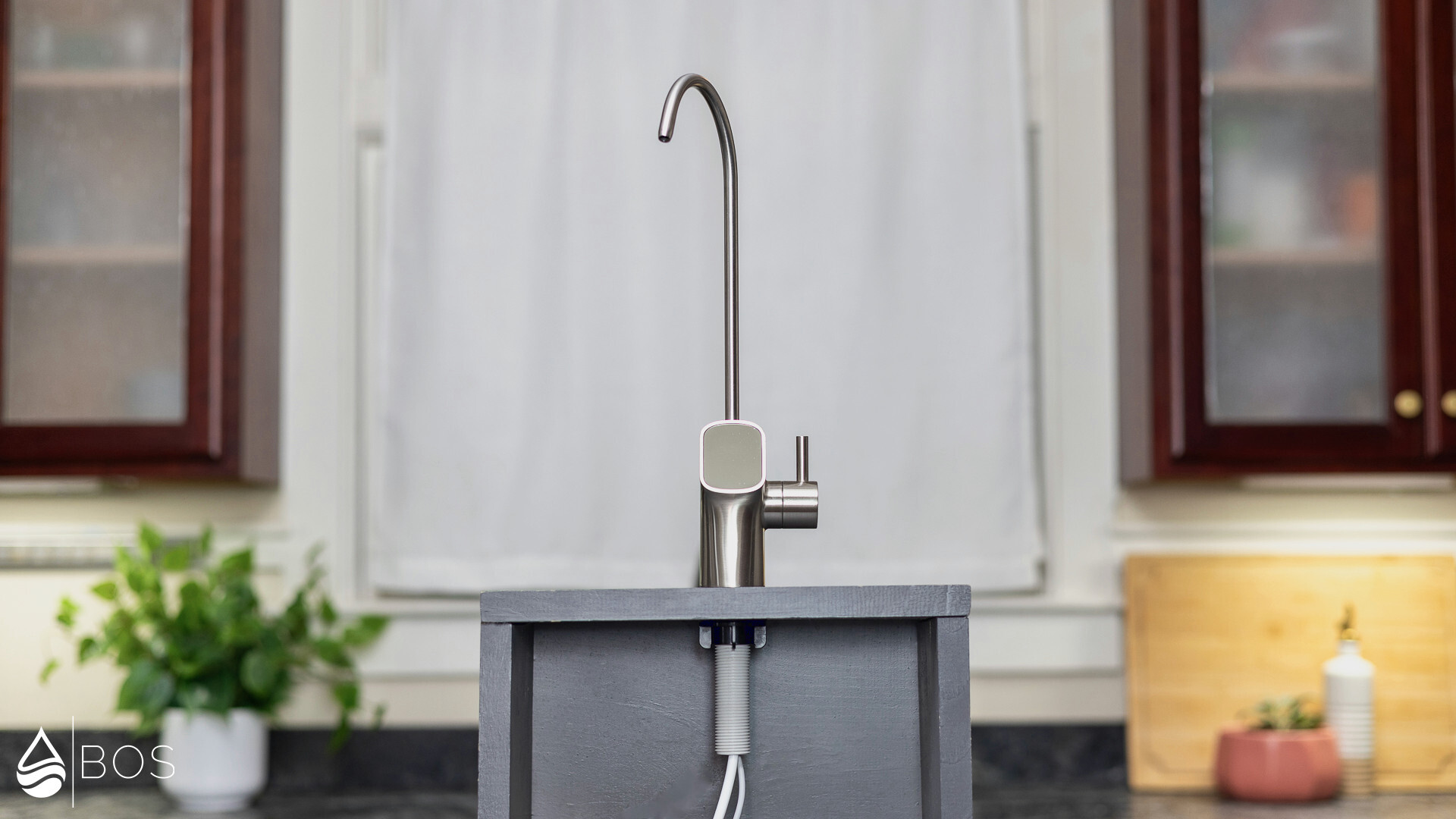
In our noise test, the Waterdrop G3P800 averaged 39.4 dBA – almost 4 dB below the average of all systems we tested (43.2 dBA), slightly quieter.* Its peak of 40.4 dBA sat about 5 dB below the average peak (45.6 dBA) – noticeably quieter.* In person, our tester found it no louder than the average system, which is consistent with the measurements. For reference, room background noise clocked in at 25-29 dBA for all systems, which neared the limits of detection for our noise meter.
*Perceived loudness based on the common rule of thumb that a 10 dB increase sounds about twice as loud. This holds for mid-range pitches; for deep sounds the effect is stronger – at 30 Hz, just 5 dB already doubles perceived loudness. Actual perception also varies between people. Measured 1 m from system, A-weighting, slow response. Meter is Class 2 (±1.5 dB) – adequate for ranking systems against each other, not for absolute values.
3. Filter Replacements: /0.90
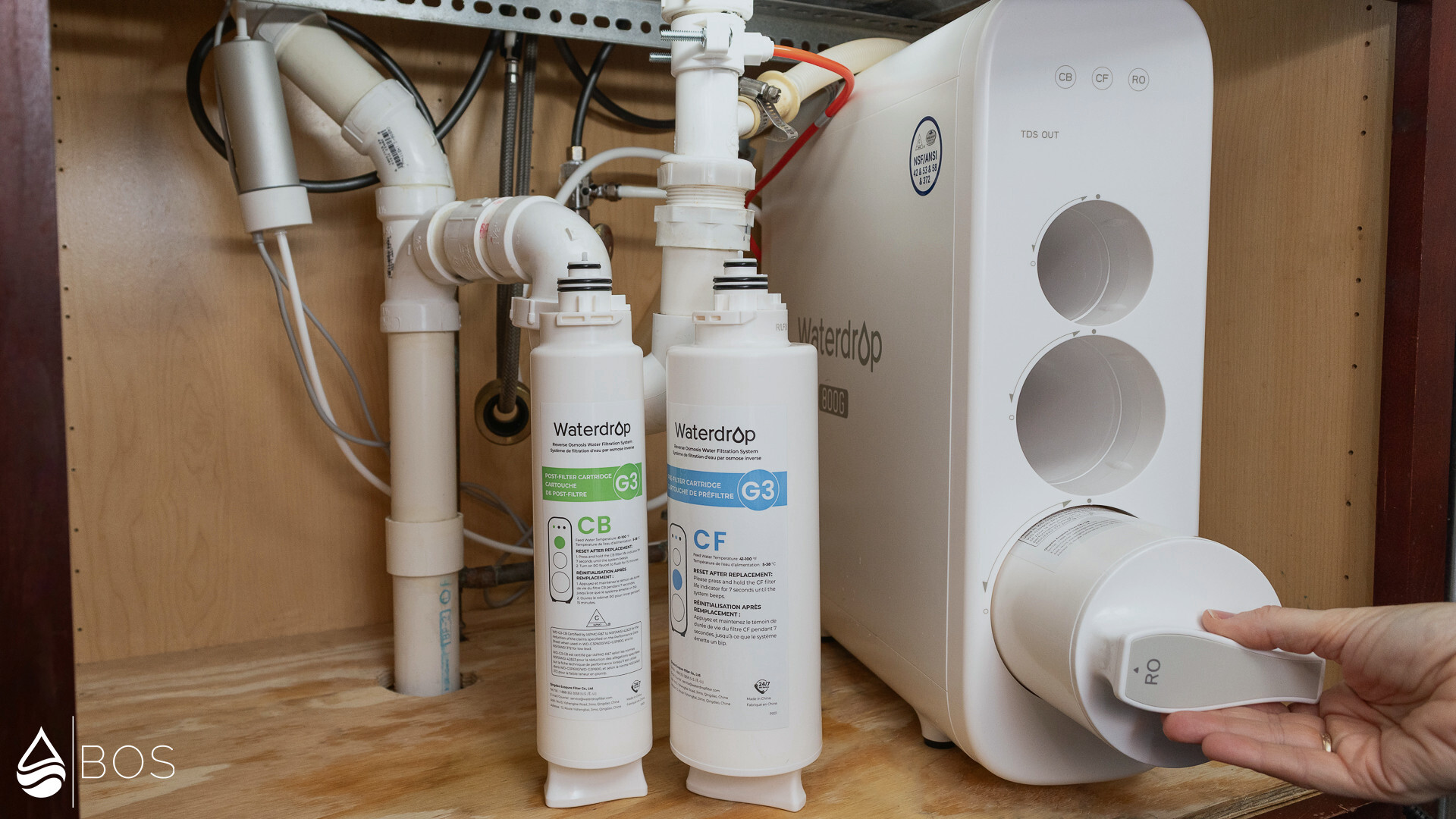
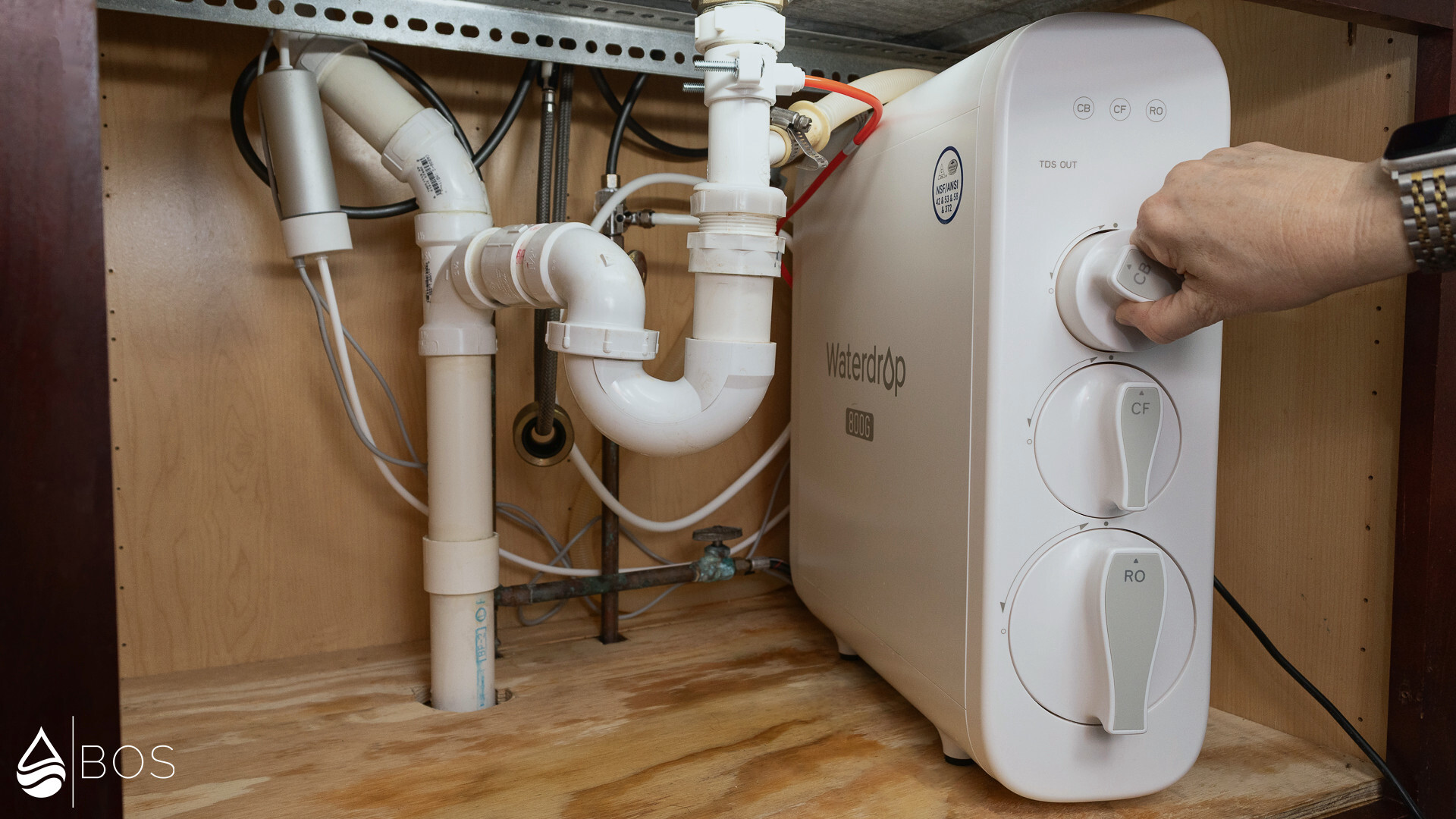
Filter replacements are very simple: the filters are easily accessible at the front of the housing and quickly twist in/out. Filter change indicator lights on the base and faucet let you know when it’s time to change each one.
Waterdrop makes inconsistent filter life claims for the G3P800 across its website and user manual. Rated filter life for the composite pre-filter is variably reported as 550-800 gal or 6 months, the RO membrane 2,200-3,200 gal or 2 years, and the carbon post-filter 1,100-1,600 gal or 12 months.
Assuming 1,000 gallons of yearly water consumption for the average household, we predict the frequency of your filter changes will be dictated by filter age rather than water usage. Therefore, expect to replace the various components every 6-24 months as indicated.
Support BOS Water’s Mission!
Every coffee helps us test more products and bring you unbiased results!
Costs: /5.00
Based on value for money, the Waterdrop G3P800 achieved a cost score of 3.89 out of 5.00, indicating it is priced above average for what it offers compared to competing systems (a score of 4.00 represents average value). Notably, its upfront price is well above average, while its annual filter replacement costs are around average compared to the other tankless ROs we tested.
1. Upfront Price
As of August 4, 2026, the Waterdrop G3P800 is priced at $999. However, Waterdrop frequently offers sales. Using our 5% off discount code (which you can combine with most other Waterdrop promotions), you can get the G3P800 for as little as $721.05 – well above the $500 average we observed across the 800-GPD tankless RO systems during our research.
2. Long-Term Expenses for Filter Replacements
Based on 1,000 gallons consumption and a 550 to 800-gal or 6-month (composite pre-filter), 2,200 to 3,200-gal or 2-year (RO membrane), and 1,100 to 1,600-gal or 12-month (carbon post-filter) rated filter life, we estimate $160 in annual filter replacement costs, which is around the $171.33 average across all the tankless ROs we tested. Plus, you can save an additional 5% with a filter subscription.
3. Product Warranty
The Waterdrop G3P800 comes with a 1-year warranty.
4. Other Cost Factors
Other features which we feel affect the Waterdrop G3P800’s value include:
- Filtered water TDS readouts on the faucet and base module.
- Built-in leak detection.
- Filter life indicators on the faucet and base module.
- UV light may inactivate germs.
- Above-average faucet quality.
Additional
1. Pure-to-Drain Ratio Test
We measured a pure-to-drain ratio of ~1:0.35 at ~50 psi feed water pressure, which is very low wastewater for RO systems in general and better than the average ~1:0.52 across the tankless RO systems we tested. The booster pump contributes to this, since higher pressure at the RO membrane means a larger share of the incoming water ends up as filtered water.
That said, the system performs automatic flushes 5 minutes after dispensing any volume, after 2 hours of cumulative water use, and after restoring power. This counters TDS creep and extends RO membrane life, but it wastes a considerable amount of water (we measured 28 oz per cycle 5 minutes after dispensing).
While you can’t disable the auto flushing, you can improve wastewater efficiency by filtering larger batches at once. The system wastes a fixed 28 oz of water per flush cycle, regardless of whether you dispense 1 cup or 20 cups. To minimize wastewater, you may filter a large volume all at once and store it in a pitcher for later use.
Conversely, dispensing smaller volumes more often produces more wastewater, so your usage habits have a large effect on the final pure-to-drain ratio.
2. Construction
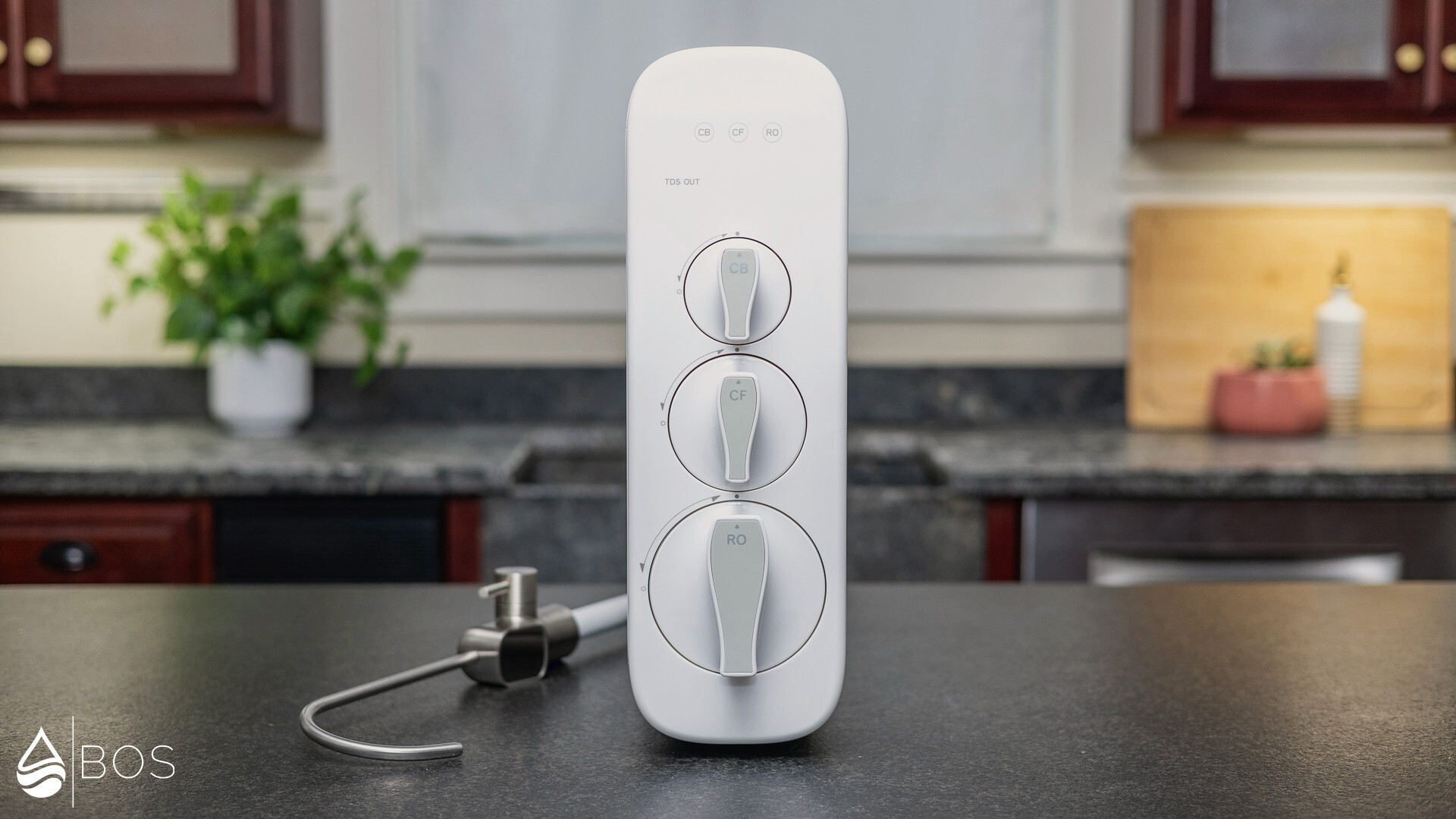
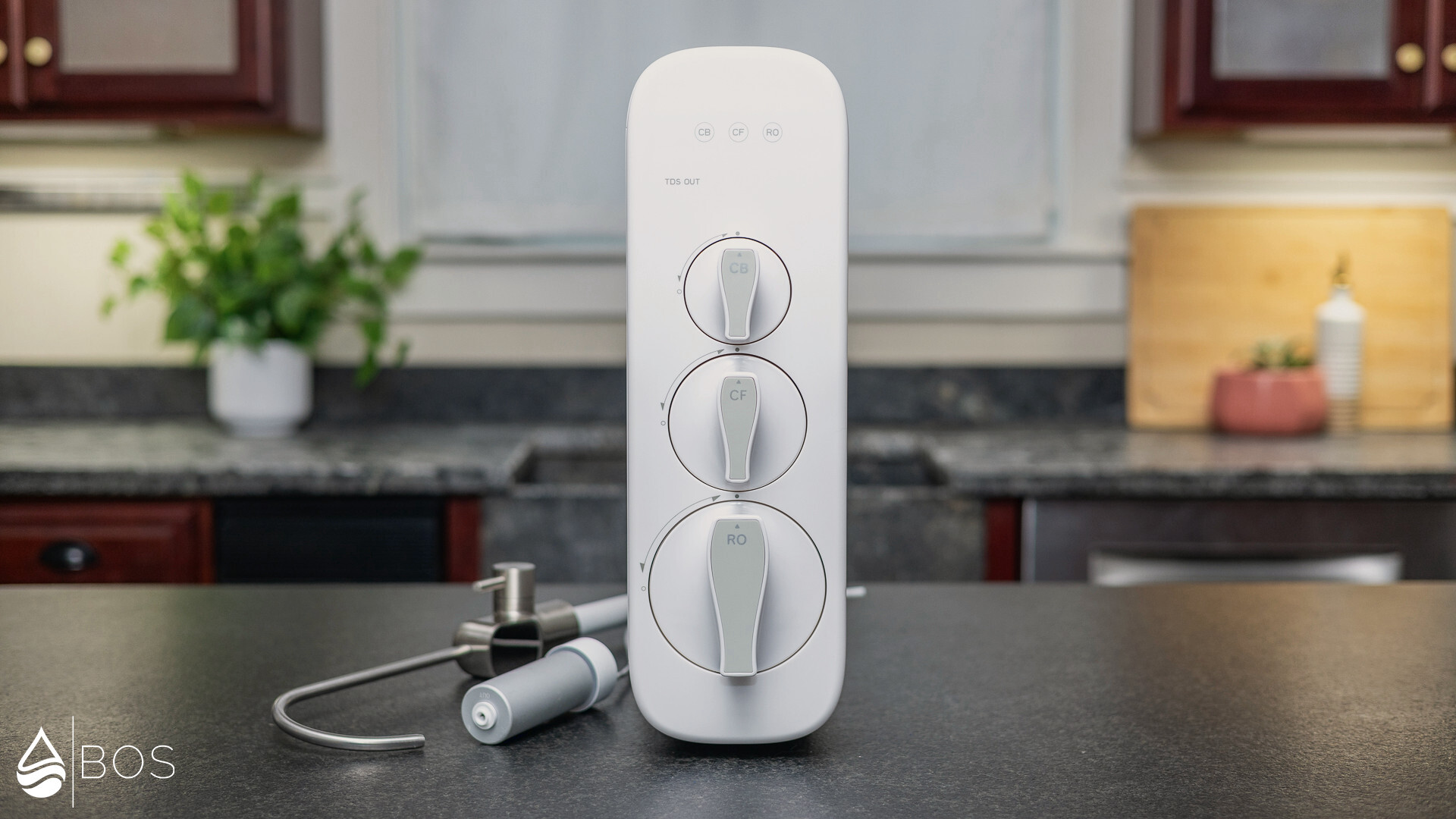
Both the housing and the metal faucet feel sturdy and well-built. In particular, the faucet feels a bit above average in quality.
3. Appearance
The faucet is sleek and modern, but its display is prone to smudges.
4. UV LED
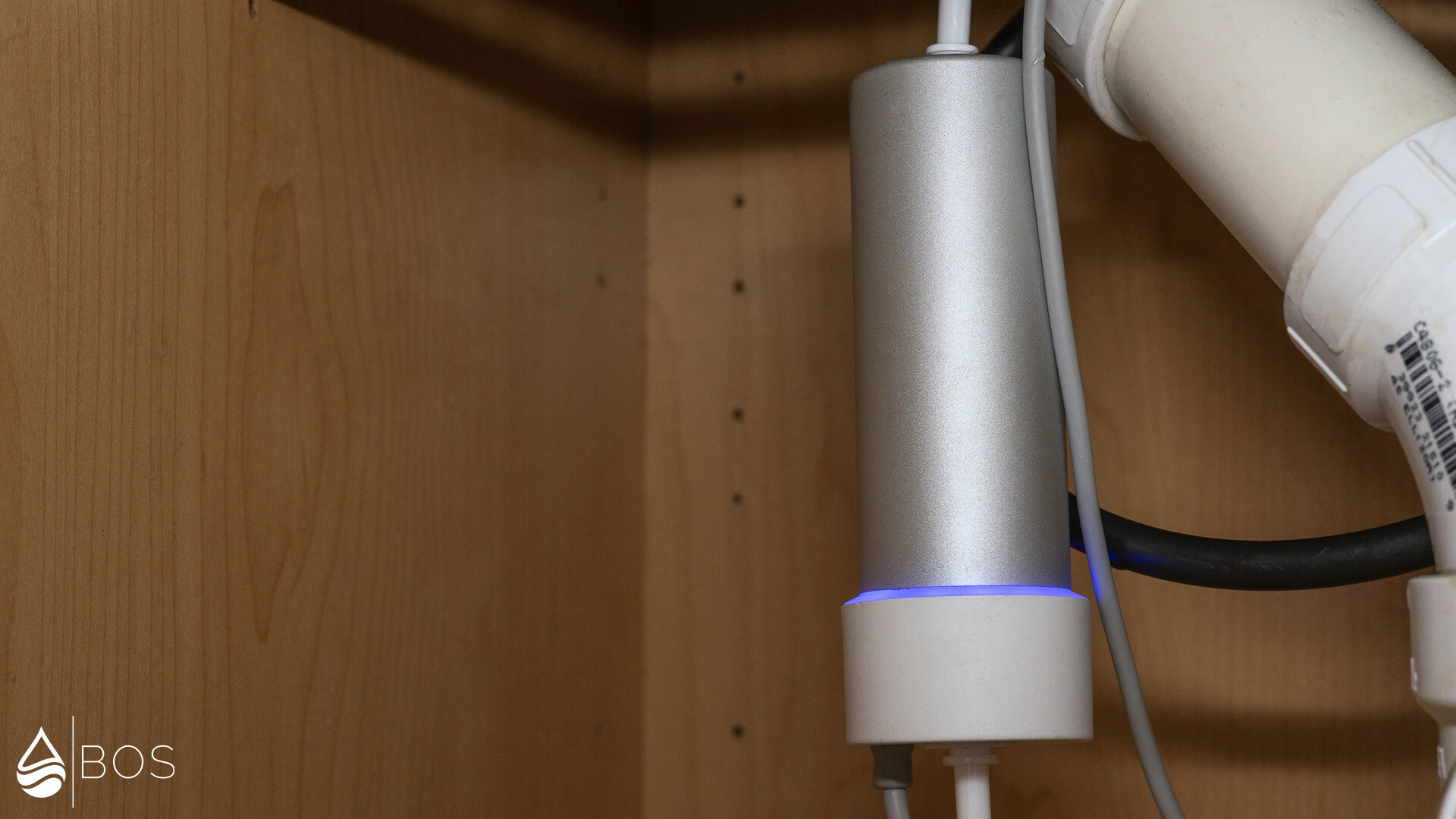
The UV light sterilizer only turns on when the faucet is on and water is flowing through the module, which saves energy.
5. Frequent Customer Complaints
We read about issues with leaking (from the base or housing), poor customer service, more wastewater than advertised, and units that stopped working.
As mentioned above, wastewater production is highly usage dependent due to the automatic flushing. When filtering larger volumes less often, we did not obtain more wastewater than expected, but that may not be the case for those frequently dispensing small amounts. We did not experience the other described issues firsthand, even after lengthy long-term use.
Bottom Line: Our #1 Overall Tankless Reverse Osmosis System + #1 for Filtration (/5.00)
Filtration weighted at 60%, and usability and cost at 20% each, the Waterdrop G3P800 scored a final rating of 4.52 out of 5.00.
The Waterdrop G3P800 takes our top spot for best tankless RO system overall and is also our #1 pick for filtration.
Filtration performance was great: the system fully removed 13 contaminants in our lab tests and produced odorless, clean-tasting water. Plus, it has 12 NSF/ANSI certifications covering the majority of important contaminants in addition to comprehensive third-party testing.
Usability is very solid: it’s easy to set up, and filter changes are simple with helpful indicator lights on the faucet and base to keep you on track. The system dispenses water quickly and without splashing or dripping. Plus, it’s well-built, and the modern, sleek metal faucet feels high quality – though its screen is prone to smudges.
Filtered water TDS readings are displayed on the faucet and base, and automatic flushing counters TDS creep and protects the RO membrane. The system wastes very little water overall – so long as you dispense larger volumes less often – since flushing creates an extra 28 oz of wastewater 5 minutes after dispensing on top of the system’s standard wastewater production.
The space-saving tankless design keeps your under-sink area uncluttered, while built-in leak detection provides some peace of mind and protects your cabinets. The UV light may add a layer of defense against microbes – though we wouldn’t rely on it to make germ-laden water safe to drink.
Though its upfront price is well above average, ongoing costs are about average.
With user-friendly features and exceptional contaminant reduction performance, the Waterdrop G3P800 is our overall winner and top choice for filtration among the tankless ROs.
(Use Code G3P800BOS for 5% Off on Top of Most Waterdrop Sales!)
Further Reading
- Review: Waterdrop G3P600 Tankless Reverse Osmosis System
- Review: Waterdrop X8-A Tankless RO System with Remineralization
- Review: Waterdrop A1 Hot & Cold Countertop RO System
- Review: Waterdrop A2 Hot & Cold Countertop RO System
- Review: Waterdrop C1H Countertop Reverse Osmosis System
- Review: Waterdrop X12 Tankless RO System with Remineralization
- Review: Waterdrop ED04 Countertop Water Filter
- Waterdrop WFD-22L Countertop Water Dispenser Review
- Review: Waterdrop CTF-01 Countertop Water Filter
- Review: Waterdrop King Gravity Water Filtration System
- Review: Waterdrop Chubby Water Filter Pitcher
- Review: Waterdrop X16 Tankless RO System with Remineralization
About the Author(s)

Sara has been a lifelong home-improvement fan (she’s been hooked on This Old House since she was five) and taught herself any project she didn’t already know by watching YouTube tutorials. She is also an award-winning filmmaker. Armed with this skillset, Sara installs, primes, samples, uses, and maintains nearly every point-of-use water treatment system we test – then brings her results to life on camera for our YouTube channel.

Raoul has a background in mechanical engineering and has been writing about home water treatment since 2015. He designs our product review processes, analyzes the results, and ties everything together. As editor-in-chief, he tries hard to keep the whole operation running smoothly behind the scenes.