

This page contains affiliate links. Learn more.
About This Guide
In 2 rounds, we tested and compared 15 tankless reverse osmosis systems. For each system, we:
- Hands-on experience: Set up, used, and maintained it.
- Filtration effectiveness: Sent unfiltered and filtered tap water samples to professional labs for analysis in order to determine real-life contaminant reduction capabilities. Plus, we checked for NSF/ANSI certifications and other test data.
- More testing: Performed taste & odor, filtration/dispensing speed, wastewater, noise, and other tests.
- All other product aspects: Considered initial + long-term costs, warranties, additional features, frequent customer complaints, etc.
Don’t Feel Like Reading?
Video Chapters
- 00:00 – Intro
- 00:38 – What’s New
- 01:46 – 2 Best Tankless ROs
- 07:53 – Top Budget Pick
- 11:18 – Full NSF Certification
- 13:42 – Best for Speed
- 16:02 – For Hot Water
- 18:17 – For Dual Flow
- 20:07 – Wrapping Up
Our Top 7 Tankless RO Systems at a Glance
| Model | Image | Rating | Buy Here | ||||||||||||||||
|---|---|---|---|---|---|---|---|---|---|---|---|---|---|---|---|---|---|---|---|
| Waterdrop G3P800 |

|

|
Check Current Price | ||||||||||||||||
|
|||||||||||||||||||
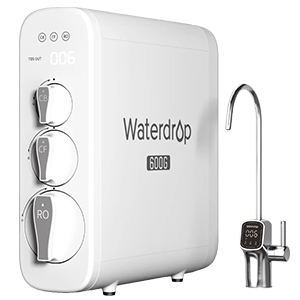
| Waterdrop G3P600 |
|
|
Check Current Price | ||||||||||||||||
|
|||||||||||||||||||
| Frizzlife PD600-TAM3 |

|

|
Check Current Price | ||||||||||||||||
|
|||||||||||||||||||
| Waterdrop X12 |

|
|
Check Current Price | ||||||||||||||||
|
|||||||||||||||||||
| Waterdrop G5P700A-PRO |

|
|
Check Current Price | ||||||||||||||||
|
|||||||||||||||||||
| Waterdrop K6 (KJ600) |

|

|
Check Current Price | ||||||||||||||||
|
|||||||||||||||||||
| Delta Clarifi DWQ1001012 |

|
|
Check Current Price (System) Check Current Price (Faucet, Not Included with System) |
||||||||||||||||
|
|||||||||||||||||||
15 Tankless Reverse Osmosis Systems Compared

| Tankless Reverse Osmosis System | Waterdrop G3P800 | Waterdrop G3P600 | Frizzlife PD600-TAM3 | Waterdrop X12 | Waterdrop G5P700A-PRO | Waterdrop K6 (KJ600) | Waterdrop X8-A | Waterdrop X16 | Delta Clarifi DWQ1001012 | iSpring RO500AK | SimPure T1-400ALK | Frizzlife PD1200 | Glacier Fresh U03 | Viomi Master M1 | Brio AQUUS 600 GPD |
|---|---|---|---|---|---|---|---|---|---|---|---|---|---|---|---|
| Purchase Links & Codes | |||||||||||||||
| Image | |
|
|
|
|
|
 |
 |
|
 |
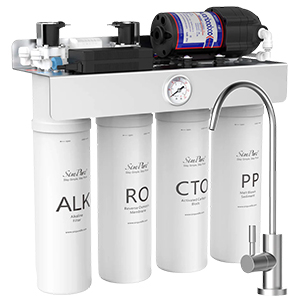 |
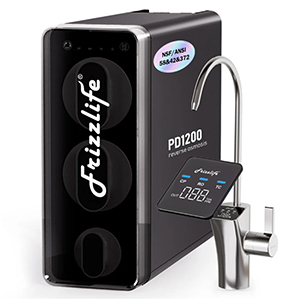 |
 |
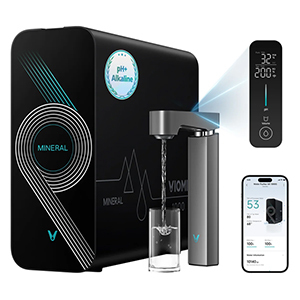 |
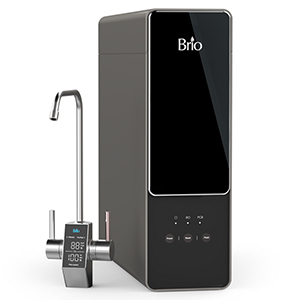 |
| FINAL RATING | |||||||||||||||
|
|
|
|
|
|
|
|||||||||
| Final Rating | 4.52/5.00 | 4.52/5.00 | 4.52/5.00 | 4.42/5.00 | 4.50/5.00 | 4.48/5.00 | 4.43/5.00 | 4.37/5.00 | 4.35/5.00 | 4.27/5.00 | 4.25/5.00 | 4.25/5.00 | 3.87/5.00 | 3.80/5.004.37/5.00 when ignoring the deliberate strontium increase from remineralization. | 2.89/5.00 |
| Verdict (Best For) | #1 Overall + #1 for Filtration | #1 Overall + #1 for Filtration | #1 Budget Pick (If You Use Our Discount Code) | #1 for Speed | Great for Dual Flow | Very Good for Hot Water | Fully NSF/ANSI-Certified but Very Pricey | ||||||||
| Comment | More Affordable than Waterdrop G3P800 but a Tad Slower with More Wastewater and No UV | Remineralized RO Water at Dispenser + Filtered Cold Water at Kitchen Faucet | RO Water + Filtered Water | ||||||||||||
| Buy Here | Check Current Price | Check Current Price | Check Current Price | Check Current Price | Check Current Price | Check Current Price | Check Current Price | Check Current Price | Check Current Price (System) Check Current Price (Faucet, Not Included with System) | Check Current Price | Check Current Price | Check Current Price | Check Current Price | Check Current Price | Check Current Price |
| Discount Code | G3P800BOS - 5% Off on Top of Most Waterdrop Sales! (waterdropfilter.com Only) |
G3P600BOS - 5% Off on Top of Most Waterdrop Sales! (waterdropfilter.com Only) |
BOSPD2410 - $120 Off! (frizzlife.com Only) |
X12BOS - 5% Off on Top of Most Waterdrop Sales! (waterdropfilter.com Only) |
G5P700A-PROBOS - 5% Off on Top of Most Waterdrop Sales! (waterdropfilter.com Only) |
K6BOS - 5% Off on Top of Most Waterdrop Sales! (waterdropfilter.com Only) |
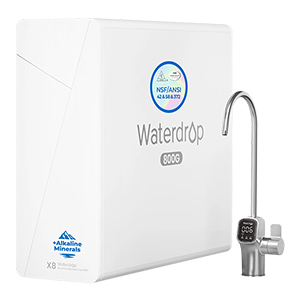
X8ABOS - 5% Off on Top of Most Waterdrop Sales! (waterdropfilter.com Only) |
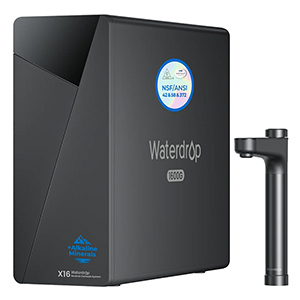
X16BOS - 5% Off on Top of Most Waterdrop Sales! (waterdropfilter.com Only) |
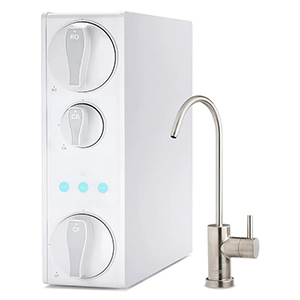
bossimpure - 35% Off! (simpurelife.com Only) |
BOSWaterPD1200 - 15% Off! (frizzlife.com Only) |
BOSWATER10 - 10% Off! |
||||
| Score Overview | |||||||||||||||
| FiltrationFiltration score combines our lab results and taste testing with NSF/ANSI certifications and 3rd-party contaminant reduction data. | 4.75/5.00 | 4.55/5.00 | 4.46/5.00 | 4.50/5.00 | 4.50/5.00 | 4.41/5.00 | 4.44/5.00 | 4.50/5.00 | 5.00/5.00 | 4.45/5.00 | 4.50/5.00 | 4.25/5.00 | 4.26/5.00 | 3.54/5.004.50/5.00 when ignoring the deliberate strontium increase from remineralization. | 2.37/5.00 |
| Usability | 4.46/5.00 | 4.68/5.00 | 4.61/5.00 | 4.56/5.00 | 4.65/5.00 | 4.70/5.00 | 4.84/5.00 | 4.35/5.00 | 4.10/5.00 | 4.51/5.00 | 3.76/5.00 | 4.25/5.00 | 2.25/5.00 | 4.39/5.00 | 3.84/5.00 |
| CostsCost scores reflect overall value for money rather than price alone. | 3.89/5.00 | 4.27/5.00 | 4.62/5.00 | 4.04/5.00 | 4.34/5.00 | 4.47/5.00 | 4.00/5.00 | 4.01/5.00 | 2.63/5.00 | 3.50/5.00 | 3.98/5.00 | 4.24/5.00 | 4.33/5.00 | 3.97/5.00 | 3.51/5.00 |
| Full Analysis | |||||||||||||||
| Price (Aug 4, 2026)No short-term sales. | $999 | $539 | $469.99 | $1,299 | $419.99 | $799 | $799 | $1,999 | $958.90 (Incl. Delta Air-Gap Faucet) | $625.06 | $349.99 | $856.00 | $269.99 | $899.99 | $499.99 |
| Filtration Lab Results | 2026: 5.00/5.00 2025: 4.82/5.00 |
2026: 5.00/5.00 2024: 4.87/5.00 |
2026: 4.98/5.00 2024: 4.39/5.00 |
2026: 5.00/5.00 2024: 4.96/5.00 |
2026: 4.85/5.00 | 2026: 4.64/5.00 | 2026: 4.94/5.00 | 2026: 4.97/5.00 | 2026: 5.00/5.00 | 2026: 4.95/5.00 | 2026: 5.00/5.00 2024: 4.65/5.00 |
2026: 4.48/5.00 | 2026: 4.76/5.00 | 2026: 4.02/5.005.00/5.00 when ignoring the deliberate strontium increase from remineralization. | 2026: 2.87/5.00 |
| Remineralization Lab Results | See Remineralization Results Tabs | See Remineralization Results Tabs | See Remineralization Results Tabs | See Remineralization Results Tabs | See Remineralization Results Tabs | See Remineralization Results Tabs | See Remineralization Results Tabs | See Remineralization Results Tabs | |||||||
| Taste Tests | 2026: Clean 2025: Clean |
2026: Clean 2024: Clean |
2026: Clean with a Nice, Light Mineral Taste 2024: Clean with a Nice, Light Mineral Taste |
2026: Clean with a Nice, Light Mineral Taste 2024: Clean |
2026: Clean with a Nice, Light Mineral Taste | 2026: Clean | 2026: Clean with a Nice, Light Mineral Taste | 2026: Clean with a Nice, Light Mineral Taste | 2026: Clean | 2026: Clean with a Nice, Light Mineral Taste | 2026: Clean with a Nice, Light Mineral Taste 2024: Clean |
2026: Clean | 2026: Clean | 2026: Clean with a Nice, Light Mineral Taste | 2026: Clean |
| Odor Tests | 2026: No Odor 2025: No Odor |
2026: No Odor 2024: No Odor |
2026: No Odor 2024: No Odor |
2026: No Odor 2024: No Odor |
2026: No Odor | 2026: No Odor | 2026: No Odor | 2026: No Odor | 2026: No Odor | 2026: No Odor | 2026: No Odor 2024: No Odor |
2026: No Odor | 2026: No Odor | 2026: No Odor | 2026: No Odor |
| Speed Test: Dispensing 1 CupMeasured at ~50 psi feed pressure. | ~5.75 sec | ~6 sec | ~6 sec | ~4.25 secMeasured in Regular and Faucet Mode. Energy Saving Mode: ~5 sec |
~5.5 sec | Ambient: ~6 sec Hot: ~7.25 sec |
~4.75 sec | ~4 secMeasured in Regular, Energy Saving, and Faucet Mode. Flow Mode: ~3.5 sec |
~7.75 sec | ~7 sec | ~8.25 sec | ~5 sec | ~8.5 sec | ~4.25 sec | ~9.5 sec~4.25 sec for filtered non-RO water. |
| Speed Test: Dispensing 4 CupsMeasured at ~50 psi feed pressure. | ~21.5 sec | ~24.75 sec | ~26 sec | ~16 secMeasured in Regular Mode. Energy Saving Mode: ~20.5 sec Faucet Mode: ~16.25 sec |
~23.25 sec | Ambient: ~27.25 sec Hot: ~29 sec |
~19.25 sec | ~13 secMeasured in Regular Mode. Energy Saving Mode: ~16 sec Flow Mode: ~12.75 sec Faucet Mode: ~13.25 sec |
~30 sec | ~28.5 sec | ~39.75 sec | ~17.25 sec | ~52.5 sec (Pressure Drops Substantially the Longer You Dispense) | ~16.75 sec | ~29 sec~18 sec for filtered non-RO water. |
| Max Continuous Hottest Water Dispensing Test | 22 oz Before Temperature Started to Decrease (Heating Took ~17 min) | ||||||||||||||
| Hot Water Temp Tests (Display vs. Thermometer) | 113 °F vs. 113.1 °F 149 °F vs. 148.8 °F 185 °F vs. 184.2 °F 203 °F vs. 199.6 °F |
||||||||||||||
| Pure-to-Drain Ratio TestMeasured at ~50 psi feed pressure. | ~1:0.35 | ~1:0.44 | ~1:0.49 | ~1:0.44 | ~1:0.92It took around 2 minutes for all wastewater to drain. | ~1:0.38 | ~1:0.4 | ~1:0.35 | ~1:0.66 (EPA WaterSense Certification Lists 78% Efficiency Rating = 1:0.28) | ~1:0.38 | ~1:0.67 | ~1:0.53 | ~1:0.98 | ~1:0.38 | ~1:0.47 |
| Noise Test (Avg / Max)Measured 1 m from system, A-weighting, slow response. Room background 25–29 dBA for all systems. Meter is Class 2 (±1.5 dB) - adequate for ranking systems against each other, not for absolute values. | 39.4 / 40.4 dBA | 40.3 / 41.4 dBA | 47.4 / 49.3 dBA | 41 / 42.7 dBAMeasured in Regular Mode. Energy Saving Mode: 37.9 / 38.3 dBA Faucet Mode: 40.4 / 41.1 dBA |
50.4 / 52.1 dBA | 38.1 / 38.4 dBA | 41.4 / 46.9 dBA | 45.9 / 52.4 dBAMeasured in Regular, Flow, and Faucet Mode. Energy Saving Mode: 47.7 / 54.2 dBA Affected by a faulty RO cartridge (loose cap creaked under pressure). |
43 / 46.4 dBA | 47.3 / 54.7 dBA | 38.5 / 39.1 dBA | 49 / 50.3 dBA | Not Applicable (No Pump) | 45.8 / 47.1 dBA | 36.7 / 37.3 dBA38.8 / 39.2 dBA for filtered non-RO water. |
| Setup Process Incl. Filter Priming | -Easy to set up and prime with clear illustrated instruction booklet + sheet -Quick-connect fittings required more force to connect and remove tubing -Tutorial video on YouTube |
-Easy to set up and prime with clear illustrated instruction booklet + sheets -Quick-connect fittings required more force to connect and remove tubing -Tutorial video on YouTube |
-Easy to set up and prime with clear illustrated instruction booklet + quick installation guide -TAM3 remineralization filter can sit on cabinet floor or be mounted to the wall (hardware included) -Blade for cutting tubing + tool for releasing quick-connect fittings included -Tutorial video on YouTube |
-Easy to set up and prime with clear illustrated instruction booklet + sheet -Tutorial video on YouTube |
-Easy to set up and prime with clear illustrated instruction booklet + sheet -Tutorial video on Amazon |
-Easy to set up and prime with clear illustrated instruction booklet + quick installation guide -Tutorial video on YouTube |
-Easy to set up and prime with clear illustrated instruction booklet + sheet -Tutorial video on YouTube |
-Easy to set up and prime with clear illustrated instruction booklet + sheet -RO cartridge would have needed replacement for long-term use (cap was not securely attached) -Tutorial video on YouTube |
-Easy to set up and prime with clear illustrated instruction booklet -Recommended air-gap faucet needs to be purchased separately -Feed water valve fits ⅜″ under sink connection with no adapter included to accommodate ½″ -Tutorial video on YouTube |
-Easy to set up and prime with clear illustrated instruction booklet -QR codes link to tutorial videos |
-Easy to set up and prime with clear illustrated instruction booklet -Can sit on cabinet floor but is more stable mounted to the wall (hardware included) -Tutorial video on YouTube |
-Easy to set up and prime with clear illustrated instruction booklet + sheet -Quick-connect fitting of the system's feed water input required more force to connect -Blade for cutting tubing included -Tutorial video on YouTube |
-Easy to set up and prime with clear illustrated instruction booklet -QR code links to tutorial video |
-Easy to set up and prime with clear illustrated instruction booklet + quick installation guide -Tool for releasing quick-connect fittings included -QR code links to tutorial video -App was easy to connect via WiFi -QR code links to app download |
-Mostly easy to set up and prime with largely clear illustrated instruction booklet -Slightly confusing illustration of the feed water valve tubing -A lot of unlabeled tubing that doesn't quite match the illustrations in the manual, so it took a little extra time to sort out what each part was -Tube cutter/quick-connect release tool included -Tutorial video on YouTube |
| Everyday Use (Speed & Water Capacity) | -Suited for daily use with fast dispensing | -Suited for daily use with fast dispensing | -Suited for daily use with fast dispensing | -Suited for daily use with very fast dispensing | -Suited for daily use with fast RO water dispensing | -Ambient: suited for daily use with fast dispensing -Hot: enough water for most use cases, and sufficiently hot for nearly all beverages and instant food |
-Suited for daily use with very fast dispensing | -Suited for daily use with very fast dispensing | -Suited for daily use | -Suited for daily use with fast dispensing | -Suited for daily use but with slow dispensing | -Suited for daily use with very fast dispensing | -Suited for daily use but with slow dispensing | -Suited for daily use with very fast dispensing | -Suited for daily use but RO water dispensing starts slow |
| Everyday Use (Dispensing) | -Easy and without splashing | -Easy and without splashing | -Easy and without splashing | -Easy, yet a pressure spike at the start of dispensing may result in splashing when filling a small vessel (activate Faucet Mode to counter this) -Dispense anywhere from 5 to 64 oz or continuously using the rotating knob -You can't control dispensing speed manually -Faucet Mode adds ramp up and down to the pour, but you can't connect system to a refrigerator/ice maker anymore -Energy Saving Mode reduces electricity consumption, pump noise, and flow rate -You can't jump between modes (requires system restart) |
-Easy and without splashing -Dual flow provides remineralized RO water at the included RO faucet and filtered cold water at the kitchen faucet (did not affect flow rate) |
-Easy and without splashing -Responsive and easy-to-navigate touchscreen -You can't control dispensing speed manually -Dispenses ambient and hot water up to 203 °F -Choose desired water temperature in 1 °F increments using faucet or base, then wait until heating indicator on faucet turns off (no on-demand heating) -Faucet and base show actual water temperature in real time -Hot water is heated, stored, and kept hot in a 316 stainless steel tank -Optional hot water child safety lock on faucet |
-Easy and without splashing | -Easy, yet a pressure spike at the start of dispensing may result in splashing when filling a small vessel (activate Faucet Mode to counter this) -Dispense anywhere from 5 to 64 oz or continuously using the rotating knob -You can't control dispensing speed manually -Faucet Mode adds ramp up and down to the pour, but you can't connect system to a refrigerator/ice maker anymore -Energy Saving Mode reduces electricity consumption, pump noise (didn't work for us), and flow rate -You can't jump between modes (requires system restart) |
-Easy and without splashing | -Easy and without splashing | -Easy and without splashing | -Easy and without splashing | -Easy and without splashing | -Easy and without splashing -Responsive and easy-to-navigate touchscreen -After a few minutes of non-use the first pour ramps up to full flow -Dispense via 3 presets (10, 40, 700 oz, customizable in the app in 10 oz increments from 10 to 700 oz or continuously) -Dispensed water was consistently 2-4 oz over the presets -You can't control dispensing speed manually |
-Easy and without splashing -Dual flow faucet provides RO water and filtered water -RO water begins with a tiny dispense, followed by a huge drop in pressure, then a smooth pour |
| Everyday Use (Other) | -Faucet + base show filtered water TDS -Built-in leak detection |
-Faucet + base show filtered water TDS -Built-in leak detection |
-Base shows filtered water TDS (sensor only tests every 60 seconds) -Built-in leak detection -Smaller footprint helps save cabinet space -Felt much louder than the average system but still acceptable |
-Faucet shows filtered water TDS -Built-in leak detection |
-Faucet shows filtered water TDS -Built-in leak detection (alert on faucet) |
-Faucet + base show filtered water TDS -Hot water can be turned off -Built-in leak detection |
-Faucet shows filtered water TDS -Built-in leak detection |
-Faucet shows filtered water TDS -Built-in leak detection |
-Base has indicator light for filtered water TDS with 3 quality tiers (low, medium, high) but no numerical readout -Built-in leak detection |
-Built-in leak detection | -Smaller footprint and wall mounting help save cabinet space | -Faucet shows filtered water TDS (sensor only tests every 30 seconds) -Built-in leak detection |
-No electricity required (no pump) -Gauge on base shows feed water pressure |
-Faucet shows feed + filtered water TDS and a qualitative pH bar for the filtered water (the system doesn't measure actual water pH) -App is easy to navigate and tracks feed & filtered water TDS, feed water temperature, gallons filtered, daily/weekly/monthly water usage history, and filter status -App allows you to toggle Multi-Device Mode for connecting a fridge/ice maker; you can also connect to devices like Alexa |
-Faucet shows feed + filtered water TDS |
| Filter Replacements | -Easy (filters are easily accessible and quickly twist in/out) | -Easy (filters are easily accessible and quickly twist in/out) | -Easy (filters are easily accessible and quickly twist in/out, except TAM3 remineralization filter which requires the included filter wrench) | -Easy (filters are easily accessible and quickly twist in/out) | -Easy (filters are easily accessible and quickly twist in/out) | -Easy (filters are easily accessible and quickly twist in/out) | -Easy (filters are easily accessible and quickly twist in/out) | -Easy (filters are easily accessible and quickly twist in/out) | -Easy (filters are easily accessible and quickly twist in/out; external sediment pre-filter swaps out via quick-connects) | -Easy (filters are easily accessible and quickly twist in/out) | -Easy (filters are easily accessible and quickly twist in/out) | -Easy (filters are easily accessible and quickly twist in/out) | -Generally easy (filters are easily accessible and quickly slide in/out), but the bottom filter's handle broke off immediately when pulled during re-testing | -Easy (filters are easily accessible and quickly twist in/out) -App reminds you to replace filters |
-Easy (filters are easily accessible and quickly twist in/out) -Filter wrench included |
| Filter Change Indicator? | Y (Faucet + Base) | Y (Faucet + Base) | Y (Base) | Y (Faucet + Base) | Y (Faucet + Base) | Y (Faucet + Base) | Y (Faucet + Base) | Y (Faucet + Base) | Y (Base) | Y (Base) | N (Pressure Gauge) | Y (Faucet + Base) | N | Y (Faucet + Base + App) | Y (Faucet + Base) |
| Production Rate | 800 GPD | 600 GPD | 600 GPD | 1200 GPD | 700 GPD | 600 GPD | 800 GPD | 1600 GPD | 600 GPD | 500 GPD | 400 GPD | 1200 GPD | 800 GPD | 1000 GPD | 600 GPD |
| Hot Water Tank | Unknown Size (50 or 70 oz?), Internal | ||||||||||||||
| WxHxD (Base) | 5.5″x17.8″x18.15″ | 5.5″x17.8″x18.15″ | 5.3″x15.5″x15″ | 6.25″x16.75″x18.2″ | 5.75″x14″x17″ | 6.35″x17″x17.6″ | 6.25″x16.75″x18.2″ | 6.25″x16.75″x18.2″ | 6.15″x15.85″x18″ | 5.12″x16.35″x17.5″ | 15.6″x15.8″x5.25″ | 5.85″x14.85″x18.25″ | 8.3″x16.7″x13.7″ | 6.5″x16″x17.7″ | 5.25″x16.6″x17.85″ |
| WxHxD (Faucet) | 3.15″x13″x5.2″ | 3.15″x13″x5.2″ | 2.5″x10.7″x5.8″ | 1.7″x11.25″x7.1″ | 3.15″x13.65″x6.5″ | 1.65″x10.2″x7.4″ | 3.15″x13″x5.2″ | 1.7″x11.25″x7.1″ | 2.5″x11″x6.4″ | 2.8″x10.25″x4.95″ | 2.85″x10.85″x5.5″ | 3″x13.75″x6.45″ | 2.35″x10.15″x5.4″ | 1.9″x10.8″x6.1″ | 4″x12″x6.6″ |
| Weight Incl. Wet Filter Cartridge(s) | 29.5 lbs | 29 lbs | 22.5 lbs | 35.4 lbs | 23.9 lbs | 32.7 lbs | 34.1 lbs | 37.5 lbs | 26.9 lbs | 28 lbs | 18 lbs | 30.4 lbs | 20.4 lbs | 32.5 lbs | 26.8 lbs |
| Plumbing Connections | ⅜″ and ½″ | ⅜″ and ½″ | ⅜″ and ½″ | ⅜″ and ½″ | ⅜″ and ½″ | ⅜″ and ½″ | ⅜″ and ½″ | ⅜″ and ½″ | ⅜″ | ⅜″ and ½″ | ⅜″ and ½″ | ⅜″ and ½″ | ⅜″ and ½″ | ⅜″ and ½″ | ⅜″ and ½″ |
| Filter Stages | 10 | 8 | 8 | 11 | 8 | 5 | 10 | 11 | 6 | 5 | 8 | 11 | 5 or 7 | 9 | 4 |
| Filter Media/Process | 3 Cartridges Combining 9 Stages Consisting of PP Cotton Sediment Pre- and Post-Filters + Coconut-Shell Activated Carbon Pre- and Post-Filter Blocks + Scale Inhibitor Membrane + RO Membrane Stage 10: UV |
3 Cartridges Combining 8 Stages Consisting of PP Cotton Sediment Pre- and Post-Filters + Coconut-Shell Activated Carbon Pre- and Post-Filter Blocks + Scale Inhibitor Membrane + RO Membrane | 3 Cartridges Combining 8 Stages Consisting of (Polyester or PP) Sediment Pre- and Post-Filters + (Coconut-Shell) Activated Carbon (Block) Pre- and Post-Filters + RO Membrane + Remineralization/Alkalinization | Stages 1-5: Composite Pre-Filter (2x Cotton Sediment Filter + Activated Carbon Block + Scale Inhibition + Cotton Sediment Filter) Stage 6: RO Membrane Stages 7-10: Composite Post-Filter (Cotton Sediment Filter + Activated Carbon Block + Remineralization + Cotton Sediment Filter) Stage 11: UV |
Stages 1-4: Composite Filter (PP Sediment Pre-Filter + Activated Carbon Fiber Pre-Filter + Scale Inhibition + PP Sediment Pre-Filter) Stage 5: RO Membrane Stages 6-8: Composite Filter (Activated Carbon Block Post-Filter + Remineralization + PP Sediment Post-Filter) |
Stages 1-5: Composite Filter (PP Cotton Sediment Filter + Activated Carbon Fiber + RO Membrane + Activated Carbon Block + PP Cotton Sediment Filter) | Stages 1-5: Composite Pre-Filter (2x Cotton Sediment Filter + Activated Carbon Block + Scale Inhibition + Cotton Sediment Filter) Stage 6: RO Membrane Stages 7-10: Composite Post-Filter (Cotton Sediment Filter + Activated Carbon Block + Remineralization + Cotton Sediment Filter) |
Stages 1-5: Composite Pre-Filter (2x Cotton Sediment Filter + Activated Carbon Block + Scale Inhibition + Cotton Sediment Filter) Stage 6: RO Membrane Stages 7-10: Composite Post-Filter (Cotton Sediment Filter + Activated Carbon Block + Remineralization + Cotton Sediment Filter) Stage 11: UV |
Stage 1: External PP Sediment Pre-Filter Stages 2-5: Composite Filter (PP Sediment Filter + Granular Activated Carbon + RO Membrane + Activated Carbon Block) Stage 6: Activated Carbon Block Post-Filter |
Stages 1+2: Composite Pre-Filter (PP Sediment Filter + Activated Carbon Block) Stage 3: RO Membrane Stages 4+5: Composite Post-Filter (Coconut-Shell Activated Carbon Block + Alkalinization) |
Stage 1: PP Cotton Sediment Pre-Filter Stages 2-4: Composite Pre-Filter (Activated Carbon Block + Scale Inhibition Layer + Microfiltration Membrane) Stage 5: RO Membrane Stages 6+7: Composite Post-Filter (Activated Carbon Block + Remineralization) Stage 8: UV (8.6 mJ/cm² at 270-280 nm) |
3 Cartridges Combining 11 Stages Consisting of (Polyester or PP) Sediment Pre- and Post-Filters + (Coconut-Shell) Activated Carbon Pre- and Post-Filters + RO Membrane + Possibly More | 3 Cartridges Combining 5 or 7 Stages Consisting of Sediment Pre- and Post-Filters + (Granular) Activated Carbon (Block) Pre- and Post-Filters + RO Membrane | 2 Cartridges Combining 9 Stages Consisting of Sediment Pre- and Post-Filters + Activated Carbon Pre- and Post-Filters (Granular & Block) + Scale Inhibition + RO Membrane + Remineralization | Stages 1+2: Composite Filter (PP Sediment Pre-Filter + Activated Carbon Fiber Pre-Filter) Stage 3: RO Membrane Stage 4: Composite Filter (5-Micron Activated Carbon Block Post-Filter) |
| Summary of NSF/ANSI Certs + Other Testing for Filtration Effectiveness | -NSF/ANSI certifications covering the majority of important contaminants, complemented by additional third-party testing | -NSF/ANSI certifications covering the majority of important contaminants, complemented by additional third-party testing | -No NSF/ANSI certifications -Considerable third-party testing but lacks most organics |
-Only 3 NSF/ANSI certifications (chlorine, taste and odor, TDS) -Well-covered by third-party testing |
-Only 1 NSF/ANSI certification (TDS) -Well-covered by third-party testing |
-No NSF/ANSI certifications -Considerable third-party testing but lacks most organics and not performed over full filter life |
-Only 3 NSF/ANSI certifications (chlorine, taste and odor, TDS) and no third-party testing | -Only 3 NSF/ANSI certifications (chlorine, taste and odor, TDS) -Well-covered by third-party testing |
-Fully NSF/ANSI-certified! | -Only 1 NSF/ANSI certification (TDS) and no third-party testing | -No NSF/ANSI certifications -Considerable third-party testing but lacks most organics and at least some wasn't performed over full filter life |
-No NSF/ANSI certifications -Considerable third-party testing but lacks most organics |
-No NSF/ANSI certifications -Limited third-party testing performed at start of operating life |
-No NSF/ANSI certifications -Some coverage through third-party testing performed at several points throughout filter life |
-We could not confirm the 2 NSF/ANSI certifications (for chlorine and TDS) claimed by Brio Water -No third-party testing |
| NSF/ANSI Certs for Filtration Effectiveness (# of Impurities Certified) | 42, 53, 58, 58 (12) - Performance Data Sheet | 42, 53, 58, 58 (12) - Performance Data Sheet | 42, 58 (3) - Performance Data Sheet | 58 (1) | 42, 58 (3) | 42, 58 (3) - Performance Data Sheet | 42, 53, 58, 401, 244 (97) - Performance Data Sheet | 58 (1) | 42, 58 (2) (Claimed by Brio Water Which We Couldn't Confirm) | ||||||
| NSF/ANSI + Other 3rd-Party Testing for Filtration Effectiveness (# of Impurities Tested) Note: Not Always Performed throughout Entire Filter Life |
42, 53, 58, 401, Other (83) - Performance Data Sheet | 53, 401 (62) - Performance Data Sheet | 42, 53, 58, Other (17) - Performance Data Sheet | 53, 58, Other (64) - Performance Data Sheet50 VOCs + 14 other contaminants (chloroform was tested as a surrogate for VOCs, per NSF/ANSI 53). | 53, 58, Other (64) - Performance Data Sheet50 VOCs + 14 other contaminants (chloroform was tested as a surrogate for VOCs, per NSF/ANSI 53). | Other (16) - Performance Data Sheet | 53, 58, Other (64) - Performance Data Sheet50 VOCs + 14 other contaminants (chloroform was tested as a surrogate for VOCs, per NSF/ANSI 53). | 42, 58, Other (17) - Performance Data Sheet | 42, 53, 58, Other (17) - Performance Data Sheet | 58, Other (6) - Performance Data Sheet | 42, 58, Other (17) - Performance Data Sheet | ||||
| Rated/Claimed Filter Life | Inconsistent Claims across Waterdrop Website Composite Pre-Filter: 550-800 gal or 6 Months RO Membrane: 2,200-3,200 gal or 2 Years Carbon Post-Filter: 1,100-1,600 gal or 12 Months |
Composite Pre-Filter: 550 gal or 6 Months RO Membrane: 2,200 gal or 2 Years Carbon Post-Filter: 1,100 gal or 12 Months |
Composite Pre-Filter: 900-1,000 gal or 12 Months RO Membrane: 1,800-2,000 gal or 2 Years Remineralization Post-Filter: 900-1,000 gal or 12 Months |
Composite Pre-Filter: 550 gal or 6 Months RO Membrane: 2,900 gal or 2 Years Composite Post-Filter: 1,100 gal or 12 Months |
Composite Filter: 1,056 gal or 6 Months RO Membrane: 2,112 gal or 2 Years |
Inconsistent Claims across Waterdrop Website (1,100 vs. 1,600 gal or 12 Months) | Composite Pre-Filter: 550 gal or 6 Months RO Membrane: 2,900 gal or 2 Years Composite Post-Filter: 1,100 gal or 12 Months |
Composite Pre-Filter: 550 gal or 6 Months RO Membrane: 2,900 gal or 2 Years Composite Post-Filter: 1,100 gal or 12 Months |
External Sediment Pre-Filter: 3,960 gal or 6 Years Composite Filter: 1,320 gal or 2 Years Carbon Post-Filter: 1,320 gal or 2 Years |
Composite Pre-Filter: 6 Months RO Membrane: 2 Years Composite Post-Filter: 12 Months |
PP Cotton Sediment Pre-Filter: 3-6 Months Composite Pre-Filter: 3-6 Months RO Membrane: 12 Months Composite Post-Filter: 3-6 Months |
Composite Pre-Filter: 900-1,000 gal or 1 Year RO Membrane: 1,800-2,000 gal or 2 Years Composite Post-Filter: 450-900 gal or 6 Months |
Inconsistent Claims across Glacier Fresh Website and No Specifics in Product Manual Composite Pre-Filter: 720-1,000 gal or 6-12 Months RO Membrane: 1,400-1,450 gal or 1-2 Years Composite Post-Filter: 1,000-1,100 gal or 6-12 Months |
RO Membrane Filter Cartridge: 4 Years PCB Composite Filter: 2 Years |
Composite Filter: 951 gal or 6-12 Months RO Membrane: 1,902 gal or 1-2 Years |
| Yearly Cost (Aug 4, 2026)Estimate is based on rated/claimed filter life and 1,000 gallons annual water consumption. No short-term sales. | ~$160 (Save 5% with Filter Subscription) | ~$145 (Save 5% with Filter Subscription) | ~$107-119 | ~$175 (Save 5% with Filter Subscription) | ~$168 (Save 5% on RO Membrane with Filter Subscription)Assumes 1,500 gallons annual use of cold filtered water at the kitchen faucet + 1,000 gallons RO water. | ~$120 (Save 5% with Filter Subscription) | ~$165 (Save 5% with Filter Subscription) | ~$185 (Save 5% with Filter Subscription) | ~$260 | ~$179 | ~$180-320 | ~$179-199 | ~$100-161 | ~$88 | ~$252-338 (Save 20% with Filter Subscription)Assumes 1,500 gallons annual use of cold filtered water + 1,000 gallons RO water. |
| Product Warranty | 1 Year | 1 Year | 1 Year, 1.5 Years upon Product Registration | 2 Years | 1 Year | 1 Year | 2 Years | 2 Years | 5 Years (except External Sediment Pre-Filter Which Is Warrantied for 30 Days) | 1 Year | 1 Year, 2 Years upon Product Registration | 1 Year, 1.5 Years upon Product Registration | 2 Years | 2 Years (If You Purchase from Official Website) 1 Year (If You Purchase from Amazon) Get Additional 6 Months upon Product Registration |
1 Year |
| (More) Features/Pros | -Sleek, modern faucet design -Feels sturdy and well built (the faucet is metal and seems a bit above average in quality) -UV LED shuts off when not needed to save energy -Automatic flushing 5 minutes after dispensing, after 2 hours of cumulative water use, and after restoring power counters TDS creep and extends RO membrane life |
-Sleek, modern faucet design -Feels sturdy and well built (the faucet is metal and seems a bit above average in quality) -Automatic flushing 5 minutes after dispensing, after 2 hours of cumulative water use, and after restoring power counters TDS creep and extends RO membrane life |
-Nice, simple faucet design -Feels sturdy and well built including the metal faucet -Manual flushing + automatic flushing after 10 minutes of cumulative water use, after 10 minutes of uninterrupted water use, after restoring power, and every 6 hours in standby mode counter TDS creep and extend RO membrane life |
-Modern, upscale faucet design with a large display that stands out (4 finishes to choose from) -Feels sturdy and well built (the faucet is metal and seems a bit above average in quality) -UV LED shuts off when not needed to save energy -Automatic flushing 10 minutes after dispensing counters TDS creep and extends RO membrane life |
-Sleek, modern faucet design -Feels sturdy and well built (the faucet is metal and seems a bit above average in quality) |
-Modern, upscale faucet design with a large display that stands out -Feels sturdy and well built (the faucet is metal and seems a bit above average in quality) -Heating overtime protection, dry burning protection, heating stops after 48 hours of non-use to save energy -Automatic boiling point correction based on altitude -Automatic flushing 5 minutes after dispensing counters TDS creep and extends RO membrane life |
-Sleek, modern faucet design -Feels sturdy and well built (the faucet is metal and seems a bit above average in quality) -Automatic flushing 10 minutes after dispensing counters TDS creep and extends RO membrane life |
-Modern, upscale faucet design with a large display that stands out (4 finishes to choose from) -Feels sturdy and well built (the faucet is metal and seems a bit above average in quality) -UV LED shuts off when not needed to save energy -Automatic flushing 10 minutes after dispensing counters TDS creep and extends RO membrane life |
-Nice, simple faucet design -Feels sturdy and well built (the faucet is metal and seems a bit above average in quality) -Automatic flushing 5 minutes after dispensing, after 2 hours of cumulative water use, and after 12 hours of non-use prevents stagnation, counters TDS creep, and extends RO membrane life |
-Nice, simple faucet design (2 finishes to choose from) -Feels sturdy and well built including the metal faucet -Automatic flushing 5 minutes after dispensing, after 2 hours of cumulative water use, and after 24 hours of non-use counters TDS creep and extends RO membrane life |
-Nice, simple faucet design -Feels sturdy and well built including the metal faucet |
-Sleek, modern faucet design -Feels sturdy and well built (the faucet is metal and seems a bit above average in quality) -Manual flushing + automatic flushing 20 minutes after dispensing, after restoring power, and every 12 hours in standby mode counter TDS creep and extend RO membrane life |
-Nice, simple faucet design -Feels mostly sturdy and well built including the metal faucet |
-Modern, upscale faucet design with a large display that stands out -Base has a sleek, modern design -Feels sturdy and well built (the faucet is metal and seems a bit above average in quality) -Automatic flushing 2 minutes after dispensing counters TDS creep and extends RO membrane life |
-Modern, upscale faucet design with a large display that stands out -Base has a sleek, modern design -Feels sturdy and well built (the faucet is metal and seems a bit above average in quality) -Manual flushing counters TDS creep and extends RO membrane life |
| (More) Cons | -Automatic flushing wastes a considerable amount of water (we measured 28 oz per cycle 5 minutes after dispensing) -Faucet display is prone to smudges |
-Automatic flushing wastes a considerable amount of water (we measured 35 oz per cycle 5 minutes after dispensing) -Faucet display is prone to smudges |
-Automatic flushing wastes varying amounts of water (we measured 17.5 oz per cycle after 10 minutes of cumulative water use) | -Automatic flushing wastes a considerable amount of water (we measured ~47.5 oz per cycle) but can be turned off -Faucet display is prone to smudges |
-Faucet display is prone to smudges | -Automatic flushing wastes a considerable amount of water (we measured 33 oz per cycle) -Faucet touchscreen is prone to smudges |
-Automatic flushing wastes a considerable amount of water (we measured 42 oz per cycle) but can be turned off -Faucet display is prone to smudges |
-Automatic flushing wastes a considerable amount of water (we measured 78 oz per cycle) but can be turned off -Faucet display is prone to smudges |
-Automatic flushing wastes a considerable amount of water (we measured 36 oz per cycle 5 minutes after dispensing) | -Automatic flushing wastes a considerable amount of water (we measured 32 oz per cycle 5 minutes after dispensing) | -Base is an eyesore with its pump and other components exposed on the top | -Automatic flushing wastes a considerable amount of water (we measured 56 oz per cycle 20 minutes after dispensing) but can be turned off -Faucet display is prone to smudges |
-Automatic flushing wastes a considerable amount of water (we measured 46 oz per cycle) -Faucet touchscreen is prone to smudges |
-Faucet display is prone to smudges | |
| Frequent Complaints from Third-Party Customer Reviews | -Poor customer service -More wastewater than advertised -Leaking (from base, housing) -Units that stopped working |
-Leaking (from base, housing, connections) -Poor customer service -Noise/vibration -Units that stopped working |
-Leaking (from base, fittings, filter housings) -Poor customer service |
-Note: not that many customer reviews yet -Faucet/flow issues (splashing, lack of speed control, preset pour amount is inaccurate) |
-Note: not that many customer reviews yet | -Faucet touchscreen won't work with wet hands -Hot water stopped working after a few months/years -Poor customer service |
-Note: not that many customer reviews yet -Poor customer service |
-Note: not that many customer reviews yet | -Note: not that many customer reviews yet -Very noisy when processing water |
-Units that stopped working -Bad taste/smell -Poor customer service |
-Poor customer service -Units that stopped working -Leaking -Very slow faucet flow |
-Leaking (from base, fittings, filter housings) -Poor customer service |
-Note: not that many customer reviews yet -No meaningful TDS reduction -Poor customer service -Difficult installation |
-Note: not that many customer reviews yet | -Note: not that many customer reviews yet |
| Tankless Reverse Osmosis System | Waterdrop G3P800 | Waterdrop G3P600 | Frizzlife PD600-TAM3 | Waterdrop X12 | Waterdrop G5P700A-PRO | Waterdrop K6 (KJ600) | Waterdrop X8-A | Waterdrop X16 | Delta Clarifi DWQ1001012 | iSpring RO500AK | SimPure T1-400ALK | Frizzlife PD1200 | Glacier Fresh U03 | Viomi Master M1 | Brio AQUUS 600 GPD | ||
|---|---|---|---|---|---|---|---|---|---|---|---|---|---|---|---|---|---|
| Purchase Links & Codes | |||||||||||||||||
| Image | |
|
|
|
|
|
|
|
|
|
|
|
|
|
|
||
| Lab Reports | Filtered Water Report | Filtered Water Report | Filtered Water Report | Filtered Water Report | Filtered Water Report | Filtered Water Report | Filtered Water Report | Filtered Water Report | Filtered Water Report | Filtered Water Report | Filtered Water Report | Filtered Water Report | Filtered Water Report | Filtered Water Report | Filtered Water Report | ||
| Unfiltered Water ReportThis sample's VOC vial arrived shattered at the lab, so VOCs couldn't be tested. We used the average VOC results of our 3 other unfiltered samples from this test round instead. | Unfiltered Water Report | Unfiltered Water Report | Unfiltered Water Report | Unfiltered Water Report | Unfiltered Water Report | Unfiltered Water Report | Unfiltered Water ReportThis sample's VOC vial arrived shattered at the lab, so VOCs couldn't be tested. We used the average VOC results of our 3 other unfiltered samples from this test round instead. | Unfiltered Water Report | Unfiltered Water ReportThis sample's VOC vial arrived shattered at the lab, so VOCs couldn't be tested. We used the average VOC results of our 3 other unfiltered samples from this test round instead. | Unfiltered Water ReportThis sample's VOC vial arrived shattered at the lab, so VOCs couldn't be tested. We used the average VOC results of our 3 other unfiltered samples from this test round instead. | Unfiltered Water Report | Unfiltered Water Report | Unfiltered Water Report | Unfiltered Water Report | |||
| Chlorine Self Test Photos | Filtered Water | Filtered Water | Filtered Water | Filtered Water | Filtered Water | Filtered Water | Filtered Water | Filtered Water | Filtered Water | Filtered Water | Filtered Water | Filtered Water | Filtered Water | Filtered Water | Filtered Water | ||
| Unfiltered Water | Unfiltered Water | Unfiltered Water | Unfiltered Water | Unfiltered Water | Unfiltered Water | Unfiltered Water | Unfiltered Water | Unfiltered Water | Unfiltered Water | Unfiltered Water | Unfiltered Water | Unfiltered Water | Unfiltered Water | Unfiltered Water | |||
| Reduction Rates for Undesirable Impurities & Contaminants | |||||||||||||||||
| Potentially Harmful | Aesthetic Issues | ||||||||||||||||
| Water Disinfectants | |||||||||||||||||
| Chlorine | ✖ | ✖ | 100% | 100% | 100% | 100% | 100% | 100% | 100% | 100% | 100% | 100% | 100% | 100% | 100% | 100% | 100% |
| Disinfection Byproducts | |||||||||||||||||
| Bromodichloromethane | ✖ | 100% | 100% | 100% | 100% | 100% | 100% | 100% | 100% | 100% | 100% | 100% | 100% | 100% | 100% | 100% | |
| Bromoform | ✖ | 100% | 100% | 100% | 100% | 100% | 100% | 100% | 100% | 100% | 100% | 100% | 100% | 100% | 100% | 100% | |
| Dibromochloromethane | ✖ | 100% | 100% | 100% | 100% | 100% | 100% | 100% | 100% | 100% | 100% | 100% | 100% | 100% | 100% | 100% | |
| Chloroform | ✖ | 100% | 100% | 100% | 100% | 100% | 100% | 100% | 100% | 100% | 100% | 100% | 100% | 100% | 100% | 100% | |
| Metals | |||||||||||||||||
| Copper | ✖ | ✖ | 100% | 100% | 100% | 100% | 100% | 100% | 100% | 100% | 100% | 100% | 100% | 100% | 100% | 100% | 100% |
| Iron | ✖ | 100% | 100% | 100% | 100% | 100% | 100% | 100% | 100% | 100% | 100% | 100% | 100% | 100% | 100% | 100% | |
| Manganese | ✖ | ✖ | 100% | 100% | 100% | 100% | 100% | 100% | 100% | 100% | 100% | 100% | 100% | 100% | 100% | 100% | 100% |
| Barium | ✖ | 100% | 100% | 100% | 100% | 100% | 100% | 100% | 100% | 100% | 98% | 100% | 100% | 100% | 93% | 100% | |
| Boron | ✖ | 42% | 42% | 41% | 36% | 28% | 44% | 44% | 33% | 90% | 44% | 78% | 51% | 35% | 50% | 41% | |
| Zinc | ✖ | 100% | 100% | 100% | 100% | 100% | 100% | 100% | 100% | 100% | 100% | 100% | 100% | 100% | 100% | 100% | |
| Strontium | ✖ | 100% | 100% | 89% | 100% | 92% | 100% | 92% | 100% | 100% | 88% | 100% | 100% | 100% | 609% Increase | 100% | |
| Lead | ✖ | 100% | 100% | 100% | 100% | Not Present | 100% | Not Present | 100% | 100% | 100% | 100% | Not Present | 100% | 100% | Not Present | |
| Tin | 100% | 100% | 100% | 100% | 100% | 100% | 100% | 100% | 100% | 100% | 100% | 100% | 100% | 100% | 100% | ||
| Salts | |||||||||||||||||
| Nitrate (N) | ✖ | 100% | 100% | 100% | 100% | 87% | 100% | 100% | 95% | 100% | 96% | 100% | 94% | 55% | 100% | 100% | |
| Fluoride | ✖ | 100% | 100% | 100% | 100% | 100% | 100% | 88% | 100% | 100% | 100% | 100% | 100% | 100% | 100% | 100% | |
| RO Salt Rejection | |||||||||||||||||
| TDS | ✖ | 94% | 94% | 92% (Uses Remineralization) | 91% (Uses Remineralization) | 93% (Uses Remineralization) | 94% | 91% (Uses Remineralization) | 93% (Uses Remineralization) | 90% | 90% (Uses Remineralization) | 78% (Uses Remineralization) | 92% | 82% | 75% (Uses Remineralization) | 92% | |
| Impurities NOT Detected in Unfiltered Tap Water Sample | |||||||||||||||||
| Methylene Chloride (µg/L) | ✖ | 1.21 | 1.87 | 13.8 | |||||||||||||
| Explanation: | |||||||||||||||||
| Full Removal | |||||||||||||||||
| Considerable Reduction | |||||||||||||||||
| Concentration More than Double of Unfiltered Water Sample | |||||||||||||||||
| Potential Leaching Reached or Exceeded the Strictest Public Health Guideline We Could Find | |||||||||||||||||
| Raw Data | |||||||||||||||||
| Water Disinfectants (Unfiltered | Filtered) |
|||||||||||||||||
| Chlorine (mg/L) | ~2 | 0 | ~2 | 0 | ~2 | 0 | ~2 | 0 | ~2 | 0 | ~2 | 0 | ~2 | 0 | ~2 | 0 | ~2 | 0 | ~2 | 0 | ~2 | 0 | ~2 | 0 | ~2 | 0 | ~2 | 0 | ~2 | 0 | ||
| Disinfection Byproducts (Unfiltered | Filtered) |
|||||||||||||||||
| Bromodichloromethane (µg/L) | 18.73 | 0 | 20.3 | 0 | 18.7 | 0 | 18.7 | 0 | 17.2 | 0 | 18.7 | 0 | 17.2 | 0 | 18.73 | 0 | 20.3 | 0 | 18.73 | 0 | 18.73 | 0 | 17.2 | 0 | 20.3 | 0 | 18.7 | 0 | 17.2 | 0 | ||
| Bromoform (µg/L) | 0.99 | 0 | 1.12 | 0 | 0.83 | 0 | 0.83 | 0 | 1.01 | 0 | 0.83 | 0 | 1.01 | 0 | 0.99 | 0 | 1.12 | 0 | 0.99 | 0 | 0.99 | 0 | 1.01 | 0 | 1.12 | 0 | 0.83 | 0 | 1.01 | 0 | ||
| Dibromochloromethane (µg/L) | 8.74 | 0 | 10.2 | 0 | 8.39 | 0 | 8.39 | 0 | 7.62 | 0 | 8.39 | 0 | 7.62 | 0 | 8.74 | 0 | 10.2 | 0 | 8.74 | 0 | 8.74 | 0 | 7.62 | 0 | 10.2 | 0 | 8.39 | 0 | 7.62 | 0 | ||
| Chloroform (µg/L) | 34 | 0 | 29.1 | 0 | 31.5 | 0 | 31.5 | 0 | 41.4 | 0 | 31.5 | 0 | 41.4 | 0 | 34 | 0 | 29.1 | 0 | 34 | 0 | 34 | 0 | 41.4 | 0 | 29.1 | 0 | 31.5 | 0 | 41.4 | 0 | ||
| Metals (Unfiltered | Filtered) |
|||||||||||||||||
| Copper (mg/L) | 0.00842 | 0 | 0.00889 | 0 | 0.0094 | 0 | 0.0094 | 0 | 0.00983 | 0 | 0.0094 | 0 | 0.00983 | 0 | 0.00842 | 0 | 0.00889 | 0 | 0.00842 | 0 | 0.00842 | 0 | 0.00983 | 0 | 0.00889 | 0 | 0.0094 | 0 | 0.00983 | 0 | ||
| Iron (mg/L) | 0.099 | 0 | 0.0519 | 0 | 0.151 | 0 | 0.151 | 0 | 0.0959 | 0 | 0.151 | 0 | 0.0959 | 0 | 0.099 | 0 | 0.0519 | 0 | 0.099 | 0 | 0.099 | 0 | 0.0959 | 0 | 0.0519 | 0 | 0.151 | 0 | 0.0959 | 0 | ||
| Manganese (mg/L) | 0.00331 | 0 | 0.00483 | 0 | 0.00409 | 0 | 0.00409 | 0 | 0.00548 | 0 | 0.00409 | 0 | 0.00548 | 0 | 0.00331 | 0 | 0.00483 | 0 | 0.00331 | 0 | 0.00331 | 0 | 0.00548 | 0 | 0.00483 | 0 | 0.00409 | 0 | 0.00548 | 0 | ||
| Barium (mg/L) | 0.0521 | 0 | 0.0497 | 0 | 0.0475 | 0 | 0.0475 | 0 | 0.0543 | 0 | 0.0475 | 0 | 0.0543 | 0 | 0.0521 | 0 | 0.0497 | 0 | 0.0521 | 0.0013 | 0.0521 | 0 | 0.0543 | 0 | 0.0497 | 0 | 0.0475 | 0.00337 | 0.0543 | 0 | ||
| Boron (mg/L) | 0.11 | 0.0642 | 0.101 | 0.0589 | 0.103 | 0.0603 | 0.103 | 0.066 | 0.102 | 0.0732 | 0.103 | 0.0573 | 0.102 | 0.0574 | 0.11 | 0.0739 | 0.101 | 0.0101 | 0.11 | 0.0621 | 0.11 | 0.0238 | 0.102 | 0.0504 | 0.101 | 0.0656 | 0.103 | 0.0518 | 0.102 | 0.06 | ||
| Zinc (mg/L) | 0.00957 | 0 | 0.00949 | 0 | 0.0102 | 0 | 0.0102 | 0 | 0.00523 | 0 | 0.0102 | 0 | 0.00523 | 0 | 0.00957 | 0 | 0.00949 | 0 | 0.00957 | 0 | 0.00957 | 0 | 0.00523 | 0 | 0.00949 | 0 | 0.0102 | 0 | 0.00523 | 0 | ||
| Strontium (mg/L) | 0.144 | 0 | 0.144 | 0 | 0.139 | 0.0156 | 0.139 | 0 | 0.15 | 0.0122 | 0.139 | 0 | 0.15 | 0.0115 | 0.144 | 0 | 0.144 | 0 | 0.144 | 0.0178 | 0.144 | 0 | 0.15 | 0 | 0.144 | 0 | 0.139 | 0.985 | 0.15 | 0 | ||
| Lead (mg/L) | 0.000532 | 0 | 0.00221 | 0 | 0.00211 | 0 | 0.00211 | 0 | 0 | 0 | 0.00211 | 0 | 0 | 0 | 0.000532 | 0 | 0.00221 | 0 | 0.000532 | 0 | 0.000532 | 0 | 0 | 0 | 0.00221 | 0 | 0.00211 | 0 | 0 | 0 | ||
| Tin (mg/L) | 0.0203 | 0 | 0.00521 | 0 | 0.00819 | 0 | 0.00819 | 0 | 0.00491 | 0 | 0.00819 | 0 | 0.00491 | 0 | 0.0203 | 0 | 0.00521 | 0 | 0.0203 | 0 | 0.0203 | 0 | 0.00491 | 0 | 0.00521 | 0 | 0.00819 | 0 | 0.00491 | 0 | ||
| Salts (Unfiltered | Filtered) |
|||||||||||||||||
| Nitrate (N) (mg/L) | 2.94 | 0 | 2.98 | 0 | 3.08 | 0 | 3.08 | 0 | 2.99 | 0.402 | 3.08 | 0 | 2.99 | 0 | 2.94 | 0.145 | 2.98 | 0 | 2.94 | 0.124 | 2.94 | 0 | 2.99 | 0.184 | 2.98 | 1.33 | 3.08 | 0 | 2.99 | 0 | ||
| Fluoride (mg/L) | 0.936 | 0 | 0.923 | 0 | 0.929 | 0 | 0.929 | 0 | 0.978 | 0 | 0.929 | 0 | 0.978 | 0.119 | 0.936 | 0 | 0.923 | 0 | 0.936 | 0 | 0.936 | 0 | 0.978 | 0 | 0.923 | 0 | 0.929 | 0 | 0.978 | 0 | ||
| RO Salt Rejection (Unfiltered | Filtered) |
|||||||||||||||||
| TDS (mg/L) | 329 | 20.9 | 349 | 22.3 | 351 | 28.2 | 351 | 30.4 | 329 | 22.1 | 351 | 21.8 | 329 | 28.7 | 329 | 21.4 | 349 | 34.5 | 329 | 34.4 | 329 | 73.2 | 329 | 24.9 | 349 | 61.9 | 351 | 88.9 | 329 | 25.2 | ||
| Other Parameters (Unfiltered | Filtered) |
|||||||||||||||||
| pH | 7.7 | 6.7 | 7.7 | 6.7 | 7.8 | 9.7 | 7.8 | 7.5 | 7.7 | 8.8 | 7.8 | 6.3 | 7.7 | 8.5 | 7.7 | 9.1 | 7.7 | 7.1 | 7.7 | 9.4 | 7.7 | 9.7 | 7.7 | 6.4 | 7.7 | 7 | 7.8 | 7.8 | 7.7 | 6.2 | ||
| Tankless Reverse Osmosis System | Frizzlife PD600-TAM3 | Waterdrop X12 | Waterdrop G5P700A-PRO | Waterdrop X8-A | Waterdrop X16 | iSpring RO500AK | SimPure T1-400ALK | Viomi Master M1 | Health Guidelines | Average of Non- Remineralization RO Systems |
|---|---|---|---|---|---|---|---|---|---|---|
| Purchase Links & Codes | ||||||||||
| Image | |
|
|
|
|
|
|
|
||
| Lab Reports | Filtered Water Report | Filtered Water Report | Filtered Water Report | Filtered Water Report | Filtered Water Report | Filtered Water Report | Filtered Water Report | Filtered Water Report | ||
| Unfiltered Water Report | Unfiltered Water Report | Unfiltered Water Report | Unfiltered Water Report | Unfiltered Water Report | Unfiltered Water Report | Unfiltered Water Report | Unfiltered Water Report | |||
| Levels of Important Minerals, pH & Alkalinity | ||||||||||
| Our remineralization lab results reflect water dispensed immediately after purification, representing the shortest possible contact time between purified RO water and remineralization media — a baseline scenario for mineral concentration. We used this approach to ensure consistency across all tested RO systems. Additional testing using TDS meters and leaving water in contact with the remineralization media for extended periods showed considerably higher TDS levels, suggesting a likely increase in mineral content under those conditions. Conclusion: Actual remineralization performance during regular everyday use is likely better than reflected in our lab results but can vary significantly. This variation seems to depend on many factors that either directly impact mineral content or influence contact time — including the type and amount of remineralization media, overall RO system design, water conditions, and system usage frequency and downtime. | ||||||||||
| Minerals | ||||||||||
| Magnesium (mg/L) | 0.0797 | 0.122 | 0 | 0.105 | 0.0588 | 0.211 | 2.57 | 0.235 | Minimum Level: 10 Optimum Level: 20-30 Source: WHO |
0.0242 |
| Calcium (mg/L) | 3.61 | 2.25 | 2.91 | 2.74 | 2.09 | 3.85 | 1.07 | 5.04 | Minimum Level: 20 Optimum Level: ~50 Source: WHO |
0.132 |
| pH & Alkalinity | ||||||||||
| pH | 9.7 | 7.5 | 8.8 | 8.5 | 9.1 | 9.4 | 9.7 | 7.8 | No Health Guideline | 6.63 |
| Alkalinity (mg/L) | 11 | 5.5 | 7 | 7.5 | 7.5 | 11 | 11 | 10 | 30 to 400 (IDPH) | 4.1 |
| Explanation: | ||||||||||
| Within Range of Health Guideline | ||||||||||
| Not within Range of Health Guideline | ||||||||||
| Tankless Reverse Osmosis System | Waterdrop G3P800 | Waterdrop G3P600 | Frizzlife PD600-TAM3 | Waterdrop X12 | SimPure T1-400ALK | ||
|---|---|---|---|---|---|---|---|
| Purchase Links & Codes | |||||||
| Image | |
|
|
|
|
||
| Lab Reports (Please ignore results for bacteria as we didn't sample in a sterile environment.) | Filtered Water Report | Filtered Water Report | Filtered Water Report | Filtered Water Report | Filtered Water Report | ||
| Unfiltered Water Report | Unfiltered Water Report | Unfiltered Water Report | Unfiltered Water Report | Unfiltered Water Report | |||
| Reduction Rates for Undesirable Impurities & Contaminants | |||||||
| Potentially Harmful | Aesthetic Issues | ||||||
| Water Disinfectants | |||||||
| Chlorine | ✖ | ✖ | 100% | 100% | 100% | 100% | 100% |
| Disinfection Byproducts | |||||||
| Bromodichloromethane | ✖ | 100% | 100% | 100% | 100% | 100% | |
| Bromoform | ✖ | 100% | 100% | 100% | 100% | 100% | |
| Dibromochloromethane | ✖ | 100% | 100% | 100% | 100% | 100% | |
| Chloroform | ✖ | 100% | 100% | 100% | 100% | 100% | |
| Metals | |||||||
| Copper | ✖ | ✖ | 100% | 100% | 100% | 100% | 100% |
| Barium | ✖ | 100% | 100% | 100% | 100% | 100% | |
| Boron | ✖ | 20% | 33% | 33% | 50% | 40% | |
| Zinc | ✖ | 100% | Not Present | 100% | Not Present | 100% | |
| Lithium | ✖ | Not Present | 100% | 100% | 100% | Not Present | |
| Strontium | ✖ | 97% | 94% | 90% | 92% | 92% | |
| Salts | |||||||
| Nitrate (N) | ✖ | Anywhere between 79% and 99% | Anywhere between 71% and 99% | 100% | Anywhere between 74% and 99% | 100% | |
| Fluoride | ✖ | Anywhere between 85% and 99% | Anywhere between 71% and 99% | 54% | Anywhere between 64% and 99% | Anywhere between 75% and 99% | |
| Other | |||||||
| Uranium | ✖ | 100% | 100% | 100% | 100% | 100% | |
| RO Salt Rejection | |||||||
| TDS | ✖ | 90% | 89% | 86% (Uses Remineralization) | 84% (Uses Remineralization) | 73% (Uses Remineralization) | |
| Impurities NOT Detected in Unfiltered Tap Water Sample | |||||||
| Iron (mg/L) | ✖ | 0.02 | |||||
| Aluminum (mg/L) | ✖ | ✖ | 0.03 | ||||
| Methylene Chloride (µg/L) | ✖ | 1.43 | |||||
| Explanation: | |||||||
| Full Removal | |||||||
| Considerable Reduction | |||||||
| Concentration More than Double of Unfiltered Water Sample | |||||||
| Potential Leaching Reached or Exceeded the Strictest Public Health Guideline We Could Find | |||||||
| Raw Data | |||||||
| Water Disinfectants (Unfiltered | Filtered) |
|||||||
| Chlorine (mg/L) | 1.55 | 0 | 0.9 | 0 | 1.52 | 0 | 0.71 | 0 | 1 | 0 | ||
| Disinfection Byproducts (Unfiltered | Filtered) |
|||||||
| Bromodichloromethane (µg/L) | 2.57 | 0 | 4.04 | 0 | 2.47 | 0 | 4.25 | 0 | 2.12 | 0 | ||
| Bromoform (µg/L) | 1.78 | 0 | 4.38 | 0 | 2.85 | 0 | 4.88 | 0 | 2.47 | 0 | ||
| Dibromochloromethane (µg/L) | 3.86 | 0 | 6.39 | 0 | 3.92 | 0 | 6.66 | 0 | 3.22 | 0 | ||
| Chloroform (µg/L) | 1.19 | 0 | 2.11 | 0 | 1.18 | 0 | 2.36 | 0 | 1.33 | 0 | ||
| Metals (Unfiltered | Filtered) |
|||||||
| Copper (mg/L) | 0.06 | 0 | 0.06 | 0 | 0.06 | 0 | 0.1 | 0 | 0.06 | 0 | ||
| Barium (mg/L) | 0.04 | 0 | 0.04 | 0 | 0.05 | 0 | 0.04 | 0 | 0.04 | 0 | ||
| Boron (mg/L) | 0.05 | 0.04 | 0.06 | 0.04 | 0.06 | 0.04 | 0.06 | 0.03 | 0.05 | 0.03 | ||
| Zinc (mg/L) | 0.01 | 0 | 0 | 0 | 0.01 | 0 | 0 | 0 | 0.01 | 0 | ||
| Lithium (mg/L) | 0 | 0 | 0.01 | 0 | 0.01 | 0 | 0.01 | 0 | 0 | 0 | ||
| Strontium (mg/L) | 0.36 | 0.01 | 0.51 | 0.03 | 0.5 | 0.05 | 0.51 | 0.04 | 0.49 | 0.04 | ||
| Salts (Unfiltered | Filtered) |
|||||||
| Nitrate (N) (mg/L) | 2.36 | <0.5 | 1.71 | <0.5 | 1.59 | 0 | 1.9 | <0.5 | 2.34 | 0 | ||
| Fluoride (mg/L) | 0.68 | <0.1 | 0.34 | <0.1 | 0.35 | 0.16 | 0.28 | <0.1 | 0.4 | <0.1 | ||
| Other (Unfiltered | Filtered) |
|||||||
| Uranium (µg/L) | 1 | 0 | 1 | 0 | 1 | 0 | 1 | 0 | 1 | 0 | ||
| RO Salt Rejection (Unfiltered | Filtered) |
|||||||
| TDS (mg/L) | 310.8 | 30.6 | 329.4 | 36 | 296.4 | 42 | 304.2 | 49.8 | 272.4 | 73.2 | ||
| Other Parameters (Unfiltered | Filtered) |
|||||||
| pH | 7.66 | 6.32 | 7.59 | 7.06 | 7.39 | 6.99 | 7.29 | 7.46 | 7.66 | 9.71 | ||
| Tankless Reverse Osmosis System | Frizzlife PD600-TAM3 | Waterdrop X12 | SimPure T1-400ALK | Health Guidelines | Average of Non- Remineralization RO Systems |
|---|---|---|---|---|---|
| Purchase Links & Codes | |||||
| Image | |
|
|
||
| Lab Reports | Filtered Water Report | Filtered Water Report | Filtered Water Report | ||
| Unfiltered Water Report | Unfiltered Water Report | Unfiltered Water Report | |||
| Levels of Important Minerals, pH & Alkalinity | |||||
| Our remineralization lab results reflect water dispensed immediately after purification, representing the shortest possible contact time between purified RO water and remineralization media — a baseline scenario for mineral concentration. We used this approach to ensure consistency across all tested RO systems. Additional testing using TDS meters and leaving water in contact with the remineralization media for extended periods showed considerably higher TDS levels, suggesting a likely increase in mineral content under those conditions. Conclusion: Actual remineralization performance during regular everyday use is likely better than reflected in our lab results but can vary significantly. This variation seems to depend on many factors that either directly impact mineral content or influence contact time — including the type and amount of remineralization media, overall RO system design, water conditions, and system usage frequency and downtime. | |||||
| Minerals | |||||
| Magnesium (mg/L) | 0.24 | 0.49 | 9.95 | Minimum Level: 10 Optimum Level: 20-30 Source: WHO |
0.56 |
| Calcium (mg/L) | 10.28 | 8.67 | 3.74 | Minimum Level: 20 Optimum Level: ~50 Source: WHO |
2.86 |
| pH & Alkalinity | |||||
| pH | 6.99 | 7.46 | 9.71 | No Health Guideline | 6.69 |
| Alkalinity (mg/L) | 22.5 | 32.5 | 65 | 30 to 400 (IDPH) | G3P800: <20 G3P600: 27.5 |
| Explanation: | |||||
| Within Range of Health Guideline | |||||
| Not within Range of Health Guideline | |||||

To learn more about our testing procedure, check our editorial guidelines.
Tankless Reverse Osmosis Systems
Please note: This page is still a work in progress. Additional content and details will be added shortly – stay tuned!
Paraphrased Video Script
We tested every popular tankless reverse osmosis system, including those ranking in Amazon’s top 100 best seller list and the ones you guys requested the most.
15 systems in total, but since this is meant to be a short guide, we’ll only share our 3 top picks, plus a few quick alternatives, some of them for special use cases, like if you want to be able to dispense steaming hot water.
And we made sure to cover all budgets, from cheap but surprisingly solid to premium-priced with ultra-fast filtration, so there should be something for everyone.
Okay, today we’re doing a concise guide to tankless RO systems, with all the information you need if you want to make the best purchase right now.
Now, two things are new in this video: the sheer number of tankless ROs we tested, and the fact that we connected all of them to our newly built testing rig that allows for more standardized testing. But that’s a story for our detailed comparison video, which is coming as soon as possible and where we’ll have more time to nerd out about stuff like that. So if you’d like to learn how the rig works and what we can do with it, let us know in the comments. And make sure you’re subscribed so you don’t miss that deep dive!
One more note before we start: these are just our picks, based on our test data and our rating process, and you might not agree with them. That’s why we’ve published all our test results, including the lab reports, in the comparison sheet linked in the description. Or you can visit bos-water.com directly. So you’re more than welcome to draw your own conclusions. Either way, don’t forget to check for our discount codes. There are several, so even if you disagree with our selection and go with another system, you might still be able to save some money.
Alright, in our opinion, the two best tankless reverse osmosis systems are the Waterdrop G3P600 and the very similar, yet slightly faster Waterdrop G3P800. Here’s why.
First, our lab testing. And a quick disclaimer here: it’s never an exact science. Small handling errors, cross contamination, or natural fluctuations in the water supply can affect the results, and we can only test for contaminants that are actually present in our water.
In round 1, both the G3P600 and the G3P800 completely removed chlorine, disinfection byproducts, copper, barium, lithium, and uranium from our tap water. Strontium, nitrate, and fluoride also saw high reduction rates. The only exception was boron, which was reduced by no more than 20-33%.
In round 2, we tested both units on a different water supply than in round 1, using a different lab and a fresh set of filters. And the results were even better: everything was removed by 100%, except boron, at 42%.
With TDS reduction between 89 and 94% and no harmful leaching in either round, these results are great and among the best in our entire comparison. The filtered water also tasted and smelled perfectly clean.
Another plus: both systems are certified to NSF standards 42, 53, and 58, covering most of the important contaminants like PFAS, fluoride, chromium 6, and lead. On top of that, there’s additional third-party testing, which also includes VOCs and NSF 401 for emerging compounds. And since the P800 has slightly more of it, it earned the higher overall filtration score: 4.75 out of 5.00, compared to 4.55 for the P600.
On usability – and this goes for every system we’re featuring today – setup was easy, with clear illustrated instructions plus a video walkthrough. With both G3s, though, the tubing needed a bit more force to push into the quick-connect fittings. Also note that the P800 comes with this separate UV module, which you install by cutting the faucet tubing. Unfortunately, there’s no stated UV dose, so we have no idea whether it helps against harmful germs.
Once installed, both systems are suited for daily use thanks to fast dispensing without splashing. In our speed tests, the P800 took around 5.75 seconds for 1 cup and 21.5 seconds for 4 cups. The P600 was slightly slower, at 6 seconds for 1 cup and 24.75 seconds for 4, which makes perfect sense, since a system’s GPD – or gallons per day – rating is generally the main indicator of how fast it filters and dispenses. The higher the rating, the faster the system. That said, compared to their respective classes, we’d say the P800’s speed was average, whereas the P600 was a tad above average, meaning it filtered faster than expected for a 600 GPD system.
Another nice touch for daily use: both the faucets and the bases show the TDS of the filtered water. We compared the readings to our separate meters and found them consistently accurate to within 10 parts per million. And again, that accuracy applies to all our top picks.
We also like the metal faucets for their modern design and solid feel. And having used both systems as my own water filter for several months, I can say all parts hold up well over time.
Filter replacements are easy, too: each system uses 3 cartridges that quickly twist in and out, rated from 550 gallons or 6 months up to 2,200 gallons or 2 years, and both have filter life indicators.
In summary, usability scores are 4.46 for the G3P800 and 4.68 for the 600, with its above-average speed.
Of course, we also measured wastewater. The P800 wasted 0.35 gallons for every gallon of RO water dispensed, and the 600 wasted 0.44 gallons, both below average in our comparison. That said, almost every tankless RO we tested runs automatic flushing cycles. They protect the RO membrane from scaling and help against TDS creep, which is why we think it’s a useful feature.
Now, what’s most important for both G3s is the flushing cycle that starts 5 minutes after dispensing sending around another 30 ounces down the drain. In other words, the overall amount of wastewater depends on how you use your system. Frequently dispense only small amounts, and you’ll waste way more. Dispense large amounts less often, for example to fill a large pitcher, and you’ll waste a lot less. One thing’s for sure, though: you’ll waste more than our measured pure-to-drain ratios suggest.
On to costs. With our custom discount codes, which is in the video description, you get an extra 5% off on top of most Waterdrop sales. That brings the P800 to around $720. The 600 is noticeably cheaper, at around $400 with our code. Now a system’s gallons-per-day rating is usually the biggest cost factor, so it makes sense that the P800 costs more. But honestly, we think it’s a bit too pricey for an 800 GPD model, while the P600 seems to be around average. Warranty is 1 year for both, and we estimate annual filter costs at around $160 for the P800 and $145 for the 600. Also, for all Waterdrop tankless ROs, you get 5% off when you subscribe to replacement filters. Cost scores come out to 3.89 for the G3P800 and 4.25 for the G3P600.
And with filtration weighted at 60%, and usability and cost at 20% each, both systems end up with a final rating of 4.52 out of 5.00, the highest in our comparison.
So which one should you pick? Well, if you don’t mind paying the $720, we’d go with the P800. It’s a little expensive upfront, but it has a slightly higher filtration score thanks to its wider third-party testing. Plus, its faucet flow is a bit faster, it wastes somewhat less water, and it comes with the additional UV stage. But if you don’t think those relatively small upgrades are worth almost double the price, the P600 is still an excellent choice.
Speaking of money, our next recommendation is the Frizzlife PD600-TAM3, our top budget pick for a tankless reverse osmosis system, assuming you use our custom discount code.
In the lab, the Frizzlife did pretty well, and in round 1, it was similar to the two Waterdrops in terms of contaminant reduction. However, the lab detected a small amount of methylene chloride in the filtered water sample, suggesting potential leaching. So not ideal. The good news is that at 1.43 parts per billion, the level stayed below the strictest public health goal for methylene chloride, which is 4 ppb. More good news: in round 2, we didn’t find any potential leaching, and once again, its contaminant reduction was about as good as the Waterdrops’, so really strong.
The water tasted and smelled flawless, and we even noticed a nice, light mineral flavor, thanks to the remineralization post-filter. By the way, what we observed in our earlier RO videos still holds true: depending on how you use your system, you shouldn’t necessarily count on its remineralization stage to add a whole lot of minerals to your purified water. Because in our testing under minimal contact between water and mineral media, not a single system could add enough calcium, magnesium, or overall alkalinity to reach the WHO-recommended optimum levels, and most of the time, not even the minimum levels. Now, what does minimal contact mean? Dispensing more than a few cups at once or within a short time. In that case, the water doesn’t sit inside the system and stay in contact with the minerals long enough to dissolve larger amounts.
But that affects pretty much all tankless and other types of ROs. What we don’t like about the Frizzlife in particular, though, is that it has no NSF certifications for contaminant reduction at all. There is some third-party testing, but it doesn’t cover most organics.
The 600 GPD system is suited for daily use, with fast, splash-free dispensing: around 6 seconds for 1 cup and 26 for 4, just a tad behind the Waterdrop G3P600.
TDS monitoring could be better. Only the base shows the TDS of the filtered water, not the faucet, which isn’t very convenient. And the sensor only measures every 60 seconds.
Another con: while still acceptable, the Frizzlife felt much louder than most other systems, including the G3P600 and 800, when filtering or flushing. We also measured higher decibel readings in our noise test.
On the upside, we like the metal faucet’s simple design, the base has the smallest footprint of all systems in our comparison, and the remineralization filter can be wall-mounted to save space.
The filters are rated between 900 gallons or 12 months and 2,000 gallons or 2 years, and replacements are easy.
For pure-to-drain, we measured more wastewater than with the two Waterdrops, and there’s also auto-flushing, for example every 6 hours in standby mode, which uses additional water.
As for costs, the base price right now is $469.99, which comes down to $349.99 with our $120 discount code. You’ll find it in the description and in our comparison sheet, so don’t forget to use it! The standard warranty is 1 year, and we estimate a low $107 a year for replacement filters. That makes the Frizzlife PD600-TAM3 our number one tankless RO recommendation for people on a smaller budget, with a final rating of 4.49 out of 5.00.
Okay, the next recommendation is kind of the opposite of the Frizzlife PD600-TAM3, which is why I only want to cover it briefly: the Delta Clarifi.
If you know our channel, you know we swear by NSF certifications for contaminant reduction, because the required testing follows strict rules and continues throughout the rated filter life and beyond. Most third-party testing, and our own too, only covers the start.
Now, if you judged all 15 tankless ROs on NSF certifications alone, the Delta Clarifi would win. It’s fully certified to NSF standards 42, 53, 58, and 401, covering close to 90 substances. And the results in our lab testing were excellent, too.
Unfortunately, it’s very pricey: $799 at the time of shooting for a 600 GPD system, while we estimate the category average at around $375, so less than half. On top of that, the package doesn’t even include a dispenser. You could go off-brand, but if you opt for what we believe is the cheapest Delta air-gap faucet – and the manual recommends using one – that adds another $159.90. So the total upfront price we paid was $958.90, again, for a 600 GPD unit. Granted, you do get a 5-year warranty, but it’s not like the system felt noticeably better in build quality than the rest. To be honest, we wouldn’t consider the $160 faucet any better than the ones on the Waterdrop models either.
Usability scored somewhat lower too, mainly due to the relatively slow faucet flow. By the way, loudness is a common complaint on Amazon, but our unit wasn’t loud, and our noise meter test confirmed that.
Also factoring in the well-above-average $260 in annual filter costs, based on Amazon prices, we end up with the lowest cost score in our comparison: 2.63 out of 5.00. So despite a perfect filtration score, the final rating comes down to 4.35.
That said, if you don’t mind the premium price tag and you want those NSF certifications, by all means, go for it. The system is suited for daily use. And who knows, maybe we’ll manage to get a really good discount code from Delta at some point.
Okay, three more quick recommendations, all of them from Waterdrop, which simply dominates the tankless RO market, including Amazon’s best seller list. Plus, in our comparison, their systems clearly outperformed other brands like Brio, Viomi, SimPure, and iSpring.
First, the X12, rated at 1,200 GPD and our number one pick for speed. It took around 4.25 seconds for 1 cup and 16 seconds for 4 cups, the second fastest times we measured. Only the X16 was a little bit faster, at 4 and 13 seconds. But we don’t think this small difference really justifies the X16’s significantly higher price tag.
Other than that, our lab results show that the X12 is very similar to the G3P600 and 800 in terms of filtration, so no complaints there. Worth noting, though: the X12 remineralizes the water, so ours had a nice, light mineral taste. And like the P800, it has a UV stage.
What’s different about the X12 is its modern-looking smart faucet. It’s made of metal with a large display, and while it feels solid, it does stand out, so it might not fit every kitchen design, although you can choose from 4 finishes.
Another difference: you dispense using a rotating knob, anywhere between 5 and 64 ounces, or continuously until you hit stop. Now, you can’t control the flow speed, and because the system is so fast, that leads to a pressure spike at the start of dispensing. So filling a small vessel might result in splashing. To counter that, you can use the X12 in faucet mode, which makes the flow ramp up gradually. Just note that in faucet mode, you can no longer connect a refrigerator or ice maker. There’s also the Energy Saving Mode, which reduces electricity consumption, flow rate, and pump noise. Whichever mode you go for, switching requires a system restart, so you can’t quickly jump between them.
The smart faucet also shows the TDS of the filtered water and has filter life indicators. Cartridge replacements are quick and easy.
For wastewater, we measured a below-average 0.44 gallons for every gallon purified, which doesn’t include the optional auto-flushing 10 minutes after dispensing.
If you’re considering buying it, remember our code. This one also gives you an extra 5% off on top of most sales. At a regular price of $1,299, that saves you an additional $65, so combined with one of the frequent sales, the system comes in at roughly $1,044. We’d say that’s still slightly above average. Warranty is 2 years, and we estimate $175 in annual filter costs, for a final rating of 4.42.
Okay, next up is the Waterdrop K6, also known as the KJ600. It was highly requested in our comments, and it’s the only tankless RO we tested that does hot water.
Lab results for the 600 GPD system were excellent, except for potential methylene chloride leaching, which stayed below the strictest health guideline. The water tasted flawless, but there are no NSF certifications for contaminant reduction, only third-party testing.
Dispensing is fast, even for the hot water, since it’s preheated and stored in an internal stainless steel tank. We’re not exactly sure how large the tank is, but at the hottest setting, which is 203 °F, we could dispense 22 ounces at once before the temperature started to drop. Heating took 17 minutes.
We also compared the displayed temperatures to the actual ones and found them to be very accurate. The only exception: the K6 didn’t quite reach 203 °F. Instead, we measured 199.6 °F, so very close, and hot enough for nearly all beverages and instant food.
The metal faucet feels solid and has a responsive touchscreen that makes it stand out. You can dispense ambient and hot water without splashing, but you can’t manually control the dispensing speed. On both the faucet and the base, you can set your desired hot water temperature between 104 and 203 °F in 1-degree increments, and both have heating indicators that turn off once that temperature is reached. The water is kept hot for 48 hours, there’s a child safety lock, and our faucet never got dangerously hot.
Both the faucet and the base also display the TDS of the filtered water and have filter life indicators. Replacing the single filter cartridge once a year is simple.
We measured below-average wastewater, but there’s auto-flushing.
For costs, the K6 is usually on sale for around $600 – pretty average. Warranty is 1 year, and annual filter costs come to $120, which seems fine. For now, that gives the K6 a final rating of 4.47. We don’t have a confirmed discount code yet, but we expect Waterdrop to agree to the usual 5% off, so just check the video description or our comparison sheet to confirm. If it’s confirmed, its cost score and final rating will improve slightly, so don’t be confused if they end up a bit higher than what we’re saying here.
Last recommendation: if you’re interested in dual flow, meaning RO water from the dedicated dispenser and filtered water from your regular kitchen faucet, check out the Waterdrop G5P700A-PRO.
Here’s how it works: the RO water goes through the entire purification process, while the filtered water coming out of your kitchen faucet only passes through the first filter cartridge. That one removes sediment, bad taste and odor, disinfection byproducts and other organics, and some other stuff. But most importantly, the filtered water skips the RO membrane, which is the second filter cartridge.
That makes the water ideal for anything where you want full flow and may not need RO-level purity, like filling pots for pasta or washing fruits and vegetables. It also keeps the minerals that RO removes, which some people prefer for taste, especially in coffee and tea. And since it skips the membrane, there’s no wastewater. Just keep in mind that everything you run through your kitchen faucet now passes through that first cartridge, which is rated at 1,056 gallons, so it’ll wear out faster.
Testing the RO water, we saw solid lab results and a clean, remineralized taste. The 700 GPD rating makes for fast RO water dispensing, and when we speed-tested the kitchen faucet, the filtration didn’t affect the flow rate at all.
Other than that, you get the usual: a sleek metal faucet with a TDS display, filter life indicators, and easy filter replacements.
It did feel a little louder than average, though. Not as loud as the Frizzlife, but the G5 actually had higher dBA readings. And the pure-to-drain ratio was almost twice the average, nearing 1:1.
We don’t have a confirmed discount code yet, but at around $370 upfront and $150 to $200 a year for filters, the overall cost seems reasonable. Final rating: 4.45 out of 5.00.
Alright! Remember, you can find the full breakdown of all 15 tankless reverse osmosis systems, including all our lab results, in the comparison sheet linked in the description, or on our website, bos-water.com.
And if this video helped you out, please consider giving it a like, and subscribe so you don’t miss our upcoming deep dive. Thanks so much for watching, and we’ll see you in the next one.
About the Author(s)

Sara has been a lifelong home-improvement fan (she’s been hooked on This Old House since she was five) and taught herself any project she didn’t already know by watching YouTube tutorials. She is also an award-winning filmmaker. Armed with this skillset, Sara installs, primes, samples, uses, and maintains nearly every point-of-use water treatment system we test – then brings her results to life on camera for our YouTube channel.

Raoul has a background in mechanical engineering and has been writing about home water treatment since 2015. He designs our product review processes, analyzes the results, and ties everything together. As editor-in-chief, he tries hard to keep the whole operation running smoothly behind the scenes.